
Research article · 2025 · Full text
International Journal of Horticulture and Food ScienceEffect of organic manures and bio-fertilizer on growth of okra [Abelmoschus esculentus (L.) Moench] Cv. kashi Chaman
Volume 7(12) · Pages 108–111 · DOI: 10.33545/26631067.2025.v7.i12b.446 ↗
Research areasAgricultural Practices and Plant GeneticsAgricultural Science and FertilizationHumic Substances and Bio-Organic Studies
Abstract
Author-writtenOrganic manures and bio-fertilizer are essential for sustained agricultural production. FYM, Vermicompost, poultry manure, and bio-fertilizer can support sustainable agricultural production. The present investigation entitled‘‘Effect of organic manures and bio-fertilizer on growth of okra [Abelmoschus esculentus (L.) Moench] Cv. Kashi chaman’’ was conducted during the kharif season of 2024 at the Organic research farm, Karguan ji, Department of Horticulture, Bundhelkhand University, Jhansi (U.P.), The experiment was laid out in Randomized Block Design with seven organic treatments viz., T1 (Control), T2 (Farmyard manure @ 20 t/ha), T3 (Vermicompost @ 5 t/ha), T4 (Poultry manure @ 3.5 t/ha), T5(Farmyard manure @ 20 t/ha + Azotobacter), T6 (Vermicompost @ 5 t/ha +Azotobacter), T7 (Poultry manure @ 3.5 t/ha + Azotobacter). These treatments were replicated thrice. The growth attributes were significantly affected due to the different organic manures and bio-fertilizer treatments. Application of organic manures and bio-fertilizer i.e. T6 (Vermicompost @ 5 t/ha +Azotobacter), recorded significantly higher plant height (26.33 cm, 57.33 cm and 101.33 cm), number of branches (3.70 and 4.77), number of leaves (12.67 , 30.00 and 43.00), stem diameter (1.35 cm, 2.56 cm and 3.36 cm).
Summary
Source-checkedPlain-language reading of the full paper, prepared with AI and checked against the text. Each point links to the authors' own words.
Why it matters
- Okra, commonly known as lady's finger or bhindi in India, is a highly valued vegetable crop prized for its tender fruits. View evidence ↗
- Okra is nutritionally dense, providing a wide array of proteins, dietary fiber, vitamins (A, C, K, B6), and essential minerals. View evidence ↗
- Organic manures provide a cost-effective and natural method for managing farm waste while supporting agricultural production. View evidence ↗
The question
- The study aimed to investigate how different organic manures and bio-fertilizers affect the growth of the okra cultivar 'Kashi Chaman'. View evidence ↗
What they did
- The research used a Randomized Block Design with seven treatments, including control, farmyard manure (20 t/ha), vermicompost (5 t/ha), poultry manure (3.5 t/ha), and combinations of these with Azotobacter, each replicated three times. View evidence ↗
- The field experiment took place during the 2024 kharif season at the Organic research farm in Jhansi, Uttar Pradesh. View evidence ↗
- Growth was measured by recording the average height of five randomly selected plants per plot at 30, 60, and 90 days after sowing (DAS). View evidence ↗
- Stem diameter was measured using Vernier calipers for five selected plants at 30, 60, and 90 DAS. View evidence ↗
What they found
- The combination of vermicompost (5 t/ha) and Azotobacter (T6) produced the highest plant heights at 30, 60, and 90 DAS (26.33 cm, 57.33 cm, and 101.33 cm), compared to the control (19.00 cm, 47.00 cm, and 87.67 cm). View evidence ↗
- T6 (Vermicompost + Azotobacter) resulted in the most branches per plant at 60 and 90 DAS (3.70 and 4.77), while the control had the fewest (2.80 and 3.80). View evidence ↗
- The highest number of leaves per plant at 30, 60, and 90 DAS was observed in T6 (12.67, 30.00, and 43.00), whereas the control was the lowest (8.33, 20.00, and 32.00). View evidence ↗
- T6 (Vermicompost + Azotobacter) achieved the maximum stem diameter at 30, 60, and 90 DAS (1.35 cm, 2.56 cm, and 3.36 cm), significantly exceeding the control (0.64 cm, 2.17 cm, and 2.87 cm). View evidence ↗
What it means
- The authors recommend using vermicompost at 5 t/ha combined with Azotobacter to achieve and sustain higher okra yields. View evidence ↗
- The study concludes that the combination of vermicompost and Azotobacter is statistically superior for improving both okra growth and soil fertility. View evidence ↗
Visual summary
1 visualsIllustrations explain the paper; they do not show study data.
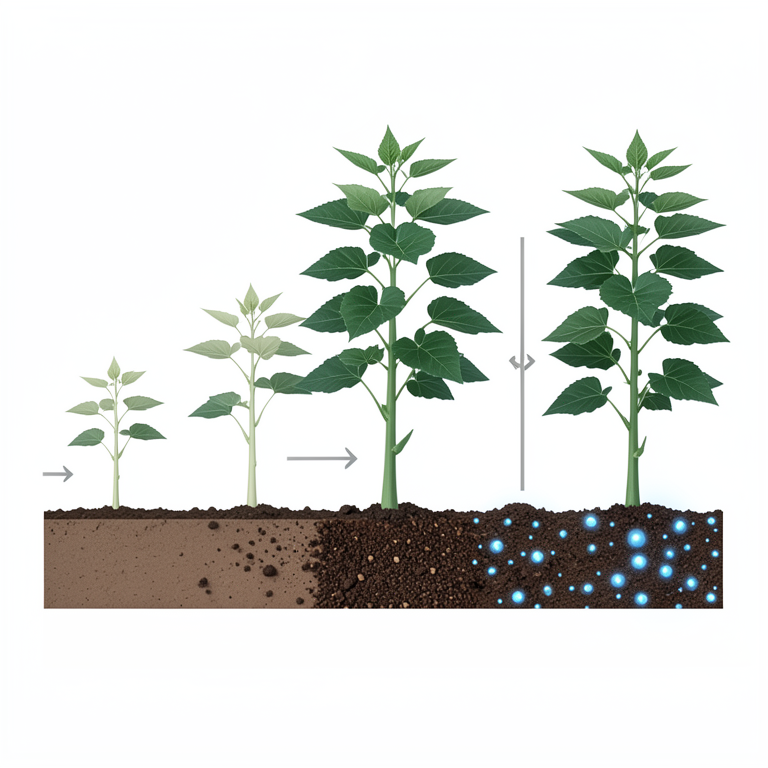
Experimental Treatment Groups
AI-generated conceptual illustration (okra plants (Abelmoschus esculentus)). It explains the idea and does not show study data.
View source evidence ↗Figures & tables
From the original paper Table 1
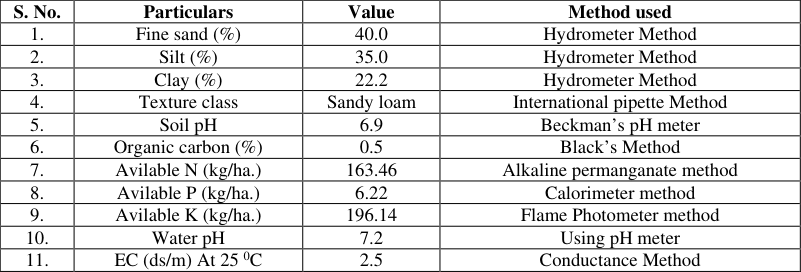 Table 2
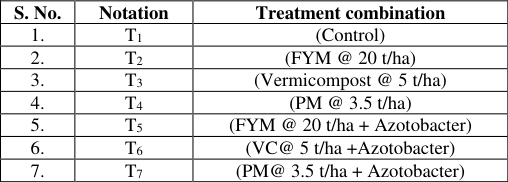 Table 3
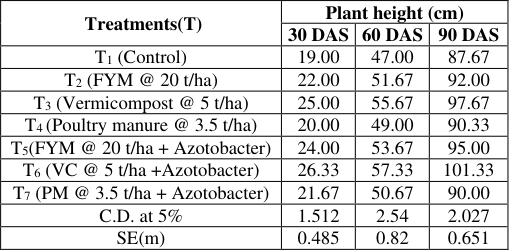 Table 4
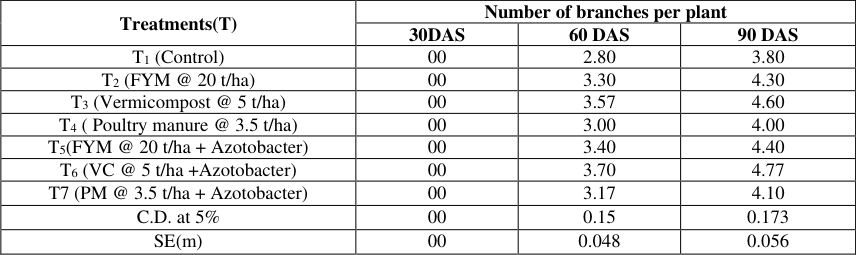 Table 5
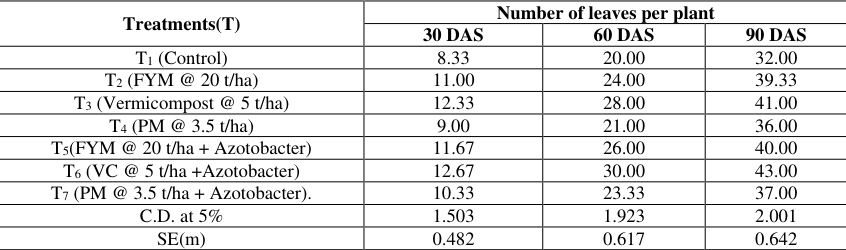 Table 6
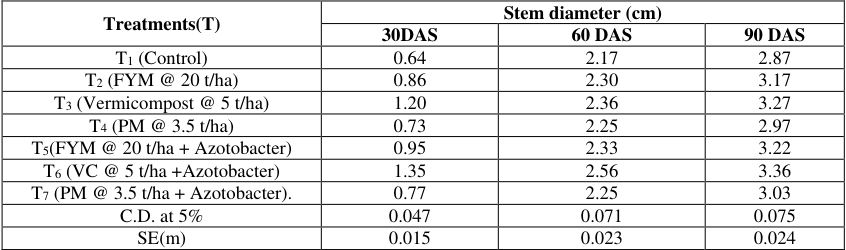 Table 7
Introduction
Okra [Abelmoschus esculentus (L.) Moench] is a valuable vegetable widely known as lady's finger and locally known as bhindi in India, with chromosomal number 2n=130 and endemic to tropical and subtropical Africa. It is prized for its tender fruits. Okra, a member of the Malvaceae family, is a major kharif and summer vegetable crop. Okra is an excellent source of carbohydrates, fiber, proteins, and vitamins (Adeboye and Oputa, 1996) [1] . Okra is an excellent source of iodine and can help with goiter treatment. Fruits can also be dried or stored for use during the off-season. Dried fruit contains 13-22% edible oil and 20-24% protein, and is used to refine edible oil. Dry fruit skin and fibers are utilized in the production of paper, cardboard, and textiles. Okra is a versatile crop known for its soft and tasty pods. This food is high in protein, riboflavin, niacin, phosphorus, potassium, zinc, and copper, as well as dietary fiber, vitamins A, C, K, thiamin, vitamin B6, folate, calcium, magnesium, and manganese. It is low in calories and fat, making it a valuable addition to the diet of people in developing countries with nutritional imbalances (Kumar and Sreeparvathy, 2010) [4] . The production of okra takes approximately 90 to 100 days, and it thrives in a warm and humid environment. India is the largest producer of okra in the world. The country cultivates okra on 0.55 million hectares, yielding an annual production of 7.3 million tonnes and achieving a productivity rate of 13.12 metric tonnes per hectare (NHB, 2023-24). The leading okra-producing states include Gujarat, followed by West Bengal, Bihar.
Effect of Organic Manures and Biofertilizer on Growth of Okra
Organic inputs such as farmyard manure (FYM), vermicompost, and chicken manure are gaining popularity globally. With the growing population, there is an increasing challenge in managing and disposing of farm waste. Therefore, effective technologies are necessary to address this issue. Organic manure serves as a natural, cost-effective, and time-efficient solution for waste management.
Farmyard manure (FYM) is a mixture of bovine dung, urine, straw, litter, and fodder residues. It contains approximately 0.5% nitrogen (N), 0.25% phosphorus (P), and 0.5% potassium (K). Essentially made from cow dung, cow urine, waste straw, and other dairy wastes, farmyard manure is high in nutrients. Among its many qualities, it is quite helpful. By binding soil aggregates, the organic manure FYM enhances soil texture in addition to giving plants nutrients. In addition to enhancing the soil's microbial population and fertilizer usage efficiency, organic manure boosts the soil's cation exchange capacity, water retention capacity, and phosphate availability while lowering nitrogen losses from the gradual release of nutrients (Tadesse et al., 2013) [9] . Vermicomposting is an environmentally friendly technique that utilizes earthworms to recycle organic waste. This process not only enhances the density of microorganisms but also produces worm casts, which provide essential nutrients for plants. Worm casts contain compounds such as gibberellins, cytokinins, and naphthaleneacetic acid (NAA), all of which promote plant growth. Vermicomposting improves soil quality by increasing the amount of humic acid, enhancing cation exchange capacity, and boosting water-soluble carbohydrates, while also lowering the carbon-to-nitrogen (C:N) ratio. The average composition of vermicompost includes 0.9% to 1.5% nitrogen (N), 0.3% to 0.64% phosphorus pentoxide (P2O5), 0.54% to 1.72% potassium oxide (K 2 O), along with copper (Cu) concentrations ranging from 2.00 to 37.7 parts per million (ppm), zinc (Zn) from 5.7 to 120 ppm, and iron (Fe) from 10.0 to 161.0 ppm. Vermicompost is produced through the interaction of earthworms and microorganisms during the non-thermophilic biodegradation of organic matter (Sallaku et al., 2009) [8] .
Poultry manure is an excellent alternative to chemical fertilizers and can significantly enhance soil quality. According to Boateng et al., the application of poultry manure increased nitrogen (N) levels in the soil by more than 53%, raising the content from 0.09% to 0.14%. Additionally, the levels of exchangeable cations also improved. Bio-fertilizers promote plant growth and help maintain soil fertility. These fertilizers are made up of microorganisms that fix nitrogen, mobilize phosphorus, and break down cellulose, all of which enhance the availability of nutrients in the soil and support agricultural production. The use of bio-fertilizers improves mineral and water absorption, boosts root development, encourages vegetative growth, and facilitates nitrogen fixation (Bhagyaraj and Suvarna, 1999) [2] .
Materials and Methods:
The field experiment was conducted at the Organic research farm, Karguan ji, Department of Horticulture, Bundhelkhand University, Jhansi (U.P.) in kharif season 2024. Geographically, Jhansi is one of the districts of Uttar Pradesh. The location is at 78° 36'59" E longitude and 25° 27'03.4" N latitude, with an average elevation of 285 meters above mean sea level between the rivers Pahuj and Betwa. This region is within agro-climatic zone VI (Bundelkhand zone). The climatic conditions prevailing during the course of investigation are presented in Table 1 and soil characteristics in Table 2, The maximum and minimum temperature range between 37.5 °C and 17.3 °C respectively were recorded during crop season. The maximum and minimum relative humidity were 94% and 40% recorded during course of crop period while the total precipitation occur was 767.8 mm.
| S. No. | Particulars | Value | Method used |
|---|---|---|---|
| 1. | Fine sand (%) | 40.0 | Hydrometer Method |
| 2. | Silt (%) | 35.0 | Hydrometer Method |
| 3. | Clay (%) | 22.2 | Hydrometer Method |
| 4. | Texture class | Sandy loam | International pipette Method |
| 5. | Soil pH | 6.9 | Beckman’s pH meter |
| 6. | Organic carbon (%) | 0.5 | Black’s Method |
| 7. | Avilable N (kg/ha.) | 163.46 | Alkaline permanganate method |
| 8. | Avilable P (kg/ha.) | 6.22 | Calorimeter method |
| 9. | Avilable K (kg/ha.) | 196.14 | Flame Photometer method |
| 10. | Water pH | 7.2 | Using pH meter |
| 11. | EC (ds/m) At 25 0C | 2.5 | Conductance Method |
Table text extracted from the original PDF; superscript letters are shown inline. The original table image is below.
View original table image
| Months | Temperature (oC) | — | RH (%) | — | Rainfall (mm) |
|---|---|---|---|---|---|
| Max. | Min. | Max. | Min. | ||
| July | 37.5 | 26.2 | 91 | 65 | 51.8 |
| Augyst | 35.2 | 24.6 | 92 | 52 | 65.05 |
| Sep. | 35.1 | 23.6 | 94 | 40 | 74.95 |
| Oct. | 35.5 | 17.3 | 90 | 40 | 0.6 |
Table text extracted from the original PDF; superscript letters are shown inline. The original table image is below.
View original table image
Experimental Design and Layou
The experiment followed a randomized block design (RBD) with three replications. The treatment was randomized using Fisher's (1950). T2 (FYM @ 20 t/ha) 3. T3 (Vermicompost @ 5 t/ha) 4. T4 (PM @ 3.5 t/ha) 5.
T5 (FYM @ 20 t/ha + Azotobacter) 6. T6 (VC@ 5 t/ha +Azotobacter) 7.
T7 (PM@ 3.5 t/ha + Azotobacter)
Before sowing, seeds were treated with Azotobacter. Biofertilizer solutions were developed. To make a sticky paste, add 5 g of jaggery to 50 ml of warm water. Seeds were treated for half an hour, dried in the shade for 30 minutes, and immediately planted in the experimental plot.
Seed sowing
The seeds of cv. 'Kashi Chaman' were sown on August 10, 2024, according to the layout design. Initially, two seeds were sown in each hill, and after germination, just one plant per hill remained. The distances between rows and plants were fixed at 60 cm and 30 cm, respectively. Thus, each plot could contain 20 plants. Watering, hoeing, weeding, and plant protection methods were used on a regular basis to ensure a healthy yield.
Irrigation
For establishment of the crop, a light irrigation was given immediately after sowing. Subsequent irrigations were given as per the crop requirement.
Thinning, weeding and hoeing
To maintain the proper plant population, thinning was done 25 days after sowing, leaving only one plant per hill. Hoeing and weeding were done twice, at 20 and 55 days after sowing.
Plant protection measures
Although no significant pest or disease attacks were seen during crop growth, sticky traps were kept to monitor sucking pests. Pheromone traps were put out to track the occurrence of fruit borers. To handle the whitefly and jassids, 5 ml of neem oil per liter was sprayed.
Harvesting
Harvesting was done in the morning so that hairs on the fruit could be easily removed. Fruits were gathered by bending the pedicel with a light jerk. The fresh green pods were taken from the plant when they reached a length of 8-10 cm.
Results and Discussion
Plant height (cm) Five plants were randomly selected from each plot and permanently marked. The height of each tagged plant was measured at 30, 60, and 90 DAS from the base of the plant to the tip of the main shoot with the help of a scale, and the average height of five plants was recorded as the mean plant height. The maximum plant height (26.33 cm, 57.33 cm and 101.33 cm respectively) at 30, 60 and 90 DAS was recorded in T 6 (Vermicompost @ 5 t/ha +Azotobacter), while it was lowest (19.00 cm, 47.00 cm and 87.67 cm) in T 1 (Control).
Effect of Organic Manures and Biofertilizer on Growth of Okra
Effect of Organic Manures and Biofertilizer on Growth of Okra
Number of branches per plant
The total number of branches arising from the plant's main stem was counted in each of the five randomly selected plants at 30, 60, and 90 days after planting, as well as at the final harvest stage, and the average was calculated per plant. The maximum number of branches per plant (00, 3.70 and 4.77 respectively) at 30, 60 and 90 DAS was recorded in T 6 (Vermicompost @ 5 t/ha +Azotobacter), while it was lowest (00, 2.80 and 3.80) in T 1 (Control).
Number of leaves per plant
The number of leaves per plant was counted for five tagged plants in each plot at 30, 60, and 90 DAS, and an average was calculated. The maximum number of leaves per plant (12.67, 30.00 and 43.00 respectively) at 30, 60 and 90 DAS was recorded in T 6 (Vermicompost@ 5 t/ha +Azotobacter), while it was lowest (8.33, 20.00 and 32.00) in T 1 (Control).
The stem diameter of five randomly selected plants was measured with Vernier calipers at 30, 60, and 90 DAS, and the average stem diameter was calculated. The maximum stem diameter (1.35 cm, 2.56 cm and 3.36 cm respectively) at 30, 60 and 90 DAS was recorded in T 6 (Vermicompost @ 5 t/ha +Azotobacter), while it was lowest (0.64 cm 2.17 cm and 2.87 cm) in T 1 (Control). Application of organic manure and bio-fertilizers had a positive increase in the growth attributes of the plants in terms of plant height. The significantly maximum plant height, number of branches, number of leaves, and stem diameter were obtained at 30, 60, and 90 DAS in T 6 , which might be due to the combined effect of organic manure and bio-fertilizer sources. Similar findings were also observed by Khetran et al. (2017) [3] , Sachan et al. (2017) [7] , and Meena et al. (2019) [5] in okra.
Conclusion
The results of the present investigation revealed that the application of vermicompost at 5 t/ha + Azotobacter was statistically superior for enhancing the growth and yield of okra in addition to increasing soil fertility status. The data indicated that net return and benefit-cost ratio were also recorded highest by applying vermicompost @ 5 t/ha + Azotobacter. In the present investigation, supplementation of Farmyard manure, vermicompost, and biofertilizers improved soil fertility. Therefore, to produce and sustain a higher yield of okra, it is recommended to make vermicompost @ 5 t/ha + Azotobacter for okra cultivation.
Figures and tables from the paper
| S. No. | Notation | Treatment combination |
|---|---|---|
| 1. | T1 | (Control) |
| 2. | T2 | (FYM @ 20 t/ha) |
| 3. | T3 | (Vermicompost @ 5 t/ha) |
| 4. | T4 | (PM @ 3.5 t/ha) |
| 5. | T5 | (FYM @ 20 t/ha + Azotobacter) |
| 6. | T6 | (VC@ 5 t/ha +Azotobacter) |
| 7. | T7 | (PM@ 3.5 t/ha + Azotobacter) |
Table text extracted from the original PDF; superscript letters are shown inline. The original table image is below.
View original table image
| Treatments(T) | Plant height (cm) | — | — |
|---|---|---|---|
| 30 DAS | 60 DAS | 90 DAS | |
| T1 (Control) | 19.00 | 47.00 | 87.67 |
| T2 (FYM @ 20 t/ha) | 22.00 | 51.67 | 92.00 |
| T3 (Vermicompost @ 5 t/ha) | 25.00 | 55.67 | 97.67 |
| T4 (Poultry manure @ 3.5 t/ha) | 20.00 | 49.00 | 90.33 |
| T5(FYM @ 20 t/ha + Azotobacter) | 24.00 | 53.67 | 95.00 |
| T6 (VC @ 5 t/ha +Azotobacter) | 26.33 | 57.33 | 101.33 |
| T7 (PM @ 3.5 t/ha + Azotobacter) | 21.67 | 50.67 | 90.00 |
| C.D. at 5% | 1.512 | 2.54 | 2.027 |
| SE(m) | 0.485 | 0.82 | 0.651 |
Table text extracted from the original PDF; superscript letters are shown inline. The original table image is below.
View original table image
| Treatments(T) | Number of branches per plant | — | — |
|---|---|---|---|
| 30DAS | 60 DAS | 90 DAS | |
| T1 (Control) | 00 | 2.80 | 3.80 |
| T2 (FYM @ 20 t/ha) | 00 | 3.30 | 4.30 |
| T3 (Vermicompost @ 5 t/ha) | 00 | 3.57 | 4.60 |
| T4 ( Poultry manure @ 3.5 t/ha) | 00 | 3.00 | 4.00 |
| T5(FYM @ 20 t/ha + Azotobacter) | 00 | 3.40 | 4.40 |
| T6 (VC @ 5 t/ha +Azotobacter) | 00 | 3.70 | 4.77 |
| T7 (PM @ 3.5 t/ha + Azotobacter) | 00 | 3.17 | 4.10 |
| C.D. at 5% | 00 | 0.15 | 0.173 |
| SE(m) | 00 | 0.048 | 0.056 |
Table text extracted from the original PDF; superscript letters are shown inline. The original table image is below.
View original table image
| Treatments(T) | Number of leaves per plant | — | — |
|---|---|---|---|
| 30 DAS | 60 DAS | 90 DAS | |
| T1 (Control) | 8.33 | 20.00 | 32.00 |
| T2 (FYM @ 20 t/ha) | 11.00 | 24.00 | 39.33 |
| T3 (Vermicompost @ 5 t/ha) | 12.33 | 28.00 | 41.00 |
| T4 (PM @ 3.5 t/ha) | 9.00 | 21.00 | 36.00 |
| T5(FYM @ 20 t/ha + Azotobacter) | 11.67 | 26.00 | 40.00 |
| T6 (VC @ 5 t/ha +Azotobacter) | 12.67 | 30.00 | 43.00 |
| T7 (PM @ 3.5 t/ha + Azotobacter). | 10.33 | 23.33 | 37.00 |
| C.D. at 5% | 1.503 | 1.923 | 2.001 |
| SE(m) | 0.482 | 0.617 | 0.642 |
Table text extracted from the original PDF; superscript letters are shown inline. The original table image is below.
View original table image
| Treatments(T) | Stem diameter (cm) | — | — |
|---|---|---|---|
| 30DAS | 60 DAS | 90 DAS | |
| T1 (Control) | 0.64 | 2.17 | 2.87 |
| T2 (FYM @ 20 t/ha) | 0.86 | 2.30 | 3.17 |
| T3 (Vermicompost @ 5 t/ha) | 1.20 | 2.36 | 3.27 |
| T4 (PM @ 3.5 t/ha) | 0.73 | 2.25 | 2.97 |
| T5(FYM @ 20 t/ha + Azotobacter) | 0.95 | 2.33 | 3.22 |
| T6 (VC @ 5 t/ha +Azotobacter) | 1.35 | 2.56 | 3.36 |
| T7 (PM @ 3.5 t/ha + Azotobacter). | 0.77 | 2.25 | 3.03 |
| C.D. at 5% | 0.047 | 0.071 | 0.075 |
| SE(m) | 0.015 | 0.023 | 0.024 |
Table text extracted from the original PDF; superscript letters are shown inline. The original table image is below.
View original table image
References
9 in the original paper- Adeboye OC, Oputa CO. Effects of galex on growth and fruit nutrient composition of okra (Abelmoschus esculentus (L.) Moench). Life Journal of Agriculture. 1996;18(2):1-9.
- Bhagyaraj DJ, Suvarna CV. Biofertilizers and their application. Agri-East. 1999;1:16-21.
- Khetran R, Muhammad AK, Ali JZS, Basharat M, Fahmid S, Ali N, et al. Effect of different doses of NPK fertilizers on seed yield of okra (Abelmoschus esculentus L. Moench). International Journal of Advanced Research in Biological Sciences. 2017;4(1):163-172.
- Kumar PS, Sreeparvathy S. Studies on heterosis in okra (Abelmoschus esculentus L.). Electronic Journal of Plant Breeding. 2010;1(6):1431-1433.
- Meena DC, Meena ML, Kumar S. Influence of organic manures and biofertilizers on growth, yield and quality of okra (Abelmoschus esculentus L. Moench). Annals of Plant and Soil Research. 2019;21(2):130-134.
- National Horticulture Board. Indian horticulture database 2023-2024. Gurgaon (HR): Ministry of Agriculture and Farmers Welfare, Government of India; 2024.
- Sachan S, Singh D, Kasera S, Mishra S, Tripathi Y, Mishra V. Integrated nutrient management in okra (Abelmoschus esculentus (L.) Moench) for better growth and higher yield. Journal of Pharmacognosy and Phytochemistry. 2017;6(5):1854-1856.
- Sallaku G, Babaj I, Kaciu S, Balliu A. Influence of vermicompost on plant growth characteristics of cucumber (Cucumis sativus L.) seedlings under saline conditions. Journal of Food Agriculture and Environment. 2009;7:869-872.
- Tadesse T, Dechassa N, Bayu W, Gebeyehu S. Effects of farmyard manure and inorganic fertilizer application on soil physico-chemical properties and nutrient balance in rain-fed lowland rice ecosystem. American Journal of Plant Sciences. 2013;4:309-316.