
Research article · 2025 · Full text
International Journal of Advanced Chemistry ResearchBiochemical evaluation of xanthine oxidase inhibition and anti-inflammatory activity of Drynaria quercifolia (L.) J. Sm and Curcuma aeruginosa Roxb. Rhizomes
Volume 7(12) · Pages 40–46 · DOI: 10.33545/26646781.2025.v7.i12a.345 ↗
Research areasGout, Hyperuricemia, Uric AcidInflammasome and immune disordersCurcumin's Biomedical Applications
Abstract
Author-writtenGout is a form of metabolic inflammatory arthritis characterized by hyperuricemia and acute joint inflammation, which is primarily driven by xanthine oxidase enzyme responsible for uric acid production and inflammation-associated membrane damages. The present study was aimed to comparatively evaluate the in-vitro biochemical xanthine oxidase (XO) inhibitory activity and anti-inflammatory (membrane stabilizing) potential of ethanolic extracts of Drynaria quercifolia (L.)J.sm and Curcuma aeruginosa Roxb. rhizomes which is ethnobotanically used against rheumatism. XO inhibition was evaluated spectrophotometrically, while the anti-inflammatory activity was evaluated using hypotonic and heat-induced erythrocyte membrane stabilization assays, with febuxostat and diclofenac used as standard drugs. Both extracts exhibited concentration-dependent XO inhibition. C. aeruginosa showed an IC₅₀ value of 4.2±0.4 µg/mL, which was comparable to febuxostat (3.5±0.5 µg/mL), whereas D. quercifolia exhibited a higher IC₅₀ value of 18.0±0.7 µg/mL, indicating moderate enzyme inhibitory activity. In the hypotonic solution-induced hemolysis assay, D. quercifolia and C. aeruginosa resulted as 64.3% and 67.0% of membrane stabilization, which is compared with 82.4% for diclofenac. In the heat-induced hemolysis activity, D. quercifolia exhibited an IC₅₀ of 132 µg/mL which shows stronger membrane protection whereas, C. aeruginosa has IC₅₀ of 207.0 µg/mL and diclofenac of 83.8 µg/mL. The findings demonstrates a complementary dual biochemical profile, wherein C. aeruginosa exhibits stronger xanthine oxidase inhibitory activity, while D. quercifolia shows relatively greater membrane stabilizing potential. The combined enzyme-level and membrane-level protection supports the preliminary in-vitro anti-gout potential of both the rhizomes ethanolic extracts. Further in-vivo and molecular studies are required to substantiate their therapeutic significance.
Summary
Source-checkedPlain-language reading of the full paper, prepared with AI and checked against the text. Each point links to the authors' own words.
Why it matters
- Gout is a metabolic inflammatory arthritis where the xanthine oxidase (XO) enzyme drives both the production of uric acid (hyperuricemia) and inflammation-related membrane damage. View evidence ↗
- Stabilizing lysosomal membranes is a key anti-inflammatory strategy because it prevents the leakage of enzymes that cause cellular auto-digestion. View evidence ↗
The question
- The study aimed to compare the in-vitro xanthine oxidase (XO) inhibitory activity and membrane-stabilizing (anti-inflammatory) potential of ethanolic extracts from the rhizomes of Drynaria quercifolia and Curcuma aeruginosa. View evidence ↗
What they did
- Drynaria quercifolia rhizomes were collected from Tamil Nadu, India, and Curcuma aeruginosa rhizomes were sourced from Assam, India. View evidence ↗
- Ethanol was used as the solvent for Soxhlet extraction of the powdered rhizomes. View evidence ↗
- XO inhibition was measured spectrophotometrically, and anti-inflammatory activity was tested via hypotonic and heat-induced erythrocyte membrane stabilization assays, using febuxostat and diclofenac as standards. View evidence ↗
- Experiments were performed in triplicate (n=3), and data were analyzed using one-way ANOVA with Tukey's post-hoc test. View evidence ↗
What they found
- Curcuma aeruginosa showed strong XO inhibition with an IC₅₀ of 4.2±0.4 µg/mL, which was comparable to febuxostat (3.5±0.5 µg/mL), while Drynaria quercifolia was less potent with an IC₅₀ of 18.0±0.7 µg/mL. View evidence ↗
- In the hypotonic solution assay, C. aeruginosa (67%) and D. quercifolia (64.3%) showed moderate membrane stabilization, both lower than the standard diclofenac (82.4%). View evidence ↗
- In the heat-induced hemolysis model, D. quercifolia (IC₅₀ 132 µg/mL) provided better membrane protection than C. aeruginosa (IC₅₀ 207 µg/mL), though both were less effective than diclofenac (IC₅₀ 83.8 µg/mL). View evidence ↗
What it means
- The authors conclude that the two extracts provide a complementary dual action: C. aeruginosa is more effective at lowering urate via XO inhibition, while D. quercifolia is more effective at protecting membranes under stress. View evidence ↗
- The authors state that further molecular and in-vivo studies are necessary to confirm the therapeutic significance of these findings. View evidence ↗
Visual summary
3 visualsIllustrations explain the paper; charts are replotted from the paper's own table values.
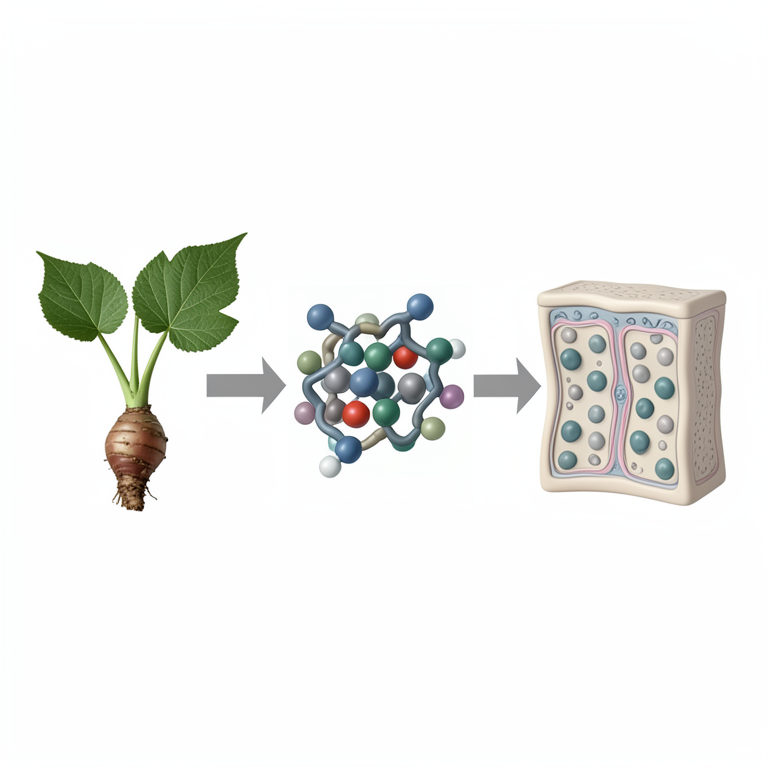
Complementary Anti-Gout Action
AI-generated conceptual illustration (Drynaria quercifolia leaves and Curcuma aeruginosa rhizomes). It explains the idea and does not show study data.
View source evidence ↗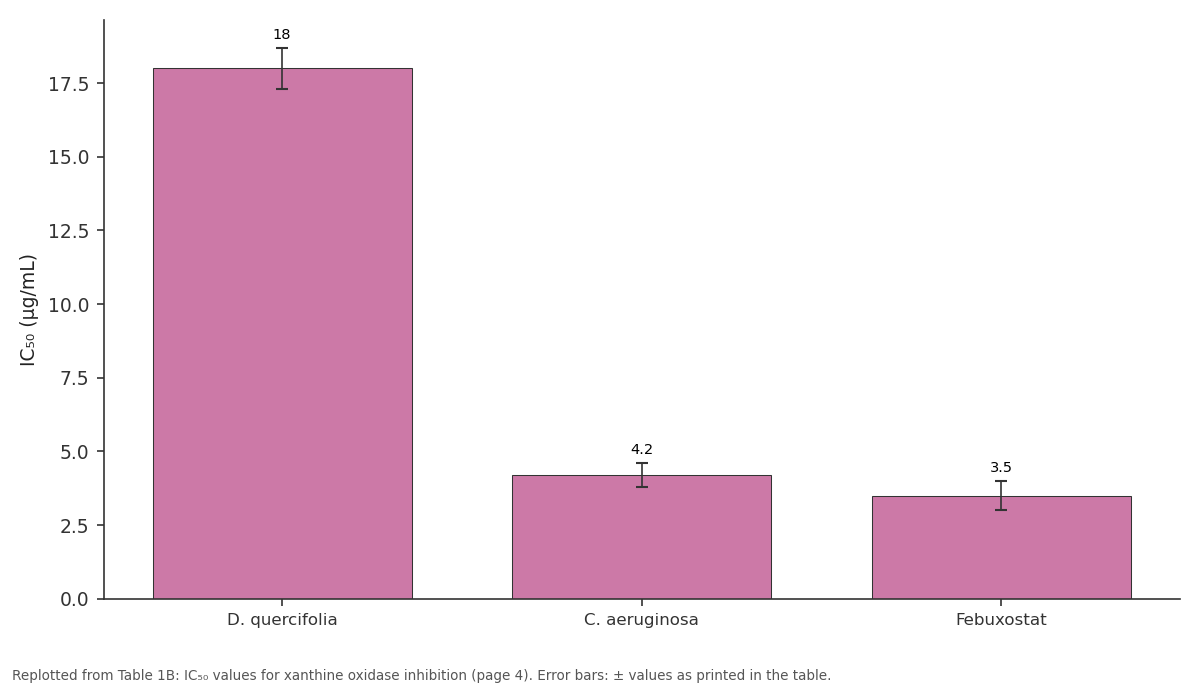
IC₅₀ (µg/mL): D. quercifolia vs C. aeruginosa vs Febuxostat
Replotted from Table 1B (page 4) of the original paper. Every bar is the paper's own table value.
View source evidence ↗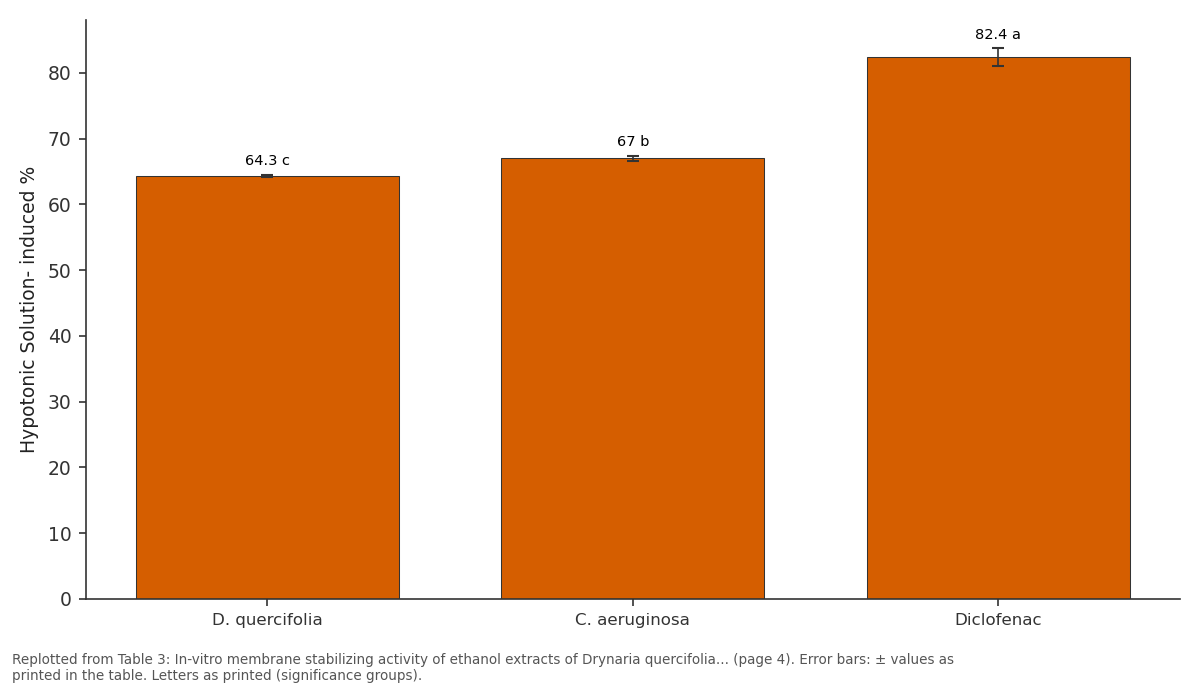
Hypotonic Solution- induced %: D. quercifolia vs C. aeruginosa vs Diclofenac
Replotted from Table 3 (page 4) of the original paper. Every bar is the paper's own table value.
View source evidence ↗Figures & tables
From the original paper Table 1A
 Table 1B
 Table 3
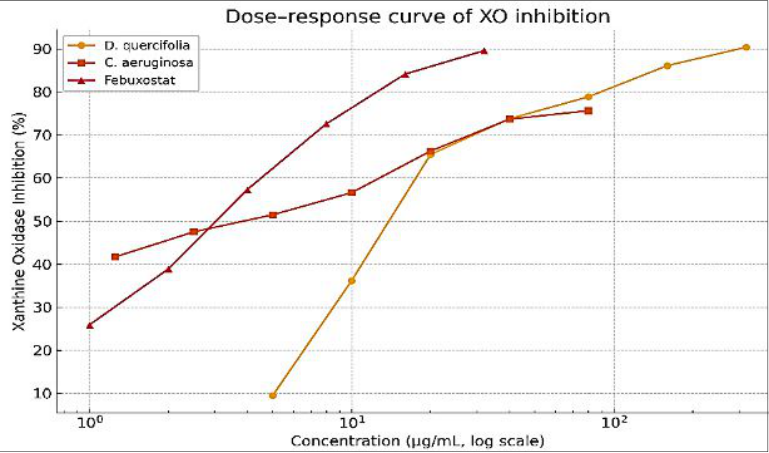 Figure 1
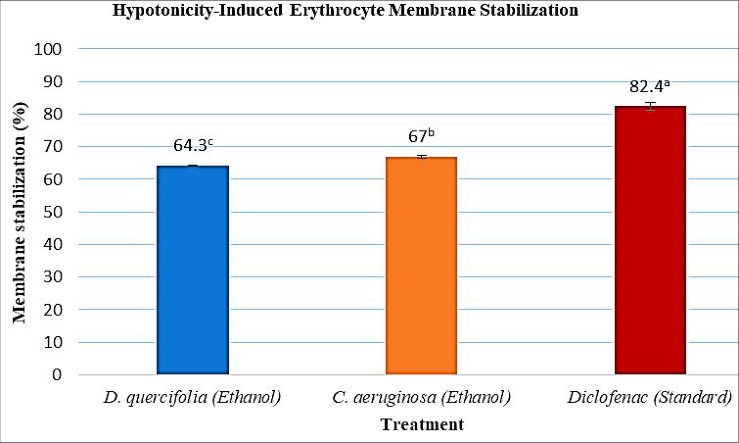 Figure 2
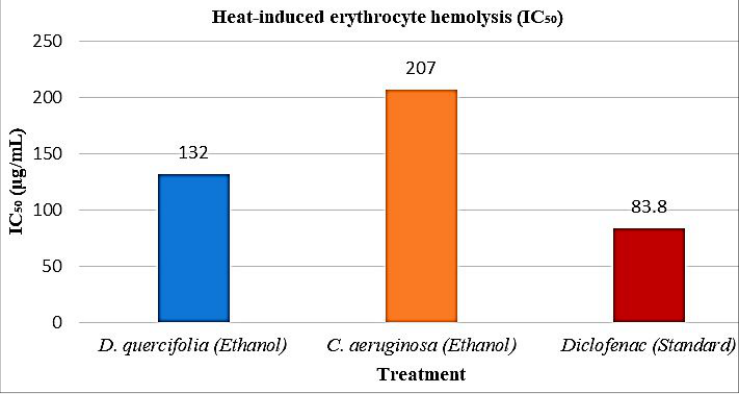 Figure 2B
Introduction
Gout is a metabolic inflammatory disorder arising from dysregulation of purine metabolism, characterized by sustained hyperuricemia and deposition of monosodium urate crystals (MSU) in joints and peri-articular tissues [1,2] . The biochemical basis of hyperuricemia is primarily governed by the enzyme xanthine oxidase (XO), which catalyzes the sequential oxidation of hypoxanthine to xanthine and xanthine to uric acid [3,4] . Beyond its role in urate biosynthesis, XO is also a significant enzymatic source of reactive oxygen species (ROS), thereby functioning as a biochemical link between hyperuricemia, oxidative stress and inflammation [5,6] . Excessive XO activity thus contributes simultaneously to uric acid accumulation and amplification of redox-mediated inflammatory damage, establishing XO as a central therapeutic target in gout pathophysiology [4,6] . Synthetic XO inhibitors such as allopurinol and febuxostat remain the main medications of urate-lowering therapy. Despite their clinical effectiveness, long-term administration of these drugs is associated with adverse reactions including hypersensitivity syndromes, hepatic dysfunction, renal complications and cardiovascular risks [7,8] . These limitations leads towards the necessity to identify alternative XO inhibitors that can provide enzyme suppression together with additional anti-inflammatory and cytoprotective benefits. In this context, naturally occurring phytochemicals are being increasingly explored as multitarget agents capable of modulating enzyme activity, oxidative stress and inflammation in a concerted manner [9,10] . In clinical practice, the two major pathogenic components of gout are managed using two distinct drug classes. Longterm control of hyperuricemia is achieved using xanthine oxidase inhibitors such as febuxostat, a selective non-purine XO inhibitor widely prescribed in gout patients. [11,12] In contrast, the acute inflammatory manifestations of gout flares are primarily treated using non-steroidal antiinflammatory drugs (NSAIDs), among which diclofenac is one of the most frequently prescribed agents for rapid suppression of pain and inflammation due to its potent cyclooxygenase inhibition and lysosomal membranestabilizing action [13,14] . Thus, febuxostat represents the pharmacological standard for urate-lowering therapy, whereas diclofenac represents the standard for acute antiinflammatory control in gout. Inflammation constitutes the second major pathogenic axis of gout, particularly during acute gout flares. Monosodium urate crystals activate neutrophils and macrophages, triggering the release of lysosomal enzymes, proteases, and pro-inflammatory mediators that culminate in severe tissue injury and pain [2,15] . Stabilization of lysosomal membranes is therefore a critical anti-inflammatory strategy, as it prevents enzyme leakage and limits cellular auto-digestion. The erythrocyte membrane closely resembles the lysosomal membrane in structural organization and stress-induced destabilization and erythrocyte membrane stabilization assays are widely employed as reliable in-vitro indicators of membrane-protective and anti-inflammatory potential [16][17][18] . Medicinal plants are rich sources of bioactive secondary metabolites such as phenolics, flavonoids, terpenoids and curcuminoids, many of which exhibit proven xanthine oxidase inhibitory, antioxidant and membrane-stabilizing activities [9,10,19] . Unlike synthetic single-target drugs, plant extracts contain multiple phytochemicals that can act simultaneously on different pathological pathways. Such multi-target activity is particularly valuable in gout, where both uric acid overproduction and inflammation-associated oxidative and membrane damage contribute to disease progression. Therefore, plant-based therapeutics offer a rational approach for the integrated management of the metabolic and inflammatory components of gout. Drynaria quercifolia (L.) J. Sm (Polypodiaceae) and Curcuma aeruginosa Roxb.
(Zingiberaceae) are rhizomatous medicinal plants extensively employed in traditional medicine for disorders associated with inflammation, musculoskeletal pain and joint dysfunction. D. quercifolia is widely used for bone healing, arthritis and joint-related ailments and is known to contain abundant flavonoids, triterpenoids and phenolic acids linked to membrane stabilization and anti-inflammatory activity [20,21] . C. aeruginosa is traditionally used in the management of swelling, pain and inflammatory conditions and is reported to be rich in terpenoids, curcuminoids and polyphenolic compounds associated with enzymatic inhibition and redox modulation [22,23] . In both species, the rhizome serves as the principal reservoir of these bioactive constituents. The selection of ethanol as the extraction solvent and the prioritization of these two rhizomes were further supported by our earlier comparative phytochemical and antioxidant investigation, which demonstrated that the ethanolic extracts of both Drynaria quercifolia and Curcuma aeruginosa possessed the highest phenolic and flavonoid contents along with superior radical scavenging and reducing capacities, establishing their strong redox relevance to gout-associated oxidative stress [24] . Although Curcuma aeruginosa and Drynaria quercifolia possess well-recognized ethno medicinal relevance in inflammatory disorders, systematic comparative evaluation of their ethanol extracts for xanthine oxidase inhibition together with membrane-stabilizing activity under standardized experimental conditions remains limited. Since effective gout management requires simultaneous suppression of uric acid biosynthesis and control of inflammation-associated membrane destabilization, a dual mechanistic investigation is scientifically warranted, which forms the basis of the present study.
Materials and Methods
Materials and Methods
Plant Material Collection and Authentication
Drynaria quercifolia (L.) J. Sm. rhizomes were obtained from the Kolli Hills region of Tamil Nadu, India, whereas Curcuma aeruginosa Roxb. rhizomes were sourced from the Beltola Bazaar herbal market, Guwahati, Assam. Both plant materials were botanically idenfied by the Botanical Survey of India, Southern Circle, Coimbatore, Tamilnadu. Authenticated voucher specimens were preserved in the institutional herbarium for future reference. The same authenticated plant materials were used in our earlier phytochemical and antioxidant investigation and in the present study to ensure experimental consistency.
Extraction
The shade-dried rhizomes of Drynaria quercifolia and Curcuma aeruginosa were separately pulverized into coarse powder. The powdered samples were individually subjected to Soxhlet extraction using ethanol as the solvent. The extraction was continued until complete exhaustion of the plant material. The resulting ethanol extracts were filtered and concentrated under reduced pressure using a rotary vacuum evaporator (Yamato BO410, Japan), followed by drying to constant weight. The dried crude ethanol slurry were weighed to determine percentage yield and stored in airtight containers at 4 ° C until further use. Stock solutions were prepared at a concentration of 1 mg/mL for subsequent xanthine oxidase inhibition and membrane stabilization assays.
In vitro Xanthine Oxidase Inhibitory Activity
The in-vitro xanthine oxidase (XO) inhibitory activity of the ethanol extracts of Curcuma aeruginosa (ECA) and Drynaria quercifolia (EDQ) was evaluated using a UVspectrophotometric method with minor modifications as described by Umamaheswari et al [25] . Phosphate buffer (pH 7.5) was prepared by dissolving 6.8 g of potassium dihydrogen orthophosphate and 1.56 g of sodium hydroxide in 900 mL of distilled water, adjusting the pH with sodium hydroxide, and making up the final volume to 1000 mL. The XO working solution (0.1 U/mL) was prepared by diluting 1 mL of enzyme stock solution (1 U/mL) with 9 mL of phosphate buffer. The substrate solution was prepared by dissolving 0.0056 g of xanthine in 200 mL of phosphate buffer. A 1 N HCl solution was prepared by diluting 8.28 mL of concentrated hydrochloric acid to 100 mL with distilled water. The reaction mixture consisted of 1.0 mL of test solution at the required concentration, 1.5 mL of phosphate buffer (pH 7.5), and 0.05 mL of XO enzyme solution (0.1 U/mL). The mixture was pre-incubated at 25 °C for 15 min. The reaction was initiated by the addition of 1.0 mL of substrate solution (150 µM xanthine) and incubated at 25 °C for 30 min. The reaction was terminated by the addition of 0.5 mL of 1 N HCl, and the absorbance was measured at 290 nm using a UV-Visible spectrophotometer. A preliminary dose range finding experiment (1-200 μg/mL) was performed for each ethanol extract. Initial single-point screening indicated that the Curcuma aeruginosa ethanol extract inhibited XO at lower concentrations than the Drynaria quercifolia ethanol extract. Based on these observations, the concentration ranges were selected for the detailed assay i.e, 1.25-80 μg/mL for C. aeruginosa, 5-320 μg/mL for D. quercifolia and 1-32 μg/mL for febuxostat. All the experiments were performed in triplicate. The percentage inhibition of xanthine oxidase activity was calculated using the formula:
where, A control is the absorbance of the reaction mixture without extract (vehicle control) and A sample is the absorbance in the presence of the test extract or standard. IC 50 values were estimated by graphical interpolation from plots of percentage inhibition versus concentration.
In vitro Anti-Inflammatory Activity 2.4.1 Membrane Stabilization Assay a. Hypotonic Solution-Induced Hemolysis
Alsever's solution was prepared by dissolving 2% dextrose, 0.8% sodium citrate, 0.05% citric acid, and 0.42% sodium chloride in distilled water and sterilized as described by Shinde et al. (1999) [26] . Fresh blood was collected from Sprague Dawley rats through retro-orbital plexus puncture under ethical approval and immediately mixed with an volume of sterilized Alsever's solution. The blood suspension was centrifuged at 3000 rpm for 10 min, and the packed erythrocytes were washed three times with isosaline (0.9% NaCl, pH 7.2). A 10% (v/v) erythrocyte suspension was prepared using isosaline. The reaction mixture (final volume 4.5 ml) consisted of 1 ml phosphate buffer (pH 7.4), 2 ml hypotonic saline (0.45% NaCl), 1 ml plant extract (1 mg/ml), and 0.5 ml erythrocyte suspension. Diclofenac sodium was used as the standard drug. The control contained all reagents except plant extract, while phosphate buffer served as the blank. The mixtures were incubated at 37 °C for 30 min and centrifuged. The absorbance of the hemoglobin released in the supernatant was measured at 560 nm using a UV-Visible spectrophotometer. The percentage of membrane stabilization was calculated using the formula:
Where A Control is the absorbance of the control and A sample is the absorbance of the sample.
b. Heat-Induced Hemolysis
The heat-induced hemolysis assay was carried out according to Shinde et al. (1999) [26] with slight modifications as reported by Henneh et al. (2018) [27] . The reaction mixture (2 ml) consisted of 1 ml of 10% erythrocyte suspension and 1 ml of plant extract (1 mg/ml), which was gently mixed. The positive control contained 1 ml RBC suspension and 1 ml diclofenac sodium at concentrations of 10, 30, and 100 μg/ml, while the negative control consisted of 1 ml RBC suspension and 1 ml normal saline. All treatments were performed in triplicate. The mixtures were heated at 56 °C for 30 min, allowed to cool to room temperature, and centrifuged at 2500 rpm for 10 min. The absorbance of the supernatant was measured at 560 nm using a UV-Visible spectrophotometer (Shimadzu) as a measure of hemolysis. The percentage inhibition of hemolysis was calculated using the formula:
Where A Control is the absorbance of the control and A sample is the absorbance of the sample.
Statistical analysis
All the experiments were carried out in triplicate and the results are expressed as mean±standard deviation (SD) (n = 3). The data were analyzed using one-way analysis of variance (ANOVA) followed by Tukey's post-hoc test for multiple comparisons. A value of p < 0.05 was considered statistically significant.
Results
Results
In-vitro Xanthine Oxidase (XO) Inhibitory Activity
The ethanol extracts of Drynaria quercifolia and Curcuma aeruginosa exhibited a clear concentration-dependent inhibition of xanthine oxidase (Table 1A; Fig. 1). C. aeruginosa produced 41.67±0.01% inhibition at 1.25 µg/mL and the inhibitory effect increased progressively to 75.63±0.01% at 80 µg/mL. In contrast, D. quercifolia showed relatively lower inhibition at the initial concentration (9.53±0.06% at 5 µg/mL), with a gradual increase to 90.36±0.0350% inhibition at 320 µg/mL. The standard drug febuxostat showed a steeper inhibitory response within a lower concentration range, producing 25.92±0.02% inhibition at 1 µg/mL and increasing to 89.56±0.01% at 32 µg/mL. The IC₅₀ values from the concentration-inhibition curves, were 18.0±0.7 µg/mL for D. quercifolia, 4.2±0.4 µg/mL for C. aeruginosa and 3.5±0.5 µg/mL for febuxostat (Table 1B).
Based on IC₅₀ values, C. aeruginosa exhibited approximately 4.3-fold greater XO inhibitory potency than D. quercifolia and showed inhibitory activity comparable to the standard drug. D. quercifolia required substantially higher concentrations to achieve equivalent levels of enzyme inhibition. Overall, both ethanol extracts demonstrated dose-dependent XO inhibitory behavior, with C. aeruginosa showing stronger inhibition at lower concentrations, while D. quercifolia displayed a more gradual inhibitory profile across a wider concentration range.
In-vitro membrane stabilizing activity (Table-3) 3.2.1 Hypotonic Solution-Induced Membrane Stabilization
In the hypotonicity-induced hemolysis assay, both ethanol extracts exhibited moderate membrane stabilizing activity (Table 3; Fig. 2A). D. quercifolia produced 64.3% membrane stabilization, while C. aeruginosa showed 67% membrane stabilization at the tested concentration. The standard drug diclofenac exhibited a higher membrane protective effect with 82.4% inhibition of hemolysis. The membrane stabilizing activities of both plant extracts were lower than that of diclofenac, while the protective effects of C. aeruginosa and D. quercifolia were comparable to each other. Values are expressed as mean ± SD (n = 3) for hypotonic solution-induced membrane stabilization. One-way ANOVA followed by Tukey's post-hoc test (p<0.05). IC₅₀ values for heat-induced hemolysis represent the concentration required to inhibit 50% hemolysis.
| Ethanol extracts of Sample | Hypotonic Solution- induced % | Heat induced Haemolysis IC50 (µg/mL) |
|---|---|---|
| D. quercifolia | 64.3±0.2c | 132 |
| C. aeruginosa | 67.0±0.4b | 207 |
| Diclofenac | 82.4± 1.4a | 83.8 |
Table text extracted from the original PDF; superscript letters are shown inline. The original table image is below.
View original table image
Heat-Induced Hemolysis
In the heat-induced hemolysis model, the membrane stabilizing potency of the samples was expressed as IC₅₀ values (Table 3; Fig. 2B). The IC₅₀ values were 132 µg/mL for D. quercifolia, 207 µg/mL for C. aeruginosa and 83.8 µg/mL for diclofenac. Diclofenac demonstrated significantly greater membrane protection than both ethanol extracts. Among the plant extracts, D. quercifolia exhibited a significantly lower IC₅₀ value than C. aeruginosa, indicating a relatively higher membrane protective efficiency of D. quercifolia under thermal stress conditions.
Discussion
Hyperuricemia is the primary biochemical abnormality underlying gout and is characterized by increased production or reduced excretion of uric acid, leading to monosodium urate crystal deposition in joints and subsequent inflammatory responses. Xanthine oxidase (XO) catalyzes the terminal steps of purine metabolism, converting hypoxanthine to xanthine and xanthine to uric acid; hence, inhibition of this enzyme remains a central therapeutic target in gout management. Alongside urate overproduction, inflammatory membrane destabilization and lysosomal enzyme release play a pivotal role in the progression of acute gouty inflammation [28] .
In the present investigation, ethanol extracts of Curcuma aeruginosa and Drynaria quercifolia were evaluated for their in-vitro anti-gout and anti-inflammatory potential using XO inhibition and erythrocyte membrane stabilization models, respectively, following a dual-mechanistic experimental strategy similar to previously reported antigout screening approaches [29,30] . Both extracts exhibited dose-dependent inhibition of XO activity, confirming their ability to interfere with uric acid biosynthesis. The lower IC₅₀ value of C. aeruginosa compared with D. quercifolia indicates a higher affinity of C. aeruginosa phytoconstituents toward the XO active site. The inhibitory potency of C. aeruginosa was comparable to that of the standard drug febuxostat, suggesting the presence of highly active XO-modulating compounds in its ethanol extract. Plant-derived phenolics and flavonoids are well documented as natural XO inhibitors due to their ability to interact with the molybdenum-pterin active center of the enzyme, thereby suppressing uric acid formation. The comparatively stronger XO inhibition observed with C. aeruginosa in the present study may therefore be attributed to its rich content of curcuminoids, terpenoids and polyphenolic compounds. The pronounced antioxidant potential and high phenolic and flavonoid content of both rhizomes reported in our earlier study [24] further mechanistically support the enzyme-level inhibitory effects observed in the current investigation. Inflammation-mediated membrane destabilization represents another fundamental pathological event in gout, where lysosomal membrane rupture leads to the release of proteases and amplification of tissue injury. Since the erythrocyte membrane closely resembles the lysosomal membrane in both structure and susceptibility to stressinduced damage, membrane stabilization assays are widely employed as surrogate in-vitro models for evaluating antiinflammatory activity. In the hypotonicity-induced hemolysis model, both C. aeruginosa and D. quercifolia demonstrated moderate membrane-protective effects at the tested concentration, whereas diclofenac exhibited the highest stabilization. Diclofenac was used as the reference standard in the membrane stabilization assays because non-steroidal antiinflammatory drugs (NSAIDs) constitute the first-line pharmacological treatment for acute gout flares. Diclofenac exerts its anti-inflammatory action primarily through cyclooxygenase (COX) inhibition and suppression of prostaglandin synthesis and also exhibits direct lysosomal and erythrocyte membrane-stabilizing effects, thereby preventing the release of tissue-damaging proteolytic enzymes during acute inflammation. Major international treatment guidelines, including those issued by the American College of Rheumatology and EULAR, recommend NSAIDs such as diclofenac for the rapid control of pain and inflammation in acute gouty arthritis [11,12] . Thus, the superior membrane-stabilizing activity of diclofenac in the present in-vitro models provides a clinically relevant pharmacological benchmark for interpreting the membrane-protective effects of the plant extracts.
Under thermal stress conditions in the heat-induced hemolysis model, D. quercifolia exhibited a lower IC₅₀ value than C. aeruginosa, indicating comparatively stronger membrane-protective efficiency of D. quercifolia at elevated temperatures. Heat-induced hemolysis primarily results from protein denaturation and oxidative membrane damage. The superior thermal membrane stabilization exhibited by D. quercifolia suggests the presence of thermostable flavonoids and triterpenoids with lipid-peroxidationinhibitory and cytoprotective properties. Previous phytochemical studies on D. quercifolia reporting flavonoids and terpenoid derivatives associated with membrane stabilization further support this observation [20,24] . Overall, the present findings reveal a complementary dual biological profile between the two rhizomes. Curcuma aeruginosa exhibited stronger XO inhibitory efficacy, indicating greater potential for suppressing uric acid biosynthesis, whereas Drynaria quercifolia displayed relatively superior membrane-stabilizing efficiency under heat-induced stress, suggesting stronger protection against inflammation-mediated membrane damage. This dual biochemical behavior closely parallels the combined clinical use of xanthine oxidase inhibitors such as febuxostat for urate-lowering therapy and NSAIDs such as diclofenac for acute inflammatory control in gout. Such complementary dual targeting is highly relevant for a disease that simultaneously involves urate overproduction and inflammation-driven cellular injury.
Conclusion
The ethanol extracts of Curcuma aeruginosa and Drynaria quercifolia demonstrated a complementary dual anti-gout action through significant xanthine oxidase inhibition and erythrocyte membrane stabilization. C. aeruginosa exhibited stronger urate-lowering potential via superior XO inhibition, whereas D. quercifolia showed comparatively higher membrane-protective anti-inflammatory activity under stress conditions. Together, these in-vitro findings indicate their potential to target both metabolic and inflammatory components of gout, warranting further in-vivo and validation.
Acknowledgments
The authors acknowledge the financial support provided by the Tamil Nadu State Council for Science and Technology (TNSCST) through the Research Funding for Research Scholars in Colleges (RFRS) scheme, which facilitated the successful completion of this study. The authors also sincerely acknowledge the Department of Pharmacology, Sri Ramakrishna College of Pharmacy, for providing the necessary laboratory facilities to carry out the xanthine oxidase inhibition assay.
Ethical Considerations
All experimental procedures involving rat blood were conducted in accordance with the guidelines of the Committee for the Purpose of Control and Supervision of Experiments on Animals (CPCSEA), Government of India.
The study protocol was reviewed and approved by the Institutional Animal Ethics Committee (IAEC) of KMCRET (Approval No.: IAEC-KMCRET/ReRc/Ph.D/117/2024). All efforts were made to minimize animal suffering and to reduce the number of animals used in the experiments.
Conflict of Interest
The authors declare that there are no conflicts of interest regarding the publication of this manuscript.
Figures and tables from the paper
| D. quercifolia | — | C. aeruginosa | — | Febuxostat | — |
|---|---|---|---|---|---|
| Concentration (µg/mL) | % Inhibition | Concentration (µg/mL) | % Inhibition | Concentration (µg/mL) | % Inhibition |
| 5 | 9.53±0.06 | 1.25 | 41.67±0.01 | 1 | 25.92±0.02 |
| 10 | 36.18±0.01 | 2.50 | 47.50±0.02 | 2 | 38.90±0.00 |
| 20 | 65.47±0.00 | 5.00 | 51.47±0.02 | 4 | 57.33±0.01 |
| 40 | 73.76±0.01 | 10.0 | 56.60±0.00 | 8 | 72.57±0.01 |
| 80 | 78.85±0.01 | 20.0 | 66.26±0.01 | 16 | 84.13±0.01 |
| 160 | 86.09±0.02 | 40.0 | 73.66±0.01 | 32 | 89.56±0.00 |
| 320 | 90.36±0.04 | 80.0 | 75.63±0.01 | - | - |
Table text extracted from the original PDF; superscript letters are shown inline. The original table image is below.
View original table image
| Sample | IC₅₀ (µg/mL) |
|---|---|
| D. quercifolia | 18.0±0.7 |
| C. aeruginosa | 4.2±0.4 |
| Febuxostat | 3.5±0.5 |
Table text extracted from the original PDF; superscript letters are shown inline. The original table image is below.
View original table image
References
29 in the original paper- So AK, Martinon F. Inflammation in gout: mechanisms and therapeutic targets. Nat Rev Rheumatol. 2017;13(11):639-647.
- Battelli MG, Bortolotti M, Polito L, Bolognesi A. The role of xanthine oxidoreductase and uric acid in metabolic syndrome. Biochim Biophys Acta Mol Basis Dis. 2018;1864(8):2557-2565.
- Pacher P, Nivorozhkin A, Szabó C. Therapeutic effects of xanthine oxidase inhibitors: renaissance half a International Journal of Advanced Chemistry Research https://www.chemistryjournals.net century after the discovery of allopurinol. Pharmacol Rev. 2006;58(1):87-114.
- Nile SH, Khobragade CN. Inhibition of xanthine oxidase activity by some Indian medicinal plants. Food Chem. 2011;124(4):1490-1495.
- Glantzounis GK, Tsimoyiannis EC, Kappas AM, Galaris DA. Uric acid and oxidative stress. Curr Pharm Des. 2005;11(32):4145-4151.
- Sadariya KA, Bhavsar SK, Thakkar VT. Xanthine oxidase inhibitors in treatment of hyperuricemia and gout. J Pharm Bioallied Sci. 2015;7(3):203-210.
- Inoue R, Yamaguchi S, Okada A, Yamauchi T, Kadowaki T, Nangaku M. Allopurinol versus febuxostat use and the risk of cardiovascular disease in people with chronic kidney disease: a new-user active comparator cohort study. Nephrology (Carlton). 2025;30(11):e70149.
- Wu N, Zu Y, Fu Y, Kong Y, Zhao J, Li X, et al. Antioxidant activities and xanthine oxidase inhibitory effects of extracts and main polyphenolic compounds obtained from Geranium sibiricum L. J Agric Food Chem. 2010;58(8):4737-4743.
- Shaukat A, Hussain K, Bukhari NI, Shehzadi N, Naheed S, Saghir F, et al. In vitro anti-gout and antiinflammatory activity of traditionally used polyherbal anti-gout remedy. Int J Biosci. 2020;16(5):327-335.
- FitzGerald JD, Dalbeth N, Mikuls T, BrignardelloPetersen R, Guyatt G, Abeles AM, et al. 2020
- American College of Rheumatology guideline for the management of gout. Arthritis Care Res. 2020;72(6):744-760.
- Richette P, Doherty M, Pascual E, Barskova V, Becce F, Castañeda-Sanabria J, et al. 2016 updated EULAR evidence-based recommendations for the management of gout. Ann Rheum Dis. 2017;76(1):29-42.
- Rang HP, Dale MM, Ritter JM, Flower RJ, Henderson G. Rang and Dale's pharmacology. 9th ed. London: Elsevier; 2020.
- Bursill D, Taylor WJ, Terkeltaub R, Kuwabara M, Merriman TR, Grainger R, et al. Gout, hyperuricemia, and crystal-associated disease network consensus statement regarding labels and definitions for disease elements in gout. Arthritis Care Res. 2019;71(3):427434.
- Gherghina ME, Peride I, Tiglis M, Neagu TP, Niculae A, Checherita IA. Uric acid and oxidative stressrelationship with cardiovascular, metabolic, and renal impairment. Int J Mol Sci. 2022;23(6):3188.
- Ge W, Li D, Gao Y, Cao X. The roles of lysosomes in inflammation and autoimmune diseases. Int Rev Immunol. 2015;34(5):415-431.
- Weissmann G. The mediation of rheumatoid inflammation by lysosomes. Adv Clin Pharmacol. 1974;6:51-63.
- Anosike CA, Obidoa O, Ezeanyika LUS. Membrane stabilization as a mechanism of the anti-inflammatory activity of methanol extract of Solanum aethiopicum. Daru. 2012;20(1):76.
- Orhan IE, Deniz FSS. Natural products and extracts as xanthine oxidase inhibitors-A hope for gout disease? Curr Pharm Des. 2021;27(2):195-210.
- Prasanna G, Anuradha R. A comprehensive review on phytopharmacological activities of Drynaria quercifolia L. Int J Pharmacogn Phytochem Res. 2016;8:13041313.
- Mondal S, Kumar S, Biswas D. Phytochemical profile and pharmacological evaluation of Drynaria quercifolia L. J Sm.: a comprehensive review. J Appl Pharm Sci. 2019;9(4):133-141.
- Nurcholis W, Khumaida N, Syukur M, Bintang M, Ardyani IDAAC. Phytochemical screening, antioxidant and cytotoxic activities in extracts of different rhizome parts from Curcuma aeruginosa Roxb. Int J Res Ayurveda Pharm. 2015;6(3):634-637.
- Sari AP, Supratman U. Mini-review: phytochemistry and biological activities of Curcuma aeruginosa Roxb. Indones J Chem. 2022;22(2):576-598.
- Narthanaa S, Pradheeba M, Vasuki Priyadharshini G, Narmatha Sri J, Pugalenthi M, Deepa MA. Comparative phytochemical profiling and mechanistic antioxidant evaluation of Drynaria quercifolia (L.) J.Sm. and Curcuma aeruginosa Roxb. rhizomes in relation to gouty arthritis. Int J Biol Sci. 2025;7(10):126-134.
- Umamaheswari M, Asokkumar K, Sivashanmugam AT, Remyaraju A, Subhadradevi V, Ravi TK. In vitro xanthine oxidase inhibitory activity of the fractions of Erythrina stricta Roxb. J Ethnopharmacol. 2009;124(3):646-648.
- Shinde UA, Phadke AS, Nair AM, Mungantiwar AA, Dikshit VJ, Saraf MN. Membrane stabilizing activitya possible mechanism of action for the antiinflammatory activity of Cedrus deodara wood oil. Fitoterapia. 1999;70(3):251-257.
- Henneh IT, Ameyaw EO, Biney RP, Benneh CK, Boakye-Gyasi E. Anti-inflammatory and analgesic activities of Pseudospondias microcarpa (A. Rich) Engl. J Basic Clin Physiol Pharmacol. 2018;29(3):1-10.
- Rock KL, Kataoka H, Lai JJ. Uric acid as a danger signal in gout and its comorbidities. Nat Rev Rheumatol. 2013;9(1):13-23.
- Sakat S, Juvekar AR, Gambhire MN. In vitro antioxidant and anti-inflammatory activity of methanol extract of Oxalis corniculata Linn. Int J Pharm Pharm Sci. 2010;2:146-155.