
Research article · 2025 · Full text
International Journal of Biology SciencesComparative assessment of genera-level diversity and habitat associations of spiders in Dongargarh, Chhattisgarh, India
Volume 7(12) · Pages 98–104 · DOI: 10.33545/26649926.2025.v7.i12b.532 ↗
Research areasSpider Taxonomy and Behavior StudiesSubterranean biodiversity and taxonomyVenomous Animal Envenomation and Studies
Abstract
Author-writtenThe jumping spiders (Araneae: Salticidae) are highly adaptable predators with ecological significance and strong habitat indicator potential. Despite their importance, data on Salticid diversity from Central India is highly limited, especially with regard to Chhattisgarh State. The present study was undertaken with the aim of estimating genera-level diversity and habitat associations of jumping spiders in Dongargarh, Chhattisgarh, and generating baseline data for biodiversity monitoring and future conservation initiatives. Field surveys were conducted in five ecologically diverse sites, namely forests, grasslands, temple complexes, villages, and urban environments, between June and October 2024. Spiders were sampled by making use of the following methods: visual search, hand collection, pitfall traps, vegetation beating, and nocturnal surveys. All specimens were identified using keys from taxonomic literature, expert validation, and comparison with authoritative references. Analysis was done on the habitat-wise species distribution, percentage composition, and genera richness. In total, seven species belonging to five genera were recorded. Menemerus and Cyclosa communities were the most dominant (28.57% each), followed by Hyllus, Plexippus, and Telamonia (14.28% each). Menemerus nigli showed high adaptability, occurring in varied natural and anthropogenic habitats, whereas Cyclosa and Hyllus are confined to specialized microhabitats such as moist vegetative zones and forest understory. All reported species belong to the IUCN "Not Evaluated" (NE) category, representing a gap at the global level of conservation. The findings have highlighted the importance of habitat diversity in Salticid conservation and confirmed Menemerus to be an ecologically plastic and disturbance-tolerant genus. The study contributes baseline data and recommends long-term, systematic surveying with molecular validation to support effective conservation in Chhattisgarh.
Summary
Source-checkedPlain-language reading of the full paper, prepared with AI and checked against the text. Each point links to the authors' own words.
Why it matters
- Jumping spiders are ecologically important predators that can serve as strong indicators of habitat health. View evidence ↗
- There is a significant lack of data regarding the diversity of jumping spiders in Central India, particularly in the state of Chhattisgarh. View evidence ↗
- Studying these spiders at the genus level helps researchers understand how they diversify evolutionarily and specialize in different habitats. View evidence ↗
The question
- The study aimed to estimate the diversity of jumping spider genera and their habitat associations in Dongargarh, Chhattisgarh, to create baseline data for conservation. View evidence ↗
What they did
- Field surveys were conducted from June to October 2024, covering the monsoon and early post-monsoon seasons. View evidence ↗
- The sampling strategy included visual searches, hand collection, pitfall traps, vegetation beating, and nocturnal surveys. View evidence ↗
- To ensure taxonomic accuracy, all spider identifications were cross-verified by an expert arachnologist. View evidence ↗
What they found
- The survey recorded a total of seven species of jumping spiders belonging to five different genera. View evidence ↗
- Cyclosa and Menemerus were the most dominant genera (28.57% each), while Hyllus, Plexippus, and Telamonia each represented 14.28% of the species richness. View evidence ↗
- Menemerus nigli demonstrated high ecological flexibility, as it was observed across four different habitat types. View evidence ↗
- Unlike the flexible Menemerus, Telamonia dimidiata was found only in dense shrubs. View evidence ↗
- All seven recorded species are listed as 'Not Evaluated' (NE) by the IUCN, highlighting a global gap in conservation assessments for these spiders. View evidence ↗
What it means
- The authors conclude that the study provides essential baseline data and emphasizes the need to preserve both natural and modified habitats. View evidence ↗
- The authors recommend long-term, systematic surveys combined with molecular validation to develop effective regional conservation policies. View evidence ↗
- The researchers relied solely on morphological identification and did not use molecular taxonomic validation. View evidence ↗
Visual summary
2 visualsIllustrations explain the paper; charts are replotted from the paper's own table values.
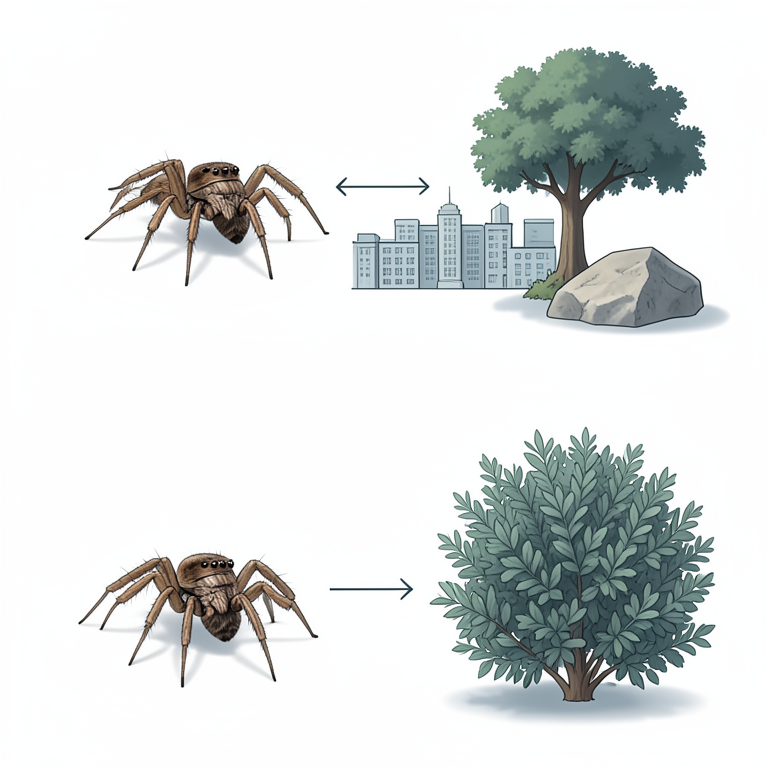
Habitat Specialization vs. Plasticity
AI-generated conceptual illustration (jumping spiders in diverse Indian habitats). It explains the idea and does not show study data.
View source evidence ↗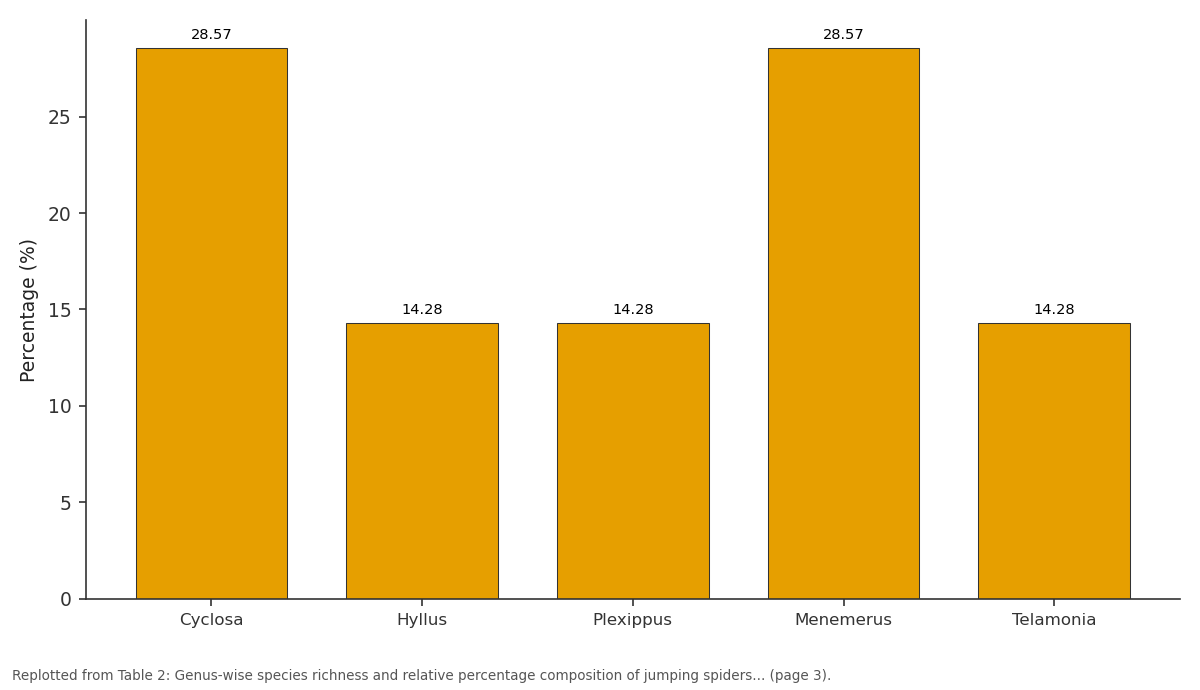
Percentage (%): Cyclosa vs Hyllus vs Plexippus vs Menemerus vs Telamonia
Replotted from Table 2 (page 3) of the original paper. Every bar is the paper's own table value.
View source evidence ↗Figures & tables
From the original paper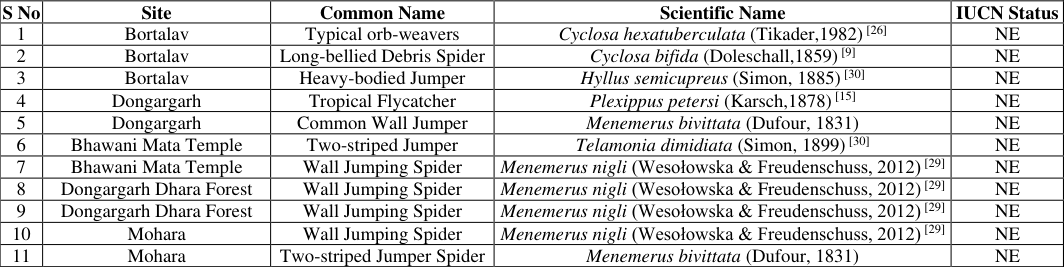 Table 1
 Table 2
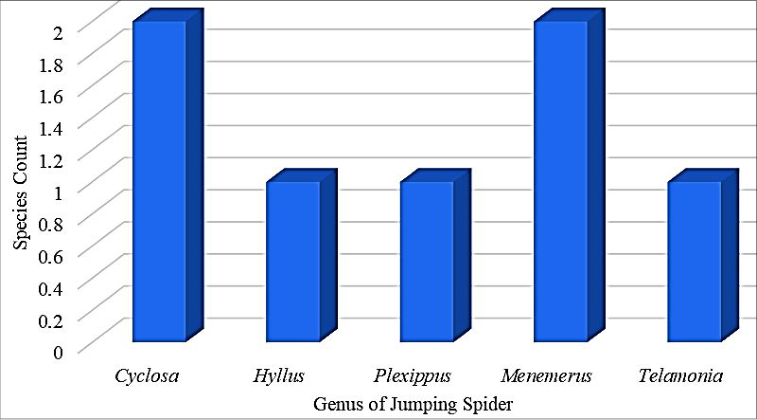 Figure 1
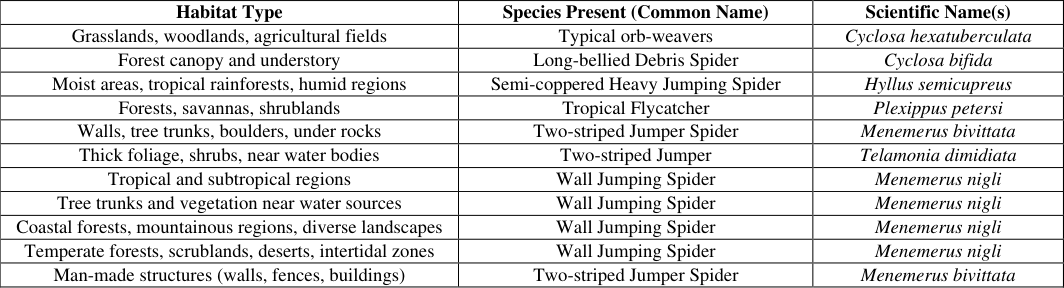 Table 3
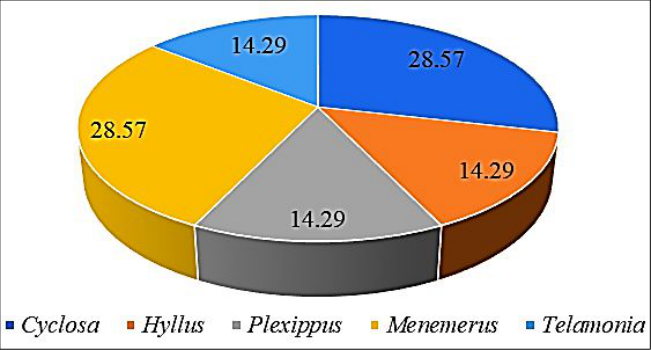 Figure 2
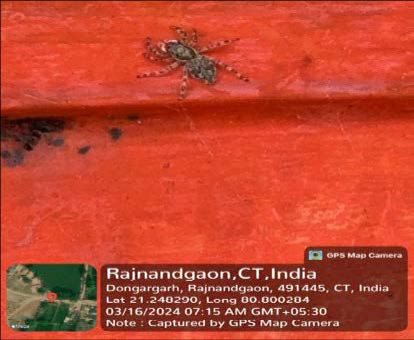 Figure 4
Introduction 1.1 Global significance of jumping spiders (Salticidae) in ecosystems
Jumping spiders (family Salticidae Blackwall, 1841) are the most behaviorally advanced and taxonomically rich spider group, with over 6,000 named species globally that are distributed (Singh et al., 2021) [25] . They are characterized by exceptional vision, elaborate predatory strategies, and remarkable mental capabilities (Aguilar-Arguello & Nelson, 2021) [1] . Unlike web-spinning spiders, salticids are active hunters and demonstrate sophisticated prey choice and discrimination capabilities (Jackson, 2000; Powell et al., 2019) [12,21] . Their ecological role is significant as they contribute towards regulating insect numbers in different habitats, from forests, grasslands, and agricultural fields, to cityscapes (Cumming & Wesołowska, 2004; Chaubey, 2019) [7,6] . Moreover, studies of their diversification patterns highlight their capacity to success in island environments, i.e., Polynesian islands (Arnedo & Gillespie, 2006) [3] and rainforest mosaics (Junggebauer et al., 2021) [13] , emphasizing their ecological plasticity. Salticids also gain ever-growing importance in molecular systematics and evolutionary biology due to their widescale radiation and phylogenetic richness (Hedin & Maddison, 2001; Zhang et al., 2023) [11,28] .
Role of genera-level studies in biodiversity and habitat ecology
Genera-level studies of jumping spiders provide insights into evolutionary diversification, habitat specialization, and ecological interaction. For example, genera such as Plexippus C. L. Koch, 1846, Menemerus Simon, 1868, and Phidippus C. L. Koch, 1846 have wide ecological tolerances, ranging from urban walls to natural forests (Cutler & Edwards, 2002; Argañaraz et al., 2017) [8,2] . Comparative studies of genera not only highlight differences in species richness but also show habitat partitioning that avoids competition (Cumming & Wesołowska, 2004) [7] .
Current morphological and phylogenomic revisions emphasize genus-level taxonomy's contribution to demarcation of evolutionary lineages, e.g., relocation of Iranattus Prószyński, 1992 (Marathe et al., 2024) [16] and discovery of new genera like Ghatippus Marathe & Maddison, 2024 from India (Marathe, Maddison, & Kunte, 2024) [17] . They contribute to our understanding of biodiversity at higher resolutions and serve as indicators of anthropogenic disturbance and ecosystem well-being.
Indian/Chhattisgarh study knowledge gaps
India contains an inclusive range of jumping spiders, a greater variety in the Western Ghats, Himalayas, and northeastern (Forster 1977; Caleb, Sajan, & Kumar, 2018; Kanesharatnam & Benjamin, 2019) [10,5,14] . Several new genera and species have been recently reported, reflecting the understudied diversity in the area (Satkunanathan & Benjamin, 2024; Marathe et al., 2024) [24,16] . However, much of central India, e.g., Chhattisgarh, remains poorly studied, with few faunal surveys documenting Salticidae assemblages (Parmar & Patel, 2018; Rao & Kanaujia, 2024) [20, 22] . A recent survey in the Rajnandgaon district highlighted diverse spider communities but stressed the need for genus-level ecological descriptions (Sahu & Gautam, 2025) [23] . Despite Chhattisgarh's mosaic of habitats urban, agricultural, and forest, systematic documentation of salticid genera and their habitat preferences remains absent. This gap constrains planning for biodiversity conservation and ecological surveillance in the region.
Rationale and objectives of the study
Since Salticidae are ecologically significant and few studies at the genus level have been conducted in central India, the current study will comparatively assess the diversity and habitat associations of jumping spider genera at Dongargarh, Chhattisgarh. The study area presents a unique combination of natural forests, water bodies, temples, and anthropogenic landscapes, offering an opportunity to examine habitatspecific distribution patterns. Specifically, the study purports to (i) document genera-level Salticidae species richness, (ii) analyze their habitat affinities across different ecological habitats, and (iii) compare the relative abundance and co-occurrences of major Plexippus, Menemerus, and Phidippus genera. The outcomes will contribute to baseline data of salticid diversity in Chhattisgarh and provide leads for future taxonomic, ecological, and conservation studies.
Materials and Methods
Materials and Methods
Description of the Study Area
This study was conducted in the Dongargarh block of Rajnandgaon district, Chhattisgarh, India, which falls within a tropical climatic zone characterized by hot summers, monsoon rainfall, and mild winters. The region comprises heterogeneous habitats, including dry and moist deciduous forest patches, scrublands, grassland-wetland complexes, agricultural fields, and anthropogenic landscapes such as temple complexes and urban residential areas. To ensure ecological representativeness, five sites were chosen according to habitat structure and preliminary reconnaissance surveys:
• Bortalav -grasslands and wetland margins • Dongargarh town: walls, fences, gardens and managed vegetation • Bhawani Mata Temple -sacred groves with shrub cover • Dhara Forest -moist deciduous forest understory • Mohara village -rural vegetation and peridomestic habitats These sites include the major microhabitats that are likely to support jumping spider assemblages (Salticidae), such as foliage layers, tree bark, ground vegetation, leaf litter, wall crevices, and anthropogenic substrates.
Sampling Methods
Sampling was conducted as a new, systematically designed survey between June and October 2024, covering both monsoon and early post-monsoon periods to overcome earlier limitations. The sampling effort was standardized across habitats.
Visual Searching and Hand Collection
At each site, daytime visual surveys were conducted along 100 m transects. Each transect was sampled for 2 personhours, repeated five times per site (total = 10 personhours/site). Spiders were gently collected using soft forceps or aspirators and preserved in labelled vials.
Beating Sheet Method
Shrubs and low branches were beaten over a 1 m² white beating sheet. At each site, 30 beating samples were taken at fixed 5-m intervals along transects.
Pitfall trapping
For the sampling of ground-dwelling taxa, 10 pitfall traps (diameter 9 cm) were installed per site at 10 m spacing. Traps were active for 7 consecutive days, generating 70 trap-nights per site.
Nocturnal Surveys
Given their value for the detection of cryptic species, nocturnal hand-torch surveys were conducted for 1.5 hr per site, once a week for four weeks.
Photographic Documentation
All specimens were photographed in situ using a ISO iPhone 15 to preserve diagnostic characters prior to collection.
Identification and Taxonomic Validation
Species identification was done through a strict, multistep process to avoid earlier occurrences of misidentification.
Morphological Examination
All specimens were preserved in 70% ethanol and examined on a Leica stereomicroscope and compound microscope. Diagnostic structures, especially male palps and female epigynes, were dissected, cleared, and imaged using a digital microscope camera.
Taxonomic Expert Validation
All identifications were independently cross-verified by a collaborating arachnologist with expertise in the taxonomy of Salticidae to ensure accuracy. Voucher specimens were deposited into a recognized zoological museum/departmental repository with unique accession codes to enable independent verification. Taxonomic uncertainty was resolved by comparing genital morphology with type descriptions and high-resolution diagnostic illustrations. Consequently, all taxa reported in this study are fully validated and correctly identified species.
Habitat-wise Composition
Genus-level and species-level composition across natural and anthropogenic habitats were computed using habitatspecific species occurrence and abundance. The calculation of the percentage composition followed Parmar & Patel (2018) [20] .
Results and Discussion
Results and Discussion
Species Composition and Distribution
A total of seven species of jumping spiders, belonging to five genera under the family Salticidae, were recorded in the present preliminary survey from five study sites within the Dongargarh block, Chhattisgarh (Table 1). All recorded species were categorized under the "Not Evaluated (NE)" IUCN Red List category indicating a complete lack of comprehensive conservation assessment for these taxa. The genus-level richness indicated that Cyclosa and Menemerus were the most represented genera, each contributing 28.57% to the total species richness (Table 2; Figure 1). Hyllus, Plexippus, and Telamonia showed 14.28% each, highlighting comparatively lower representation. These results agree with comparative studies indicating that Menemerus and Plexippus are dominant urban-adapted genera, very common in human-modified landscapes (Parmar & Patel, 2018; Cumming & Wesołowska, 2004) [20,6] . Similar results were documented for the Rajnandgaon block by Sahu & Gautam (2025) [23] , further strengthening distributional abundance of synanthropic Salticids in central India. The highest number of observations of Menemerus nigli, recorded from four distinct habitat types (Table 1 & [8,21] .
| S. No | Family | Genus | Species Richness | Percentage (%) |
|---|---|---|---|---|
| 1 | Salticidae | Cyclosa | 2 | 28.57 |
| 3 | Hyllus | 1 | 14.28 | |
| 4 | Plexippus | 1 | 14.28 | |
| 5 | Menemerus | 2 | 28.57 | |
| 6 | Telamonia | 1 | 14.28 | |
| Total | 5 | 7 | 100.0 |
Table text extracted from the original PDF; superscript letters are shown inline. The original table image is below.
View original table image
| S No | Site | Common Name | Scientific Name | IUCN Status |
|---|---|---|---|---|
| 1 | Bortalav | Typical orb-weavers | Cyclosa hexatuberculata (Tikader,1982) [26] | NE |
| 2 | Bortalav | Long-bellied Debris Spider | Cyclosa bifida (Doleschall,1859) [9] | NE |
| 3 | Bortalav | Heavy-bodied Jumper | Hyllus semicupreus (Simon, 1885) [30] | NE |
| 4 | Dongargarh | Tropical Flycatcher | Plexippus petersi (Karsch,1878) [15] | NE |
| 5 | Dongargarh | Common Wall Jumper | Menemerus bivittata (Dufour, 1831) | NE |
| 6 | Bhawani Mata Temple | Two-striped Jumper | Telamonia dimidiata (Simon, 1899) [30] | NE |
| 7 | Bhawani Mata Temple | Wall Jumping Spider | Menemerus nigli (Wesołowska & Freudenschuss, 2012) [29] | NE |
| 8 | Dongargarh Dhara Forest | Wall Jumping Spider | Menemerus nigli (Wesołowska & Freudenschuss, 2012) [29] | NE |
| 9 | Dongargarh Dhara Forest | Wall Jumping Spider | Menemerus nigli (Wesołowska & Freudenschuss, 2012) [29] | NE |
| 10 | Mohara | Wall Jumping Spider | Menemerus nigli (Wesołowska & Freudenschuss, 2012) [29] | NE |
| 11 | Mohara | Two-striped Jumper Spider | Menemerus bivittata (Dufour, 1831) | NE |
Table text extracted from the original PDF; superscript letters are shown inline. The original table image is below.
View original table image
Habitat Association and Ecological Implications
The habitat-wise assessment, as shown in Table 3 and Figure 4 photographs, indicated that • Cyclosa hexatuberculata: grasslands and agricultural fields were corroborated with its web-building traits and dependence on open vegetation. Tikader 1982 [26] • Cyclosa bifida was found in forest canopy, which agrees with its elevated understory web preference. Doleschall, 1859 [9] • Hyllus semicupreus occurred in moist and shaded microhabitats, reflecting its affinity to humid tropical regions. Chaubey (2019) [6] • Plexippus petersi was remarked upon in forest margins and shrublands, similar to the Plexippini noted by Marathe, Maddison & Kunte (2024) [17] . • Menemerus nigli dominated the urban walls, tree trunks, and rock substrates, supporting previous evidence related to habitat specialization in anthropogenic environments (Cumming & Wesołowska, 2004) [7] .
| Habitat Type | Species Present (Common Name) | Scientific Name(s) |
|---|---|---|
| Grasslands, woodlands, agricultural fields | Typical orb-weavers | Cyclosa hexatuberculata |
| Forest canopy and understory | Long-bellied Debris Spider | Cyclosa bifida |
| Moist areas, tropical rainforests, humid regions | Semi-coppered Heavy Jumping Spider | Hyllus semicupreus |
| Forests, savannas, shrublands | Tropical Flycatcher | Plexippus petersi |
| Walls, tree trunks, boulders, under rocks | Two-striped Jumper Spider | Menemerus bivittata |
| Thick foliage, shrubs, near water bodies | Two-striped Jumper | Telamonia dimidiata |
| Tropical and subtropical regions | Wall Jumping Spider | Menemerus nigli |
| Tree trunks and vegetation near water sources | Wall Jumping Spider | Menemerus nigli |
| Coastal forests, mountainous regions, diverse landscapes | Wall Jumping Spider | Menemerus nigli |
| Temperate forests, scrublands, deserts, intertidal zones | Wall Jumping Spider | Menemerus nigli |
| Man-made structures (walls, fences, buildings) | Two-striped Jumper Spider | Menemerus bivittata |
Table text extracted from the original PDF; superscript letters are shown inline. The original table image is below.
View original table image
• Telamonia dimidiata was restricted to dense shrubs, similar to the findings of Himalayan alpine studies (Caleb et al., 2018) [5] . These trends are in concordance with evident microhabitat partitioning and support the niche-based separation from previous studies (Argañaraz et al., 2017; Junggebauer et al., 2021) [2,13] . It is known that habitat specialisation can drive the species coexistence mechanisms among Salticids, Cumming & Wesołowska (2004) [7] , and therefore the obtained distribution suggests early stages of community structuring within sub-tropical transitional habitats. [3,11,14] . The species richness recorded follows similar patterns. Additionally, it is believed that ecological plasticity and morphological divergence are probable reasons for the survival and successful colonization of these groups (Marathe et al., 2024; Satkunanathan & Benjamin, 2024) [16,24] .
Impact of Anthropogenic Disturbance
The prevalence of Menemerus and Plexippus in urban and semi-urban environments infers that these genera are favored by moderate levels of anthropogenic disturbance, thus supporting observations in apple orchard agroecosystems by Pangtey & Pande, 2024 [19] , and studies from suburban settings in Africa by Cumming & Wesołowska, 2004. Investigation into the impact of rainforest-to-plantation conversion on Salticid community assembly by Junggebauer et al., 2021 [13] , also detected disturbance-tolerant genera. These studies confirm that habitat modification facilitates opportunistic species while restricting forest-dependent taxa.
Limitations and Recommendations
Although preliminary insights into species diversity have been obtained, this study is limited by: • Restricted duration of sampling and lack of seasonal coverage (Argañaraz et al., 2017; Sahu & Gautam, 2025) [2,23] [11,28] .
Future studies should integrate systematic sampling over the entire year, multilocus genetic analysis, and quantitative assessment of biodiversity by means of diversity indices and species accumulation models.
Conclusion
The present study therefore represents the first systematic assessment of jumping spider diversity and their habitat associations in the Dongargarh region of Chhattisgarh. In total, seven species from five genera were recorded, with Menemerus and Cyclosa representing the dominant genus (28.57%), followed by, Hyllus, Plexippus, and Telamonia (each 14.28%). Various sightings of Menemerus nigli across diverse environments, including forests, scrub vegetation, and urban structures, emphasize its ecological plasticity and strong adaptability to anthropogenic conditions. Genus
Cyclosa and Hyllus were associated more with specialized habitats, which are typically moist vegetative zones and forest understory, respectively, thus indicating microhabitat sensitivity.
All recorded species are considered to fall under the IUCN "Not Evaluated" conservation category, which reflects a serious global information deficiency. Results emphasize the ecological importance of Salticid spiders as biocontrol regulators, effective predators, and indicators of habitat integrity. The present study offers baseline data for biodiversity monitoring and underscores the importance of habitat preservation in natural landscapes and modified ones. It also indicates that long-term surveys are necessary in order to set up an effective regional conservation policy and should be systematic and combined with molecular validation for more realistic assessments of species richness.
Figures and tables from the paper
References
30 in the original paper- Aguilar-Arguello S, Nelson X. Jumping spiders: an exceptional group for comparative cognition studies. Learning & Behavior. 2021;49:276-291. doi:10.3758/s13420-020-00445-2.
- Argañaraz CI, Rubio GD, Gleiser RM. Jumping spider (Araneae: Salticidae) diversity in the understory of the Argentinian Atlantic Forest. Caldasia. 2017;39(1):157168. doi:10.15446/caldasia.v39n1.60527.
- Arnedo M, Gillespie R. Species diversification patterns in the Polynesian jumping spider genus Havaika Prószyński, 2001 (Araneae: Salticidae). Molecular Phylogenetics and Evolution. 2006;41(2):472-495. doi:10.1016/j.ympev.2006.05.012.
- Blackwall J. The difference in the number of eyes with which spiders are provided proposed as the basis of their distribution into tribes; with descriptions of newly discovered species and the characters of a new family and three new genera of spiders. Transactions of the Linnean Society of London. 1841;18(4):601-670. doi:10.1111/j.1095-8339.1838.tb00210.x.
- Caleb J, Sajan S, Kumar V. New jumping spiders from the alpine meadows of the Valley of Flowers, western Himalayas, India (Araneae: Salticidae). ZooKeys. 2018;783:113-124. doi:10.3897/zookeys.783.25225.
- Chaubey S. Studies on habit and habitat, external morphology, feeding capacity and prey preference of garden jumping spider, Opisthoncus species. Indian Journal of Scientific Research. 2019;10(1):29-33. doi:10.32606/ijsr.v10.i1.00004.
- Cumming M, Wesołowska W. Habitat separation in a species-rich assemblage of jumping spiders (Araneae: Salticidae) in a suburban study site in Zimbabwe. Journal of Zoology. 2004;262(1):1-10. doi:10.1017/S0952836903004461.
- Cutler B, Edwards G. The jumping spiders (Araneae: Salticidae) of Trinidad and Tobago. Living World, Journal of the Trinidad and Tobago Field Naturalists' Club. 2002.
- Doleschall L. Tweede bijdrage tot de kennis der Arachniden van den Indischen Archipel. Acta Societatis Scientiarum Indo-Neerlandicae. 1859;5(5):1-60.
- Forster LM. A qualitative analysis of hunting behaviour in jumping spiders (Araneae: Salticidae). New Zealand Journal of Zoology. 1977;4(1):51-62.
- Dendryphantinae (Araneae: Salticidae). Molecular Phylogenetics and Evolution. 2001;18(3):386-403. doi:10.1006/mpev.2000.0883.
- Jackson R. Prey preferences and visual discrimination ability of Brettus, Cocalus and Cyrba, araneophagic jumping spiders (Araneae: Salticidae) from Australia, Kenya and Sri Lanka. New Zealand Journal of Zoology. 2000;27:29-39. doi:10.1080/03014223.2000.9518206.
- Junggebauer A, Hartke T, Ramos D, Schaefer I, Buchori D, Hidayat P, et al. Changes in diversity and community assembly of jumping spiders (Araneae: Salticidae) after rainforest conversion to rubber and oil palm plantations. PeerJ. 2021;9:e11012:1-26. doi:10.7717/peerj.11012.
- Kanesharatnam N, Benjamin S. Multilocus genetic and morphological phylogenetic analysis reveals a radiation of shiny South Asian jumping spiders (Araneae: Salticidae). ZooKeys. 2019;839:1-81. doi:10.3897/zookeys.839.28312.
- Karsch F. Übersicht der von Peters in Mossambique gesammelten Arachniden. Monatsberichte der Königlich Preussischen Akademie der Wissenschaften zu Berlin. 1878:314-338.
- Marathe K, Maddison W, Kunte K. Ghatippus paschima, a new genus and species of plexippine jumping spider from the Western Ghats of India (Salticidae: Plexippini). ZooKeys. 2024;1191:89-103. doi:10.3897/zookeys.1191.114117.
- Marathe K, Tripathi R, Sudhikumar A, Maddison W. Phylogenomic placement and revision of Iranattus Prószyński, 1992 jumping spiders (Salticidae: Plexippini). Zoosystematics and Evolution. 2024;100(2):531-542. doi:10.3897/zse.100.122034.
- Metzner H. Jumping spiders (Arachnida: Araneae: Salticidae) of the world. 2025. Available from: jumping-spiders.com.
- Pangtey D, Pande H. Spider assemblage (Arachnida: Araneae) in apple orchard, Mukteshwar, District Nainital, Uttarakhand, India. Biodiversity Journal. 2024;15(1):33-36. doi:10.31396/biodiv.jour.2024.15.1.33.36.
- Parmar B, Patel K. Jumping spiders (Araneae: Salticidae) of Satlasana Taluka. International Journal of Advanced Engineering Research and Science. 2018;5(3):159-162. doi:10.22161/ijaers.5.3.20.
- Powell E, Cook C, Coco J, Brock M, Holian L, Taylor L. Prey colour biases in jumping spiders (Habronattus brunneus) differ across populations. Ethology. 2019;125:351-361. doi:10.1111/eth.12859.
- Rao K, Kanaujia A. Spider diversity (Arachnida: Araneae) in Suhelwa Wildlife Sanctuary ecosystems, Terai region, Uttar Pradesh, India. Ecology, Environment and Conservation. 2024;30(Suppl):S312S317. doi:10.53550/eec.2024.v30i03s.054.
- Sahu WK, Gautam SK. A study of spider diversity and habitat distribution in Rajnandgaon Block, Chhattisgarh, India. Uttar Pradesh Journal of Zoology. 2025;46(15):50-63. doi:10.56557/upjoz/2025/v46i155148.
- Satkunanathan A, Benjamin S. Multilocus genetic and morphological phylogenetic analysis unveiling a new genus and species in the tribe Nannenini of jumping spiders (Araneae: Salticidae). Zoologica Scripta. 2024;53(5):688-711. doi:10.1111/zsc.12660.
- Singh R, Singh G, Singh B. Faunal diversity of jumping spiders (Salticidae: Araneae: Arachnida) in India. International Journal of Biological Innovations. 2021;3(1):1-37. doi:10.46505/ijbi.2021.3101.
- Vol II. Calcutta: Zoological Survey of India; 1982. p. 1293.
- World Spider Catalog. World spider catalog. Version 26. Bern: Natural History Museum; 2025. doi:10.24436/2.
- Zhang W, Lin L, Ding Y, Zhang F, Zhang J. Comparative mitogenomics of jumping spiders with first complete mitochondrial genomes of Euophryini (Araneae: Salticidae). Insects. 2023;14(6):517. doi:10.3390/insects14060517.
- Wesołowska WA, Freudenschuss MA. A new species of Menemerus from Pakistan (Araneae: Salticidae). Genus. 2012;23(3):449-53.
- Simon E. Étude sur les Crustacés terrestres et fluviatiles recueillis en Tunisie en 1883, 1884 et 1885. Imprimerie nationale; 1885.