
Research article · 2025 · Full text
International Journal of Horticulture and Food ScienceEffect of organic manures and bio-fertilizer on growth and yield performance of okra (Abelmoschus esculentus L. Moench) CV. Kashi Lalima
Volume 7(12) · Pages 54–56 · DOI: 10.33545/26631067.2025.v7.i12a.439 ↗
Research areasAgricultural Practices and Plant GeneticsHumic Substances and Bio-Organic StudiesAgricultural Science and Fertilization
Abstract
Author-writtenThe present study was conducted at Horticulture Research Farm, Department of Horticulture Chaudhary Charan Singh University Campus, Meerut, during summer season of 2022 to investigate the effect of organic manures and bio-fertilizer on growth and yield performance of okra. The study performed in randomized block design and replicated three times. The treatments involved in the study were nine in number i.e. T1 (control), T2 (FYM @ 20 t/ha), T3 (FYM @ 20 t/ha + Azotobacter), T4 (FYM @ 20 t/ha + Azospirillum), T5 (Vermicompost @ 4 t/ha), T6 (Vermicompost @ 4 t/ha + Azotobacter), T7 (Vermicompost @ 4 t/ha + Azospirillum), T8 (FYM @ 10 t/ha + Vermicompost @ 2 t/ha + Azotobacter), and T9 (FYM @ 10 t/ha + Vermicompost @ 2 t/ha + Azospirillum). All treatments were randomly distributed among the plots. All variable parameters related to growth and yield attributes were significantly influenced by different treatments of organic manures and biofertilizers. Results revealed that among all the treatments, the soil application of FYM @ 10 t/ha + Vermicompost @ 2 t/ha + Azospirillum (T9) gave the better effect on vegetative and yield parameters viz. plant height (87.26 cm), number of branches per plant (3.33), number of leaves (20.00), leaf width (15.80 cm), days to 50% flowering (39.33), number of fruit per plant (14.46), fruit length (14.11cm), fruit diameter (10.26 mm), weight of fruit (12.60 g) and fruit yield (121.89 q/ha). While the treatment T1 (control) showed minimum values in term of growth and yield of okra.
Summary
Source-checkedPlain-language reading of the full paper, prepared with AI and checked against the text. Each point links to the authors' own words.
Why it matters
- Okra is a significant vegetable crop grown in tropical and sub-tropical regions globally. View evidence ↗
- The use of inorganic fertilizers in intensive agriculture can lead to nutrient imbalances and reduced crop yields. View evidence ↗
- Organic manures are beneficial as they improve soil microbial populations, water holding capacity, and phosphate availability. View evidence ↗
The question
- The study aimed to investigate how different organic manures and bio-fertilizers affect the growth and yield of okra. View evidence ↗
What they did
- The experiment was conducted during the summer of 2022 at the Horticulture Research Farm in Meerut, Uttar Pradesh. View evidence ↗
- The researchers used a randomized block design with three replications. View evidence ↗
- Nine treatments were tested, including a control, various doses of Farm Yard Manure (FYM) and Vermicompost, and combinations of these with bio-fertilizers Azotobacter and Azospirillum. View evidence ↗
What they found
- The highest plant height (87.26 cm) was achieved with the T9 treatment (FYM 10 t/ha + Vermicompost 2 t/ha + Azospirillum), compared to the control (58.60 cm). View evidence ↗
- T9 produced the most branches per plant (3.33), which was statistically similar to the T8 treatment (3.20). View evidence ↗
- The T9 treatment resulted in the highest number of leaves per plant (20.00), outperforming all other tested treatments. View evidence ↗
- T9 led to the earliest 50% flowering (39.33 days), which was statistically equivalent to the FYM 20 t/ha + Azotobacter treatment (39.3 days). View evidence ↗
- The T9 treatment produced the highest number of fruits per plant (14.46), significantly more than the control (7.80). View evidence ↗
- The longest fruits (14.11 cm) were found in T9, which was statistically similar to T8 (13.35 cm) and longer than the control (10.19 cm). View evidence ↗
- T9 resulted in the largest fruit diameter (10.26 mm), followed by T8 (9.60 mm). View evidence ↗
- The highest fruit weight (12.60 g) was observed in T9, compared to the lowest weight in the control (7.30 g). View evidence ↗
- The T9 treatment achieved the maximum fruit yield of 121.89 q/ha, outperforming T8 (117.68 q/ha) and the control. View evidence ↗
What it means
- The authors conclude that combining organic manures and bio-fertilizers, specifically the T9 combination, is a sustainable way to increase okra productivity in western Uttar Pradesh. View evidence ↗
Visual summary
3 visualsIllustrations explain the paper; charts are replotted from the paper's own table values.
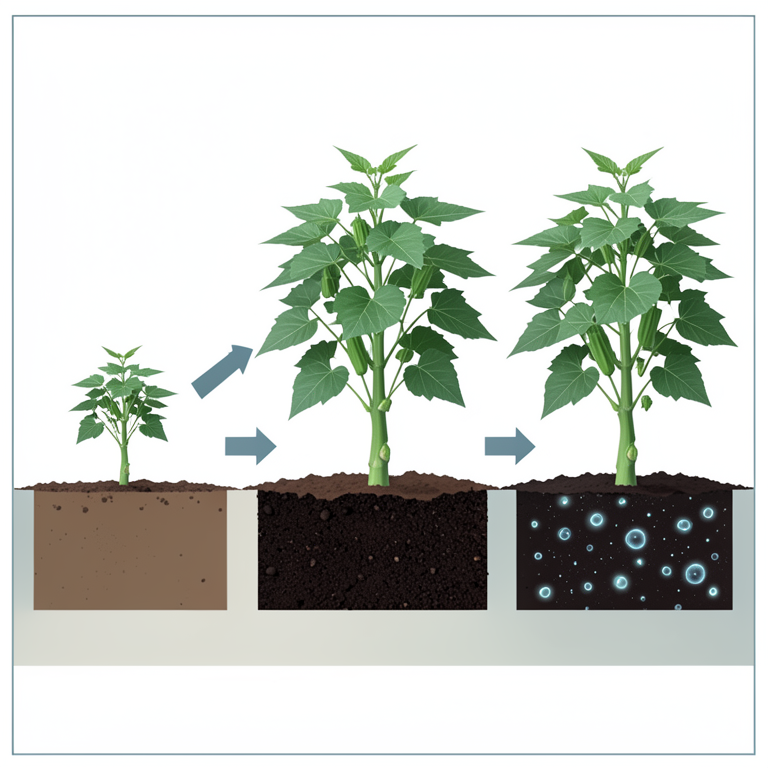
Treatment Comparison Concept
AI-generated conceptual illustration (okra plants (Abelmoschus esculentus)). It explains the idea and does not show study data.
View source evidence ↗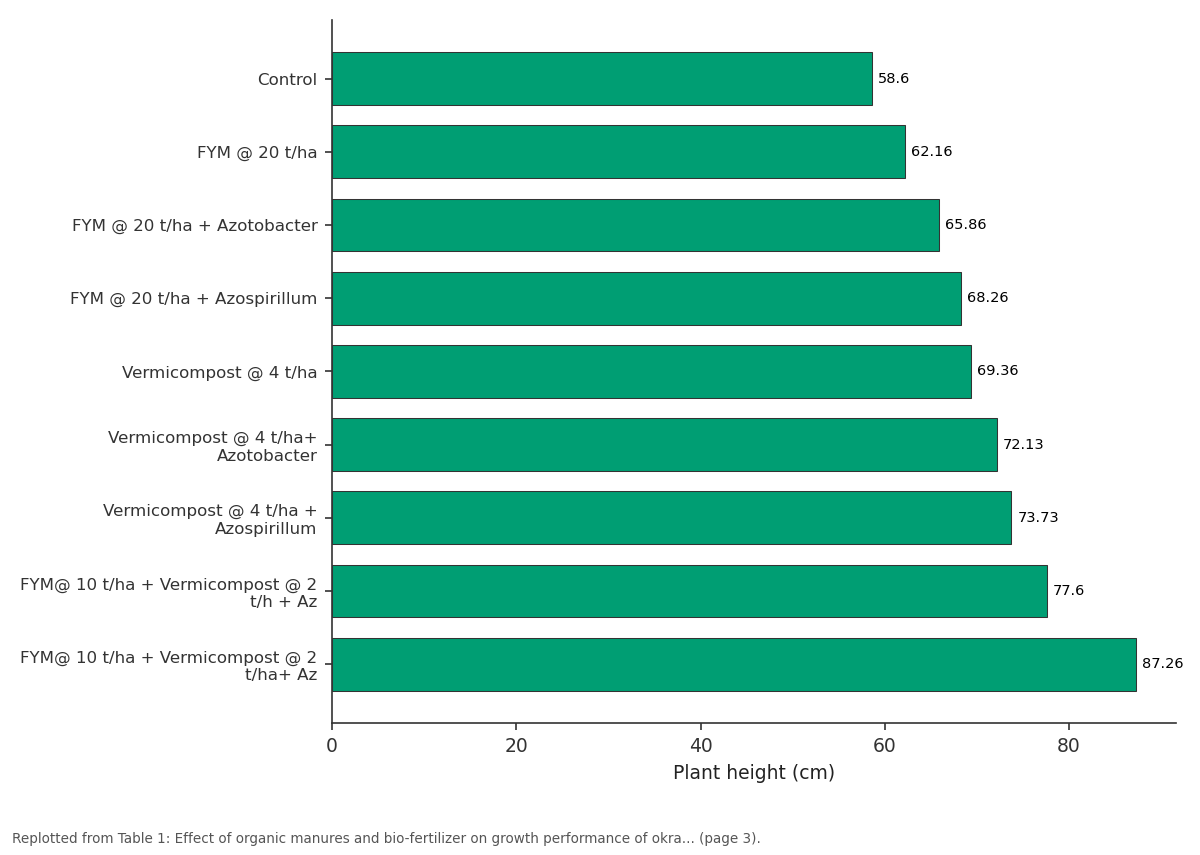
Plant height (cm): Control vs FYM @ 20 t/ha vs FYM @ 20 t/ha +... vs FYM @ 20 t/ha +... vs Vermicompost @ 4 t/ha
Replotted from Table 1 (page 3) of the original paper. Every bar is the paper's own table value.
View source evidence ↗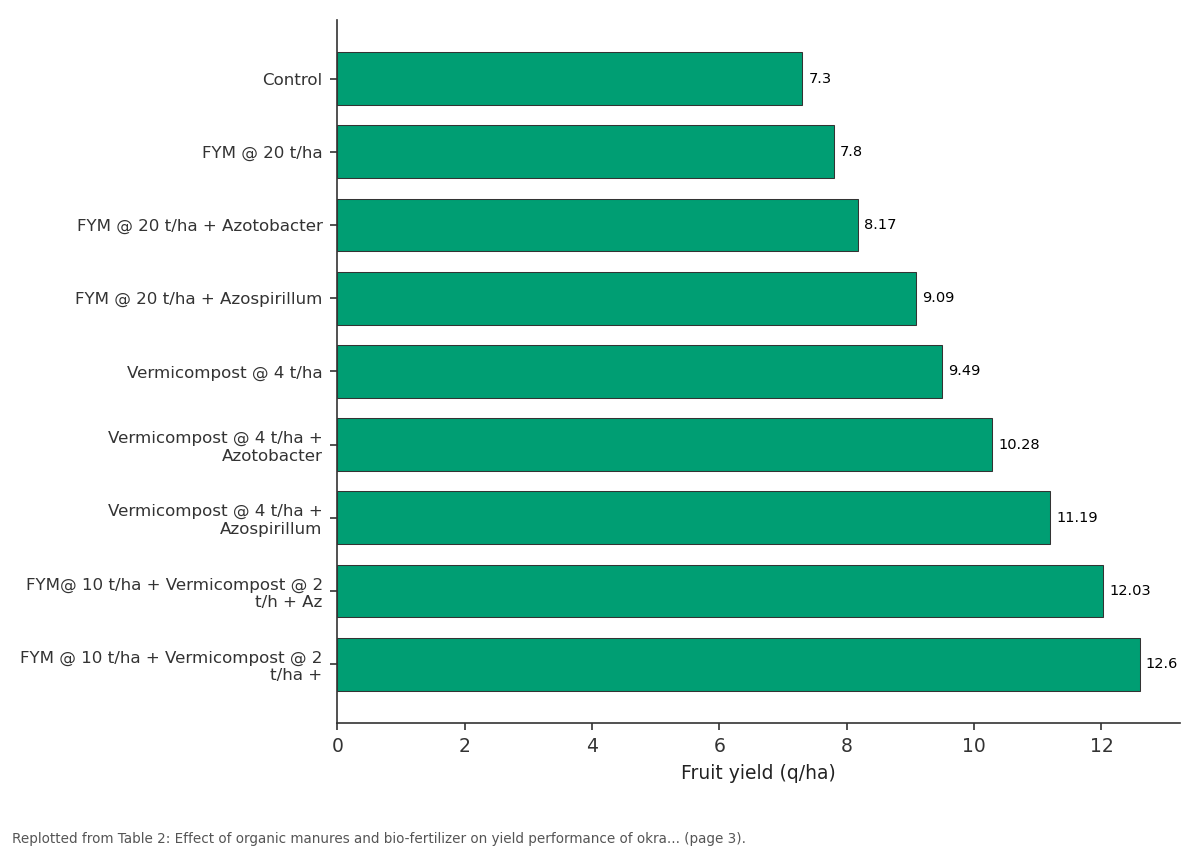
Fruit weight (g): Control vs FYM @ 20 t/ha vs FYM @ 20 t/ha +... vs FYM @ 20 t/ha +... vs Vermicompost @ 4 t/ha
Replotted from Table 2 (page 3) of the original paper. Every bar is the paper's own table value.
View source evidence ↗Figures & tables
From the original paper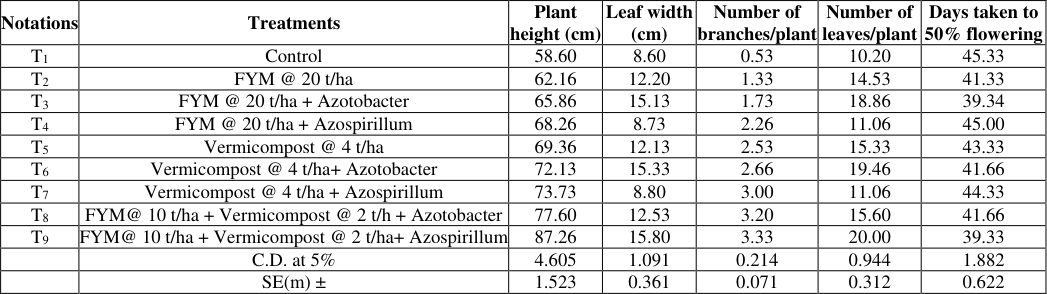 Table 1
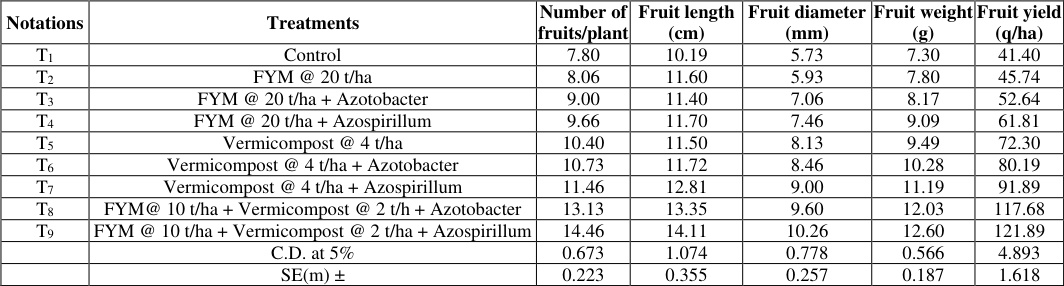 Table 2
Introduction
Okra or lady's finger is considered as an important vegetable of the tropical and sub-tropical regions of the world. It is popular in India, Pakistan, Cameroon, Iraq and Ghana. In India, okra is available throughout the year and its production can be tailored according to the demand. After onion, okra has the major share in revenue generation through export of vegetables. Andhra Pradesh, West Bengal, Bihar, Gujarat, Odisha, Jharkhand and Maharashtra are the leading okra producing states in India. Okra fruits contain good amount of fiber, vitamin C, and antioxidants. The edible fruit is valuable for very good supplement of vitamins and minerals in diets of people from the developing countries, where they depend on cereal crops. Kashi Lalima is an important cultivar of okra and it is released by IIVR, Varanasi in the year 2019. Kashi Lalima characterized by medium tall in height, short internodes and produce redish purple colour fruits. It is tolerant to yellow vein mosaic virus and rich in anthocyanin and phenolics. Okra production is seriously affected by the use of local varieties (low yielding), sub-optimal and inappropriate manure doses. In intensive agriculture production system, the use of inorganic fertilizer has not been helpful because it is often associated with reduced crop yield and nutrients imbalance (Kang and Juo, 1984) [5] . Furthermore, the chemical fertilizers are high in cost, less availability at right time, lack of technical skill and lack of access to credit. Organic manure increases water holding capacity and phosphate availability of the soil besides improving the fertilizers use efficiency and microbial population of soil. It reduces nitrogen losses due to slow release of nutrients. In recent years the use of vermicompost has also been advocated in organic farming system. Vermicompost is a mixture of worm casting, organic materials, humus, living earthworms, their cocoons and other organisms.
Vermicompost is a slow releasing, organic manure which have most of the macro as well as micro nutrients and supplement the nutrients requirement of plant for longer period. They also contain other growth promoting agents like enzymes and hormones. In the process of decomposition of organic manures, they give humus, which helps to improve the physical, chemical and biological properties of the soil. Bio-fertilizer is a formulation contains living microorganisms which enhance supply or availability of primary nutrients to the host plant to promote the growth and yield. Beneficial micro-organisms are ecofriendly and play an important role in plant growth, development and also help in sustainable agricultural development. Azotobacter and azospirillum are free-living micro-organism which having the potential to fixed atmospheric nitrogen in the soil. Beside fix atmospheric nitrogen, azotobacter also produce some plant hormones such as indole acetic acids, gibberellic acids, naphthalene acetic acid, and vitamin B complex. It inhibits the root pathogens while promoting root growth and improves soil health reported by Sumbul et al., 2020 [13] .
Materials and methods
The current study entitled Effect of organic manures and bio-fertilizer on growth and yield performance of okra (Abelmoschus esculentus L. Moench) cv. Kashi Lalima was carried out at Horticulture Research Farm, Chaudhary Charan Singh University Campus, Meerut, (U.P) during summer season of 2022. Meerut is situated at the 29.01° N latitude and 77.43° E longitude at an altitude 222 meter above the mean sea level. The soil of experiment field was rich in NPK with fair amount of organic carbon. Kashi Lalima variety of okra was selected for the present study. Kashi Lalima is the resistant against Yellow vein mosaic virus. A total number of nine treatments used for experiment i.e. T 1 (control), T 2 (FYM @ 20 t/ha), T 3 (FYM @ 20 t/ha + Azotobacter), T 4 (FYM @ 20 t/ha + Azospirillum), T 5 (Vermicompost @ 4 t/ha), T 6 (Vermicompost @ 4 t/ha + Azotobacter), T 7 (Vermicompost @ 4 t/ha + Azospirillum), T 8 (FYM @ 10 t/ha + Vermicompost @ 2 t/ha + Azotobacter), and T 9 (FYM @ 10 t/ha + Vermicompost @ 2 t/ha + Azospirillum). All treatments were randomly distributed among the plots and replicated three times. Farm yard manure (FYM) and vermicompost mixed in soil 15 and 7 days before sowing, respectively. Azotobacter and azospirillum were mixed either in farmyard manure or in vermicompost (as per the treatment) and applied into the soil at the rate of 5 kg/ha. The seeds were sown in the lines with a spacing of 45 × 30 cm. The seed was germinated in eight to ten days. All plant protection practices were used for healthy crop production. All observations recorded from randomly tagged plants in each plot. All recorded observations were statistically analyzed from the analysis of variance.
Results and discussion
The data presented in table-1 and table-2 clearly indicated that vegetative and reproductive parameters of okra were significantly influenced by soil application of organic manures and biofertilizers. Among all the treatments applied, maximum plant height (87.26 cm) was observed under FYM @ 10 t/ha + Vermicompost @ 2 t/ha + Azospirillum followed by treatment FYM @ 10 t/ha + Vermicompost @ 2 t/ha + Azotobacter (77.60 cm) and Vermicompost @ 4 t/ha + Azospirillum (73.73 cm), while the minimum plant height (58.60 cm) was obtained under T 1 (control). Similarly, maximum leaf width (15.80 cm) was recorded with FYM @ 10 t/ha + Vermicompost @ 2 t/ha + Azospirillum, while lowest value was obtained under T 1 (control). These findings are confirmed with the finding of Vikas et al. (2017) [16] in okra and Kumar et al. (2019) [7] in case of radish. Highest plant height and leaf length by the soil application of organic manures and azospirillum containing treatment (T 9 ) might be due to gladly availability and easy absorption of nutrients by the plant roots, that enhanced the morphological growth of the plant (Onwu et al., 2014) [10] . The number of branches per plant and number of leaves per plant were significantly influenced by soil application of organic manure and biofertilizers than the control. The maximum number of branches per plant (3.33) was observed in treatment FYM @ 10 t/ha + Vermicompost @ 2 t/ha + Azospirillum (T 9 ) which was found statistically at par with FYM @ 10 t/ha + Vermicompost @ 2 t/ha +Azotobacter (3.20) while lowest value was obtained under T 1 (control). Further, the maximum number of leaves per plant (20.00) was recorded in the FYM @ 10 t/ha + Vermicompost @ 2 t/ha + Azospirillum (T 9 ) which was found statistically superior over all other treatments. These findings are in the line with the findings of Bamboriya et al., 2022 [1] and Basfore et al., 2018. Bamboriya et al., 2022 [1] recorded maximum number of branches (2.80) with the application of vermicompost and Azospirillum + PSB. Kumar et al. (2018) [6] also recorded maximum number of leaves with the soil application of Vermicompost @ 2.5 tonnes/ha + Azotobacter @ 2.5 kg/ha in case of radish. Number of branches and leaf initiation depends on the periodic initiation of new meristems and cell division. The increase in number of branches and number of leaves per plant might be due to optimum supply of macro and micro nutrients and high level of auxins in the plant system. Minimum days taken to 50% flowering (39.33) was observed under the soil application of FYM @ 10 t/ha + Vermicompost @ 2 t/ha + Azospirilum (T 9 ) fwhich was found statistically at par with FYM @ 20 t/ha + Azotobacter (39.3). While maximum days taken to 50% flowering was obtained under T 1 (control). The better efficiency of organic manures is due to the fact that they might have provided both macro and micro nutrients at their optimal levels which ultimately enhanced the early growth phases and encouraged reproductive growth as well. Application of biofertilizers has ability to supply the plant promoting substances to the plants, which stimulated plant growth traits, absorption and metabolism (Lambert et al., 1979) [9] . Similar observations have also been made by Das et al. (2014) [3] . Similarly, maximum number of fruits per plant (14.46) was recorded under the treatment T 9 (FYM @ 10 t/ha + Vermicompost @ 2 t/ha + Azospirillum) which was found statistically higher over all other treatments, while lowest value (7.80) was obtained under T 1 (control). Number of fruits per plant directly related to the number of flower and fruit set per cent. The significant improvement in number of pod due to the soil application of FYM and vermicompost with azotobacter in the present study might be because of the fact that organic manures and bio-fertilizers increases the metabolic activity of plant though the supply of all essential nutrients, which resulted in enhancement of reproductive phase in plants.
The maximum pod length (14.11 cm) was observed under treatment T 9 (FYM @ 10 t/ha + Vermicompost @ 2 t/ha + Azospirilum) which was found statistically at par with the soil application of FYM @ 10 t/ha + Vermicompost @ 2 t/ha + Azotobacter (13.35 cm). While minimum fruit length was recorded under the control (10.19 cm). The fruit diameter as affected by various treatments varied from 5.73 mm (control) to 10.26 mm (FYM @ 10 t/ha + Vermicompost @ 2 t/ha + Azospirilum) during the year of experiment. The maximum fruit diameter (10.26 mm) was recorded in the treatment T 9 (FYM @ 10 t/ha + Vermicompost @ 2 t/ha + Azospirilum) followed by treatment T 8 (FYM @ 10 t/ha + Vermicompost @ 2 t/ha +Azotobacter) (9.60 mm). However, the effect of soil application of FYM @ 10 t/ha + Vermicompost @ 2 t/ha + Azospirilum and FYM @ 10 t/ha + Vermicompost @ 2 t/ha + Azotobacter on fruit diameter was statistically found at par. The application of different organic manures viz. vermicompost FYM and poultry manure are help improve N use efficiency through increased nutrient concentrations, soil organic matter content, water-holding capacity, bulk density, and soil temperature. This increase in nitrogen use efficiency promotes root and shoot growth resulting in an increase in crop yield. Significant impact of the soil application of inorganic fertilizers, organic manures and bio fertilizers on fruit weight and fruit yield were also observed during the study (table 2). It is evident from the data that fruit weight as affected by treatments varied from 7.30 g (control) to 12.60 g (FYM @ 10 t/ha + Vermicompost @ 2 t/ha + Azospirilum) during the study. The maximum fruit weight (12.60 g) was recorded in treatment T 9 (FYM @ 10 t/ha + Vermicompost @ 2 t/ha + Azospirilum) followed by treatment T 8 (FYM @ 10 t/ha + Vermicompost @ 2 t/ha +Azotobacter) (12.03 g), while minimum fruit weight (7.30 g) was recorded under the control treatment. Similarly, the maximum fruit yield (121.89 q/ha) was recorded under the soil application of FYM @ 10 t/ha + Vermicompost @ 2 t/ha + Azospirilum followed by FYM @ 10 t/ha + Vermicompost @ 2 t/ha + Azotobacter (117.68 q/ha), While the minimum yield was recorded under T 1 (control). Similar findings were also reported by Talageri et al. (2011) [14] , Prasad and Naik (2013) [12] , Tyagi et al. (2016) [15] and Vikas et al. (2017) [16] . Soil application of organic manures and bio-fertilizers enhance vegetative parameters and reproductive parameters and yield (Lalitha et al., 2000) [8] .
| Notations | Treatments | Number of fruits/plant | Fruit length (cm) | Fruit diameter (mm) | Fruit weight (g) | Fruit yield (q/ha) |
|---|---|---|---|---|---|---|
| T1 | Control | 7.80 | 10.19 | 5.73 | 7.30 | 41.40 |
| T2 | FYM @ 20 t/ha | 8.06 | 11.60 | 5.93 | 7.80 | 45.74 |
| T3 | FYM @ 20 t/ha + Azotobacter | 9.00 | 11.40 | 7.06 | 8.17 | 52.64 |
| T4 | FYM @ 20 t/ha + Azospirillum | 9.66 | 11.70 | 7.46 | 9.09 | 61.81 |
| T5 | Vermicompost @ 4 t/ha | 10.40 | 11.50 | 8.13 | 9.49 | 72.30 |
| T6 | Vermicompost @ 4 t/ha + Azotobacter | 10.73 | 11.72 | 8.46 | 10.28 | 80.19 |
| T7 | Vermicompost @ 4 t/ha + Azospirillum | 11.46 | 12.81 | 9.00 | 11.19 | 91.89 |
| T8 | FYM@ 10 t/ha + Vermicompost @ 2 t/h + Azotobacter | 13.13 | 13.35 | 9.60 | 12.03 | 117.68 |
| T9 | FYM @ 10 t/ha + Vermicompost @ 2 t/ha + Azospirillum | 14.46 | 14.11 | 10.26 | 12.60 | 121.89 |
| C.D. at 5% | 0.673 | 1.074 | 0.778 | 0.566 | 4.893 | |
| SE(m) ± | 0.223 | 0.355 | 0.257 | 0.187 | 1.618 |
Table text extracted from the original PDF; superscript letters are shown inline. The original table image is below.
View original table image
The increase in yield might be attributed to the fact that after proper decomposition and mineralization, the manures supply essential nutrients directly to the plants. Application of vermicompost helps in increasing the organic matter content of the soil, in maintaining soil natural productivity (Gupta et al., 2011) [4] . Yield increases are also accompanied by azospirillum which increased nitrogen concentration due to bacterial inoculation which may be attributed nitrogen assimilation by plants (Pacovsky et al., 1985) [11] .
Conclusions
The present investigation demonstrated that the combined application of organic manures and biofertilizers significantly enhanced the growth and yield performance of okra during the summer season of 2022 evaluated, the integrated use of FYM @ 10 t/ha + Vermicompost @ 2 t/ha + Azospirillum (T 9 ) proved to be the most effective, producing superior vegetative growth, early flowering, and maximum yield attributes. This treatment consistently outperformed all other combinations, while the control (T 1 ) recorded the lowest growth and yield values. Overall, the study confirms that integrating organic manures with suitable biofertilizers, particularly the T 9 combination, can serve as a sustainable and efficient approach to improve okra productivity under western Uttar Pradesh field conditions.
Figures and tables from the paper
| Notations | Treatments | Plant height (cm) | Leaf width (cm) | Number of branches/plant | Number of leaves/plant | Days taken to 50% flowering |
|---|---|---|---|---|---|---|
| T1 | Control | 58.60 | 8.60 | 0.53 | 10.20 | 45.33 |
| T2 | FYM @ 20 t/ha | 62.16 | 12.20 | 1.33 | 14.53 | 41.33 |
| T3 | FYM @ 20 t/ha + Azotobacter | 65.86 | 15.13 | 1.73 | 18.86 | 39.34 |
| T4 | FYM @ 20 t/ha + Azospirillum | 68.26 | 8.73 | 2.26 | 11.06 | 45.00 |
| T5 | Vermicompost @ 4 t/ha | 69.36 | 12.13 | 2.53 | 15.33 | 43.33 |
| T6 | Vermicompost @ 4 t/ha+ Azotobacter | 72.13 | 15.33 | 2.66 | 19.46 | 41.66 |
| T7 | Vermicompost @ 4 t/ha + Azospirillum | 73.73 | 8.80 | 3.00 | 11.06 | 44.33 |
| T8 | FYM@ 10 t/ha + Vermicompost @ 2 t/h + Azotobacter | 77.60 | 12.53 | 3.20 | 15.60 | 41.66 |
| T9 | FYM@ 10 t/ha + Vermicompost @ 2 t/ha+ Azospirillum | 87.26 | 15.80 | 3.33 | 20.00 | 39.33 |
| C.D. at 5% | 4.605 | 1.091 | 0.214 | 0.944 | 1.882 | |
| SE(m) ± | 1.523 | 0.361 | 0.071 | 0.312 | 0.622 |
Table text extracted from the original PDF; superscript letters are shown inline. The original table image is below.
View original table image
References
16 in the original paper- Bamboriya JS, Naga SR, Yadav S, Aechra S, Yadav PK. Effect of organic manures and biofertilizers on growth, yield attributing characters and yield of okra (Abelmoschus esculentus (L.) Moench). Pharma Innov J. 2022;11(2):1405-1407.
- Basfore S, Chatterjee R, Sikder S. Impact of combination of different organic manures, bio-fertilizer and organic mulches on growth and yield of okra. J Crop Weed. 2018;14(3):57-60.
- Das AK, Prasad B, Singh R. Response of chemical fertilizer and vermicompost on okra (Abelmoschus esculentus) cv. Prabhani Kranti. Asian J Hortic. 2014;9(2):372-376.
- Gupta AK, Ray B, Singh MP, Upadhyaya V, Singh CK. Effect of fertilizer and vermicompost on growth, yield and biochemical changes in Abelmoschus esculentus. Plant Arch. 2011;11(1):285-287.
- Kang BT, Juo ASR. Management of low activity clay soils in tropical Africa for food crop production. In: Terry ER, Oduro KA, Caveness F, editors. Tropical Root crops: Research strategies for the 1980s. Ottawa (ON): IDRC; 1984. p. 129-133.
- Kumar S, Dev P, Kumar J, Kumar H. Impact of organic manures and biofertilizers on the performance of radish (Raphanus sativus L.). Hortflora Res Spectr. 2018;7(2):137-140.
- Kumar T, Kumar J, Dev P, Choudhary K, Kumar V. Impact of organic manures and bio-fertilizers on the performance of radish (Raphanus sativus L.) cv. Arka Nishant. Hortflora Res Spectr. 2019;8(3&4):77-81.
- Lalitha R, Fathima K, Ismail SA. The impact of biopesticide and antimicrobial fertilizers on productivity and growth of Abelmoschus esculentus. Vasundara Earth. 2000;1-2:4-9.
- Lambert DH, Baker DE, Cole H. The role of mycorrhizae in interactions of phosphorus with Zinc, Copper and other elements. Soil Soc Am J. 1979;43:976-980.
- Onwu AC, Abubakar JR, Unah PO. Effect of poultry manure on growth, yield of okra and soil properties in Makurdi, North Central Nigeria. Int J Agric Food Sci. 2014;4:9-12.
- Pacovsky RS, Pawar EA, Bethlenfalvay GJ. Nutrition of sorghum plants fertilized with nitrogen or inoculated with Azospirillum. Plant Soil. 1985;85:145-148.
- Prasad PH, Naik A. Effect of varying NPK levels and bio-fertilizers on growth and yield of okra [Abelmoschus esculentus (L.) Moench] under sustainable condition. Trends Biosci. 2013;6(2):167169.
- Sumbul A, Ansari RA, Rizvi R, Mahmood I. Azotobacter: A potential bio-fertilizer for soil and plant health management. Saudi J Biol Sci. 2020;27(12):3634-3640. DOI:10.1016/j.sjbs.2020.08.004.
- Talageri AD, Narayana J, Shilpashree YP, Kulapati, Hipparagi. Comparative evaluation of organic manures and chemical fertilizers on okra (Abelmoschus esculentus). Plant Arch. 2011;11(1):571-573.
- Tyagi SK, Shukla A, Mittoliya VK, Sharma ML, Khire AR, Jain YK. Effect of Integrated Nutrient Management on Growth, Yield and Economics of Okra (Abelmoschus esculentus (L). Moench) Under Nimar Valley conditions of Madhya Pradesh. Int J Trop Agric. 2016;34(2):415-419.
- Vikas, Kumar J, Dev P. Effect of organic manures and bio-fertilizers on vegetative growth and yield parameters of okra (Abelmoschus esculentus L. Moench.) cv. Arka Anamika. Hortflora Res Spectr. 2017;6(3):209-211.