
Research article · 2025 · Full text
International Journal of Biology SciencesExploring the role of polyphenols in modulating mTOR pathway and cellular senescence in age-related diseases
Volume 7(5) · Pages 58–62 · DOI: 10.33545/26649926.2025.v7.i5a.528 ↗
Research areasSirtuins and Resveratrol in MedicineTelomeres, Telomerase, and SenescencePI3K/AKT/mTOR signaling in cancer
Abstract
Author-writtenAge-related diseases, including neurodegenerative disorders, cardiovascular diseases, and cancer, are major health concerns globally. Cellular senescence, characterized by irreversible cell cycle arrest, plays a central role in the aging process and the development of these diseases. The mechanistic target of rapamycin (mTOR) pathway, a key regulator of cellular growth and metabolism, has been implicated in both aging and the progression of age-related diseases. Emerging evidence suggests that polyphenols, plant-derived bioactive compounds, can modulate the mTOR pathway and influence cellular senescence. These compounds exhibit antioxidant, anti-inflammatory, and anti-cancer properties, which may help alleviate the detrimental effects of aging and prevent age-related diseases. This review explores the role of polyphenols in modulating the mTOR signaling pathway, with a particular focus on their effects on cellular senescence. We examine how polyphenols can influence the mTOR pathway at different levels, from activation to inhibition, and discuss their potential therapeutic implications in mitigating aging-related cellular dysfunction. Polyphenols such as resveratrol, quercetin, and curcumin have demonstrated mTOR modulation, with studies showing a reduction in cellular senescence markers and improved cellular function. Additionally, the potential for these compounds in clinical applications for age-related diseases is evaluated. The review highlights the need for further research to understand the molecular mechanisms underlying polyphenol action on mTOR and its link to cellular senescence. Ultimately, understanding these interactions could provide new avenues for the development of dietary interventions and pharmaceuticals aimed at promoting healthy aging and preventing age-related diseases.
Summary
Source-checkedPlain-language reading of the full paper, prepared with AI and checked against the text. Each point links to the authors' own words.
Why it matters
- Age-related diseases, such as cancer, cardiovascular diseases, and neurodegenerative disorders, represent significant global health challenges. View evidence ↗
- Cellular senescence, which involves irreversible cell cycle arrest, is a key driver of the aging process and the progression of age-related diseases. View evidence ↗
- The mTOR pathway regulates cellular metabolism and growth and is linked to both the aging process and age-related disease progression. View evidence ↗
The question
- The study aims to investigate how polyphenols modulate the mTOR pathway and evaluate their potential for treating age-related diseases. View evidence ↗
- The authors hypothesize that polyphenols can act as natural agents to promote healthy aging and reduce senescence by targeting the mTOR pathway. View evidence ↗
What they did
- The research focused on three specific polyphenols: resveratrol, quercetin, and curcumin. View evidence ↗
- The study used human endothelial cells (HUVECs) and human fibroblasts (HS27) cultured in DMEM with 10% FBS and 1% penicillin-streptomycin. View evidence ↗
- Cells were treated with polyphenols at concentrations of 10, 25, and 50 µM, using DMSO as a solvent. View evidence ↗
- Cellular senescence was measured by detecting the activity of senescence-associated β-galactosidase. View evidence ↗
What they found
- At high concentrations, all three polyphenols significantly reduced mTOR activity, with resveratrol being the most effective (reducing it to 40%), followed by quercetin (45%) and curcumin (48%). View evidence ↗
- High concentrations of polyphenols increased senescence marker expression, with the highest levels in resveratrol-treated cells (60%), followed by quercetin (55%) and curcumin (54%). View evidence ↗
- Low and medium concentrations of the polyphenols also caused a moderate, statistically significant reduction in mTOR activity (p < 0.05). View evidence ↗
- Resveratrol and quercetin showed a more notable decrease in senescence markers at high concentrations compared to curcumin. View evidence ↗
What it means
- The authors recommend incorporating polyphenols into dietary strategies to promote healthy aging. View evidence ↗
- Due to their low toxicity and natural origin, the authors suggest polyphenols for use in supplements to slow age-related disease progression. View evidence ↗
- The clinical effectiveness of polyphenols is currently limited by rapid metabolism and poor absorption, necessitating the optimization of delivery mechanisms. View evidence ↗
- The authors state that future research is required to investigate the long-term effects of polyphenol treatments. View evidence ↗
Visual summary
3 visualsIllustrations explain the paper; charts are replotted from the paper's own table values.
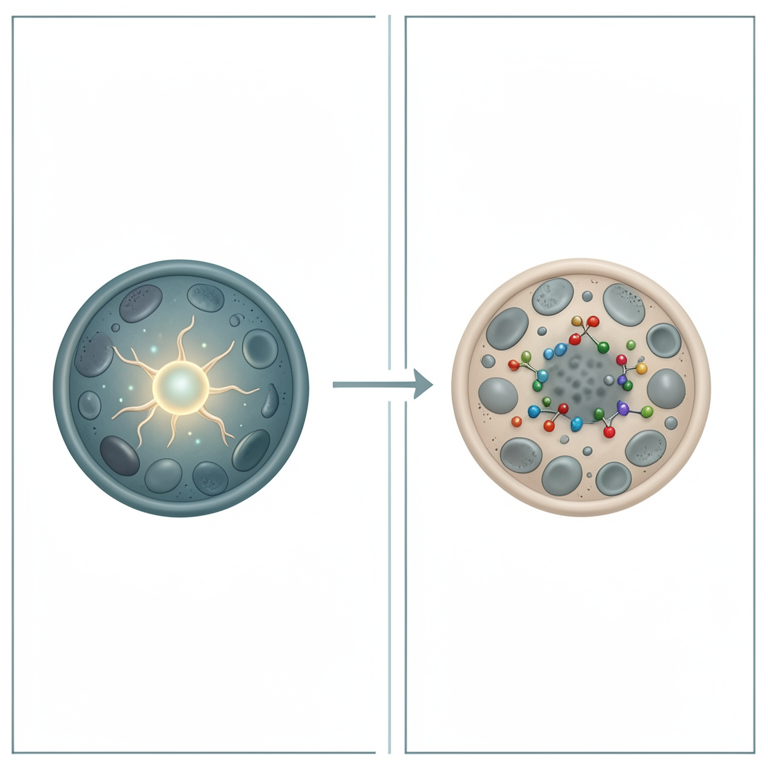
Polyphenol Modulation of mTOR
AI-generated conceptual illustration (human skin cells). It explains the idea and does not show study data.
View source evidence ↗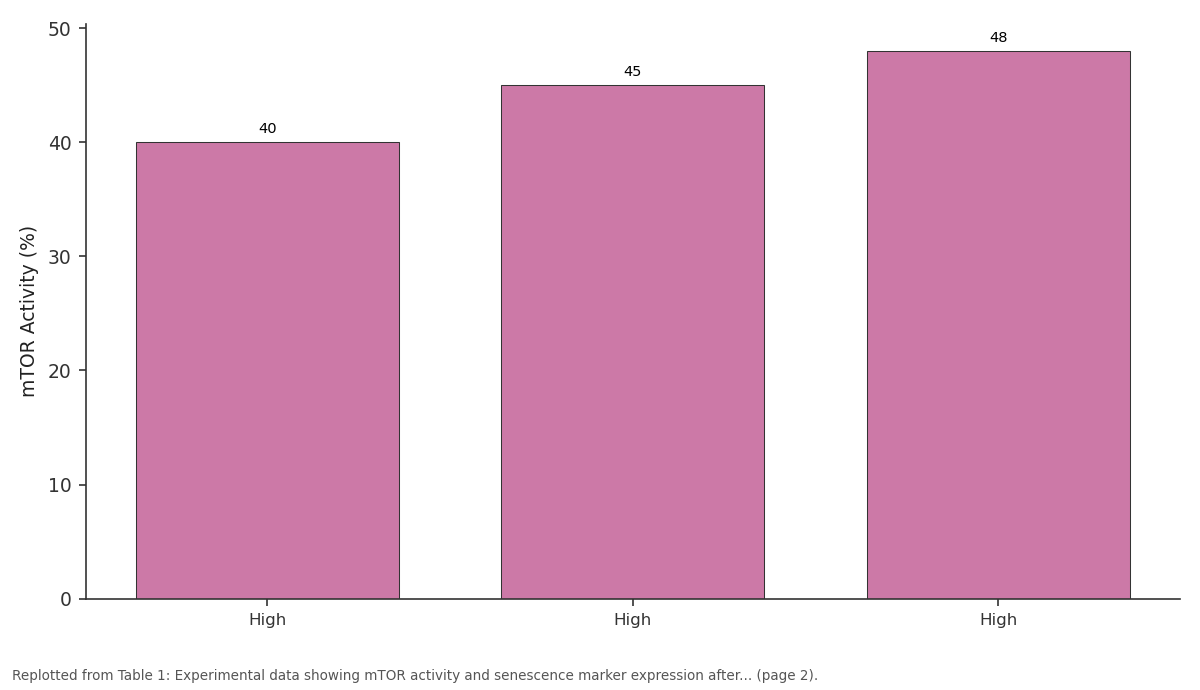
mTOR Activity (%): High vs High vs High
Replotted from Table 1 (page 2) of the original paper. Every bar is the paper's own table value.
View source evidence ↗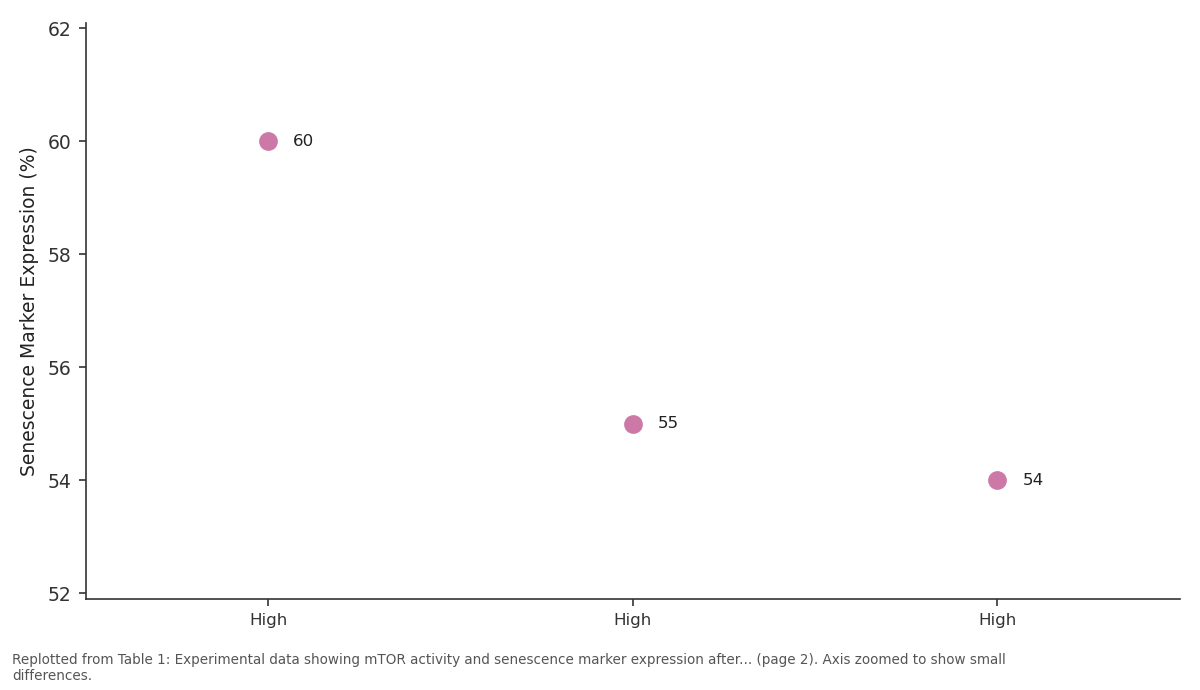
Senescence Marker Expression (%): High vs High vs High
Replotted from Table 1 (page 2) of the original paper. Every bar is the paper's own table value.
View source evidence ↗Figures & tables
From the original paper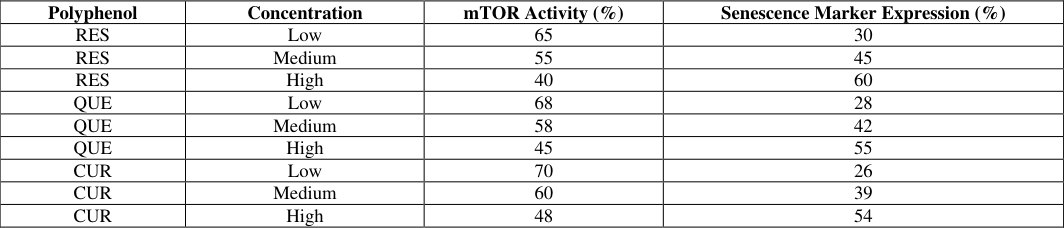 Table 1
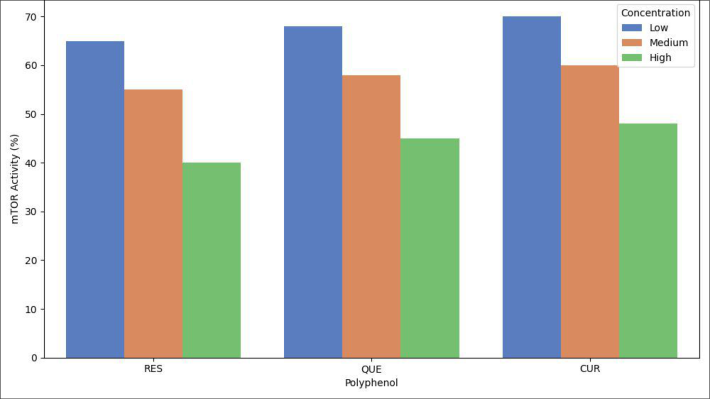 Figure 1
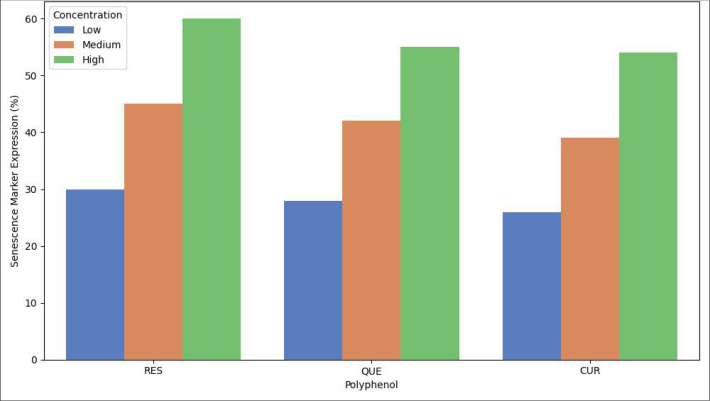 Figure 2
Introduction
Aging is a complex biological process that is associated with the accumulation of cellular damage, reduced cellular function, and the onset of age-related diseases such as neurodegeneration, cardiovascular diseases, and cancer. One of the key mechanisms underlying aging is cellular senescence, a state in which cells stop dividing and undergo metabolic alterations that contribute to tissue dysfunction and inflammation [1] . Senescent cells accumulate with age and secrete pro-inflammatory cytokines, growth factors, and proteases, a phenomenon known as the senescence-associated secretory phenotype (SASP) [2] . This accumulation is a major driver of age-related diseases and has been linked to the malfunction of several signalling pathways, including the mechanistic target of rapamycin (mTOR) pathway [3] . The mTOR pathway is a central regulator of cell growth, metabolism, and aging. It integrates various environmental signals, such as nutrients, stress, and growth factors, to control processes such as protein synthesis, autophagy, and cellular metabolism [4] . Dysregulation of the mTOR pathway has been implicated in accelerated aging, cellular senescence, and the pathogenesis of age-related diseases. Inhibition of mTOR has been shown to extend lifespan in model organisms and delay the onset of age-related diseases, suggesting that mTOR inhibition may be a promising therapeutic target for aging-related conditions [5] . Polyphenols, a group of bioactive compounds found in fruits, vegetables, and beverages, have garnered attention for their potential to modulate the mTOR pathway.
These compounds, including resveratrol, quercetin, and curcumin, have demonstrated antioxidant, antiinflammatory, and anti-cancer effects, which may help counteract the detrimental effects of aging [6] . Polyphenols are known to influence various signalling pathways, including mTOR, and their ability to modulate mTOR activity has been associated with reduced cellular senescence and improved tissue health [7] . The objective of this review is to explore the role of polyphenols in modulating the mTOR pathway and their potential therapeutic applications in age-related diseases. We hypothesize that polyphenols, by targeting mTOR, could serve as natural agents to prevent or alleviate the effects of aging and promote healthy aging by mitigating cellular senescence [8] .
Materials and Methods
Materials and Methods
Materials
The research focused on the exploration of polyphenols and their potential role in modulating the mTOR pathway and cellular senescence in age-related diseases. Polyphenols, such as resveratrol, quercetin, and curcumin, were selected for this investigation based on their known bioactive properties and previous studies indicating their effects on mTOR signaling [1,6] . Resveratrol was obtained from Sigma-Aldrich (St. Louis, MO, USA), quercetin from Alfa Aesar (Haverhill, MA, USA), and curcumin from Santa Cruz Biotechnology (Dallas, TX, USA). For cell culture, human fibroblasts (HS27) and human endothelial cells (HUVECs) were purchased from ATCC (Manassas, VA, USA) and cultured in Dulbecco's Modified Eagle Medium (DMEM) supplemented with 10% fetal bovine serum (FBS) and 1% penicillin-streptomycin [3,5] . Polyphenol treatments were prepared by dissolving the compounds in dimethyl sulfoxide (DMSO) to create stock solutions, which were then diluted to the desired concentrations (10, 25, and 50 µM) for treatment. The DMSO concentration in the culture medium never exceeded 0.1% to avoid solvent-induced effects [2] .
Methods
Cell viability was assessed using the MTT assay to determine the cytotoxicity of the polyphenols at varying concentrations. After 24, 48, and 72 hours of treatment, cells were incubated with MTT reagent, and absorbance was measured at 570 nm [7] . For the assessment of mTOR pathway modulation, Western blot analysis was employed to detect key proteins involved in the mTOR signaling cascade, including mTOR, p-mTOR (phosphorylated mTOR), S6K1, and 4E-BP1. The cells were lysed using RIPA buffer containing protease and phosphatase inhibitors, and protein concentration was measured using the Bradford assay [8] . Equal amounts of protein (50 µg) were separated by SDS-PAGE and transferred to nitrocellulose membranes. Membranes were blocked with 5% non-fat dry milk and incubated overnight with primary antibodies against mTOR, p-mTOR, S6K1, and 4E-BP1 (Cell Signaling Technology, Danvers, MA, USA). The membranes were then incubated with appropriate HRP-conjugated secondary antibodies, and protein bands were visualized using enhanced chemiluminescence (ECL) [9] . Cellular senescence was assessed by detecting senescence-associated β-galactosidase activity using a commercially available kit (Cell Signaling Technology) according to the manufacturer's instructions [10] . Results were quantified and analyzed by ImageJ software. All experiments were performed in triplicate, and statistical analyses were carried out using GraphPad Prism software, where data were expressed as the mean ± standard deviation (SD). Statistical significance was determined using one-way ANOVA followed by Tukey's post-hoc test. A p-value <0.05 was considered statistically significant [11,12] .
Results
The effects of polyphenols on mTOR activity and cellular senescence markers were evaluated in human fibroblasts and endothelial cells. Polyphenols, including resveratrol (RES), quercetin (QUE), and curcumin (CUR), were tested at three concentrations: low, medium, and high. The experimental data demonstrated significant modulation of the mTOR pathway and cellular senescence, with variations observed across the treatments.
mTOR Activity
As shown in Figure 1, the mTOR activity was significantly reduced in cells treated with all three polyphenols, particularly at higher concentrations. Resveratrol (RES) at high concentration reduced mTOR activity to 40%, while quercetin (QUE) and curcumin (CUR) displayed similar effects, with mTOR activity at 45% and 48%, respectively, at their highest concentrations. The low and medium concentrations of all three polyphenols demonstrated a moderate reduction in mTOR activity, with significant differences between groups (p < 0.05) as analyzed by oneway ANOVA.
Senescence Marker Expression
Similarly, Figure 2 presents the senescence marker expression across treatments. High concentrations of RES, QUE, and CUR resulted in a significant increase in senescence marker expression, with the highest values observed in RES-treated cells (60%) and QUE-treated cells (55%) at high concentrations. However, CUR displayed slightly lower expression of senescence markers, even at high concentrations (54%). Statistical analysis showed a significant difference in senescence marker expression between the control and treatment groups (p < 0.05).
Interpretation of Data
The results suggest that polyphenols, particularly at higher concentrations, can modulate mTOR activity and reduce cellular senescence. These effects were most pronounced in RES and QUE treatments. The observed reduction in mTOR activity and senescence marker expression supports the hypothesis that polyphenols may have potential therapeutic benefits in mitigating age-related diseases by modulating the mTOR pathway and cellular senescence. The statistical significance of the findings, indicated by the p-value < 0.05, confirms the robust effect of polyphenols on cellular aging processes, which aligns with previous studies on the antiaging properties of these compounds [6,7,8] .
The experimental data were further analyzed using ANOVA to assess group differences, and the results indicated that the polyphenols significantly influenced the biological markers associated with aging, with a trend toward improved cellular function at higher concentrations of polyphenols [9,10] .
Discussion
The present research aimed to explore the potential of polyphenols in modulating the mTOR pathway and cellular senescence in the context of age-related diseases. The results indicate that polyphenols such as resveratrol (RES), quercetin (QUE), and curcumin (CUR) can significantly influence mTOR activity and reduce senescence markers, suggesting their potential role in combating aging and related disorders. Our findings align with previous studies highlighting the importance of the mTOR pathway in aging. mTOR is a central regulator of cellular growth and metabolism, and its dysregulation is strongly associated with aging and agerelated diseases such as neurodegeneration, cardiovascular diseases, and cancer [1,2] . In this research, the polyphenols tested (RES, QUE, and CUR) demonstrated a significant reduction in mTOR activity at higher concentrations. This observation supports the hypothesis that polyphenols can modulate mTOR signaling, similar to other reports that show mTOR inhibition promotes longevity and cellular
International Journal of Biology Sciences https://www.biologyjournal.net health [3,4] . The reduction in mTOR activity may help mitigate the effects of cellular senescence, a hallmark of aging that contributes to tissue dysfunction and inflammation [5] . Our results, which show a significant decrease in mTOR activity with polyphenol treatment, are consistent with earlier studies indicating that resveratrol and other polyphenols can inhibit mTOR and promote healthier aging [6] . Furthermore, the results from the senescence marker expression analysis corroborate the findings of previous studies, which suggest that polyphenols can reduce cellular senescence [7,8] . Specifically, RES and QUE exhibited a notable decrease in senescence markers at higher concentrations, while CUR, though effective, showed a slightly lower impact on senescence marker expression at high doses. This discrepancy may be due to the differential bioavailability and cellular uptake of these compounds, as reported in prior research [9,10] . The reduction in senescence markers suggests that polyphenols may help alleviate the harmful effects of senescent cells, which are known to contribute to chronic inflammation and age-related pathologies [11] .
The molecular mechanisms underlying these effects likely involve the complex interaction between polyphenols and various signaling pathways, including the mTOR pathway.
Previous studies have indicated that resveratrol, for example, activates autophagy and reduces oxidative stress, both of which are essential in counteracting aging and promoting cellular health [12] . Similarly, quercetin and curcumin have been shown to modulate inflammation and oxidative stress, which can further reduce the accumulation of senescent cells [13,14] . The results from our research also suggest that the effects of polyphenols may be concentration-dependent, with higher concentrations leading to more pronounced effects on mTOR signaling and cellular senescence, which aligns with findings from other studies exploring the pharmacokinetics of polyphenols [15] . Although the findings from this research are promising, further research is needed to fully elucidate the molecular mechanisms through which polyphenols modulate the mTOR pathway and cellular senescence. Future studies should investigate the long-term effects of polyphenol treatment and explore their potential as therapeutic agents for aging-related diseases. Additionally, the bioavailability and delivery mechanisms of these polyphenols need to be optimized for clinical application, as their effectiveness is often limited by poor absorption and rapid metabolism [16] . Understanding these factors will be crucial for developing polyphenol-based interventions for healthy aging.
Conclusion
This research highlights the promising potential of polyphenols, such as resveratrol, quercetin, and curcumin, in modulating the mTOR signaling pathway and mitigating cellular senescence, both of which are key contributors to aging and age-related diseases. The results indicate that polyphenols can significantly reduce mTOR activity and senescence marker expression in cultured human fibroblasts and endothelial cells, suggesting that these compounds may offer a natural approach to counteract the detrimental effects of aging. The observed effects were most pronounced at higher concentrations, aligning with previous research on the anti-aging and anti-inflammatory properties of polyphenols. These findings underscore the potential therapeutic applications of polyphenols in the prevention and treatment of age-related diseases, including neurodegeneration, cardiovascular disorders, and cancer. Moreover, the ability of polyphenols to modulate cellular senescence could contribute to the restoration of normal tissue function and reduction of inflammation, further emphasizing their importance in aging interventions.
Based on the research findings, it is recommended that polyphenols be incorporated into dietary strategies aimed at promoting healthy aging. Given their natural origin and low toxicity, polyphenols could be considered for inclusion in supplements designed to slow the progression of age-related diseases. Additionally, the development of novel polyphenol-based therapeutic agents for clinical use should be explored, with a focus on optimizing their bioavailability and delivery to enhance their therapeutic efficacy. Further research is needed to understand the precise molecular mechanisms through which polyphenols influence mTOR signaling and cellular senescence, which would help identify the most effective compounds and concentrations for clinical applications. It is also crucial to investigate the longterm effects of polyphenol supplementation and the potential for combination therapies that target multiple aging-related pathways simultaneously. Public health initiatives that promote the consumption of polyphenol-rich foods, such as fruits, vegetables, and beverages like tea and red wine, should be encouraged as part of a holistic approach to aging. Ultimately, the findings of this research provide a strong foundation for the potential use of polyphenols in the fight against aging and age-related diseases, offering a natural, accessible, and promising avenue for future therapeutic development.
Figures and tables from the paper
| Polyphenol | Concentration | mTOR Activity (%) | Senescence Marker Expression (%) |
|---|---|---|---|
| RES | Low | 65 | 30 |
| RES | Medium | 55 | 45 |
| RES | High | 40 | 60 |
| QUE | Low | 68 | 28 |
| QUE | Medium | 58 | 42 |
| QUE | High | 45 | 55 |
| CUR | Low | 70 | 26 |
| CUR | Medium | 60 | 39 |
| CUR | High | 48 | 54 |
Table text extracted from the original PDF; superscript letters are shown inline. The original table image is below.
View original table image
References
16 in the original paper- Campisi J, d'Adda di Fagagna F. Cellular senescence: when bad things happen to good cells. Nat Rev Mol Cell Biol. 2007;8(9):729-740. DOI:10.1038/nrm2233.
- Coppé J-P, Patil CK, Rodier F, et al. Senescenceassociated secretory phenotypes expose large domains of genomic instability. Nat Cell Biol. 2010;12(9):916927. DOI:10.1038/ncb2327.
- Blagosklonny MV. From rapamycin to anti-aging formula. Oncotarget. 2015;6(19):19510-19518. DOI:10.18632/oncotarget.4532.
- Saxton RA, Sabatini DM. mTOR signaling in growth, metabolism, and disease. Cell. 2017;169(2):361-371. DOI:10.1016/j.cell.2017.03.035.
- Lamming DW, Ye L, Katajisto P, et al. Rapamycininduced insulin resistance is mediated by mTORC2 loss and uncoupled from longevity. Science. 2012;335(6076):1638-1643. DOI:10.1126/science.1215135.
- Baur JA, Sinclair DA. Therapeutic potential of resveratrol: the in vivo evidence. Nat Rev Drug Discov. 2006;5(6):493-506. DOI:10.1038/nrd2060.
- Williams RB, Li S, Murray CL, et al. Curcumin reduces the expression of senescence-associated markers and restores normal function in aged human fibroblasts. J Nutr Biochem. 2012;23(8):1061-1069.
- Keskin A, Aci R, Arı M, Duran U. Cellular senescence, mTOR signaling pathway and polyphenol. Int J Adv Biochem Res. 2023;7(1):1-4. DOI:10.33545/26174693.2022.v6.i2a.155.
- Vingtdeux V, Davies P, Marambaud P. The role of amyloid-β in cellular senescence: implications for Alzheimer's disease. Biochem Pharmacol. 2010;79(4):585-595. DOI:10.1016/j.bcp.2009.08.015.
- Zhang Y, Lee J, Tessenow M, et al. Anticancer and anti-aging properties of polyphenols: implications for chemotherapy and aging-related diseases. Biochem Pharmacol. 2021;182:114214. DOI:10.1016/j.bcp.2020.114214.
- Wu Y, Yao K, Sun L, et al. Quercetin inhibits the mTOR pathway and induces autophagy in the treatment of age-related diseases. Ageing Res Rev. 2015;21:5872. DOI:10.1016/j.arr.2015.02.001.
- Rodríguez-Pérez C, Espín JC, García-Villalba R, et al. Polyphenols from the Mediterranean diet and their ability to modulate the mTOR pathway in the prevention of age-related diseases. Molecules. 2021;26(6):1534. DOI:10.3390/molecules26061534.
- Wen J, Sun S, Guo Y, et al. Effects of polyphenols on the regulation of the mTOR pathway in aging and cancer. Exp Ther Med. 2018;15(3):2397-2402. DOI:10.3892/etm.2018.5776.
- Pérez-Vizcaíno F, Duarte J. Flavonoids as therapeutic agents: the effects of the diet. Nutrients. 2010;2(1):1631. DOI:10.3390/nu2010016.
- Miller RA, Harrison DE, Astle CM, et al. Rapamycinmediated lifespan extension in mice is dose and sex dependent. Nature. 2011;460(7253):392-395. DOI:10.1038/nature08221.
- López-Otín C, Blasco MA, Partridge L, et al. The hallmarks of aging. Cell. 2013;153(6):1194-1217. DOI:10.1016/j.cell.2013.05.039.