
Research article · 2025 · Full text
International Journal of Biology SciencesReview on the antiviral activity of natural compounds against Tilapia Lake virus
Volume 7(12) · Pages 50–60 · DOI: 10.33545/26649926.2025.v7.i12a.527 ↗
Research areasAquaculture disease management and microbiotaPolyamine Metabolism and ApplicationsInvertebrate Immune Response Mechanisms
Abstract
Author-writtenAquaculture has become the fastest growing food sector providing more than half of the fish supply chain. Tilapia is an important finfish aquaculture species because of its affordability, high-quality protein and nutrients, tolerance to high-density aquaculture, and reputation for disease resistance, tilapia farming has become a significant part of aquaculture. There was severe challenge occurred due to disease outbreaks, high stocking density and overuse of antibiotics. Tilapia was infected with several bacterial and viral infection, among them TiLV show severe loss to tilapia farming. Tilapia lake virus (TiLV) is a new virus that has had a significant impact on the global tilapia farming. Compared with chemical drugs and antibiotics, natural medicines have lesser side-effects, produce drug resistance, and exhibit low toxicity to the water environment. Most of the medicinal compounds can effectively improve the growth performance and disease resistance for aquatic animals. The present review summarizes the antiviral activities of natural compounds and their importance against fish virus. Furthermore, usage of homeopathy and herbal medicines will have positive impact on the prevention or treatment of viral diseases in aquaculture. This article will have clear explanation about herbal and homeopathy medicines which will combat viral disease in Aquaculture sector.
Summary
Source-checkedPlain-language reading of the full paper, prepared with AI and checked against the text. Each point links to the authors' own words.
Why it matters
- Tilapia is a critical species in global aquaculture due to its nutritional value, affordability, and ability to thrive in high-density farming environments. View evidence ↗
- Tilapia Lake virus (TiLV) poses a severe threat to the industry, causing global outbreaks with mortality rates ranging from 20% to 90%. View evidence ↗
- Natural medicines are considered preferable to chemical drugs and antibiotics because they typically have lower toxicity to the environment and fewer side effects. View evidence ↗
The question
- The objective of this review is to summarize the antiviral activities of natural compounds and their significance in combating fish viruses, specifically TiLV. View evidence ↗
What they did
- TiLV is detected using various molecular techniques, including nested, semi-nested, and quantitative RT-PCR, as well as in situ hybridization. View evidence ↗
- Among eight tested cell lines, only the E11 line and primary tilapia brain cells were found to be susceptible to TiLV, showing a cytopathic effect. View evidence ↗
What they found
- Experimental challenges showed that red hybrid tilapia and giant gourami are highly susceptible to TiLV, with mortality rates between 60% and 100%. View evidence ↗
- Certain fish species, including three types of carps (C. catla, C. mrigala, and H. molitrix), were found to be resistant to TiLV infection. View evidence ↗
- Ribavirin has been shown to reduce TiLV replication and the cytopathic effect in fish cells in a dose-dependent manner. View evidence ↗
- Inactivated vaccines (HKV and FKV) provided significant protection against TiLV, with relative percent survival (RPS) of 71.3% and 79.6% respectively. View evidence ↗
- Among tested natural compounds, arctigenin demonstrated the highest inhibition by blocking viral replication in the context of SVCV. View evidence ↗
- Homeopathic combinations have been reported to increase performance and lower cortisol levels in Nile tilapia compared to control groups. View evidence ↗
- Certain homeopathic potencies completely inhibited viral lesions in chick embryos, suggesting immediate antiviral effects. View evidence ↗
What it means
- The authors conclude that the use of herbal and homeopathic medicines can positively impact the prevention and treatment of viral diseases in aquaculture. View evidence ↗
- The authors state that further development of antiviral compounds is needed to prevent various fish viral diseases in the future. View evidence ↗
Visual summary
1 visualsIllustrations explain the paper; they do not show study data.
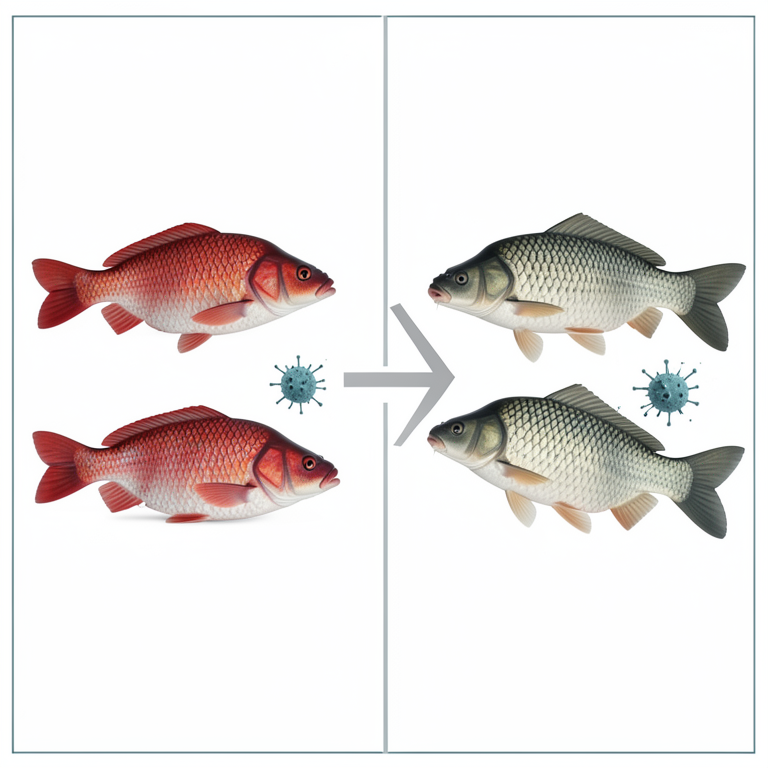
TiLV Host Susceptibility
AI-generated conceptual illustration (Red hybrid tilapia, giant gourami, and various carp species). It explains the idea and does not show study data.
View source evidence ↗Introduction
Aquaculture is indeed playing a significant role in increasing global fish production and satisfying expanding demand for fisheries products, and it will continue to do so in the future. Capture fisheries production has stopped growing, and it is no longer thought to be capable of meeting the expanding worldwide demand for fisheries products. Aquaculture output has been continuously increasing in recent years, and it is now the fastest growing food production industry in the world. It has become an important part of overall development initiatives in many parts of the globe. Aquaculture is one of the most fastgrowing segments of the global livestock industry. India, Bangladesh, Egypt, Myanmar, and Brazil concentrate mostly on inland finfish aquaculture, while their potential for mariculture finfish output remains virtually unexplored.
Tilapia culture
Tilapia is the common name for a group of cichlid fish that live in freshwater streams, ponds, rivers, and lakes, as well as brackish water. Tilapias, once considered an invasive species, are increasingly becoming more important in aquaculture. The tilapia is the world's secondmost-important finfish aquaculture species. Because of its affordability, high-quality protein and nutrients, tolerance to high-density aquaculture, and reputation for disease resistance, tilapia farming has become a significant part of aquaculture. China remains the single largest producer of freshwater fish for export and domestic consumption for 56% of the global output in 2017. Tilapia production accounts for about 40% of fisheries sector in aquaculture. There are 1524 different species of tilapia. Their native lands range from southern Africa and Madagascar to northern Syria. Three genera are responsible for economically important species such as table fish (Tilapia, Oreochromis, and Sarotherodon). Aside from their nutritional value, certain species are beneficial for managing aquatic vegetation. They described 77 tilapia species (along with a few subspecies), while Jhingran et al. (1973) [ 37] included 22 species that have been used in experimental or industrial scale fish cultivation. Oreochromis niloticus (Nile tilapia), Oreochromis mossambicus (Mozambique tilapia), Oreochromis aureus (Blue tilapia), Oreochromis hornorum (Zanzibar tilapia), and Oreochromis hybrids are the most widely cultivated tilapia species (Red tilapia). Oreochromis niloticus, sometimes known as the Nile tilapia, is one of the most significant fish species in tropical and sub-tropical aquaculture. It is a significant source of animal protein and profit all around the world. Asian countries are the largest producers and consumers of tilapia. China is the leading producer of Oreochromis niloticus alone, accounting for approximately one-third of global production. Nile tilapia account for more than 90% of all commercially farmed tilapia outside of Africa. Because of its resemblance to the marine red snapper, which gives it a high market value, the hybrid "red" tilapia has become increasingly popular for aquaculture. Genetic mutations were used to create the first red tilapias. In China, Bangladesh, Indonesia, Laos, Malaysia, Taiwan, and the Philippines, tilapia aquaculture has grown in popularity. The global tilapia production at almost 7 million tonnes in 2020. Many countries culture this species, the countries like China, Thailand, Ecuador, Egypt, and Indonesia are the top producers, while the United States is the largest importer Harvey et al. (2015) [31] . There was no report of any viral disease in tilapia until 2009, during summer there will be mass mortality observed in 2009 from different parts of Israel. The annual global production of farmed tilapia has been steadily increasing in recent years. China (1.8 million tonnes), Indonesia (1.1 million tonnes), and Egypt (875 thousand tonnes) were the top three tilapia producers. Bangladesh, Vietnam, the Philippines, Brazil, and Thailand are among the top tilapia producers in the world Cai et al. (2017) [ 16 ] . Despite all of the apparent advantages of tilapia farming, they have succumbed to different diseases, as have all highly grown fish. Many cases of bacterial infections in tilapia have been reported, including infections caused by Flavobacterium columnare, Aeromonas species, and Streptococcus spp. Aeromonads like A. hydrophila and A. veronii spread horizontally in fish, causing haemorrhagic sickness, ulcerative syndrome, and Motile Aeromonas Septicaemia, with significant mortality rates, especially in farmed warm water fish. A case of spontaneous TiLV and A. veronii co-infection in Malaysian red hybrid tilapia was recently reported Amal et al. (2018) [5] . Aeromonas motile mesophilic is zoonotic, meaning it may spread between animals and people, causing a wide range of infectious diseases in a wide range of hosts, including amphibians, birds, fish, reptiles, and mammals. A variety of viruses have been linked to disease in farmed fish, but only a few have been linked to tilapia. There will be reporting of eight viral diseases in tilapia which comprise of three RNA and five DNA viruses. The reported RNA viruses are Tilapia Lake virus (TiLV), Nervous necrosis virus (NNV) and Infectious pancreatic necrosis virus (IPNV) while the five reported DNA viruses include the Bohle iridovirus (BIV), infectious spleen and kidney necrosis virus (ISKNV), Lymphocystivirus, Iridovirus-like (IriVL) and Tilapia larvae encephalitis virus (TLEV) Machimbirike et al. (2019) [48] . Until recently, when a novel virus called tilapia lake virus emerged, none of the previously described viruses were worldwide common (TiLV). It is officially known as Tilapia tilapinevirus of the genus Tilapinevirus and family Amnoonviridae here it is referred as TiLV. TiLV, NNV and ISKNV are the virus causing severe or potential threats to farmed tilapia industry in ASEAN countries Dong et al. (2017) [26] .
Tilapia lake virus
Tilapia lake virus (TiLV) is a new virus that has had a significant impact on the global tilapia farming business and food security Jansen et al. (2019) [36] . Based on its shape of round to oval enveloped and filamentous/tubular viral particles with negative-sense, 10-segment RNA genomes and a total length of 10,323 kb, the virus was classed as an Orthomyxo-like virus Del-Pozo et al. (2017) [22] . Open reading frames (ORFs) can be found in each of the ten segments, and each ORF can code for up to 14 different proteins. With a nucleotide size of 1.641 kb, segment 1 is the largest in the TiLV genome. Segments 1, 2, 4, and 5 have a high level of homology with the Dhori virus, whereas segments 6, 7, and 8 have a significant evolutionary relationship with the influenza virus. Segment 3 has a low level of homology with the infectious salmon anaemia virus Acharya et al. (2019) [2] . By April 2020, TiLV had been detected in 16 countries on four continents, Following the first discovery of a novel disease in Ecuador, dubbed syncytial hepatitis of tilapia, TiLV was detected in Israel in 2014 Eyngor et al. (2014) [27] ; Bacharach et al. (2016) [8] ; Ferguson et al. (2014) [29] . TiLV outbreaks have also been documented in Peru Pulido et al. (2019) [72] , Ecuador Subramaniam et al. (2019) [85 ] , Egypt Fathi et al. (2017) [28] ; Nicholson et al. (2017) [63] , India Behera et al. (2018) [13] , Thailand Dong et al. (2017) [26] ; Surachetpong et al. (2017) [88] , and Malaysia Abdullah et al. (2018) [1] ; Amal et al. (2018) [5] , Bangladesh Chaput et al. (2020) [17] , Tanzania Mugimba et al. (2018) [59] , Uganda Mugimba et al. (2018) [59] , USA Ahasan et al. (2020) [3] , Colombia Tsofack et al. (2017) [41] . On a worldwide scale, the virus's high mortality rates (20-90%) and quick spread have affected the livelihoods of millions of tilapia farmers Jansen et al. (2019) [36] . Tilapia can cause up to 90% mortality in farms of Nile tilapia (Oreochromis niloticus), red tilapia (Oreochromis sp.), and hybrid tilapia (O. niloticus x O. aureus) Dong et al. (2017) [26] ; Eyngor et al. (2014) [27] ; Ferguson et al. (2014) [29] ; Ecuador Ferguson et al. (2014) [29] , Israel Eyngor et al. (2014) [27] , Colombia Kembou Tsofack et al. (2017) [41] , Egypt Fathi et al. (2017) [28] ; Nicholson et al. (2017) [63] , and Thailand Fathi et al. (2017) [28] . Dong et al. (2017) [26] ; Surachetpong et al. (2017) [88] . Nested RT-PCR, semi-nested RT-PCR, SYBR quantitative RT-PCR, and in situ hybridization have all been reported as TiLV detection methods Bacharach et al. (2016) [8] ; Dong et al. (2017) [26] ; Kembou Tsofack et al. (2017) [41 ] . TiLV infection has only been found in tilapia and hybrid species, with common carp and grey mullet grown in ponds with TiLV-infected tilapia showing no clinical indications of the disease Eyngor et al. (2014) [27] ; Fathi et al. (2017) [ 28] . TiLV was found in two samples from ornamental African cichlids with TiLV symptoms, in addition to tilapia Kembou Tsofack et al. (2017) [41] . The majority of warm-water fish were TiLVresistant, with no mortality or clinical symptoms of infection. In giant gourami (Osphronemus goramy) infected with TiLV, however, significant mortality, severe clinical symptoms, and histological abnormalities were detected. Furthermore, TiLV genomic RNA was only found in the livers of giant gourami and red hybrid tilapia, but not in liver samples from other fish species, indicating that these two species are TiLV susceptible Jaemwimol et al. (2018) [35] . Their investigation was able to detect TiLV antigens in both experimental and naturally TiLV-infected fish using a synthetic rabbit polyclonal IgG antibody produced against the TiLV antigen. TiLV infection displays cellular tropism using immunohistochemistry Piewbang et al. (2021) [68] . In this work, researchers analysed at the immunological effects and protective effectiveness of formaldehyde and propiolactone-inactivated vaccinations against TiLV in tilapia with and without the Montanide IMS 1312 VG adjuvant. The propiolactone-inactivated TiLV vaccine, when combined with the adjuvant Montanide IMS 1312 VG and booster immunizations, can provide tilapia with substantial levels of resistance against virus challenge. The majority of tilapia developed antibody responses to this vaccine, and titers increased dramatically after booster immunisation. This suggests that this vaccination could be useful in preventing TiLV infection in locations where TiLV epidemics are a concern Zeng et al. (2021) [101] . It has a number of advantages over traditional vaccinations, including ease of preparation, stability, and a relatively low cost. DNA vaccines are currently being utilised to manage or reduce virus infection in humans, animals, and fish Corbeil et al., (2000) [18] . TiLV-ORF10 was used to prepare DNA vaccines and investigate antiviral effects in this case Yu et al. (2021) [100] . They tested the ability of two variants of a simple water-based inactivated vaccination for TiLV (HKV and FKV) to protect tilapia against the virus in their study. In vaccinated fish, both HKV and FKV were able to confer reasonably significant levels of protection (RPS, 71.3 percent vs. 79.6 percent) Mai et al. (2021) [50] . They developed the most effective approach for detecting TiLV antigen and confirmed the rabbit polyclonal IgG antibody immunised with a pure TiLV antigen. A unique band at 36 kDa was found in both the vaccinated rabbit serum and the TiLV-exposed fish serum. This is the first study to show that ribavirin effectively reduces the cytopathic effect of TiLV infection in fish cells. Ribavirin also reduces TiLV replication and enhances cell survival in a dose-dependent manner, according to the researchers. Despite this, they discovered that ribavirin can cause cell toxicity in E-11 cells at high concentrations. They established the efficacy of antiviral treatment against TiLV in their experiment Lertwanakarn et al. (2021) [45] . This study found that HKV and FKV vaccination of tilapia broodstock results in a protective antibody response against TiLV, which can then be passed on to fertilised eggs and larvae to promote maternal immunity. For maternal antibody transmission, HKV appears to have a higher potential than FKV Mai et al. (2022) [49] . In their study, six immune response genes were found to be elevated three and six weeks after TiLV inoculation, they have found significant increases in the expression of cytokine genes encoding TNF-, IL-1, and IFN-, as well as the CD4 and MHC adaptive immune genes MHC-I and MHC-II in the spleens and kidneys of most of the vaccinated tilapia. The use of the adjuvant in combination with booster immunizations, in particular, resulted in an increase in immune response and protection. Cytokines are a type of cell signalling molecule that connects the innate and adaptive immune systems Zou et al. (2016) [102] . The use of zebrafish as an animal model to investigate immune responses after infection with tilapia lake virus (TiLV), a new virus linked to significant morbidity and mortality in both farmed and wild tilapia populations. The death of zebrafish infected with TiLV by i.p. injection was, on the other hand, quite low, compared to tilapia mortality, which was over 80% during challenge studies in the lab. TiLV replicates in a variety of zebrafish organs, with the brain containing the most virus at 6 dpi. TiLV also activates the adaptive immune response and triggers a strong type I IFN response, which may both have a role in reducing virus replication and boosting fish survival Mojzesz et al. (2020) [73] . The zebrafish is rising in popularity as a model organism for studying host-pathogen interactions. The larvae provide a different model system to investigate primarily innate immunity because the adaptive immune system of zebrafish matures between 4 and 6 weeks after fertilisation Lam et al. (2006) [44] . Clear histopathology alterations in the brain of TiLV-infected tilapia have also been detected. Lesions, focal haemorrhages, capillary congestion in both white and grey matter, and gliosis foci Eyngor et al. (2014) [27] ; Jansen et al. (2019) [36] ; Tattiyapong et al. (2017) [90] . Despite the virus being injected intramuscularly into broodstock in this experiment, the virus was later identified in the blood, liver, and reproductive organs, as shown by PCR, ISH, and cell culture. This research demonstrates that TiLV produced systemic infection in tilapia broodstock and that the virus can circulate through the bloodstream into both male and female reproductive organs. Contaminated female fish generated infected eggs, which resulted in infected fertilised eggs when fertilised with sperm from infected male broodstock Dong et al. (2020) [25] . Natural outbreaks of TiLV in broodstock and fry in two tilapia hatcheries were confirmed in their research. TiLV genomic RNA was found in infected broodstock's liver and reproductive organs, and infective virus was isolated from a susceptible cell line. TiLV was found in the ovary and testis of naturally infected and experimentally challenged fish using an insitu hybridization technique. Furthermore, the presence of TiLV genomic RNA and active virus in the testis and ovary of 2day-old fry revealed that the virus might be transferred from infected broodstock to progenies Yamkasem et al. (2019) [ 99] . In unexposed red tilapia challenged by TiLV IP-injection or cohabitation with TiLV-infected fish, the average cumulative mortality was 70% and 47%, accordingly. The IP-challenged fish showed clinical symptoms of TiLV infections within 4-5 dpc, whereas the cohabitationchallenged fish displayed clinical signs within 9-12 dpc. Survivors of past TiLV infections who were re-challenged by IP-injection or cohabitation showed no clinical symptoms or mortality. At 28 days after the main challenge, an RT-qPCR assay revealed no TiLV in the liver and spleen of the surviving fish. At 1, 3, and 7 days after being rechallenged with TiLV, there was no evidence of the virus in the liver or spleen. At 28 days after the first challenge (0 days after the re-challenge), the majority of the rechallenged fish have circulating antibodies at a particular level, and could produce fast antibody production after secondary exposure to TiLV within 7 days. Additional challenge studies indicated that individuals who had been in the lab for two months since their first exposure to TiLV had developed protective immunity against repeated exposure to the virus Tattiyapong et al. (2020) [91] . The observation of zebrafish larvae is sensitive to tilapia lake virus and that systemic TiLV injection causes substantial mortality at 4-5 days post infection. This is in contrast to adult zebrafish, which had extremely minimal mortality with TiLV infection Widziolek et al. (2021) [96] . Cell culture isolation is the important standard for virus identification, according to the OIE. Studies on TiLV isolation utilising eight different cell lines (tilapia primary brain cells, E11, CHSE214, BF2, BB, EPC, KF1, RTG2, and FHM) revealed that only the E11 cell line and primary tilapia brain cells displayed a cytopathic effect (CPE) cell lines are not available from O. niloticus Eyngor et al. (2014) [27] . TiLV has been obtained from the brains of infected tilapia in a number of experiments Dong et al. (2017) [26] ; Eyngor et al. (2014) [27] ; Ferguson et al. (2014) [29] ; Kembou Tsofack et al. (2017) [41] . According to Reed and Muench's (1938) approach, virus titres were expressed as the 50% tissue culture infective dose (TCID50). Isolating viruses and understanding virus-host interactions require the use of cell lines Crane et al. (2011) [19] . Because fish viruses are often host specific, a cell line produced from a certain fish species is better suited to analyzing the viruses that have been identified from that species Pandey et al. (2013) [64] . They produced two cell lines from the liver and brain of Nile tilapia, which are the main target organs of TiLV, and designated them as OnlL and OnlB Swaminathan et al. (2018) [89] . Using the explant approach, a cell line was obtained from the heart of O. niloticus. Many cell lines have already been generated from heart tissue of many fish species, including SHHT (Channa striatus), SICH (Catla catla), RH (Labeo rohita), SPH (Lateolabrax japonicus), GH (Epinephelus awoara), PH (Sardinops sagax), RGH (Epinephelus quoyanus) and TH (O. mossambicus) Nanthini et al. (2019) [61] . The vulnerability of OnH cells to tilapia lake virus was investigated in this research, and the cytopathic effects in the OnH cell line comprised cell elongation and rounding, followed by death and detachment after TiLV inoculation Yadav et al. (2020) [97] . They used explant method to produce a cell line from the caudal fin of striped catfish in their experiment and the vulnerability of the PHF cell line to tilapia lake virus (TiLV) was investigated in this work. PHF cells, on the other hand, showed no CPE after 14 days and even after three blind passages. This indicated that the cell line was not TiLV permissive, and so could not be used to detect TiLV in suspicious samples Soni et al. (2018) [84] . The explant approach is employed for cell line generation because it is simple and quick, and it does not cause harm to the cell surface like the enzymatic method does Avella et al. (1994) [7] . Caudal fin was used for cell line creation because it has a high regeneration potential and more importantly, it can be removed from fish without sacrificing the fish Rathore et al. (2007) [75] . SSN1 and CFF cell lines derived from Channa striatus and Pristolepis fasciatus, respectively, have been observed to cause CPE in TiLV-infected heterologous cell lines Eyngor et al. (2014) [27] ; Behera et al. (2018) [13] . Both Nile and red tilapia were injected with cell culture suspension made from TiLV infected E-11 cells in their study to see if TiLV can induce disease in native susceptible fish. Clinical symptoms such as epidermal erosion, haemorrhages, and abdominal distension were found in challenged fish at 3 to 5 dpi. These clinical indications in the experimentally challenged fish were similar to those observed in the field Tattiyapong et al. (2017) [90] . This research indicated that Aulonocara spp. are very vulnerable to TiLV when infected via intracoelomic injection, as evidenced by ISH, RT-qPCR, and virus isolation, among other methods. After exposure to TiLV, the challenged ornamental African cichlids had a high mortality rate, as well as severe clinical symptoms and histological abnormalities Yamkasem et al. (2021) [98] .
Experimental infection using tilapia lake virus
In this challenge experiment with TiLV, there will be observing of fish mortality on 5 days post challenge and cumulative mortality result in ornamental African cichlids Aulonocara spp with 56.25% and the viral copies was high in all the three organs in ornamental fish Yamkasem et al. (2021) [98] . In this study, they evaluated the experimental infection of three carps (C. catla, C. mrigala, and H. molitrix) and the result shows that these fishes are resistant to virus and non-susceptible to TiLV. There will be no clinical sign and histopathological changes were observed in this study Pradhan et al. (2021) [71] . In their research an experimental challenge with TiLV infection was observed in 10 warm water fish species consist of giant gourami (Osphronemus goramy), snakeskin gourami (Trichogaster pectoralis), iridescent shark (Pangasianodon hypophtthalmus), walking catfish (Clarias macrocephalus), striped snake-head fish (Channa striata), climbing perch (Anabas testudineus), common carp (Cyprinus carpio), silver barb (Barbodes gonionotus), Asian sea bass (Lates calcarifer), and red hybrid tilapia (Oreochromis spp.) and the result revealed that red hybrid tilapia and giant gourami developed a clinical sign and mortality observed between 60-100% Jaemwimol et al. (2018) [35] . During the 12-day experimental period, rohu treated with TiLV showed no clinical symptoms and no mortality Pradhan et al. (2020) [70] . In this study the adult zebra fish was infected with TiLV by intraperitoneal injection and the infection was observed in liver, spleen and kidney. They have analysed antiviral response against TiLV using zebra fishes Rakus et al. (2021) [73] . This study shows that the infected red tilapia (66%) and nile tilapia (86%) showed severe mortality using TiLV. The mortality was observed within 4-12 days of post infection Tattiyapong et al. (2017) [90] . Infection of TiLV in Mozambique tilapia shows mortality and observation of clinical signs Waiyamitra et al. 2021) [95] .
Vaccines in aquaculture
Vaccines are biological related preparation establish to improve immune response for particular disease or group of disease. Fish are cold blooded animal as it will respond to vaccine based on the temperature of water. If the temperature will be higher the vaccine respond to the fish will be faster. During the past 20 years period vaccine play an important role in controlling infectious disease and costeffective method in aquaculture. In previous years, there will be use of antibiotic for the prevention of bacterial disease and the use of antibiotic has not given proper solution for the disease outbreak. There will be a development of more problems associated with the use of antibiotics in aquaculture. The use of antibiotics results in development of antimicrobial resistance factor against bacterial diseases. For the alternative source there will use of vaccination treatment in fish and shrimp diseases. Vaccination is the method of lowering the risk of disease occurrence in aquaculture. Vaccine will be immunized by via injection through intramuscularly, intraperitoneal and oral route or the vaccine will be incorporated into the feed for disease prevention. The administration of vaccine has both advantage and disadvantage, it is approved that only the injection and immersion routes have given enough protection in commercial vaccines. The method of injection will be impressive but due to side effect and cost effective to seek for alternative approach Plant et al. (2011) [69] . The vaccine will provide proper immunoprotection against disease outbreak. IPNV, IHNV, SVC virus, salmon pancreas disease virus, and ISA virus vaccines are the commercially available viral vaccines for fish virus Salgado-Miranda et al. (2013) [77] . Intra-abdominal adhesions, inflammation, granulomatous peritonitis, and pigmentation near the injection site Midtlyng et al. (1996) [57] , as well as spinal abnormalities, are all side effects of vaccine mixed with adjuvant Berg et al. (2006) [14] . Vaccine may cause severe reaction if it is wrongly administered to the fish and small size fish will not properly respond to this method due to their less immune response of smaller size fish Komar et al. (2004) [42] . In spite of reducing this risk, homeopathy medicine can be used against fish virus and it will aid in a safe and cost-efficient in aquaculture production. There will not be any negative impact of using these homeopathy medicine and it is eco-friendly in nature.
Homeopathy medicine
Homeopathy is a science created by Samuel Hahnemann in 1796. Technical applications of infinitesimal dilutions include: Hahnemann dilutes and then vigorously agitates his formulations in order to lessen the toxicity of the ingredients chosen using the principle of similarity. The solution is violently shaken (succussion) after each dilution, either manually or mechanically, to maintain its pharmacological properties after significant dilutions. Despite the absence of scientific evidence, it is regarded as an alternative medicine because of its low cost, less side effects, and occasional failure of traditional treatment methods Baran et al. (2014) [12] . At each level of potentization, there is serial dilution and agitation (with vigorous strokes) or trituration. Trituration is the process of finely grinding a starting substance with lactose, which is utilised when the starting substance is insoluble in water or alcohol. When diluted 1:9 and 1:99, the potency levels are indicated as "x" (or "d") and "c," respectively. A dilution without agitation (or trituration) is regarded to be devoid of therapeutic efficacy and should not be referred to as potency. Potency 12cH, for example, was diluted 1:99 12 times with strong strokes at each dilution level; "H" stands for Hahnemann's technique. According to Avogadro's number, no molecule of the beginning chemical should have a potency greater than 12CH. However, considerably greater centesimal potencies, such as 200, 1,000, 10,000cH, and so on, are commonly used in homoeopathy therapeutic treatment with good outcomes. Treatment with homeopathy pharmaceuticals has been proven to be effective against bacterial infections in several studies Peckham et al. (2014) [67] , however there are few reports that homeopathy drugs are useful against bacterial diseases. Homeopathy medicine will represent the nanomedicine and improve the immune response in the cellular level Upadhyay et al. (2011) [93] . Homeopathy medicines are extracted or obtained from natural or synthetic sources including minerals and chemicals, plant materials including roots, stems, leaves, lowers, bark, pollen, lichen, moss, ferns and algae, microorganisms including fungi, bacteria, viruses and plant parasites including animal organs, tissues, secretions and cell lines; human materials include tissues, secretions, hormones, and cell lines. Many antibiotics and chemicals used in aquaculture effect on increasing such as water and soil contamination, as well as the creation of unhealthy aquaculture products Doehring et al. (2016) [24] .
Homeopathy medicine role in aquaculture
Homeopathy can be used to heal fish because it works with all living organisms. Instead, then trying to force a pill down a struggling fish's throat, remedies can be used to avoid some fish ailments. There is an easier solution, however simply medication the water in which it swims. The doses should be determined by the water area as well as the fish stocking density. For example, a small tank containing water and infected fish can be treated by dissolving one pill per litre in the water and waiting 24 hours to see if the fish respond. The sick fishes can be treated in groups for greater areas and quantities of fish. Overtreatment of the fishes by exposing them to medicated water in the sun may lead them to become ill. For appropriate homeopathy treatment, proper symptom identification is essential Doehring et al. (2016) [24] . During the time of gonadal differentiation, a comparison study was undertaken in which the effect of homeopathy complex was assessed against the performance, gonadal response, gills, and liver histology of Nile tilapias. The Nile tilapia (Oreochromis niloticus) has been revealed to be one of the most profitable fish species in modern aquaculture practises Valentim et al. (2008) [94] . Homeopathy will have an important role in marine fish aquaculture production Mazón-Suástegui et al. (2016) [53] . Homeopathy medicines exhibited a statistically significant influence on general health, nutrition, and immunity in coccidia-infested juvenile snapper fish L. guttatus. Apart from increased mucin production in gill tissue and increased production of neutrophils and lymphocytes in blood, which could act as macrophages against the presence of intestinal coccidia, homeopathy treated fish showed increased mucin production in gill tissue, with associated increased production of neutrophils and lymphocytes in blood Rosero-García et al.
(2019) [21] . The homeopathy combination lowered cortisol levels and increased performance in Nile tilapia (O. niloticus) under the same experimental studies as the control group Merlini et al. (2014) [56] . When compared to animals treated with the synthetic hormone and controls, Nile tilapia fingerlings (Oreochromis niloticus) fed with the homeopathy complex Homeopatila RS demonstrated stronger hypertrophy of muscle fibres, smaller average body size, and higher survival Júnior et al. (2012) [40] . The four-hour transportation induced physiological changes in juvenile pacu (P. mesopotamicus), and the homeopathy compound, when supplied in water or diet, did not reduce stress reactions in the doses and period examined. Dietary sucrose supplementation changed cortisol and blood glucose levels, showing that it has a calming effect on these stress markers and it shows better results when compared with homeopathy medicine De Oliveira Feitosa et al. (2013) [20] . Their research found that a homeopathy medication formulated from pathogenic bacteria at decimal and centesimal dilutions (1D, 7C) had the capacity to stimulate the scallop Argopecten ventricosus immunomodulatory response and antioxidant system, as well as promote growth. T3 (AcF 1D + MsS 1D) is a homeopathy medication made from sodium metasilicate and phosphoric acid mother tinctures. The centesimal homeopathy dynamization (1:100 dilution/succussion) of a commercial homeopathy medication manufactured from the venom of the blue scorpion Rhopalurus junceus was used in Treatment T5 (ViD 31C). The final dilution vehicle was distilled water and these T3 and T5 homeopathy complex shows increased immune modulatory response López-Carvallo et al. (2019) [47] . The nosodes are broad-spectrum preparations made from biologic materials such as cultures or clinical samples of microorganisms (such as bacteria, fungi, and viruses), parasites, diseased tissues (such as malignant tissues), or decomposition products from animals and humans Shah et al. (2014) [78] . For the first time, the composition and diversity of the gastrointestinal microbiota of the sea mollusk A. ventricosus has been reported, with the phyla Proteobacteria, Actinobacteria, and Bacteroidetes dominating. Microbacterium maritypicum (T1, T3) and Symbiobacterium toebii both developed and survived in the presence of (T2, T5) homeopathy treatment Mazón-Suástegui et al. (2019) [55] . The impact of the homeopathy drug Natrum muriaticum 30 c on Puntius conchonius at various dosage levels is explained in detailed. It was found that fecundity differed depending on the dose of Natrum muriaticum used. The treated fishes produced the highest and lowest number of eggs, respectively, at 0.02 percent and 0.08 percent Sudha et al. (2015) [86] . An in-vivo experiment was conducted to determine the prophylactic effectiveness of streptococcinum 30c, Aconitum napellus 30c, and Crotalus horridus 30c in tilapia fish infected with Streptococcus agalactiae. Crotalus horridus has shown effective antibacterial action against Streptococcus agalactiae John et al. (2019) [38] . In their research the effect of homeopathy complex on fatty acids in muscle and performance of the Nile tilapia (Oreochromis niloticus) was evaluated and these will be lower performance of homeopathy treated fish when compared with control group Andretto et al. (2014) [6] . In their study they have analyse the effects of Streptococcinum, Hepar Sulfur, Rosmarinus officinalis and erythromycin on cultured rainbow trout (Oncorhynchus mykiss) with experimental streptococcosis was performed and the survival rate will better when compared with chemical drug and control group Salehi et al. (2015) [76] . The performance, occurrence of ectoparasites, and morpho-functional response of the liver and branchiae of Nile tilapia (Oreochromis niloticus) reared on fish meal with varying concentrations of the homeopathy compound Homeopatila 100 were investigated. The addition of Homeopatila 100 to the diet of Nile tilapia juveniles at a concentration of 40 mL per kg/meal could be a valuable measure in fish breeding Braccini et al. (2013) [15] . The in vitro treatment of RBCs with potentized medicines like Merc cor 30c and Nux vom 30c resulted in increased water penetration through the red cells. When the fish were pretreated in vivo with Nux vom 30c, the influx of water through the cells was increased even more Sukul et al. (2003) [87] . The effect of homeopathy treatments made from Vibrio parahaemolyticus and Vibrio alginolyticus (H1), as well as commercial homeopathy medications Phosphoricum acidum and Silicea terra (H2), on the immune and antioxidant responses in Seriola rivoliana juveniles challenged with Vibrio parahaemolyticus under standard culture conditions Mazón-Suástegui et al. (2019) [54] . The greatest survival recorded in animals that received treatments TH2, TH3 and TH4 after V. parahaemolyticus challenge indicated a protector effect, which shows that the homeopathy medications assessed could be an alternative tool for controlling bacterial diseases in shrimp farming. Homeopathy medicine increased survival and immunity of the shrimp L. vannamei juveniles when infected with V. parahaemolyticus Mazón-Suástegui et al. (2018) [52] . The researchers have found that the tested combination homeopathy medicines exhibited antiviral efficacy against the BHV-1 and BVDV-1 viruses in vitro and in vivo in animal virus Nefedchenko et al. (2015) [62] . Influenzinum RC, a biotherapy made from infectious influenza A virus in 30dH dilution, was developed in their research. In MDCK and J774G8 cell lines, the antiviral effects of this homeopathy medicine, as well as related molecular and biochemical features, were investigated. The impact of this biotherapy on J774's cytokine output G8 macrophages were studied, and J774 caused an increase in TNFα production. The presence of G8 macrophages suggests that the biotherapy has a stimulatory effect on these cells Siqueira et al. (2013) [83] . Crotalus horridus appears to be an effective and alternative in the event of ehrlichiosis, based on the findings of this study. On the seventh day after therapy, temperature, pulse, and respiration all decreased significantly. After treatment, the clinical symptoms also improved. All of the sick animals were more attentive and had a better appetite. After Crotalus horridus treatment, haemato-biochemical abnormalities caused by ehrlichiosis-infected dogs restored to normal Tungnunga et al. (2016) [92] . The antipyretic effects of the homeopathy medications Bell and Pyro were explored in this research (200c and 1000c). When compared to paracetamol and Bell, pyro potencies (200c, 1000c) demonstrated a significant reduction in fever and more notable antipyretic effect against S. cerevisiae-induced fever. Pyro potencies have been shown to reduce fever by inhibiting cytokine induction and thereby preventing prostaglandin production Ahmad et al. (2019) [4] . When compared to the vehicle-treated group of animals, the rectal temperature of all the animals treated with Aconite, Arnica, Belladona, and Pyrogenium did not lower with time Gosavi et al. (2010) [30] . The effects of A. napellus should be studied in a variety of fever models, particularly in the stress-induced hyperpyrexia model. The results of this study show that an ultrahigh dilution of the homeopathy drug A. napellus can produce antipyretic effect in rabbits with Baker's yeast-induced fever Ahmad et al. (2019) [4] . According to the findings, homeopathy medicines including Arsenic album, Antimonium crudum, Hepar sulphur, and Silicea have antibacterial activity as shown by Agar well diffusion assays, Minimum Inhibitory Concentration, and bactericidal studies and the result shows that the homeopathy medicines have anti-bacterial activity against Staphylococcus epidermidis Pasalkar et al. (2019) [66] . When the virus and drugs were given together or at different intervals post infection, the results of antiviral activity of homeopathy drugs against CEV of fowls clearly show that five drugs in their potencies, such as Typhoidinum 200, Hydrophobinum 1000, Tuberculinum 1000, Nux vomica 200, and Malandrinum 1000, completely inhibited viral lesions in the chorio-allantoic membranes of developing chick embryos. Homeopathy treatments have immediate antiviral effects, and they are effective whether taken before, subsequently, separately, or at intervals during a viral infection. These medications also developed an antiviral component, which may be interferon-like or something else new Singh et al. (1985) [82] . In their research they have concluded that Bothrops Lanceolatus is effective in treating coronary artery disease Panicker et al. (2021) [65] .
References
101 in the original paper- Abdullah A, Ramly R, Ridzwan MM, Sudirwan F, Abas A, Ahmad K, Murni M, Kua BC. First detection of tilapia lake virus (TiLV) in wild river carp (Barbonymus schwanenfeldii) at Timah Tasoh Lake, Malaysia. Journal of Fish Diseases. 2018;41(9):14591462.
- Acharya V, Chakraborty HJ, Rout AK, Balabantaray S, Behera BK, Das BK. Structural characterization of open reading frame-encoded functional genes from tilapia lake virus (TiLV). Molecular Biotechnology. 2019;61(12):945-957.
- Ahasan MS, Keleher W, Giray C, Perry B, Surachetpong W, Nicholson P, Al-Hussinee L, Subramaniam K, Waltzek TB. Genomic characterization of tilapia lake virus isolates recovered from moribund Nile tilapia (Oreochromis niloticus) on a farm in the United States. Microbiology Resource Announcements. 2020;9(4):e01010-e01028.
- Ahmad S, Abbasi WM, Rehman T. Evaluation of antipyretic activity of Belladonna and Pyrogenium ultrahigh dilutions in induced fever model: antipyretic effects of Belladonna and Pyrogenium. Journal of International Journal of Biology Sciences https://www.biologyjournal.net Complementary and Integrative Medicine. 2019;16(1):1-8.
- Amal MN, Koh CB, Nurliyana M, Suhaiba M, NorAmalina Z, Santha S, Diyana-Nadhirah KP, Yusof MT, Ina-Salwany MY, Zamri-Saad M. A case of natural coinfection of Tilapia Lake Virus and Aeromonas veronii in a Malaysian red hybrid tilapia (Oreochromis niloticus × O. mossambicus) farm experiencing high mortality. Aquaculture. 2018;485:12-16.
- Andretto AP, Fuzinatto MM, Bonafe EG, Braccini GL, Mori RH, Pereira RR, Oliveira CA, Visentainer JV, Vargas L. Effect of a homeopathic complex on fatty acids in muscle and performance of the Nile tilapia (Oreochromis niloticus). Homeopathy. 2014;103(3):178-185.
- Avella M, Berhaut J, Payan P. Primary culture of gill epithelial cells from the sea bass Dicentrarchus labrax. In vitro Cellular & Developmental Biology -Animal. 1994;30(1):41-49.
- Bacharach E, Mishra N, Briese T, Zody MC, Kembou Tsofack JE, Zamostiano R, Berkowitz A, Ng J, Nitido A, Corvelo A, Toussaint NC. Characterization of a novel orthomyxo-like virus causing mass die-offs of tilapia. mBio. 2016;7(2):e00431-e00516.
- Balasubramanian G, Sarathi M, Kumar SR, Hameed AS. Screening the antiviral activity of Indian medicinal plants against white spot syndrome virus in shrimp. Aquaculture. 2007;263(1-4):15-19.
- Balmer BF, Getchell RG, Powers RL, Lee J, Zhang T, Jung ME, Purcell MK, Snekvik K, HC. Broadspectrum antiviral JL122 blocks infection and inhibits transmission of aquatic rhabdoviruses. Virology. 2018;525:143-149.
- Balmer BF, Powers RL, Zhang TH, Lee J, Vigant F, Lee B, Jung ME, Purcell MK, Snekvik K, Aguilar HC. Inhibition of an aquatic rhabdovirus demonstrates promise of a broad-spectrum antiviral for use in aquaculture. Journal of Virology. 2017;91(4):e02181e02216.
- Baran GR, Kiani MF, Samuel SP. Tissue engineering: growing replacement human tissue in the lab. In: Healthcare and Biomedical Technology in the 21st Century. New York: Springer; 2013. p. 343-382.
- Behera BK, Pradhan PK, Swaminathan TR, Sood N, Paria P, Das A, Verma DK, Kumar R, Yadav MK, Dev AK, Parida PK. Emergence of tilapia lake virus associated with mortalities of farmed Nile tilapia Oreochromis niloticus (Linnaeus 1758) in India. Aquaculture. 2018;484:168-174.
- Berg A, Rødseth OM, Tangerås A, Hansen T. Time of vaccination influences development of adhesions, growth and spinal deformities in Atlantic salmon Salmo salar. Diseases of Aquatic Organisms. 2006;69(23):239-248.
- Braccini GL, Natali MR, Ribeiro RP, Mori RH, Riggo R, Oliveira CA, Hildebrandt JF, Vargas L. Morphofunctional response of Nile tilapia (Oreochromis niloticus) to a homeopathic complex. Homeopathy. 2013;102(4):233-241.
- Cai J, Quagrainie K, Hishamunda N. Social and economic performance of tilapia farming in Africa. FAO Fisheries and Aquaculture Circular. 2017;C1130:1-56.
- Chaput DL, Bass D, Alam MM, Al Hasan N, Stentiford GD, van Aerle R, Moore K, Bignell JP, Haque MM, Tyler CR. The segment matters: probable reassortment of tilapia lake virus (TiLV) complicates phylogenetic analysis and inference of geographical origin of new isolate from Bangladesh. Viruses. 2020;12(3):258-272.
- Corbeil S, Kurath G, Lapatra SE. Fish DNA vaccine against infectious hematopoietic necrosis virus: efficacy of various routes of immunisation. Fish & Shellfish Immunology. 2000;10(8):711-723.
- Crane M, Hyatt A. Viruses of fish: an overview of significant pathogens. Viruses. 2011;3(11):2025-2046.
- de Oliveira Feitosa KC, Povh JA, de Abreu JS. Physiological responses of pacu (Piaractus mesopotamicus) treated with homeopathic product and submitted to transport stress. Homeopathy. 2013;102(4):268-273.
- del Pilar Rosero-García A, Mazón-Suástegui JM, Dumas S, Chávez-Sánchez MC, Avilés-Quevedo A, Rodríguez-Jaramillo C. Effect of homeopathic medicines on intestinal coccidia and immune response cells in spotted rose snapper (Lutjanus guttatus). Homeopathy. 2019;32(3):201-213.
- Del-Pozo J, Mishra N, Kabuusu R, Cheetham S, Eldar A, Bacharach E, Lipkin WI, Ferguson HW. Syncytial hepatitis of tilapia (Oreochromis niloticus L.) is associated with orthomyxovirus-like virions in hepatocytes. Veterinary Pathology. 2017;54(1):164170.
- Direkbusarakom S, Herunsalee A, Yoshimizu M, Ezura Y. Antiviral activity of several Thai traditional herb extracts against fish pathogenic viruses. Fish Pathology. 1996;31(4):209-213.
- Doehring C, Sundrum A. Efficacy of homeopathy in livestock according to peer-reviewed publications from 1981 to 2014. Veterinary Record. 2016;179(24):628635.
- Dong HT, Senapin S, Gangnonngiw W, Nguyen VV, Rodkhum C, Debnath PP, Delamare-Deboutteville J, Mohan CV. Experimental infection reveals transmission of tilapia lake virus (TiLV) from tilapia broodstock to their reproductive organs and fertilized eggs. Aquaculture. 2020;515:734541:1-10.
- Dong HT, Siriroob S, Meemetta W, Santimanawong W, Gangnonngiw W, Pirarat N, Khunrae P, Rattanarojpong T, Vanichviriyakit R, Senapin S. Emergence of tilapia lake virus in Thailand and an alternative semi-nested RT-PCR for detection. Aquaculture. 2017;476:111-118.
- Eyngor M, Zamostiano R, Kembou Tsofack JE, Berkowitz A, Bercovier H, Tinman S, Lev M, Hurvitz A, Galeotti M, Bacharach E, Eldar A. Identification of a novel RNA virus lethal to tilapia. Journal of Clinical Microbiology. 2014;52(12):4137-4146.
- Fathi M, Dickson C, Dickson M, Leschen W, Baily J, Muir F, Ulrich K, Weidmann M. Identification of tilapia lake virus in Egypt in Nile tilapia affected by "summer mortality" syndrome. Aquaculture. 2017;473:430-432.
- Ferguson HW, Kabuusu R, Beltran S, Reyes E, Lince JA, del Pozo J. Syncytial hepatitis of farmed tilapia, Oreochromis niloticus (L.): a case report. Journal of Fish Diseases. 2014;37(6):583-589.
- Gosavi TP, Ghosh P, Ghole VS, Bodhankar SL, Bodhankar SL. Effect of potentized homeopathic International Journal of Biology Sciences https://www.biologyjournal.net preparations in yeast induced pyrexia in laboratory animals. Pharmacologyonline. 2010;2:629-641.
- Harvey D. Aquaculture trade-recent years and top countries. Washington (DC): United States Department of Agriculture; 2015.
- Honda K, Yanai H, Negishi H, Asagiri M, Sato M, Mizutani T, Shimada N, Ohba Y, Takaoka A, Yoshida N, Taniguchi T. IRF-7 is the master regulator of type-I interferon-dependent immune responses. Nature. 2005;434(7034):772-777.
- Howlader P, Ghosh AK, Islam SS, Bir J, Banu GR. Antiviral activity of Cynodon dactylon on white spot syndrome virus (WSSV)-infected shrimp: an attempt to mitigate risk in shrimp farming. Aquaculture International. 2020;28(4):1725-1738.
- Huang AG, Tan XP, Qu SY, Wang GX, Zhu B. Evaluation on the antiviral activity of genipin against white spot syndrome virus in crayfish. Fish & Shellfish Immunology. 2019;93:380-386.
- Jaemwimol P, Rawiwan P, Tattiyapong P, Saengnual P, Kamlangdee A, Surachetpong W. Susceptibility of important warm water fish species to tilapia lake virus (TiLV) infection. Aquaculture. 2018;497:462-468.
- Jansen MD, Dong HT, Mohan CV. Tilapia lake virus: a threat to the global tilapia industry? Reviews in Aquaculture. 2019;11(3):725-739.
- Jhingran VG, Gopalakrishnan V. Estuarine fisheries resources of India in relation to adjacent seas. Journal of the Marine Biological Association of India. 1973;15:323-334.
- John A. An in-vivo study to ascertain the prophylactic activity of streptococcinum 30C, Aconitum napellus 30C, Crotalus horridus 30C in Streptococcus agalactiae infected tilapia. 2019.
- Johnson SL, Weston JA. Temperature-sensitive mutations that cause stage-specific defects in zebrafish fin regeneration. Genetics. 1995;141(4):1583-1595.
- Júnior RP, Vargas L, Valentim-Zabott M, Ribeiro RP, Da Silva AV, Otutumi LK. Morphometry of white muscle fibers and performance of Nile tilapia (Oreochromis niloticus) fingerlings treated with methyltestosterone or a homeopathic complex. Homeopathy. 2012;101(3):154-158.
- Kembou Tsofack JE, Zamostiano R, Watted S, Berkowitz A, Rosenbluth E, Mishra N, Briese T, Lipkin WI, Kabuusu RM, Ferguson H, Del-Pozo J. Detection of tilapia lake virus in clinical samples by culturing and nested reverse transcription-PCR. Journal of Clinical Microbiology. 2017;55(3):759-767.
- Komar C, Turnbull JF, Roque A, Fajer E, Duncan NJ. Effect of water treatment and aeration on the percentage hatch of demersal, adhesive eggs of the bullseye puffer (Sphoeroides annulatus). Aquaculture. 2004;229(14):147-158.
- Kuo HP, Chung CL, Hung YF, Lai YS, Chiou PP, Lu MW, Kong ZL. Comparison of the responses of different recombinant fish type I interferons against betanodavirus infection in grouper. Fish & Shellfish Immunology. 2016;49:143-153.
- Lam SH, Winata CL, Tong Y, Korzh S, Lim WS, Korzh V, Spitsbergen J, Mathavan S, Miller LD, Liu ET, Gong Z. Transcriptome kinetics of arsenic-induced adaptive response in zebrafish liver. Physiological Genomics. 2006;27(3):351-361.
- Lertwanakarn T, Trongwongsa P, Yingsakmongkol S, Khemthong M, Tattiyapong P, Surachetpong W. Antiviral activity of ribavirin against tilapia tilapinevirus in fish cells. Pathogens. 2021;10(12):1616.
- Liu G, Wang C, Wang H, Zhu L, Zhang H, Wang Y, Pei C, Liu L. Antiviral efficiency of a coumarin derivative on spring viremia of carp virus in vivo. Virus Research. 2019;268:11-17.
- López-Carvallo JA, Arcos-Ortega GF, Tovar-Ramírez D, Hernández-Oñate MÁ, Abasolo-Pacheco F, GarcíaCorona JL, Mazón-Suástegui JM. Effect of immunomodulatory medication over the general response of juvenile Catarina scallop (Argopecten ventricosus Sowerby II, 1842). Latin American Journal of Aquatic Research. 2019;47(1):65-77.
- Machimbirike VI, Jansen MD, Senapin S, Khunrae P, Rattanarojpong T, Dong HT. Viral infections in tilapines: more than just tilapia lake virus. Aquaculture. 2019;503:508-518.
- Mai TT, Kayansamruaj P, Soontara C, Kerddee P, Nguyen DH, Senapin S, Costa JZ, Del-Pozo J, Thompson KD, Rodkhum C, Dong HT. Immunization of Nile tilapia (Oreochromis niloticus) broodstock with tilapia lake virus (TiLV) inactivated vaccines elicits protective antibody and passive maternal antibody transfer. Vaccines. 2022;10(2):167.
- Mai TT, Kayansamruaj P, Taengphu S, Senapin S, Costa JZ, Del-Pozo J, Thompson KD, Rodkhum C, Dong HT. Efficacy of heat-killed and formalin-killed vaccines against Tilapia tilapinevirus in juvenile Nile tilapia (Oreochromis niloticus). Journal of Fish Diseases. 2021;44(12):2097-2109.
- Manilal A, Sujith S, Selvin J, Kiran GS, Shakir C. In vivo antiviral activity of polysaccharide from the Indian green alga Acrosiphonia orientalis (J. Agardh): potential implication in shrimp disease management. World Journal of Fish and Marine Sciences. 2009;1(4):278-282.
- Mazón-Suástegui J, García-Bernal M, Avilés-Quevedo A, Campa-Córdova Á, Salas-Leiva J, Abasolo-Pacheco F. Assessment of homeopathic medicines on survival and antioxidant response in white shrimp Litopenaeus vannamei. Revista MVZ Córdoba. 2018;23(3):68506859.
- Mazón-Suástegui JM, Abasolo-Pacheco F, Bernal MG, Avilés-Quevedo A, Campa-Córdova ÁI, Saucedo PE, Rodríguez-Jaramillo C. Homeopathy for mollusk aquaculture: increased growth, survival, and protection of juvenile Catarina scallop Argopecten ventricosus against bacterial pathogen challenge. Homeopathy. 2016;105(1):1-10.
- Mazón-Suástegui JM, Salas-Leiva J, Teles A, TovarRamírez D. Immune and antioxidant enzyme response of longfin yellowtail (Seriola rivoliana) juveniles to ultra-diluted substances derived from phosphorus, silica and pathogenic Vibrio. Homeopathy. 2019;108(1):4353.
- Mazón-Suástegui JM, Tovar-Ramírez D, Ortiz-Cornejo NL, García-Bernal M, López-Carvallo JA, Salas-Leiva JS, Abasolo-Pacheco F. Efecto de medicamentos homeopáticos sobre crecimiento, supervivencia y microbiota gastrointestinal en juveniles del pectínido Argopecten ventricosus. Revista MVZ Córdoba. 2019;24(3):7328-7338.
- Merlini LS, Vargas L, Piau R Jr, Ribeiro RP, Merlini NB. Effects of a homeopathic complex on the performance and cortisol levels in Nile tilapia (Oreochromis niloticus). Homeopathy. 2014;103(2):139-142.
- Midtlyng PJ, Reitan LJ, Speilberg L. Experimental studies on the efficacy and side-effects of intraperitoneal vaccination of Atlantic salmon (Salmo salar L.) against furunculosis. Fish & Shellfish Immunology. 1996;6(5):335-350.
- Monteiro M, Lavrador AS, Santos R, Rangel F, Iglesias P, Tárraga M, Couto A, Serra CR, Tafalla C, Da Costa E, Domingues MR. Evaluation of the potential of marine algae extracts as a source of functional ingredients using zebrafish as animal model for aquaculture. Marine Biotechnology. 2021;23(4):529545.
- Mugimba KK, Chengula AA, Wamala S, Mwega ED, Kasanga CJ, Byarugaba DK, Mdegela RH, Tal S, B, Dishon A, Mutoloki S. Detection of tilapia lake virus (TiLV) infection by PCR in farmed and wild Nile tilapia (Oreochromis niloticus) from Lake Victoria. Journal of Fish Diseases. 2018;41(8):11811189.
- Nácher-Vázquez M, Ballesteros N, Canales Á, SaintJean SR, Pérez-Prieto SI, Prieto A, Aznar R, López P. Dextrans produced by lactic acid bacteria exhibit antiviral and immunomodulatory activity against salmonid viruses. Carbohydrate Polymers. 2015;124:292-301.
- Nanthini R, Abdul Majeed S, Vimal S, Taju G, Sivakumar S, Santhosh Kumar S, Pillai D, Sneha KG, Rakesh CG, Sahul Hameed AS. In vitro propagation of tilapia lake virus in cell lines developed from Oreochromis mossambicus. Journal of Fish Diseases. 2019;42(11):1543-1552.
- Nefedchenko AV, Glotova TI, Glotov AG. In vitro and in vivo activity of homeopathic drugs against bovine herpesvirus-1 and bovine viral diarrhoea virus-1. Bulgarian Journal of Veterinary Medicine. 2015;18(1):1-10.
- Nicholson P, Fathi MA, Fischer A, Mohan C, Schieck E, Mishra N, Heinimann A, Frey J, Wieland B, Jores J. Detection of Tilapia Lake Virus in Egyptian fish farms experiencing high mortalities in 2015. Journal of Fish Diseases. 2017;40(12):1925-1930.
- Pandey G. Overview of fish cell lines and their uses. International Journal of Pharmaceutical Research and Science. 2013;2:580-590.
- Pasalkar AD, Kathade SA, Jadhav AB, Kunchiraman BN, Shinde CH. Study the antibacterial activity of homoeopathic medicines against Staphylococcus epidermidis in vitro. International Journal of Health Sciences Research. 2019;9:49-53.
- Peckham EJ, Relton C, Raw J, Walters C, Thomas K, Smith C, Kapur K, Said E. Interim results of a randomised controlled trial of homeopathic treatment for irritable bowel syndrome. Homeopathy. 2014;103(3):172-177.
- Piewbang C, Tattiyapong P, Khemthong M, Lachroje S, Boonrungsiman S, Kasantikul T, Surachetpong W, Techangamsuwan S. Dual infections of tilapia parvovirus (TiPV) and tilapia lake virus (TiLV) in multiple tilapia farms: their impacts, genetic diversity, viral tropism, and pathological effects. Aquaculture. 2022;550:737887.
- Plant KP, LaPatra SE. Advances in fish vaccine delivery. Developmental & Comparative Immunology. 2011;35(12):1256-1262.
- Pradhan PK, Paria A, Yadav MK, Verma DK, Gupta S, Swaminathan TR, Rathore G, Sood N, Lal KK. Susceptibility of Indian major carp Labeo rohita to tilapia lake virus. Aquaculture. 2020;515:734567.
- Pradhan PK, Verma DK, Yadav SC, Dev AK, Swaminathan TR, Paria A, Valappil RK, Sood N. Carps, Catla catla, Cirrhinus mrigala and Hypophthalmichthys molitrix are resistant to experimental infection with tilapia lake virus (TiLV). Fishes. 2021;6(4):56-56.
- Pulido LL, Mora CM, Hung AL, Dong HT, Senapin S. Tilapia lake virus (TiLV) from Peru is genetically close to the Israeli isolates. Aquaculture. 2019;510:61-65.
- Rakus K, Mojzesz M, Widziolek M, Pooranachandran N, Teitge F, Surachetpong W, Chadzinska M, Steinhagen D, Adamek M. Antiviral response of adult zebrafish (Danio rerio) during tilapia lake virus (TiLV) infection. Fish Shellfish Immunol. 2020;101:1-8.
- Rameshthangam PA, Ramasamy P. Antiviral activity of bis(2-methylheptyl) phthalate isolated from Pongamia pinnata leaves against White Spot Syndrome Virus of Penaeus monodon Fabricius. Virus Res. 2007;126(12):38-44.
- Rathore G, Kumar G, Swaminathan TR, Sood N, Singh VI, Abidi R, Lakra WS. Primary cell culture from fin explants of Labeo rohita (Ham.). Indian J Fish. 2007;54(1):93-97.
- Salehi M, Nekuiefard A. Effects of Streptococcinum, Hepar sulfur, Rosmarinus officinalis and erythromycin on cultured rainbow trout (Oncorhynchus mykiss) with experimental streptococcosis. Iran J Fish Sci. 2015;14(1):302-307.
- Salgado-Miranda C, Loza-Rubio E, Rojas-Anaya E, García-Espinosa G. Viral vaccines for bony fish: past, present and future. Expert Rev Vaccines. 2013;12(5):567-578.
- Shah R. Scientific method of preparing homoeopathic nosodes. Indian J Res Homoeopathy. 2014;8(3):166174.
- Shan LP, Hu LH, Zhao QI, Zhang LN, Liu L, Chen J, Chen JP. Difference in medication pattern potentially enhances antiviral efficiency of a novel aminofluorophenyl compound on WSS risk in shrimp seedling culture. Aquaculture. 2021;539:736670736670.
- Shen YF, Liu L, Chen WC, Hu Y, Zhu B, Wang GX. Evaluation on the antiviral activity of arctigenin against spring viraemia of carp virus. Aquaculture. 2018;483:252-262.
- Shen YF, Liu YH, Li BY, Liu TQ, Wang GX. Evaluation on antiviral activity of a novel arctigenin derivative against multiple rhabdoviruses in aquaculture. Virus Res. 2020;285:198019-198019.
- Singh LM, Gupta G. Antiviral efficacy of homoeopathic drugs against animal viruses. Br Homoeopath J. 1985;74(3):168-174.
- Siqueira CM, Costa B, Amorim AM, Gonçalves M, da Veiga VF, Castelo-Branco M, Takyia C, Zancan P, Câmara FP, Couceiro JN, Holandino C. H3N2 homeopathic influenza virus solution modifies cellular and biochemical aspects of MDCK and J774G8 cell lines. Homeopathy. 2013;102(1):31-40.
- Soni P, Pradhan PK, Swaminathan TR, Sood N. Development, characterization and application of a new epithelial cell line from caudal fin of Pangasianodon hypophthalmus (Sauvage 1878). Acta Trop. 2018;182:215-222.
- Subramaniam K, Ferguson HW, Kabuusu R, Waltzek TB. Genome sequence of tilapia lake virus associated with syncytial hepatitis of tilapia in an Ecuadorian aquaculture facility. Microbiol Resour Announc. 2019;8(18):e01009-18.
- Sudha C, Gokula V. Induced spawning of rosy barb Puntius conchonius by Natrum muriaticum. Int J Adv Pharm Biol Chem. 2015;4(4):801-804.
- Sukul NC, De A, Sinhababu SP, Sukul A. Potentized mercuric chloride and Nux vomica facilitate water permeability in erythrocytes of a freshwater catfish Clarias batrachus under acute ethanol intoxication. J Altern Complement Med. 2003;9(5):719-725.
- Surachetpong W, Janetanakit T, Nonthabenjawan N, Tattiyapong P, Sirikanchana K, Amonsin A. Outbreaks of tilapia lake virus infection, Thailand, 2015-2016. Emerg Infect Dis. 2017;23(6):1031-1033.
- Swaminathan TR, Raja A, Dharmaratnam A, Nithianantham SR. Comparative sensitivity of three new cell lines developed from gill, liver and brain tissues of goldfish Carassius auratus (L.) to cyprinid herpesvirus-2 (CyHV-2). J Virol Methods. 2021;291:114069-114069.
- Tattiyapong P, Dachavichitlead W, Surachetpong W. Experimental infection of tilapia lake virus (TiLV) in Nile tilapia (Oreochromis niloticus) and red tilapia (Oreochromis spp.). Vet Microbiol. 2017;207:170-177.
- Tattiyapong P, Dechavichitlead W, Waltzek TB, Surachetpong W. Tilapia develop protective immunity including a humoral response following exposure to tilapia lake virus. Fish Shellfish Immunol. 2020;106:666-674.
- Tungnunga I, Sarma K, Roychoudhury P, Borthakur S, Das G, Prasad H, Behera S. Therapeutic evaluation of homoeopathic drug Crotalus horridus 200C against Ehrlichiosis-infected dogs in Mizoram. Indian J Res Homoeopathy. 2016;10(1):42-51.
- Upadhyay RP, Nayak C. Homeopathy emerging as nanomedicine. Int J High Dilution Res. 2011;10(37):299-310.
- Valentim-Zabott M, Vargas L, Ribeiro RP, Piau R, Torres MB, Rönnau M, Souza JC. Effects of a homeopathic complex in Nile tilapia (Oreochromis niloticus L.) on performance, sexual proportion and histology. Homeopathy. 2008;97(4):190-195.
- Waiyamitra P, Piewbang C, Techangamsuwan S, Liew WC, Surachetpong W. Infection of Tilapia tilapinevirus in Mozambique tilapia (Oreochromis mossambicus), a globally vulnerable fish species. Viruses. 2021;13(6):1104-1104.
- Widziolek M, Janik K, Mojzesz M, Pooranachandran N, Adamek M, Pecio A, Surachetpong W, Levraud JP, Boudinot P, Chadzinska M, Rakus K. Type I interferondependent response of zebrafish larvae during tilapia lake virus (TiLV) infection. Dev Comp Immunol. 2021;116:103936-103936.
- Yadav MK, Rastogi A, Joaquin MP, Verma DK, Rathore G, Swaminathan TR, Paria A, Pradhan PK, Sood N. Establishment and characterization of a continuous cell line from heart of Nile tilapia Oreochromis niloticus and its susceptibility to tilapia lake virus. J Virol Methods. 2021;287:113989-113989.
- Yamkasem J, Piewbang C, Techangamsuwan S, Pierezan F, Soto E, Surachetpong W. Susceptibility of ornamental African cichlids Aulonocara spp. to experimental infection with tilapia lake virus. Aquaculture. 2021;542:736920-736920.
- Yamkasem J, Tattiyapong P, Kamlangdee A, Surachetpong W. Evidence of potential vertical transmission of tilapia lake virus. J Fish Dis. 2019;42(9):1293-1300.
- Yu NT, Zeng WW, Xiong Z, Liu ZX. A high efficacy DNA vaccine against tilapia lake virus in Nile tilapia (Oreochromis niloticus). Aquac Rep. 2022;24:101166101166.
- Zeng W, Wang Y, Hu H, Wang Q, Bergmann SM, Wang Y, Li BO, Lv Y, Li H, Yin J, Li Y. Cell culturederived tilapia lake virus-inactivated vaccine containing montanide adjuvant provides high protection against viral challenge for tilapia. Vaccines. 2021;9(2):86-86.
- Zou J, Secombes CJ. The function of fish cytokines. Biology. 2016;5(2):23-23.