
Research article · 2025 · Full text
International Journal of Biology SciencesMicroplastic abundance in commercially important brackish water fin-fish from the Bay of Bengal
Volume 7(12) · Pages 41–45 · DOI: 10.33545/26649926.2025.v7.i12a.525 ↗
Research areasMicroplastics and Plastic PollutionMarine Biology and Environmental ChemistryEffects and risks of endocrine disrupting chemicals
Abstract
Author-writtenMicroplastics (MPs) are prevalent contaminants found in marine ecosystems worldwide. This study investigates the occurrence of microplastic contamination in the gastrointestinal tracts of several commercially significant brackish water fin-fish from the Bay of Bengal. Seven brackish water fish species Bombay-duck (Harpadon nehereus), Amadi (Coilia reynaldi), Bhola Bhetki (Nibea soldado), Silver Pomfret (Pampus argenteus), Goldspot mullet (Planiliza parsia), Horse Mackerel (Megalaspis cordyla), and Fringe scale sardinella (Sardinella fimbriata) were sourced from two major fish markets in Kolkata. Fish digestive tracts were dissected and incubated in potassium hydroxide, then subjected to density separation using sodium chloride. Supernatants were vacuum-filtered, dried, and examined under a stereomicroscope. The hot needle test confirmed the presence of microplastics. Harpadon nehereus exhibited the highest contamination (6.5 ± 2.56 MP/individual). Fibers were the most common microplastic type, and red was the predominant color. These findings imply trophic transfer and potential ecological and human health risks, exacerbated by poor waste management. Further research is required to elucidate the full scope of ecological and health implications.
Summary
Source-checkedPlain-language reading of the full paper, prepared with AI and checked against the text. Each point links to the authors' own words.
Why it matters
- Microplastics are emerging global contaminants consisting of plastic particles smaller than 5 mm. View evidence ↗
- The persistence of microplastics in the environment is a concern for food safety because they enter the food chain through ingestion by aquatic organisms and can potentially reach humans. View evidence ↗
- In fish, these particles can accumulate in the gastrointestinal tract, which may lead to impaired feeding and obstructed digestion. View evidence ↗
The question
- The study aimed to evaluate the presence and characteristics of microplastic contamination in commercially available brackish water fin-fish. View evidence ↗
What they did
- The researchers analyzed 32 individuals across seven commercial brackish water fish species sourced from the Thakurpukur and Chetla fish markets in Kolkata. View evidence ↗
- Microplastics were extracted by digesting the gut with 15% KOH at 60°C for 24 hours, followed by density separation using a 30% NaCl solution. View evidence ↗
- Particles were counted using stereomicroscopes and compound microscopes (100x, 400x), and their identity as plastics was confirmed using the hot needle test. View evidence ↗
What they found
- Microplastics were present in 100% of the analyzed samples, with a total of 178 particles recovered from the fish guts. View evidence ↗
- The highest microplastic abundance was found in Harpadon nehereus (6.5 ± 2.56 MP/individual), while Megalaspis cordyla had the lowest (3.33 ± 2.30 MP/individual). View evidence ↗
- The identified microplastics consisted of three morphological types: fibers (58%), fragments (29%), and films (13%). View evidence ↗
- Statistical analysis (ANOVA) showed a significant difference in microplastic abundance among the different fish species (F = 2.738, p = 0.034). View evidence ↗
- There was no statistically significant difference in microplastic abundance between the two fish market locations (F = 0.046, p = 0.832). View evidence ↗
What it means
- The authors conclude that the ingestion of microplastics by these commercial fish suggests a potential pathway for human exposure to these contaminants. View evidence ↗
- The high contamination in Bombay-duck is attributed by the authors to its demersal feeding habits. View evidence ↗
- The authors state that further research is required to understand the toxicokinetics and toxicodynamics of microplastic exposure in fish. View evidence ↗
Visual summary
1 visualsIllustrations explain the paper; they do not show study data.
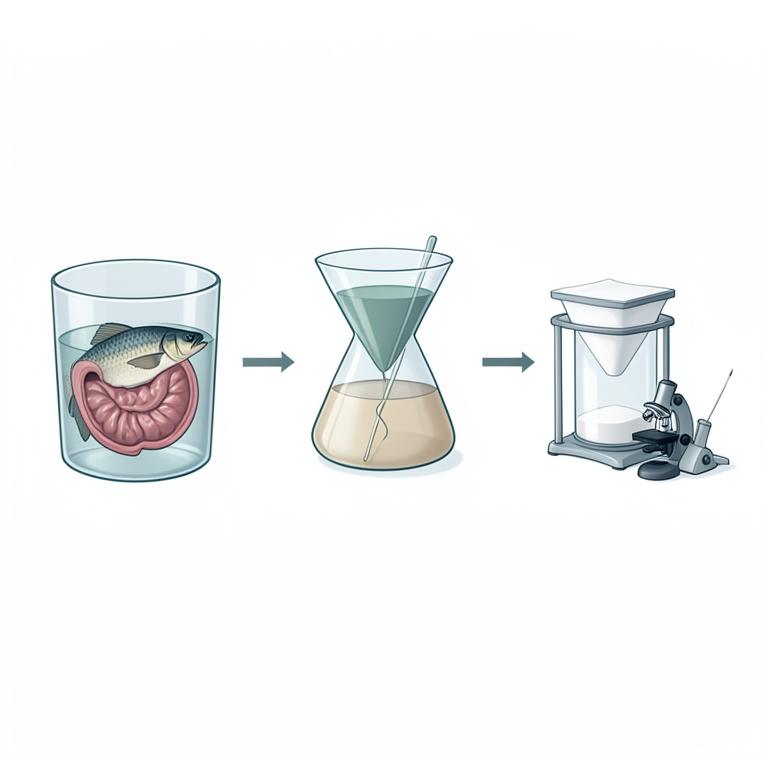
Microplastic Extraction Workflow
AI-generated conceptual illustration (brackish water fin-fish from the Bay of Bengal). It explains the idea and does not show study data.
View source evidence ↗Figures & tables
From the original paper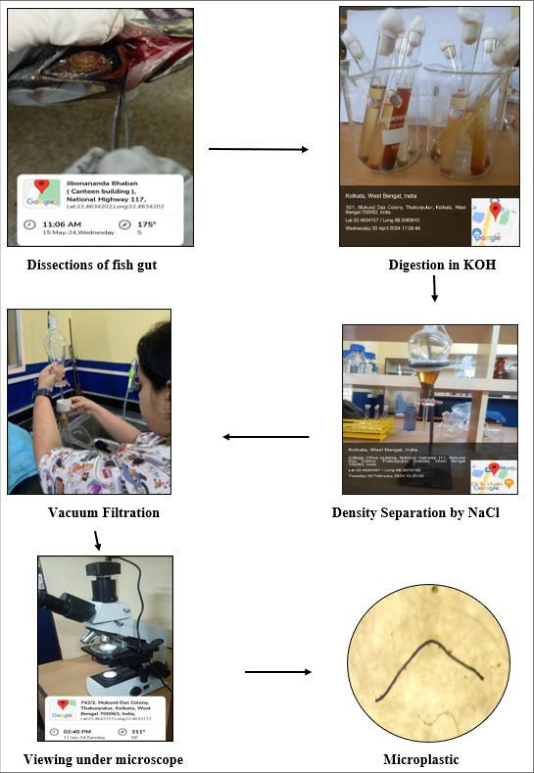 Figure 1
 Table 1
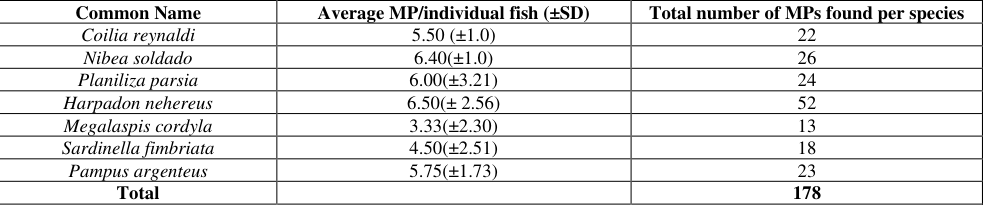 Table 2
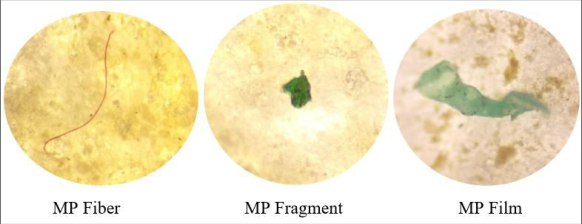 Figure 2
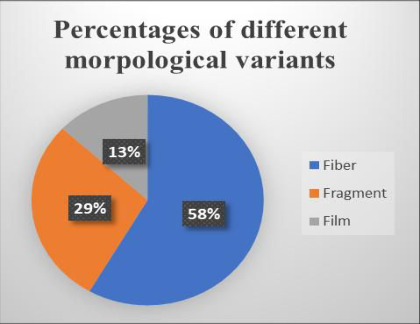 Figure 3
 Table 3
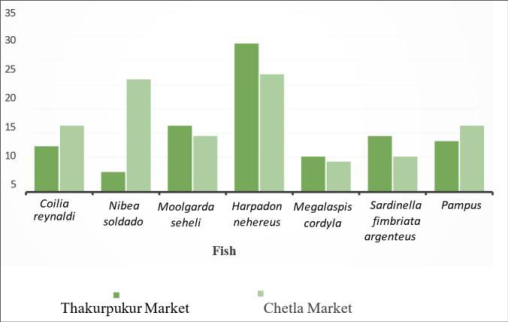 Figure 4
Introduction
Microplastics (MPs), defined as plastic particles less than 5 mm in size, are an emergent global environmental contaminant. They originate from the degradation of larger plastic items and from industrial processes including plastic production, textiles, and cosmetics manufacturing. Currently, an estimated 5.25 trillion microplastic particles float in oceans worldwide (Prata & Dias-Pereira, 2023) [13] . MPs reach aquatic systems via marine debris, industrial discharge, and consumer products, accumulating in marine, freshwater, and terrestrial environments. Their persistence raises concerns over impacts on aquatic life and food safety, as they are ingested by plankton and shellfish, entering the food chain and potentially reaching humans (Campanale et al., 2020) [5] . Recent evidence has also documented microplastics in human placenta, with PVC and nylon being the most frequently detected polymers (Carrington, 2024) [6] . Human exposure to microplastics is associated with oxidative stress, nucleic acid (DNA) damage, and inflammation, potentially leading to neurotoxicity and immune system disruption. In fish, microplastics can accumulate in the gastrointestinal tract, obstruct digestion, and impair feeding. They may adhere to skin or migrate to organs, causing nutritional deficits, growth disorders, tissue damage, and altered gene expression (You Li et al., 2021 and Khan et al., 2024) [17,10] . Furthermore, microplastics may act as vectors for persistent organic pollutants and endocrine disruptors, exacerbating toxic effects. Studies indicate that microplastics can be found in 75% of commercially important fish species (Clere et al., 2022) [7] . Another study established that after being exposed to microplastics, fish can suffer from neurotoxicity, and behavioural abnormalities (Bhuyan, 2022) [3] . This research was undertaken to assess the occurrence and characteristics of microplastic contamination in commercially available brackish water fin-fish species.
Materials and Methods
Materials and Methods
Sample Collection
Seven commercial brackish water fin-fish species: Bombayduck [ Harpadon nehereus (Hamilton, 1822)], Amadi [ Coilia reynaldi Valenciennes, 1848], Bhola Bhetki [ Nibea soldado (Lacepède, 1802)], Silver Pomfret [ Pampus argenteus (Euphrasen, 1788)], Goldspot mullet [Planiliza parsia (Hamilton, 1822)], Horse Mackerel [ Megalaspis cordyla (Linnaeus, 1758)] and Fringescale sardinella [Sardinella fimbriata (Valenciennes, 1847)] with a total number of 32 individuals (n=32) were bought from the fishermen at Thakurpukur and Chetla fish market, Kolkata. The fishes collected at Thakurpukur market were obtained from Diamond Harbour fish landing site, and fishes from Chetla market were obtained from Namkhana fish landing station. Thereafter, the fishes were immediately brought to the laboratory for further analysis.
Microplastic Extraction
Fish morphometric parameters [total length (TL), standard length (SL), gut length (GL), gut weight, body weight, etc.] were recorded. Gut contents (stomach and intestine) were dissected, placed in clean petri dishes, and processed using standard protocols. The entire gut was digested with 10-15 ml of 15% (w/v) KOH in glass tubes at 60°C for 24 hours (48 hours for gills). Post-digestion, samples underwent density separation using 30% NaCl solution. Floating particles were vacuum-filtered (8-10 µm Whatman glass microfiber). Filter papers were dried and analyzed with a stereomicroscope. Procedural steps are summarized below (Fig. 1).
Fig 1: Procedural Steps of Microplastic Extraction
Fig 1: Procedural Steps of Microplastic Extraction
Microplastic Analysis
Filters were examined under stereomicroscope and compound microscope (100x, 400x), and MPs were enumerated as items per individual. The hot needle test verified microplastic identity. The morphological type (fiber, fragment, film) and color were documented and photographed.
Quality Control
To prevent contamination, all personnel used lab coats and sterilized latex gloves. All laboratory equipment was autoclaved and rinsed with distilled water before use. Glassware was preferred over plastic. Solutions (distilled water, KOH, NaCl) were freshly prepared and sterilized for each batch.
Data Analysis
Microplastic abundance in fish gut and gills was expressed as MP/individual ± standard error of mean. Statistical analyses, including ANOVA, tested differences among species and locations (α = 0.05). Graphical summaries were generated in Microsoft Excel.
Results
Sample Overview: A total of 32 fishes from seven species were analyzed. For Harpadon nehereus, eight specimens were examined (n=8); for each of the other six species, four individuals were examined (n=24). Morphometric characters like standard length, total length, body weight, gut weight, gill weight were taken and the quantitative values have been mentioned in Table -1
Morphological Types
Three types of MPs were identified in the fish gut (Fig. 2): fibers (58%), fragments (29%), and films (13%). Films were observed only in four species: Coilia reynaldi, Nibea soldado, Harpadon nehereus, and Sardinella fimbriata.
Fibers were the most abundant (58%) microplastic type in all seven species. Microplastic fragments (29%) were isolated from all the fish species except Megalaspis cordyla.
Films were the least obtained (13%) type of microplastic found in Coilia reynaldi, Nibea soldado, Harpadon nehereus and Sardinella fimbriata (Fig. 3). Similar proportions of microplastic types were found in six of the species, except for Megalaspis cordyla. Harpadon nehereus had the highest average microplastic number (abundance), at 6.5 (±2.56) items per individual fish. Megalaspis cordyla had the lowest average microplastic number, at 3.33 (±2.30) items per individual fish (Table -2). The ANOVA indicated a statistically significant difference when all the species of the commercially available brackish water fish were considered (F = 2.738, p = 0.034). Average microplastic abundance per fish species in two different fish market locations has been presented in the Figure -4. In our study, the microplastic abundance of Nibea soldado in Fishing Market Chetla Market is relatively much higher than the Thakurpukur Market. However, ANOVA test found no significant difference between these two locations (F = 0.046, p = 0.832).
Fig 4: Comparison of Microplastic Abundance In Fish Species From Two Markets
Colour Distribution There were five different types of colours of MPs observed (Table . 3). Red was the most common colour (29.51%), followed by black (22.09%), blue (19.86%), brown (18.21%), and green (10.32%).
Statistical Analysis
ANOVA indicated significant differences among species (F = 2.738, p = 0.034). No significant difference in microplastic abundance was found between the two market locations (F = 0.046, p = 0.832).
Discussion
Synthetic plastics from land-based activities, such as litter, agricultural runoff, and sewage can enter aquatic environments through countless pathways including rivers, streams, and storm drains. In marine environments few activities like fishing gear, shipping, and offshore drilling can also contribute to plastic pollution. Photo-degradation process can break down the large sized plastics through exposure to sunlight, leading to the formation of microplastics. Plastic can be broken down through mechanical forces (mechanical degradation) such as waves and currents, which can break it into smaller fragments called micro-or nanoplastics. Even biodegradable agents like bacteria and fungi can break plastics into smaller components. Plastics can also be broken down through chemical degradation, such as hydrolysis and oxidation. Microplastics can also come from a variety of sources, including cosmetics, clothing, and industrial processes.
It is familiar to all that fish are cold-blooded, primary aquatic vertebrates found in various aquatic environments, including freshwater as well as brackish water. Ecologically they play the crucial roles in food web dynamics, nutrient cycling, and maintaining ecosystem health and resilience, acting as both consumer and prey and contributing to the overall stability of marine environments. Some fish species consume primary producers or detritus and on that basis they are placed at the second trophic level. Many fish species are carnivores, occupying higher trophic levels (3 rd and above) and few are apex predators occupying the highest trophic levels (feeding on other fish and marine mammals). Out of seven studied fish species, Bombay duck, a demersal fish, inhabits deep water offshore on sandy mud bottom for most of the year, but also gathers in large shoals in deltas of rivers to feed during monsoons (Frimodt, 1995 and Yamada et.al., 1995) [9,16] . Amedi, a pelagic fish, occurs in coastal and tidal stretches of rivers. They feed on copepods, prawns, larval decapods and other crustaceans. Bhola Bhetki, a demersal fish, inhabits shallow coastal waters and estuaries (Sasaki, 2001) [14] . Juveniles occur in brackish estuaries and often ascend the lower reaches of large, turbid rivers (Allen, 1991) [2] . It feeds on small fishes and invertebrates. Silver Pomfret is a demersal fish species and usually found in schools over muddy bottoms. Adults feed on ctenophores, salps, medusae, and other zooplankton groups. Goldspot mullet is a demersal fish found in shallow coastal waters, estuaries, lagoons, and sometimes entering tidal rivers. It feeds on small algae, diatoms, and other organic matter. Adult Horse Mackerel, pelagic fish, are primarily oceanic, pelagic schooling species rarely seen on reefs (Kuiter and Tonozuka, 2001; Allen and Erdmann, 2012) [11,1] . They are carnivorous and feed mainly on smaller fish (Fischer et.al., 1990) [8] . Fringe scale sardinella, a pelagic fish species, forms schools in coastal water body and prefer to feed on plankton species like diatoms, dinoflagellates, zooplankton and unrecognisable matter (Yagnesh and Hitesh, 2022) [15] . The present study established that microplastics are ingested by a considerable number of fishes from a range of species feeding in both pelagic and demersal environments. Ingestion of this debris probably occurred accidently during their normal feeding activity. The demersal fish species are generally carnivorous feeding on benthic fish, crustaceans, International Journal of Biology Sciences https://www.biologyjournal.net molluscs etc. whereas, fish feeding in pelagic waters, feed on pelagic fish and other invertebrates. The planktivorous fish may ingest fibres of the same colour as prey items (Boerger et al., 2010) [4] . Further research work is needed to establish the potential consequences.
Conclusion
The results of this study indicate microplastic ingestion by commercially available brackish water fishes from Diamond Harbour and Namkhana marine fish landing stations, suggesting a potential route of microplastic exposure of humans. The most abundant microplastics found in this study were fibres. Bombay-duck (Harpadon nehereus) was highly contaminated, probably due to its demersal feeding habit. Marine fish consumption is a natural option especially to people staying in densely populated urban region. The brackish water fishes pose a serious question of seafood safety. Additionally, microplastics are capable of penetrating root systems and contaminating fruits and vegetables. The foundation of our existence is increasingly being impacted by the food we eat and the ubiquitous presence of microplastics. There is growing evidence of microplastics posing serious threat to public health (Pachuau et al, 2024. Further research is needed to understand the toxicokinetics and toxicodynamics of microplastic exposure in fish species.
Figures and tables from the paper
| Species | Total Length (cm) | Standard Length (cm) | Weight(gm) | Gut Weight (gm) |
|---|---|---|---|---|
| Coilia reynaldi | 16.95 ± 1.9 | 15.41±1.8 | 17.5±4.70 | 0.36±0.24 |
| Nibea soldado | 16.48 ± 2.41 | 13.77±1.91 | 64±34.98 | 1.32±0.58 |
| Planiliza parsia | 16.15±0.49 | 13.15±0.63 | 49.2±4.52 | 2.7±0.55 |
| Harpadon nehereus | 22.26±1.75 | 19.73±1.93 | 53.03±5.55 | 1.26±0.76 |
| Megalaspis cordyla | 25.3±0.56 | 20.95±0.91 | 105±7.03 | 2.6±0.14 |
| Sardinella fimbriata | 13.9±0.56 | 11.2±0.42 | 27.15±1.48 | 1.6±0.28 |
| Pampus argenteus | 17.85±0.07 | 12.35±0.77 | 78.85±8.13 | 3.16±0.32 |
Table text extracted from the original PDF; superscript letters are shown inline. The original table image is below.
View original table image
| Common Name | Average MP/individual fish (±SD) | Total number of MPs found per species |
|---|---|---|
| Coilia reynaldi | 5.50 (±1.0) | 22 |
| Nibea soldado | 6.40(±1.0) | 26 |
| Planiliza parsia | 6.00(±3.21) | 24 |
| Harpadon nehereus | 6.50(± 2.56) | 52 |
| Megalaspis cordyla | 3.33(±2.30) | 13 |
| Sardinella fimbriata | 4.50(±2.51) | 18 |
| Pampus argenteus | 5.75(±1.73) | 23 |
| Total | 178 |
Table text extracted from the original PDF; superscript letters are shown inline. The original table image is below.
View original table image
| Species | Red | Black | Blue | Green | Brown |
|---|---|---|---|---|---|
| Coilia reynaldi | 36.68% | 18.65% | 13.88% | 9.77% | 21.02% |
| Nibea soldado | 16.58% | 27.83% | 22.07% | 15.28% | 18.24% |
| Planiliza parsia | 42.26% | 16.02% | 0.59% | 25.11% | 16.02% |
| Harpadon nehereus | 28.65% | 30.17% | 11.58% | 14.09% | 15.51% |
| Megalaspis cordyla | 19.43% | 23.51% | 30.86% | 07.98% | 18.22% |
| Sardinella fimbriata | 36.17% | 0.00% | 25.37% | 0.00% | 38.46% |
| Pampus argenteus | 26.83% | 38.48% | 34.69% | 0.00% | 0.00% |
Table text extracted from the original PDF; superscript letters are shown inline. The original table image is below.
View original table image
References
17 in the original paper- Allen GR, Erdmann MV. Reef fishes of the East Indies. Volumes I-III. Perth, Australia: Tropical Reef Research; 2012.
- Allen GR. Field guide to the freshwater fishes of New Guinea. Publication No. 9. Madang, Papua New Guinea: Christensen Research Institute; 1991. p. 1-268.
- Bhuyan MS. Effects of microplastics on fish and in human health. Frontiers in Environmental Science. 2022;10:827289. p. 1-16.
- Boerger CM, Lattin GL, Moore SL, Moore CJ. Plastic ingestion by planktivorous fishes in the North Pacific Central Gyre. Marine Pollution Bulletin. 2010;60(12):2275-2278.
- Campanale C, Massarelli C, Savino I, Locaputo V, Uricchio VF. A detailed review study on potential effects of microplastics and additives of concern on human health. International Journal of Environmental Research and Public Health. 2020;17(4):1212. p. 1-27.
- Carrington D. Microplastics found in every human placenta tested in study. The Guardian. 2024 Feb 27; p. 1-4.
- Clere IK, Ahmmed F, Remoto PJG III, Fraser-Miller SJ, Gordon KC, Komyakova V, Allan BJM. Quantification and characterization of microplastics in commercial fish from southern New Zealand. Marine Pollution Bulletin. 2022;184:114121. p. 1-9.
- Fischer W, Sousa I, Silva C, de Freitas A, Poutiers JM, Schneider W, Borges TC, Feral JP, Massinga A. FAO species identification sheets for fishery purposes: Field guide to commercial marine and brackish-water species of Mozambique. Rome: FAO; 1990. p. 1-424.
- Frimodt C. Multilingual illustrated guide to the world's commercial warmwater fish. Oxford, England: Fishing News Books; 1995. p. 1-215.
- Khan ML, Hassan HU, Khan FU, Ghaffar RA, Rafiq N, Bilal M, Khooharo AR, Ullah S, Jafari H, Nadeem K, Siddique MAM, Arai T. Effects of microplastics in freshwater fishes health and the implications for human health. Brazilian Journal of Biology. 2024;84:e272524. p. 1-12.
- Kuiter RH, Tonozuka T. Pictorial guide to Indonesian reef fishes. Part 1: Eels-Snappers (MuraenidaeLutjanidae). Australia: Zoonetics; 2001. p. 1-302.
- Pachuau L, Rebecca V, Khawlhring L, Punuri JB. Microplastics: their effects on the environment, human health and plant ecosystems. Environmental Pollution & Management. 2024;1:248-259.
- Prata JC, Dias-Pereira P. Microplastics in terrestrial domestic animals and human health: implications for food security and food safety and their role as sentinels. Animals (Basel). 2023;13(4):661. p. 1-19.
- Sasaki K. Sciaenidae. Croakers (drums). In: Carpenter KE, Niem VH, editors. FAO species identification guide for fishery purposes: The living marine resources of the Western Central Pacific. Vol. 5. Rome: FAO; 2001. p. 3117-3174.
- Yagnesh M, Hitesh K. Food and feeding habits of Sardinella longiceps Valenciennes, 1847 caught along Veraval coast of Gujarat. Indian Journal of Fisheries. 2022;69(2):1-8.
- Yamada U, Shirai S, Irie T, Tokimura M, Deng S, Zheng Y, Li C, Kim YU, Kim YS. Names and illustrations of fishes from the East China Sea and the Yellow Sea. Tokyo, Japan: Overseas Fishery Cooperation Foundation; 1995. p. 1-288.
- Li Y, Sun Y, Li J, Tang R, Miu Y, Ma X. Research on the influence of microplastics on marine life. IOP Conference Series: Earth and Environmental Science. 2021;631(1):012006. p. 1-6.