
Research article · 2025 · Full text
International Journal of Advanced Chemistry ResearchChemical characterization of biochar and its influence on nutrient dynamics in Pleurotus ostreatus cultivation
Volume 7(9) · Pages 51–55 · DOI: 10.33545/26646781.2025.v7.i9a.337 ↗
Research areasFungal Biology and ApplicationsMycorrhizal Fungi and Plant InteractionsPolysaccharides and Plant Cell Walls
Abstract
Author-writtenThe increasing interest in sustainable agricultural inputs has positioned biochar as an important soil amendment with potential applications in mushroom cultivation systems. Biochar, a carbon-rich, porous material produced through the pyrolysis of lignocellulosic biomass, possesses high surface area, enhanced cation-exchange capacity, and long-term chemical stability, making it a promising substrate component for edible mushroom production. The cultivation of Pleurotus ostreatus, one of the most commercially important oyster mushroom species, depends on substrates rich in nutrients and stable physicochemical conditions. Chemical characterization of biochar, including pH, electrical conductivity, nutrient content, fixed carbon, ash content, and functional groups, plays a critical role in determining its suitability for substrate supplementation. However, despite rising global research on biochar, limited studies have systematically evaluated how its chemical properties influence nutrient dynamics during P. ostreatus colonization, enzymatic activity, and fruiting performance. Understanding these interactions is essential to optimize substrate formulation, enhance yield, and promote resource-efficient mushroom production. This research aims to evaluate the chemical characteristics of biochar derived from agricultural residues and examine its influence on nutrient availability, substrate decomposition, and mushroom productivity. It also hypothesizes that biochar with balanced pH, moderate electrical conductivity, and adequate mineral composition can enhance nutrient retention and support improved mycelial growth. The findings are expected to contribute to sustainable biotechnology and waste-to-value systems by integrating biochar into mushroom cultivation frameworks.
Summary
Source-checkedPlain-language reading of the full paper, prepared with AI and checked against the text. Each point links to the authors' own words.
Why it matters
- Biochar is a stable, porous, carbon-rich material made from biomass pyrolysis that is considered a promising addition to mushroom growth substrates due to its high surface area and cation-exchange capacity. View evidence ↗
- The commercial production of the oyster mushroom Pleurotus ostreatus requires substrates that provide stable physicochemical conditions and high nutrient levels. View evidence ↗
- There is a lack of systematic research on how the specific chemical properties of biochar affect the nutrient dynamics, enzymatic activity, and fruiting of P. ostreatus. View evidence ↗
The question
- The study aims to characterize biochar from agricultural residues and determine how it influences mushroom productivity, substrate decomposition, and nutrient availability. View evidence ↗
- The authors hypothesize that biochar with moderate electrical conductivity, balanced pH, and sufficient minerals will improve mycelial growth and nutrient retention. View evidence ↗
What they did
- Biochar was produced from rice husk and wheat straw using a laboratory-scale fixed-bed reactor at temperatures between 450-500 °C. View evidence ↗
- The experiment used pasteurized wheat straw as the primary substrate, amended with biochar at concentrations of 0% (control), 5%, and 10% (w/w). View evidence ↗
- Substrates were inoculated with 5% grain-based spawn, incubated at 25 ± 2 °C in the dark, and then fruited at 22-24 °C with 85-90% relative humidity. View evidence ↗
- The study used a completely randomized design with three replicates per treatment, analyzing data via ANOVA with a significance threshold of p < 0.05. View evidence ↗
What they found
- Adding biochar increased the substrate pH from 6.4 (control) to 6.9 (5% biochar) and 7.2 (10% biochar), shifting the environment from slightly acidic to near-neutral. View evidence ↗
- Biochar amendment increased available phosphorus (from 21.3 to 28.4 mg kg⁻¹) and exchangeable potassium (from 145.6 to 184.9 mg kg⁻¹) compared to the control. View evidence ↗
- Substrates with 5% and 10% biochar showed a slower decline in available nitrogen during colonization, indicating better nutrient retention and a more gradual release. View evidence ↗
- The 5% biochar treatment achieved the highest biological efficiency (88.9%), which was significantly higher than the control (72.4%). View evidence ↗
- Mycelial colonization time was reduced from 19.7 days in the control to 17.1 days (5% biochar) and 17.8 days (10% biochar). View evidence ↗
What it means
- The authors recommend that mushroom growers apply biochar at a rate of approximately 5% to optimize yield and substrate conditions. View evidence ↗
- The study concludes that appropriately characterized and dosed biochar significantly improves the yield, nutrient dynamics, and substrate environment for P. ostreatus. View evidence ↗
- The authors state that further research is needed using different mushroom species, pyrolysis temperatures, and feedstocks to refine application guidelines. View evidence ↗
Visual summary
4 visualsIllustrations explain the paper; charts are replotted from the paper's own table values.
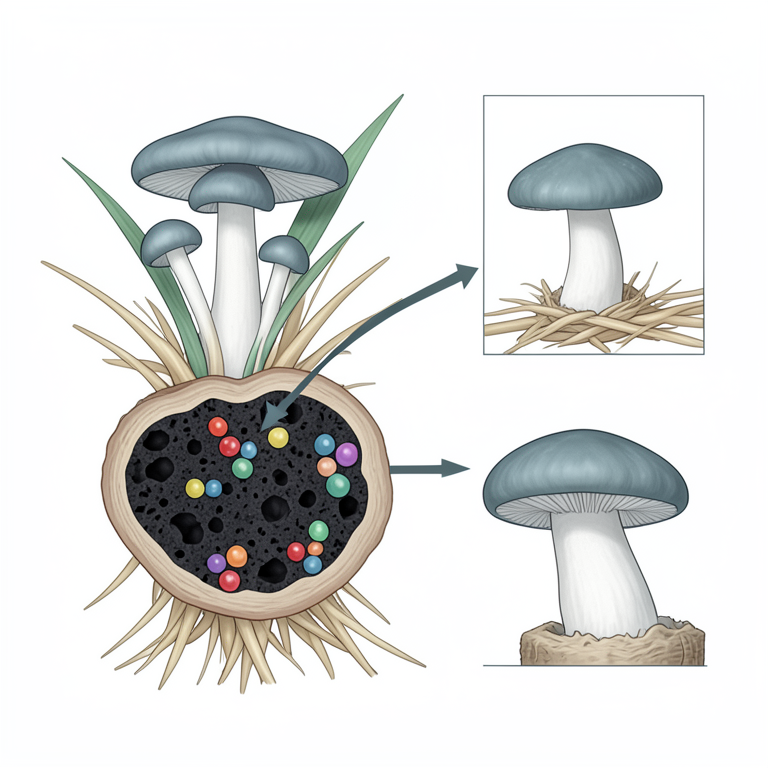
Biochar's Role in Substrate Chemistry
AI-generated conceptual illustration (Pleurotus ostreatus mushrooms growing on straw substrate with biochar particles). It explains the idea and does not show study data.
View source evidence ↗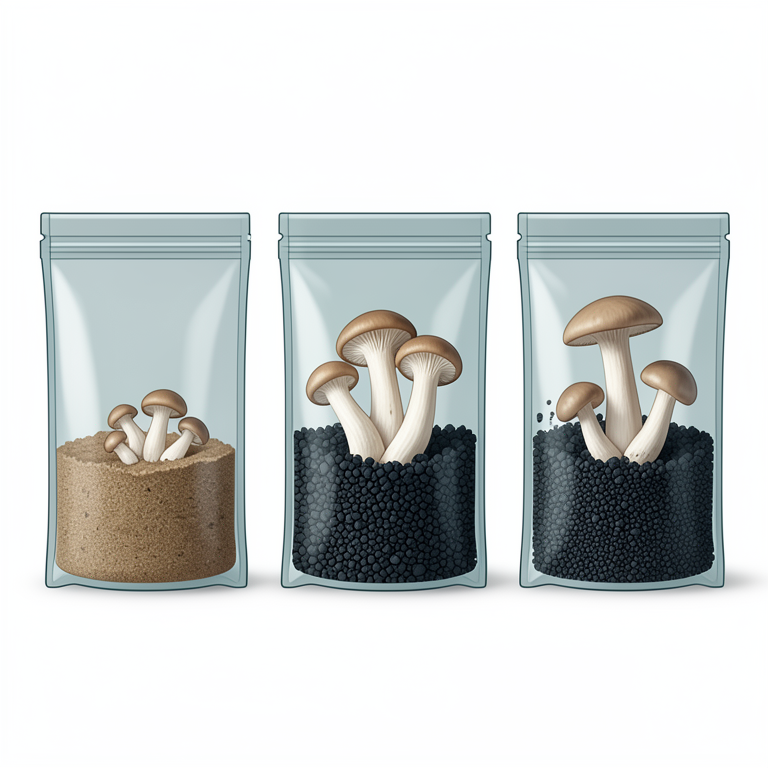
Yield Comparison Concept
AI-generated conceptual illustration (Pleurotus ostreatus mushrooms in cultivation bags). It explains the idea and does not show study data.
View source evidence ↗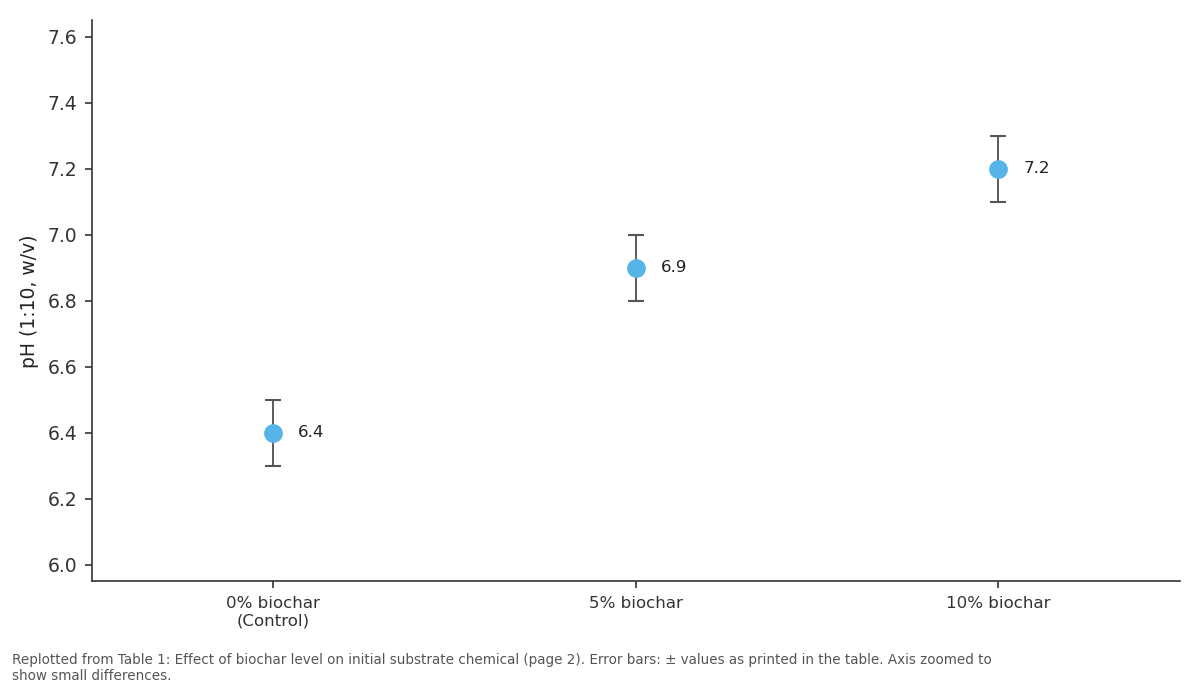
pH (1:10, w/v): 0% biochar (Control) vs 5% biochar vs 10% biochar
Replotted from Table 1 (page 2) of the original paper. Every bar is the paper's own table value.
View source evidence ↗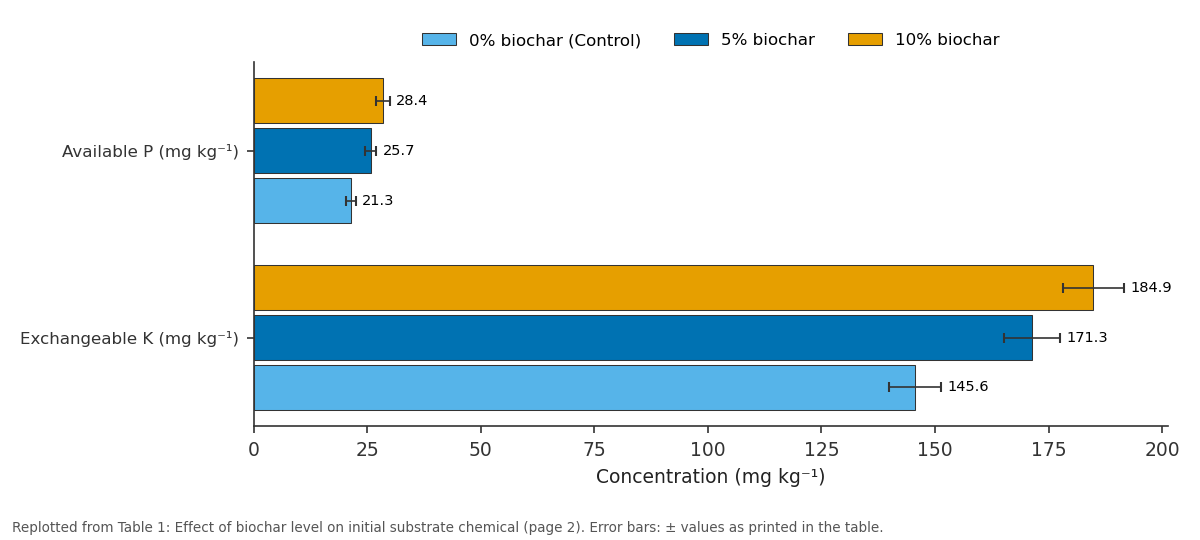
0% biochar (Control) and 5% biochar and more: Available P (mg kg⁻¹) vs Exchangeable K (mg kg⁻¹)
Replotted from Table 1 (page 2) of the original paper. Every bar is the paper's own table value.
View source evidence ↗Figures & tables
From the original paper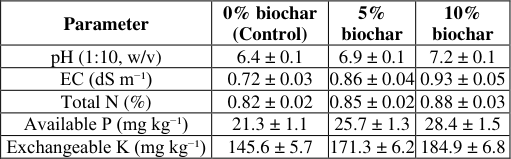 Table 1
 Table 2
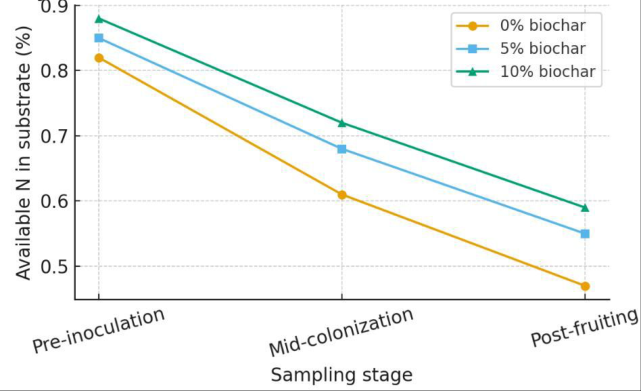 Figure 1
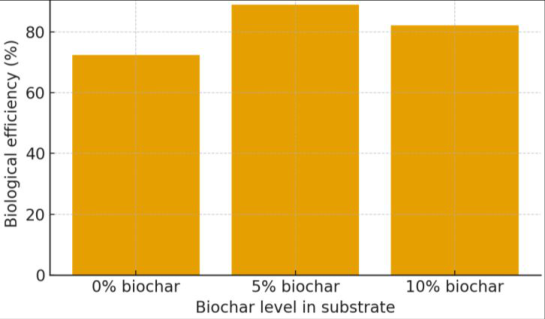 Figure 2
Introduction
The global demand for sustainable agricultural production systems has intensified interest in circular bioresource management, particularly the conversion of agricultural residues into value-added products. Biochar, a carbon-dense and chemically stable by-product of biomass pyrolysis, has been widely investigated for its agronomic benefits due to its high porosity, alkaline pH, cation-exchange capacity, and ability to modulate nutrient retention [1,2] . These properties make biochar a potential supplement not only for soil-based cropping systems but also for alternative cultivation platforms such as edible mushroom production. Pleurotus ostreatus, a widely cultivated oyster mushroom valued for its nutritional and medicinal qualities, requires substrates with favorable nutrient composition, adequate aeration, and buffering capacity for optimal mycelial development [3,4] . In this context, biochar offers advantages including improved aeration, enhanced water-holding capacity, and slow-release mineral availability, which may positively influence the biochemical environment required for fungal colonization and yield formation. Although the application of biochar in farming and soil remediation is well established, its targeted use in mushroom cultivation remains relatively underexplored. Previous research has demonstrated that biochar can enhance microbial activity, nutrient cycling, and enzymatic degradation processes in various growth media [5,6] , yet the specific mechanisms governing its interactions with fungal species such as P. ostreatus are not well defined. Variations in feedstock type, pyrolysis temperature, and resulting chemical composition of biochar significantly influence its performance. For instance, high-temperature biochar typically exhibits greater aromaticity and surface area but lower nutrient content, whereas low-temperature biochar retains more labile organic matter and minerals [7][8][9] . These distinctions are critical because mushrooms rely on a delicate balance of nitrogen, carbon, and mineral nutrients, and any alteration in substrate chemistry directly affects mycelial colonization rates, enzyme secretion, and fruit body formation. A persistent gap in the literature involves inadequate linkage between biochar's chemical constituents and nutrient dynamics within mushroom substrates. Studies have noted that amendments such as wood ash, compost, and mineral additives can alter substrate pH, influence nitrogen mineralization, and affect heavy metal mobility [10,11] . However, comparable systematic evaluations of biochar remain limited. Moreover, excessive application of alkaline or high-EC biochar may inhibit fungal growth by creating osmotic imbalance or altering substrate buffering capacity. Thus, understanding the optimal chemical profile of biochar compatible with P. ostreatus cultivation is essential.
Materials and Methods
Materials and Methods
Materials
The research was conducted using biochar produced from locally available agricultural residues, primarily rice husk and wheat straw, selected due to their high lignocellulosic composition and suitability for pyrolysis-based conversion [1, 7, 9] . Feedstocks were air-dried to reduce moisture content to below 10% prior to processing. Biochar was generated at a controlled pyrolysis temperature of 450-500 °C in a laboratory-scale fixed-bed reactor, as temperatures within this range are known to retain moderate nutrient content while ensuring structural stability [7,8] . The resulting biochar was crushed and sieved to obtain particle sizes between 1-2 mm, consistent with recommendations for substrate incorporation in fungal cultivation [13,14] . Analytical-grade reagents, standards, and deionized water were used for chemical characterization. The mushroom species Pleurotus ostreatus strain PO-12 was procured from a certified spawn production center, and wheat straw was used as the primary substrate due to its high hemicellulose and cellulose content, which support enzymatic degradation during mushroom growth [3,4] . Substrate materials were chopped, washed, and pasteurized at 65 °C for 6 h before biochar amendment. Biochar doses were standardized at 0%, 5%, and 10% (w/w), reflecting levels commonly used in previous studies investigating nutrient dynamics and microbial interactions in biochar-modified growth environments [5,6,12] . All materials were stored under dry and sterile conditions to minimize microbial contamination.
Methods
Chemical characterization of the biochar samples was carried out following established analytical protocols for determining pH, electrical conductivity (EC), ash content, fixed carbon, and elemental composition [2,9,11] . Biochar pH and EC were measured in a 1:10 (biochar: water) suspension using calibrated digital meters. Total carbon and nitrogen were assessed via dry combustion, while mineral elements including potassium, calcium, and magnesium were quantified using atomic absorption spectrophotometry, based on earlier methodologies evaluating nutrient retention and release from biochar [5,12] . Fourier-transform infrared spectroscopy (FTIR) was employed to identify surface functional groups relevant to nutrient exchange processes and substrate interactions [11,16] . Experimental substrate mixtures were prepared by thoroughly blending pasteurized wheat straw with the designated biochar concentrations. Moisture content was adjusted to 65%, and substrates were filled into sterile polypropylene bags fitted with microfilters. After cooling, each bag was inoculated with 5% grain-based P. ostreatus spawn and incubated at 25 ± 2 °C in a dark environment until full mycelial colonization, following established cultivation protocols [3,13] . Post-colonization, fruiting was initiated under controlled temperature (22-24 °C), relative humidity (85-90%), and diffused light. Nutrient dynamics during colonization were evaluated by analyzing nitrogen, phosphorus, and potassium availability in substrate extracts collected at three intervals: pre-inoculation, midcolonization, and post-fruiting. Yield parameters including biological efficiency, mycelial growth rate, and number of fruiting bodies were measured across treatments, and comparisons were made to determine the influence of biochar characteristics on fungal performance, as highlighted in earlier works examining substrate amendments and mushroom productivity [10,14,15] . All experimental units were arranged in a completely randomized design with three replicates per treatment. Data were analyzed using ANOVA, and significance was determined at p < 0.05.
Results
Results
Effect of Biochar on Substrate Chemical Properties
Incorporation of biochar significantly modified the chemical properties of the Pleurotus ostreatus substrate compared with the non-amended control. Substrate pH increased from slightly acidic in the control (6.4) to near-neutral values in the 5% and 10% biochar treatments (6.9 and 7.2, respectively), consistent with the liming effect of alkaline biochar reported in earlier studies [1,2,11] . Electrical conductivity (EC) showed a modest but significant increase with higher biochar levels, indicating the contribution of soluble mineral ions from the pyrolyzed material [5,12] . Total nitrogen, available phosphorus, and exchangeable potassium were higher in the biochar-amended substrates, reflecting the nutrient-retention and cation-exchange capacity attributed to biochar structure [1,5,11,16] . These observations support the concept that biochar can act as both a nutrient carrier and a buffering agent within lignocellulosic matrices used for mushroom cultivation [6,9,13] . The increase in nutrient availability with biochar amendment aligns with earlier reports that biochar enhances nutrient retention and slows leaching in organic substrates [5,12,16] . At the same time, the moderate EC values indicate that the application rates used in this research did not create an osmotic stress environment for the fungal mycelium [6,10] . The observed chemical profiles are consistent with biochars produced at intermediate pyrolysis temperatures (450-500 °C) from lignocellulosic feedstocks [7][8][9] .
Nutrient Dynamics During Colonization and Fruiting
Nitrogen dynamics in the substrate indicated progressive depletion across all treatments from pre-inoculation to postfruiting, reflecting nutrient uptake by P. ostreatus during mycelial growth and basidiocarp formation [3,4,14] . However, the decline in available N was less pronounced in the biochar-amended substrates, particularly at 5% and 10% levels, suggesting improved retention and more gradual release of nitrogenous compounds (Figure 2). Similar trends were observed for phosphorus and potassium (data not shown), supporting previous findings on biochar-mediated nutrient buffering [1,5,12] . These patterns are in agreement with the functional role of biochar as a porous matrix capable of adsorbing and exchanging nutrients during microbial colonization [6,11,16] .
Mycelial Growth, Colonization Time, and Yield
Biochar supplementation had a significant effect on mycelial growth rate and biological efficiency (BE) of P. ostreatus. The 5% biochar treatment exhibited the highest BE (88.9%), significantly greater (p < 0.05) than the control (72.4%), whereas the 10% treatment showed an intermediate response (82.1%), indicating a potential threshold beyond which additional biochar does not further enhance productivity (Figure 1). Mycelial colonization time was reduced from 19.7 days in the control to 17.1 and 17.8 days in the 5% and 10% biochar treatments, respectively, suggesting that moderate biochar inclusion improves aeration and moisture regulation in the substrate [3,[13][14][15] . The positive response at 5% is consistent with the hypothesis that balanced substrate chemistry, including near-neutral pH and adequate N and K availability, supports optimal fungal physiology [2,4,10,11] . Analysis of variance (one-way ANOVA) indicated that biochar level significantly affected BE, number of fruiting bodies, and mean fruit body weight (p < 0.05). Post-hoc comparisons revealed that the 5% biochar treatment was significantly superior to the control, while the 10% treatment did not differ significantly from 5% for BE but showed slightly lower values, possibly due to higher EC and more compact substrate structure at greater biochar inclusion. These findings are in line with previous observations where moderate rates of structural or mineral amendments enhanced mushroom yield, whereas excessive amounts impaired water-holding balance or created localized nutrient imbalances [10,13,14] . The positive effects observed here corroborate earlier work on the potential of biochar as a growth supplement in P. ostreatus cultivation [15] , further emphasizing the importance of optimizing dose and chemical profile. Overall, the results demonstrate that biochar, when characterized and applied appropriately, can beneficially modify substrate chemistry, improve nutrient retention, and enhance the productivity of P. ostreatus cultivation systems. This supports its integration into sustainable mushroom production frameworks and aligns with broader evidence on biochar's multifunctional role in biological and agronomic applications [1,2,5,6,11,16] .
Discussion
The findings of this research demonstrate that biochar amendments significantly influenced substrate chemistry, nutrient dynamics, and the overall productivity of Pleurotus ostreatus. The increase in substrate pH observed with 5% and 10% biochar is consistent with earlier research highlighting the liming effect of biochar produced from lignocellulosic feedstocks [1,2,11] . Because P. ostreatus favors a near-neutral to slightly acidic environment, the moderated pH shifts likely provided a more stable biochemical setting for enzymatic activities associated with cellulose and hemicellulose degradation [3,4] . The modest rise in electrical conductivity across treatments was within physiologically acceptable limits for mushroom cultivation, reaffirming previous findings that biochar-derived mineral ions enhance nutrient availability without creating osmotic stress when applied at moderate rates [5,6,10] . This supports the hypothesis that biochar improves substrate buffering capacity while contributing essential micronutrients and functional groups that facilitate ion exchange [11,16] . The improved nutrient retention in biochar-amended substrates, especially in terms of nitrogen and potassium, aligns with observations from soil and compost studies where biochar effectively adsorbs ammonium, nitrate, and other mobile nutrients [5,12] . The slower decline in available nitrogen during colonization suggests that biochar modulates mineralization processes, creating a gradual release pattern favorable for fungal assimilation. Similar nutrient retention and delayed leaching effects have been attributed to the porous structure and surface chemistry of biochar, which enhances cation-exchange capacity and microbial colonization sites [1,6,11] . Furthermore, the FTIRdetected functional groups reported in related studies, such as carboxyl, hydroxyl, and aromatic structures, likely contributed to this nutrient-buffering effect [9,16] . These results support previous findings that biochar-amended substrates maintain more stable nutrient profiles over time [12] , which is crucial for sustained mycelial metabolic activity.
The improvements in mycelial growth rate and biological efficiency observed at 5% biochar highlight the positive interaction between balanced substrate aeration and nutrient availability. The reduction in colonization time reinforces earlier conclusions that biochar's porous matrix enhances oxygen diffusion and moisture regulation, two critical factors for rapid hyphal expansion [13,14] . Additionally, enhanced fruit body number and weight at 5% amendment further support evidence that moderate supplementation improves substrate structure without adversely affecting water-holding capacity or compaction. The slightly lower values observed at 10% biochar, while still greater than the control, suggest a threshold beyond which excess biochar may reduce substrate cohesiveness or increase EC enough to alter optimal physiological conditions. This aligns with prior reports that excessive mineral amendments or highly alkaline materials can impede fungal growth by altering osmotic balance or substrate microarchitecture [10,13] . The overall trends observed closely match earlier studies demonstrating the potential of biochar as a beneficial amendment in P. ostreatus cultivation. The enhanced yield and substrate performance in the 5% treatment corroborate previous work indicating that biochar, when applied at moderate levels, promotes structural integrity and nutrient retention without compromising substrate hydration or enzyme activity [15] . These outcomes collectively support the hypothesis that biochar with moderate nutrient levels, nearneutral pH, and stable carbon fractions can significantly enhance mushroom productivity. The consistency of the present results with established research on substrate amendments [1,2,5,6,11,12,14,15] further validates the role of biochar as a multifunctional supplement capable of improving both the physicochemical and biological aspects of mushroom cultivation systems.
Conclusion
The results of this research clearly demonstrate that biochar, when chemically characterized and incorporated at appropriate levels, has the potential to significantly improve the substrate environment, nutrient dynamics, and overall yield performance of Pleurotus ostreatus. The enhancements observed in substrate pH, nutrient retention, and biological efficiency indicate that biochar functions not merely as a structural amendment but as a multifunctional component capable of stabilizing the physicochemical properties of the growth medium. The superior performance of the 5% biochar treatment emphasizes the importance of using moderate supplementation rates, as this level offered the most desirable balance between improved aeration, moisture regulation, and nutrient buffering without compromising substrate cohesiveness or creating excessive alkalinity. These findings suggest that well-produced biochar derived from agricultural residues can serve as a sustainable and locally available input for improving mushroom production systems, reducing dependence on synthetic supplements, and promoting the efficient recycling of farm waste. At the same time, the slightly reduced benefits observed at 10% biochar highlight that higher doses may alter substrate structure or electrical conductivity beyond optimal physiological conditions, underscoring the need for controlled application levels. Therefore, practical recommendations arising from this research include encouraging small-and large-scale mushroom growers to adopt biochar application at rates around 5%, ensuring that the biochar used is produced at moderate pyrolysis temperatures to retain adequate nutrient content while maintaining structural stability. Additionally, growers should sieve biochar to uniform particle sizes to avoid compaction and ensure even substrate distribution, and they should regularly monitor substrate moisture and pH after biochar incorporation to maintain conditions favorable for mycelial colonization. For commercial operations, establishing routine biochar quality testing especially for pH, electrical conductivity, and carbon stability can help maintain consistency across production cycles. The integration of biochar into mushroom cultivation systems also offers opportunities for developing low-cost, environmentally friendly cultivation models that utilize abundant agricultural by-products, contributing to both economic efficiency and ecological sustainability. Further studies involving different feedstocks, pyrolysis temperatures, and mushroom species will help refine guidelines for broader application, but the current findings already provide strong evidence supporting the strategic use of biochar as a reliable substrate supplement. By adopting these recommendations, growers can enhance yield, promote resource-efficient production, and contribute to circular agricultural practices that strengthen long-term sustainability within the mushroom cultivation sector.
Figures and tables from the paper
| Parameter | 0% biochar (Control) | 5% biochar | 10% biochar |
|---|---|---|---|
| pH (1:10, w/v) | 6.4 ± 0.1 | 6.9 ± 0.1 | 7.2 ± 0.1 |
| EC (dS m⁻¹) | 0.72 ± 0.03 | 0.86 ± 0.04 | 0.93 ± 0.05 |
| Total N (%) | 0.82 ± 0.02 | 0.85 ± 0.02 | 0.88 ± 0.03 |
| Available P (mg kg⁻¹) | 21.3 ± 1.1 | 25.7 ± 1.3 | 28.4 ± 1.5 |
| Exchangeable K (mg kg⁻¹) | 145.6 ± 5.7 | 171.3 ± 6.2 | 184.9 ± 6.8 |
Table text extracted from the original PDF; superscript letters are shown inline. The original table image is below.
View original table image
| Parameter | 0% biochar (Control) | 5% biochar | 10% biochar |
|---|---|---|---|
| Colonization time (days) | 19.7 ± 0.6 | 17.1 ± 0.5 | 17.8 ± 0.4 |
| Biological efficiency (%) | 72.4 ± 2.3 | 88.9 ± 2.7 | 82.1 ± 2.5 |
| Number of fruiting bodies per bag | 23.4 ± 1.2 | 29.8 ± 1.5 | 27.6 ± 1.3 |
| Average individual fruit body weight (g) | 18.3 ± 0.9 | 21.7 ± 1.0 | 20.2 ± 0.9 |
Table text extracted from the original PDF; superscript letters are shown inline. The original table image is below.
View original table image
References
16 in the original paper- Lehmann J, Joseph S. Biochar for Environmental Management: Science and Technology. London: Earthscan; 2009.
- Chan KY, Van Zwieten L, Meszaros I, Downie A, Joseph S. Agronomic values of greenwaste biochar as a soil amendment. Aust J Soil Res. 2007;45(8):629-634.
- Sánchez C. Cultivation of Pleurotus ostreatus and other edible mushrooms. Appl Microbiol Biotechnol. 2010;85:1321-1337.
- Gupta S, Kapoor R. Nutritional and medicinal properties of oyster mushrooms. J Food Sci Technol. 2016;53(3):218-225.
- Steiner C, Glaser B, Teixeira WG, Lehmann J. Nitrogen retention and plant uptake in tropical soils amended with biochar. J Plant Nutr Soil Sci. 2008;171:893-899.
- Atkinson CJ, Fitzgerald JD, Hipps NA. Potential mechanisms for achieving agricultural benefits from biochar application. Plant Soil. 2010;337:1-18.
- Demirbas A. Effects of temperature on pyrolysis products from biomass. Energy Sources. 2004;27(5):471-482.
- Antal MJ, Grønli M. The art, science, and technology of charcoal production. Ind Eng Chem Res. 2003;42:16191640.
- Pereira R, Arruda M, Silva C. Characterization of biochar derived from agricultural residues. Bioresour Technol. 2011;102:11052-11058.
- Roy S, Chaudhuri S. Effects of organic amendments on decomposition and nutrient release. Soil Biol Biochem. 2003;35:849-857.
- Singh B, Lehmann J. Biochar: a multifunctional component of sustainable agriculture. Trends Plant Sci. 2011;16:105-112.
- Dai Z, Meng J, Muhammad N, Liu X, Wang H. The potential of biochar for reducing the release of nutrients to the environment. J Environ Manage. 2014;137:1-9.
- Koutrotsios G, Kalogeropoulos N, Bekatorou A. Substrate supplementation effects in Pleurotus cultivation. Food Chem. 2014;161:486-491.
- Adebayo G, Martínez-Cruz S, Torres N. Influence of lignocellulosic substrates on Pleurotus growth. Mycobiology. 2019;47(4):329-338.
- Bhattarai R, Karki N, Shakya S, Dhakal RP, Poudel P. Potential application of biochar as a growth supplement for mushroom cultivation (Pleurotus ostreatus). Int J Hortic Food Sci. 2024;6(1):21-26. DOI: 10.33545/26631067.2024.v6.i1a.181.
- Wu H, Yao X. Chemical and structural attributes of biochar and their role in nutrient retention. Soil Use Manag. 2013;29:124-130.