
Research article · 2025 · Full text
International Journal of Agriculture and Food ScienceSynergistic effects of pre-treatments and storage conditions on the shelf-life of white button mushrooms (Agaricus bisporus) packaged in biodegradable packaging
Volume 7(10) · Pages 640–650 · DOI: 10.33545/2664844x.2025.v7.i10i.932 ↗
Research areasPostharvest Quality and Shelf Life ManagementFungal Biology and ApplicationsNanocomposite Films for Food Packaging
Abstract
Author-writtenThis research explores the efficacy of combining hydrogen peroxide washing treatments with innovative, eco-friendly packaging solutions to extend the shelf-life of white button mushrooms. The study evaluates the impact of these treatments under varying storage conditions, emphasizing their potential to maintain product quality and safety while reducing waste and reliance on conventional plastics. Mushrooms were washed with tap water, distilled water, and hydrogen peroxide solutions (1%, 1.5%, and 2% w/v) before packaging. For packaging, a biodegradable container made from sugarcane bagasse and a biodegradable film developed at ICAR-CIAE, Bhopal using polylactic acid (PLA), corn starch and glycerol via. modified solvent casting techniques. The mushrooms sample were packed and stored at ambient (25±2 °C) and recommended low temperatures (5±1 °C) and the results demonstrated that hydrogen peroxide washing significantly improved shelf life, extending it from 1 to 3 days at 25±2 °C and from 5 to 12 days at 5±1 °C. Among all treatments, washing with a 1.5% hydrogen peroxide solution and using biobased biodegradable packaging was the most effective, maintaining mushroom quality for up to 12 days at 5 °C. This approach effectively controlled weight loss, pH, firmness, maturity index, microbial counts, total soluble solids, and colour. The findings highlight the viability of this approach as a commercially promising alternative for the mushroom industry, mushrooms treated with natural preservatives aligns with current sustainability goals and contributing to the development of sustainable packaging systems that support both environmental and economic objectives.
Summary
Source-checkedPlain-language reading of the full paper, prepared with AI and checked against the text. Each point links to the authors' own words.
Why it matters
- White button mushrooms are the most widely cultivated and consumed mushroom species globally, accounting for approximately 40% of total production. View evidence ↗
- The white button mushroom (Agaricus bisporus) is highly prone to post-harvest spoilage and damage because its cap lacks a protective cuticle. View evidence ↗
- Traditional washing methods like chlorine are often ineffective at extending shelf-life and raise environmental and health concerns due to carcinogenic byproducts. View evidence ↗
The question
- The study aims to evaluate how different concentrations of hydrogen peroxide washing and biodegradable packaging affect the quality and shelf-life of white button mushrooms at ambient (25±2 °C) and low (5±1 °C) temperatures. View evidence ↗
What they did
- The mushrooms were placed in biodegradable sugarcane bagasse trays and overwrapped with a biodegradable film composed of polylactic acid (PLA), corn starch, and glycerol. View evidence ↗
- Samples were stored in two temperature environments: ambient (25±2 °C) and low (5±1 °C). View evidence ↗
- Quality attributes, including weight loss, pH, firmness, maturity index, microbial count, total soluble solids, color, and browning index, were measured every two days until spoilage. View evidence ↗
What they found
- Hydrogen peroxide washing extended the shelf-life of mushrooms from 1 to 3 days at ambient temperature (25±2 °C) and from 5 to 12 days at low temperature (5±1 °C). View evidence ↗
- At low temperatures, washing with 2% hydrogen peroxide (T11) was most effective at minimizing weight loss, recording 19.21% after 12 days. View evidence ↗
- After 12 days of low-temperature storage, hydrogen peroxide treatments maintained significantly higher firmness (T11: 26.42 N, T12: 24.89 N, T10: 18.36 N) compared to the control (7.15 N). View evidence ↗
- A 3% (w/v) hydrogen peroxide solution was the most effective at controlling microbial growth, with counts of 6.84 log10 CFU.g-1 at day 6 and 6.42 log10 CFU.g-1 at day 12. View evidence ↗
What it means
- The authors conclude that washing mushrooms with 2% (w/v) hydrogen peroxide, using biodegradable packaging, and storing at 5±1 °C is the most effective method to preserve freshness for up to 12 days. View evidence ↗
- The combination of hydrogen peroxide washing and biodegradable packaging is recommended as a sustainable, commercially viable alternative to synthetic plastics for the mushroom industry. View evidence ↗
Visual summary
2 visualsIllustrations explain the paper; charts are replotted from the paper's own table values.
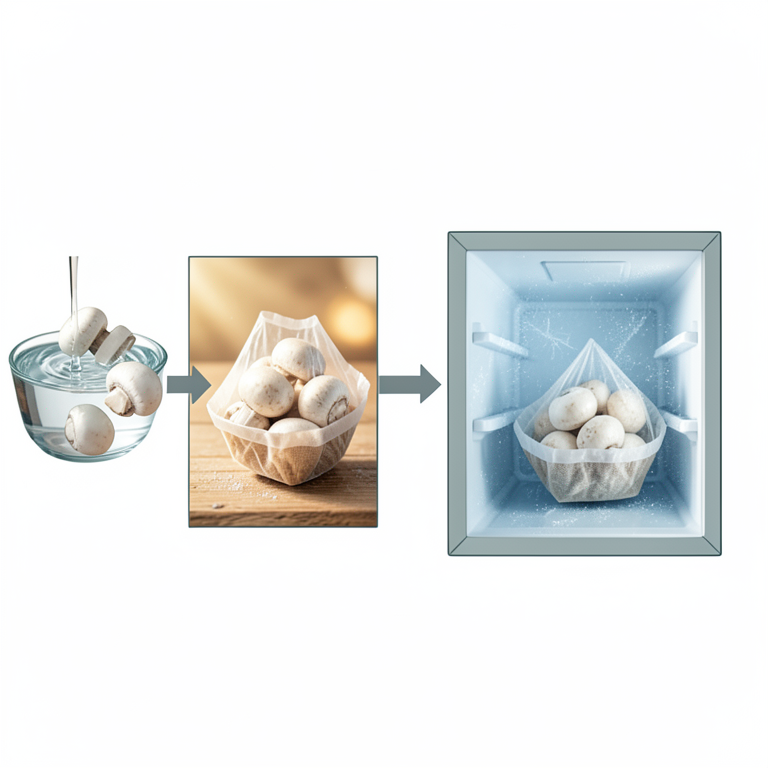
Experimental Workflow
AI-generated conceptual illustration (white button mushrooms (Agaricus bisporus) in biodegradable sugarcane bagasse trays with bio-film wrap). It explains the idea and does not show study data.
View source evidence ↗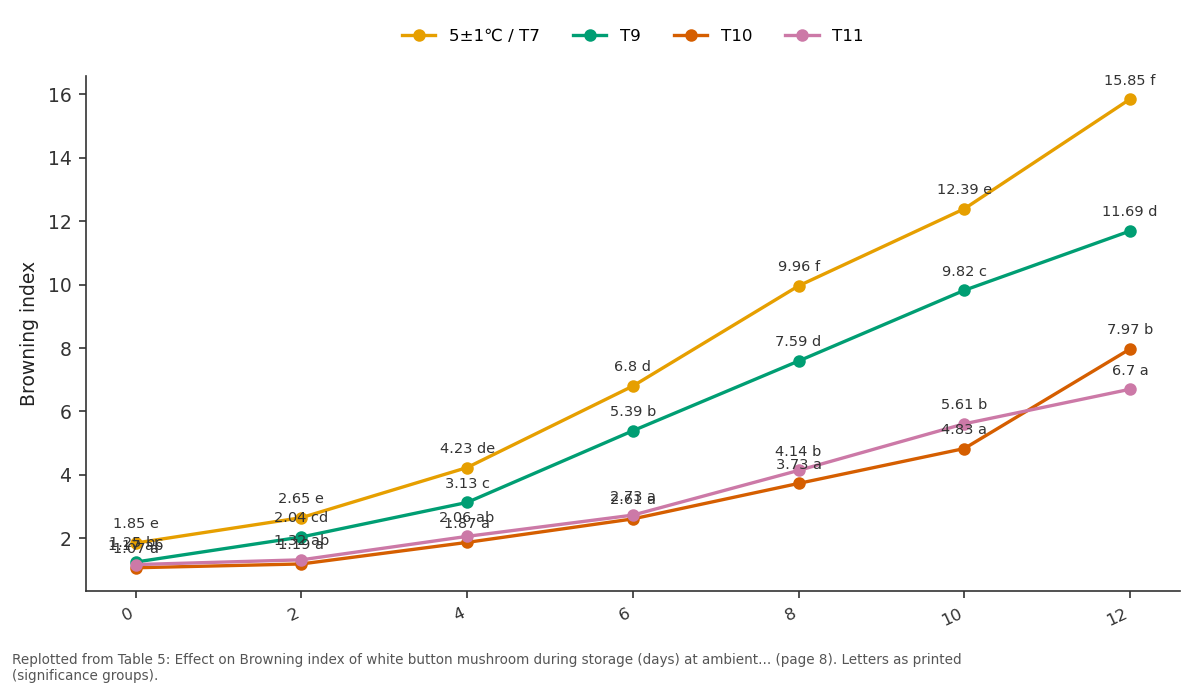
5±1℃ / T7 and T9 and more: 0 vs 2 vs 4 vs 6 vs 8
Replotted from Table 5 (page 8) of the original paper. Every bar is the paper's own table value.
View source evidence ↗Figures & tables
From the original paper Table 1
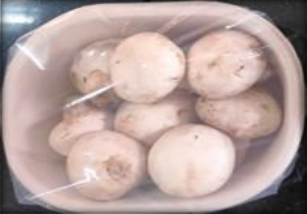 Figure 1
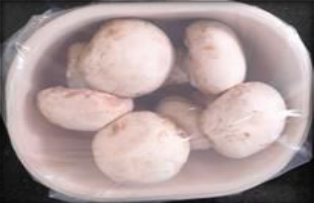 Figure 1
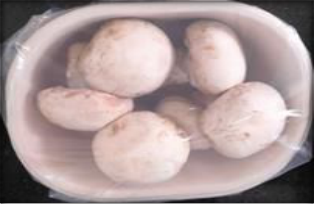 Figure 1
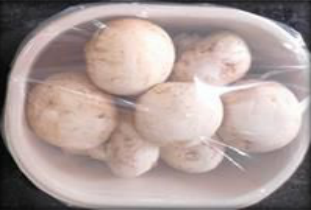 Figure 1
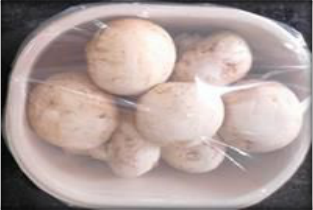 Figure 1
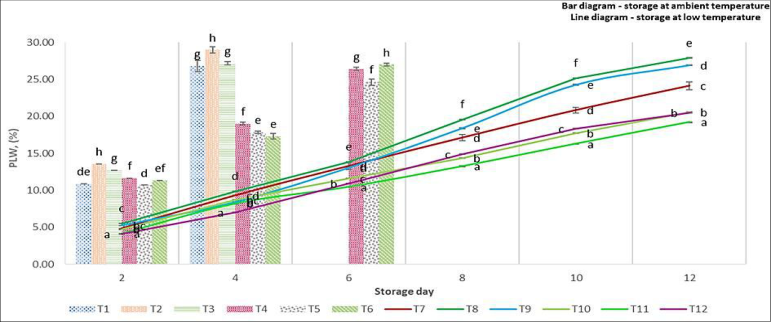 Figure 2
 Table 2
 Table 3
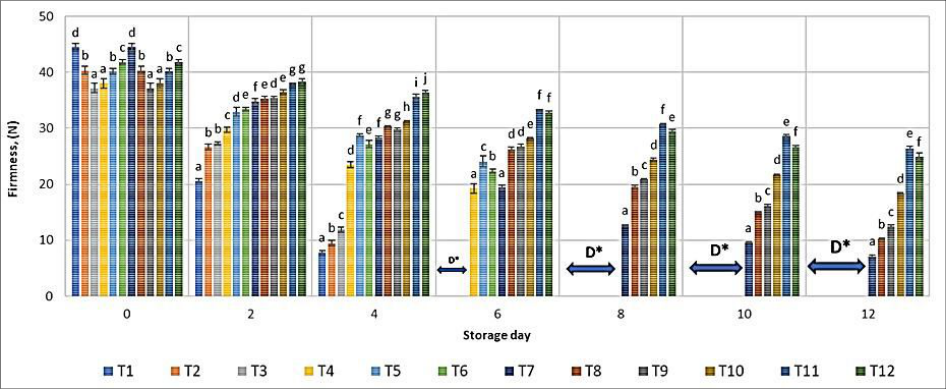 Figure 3
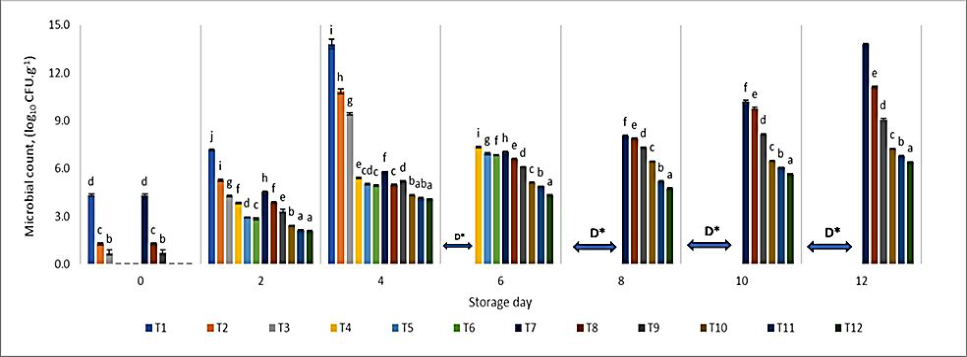 Figure 4
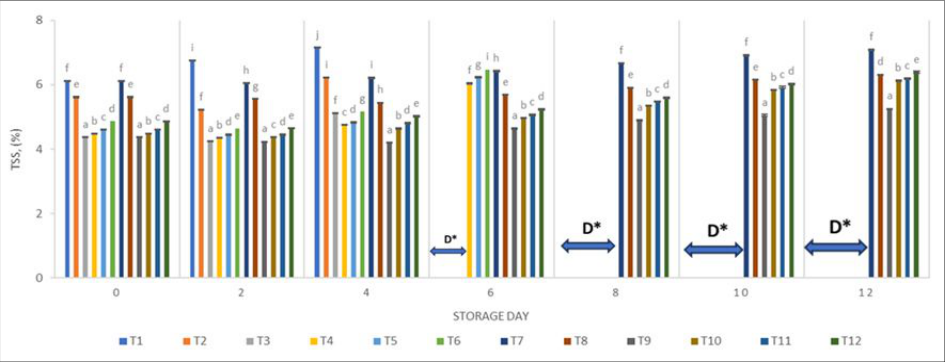 Figure 5
 Table 4
 Table 5
Introduction
Mushrooms have been consumed from centuries back due to their medicinal and nutritional benefits (Bringye et al., 2021) [6] . Mushrooms are a rich source of vitamins, particularly vitamin B and also a high in protein, minerals, and essential amino acids, with low in calories (Singh, 2023) [34] . Among the numerous edible mushroom species available, only a few, including white button mushroom, oyster mushroom, paddy straw mushroom, and milky mushroom are cultivated and consumed commercially in India. Among these species, white button mushroom stands out as the most widely consumed and cultivated mushroom globally, contributing to around 40% of the world's total mushroom production (Moradian et al., 2018) [24] . Due to its physiology, Agaricus bisporus is highly susceptible to spoilage and damage after its harvest, as its cap has no cuticle to shield it from physical harm, water loss, and microbial invasion (Subrahmanyam et al., 2023) [36] . Mushrooms have a higher respiration rate than other horticultural crops resulting in a shorter post-harvest life and which faces problems in marketability. Several factors characterize the postharvest quality of mushrooms, including shape, size, colour, maturity, microbial growth, physiological weight loss etc. One of the critical issue, particularly for commercially sold mushrooms, is the loss of their original white colour during storage. Colour is the first thing played a role in customer acceptance and largely controls mushroom business growth. Since the use of compost in mushroom cultivation creates a huge contamination, in the form of dirt and bacterial adherence to the mushroom.
These contaminations can be removed by washing or rinsing to prevent microbial spoilage (Verma et al., 2020) [43] . However, washing increases the moisture content of mushrooms, making them more prone to microbial growth and browning. Traditional washing methods for button mushrooms, such as chlorine or water-based treatments, often fail to sufficiently maintain the quality and extend the shelf-life of mushrooms. These methods can result in undesirable changes, such as browning, texture softening, and increased microbial load, reducing marketability and consumer acceptance. Additionally, the use of chlorine poses health risks due to potential carcinogenic byproducts and is environmentally concerning. Therefore, it is a way to add anti-browning and antimicrobial agents in water for washing the mushrooms (Zhang et al., 2018) [46] . Using hydrogen peroxide, sodium hypochlorite, hydrogen peroxide, malic acid, acetic acid, and ascorbic acid in mushroom washing processes can effectively reduce microbial activity (Sahoo et al., 2021; Sami et al., 2021) [28,29] . However, these treatments still have limitations in enhancing the shelf life of mushrooms. Among the many reported treatments, washing of fresh button mushrooms with aqueous hydrogen peroxide is considered an easy and cost-effective because it is less likely to cause the leaching of essential nutrients and bioactive compounds. Additionally, its use as a natural preservative aligns with the growing consumer demand for clean-label and chemicalfree food products. Apart from the application of washing treatment, packaging technique also contribute to the improvement in the quality and shelf life of mushrooms. In the mushroom industry, commonly used packaging techniques include perforated packaging, vacuum sealing, and film wrapping (Dawadi et al., 2022; Sharma et al., 2024) [10,31] . However, after the mushrooms are harvested, they are also sold directly in the market without packaging (Castellanos-Reyes et al., 2021) [7] . Polyethylene (PE) and polyvinyl chloride (PVC) are commonly used for mushroom packaging, but PE is effective in reducing browning, minimizing water loss, and slowing the respiration rate of pine mushrooms (Feng et al., 2023) [11] . By monitoring the exchanges of gases and vapours with the outside atmosphere and monitoring the needs of the food, plastic packaging helps to maintain the mushroom quality during storage and enhances safety by reducing the risk of contamination and food-borne illnesses. The use of plastic packaging offers key benefits such as reducing food waste with extending shelf life. Additionally, its lightweight nature helps to save energy and fuel, thereby lowering greenhouse gas emissions during transportation (Boone et al., 2023) [4] . However, despite these advantages, the leakage of millions of tons of plastic into the environment has led to significant pollution and incurred substantial economic costs. Developing sustainable packaging alternatives made from bio-based and biodegradable materials may help to mitigate plastic waste (Tweneboah Kodua et al., 2022) [40] . Polylactic acid (PLA), derived from renewable resources like starch and sugar, is a compostable polymer increasingly used for food packaging due to its sustainability benefits (Swetha et al., 2023) [37] . However, PLA is brittle under stress, undergoes significant physical aging, and is relatively expensive compared to traditional polymers (Ferdinánd et al., 2023) [12] . To improve its properties and make it more cost-effective, PLA is often blended with other agents or used with plasticizers, such as glycerol or formamide, to enhance flexibility and mechanical strength (Shahbazi & Shavisi, 2018) [30] . PLAstarch blend films are a promising option for biodegradable packaging, but they still require further development to improve their mechanical properties (Da Silva Pens et al., 2024) [9] . Despite the interest, there is limited research on using PLA and PLA-starch films for packaging fresh vegetables, particularly for fresh white button mushrooms (Yaradoddi et al., 2020) [44] . Effective postharvest management, appropriate temperature control, and advanced packaging technologies are crucial for preserving the quality and extending the shelf life of white button mushrooms. However, the impact of washing these mushrooms with varying concentrations of hydrogen peroxide solutions, followed by packaging in bio-based and biodegradable materials, on their postharvest quality during storage has not been thoroughly studied. The use of hydrogen peroxide as a washing treatment is compatible with biodegradable packaging, which is increasingly preferred for sustainable food packaging solutions. The combination of hydrogen peroxide treatment and biobased packaging materials can further enhance the preservation of mushrooms by creating a synergistic effect. This study is important as it explores the effectiveness of hydrogen peroxide washing in varying concentrations to improve the shelf life and quality of white button mushrooms during storage at both ambient (25±2 °C) and low (5±1 °C) temperatures. By reducing microbial load and inhibiting enzymatic browning, hydrogen peroxide treatment can enhance product safety and visual appeal. Packaging the treated mushrooms in biobased-biodegradable films aligns with sustainability goals, reducing environmental impact. The findings could lead to commercially viable solutions that combine natural preservatives with eco-friendly packaging, offering an improved, sustainable alternative for the mushroom industry.
Materials and Methods
Materials and Methods
Study location
The experiments were conducted at the Agricultural Produce Processing Division of the ICAR-Central Institute of Agricultural Engineering, Bhopal, India (coordinates: 23°15'35.75" N, 77°24'45.40" E) in January 2024.
Collection, washing, film preparation, packaging, and storage of white button mushroom
Freshly harvested, unwashed, whole white button mushrooms were collected from the identified farm situated near to Bhopal city of Madhya Pradesh, India. The individual mushrooms, at its closed cap stage with a pileus diameter of 40-50 mm, were cut from parent media and safely transported to reach in to the laboratory and stored at 5 °C with 90% relative humidity until further use. Before using it for experiments, the stem of each mushroom was trimmed to 10 mm length, and selected only those with uniform size, no defects, undamaged caps, and a cap diameter of 40 to 45 mm. The selected mushrooms were then washed in aqueous solutions of 1%, 1.5%, and 2% (w/v) hydrogen peroxide for 2 minutes with gentle shaking to remove soil adherents and minimize bruising. All types of washing solutions were prepared at ambient temperature. After rinsing, the mushrooms were placed on absorbent paper for 10 minutes to remove the excess surface moisture. The selected treatment for washing of mushrooms includes: unwashed/control, washed in tap water, washed in distilled water, and washed in 1%, 1.5%, and 2% (w/v) hydrogen peroxide solutions. Further, the mushrooms were packaged in biobased-biodegradable (made from sugarcane bagasse) trays (approx. 100g/tray) of 0.72 mm thick with box dimensions of 140×100×40 mm which was procured from local market. The trays were overwrapped with laboratory prepared biodegradable films (Figure 1). Biodegradable film (combination of polylactic acid, corn starch and glycerol) developed (Mangaraj et al., 2022) [22] with some modifications using modified solvent casting (Yousefnia Pasha et al., 2021) [45] . The developed biodegradable film showed the thickness: 0.043±0.006 mm, tensile strength (TS): 56.38±2.84 (Mpa), haze percentage: 26.37%, oxygen transmission rate (OTR): 318.25±6.23 (cc.m -2 .day -1 ) and water vapour transmission rate (WVTR): 146.85±4.67 (g.m - 2 .day -1 ). The mushroom trays were split into two equal groups and stored at two distinct temperatures: ambient (25±2 °C) in BOD incubator and low (5±1 °C) in refrigerator. The treatments applied to the mushrooms during the experiments are mentioned in Table 1. The experimental samples washed, packaged and stored as per the experimental conditions were analyzed at every 2 days of interval for its selected quality attributes like change in physiological loss in weight (PLW,%), pH, firmness, maturity index, microbial count, total soluble solids, colour and browning index till the spoilage in stored samples. Washing with 1% hydrogen peroxide (w/v) T10 Washing with 1% hydrogen peroxide (w/v) T5
| Treatment codes | Stored at ambient temperature (25±2℃) | Treatment codes | Stored at low temperature (5±1℃) |
|---|---|---|---|
| T1 | Control / unwashed | T7 | Control / unwashed |
| T2 | Washing with tap water | T8 | Washing with tap water |
| T3 | Washing with Distilled water | T9 | Washing with Distilled water |
| T4 | Washing with 1% hydrogen peroxide (w/v) | T10 | Washing with 1% hydrogen peroxide (w/v) |
| T5 | Washing with 1.5% hydrogen peroxide (w/v) | T11 | Washing with 1.5% hydrogen peroxide (w/v) |
| T6 | Washing with 2% hydrogen peroxide (w/v) | T12 | Washing with 2% hydrogen peroxide (w/v) |
Table text extracted from the original PDF; superscript letters are shown inline. The original table image is below.
View original table image
Control / unwashed
Washing with 1.5% hydrogen peroxide (w/v) T11 Washing with 1.5% hydrogen peroxide (w/v) T6
Washing with 2% hydrogen peroxide (w/v) T12 Washing with 2% hydrogen peroxide (w/v)
The weight loss of all experimental samples of mushroom was measured through a digital weighing balance (Mettler Toledo, Switzerland), with an accuracy of ± 0.001 g. The percentage (%) of physiological loss in weight was calculated as follows:
Where, PLW-Physiological loss in weight, (%) Wi -Initial weight of mushrooms, (g) Wf -Final weight of mushrooms. (g)
pH value
The stored mushroom samples with an equal quantity of distilled water (w/v) were crushed in pestle mortar, and the supernatant was filtered. The pH of the filtered mushroom juice was estimated with the help of a digital pH meter (Model: LT 5001, Labtronics, India) with a resolution of 0.01, after calibration with standard pH 4, 7, and 9 buffer solutions (Thakur et al., 2020) [38] .
Firmness
Firmness of the stored samples were assessed using a texture analyzer (TA-133 XT, Stable Micro Systems, UK) equipped with a 250 N load cell. A cylindrical probe (P-12.5) of a 12.5 mm diameter was used for testing of whole mushroom. During testing, the probe was operated at a constant speed of 2 mm/s, with defined penetration depth of 5 mm. The mean firmness was determined by averaging the firmness values obtained from different positions of the mushroom relative to the probe (Moradian et al., 2018) [24] .
Maturity index
The maturity index of mushrooms, which indicates the level of maturity and generally increases after harvest, was assessed based on cap opening using a 7-point scale (Ban et al., 2014) [3] . To evaluate the ageing of white button mushrooms, five mushrooms were randomly selected from each package and manually inspected through visual observation and the veil opening rate was used as a key parameter. This rate is defined as the ratio of mushrooms with open caps to the total number of mushrooms.
Microbial load
The total microbial load on the mushroom samples was monitored at two-days intervals during storage to evaluate the incidents of microbial spoilage. The colony count method is used for microbial load calculations in terms of CFU. During the estimation, nutrient agar based culture medium was used for bacterial growth, employing the pour plate method. Serial dilutions were prepared for bacterial colony counting. For each experiment, 1 gram of the sample was thoroughly mixed in a sterile test tube filled with 9 millilitres of distilled water. The medium was then poured to cover approximately one-third of the plate's depth and spread evenly. From each diluted sample, pour 1 millilitre of diluted solution into a sterile petri plate. After allowing the plates to cool, they were sealed with parafilm and incubated for 24-48 hours at 37 °C. Colony counts were performed by dividing the plate into four sections, counting the colonies in one section using a digital colony counter, and then multiplying by four to estimate the total colony count (Ranganna, 1986) [27] . The colony forming units (CFU) per gram of sample were then calculated.
Total soluble solids (TSS)
The total soluble solids of the mushrooms were determined from the extracted mushroom juice using a portable digital refractometer (HM SCM-1000, HM Digital, India) with a measurement range of 0 to 45% (López-Gómez et al., 2021) [18] .
Color measurements
Mushroom sample images with high resolution were captured using a 24. [38] .
Browning Index
The browning index of the mushroom during the storage period as per the given standard procedure (Mohapatra et al., 2010) [23] .
Browning Index (BI) = 100 × [ X -0.31 0.17
]
]
Statistics
Statistical analysis, including Duncan's Multiple Range Test (DMRT) and ANOVA, was evaluated to find out the effects of washing treatments and storage temperatures on statistical differences of these quality parameters. These analyses were performed using SPSS 19.0 statistical software.
Results and Discussion
Results and Discussion
Physiological loss in weight, resulting from water loss from the epidermal layer during postharvest storage, significantly affects mushroom quality (Cavusoglu et al., 2021) [8] . In the present investigation, a notable difference in physiological weight loss (p<0.05) was observed between washed and unwashed mushrooms stored at both ambient (25±2 °C) and low (5±1 °C) temperatures. Weight loss was notably influenced by storage temperature, being twice as much at ambient temperature compared to selected low temperature. For all mushroom samples, PLW,% increased over elapse in storage time (Figure 2), evident from their dehydrated appearance on surface. However, washing treatments played a crucial role in reducing weight loss, likely by decreasing respiration and transpiration rates (Figure 2) (Lufu et al., 2020) [19] .
D*: Samples discarded due to spoilage
At ambient temperature, the highest weight loss was observed in sample T2, with approximately 29% loss after 4 days of storage. In contrast, sample T5 exhibited the lowest weight loss, with a reduction of 24.63% after 6 days of storage. The increase in weight loss during storage duration was generally higher in higher temperatures (Castellanos-Reyes et al., 2021) [7] . This corresponds to a reduction in the vapour transmission of films, along with a decrease in the transpiration and respiration rates of the mushrooms, regardless of the treatment and packaging materials used (Gholami et al., 2020) [14] . Washing the mushroom with hydrogen peroxide at all concentration samples (T4, T5, T6) showed less weight loss compared to control (T1), washing with tap water (T2) and distilled water. At low temperatures, mushrooms washed with 2% hydrogen peroxide (T11) showed the lowest weight loss of 19.21% followed by samples T12 and T10 after the 12 th day of storage. At ambient temperature (25±2 °C), hydrogen peroxide-washed mushroom samples were rejected after 6 th day of storage, whereas their counterparts stored at low temperatures (5±1 °C) lasted longer till 12 th day of storage. Storage of mushrooms at low temperatures was also effective in reducing the weight loss for control and washing with tap and distilled water. Mushrooms stored under refrigerated conditions retained more weight compared to those stored at ambient conditions (Dawadi et al., 2022) [10] . Washing with 2% (w/v) hydrogen peroxide and storing at low temperatures (T11) was more effective in minimizing weight loss compared to the control and other washing treatments. Additionally, pretreatments with H2O2 have been found to significantly reduce weight loss in pepper fruits during storage at both ambient and low temperatures (Tiamiyu et al., 2023) [39] .
pH
pH plays a critical role in physiological activities of the fresh agro commodities during storage and further influences on its shelf-life. In the present investigation, the initial pH of stored fresh button mushroom (T1) was reported as 6.52. Same range (6.50-6.92) of pH was also reported in literature for fresh mushroom (Aday, 2016) [1] . At day 0, the pH of hydrogen peroxide-washed mushrooms in the treatment of T4, T5 and T6 was 5.13, 4.65 and 4.53 which was lower than the without washed control (T1), and washed with tap (T2) and distilled water (T3). The lower pH values observed in the hydrogen peroxide-washed mushrooms were attributed to the acidic nature of hydrogen peroxide, which likely to be adsorbed onto the external surface of the mushrooms during washing. During grinding and centrifugation, hydrogen peroxide may transferred to the supernatant, contributing to the lowering in pH values. Further an increase in pH was observed for samples of all the treatments over elapsed in storage period under both ambient and low-temperature conditions (Table 2). The pH values are responsible for microbial growth, spoilage and the subsequent production of organic acids (Snyder et al., 2018) [35] . Washing treatments and storage temperatures significantly influenced on pH (P < 0.05) of the stored mushroom samples (Table 2). At ambient temperature, T5 treatment showed the lowest pH value of 5.31 after 6 days of storage, which is less than the pH value of fresh mushrooms at 0 th days. At low temperatures, mushrooms washed with 3% hydrogen peroxide (T12) showed the lowest pH value of 5.36 followed by samples T11 (5.40) and T10 (5.96) after the 12 th day of storage. Washing button mushrooms with 3% (w/v) hydrogen peroxide and stored at low temperature (T12) was found effective in reducing pH level compared to control and other washing treatments.
| Days | 25±2℃ | — | — | — | — | — | 5±1℃ | — | — | — | — | — |
|---|---|---|---|---|---|---|---|---|---|---|---|---|
| T1 | T2 | T3 | T4 | T5 | T6 | T7 | T8 | T9 | T10 | T11 | T12 | |
| 0 | 6.52f | 6.40e | 6.01d | 5.13c | 4.65b | 4.53a | 6.52f | 6.40e | 6.01d | 5.13c | 4.65b | 4.53a |
| 2 | 6.68l | 6.57j | 6.35h | 5.36f | 4.96d | 4.84c | 6.61k | 6.45i | 6.07g | 5.20e | 4.72b | 4.59a |
| 4 | 6.97k | 6.81j | 6.50h | 5.47f | 5.13d | 5.03c | 6.71i | 6.52h | 6.15g | 5.34e | 4.81b | 4.74a |
| 6 | D* | D* | D* | 5.94f | 5.36d | 5.31c | 6.76i | 6.77h | 6.26g | 5.49e | 4.95b | 4.87a |
| 8 | D* | D* | D* | 6.84f | 6.68e | 6.33d | 5.64c | 5.06b | 4.99a | |||
| 10 | 6.91f | 6.76e | 6.41d | 5.79c | 5.23b | 5.13a | ||||||
| 12 | 7.02f | 6.86e | 6.51d | 5.96c | 5.40b | 5.36a |
Table text extracted from the original PDF; superscript letters are shown inline. The original table image is below.
View original table image
Firmness
The firmness of white button mushrooms is one of the critical quality parameter for consumers acceptance., The change in textural attributes of the mushroom is also one of the key indicator for deterioration (Borges et al., 2023) [5] . The initial firmness of fresh mushrooms (T1) was found to be 44.49 ±3.64 N. The firmness values of all the treated and stored samples was gradually decreased with increase in storage time for both ambient and low temperatures storage conditions (Figure 3). The treatment parameters like treatment combinations, storage temperature, and duration significantly (P< 0.05) effected on the firmness values of the mushroom. Mushroom softening or loss of firmness is also linked to the degradation of proteins and polysaccharides, shrinkage of hyphae, disruption of central vacuoles, and expansion of intercellular spaces on the surface of the piles (Qiu et al., 2022) [26] . Under ambient conditions, the mushrooms washed with hydrogen peroxide shown better retention of firmness even after 6 th day of storage as compared to control without washing sample and distilled water washed sample shown at 4 th day of storage (Figure 3). These observation might be due to the hydrogen peroxide washing appeared to mitigate softening caused by bacterial activity and water loss. Similarly, at low temperature storage, mushrooms washed with hydrogen peroxide showed significantly higher firmness (p ≤ 0.05) compared to the control and those washed with tap and distilled water after the 12 th day of storage. This results raveled that, hydrogen peroxide washing, when combined with suitable packaging, helps to delay the mushroom softening during storage. Additionally, the use of PVC film for packaging was observed to slow down changes in firmness by increasing CO2 levels within the package and hence reduction in respiration rates (Mangaraj et al., 2014) [20] . Under low-temperature conditions, after 12 th days of storage, the firmness of the control (T7) decreased to 7.15 N, whereas the firmness values for T10, T11, and T12 were 18.36 N, 26.42 N, and 24.89 N, respectively. Minimal changes in textural parameters were also noted for T11 followed by T12, highlighting the effectiveness of hydrogen peroxide washing and biodegradable packaging to maintain the texture of mushroom.
Maturity index
The opening of button mushroom cap during storage is an indicator of maturity, represents the internal moisture loss.
During the maturity, tissues of upper surface of mushroom dry out and further leads to increased water loss. This water loss further causes the caps and veil to lose their original structure (Cavusoglu et al., 2021) [8] . The washing treatments with hydrogen peroxide found to be effective in preserving the integrity of the veil until the 6 th days of storage at ambient temperature and up to the 12 th days under low-temperature conditions (Table 3). At the start of the experiment (Day 0), all mushroom samples exhibited a maturity index of 0, as each selected mushroom was at the closed-cap stage. The experimental results presented in table 3, shows that, hydrogen peroxide solution of 3% (w/v) concentration used to wash the mushrooms observed to be the most effective approach to delayed cap opening. The maturity index found to be increased with the values of 3.93 in T10, 3.81 in T11, and 3.79 in T12 at 12 th day of storage. Despite the hydrogen peroxide washing treatment, the incidences of veil opening was visible in mushrooms stored at ambient temperature storage. Among all treatments, washing with a 3% (w/v) hydrogen peroxide solution and storing the mushrooms at a low temperature (i.e T12) was found the most effective with lower values of maturity index and far better than both the control and other selected washing treatments.
| Days | 25±2 ℃ | — | — | — | — | — | 5±1 ℃ | — | — | — | — | — |
|---|---|---|---|---|---|---|---|---|---|---|---|---|
| T1 | T2 | T3 | T4 | T5 | T6 | T7 | T8 | T9 | T10 | T11 | T12 | |
| 2 | 2.95k | 1.96j | 1.88i | 1.52h | 1.46g | 1.41e | 1.43f | 1.40e | 1.37d | 1.13c | 1.09b | 1.01a |
| 4 | 4.11k | 4.08j | 3.97i | 2.86h | 2.76g | 2.70f | 2.59e | 2.36d | 2.23c | 1.92b | 1.79a | 1.77a |
| 6 | D* | D* | D* | 3.98h | 3.86g | 3.85g | 3.26f | 3.10e | 2.98d | 2.51c | 2.38a | 2.41b |
| 8 | D* | D* | D* | 4.13d | 3.88c | 3.88c | 2.92b | 2.87a | 2.91b | |||
| 10 | D* | D* | D* | 3.58c | 3.42a | 3.51b | ||||||
| 12 | 3.93c | 3.81b | 3.79a |
Table text extracted from the original PDF; superscript letters are shown inline. The original table image is below.
View original table image
Microbial load
The microbial load, particularly Pseudomonas spp., plays a vital role in determining the postharvest quality of mushrooms (Venturini et al., 2011) [42] . In this study, the initial Pseudomonas spp. count on fresh white button mushrooms was reported in the tune of 4.33 log10 CFU.g -1 , which is also in range with previous studies which reported it in the range of 3.9 to 6.1 log10 CFU.g -1 at harvest time (Simón et al., 2005) [33] . With elapsed in storage period, the Pseudomonas spp. count found to be increased in the stored freshly harvested mushroom samples. However, washing the mushrooms with hydrogen peroxide and packaging them in biodegradable packaging significantly reduced the microbial counts, due to antimicrobial effect of hydrogen peroxide's (Figure 4). The inhibitory impact of sodium citrate (SC) on microbial growth reported by Allende et al. (2009) [2] in which the reduction of total aerobic mesophilic bacteria by 3 log10 CFU.g -1 on fresh-cut cilantro after washing with a 1 g.L -1 SC solution (Allende et al., 2009) [2] . The washing methods shown the significant (p ≤ 0.05) effect on the Pseudomonas spp. counts in treated and stored mushrooms as per the experimental conditions. D*: Samples discarded due to spoilage The highest microbial count was observed in the control samples, in the range of 13.80 to 13.81 log10 CFU.g -1 after 4 days of ambient storage and 12 days of low-temperature storage, respectively. Among the selected treatments, washing of mushrooms with 3% (w/v) hydrogen peroxide solution proved the most effective in curbing microbial growth. At the 6 th day of storage, the microbial count in the T6 treatment was 6.84 log10 CFU.g -1 , and it get change up to 6.42 log10 CFU.g -1 at 12 th days of storage. Although the total microbial count in various treatments was found to be increased with increase in storage time, still the values are in the acceptable limits given by IS: 7463-2004. The findings indicate that washing of button mushrooms with a 3% (w/v) hydrogen peroxide solution, followed by storage at a low temperature (T12), are more effective in controlling the microbial growth as compared to the control (without washing) and other washing treatments.
Total soluble solids (TSS)
The TSS of mushroom found to be increased with increase in storage as presented in figure 5. This increasing trend in TSS is the indicator of elevated respiration rate and progression of ripening process (Moreno et al., 2021) [25] . The changes in TSS were more significant in the control samples than in the treatment samples. On day 0, also washing of mushrooms with tap water, distilled water, and 1%, 1.5%, and 2% (w/v) hydrogen peroxide solutions shows the lower TSS value compared to the control without washed sample (Figure 5). D*: Samples discarded due to spoilage At ambient temperature, the maximum TSS value was reported in sample of treatment T1 i.e., 7.15%. While the sample of T4 treatment showed less TSS value i.e., 6.04% even after 4 th days of storage. At low-temperature storage, mushrooms washed with distilled water (T10) showed the lowest TSS value (5.25%) followed by samples T10 and T11 after the 12 th day of storage. Similar trend of change in TSS was also reported by Shirvani et al. (2023) [32] in modified atmosphere (MA) packaged conditions fresh-cut mangosteen, purple and yellow plums, and pears (Shirvani et al., 2023; Mangaraj et al., 2011) [32,21] .
Colour Change in L *
Colour change in mushrooms is one of the major and primary indicator for consumer preference and acceptance. In the experimental data, the L* value, representing the lightness or darkness of the mushroom samples, decreased with respect to increase in storage time in both ambient and low-temperature storage (Table 4). Similar trend was also reported by Vazirianjafari et al. (2023) [41] for button mushroom (Vazirianjafari et al., 2023) [41] . Washing treatments mainly enhance the L* value and hence help to maintain the whiteness of the button mushroom. On day 0, the L* value of the fresh white button mushrooms (control) was 87.53, and this value fond to be gradually increased in all treated samples after washing. At 4 th days of storage at ambient temperature, the L* value of the control sample (T1) was significantly (p ≤ 0.05) lower than the washed sample with hydrogen peroxide. Among the treatments, washing with a 2% (w/v) hydrogen peroxide solution was most effective for maintaining the whiteness of the mushrooms after 6 th days of storage, likely due to its bleaching properties (Table 4). However, higher concentrations of hydrogen peroxide caused a slight yellowing of the mushrooms. The hydrogen peroxide wash resulted in the smallest reduction in L* value at the beginning of storage, and it gets decline over time (Gupta & Bhat, 2016) [15] . [17] ; Gao et al. (2014) [13] . This criterion is commonly used to assess the shelf life of mushrooms in both industry and research. Therefore, washing mushrooms with a 2% (w/v) hydrogen peroxide solution and storing them at a low temperature is the most effective method for minimizing the colour changes in white button mushrooms.
| Days | 25±2℃ | — | — | — | — | — | 5±1℃ | — | — | — | — | — |
|---|---|---|---|---|---|---|---|---|---|---|---|---|
| T1 | T2 | T3 | T4 | T5 | T6 | T7 | T8 | T9 | T10 | T11 | T12 | |
| 0 | 87.53a | 90.15b | 90.30bc | 91.66cd | 92.03d | 92.49d | 87.53a | 90.15b | 90.30bc | 91.66cd | 92.03d | 92.49d |
| 2 | 80.94a | 83.66b | 84.53b | 86.71d | 88.75ef | 89.56fg | 84.51b | 85.74c | 88.39e | 90.09g | 91.41h | 91.59h |
| 4 | 75.11a | 76.59a | 79.61b | 82.80cd | 83.82de | 84.71def | 80.60bc | 81.12bc | 85.67ef | 86.29f | 89.72g | 90.13g |
| 6 | D* | D* | D* | 78.69b | 81.50d | 80.06c | 77.60a | 78.90b | 81.68d | 86.80e | 97.98f | 88.47f |
| 8 | D* | D* | D* | 74.61a | 75.35b | 79.08c | 85.05d | 86.48e | 86.40e | |||
| 10 | 70.87a | 72.15b | 76.96c | 83.86d | 84.77e | 83.85d | ||||||
| 12 | 67.21a | 70.01b | 74.02c | 80.08d | 82.48f | 81.95e |
Table text extracted from the original PDF; superscript letters are shown inline. The original table image is below.
View original table image
Browning index
The browning index of mushrooms is influenced by changes in L*, a*, and b* values of it. As storage time progressed, the browning index of the mushrooms increased consistently across all the selected treatments (Table 5). This change in browning index might be due to the natural ageing and respiration in the mushrooms. The washing treatments had a significant effect (p ≤ 0.05) on the extent of mushroom browning with respect to increase in storage duration. At ambient temperature, the browning index in control (T1) without washed sample was 15.37 which was significantly higher than the sample washed with 2% (w/v) hydrogen peroxide concentration and measured values at 4 th days of storage i.e., 7.60. counterparts stored at ambient temperature condition at day 4. Mushrooms stored at low temperatures showed better performance compared to those stored at room temperature. This improvement is likely due to the lower temperature reducing the rates of respiration, ageing, biochemical reactions, and enzymatic activity (Castellanos-Reyes et al., 2021) [7] . At low temperatures, all the hydrogen peroxidetreated mushroom samples were effective in controlling the browning up to the 12 th day of storage. However, mushrooms washed with 2% (w/v) hydrogen peroxide concentrations scored better than all other selected treatments. The browning of mushrooms is primarily caused by the oxidation of phenolic compounds by polyphenol oxidase enzymes (Kim et al., 2020) [16] .
| Days | 25±2℃ | — | — | — | — | — | 5±1℃ | — | — | — | — | — |
|---|---|---|---|---|---|---|---|---|---|---|---|---|
| T1 | T2 | T3 | T4 | T5 | T6 | T7 | T8 | T9 | T10 | T11 | T12 | |
| 0 | 1.85e | 1.55d | 1.25bc | 1.07a | 1.17ab | 1.32c | 1.85e | 1.55d | 1.25bc | 1.07a | 1.17ab | 1.32c |
| 2 | 6.78g | 5.66f | 5.17f | 1.88bcd | 1.97cd | 2.45de | 2.65e | 2.34de | 2.04cd | 1.19a | 1.32ab | 1.47abc |
| 4 | 15.37i | 13.20h | 10.69g | 4.00de | 4.31e | 4.89f | 4.23de | 3.88d | 3.13c | 1.87a | 2.06ab | 2.35b |
| 6 | D* | D* | D* | 8.53f | 7.60e | 10.24g | 6.80d | 6.31c | 5.39b | 2.61a | 2.73a | 3.05a |
| 8 | D* | D* | D* | 9.96f | 8.56e | 7.59d | 3.73a | 4.14b | 4.52c | |||
| 10 | 12.39e | 10.88d | 9.82c | 4.83a | 5.61b | 5.76b | ||||||
| 12 | 15.85f | 13.45e | 11.69d | 7.97b | 6.70a | 9.27c |
Table text extracted from the original PDF; superscript letters are shown inline. The original table image is below.
View original table image
Conclusion
Mushroom is one of the best sources of protein for vegetarian diet. However, it has shelf life of 1 day under ambient conditions, which might be due to high rate of respiration and microbial contamination at field level.
Hence, the study aimed at finding a solution for washing treatment to reduce the microbial contamination and biodegradable packaging solutions for enhancing shelf life with sustainable environmental safety. During the investigation, selected mushrooms were treated with different washing techniques and stored at ambient and low temperatures. The study demonstrates that washing white button mushrooms with hydrogen peroxide and storing them at low temperatures effectively maintains their quality.
Washing with 2% hydrogen peroxide (T11) minimized weight loss, while 3% hydrogen peroxide (T12) reduced pH levels more effectively than the control and other treatments. Texture preservation was best in T11 and T12, emphasizing the combined benefits of hydrogen peroxide washing and biodegradable packaging. Furthermore, T12 resulted in the lowest maturity index and superior microbial control. Hydrogen peroxide-treated mushrooms, particularly those washed with 2% and stored at low temperatures, also showed minimal browning and better color retention, making these methods optimal for extending shelf-life. Among the treatments, washing the mushrooms with 2% (w/v) hydrogen peroxide followed by biodegradable packaging and storing at low temperatures (5±1℃) effectively preserved freshness and prevented spoilage up to 12 days. These findings suggest that hydrogen peroxide washing and biodegradable packaging systems could serve as viable alternatives for enhancing the shelf life of button mushrooms while reducing the environmental impact of synthetic plastics.
References
46 in the original paper- Aday MS. Application of electrolyzed water for improving postharvest quality of mushroom. LWTFood Science and Technology. 2016;68:44-51.
- Allende A, McEvoy J, Tao Y, Luo Y. Antimicrobial effect of acidified sodium chlorite, sodium chlorite, sodium hypochlorite, and hydrogen peroxide on Escherichia coli O157:H7 and natural microflora of fresh-cut cilantro. Food Control. 2009;20(3):230-239.
- Ban Z, Li L, Guan J, Feng J, Wu M, Xu X, et al. Modified atmosphere packaging (MAP) and coating for improving preservation of whole and sliced Agaricus bisporus. Journal of Food Science and Technology. 2014;51:3894-3901.
- Boone L, Préat N, Nhu TT, Fiordelisi F, Guillard V, Blanckaert M, et al. Environmental performance of plastic food packaging: Life cycle assessment extended with costs on marine ecosystem services. Science of the Total Environment. 2023;894:164781.
- Borges MM, Simões AS, Miranda C, Sales H, Pontes R, Nunes J. Microbiological assessment of white button mushrooms with an edible film coating. Foods. 2023;12(16):3061.
- Bringye B, Fekete-Farkas M, Vinogradov S. An analysis of mushroom consumption in Hungary in the international context. Agriculture. 2021;11(7):677.
- Castellanos-Reyes K, Villalobos-Carvajal R, Beldarrain-Iznaga T. Fresh mushroom preservation techniques. Foods. 2021;10(9):2126.
- Cavusoglu S, Uzun Y, Yilmaz N, Ercisli S, Eren E, Ekiert H, et al. Maintaining the quality and storage life of button mushrooms (Agaricus bisporus) with gum, agar, sodium alginate, egg white protein, and lecithin coating. Journal of Fungi. 2021;7:614.
- Da Silva Pens CJ, Klug TV, Stoll L, Izidoro F, Flores SH, de Oliveira Rios A. Poly(lactic acid) and its improved properties by some modifications for food packaging applications: A review. Food Packaging and Shelf Life. 2024;41:101230.
- Dawadi E, Magar PB, Bhandari S, Subedi S, Shrestha S, Shrestha J. Nutritional and post-harvest quality preservation of mushrooms: A review. Heliyon. 2022;8(12):e11990.
- Feng Y, Xu H, Sun Y, Xia R, Hou Z, Li Y, et al. Review of packaging for improving storage quality of fresh edible mushrooms. Packaging Technology and Science. 2023;36(8):629-646.
- Ferdinánd M, Várdai R, Móczó J, Pukánszky B. Poly(lactic acid) reinforced with synthetic polymer fibers: Interactions, structure and properties. Composites Part A: Applied Science and Manufacturing. 2023;164:107318.
- Gao M, Feng L, Jiang T. Browning inhibition and quality preservation of button mushroom (Agaricus bisporus) by essential oils fumigation treatment. Food Chemistry. 2014;149:107-113.
- Gholami R, Ahmadi E, Ahmadi S. Investigating the effect of chitosan, nanopackaging, and modified atmosphere packaging on physical, chemical, and mechanical properties of button mushroom during storage. Food Science and Nutrition. 2020;8:224-236.
- Gupta P, Bhat A. Efficacy of different washing treatments on quality of button mushrooms (Agaricus bisporus). Journal of Food Processing and Technology. 2016;7(5):590.
- Kim S. Antioxidant compounds for the inhibition of enzymatic browning by polyphenol oxidases in the fruiting body extract of the edible mushroom Hericium erinaceus. Foods. 2020;9(7):951.
- Lagnika C, Zhang M, Nsor-Atindana J, Bashari M. Effects of ultrasound and chemical treatments on white mushroom (Agaricus bisporus) prior to modified atmosphere packaging in extending shelf-life. Journal of Food Science and Technology. 2014;51:3749-3757.
- López-Gómez A, Ros-Chumillas M, Navarro-Martínez A, Barón M, Navarro-Segura L, Taboada-Rodríguez A, et al. Packaging of fresh sliced mushrooms with essential oils vapours: A new technology for maintaining quality and extending shelf life. Foods. 2021;10:1196.
- Lufu R, Ambaw A, Opara UL. Water loss of fresh fruit: Influencing pre-harvest, harvest, and postharvest factors. Scientia Horticulturae. 2020;272:109519.
- Mangaraj S, Goswami TK, Giri SK, Joshy CG. Design and development of modified atmosphere packaging system for guava (cv. Baruipur). Journal of Food Science and Technology. 2014;51:2925-2946.
- Mangaraj S, Sadawarti MJ, Prasad S. Assessment of quality of pears stored in laminated modified atmosphere packages. International Journal of Food Properties. 2011;14(5):1110-1123.
- Mangaraj S, Thakur RR, Yadav A. Development and characterization of PLA and cassava starch-based novel biodegradable film used for food packaging application. Journal of Food Processing and Preservation. 2022;46:e16314.
- Mohapatra D, Bira ZM, Kerry JP, Frías JM, Rodrigues FA. Postharvest hardness and color evolution of white button mushrooms (Agaricus bisporus). Journal of Food Science. 2010;75:E146-E152.
- Moradian S, Almasi H, Moini S. Development of bacterial cellulose-based active membranes containing herbal extracts for shelf life extension of button mushrooms (Agaricus bisporus). Journal of Food Processing and Preservation. 2018;42(3):e13537.
- Moreno JL, Tran T, Cantero-Tubilla B, López-López K, Becerra López Lavalle LA, Dufour D. Physicochemical and physiological changes during the ripening of banana (Musaceae) fruit grown in Colombia. International Journal of Food Science and Technology. 2021;56(3):1171-1183.
- Qiu Y, Bi J, Jin X, Wu X, Hu L, Chen L. Investigation on the rehydration mechanism of freeze-dried and hotair dried shiitake mushrooms from pores and cell wall fibrous material. Food Chemistry. 2022;383:132360.
- Ranganna S. Handbook of analysis and quality control for fruit and vegetable products. New Delhi: Tata McGraw-Hill Education; 1986.
- Sahoo SK, Tomar MS, Pradhan CR. Disinfecting agents for controlling fruits and vegetable diseases after harvest. In: Food losses, sustainable postharvest and food technologies. Academic Press; 2021. p. 103-151.
- Sami R, Elhakem A, Almushhin A, Alharbi M, Almatrafi M, Benajiba N, et al. Enhancement in physicochemical parameters and microbial populations of mushrooms as influenced by nano-coating treatments. Scientific Reports. 2021;11(1):7915.
- Shahbazi Y, Shavisi N. A novel active food packaging film for shelf-life extension of minced beef meat. Journal of Food Safety. 2018;38(6):e12569.
- Sharma V, Singh P, Singh A. Shelf-life extension of fresh mushrooms: From conventional practices to novel technologies-A comprehensive review. Future Postharvest Food. 2024;1(1):1-20.
- Shirvani A, Sadrnia H, Rohani A. Effect of vacuum and modified atmosphere packaging on the quality characteristics and shelf life of 'California' plum. Erwerbs-Obstbau. 2023;65(6):2345-2355.
- Simón A, González-Fandos E, Tobar V. The sensory and microbiological quality of fresh sliced mushroom (Agaricus bisporus L.) packaged in modified atmospheres. International Journal of Food Science and Technology. 2005;40(9):943-952.
- Singh M. Mushrooms for nutrition and entrepreneurship. In: Vegetables for nutrition and entrepreneurship. Singapore: Springer Nature; 2023. p. 361-387.
- Snyder AB, Worobo RW. Fungal spoilage in food processing. Journal of Food Protection. 2018;81(6):1035-1040.
- Subrahmanyam K, Gul K, Sehrawat R, Allai FM. Impact of in-package cold plasma treatment on the physicochemical properties and shelf life of button mushrooms (Agaricus bisporus). Food Bioscience. 2023;52:102425.
- Swetha TA, Ananthi V, Bora A, Sengottuvelan N, Ponnuchamy K, Muthusamy G, et al. A review on biodegradable polylactic acid (PLA) production from fermentative food waste-its applications and degradation. International Journal of Biological Macromolecules. 2023;234:123703.
- Thakur RR, Shahi NC, Mangaraj S, Lohani UC, Chand K. Effect of apple peel-based edible coating material on physicochemical properties of button mushrooms (Agaricus bisporus) under ambient condition. International Journal of Chemical Studies. 2020;8:2362-2370.
- Tiamiyu QO, Adebayo SE, Ibrahim N. Recent advances on postharvest technologies of bell pepper: A review. Heliyon. 2023;9(4):e15725.
- Tweneboah Kodua T. A review of the effects of nontariff measures in food and agricultural trade: Insights for Economic Community of West African States. SSRN Electronic Journal. 2022;4235437.
- Vazirianjafari K, Omid M, Soltani Firouz M. Power ultrasound coupled with modified atmosphere packaging: Synergistic effects on the shelf-life of white button mushroom (Agaricus bisporus). Journal of Food Processing and Preservation. 2023;1:5844322.
- Venturini ME, Reyes JE, Rivera CS, Oria R, Blanco D. Microbiological quality and safety of fresh cultivated and wild mushrooms commercialized in Spain. Food Microbiology. 2011;28(8):1492-1498.
- Verma AK, Shivani PCS, Kumar M, Rani N. Processing of mushrooms: A viable option to sustain the growing population of developing countries. International Journal of Chemical Studies. 2020;8:1416-1423.
- Yaradoddi JS, Banapurmath NR, Ganachari SV, Soudagar MEM, Mubarak NM, Hallad S, et al. Biodegradable carboxymethyl cellulose-based material for sustainable packaging application. Scientific Reports. 2020;10:21960.
- Yousefnia Pasha H, Mohtasebi SS, Tabatabaeekoloor R, Taherimehr M, Javadi A, Soltani Firouz M. Preparation and characterization of the plasticized polylactic acid films produced by the solvent-casting method for food packaging applications. Journal of Food Processing and Preservation. 2021;45:e16089.
- Zhang K, Pu YY, Sun DW. Recent advances in quality preservation of postharvest mushrooms (Agaricus bisporus): A review. Trends in Food Science and Technology. 2018;78:72-82.