
Research article · 2025 · Full text
International Journal of Horticulture and Food ScienceObservation and analysis of absorbance value by experimental study of coriander extract vs mother tincture
Volume 7(9S) · Pages 04–07 · DOI: 10.33545/26631067.2025.v7.i9sa.414 ↗
Research areasCancer and biochemical researchPharmacology and Nanomedicine ResearchBiological Stains and Phytochemicals
Abstract
Author-writtenBackground: Through this research study preparing the Homoeopathic mother tincture Coriander in ethyl alcohol base with ratio (1:9) and the extract of Coriander is identified under the quality assessment with UV- Visible spectrophotometer. Methodology: Preparation of Coriander extract by pulp and taking out of the juice by extraction is done. Preparation of Coriander Q in the proportion of (1:9), 1 part is Coriander leaves and 9 part is alcohol. After preparing this from each group (3-4) ml samples were taken in a sterile cuvette placed inside the UV- VIS Chamber to pass it under UV- VIS. Results: As per the UV Spectrometric result of the mother tincture it has been seen that absorbance value is 0.3827 at 610 nm wavelength, 0.3318 at 537 nm, 0.3297 at 627nm, 0.214 at 575 nm, and 0.2617 at 525 nm, Whereas the extract’s value at 405 nm wavelength 4.0 which is lanolinic acid.
Summary
Source-checkedPlain-language reading of the full paper, prepared with AI and checked against the text. Each point links to the authors' own words.
Why it matters
- Coriander leaves contain quercetin, a flavonoid that can help prevent various metabolic disorders. View evidence ↗
- Coriander leaves are used globally as seasonings and have shown potential in treating conditions such as asthma, diarrhea, and urinary tract infections. View evidence ↗
- Coriander is noted for its ability to reduce uric acid in the body by inhibiting the xanthine oxidase enzyme. View evidence ↗
The question
- The study aimed to investigate various compounds within a primary tincture of coriander leaves using HPTLC-UV. View evidence ↗
- The researchers sought to determine the optimal concentrations of coriander in both raw and primary tincture forms. View evidence ↗
What they did
- Coriander extract was prepared by pulping the leaves and extracting the juice. View evidence ↗
- The coriander mother tincture (Coriander Q) was prepared using a ratio of 1 part coriander leaves to 9 parts alcohol. View evidence ↗
- Samples of 3-4 ml from each group were analyzed using a UV-VIS spectrophotometer. View evidence ↗
- The analysis was performed using a double-beam UV-Vis spectrophotometer, model UV 1900i. View evidence ↗
What they found
- The mother tincture showed absorbance values of 0.3827 at 610 nm, 0.3318 at 537 nm, 0.3297 at 627 nm, 0.214 at 575 nm, and 0.2617 at 525 nm. View evidence ↗
- The coriander extract showed an absorbance value of 4.0 at 405 nm, which the authors attribute to lanolinic acid. View evidence ↗
What it means
- The authors conclude that absorbance values differ depending on the extraction method used for preparing mother tinctures. View evidence ↗
Visual summary
3 visualsIllustrations explain the paper; charts are replotted from the paper's own table values.
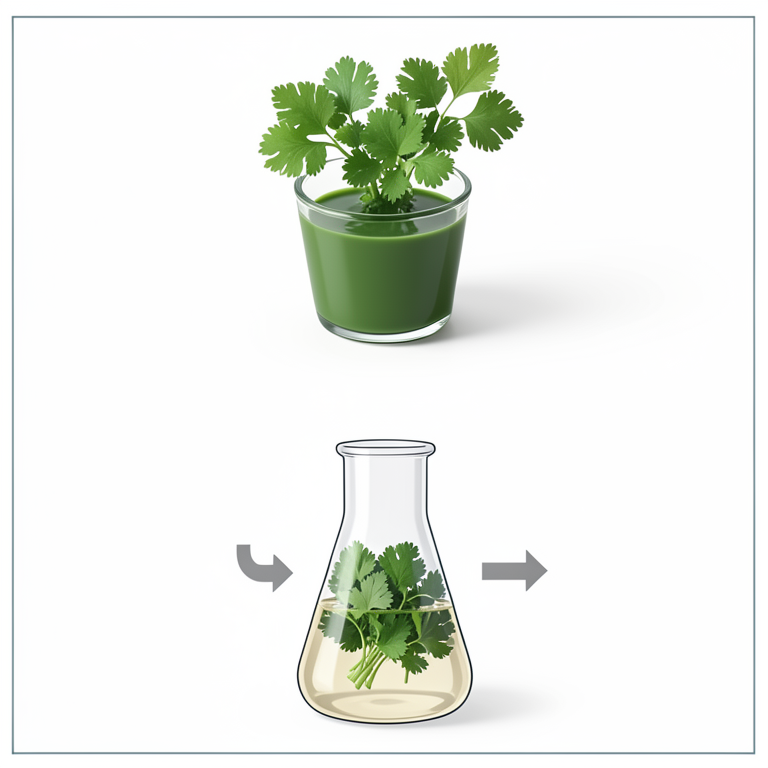
Extraction Process Comparison
AI-generated conceptual illustration (coriander leaves). It explains the idea and does not show study data.
View source evidence ↗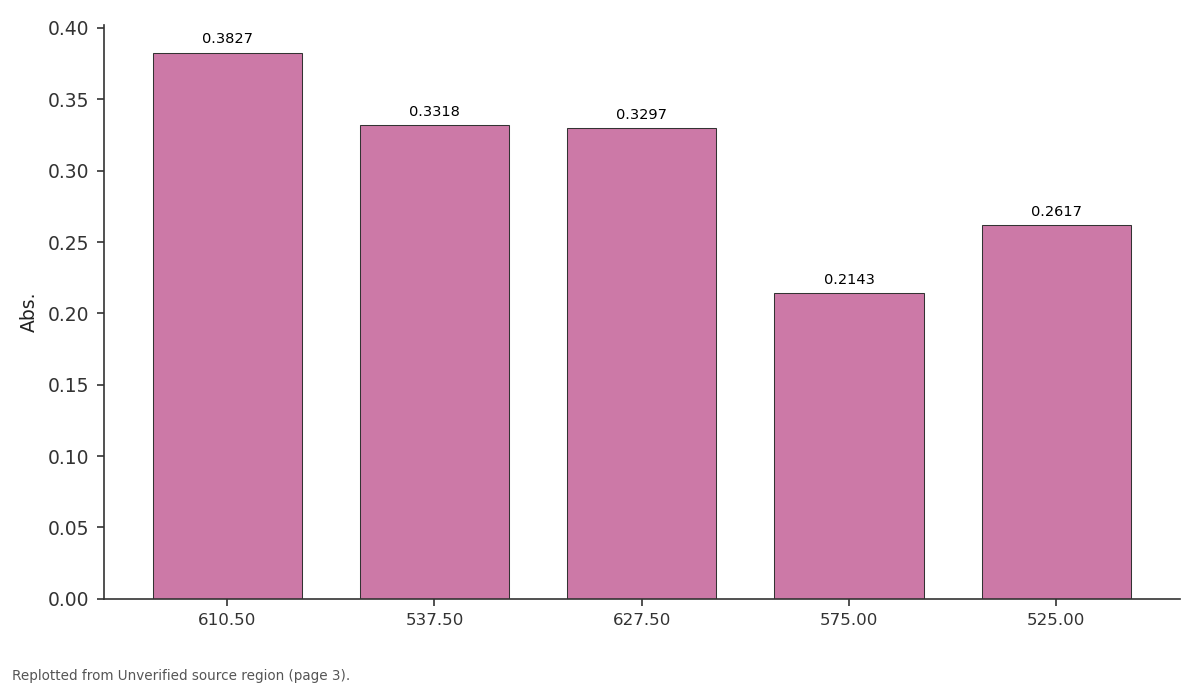
Abs.: 610.50 vs 537.50 vs 627.50 vs 575.00 vs 525.00
Replotted from a table (page 3) of the original paper. Every bar is the paper's own table value.
View source evidence ↗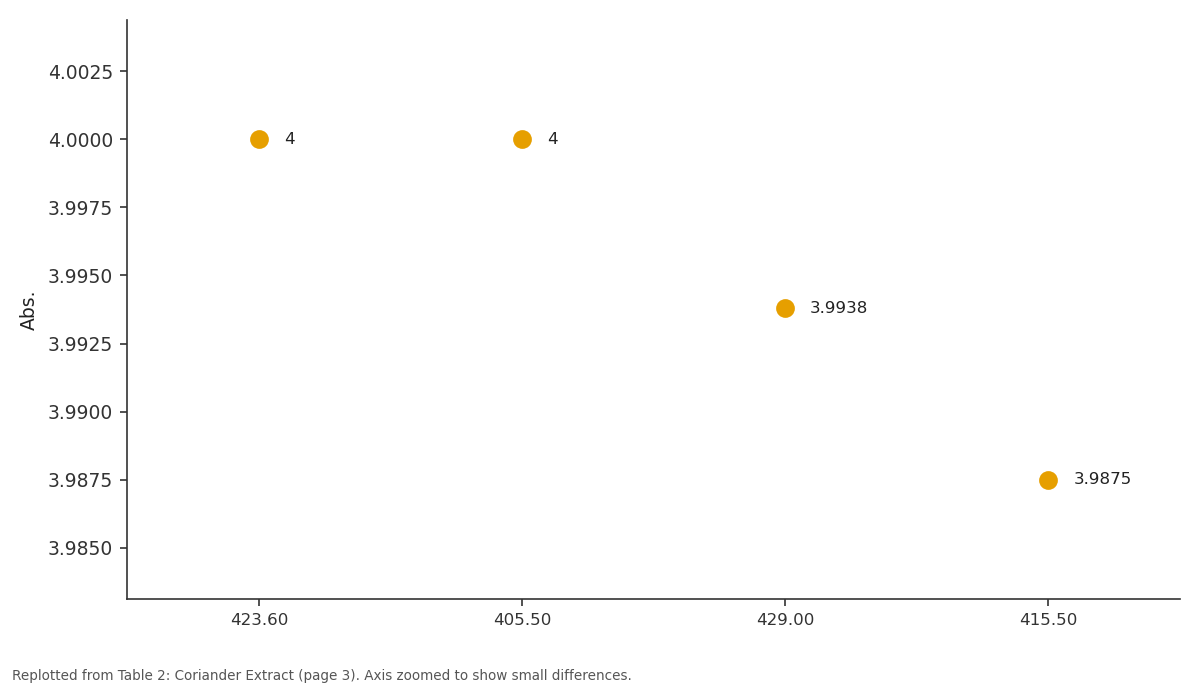
Abs.: 423.60 vs 405.50 vs 429.00 vs 415.50
Replotted from Table 2 (page 3) of the original paper. Every bar is the paper's own table value.
View source evidence ↗Figures & tables
From the original paper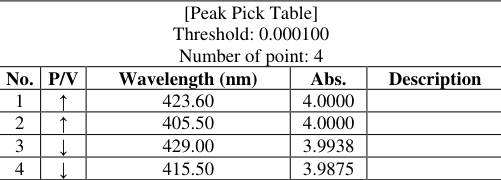 Table 2
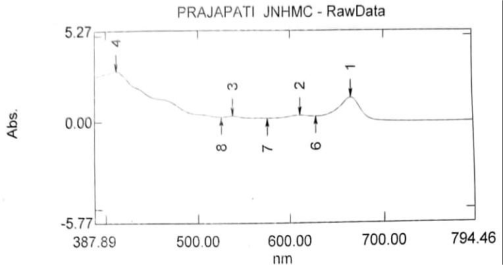 Figure 1
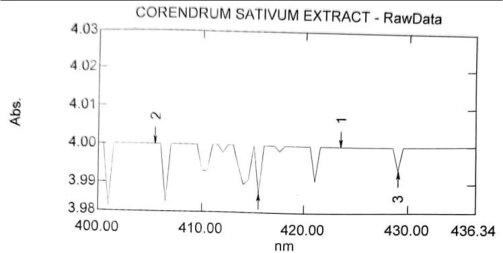 Figure 2
Introduction
Coriander leaves (Coriandrum sativum L.) contain quercetin, a flavanol from the flavonoid polyphenol group that helps prevent various metabolic disorders. This study aimed to use HPTLC-UV to investigate different compounds in coriander leaves in primary tincture. Due to its charming green colour and flavour, coriander (Coriandrum sativum L.) leaves are most extensively used in Asia, India, Central Europe, and North Africa for colourful fashions (gravies, salads, and garnish -braised food). Due to the recent emergence of nutraceutical factors, similar as chlorogenic acid, vanillic acid, caffeic acid, ferulic acid, p -coumaric acid, quercetin, kaempferol, and apigenin, it's also employed as a medical factory. One of these is quercetin, which has a advanced attention in coriander than in other flavonoids in the same family (Kozłowska et al. 2021). The leaves from different regions are employed as spicing agents and seasonings, and they show promising goods on colorful diseases, including indigestion, abdominal distention, diarrhea, urinary tract infections, and asthma. also, these leaves have been used to palliate nausea and vomiting (Scandar, Zadra, and Marcotullio 2023) [1] . Coriander contains a suitable quantum of quercetin, as well as optimal situations of fiber, protein, minerals, ascorbic acid, and vitamin A. This combination of nutrients makes it a precious addition to colorful dishes for home cuisine. Quercetin plays an important part in several body functions. People frequently use coriander leaves and seed greasepaint in their reflections because it adds a favourable taste. colourful studies have been conducted to explore the nutritive values of coriander leaves, seeds, and flowers (Frydrych, Krośniak, and Jurowski 2023; Bhat et al. 2014). Along with having antibacterial, vulnerable -boosting, anti -seditious, free radical scavenging, antilipidemic, antiaging, and anticancer conduct, it's pivotal for sustaining growth performance and digestion (Abdel -Latif et al. 2021; David et al. 2016; Mechchate et al. 2021). According to colorful academic studies, it also significantly lowers the frequence of hyperuricemia [2] . The metabolic by -product of purine and pyrimidine nucleic acids is uric acid. Reactive oxygen species are produced as xanthine dehydrogenase/ xanthine oxidase (XDH/ XO) catabolizes the conformation of uric acid, adding the threat of high blood pressure, elevated cholesterol situations, diabetes, and atherosclerosis (Punzi 2022). The main contributors to increased uric acid in the diet are purine and fructose input (Su et al. 2020).
A naturally being sugar patch called fructose pets up the metabolism of de novo purines by lowering ATP situations, which causes a rise in blood uric acid situations. High fructose consumption, similar as white sugar in tea and carbonated potables, is getting a bad habit among Pakistanis, and per capita sugar consumption has increased by over to 24 kg from 2018 -19. The average person consumes 16 soupspoons of sugar each day, which accounts for around 3.5 of all food charges in the kitchen (Lubawy and Formanowicz 2023). Pure fructose is set up in colourful products, similar as high fructose sludge saccharinity, sweets, and reused foods [3] It plays a significant part in adding the product of uric acid in the body. Diurnal fructose consumption of 25 -50 g is considered safe, while 50 -100 g is considered high but manageable ( [4] . The study was designed to introduce a new, provident, and indigenous source of organic composites, along with a food -grounded strategy to reduce the prevalence of hyperuricemia, emphasizing that forestalment is better than cure. The other ideal is to explore the nutraceutical perspective of coriander greasepaint through rat modelling [5] . Presently, the main remedial approaches for treating hyperuricemia involve the use of allopurinol and febuxostat, which are associated with colourful side goods. [6] Thus, there's a need to quantify the quercetin content in natural sources and to address this issue by introducing applicable situations of colourful functional composites. Former studies have demonstrated that coriander exhibits inhibitory exertion against xanthine oxidase in vitro (Kim 2023) [7] . This study aims to estimate the efficacy of coriander in rats. The rats were given different situations of coriander, corresponding to varying quantities of quercetin, as there's an exploration gap in former studies regarding this content [8] . The thing is to identify the optimal position of coriander splint greasepaint that provides a safe quantum of quercetin. Also, this study will determine the optimum situations of coriander, both in their raw forms and on a primary tincture, using the mortal original cure formula for accurate assessment [9] . Coriander has the antibacterial, immune-boosting, anti-inflammatory, free radical scavenging, antilipidemic, and antiaging it significantly lower the prevalence of hyperuricemia. Coriander inhibits the xanthine oxidase enzyme because of the variable amount of quercetin that has the capacity to reduce uric acid in the body. Therefore, in this research study, Coriander leaf powder is used to prevent the formation of uric acid crystals, which proved to be much more effective and have no side effects [10] .
UV visible Spectroscopy
Bright/ apparent (UV/ VIS) spectroscopic disquisition is a pivotal exploration centre means for getting significant synthetic data about particulars and cycles in different ultramodern areas. The UV/ VIS spectrophotometer is a profoundly flexible exploration installation instrument that is economically accessible in a large number of optic plans, particulars, unearthly estimation ranges and capacities, and functional designs [11] . While similar necessary inflexibility is profitable, it also requires an elevated degree of customer understanding to guarantee that the picked spectrophotometer is proper for the indicated scientific undertaking and likewise to check that the spectrophotometer is working meetly [12] . While playing out an UV/ VIS fashion on guaranteed spectrophotometer, the exploration installation investigator and principal thought to be upset about information parity and its results. Information similarity in UV/ VIS examination alludes to whether colourful spectrophotometers are suitable of creating identical estimation results for guaranteed perceptive fashion [13] . From a quality control point of view, the coherent inquiry that ought to constantly be posed is" Would I be gaining similar estimation information for this fashion in the event that I was exercising an alternate UV/ VIS spectrophotometer?" Reference material normalization is the perceptive means to respond to this inquiry and to give the abecedarian archived evidence [14] . Reference material normalization is vital to the lab standard working system or blessing/ capability convention, which should incorporate evaluation of slapdash 15 brilliant energy (slapdash light) and significant check of the frequency and photometric sizes of the spectrophotometer [16,17] .
Materials and Methods
The healthy coriander leaves are purchased from the market. Then the leaves are chopped and make a paste by clean porcelain mortar and pestle. As per the UV Spectrometric result (Figure 1 and Table 1) it has been seen that absorbance value is 0.3827 at 610 nm wavelength, 0.3318 at 537 nm, 0.3297 at 627nm, 0.214 at 575 nm, and 0.2617 at 525 nm Whereas in table 2 at 405 nm wavelength lanolinic acid is absorbed and value is 4.0.
| [Peak Pick Table] Threshold: 0.000100 Number of point: 4 | — | — | — | — |
|---|---|---|---|---|
| No. | P/V | Wavelength (nm) | Abs. | Description |
| 1 | ↑ | 423.60 | 4.0000 | |
| 2 | ↑ | 405.50 | 4.0000 | |
| 3 | ↓ | 429.00 | 3.9938 | |
| 4 | ↓ | 415.50 | 3.9875 |
Table text extracted from the original PDF; superscript letters are shown inline. The original table image is below.
View original table image
Type of Study
Type of Study
Conclusion
As per the above study it is proved that while preparation of mother tinctures the absorbance value will differ as different extraction value with the help of UV-visible spectrophotometer (Double beam).
Acknowledgement
AcknowledgementAuthors would like to thanks Dr Poorav Desai dean & Principal, Jawaharlal Nehru Homoeopathic Medical college, Parul University & Dr. Suraj Singh for their valuable support.
Figures and tables from the paper
References
17 in the original paper- Venkatachalam S. Ultraviolet and visible spectroscopy studies of nanofillers and their polymer nanocomposites. In: Spectroscopy of Polymer Nanocomposites. Norwich, NY: William Andrew; 2016. p. 130-157.
- Ríos-Reina R, Azcarate SM. How chemometrics revives the UV-Vis spectroscopy applications as an analytical sensor for spectralprint (nontargeted) analysis. Chemosensors. 2022;11:8.
- Imam SS, Sharma R. Natural compounds promising way to treat lung cancer. International Journal of Pharmaceutical Research and Applications. 2023;8:552-558.
- Imam SS, Sharma S, Kumari D, Khan S, Pathak P, Katiyar D. An expedient approach to treat asthma through non-steroidal, natural transferosomes aerosol system. Innovare Journal of Medical Sciences. 2022;10:7-11.
- Imam SS, Imam ST, Agarwal S, Kumar R, Ammar MY, Athar MW, et al. Lung cancer therapy using naturally occurring products and nanotechnology. Innovare Journal of Medical Sciences. 2022;10:1-5.
- Imam ST, Imam SS. The cream which relieves the pain of menstrual cramps without interfering with the hormones or period cycle. Research Journal of Pharmacy and Technology. 2023;16:1239-1246.
- Imam SS. Topical formulation constituted with transferosomes for the treatment of non-melanoma skin cancer. Asian Journal of Pharmaceutical and Clinical Research. 2023;16:27-32.
- Imam SS. Nanoparticles: The future of drug delivery. International Journal of Current Pharmaceutical Sciences. 2023;15:8-15.
- Imam SS, Mehdi S, Mansuri A. A comprehensive review on the pharmacological potential of red ginseng oil, tea tree oil and hemp seed oil. European Journal of Biomedical. 2024;11:167-177.
- Adhirajan N, Ravi Kumar T, Shanmugasundaram N, Babu M. In vivo and in vitro evaluation of hair growth potential of Hibiscus rosasinensis Linn. Journal of Ethnopharmacology. 2003;88:235-239.
- Han A, Mirmirani P. Clinical approach to the patient with alopecia. Seminars in Cutaneous Medicine and Surgery. 2006;25:11-23.
- Bagatell C, Bremner WJ. Androgens in men -uses and abuses. New England Journal of Medicine. 1996;334:707-715.
- Olsen EA. Androgenetic alopecia. In: Olsen EA, editor. Disorders of Hair Growth: Diagnosis and Treatment. New York: McGraw Hill, Inc; 1993. p. 257-287.
- Takahashi T, Kamiya T, Yokoo Y. Proanthocyanidins from grape seeds promote proliferation of mouse hair follicle cells in vitro and convert hair cycle in vivo. Acta Dermato-Venereologica. 1998;78:428-432.
- Adhirajan N, Dixit VK, Gowri C. Development and evaluation of herbal formulations for hair growth. Indian Drugs. 1999;38:559-563.
- Roy RK, Thakur M, Dixit VK. Effect of Cuscuta reflexa Roxb on hair growth in albino rats. Indian Drugs. 2006;43(12):951-956.
- Lipi P, Suryaprakash BN, Pande MS. Development and evaluation of herbal formulations for hair growth. EJournal of Chemistry. 2008;5(1):34-38.