
Research article · 2025 · Full text
International Journal of Horticulture and Food ScienceAssessment of natural dye extracted from Ixora coccinea L. flowers for commercial textile utilization using bio-mordant
Volume 7(10) · Pages 38–42 · DOI: 10.33545/26631067.2025.v7.i10a.401 ↗
Research areasDyeing and Modifying Textile FibersEnzyme-mediated dye degradationMicrobial Metabolism and Applications
Abstract
Author-writtenThe study aimed to assess the dyeing potential of Ixora coccinea L. flower extract on cotton fabric using eco-friendly bio-mordants for sustainable textile applications. Shade-dried flowers were subjected to aqueous and ethanol extraction, and dyed cotton fabrics were evaluated for color fastness properties, including resistance to light, washing, rubbing, and perspiration. Among the mordants tested—myrobalan, pomegranate rind, majuphal seed powder, and alum—pomegranate rind powder demonstrated superior performance with solvent extract, exhibiting excellent color fastness (scores up to 6 for light and 5 for washing). Solvent extraction consistently produced better results than aqueous extraction, indicating higher dye-fibre binding efficiency. The findings highlight Ixora coccinea ethanol dye extract along with pomegranate rind powder as a bio-mordant, as a promising source of natural dye with significant commercial potential in eco-textile industries, promoting sustainable and non-toxic alternatives to synthetic dyes.
Summary
Source-checkedPlain-language reading of the full paper, prepared with AI and checked against the text. Each point links to the authors' own words.
Why it matters
- Synthetic dyes used in the textile industry are problematic because they are toxic, non-biodegradable, and cause pollution. View evidence ↗
- Flowers contain pigments such as anthocyanins, carotenoids, flavonoids, and betalains, making them viable sources for natural dyes. View evidence ↗
- Ixora coccinea L. is an underutilized tropical shrub that produces red-pink flowers rich in anthocyanins. View evidence ↗
The question
- The study aims to determine if Ixora coccinea flowers can be used as a commercially feasible natural dye for cotton fabric by testing color fastness with different bio-mordants. View evidence ↗
What they did
- Dye was extracted using two methods at 80 °C for three hours: aqueous extraction (30 mL/g ratio) and ethanol extraction (10 mL/g ratio). View evidence ↗
- The material used was 100% cotton knitted fabric (10 x 10 cm), which was scoured in 5% NaOH at 60 °C for one hour. View evidence ↗
- Color fastness to light, washing, rubbing, and perspiration was evaluated at SITRA using ISO standards (ISO 105-B02, ISO 105-C06, ISO 105-X12, and ISO 105-E04). View evidence ↗
What they found
- Pomegranate rind powder provided the best light fastness, scoring 6 for solvent extract and 5 for aqueous extract. View evidence ↗
- For washing fastness, pomegranate rind powder was the most effective, scoring 4 for both solvent and aqueous extracts. View evidence ↗
- Pomegranate rind powder showed the highest rubbing fastness, with scores of 5 (dry) and 4 (wet) for solvent extract, and 4 (dry) and 4 (wet) for aqueous extract. View evidence ↗
- Pomegranate rind powder achieved the highest perspiration fastness, scoring 5 in acidic conditions with solvent extract and 4 in other conditions. View evidence ↗
- Solvent-based extraction generally resulted in better color fastness than aqueous extraction across all mordant treatments. View evidence ↗
- The dye showed pH sensitivity, with better color retention in acidic perspiration conditions than in alkaline conditions. View evidence ↗
What it means
- The authors conclude that Ixora coccinea flower extract is a viable natural dye for cotton, with pomegranate rind powder being the most efficient bio-mordant. View evidence ↗
- The authors state that future research is needed to test color retention over longer periods and to investigate the costs and scalability of the process. View evidence ↗
Visual summary
3 visualsIllustrations explain the paper; charts are replotted from the paper's own table values.
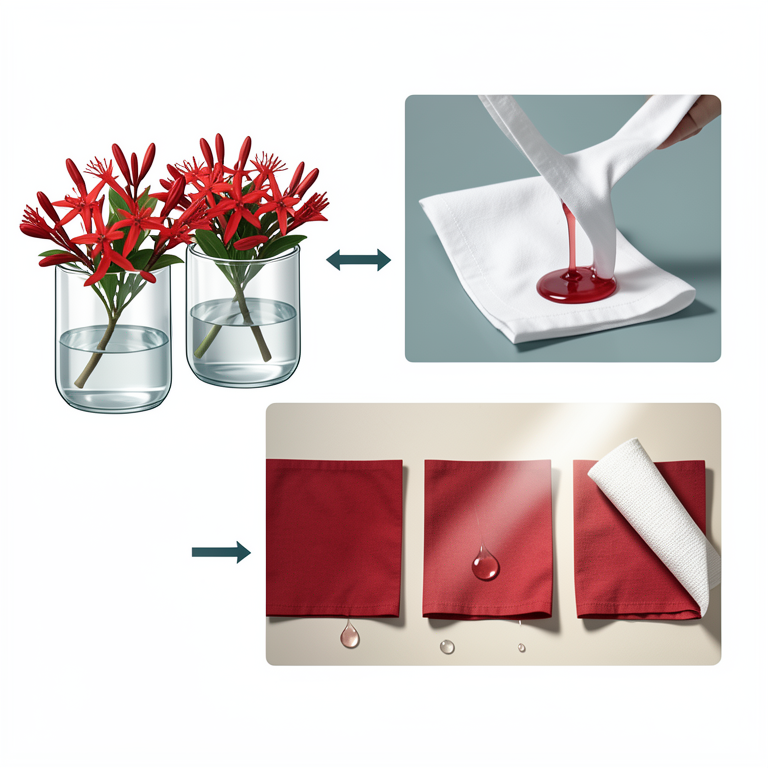
Experimental Workflow
AI-generated conceptual illustration (Ixora coccinea flowers and cotton fabric). It explains the idea and does not show study data.
View source evidence ↗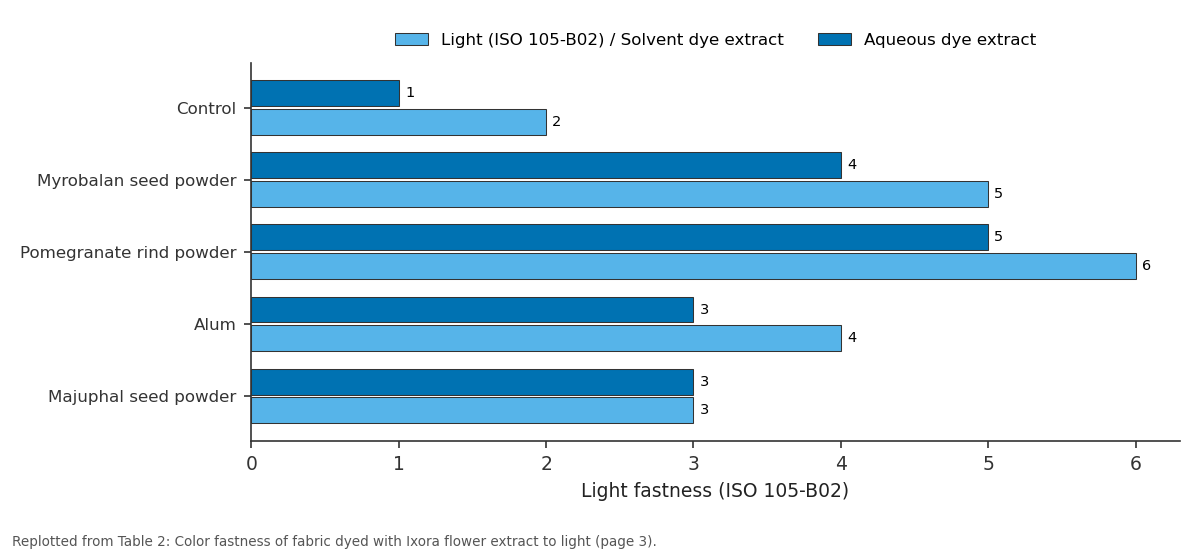
Light (ISO 105-B02) / Solvent dye extract and Aqueous dye extract: Control vs Myrobalan seed powder vs Pomegranate rind powder vs Alum vs Majuphal seed powder
Replotted from Table 2 (page 3) of the original paper. Every bar is the paper's own table value.
View source evidence ↗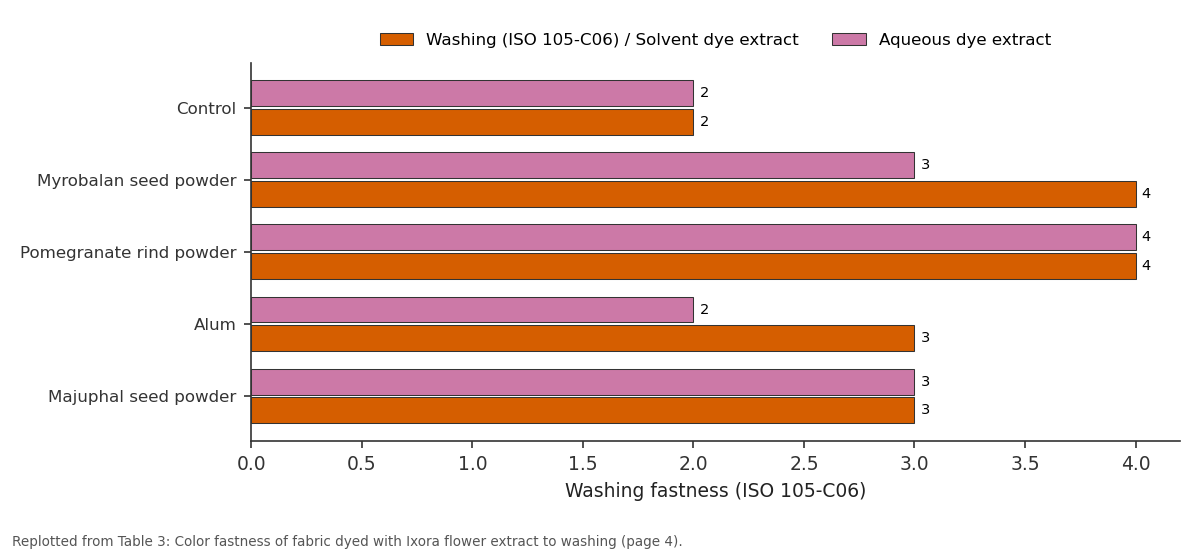
Washing (ISO 105-C06) / Solvent dye extract and Aqueous dye extract: Control vs Myrobalan seed powder vs Pomegranate rind powder vs Alum vs Majuphal seed powder
Replotted from Table 3 (page 4) of the original paper. Every bar is the paper's own table value.
View source evidence ↗Figures & tables
From the original paper Table 1
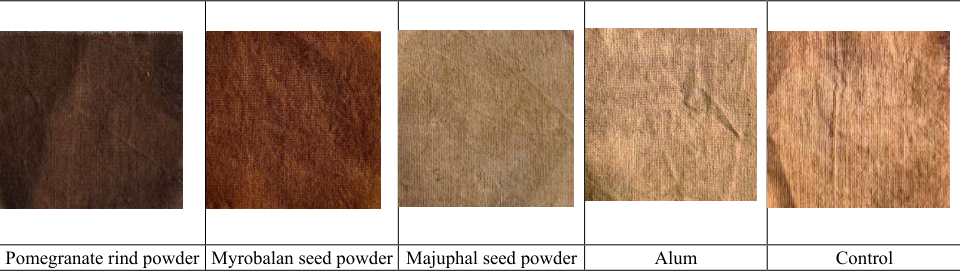 Table 2
 Table 2
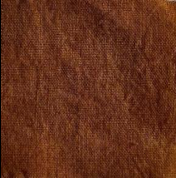 Figure 2
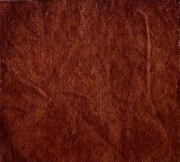 Figure 1
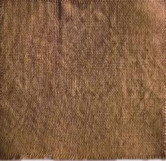 Figure 1
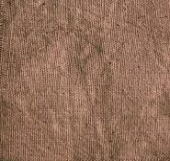 Figure 1
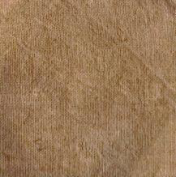 Figure 2
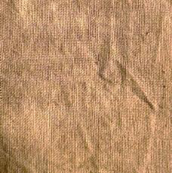 Figure 2
 Table 3
 Table 4
 Table 5
Introduction
Synthetic dyes are extensively utilized in textile industry which pose environmental and health risks due to their non-biodegradable nature, toxicity, and the pollution. Consequently, there is an increasing interest in natural dyes derived from plants, which are renewable, biodegradable, and generally considered safer. Natural dyes also have other properties, such as repelling insects, neutralizing odours, acting as antifeedants and inhibiting the growth of microorganisms. It also protects from UV rays and possesses qualities like luminescence (1). Flowers are rich sources of pigments like anthocyanins, carotenoids, flavonoids and betalains that impart color, which can be employed as potential sources for natural dye (2). Many research has been done on underutilized flowers like Delonix regia, Ceasalpinnia pulcherimma, Lantana, Plumeria and Bougainvillea for textile colorant (3). Ixora coccinea L., is one such underutilized ornamental shrub in tropical areas, produces a large number of red-pink flowers rich in anthocyanins. Ixora (red color) is grown in Karur, Tiruchirappalli, Dindigul and Salem districts of Tamil Nadu for loose flower purposes. The peak season of flowering is April-May (4). While the ornamental and medicinal benefits of Ixora have been studied, its potential for dyeing textiles has not been thoroughly evaluated under conditions relevant to commercial use, particularly with eco-friendly bio-mordants. This study seeks to assess the dyeing potential of Ixora coccinea flowers on cotton fabric by examining color fastness properties with various bio-mordants to determine its commercial feasibility.
Materials and Methods
Materials and Methods
Plant material and extraction
Ixora coccinea (Red type) flowers were collected from the Botanical Garden of Tamil Nadu Agricultural University, Tamil Nadu, India. The flowers were shade-dried for ten days at room temperature until they reached a moisture content of 20 percent, then ground into powder. Two methods of extraction; Aqueous and Ethanol method was carried out. Aqueous extraction was done using water bath at 80 °C for three hours with a solvent-to-sample ratio of 30 mL/g. Ethanol extraction was performed in a Soxhlet apparatus at 80 °C for three hours with a solvent-to-sample ratio of 10 mL/g. The extract was filtered (Whatman No.1) and concentrated using a rotary evaporator to create a usable dye bath (5).
Fabric preparation
100% cotton knitted fabric (10 × 10 cm) was scoured in 5% NaOH at 60 °C for one hour to eliminate impurities, then rinsed with distilled water and shade-dried.
Mordanting treatments
Cotton samples were pre-mordanted with the following treatments (6 replicates per treatment). Mordanting was carried out by immersing fabrics in mordant solution (material: liquor ratio 1:20) at 60 °C for 1 h, followed by rinsing and shade drying.
Dyeing procedure
The cotton fabric was dyed using the dye extracted from Ixora flowers as outlined by (6). Mordanted fabrics were dyed with Ixora extract under the same ratio (1:20) at 80 °C for 1 h. Then it was soaked overnight in the dye bath for better absorption. Overnight-soaked fabric was treated with dye fixative by dipping in lime water for 15 minutes. After dyeing, fabrics were washed until wash-off was minimal, then shade dried.
Evaluation of color fastness
The dyed cotton fabrics were tested for color fastness at the South India Textile Research Association (SITRA), Coimbatore.
Color fastness to light
This test adheres to the standardized protocol ISO 105-B02. A piece of dyed cotton fabric of a standard size is cut and mounted on a card next to a blue wool reference standard, which includes eight strips with predetermined light fastness ratings (1 = very poor, 8 = excellent). Both the sample and the reference are subjected to an artificial light source, usually a xenon arc lamp, which mimics natural sunlight.
The exposure time varies according to the standard, ranging from a few hours to several days. The test chamber maintains specific temperature (40-60°C) and humidity (30-65%) conditions. After exposure, the fabric's color change is evaluated using a grey scale (ISO 105-A02).
Color fastness to washing
The test follows the standardized procedure ISO 105-C06. A standard-sized fabric sample is sewn with an adjacent multifiber fabric (comprising wool, cotton, polyester, nylon, acetate, and acrylic) to evaluate both color loss and staining. The sample is placed in a laundrometer with a detergent solution, typically containing sodium perborate and a nonionic detergent, at a specified temperature (30-95 °C), duration (30-45 minutes), and agitation level, depending on the intended washing conditions. After washing, the sample is rinsed and dried under controlled conditions. The degree of color change is assessed using a grey scale for color change (ISO 105-A02), while staining on the adjacent fabric is evaluated with a grey scale for staining (ISO 105-A03).
The results are rated on a scale from 1 (poor) to 5 (excellent).
Color fastness to rubbing
This test adheres to the standard procedure ISO 105-X12.
During the test, a fabric sample is placed on a testing apparatus, and a white cotton cloth is rubbed against it with controlled pressure and strokes. The test is performed under two conditions viz., dry rubbing and wet rubbing, where the cloth is dampened with water. After the rubbing process, the white cotton cloth is examined for color transfer using a grey scale for staining (ISO 105-A03). The results are rated from 1 (poor) to 5 (excellent).
Color fastness to perspiration
This test follows the standard method ISO 105-E04. A fabric sample is sewn to a multi fiber adjacent fabric and immersed in two solutions viz., acidic (pH ~ 4.3, using acetic acid and sodium chloride) and alkaline (pH ~8.0, using sodium carbonate and sodium chloride), to replicate human sweat conditions. After a 30 minute soak, the sample is placed under a fixed pressure of 4.5 kg between glass or acrylic plates and incubated at 37°C for 4 hours to simulate body heat. The sample is then air-dried. The extent of color change is evaluated using a grey scale for color change (ISO 105-A02), and staining on the adjacent fabric is assessed with a grey scale for staining (ISO 105-A03). The results are rated from 1 (poor) to 5 (excellent).
Results and Discussion
Cotton fabrics dyed with Ixora flower extract exhibited shades of colors ranging from brown to pale pink with different mordants. The shades of color obtained after dyeing with aqueous and ethanol dye extract with different bio-mordants are presented in Fig. 1 The scale ranges from 1 (Poor) to 8 (Excellent), reflecting the extent of color change due to light exposure.
Color fastness to washing
The evaluation of color fastness to washing for dyed fabrics was assessed based on ISO 105-C06 standards. Assessment of color retention involved measuring the extent of staining and color change and the results are detailead in Table 3. Fabrics treated with pomegranate rind powder demonstrated the highest color fastness to washing, achieving a score of 4 for both solvent and aqueous dye extracts. This finding aligns with research by Jabar, Adedayo (10), who studied the effect of solvent on natural dye extraction. They also found that the choice of solvent impacts color yield, while mordant selection remains the main factor in determining washing fastness properties. These findings are further supported by Adeel, Yameen (11), whose comparative research on extraction methods demonstrated that solvent polarity significantly influenced the binding affinity of the extracted compounds with bio-mordants, with solvent extractions showing enhanced washing fastness when combined with tannin-rich natural mordants like pomegranate. Following this, myrobalan seed powdertreated fabrics scored 4 and 3, for solvent and aqueous dye extracts respectively. The control showed the lowest fastness, with a score of 2 for both the dye extracts. Fabrics treated with alum showed moderate color fastness, scoring 3 for solvent dye extract and 2 for aqueous dye extract. The consistently lower washing fastness observed with aqueous extracts in alum mordanted samples (rating of 2 compared to 3 for solvent extract) correlates with observations by Phan, Van Den Broeck (12), who found that water extracts the compounds with different binding affinities for metallic mordants compared to ethanol extraction. Their comprehensive study on the effects of solvents in natural dyeing revealed that solvent extraction typically yields compounds with greater affinity for metal-coordination complexes, which translates to enhanced washing durability. Majuphal seed powder-treated fabrics received a score of 3 for both dye extracts. These findings suggest that pomegranate rind powder was the most effective mordant for improving color fastness to washing.
| Mordants | Washing (ISO 105-C06) | — |
|---|---|---|
| Solvent dye extract | Aqueous dye extract | |
| Control | 2 | 2 |
| Myrobalan seed powder | 4 | 3 |
| Pomegranate rind powder | 4 | 4 |
| Alum | 3 | 2 |
| Majuphal seed powder | 3 | 3 |
Table text extracted from the original PDF; superscript letters are shown inline. The original table image is below.
View original table image
Color fastness to rubbing
The grey scale rating for rub fastness demonstrated that the performance of dyed fabric varied according to the mordant used as mentioned in Table 4. In the case of solvent dye extract, fabrics treated with pomegranate rind powder achieved the highest dry rub fastness score of 5. Vankar and Shukla (13) found that the superior performance of pomegranate was due to its high content of gallic acid and ellagitannin, which form stable coordination complexes with dye molecules, enhancing abrasion resistance. This was followed by fabrics treated with myrobalan seed powder, alum and majuphal seed powder, each receiving a score of 4. The control, with a score of 3, showed moderate staining. Under wet rubbing conditions, pomegranate rind powder-treated fabrics excelled with a score of 4, while the control scored the lowest of 2, indicating a higher degree of color transfer. For aqueous dye extracts, fabrics mordanted with pomegranate rind powder exhibited the highest dry rub fastness, rate of 4, followed by the control, myrobalan seed powder, alum and majuphal seed powder, all scoring 3. In wet conditions, pomegranate rind powder achieved the highest fastness score of 4, whereas the control had the lowest score of 1, indicating significant color loss. Benli (14) explains that wet rub fastness scores were consistently lower than dry scores because water acts as a plasticizer during wet rubbing tests, with tannin-rich bio-mordants offering better protection against this effect.
| Mordants | Rubbing (ISO 105-X12) | — | — | — |
|---|---|---|---|---|
| Solvent dye extract | Aqueous dye extract | |||
| Dry | Wet | Dry | Wet | |
| Control | 3 | 2 | 3 | 1 |
| Myrobalan seed powder | 4 | 3 | 3 | 3 |
| Pomegranate rind powder | 5 | 4 | 4 | 4 |
| Alum | 4 | 3 | 3 | 2 |
| Majuphal seed powder | 4 | 2 | 3 | 2 |
Table text extracted from the original PDF; superscript letters are shown inline. The original table image is below.
View original table image
Color fastness to perspiration
The assessment of color fastness for fabrics dyed with Ixora flower extract was performed under perspiration conditions, adhering to the IS/ISO 105 E04-2008 (RA 2019) standard for both acidic and alkaline environments. The color fastness was evaluated using a grey scale, and the results are summarized in Table 5. Fabrics treated with pomegranate rind powder achieved the highest color fastness of 5 in acidic conditions with solvent dye extract and 4 in myrobalan seed powder and alum. This demonstrates that pomegranate rind powder had superior resistance to fading due to perspiration. The control resulted in the lowest scores (3 in acidic and 2 in alkaline conditions for both dye extracts), emphasizing the role of mordants in color retention, which aligns with the findings of Rani, Guru (15), who found that non-mordanted natural dyes form weak hydrogen bonds that are easily disrupted by perspiration. Among other mordants, myrobalan seed powder and majuphal seed powder exhibited moderate fastness scores, ranging from 3 to 4 across different conditions in both dye extracts. Alum, on the other hand, showed the lowest fastness score of 2, particularly in alkaline conditions with aqueous dye extract supporting the study of Singhee (16), who found that aluminium-based mordants form coordinate bonds that are less stable in alkaline environments. Enaru, Drețcanu (17) demonstrated that anthocyanin-based dyes exhibit greater stability in acidic environments that maintain their molecular structure, while alkaline conditions induce structural changes that weaken dye-fibre bonds.
| Mordants | Perspiration (ISO 105-E04) | — | — | — |
|---|---|---|---|---|
| Solvent dye extract | Aqueous dye extract | |||
| Acid | Alkaline | Acid | Alkaline | |
| Control | 3 | 2 | 3 | 2 |
| Myrobalan seed powder | 4 | 3 | 3 | 4 |
| Pomegranate rind powder | 5 | 4 | 4 | 4 |
| Alum | 4 | 3 | 3 | 2 |
| Majuphal seed powder | 3 | 3 | 4 | 3 |
Table text extracted from the original PDF; superscript letters are shown inline. The original table image is below.
View original table image
Conclusion
The study confirms Ixora coccinea flower extract as a viable natural dye for cotton fabrics using bio-mordants. Solvent dye extract generally yielded better color fastness results compared to aqueous dye extract across all mordant treatments, suggesting solvent-based extraction may be preferable for textile applications. Among those tested, pomegranate rind powder is the most efficient mordant, delivering superior fastness properties. Fabrics generally showed better color retention in acidic perspiration conditions compared to alkaline conditions, particularly with solvent dye extracts, suggesting pH sensitivity of the Ixora dye-fabric interaction. The findings support commercial application potential. Future work should test color retention under prolonged exposure, and explore cost and scalability.
Acknowledgement
I would like to acknowledge Department of Floriculture and Landscaping, Horticultural College and Research Institute, Tamil Nadu Agricultural University, Periyakulam, for providing the necessary facilities and support to conduct this research.
Figures and tables from the paper
| Treatment | Bio-Mordant | Concentration (%) |
|---|---|---|
| T₁ | Control (no mordant) | - |
| T₂ | Myrobalan seed powder (Terminalia chebula) | 10 |
| T₃ | Pomegranate rind powder (Punica granatum) | 10 |
| T₄ | Majuphal seed powder (Quercus infectoria) | 10 |
| T₅ | Alum | 4 |
Table text extracted from the original PDF; superscript letters are shown inline. The original table image is below.
View original table image
| Mordants | Light (ISO 105-B02) | — |
|---|---|---|
| Solvent dye extract | Aqueous dye extract | |
| Control | 2 | 1 |
| Myrobalan seed powder | 5 | 4 |
| Pomegranate rind powder | 6 | 5 |
| Alum | 4 | 3 |
| Majuphal seed powder | 3 | 3 |
Table text extracted from the original PDF; superscript letters are shown inline. The original table image is below.
View original table image
References
17 in the original paper- Kumar J, Sinha AK. Resurgence of natural colourants: a holistic view. Natural Product Research. 2004;18(1):59-84.
- Tanaka Y, Sasaki N, Ohmiya A. Biosynthesis of plant pigments: anthocyanins, betalains and carotenoids. The Plant Journal. 2008;54(4):733-49.
- Datta DB, Das D, Sarkar B, Majumdar A. Lantana camara flowers as a natural dye source for cotton fabrics. Journal of Natural Fibers. 2023;20(1):2159604.
- Reshma R, Ganga M, Visalakshi M. Standardization of post-harvest management techniques for Ixora (Ixora spp.). International Journal of Environment and Climate Change. 2023;13(10):1267-80.
- Jha CK, Ratan Kumar RK, Kumar S, Rajeswari V. Extraction of natural dye from marigold flower (Tagetes erecta L.) and dyeing of fabric and yarns: colorimetric analysis and fastness properties. 2015.
- Kulkarni S, Gokhale A, Bodake U, Pathade G. Cotton dyeing with natural dye extracted from pomegranate (Punica granatum) peel. Universal Journal of Environmental Research and Technology. 2011;1(2).
- Adeel S, Ahmad S, Habib N, Mia R, Ahmed B. Coloring efficacy of Nyctanthes arbortristis based yellow natural dye for surface-modified wool. Industrial Crops and Products. 2022;188:115571.
- Punrattanasin N, Nakpathom M, Somboon B, Narumol N, Rungruangkitkrai N, Mongkholrattanasit R. Silk fabric dyeing with natural dye from mangrove bark (Rhizophora apiculata Blume) extract. Industrial Crops and Products. 2013;49:122-9.
- Shams-Nateri A, Hajipour A, Dehnavi E, Ekrami E. Colorimetric study on polyamides dyeing with weld and pomegranate peel natural dyes. Clothing and Textiles Research Journal. 2014;32(2):124-35.
- Jabar JM, Adedayo TE, Odusote YA. Eco-friendly dyeing of cotton fabric using Mucuna slonaei F extract: effects of metal salts pre-mordanting on color strength and fastness properties. Current Research in Green and Sustainable Chemistry. 2021;4:100151.
- Adeel S, Yameen M, Asghar F, Amin N, Ozomay M, Mirnezhad S. Extraction and application of plant-based tannins as sources of natural colourants. Natural Dyes and Sustainability. 2024:103-26.
- Phan K, Van Den Broeck E, Van Speybroeck V, De Clerck K, Raes K, De Meester S. Anthocyanins from blueberries as a natural dye for cotton: experimental and theoretical study. Dyes and Pigments. 2020;176:108180.
- Vankar PS, Shukla D. New Trends in Natural Dyes for Textiles. Woodhead Publishing; 2019.
- Benli H. Bio-mordants: a review. Environmental Science and Pollution Research. 2024;31(14):20714-71.
- Rani J, Guru R, Singh J, Santhanam S. Eco-dyeing and finishing of cotton fabric using colour derived from lotus seed: enhanced fastness with chitosan. Textile and Leather Review. 2024;7:1039-60.
- Singhee D. Review on natural dyes for textiles from wastes. Chemistry and Technology of Natural and Synthetic Dyes and Pigments. IntechOpen; 2020.
- Enaru B, Drețcanu G, Pop TD, Stǎnilǎ A, Diaconeasa Z. Anthocyanins: factors affecting stability and degradation. Antioxidants. 2021;10(12):1967.