
Research article · 2025 · Full text
International Journal of Agriculture and Food ScienceTo study the Efficacy of Trichoderma harzianum against phytopathogenic fungi
Volume 7(10) · Pages 165–167 · DOI: 10.33545/2664844x.2025.v7.i10c.866 ↗
Research areasPlant-Microbe Interactions and ImmunityPlant Disease Management TechniquesPlant Disease Resistance and Genetics
Abstract
Author-writtenTrichoderma species are significant potential bioagents that can combat a variety of soil-borne fungal infections. Compared to their counterparts (bacteria, nematodes, viruses, and protozoa), Trichoderma based biocontrol agents are more effective at promoting plant growth and soil remediation activities. Cultural characteristics of T. harzianum isolates showed light green sporulation throughout the plates and fluffy growth at margin. T. harzianum significantly highest mycelial inhibition was observed by Fusarium oxysporum f.sp. lycopersici(75.00 %) with 22.00 mm average colony diameter after seven days of incubation which was followed by Macrophomina phaseolina (55.73%), Sclerotium rolfsii (60.00%) isolates with average colony diameters 34.10 mm respectively. T. harzianum showed maximum antagonistic potential in dual culture technique against Sclerotium rolfsii, Macrophomina phaseolina and F. oxysporum f. sp. Lycopersici. whereas T. harzianum isolates showed maximum antagonistice effect to F. oxysporum f. sp. Lycopersici followed by Sclerotium rolfsii, Macrophomina phaseolina
Summary
Source-checkedPlain-language reading of the full paper, prepared with AI and checked against the text. Each point links to the authors' own words.
Why it matters
- The use of chemical pesticides to control plant diseases is problematic because these compounds can accumulate in the food chain and pose hazards to mammals. View evidence ↗
- Changes in farming practices have led to the wide distribution of soil-borne pathogenic fungi like Fusarium and Sclerotium, which negatively affect economically important crops. View evidence ↗
- Trichoderma species are established biocontrol agents that can attack other fungi and produce antibiotics to inhibit pathogens. View evidence ↗
The question
- The study aims to evaluate how effective Trichoderma harzianum is at inhibiting the growth of phytopathogenic fungi. View evidence ↗
What they did
- The morphological and cultural traits of T. harzianum were analyzed by inoculating 6 mm mycelial discs on PDA media and incubating them at 28 ± 20 °C for one week. View evidence ↗
- To test efficacy, 6 mm mycelial discs of the bioagent and pathogens were placed approximately 4 cm apart on solidified PDA. View evidence ↗
- The experiment was repeated four times at a room temperature of 27 ± 20 °C, using controls where the pathogen grew alone. View evidence ↗
- Pathogen radial growth was measured after seven days of incubation, and the Bliss formula was used to calculate the percentage of mycelial growth inhibition. View evidence ↗
What they found
- T. harzianum exhibited cultural characteristics including light green sporulation, green raised colonies, whitish green mycelial growth, and fluffy margins. View evidence ↗
- The average colony diameter of T. harzianum increased over time, measuring 22 mm at 24 hours, 54 mm at 48 hours, and 82 mm at 72 hours. View evidence ↗
- T. harzianum was most effective against Fusarium oxysporum f.sp. lycopersici, achieving 75.00% mycelial inhibition and an average colony diameter of 22.00 mm after seven days. View evidence ↗
- T. harzianum also inhibited Sclerotium rolfsii (60.00% inhibition, 34.10 mm diameter) and Macrophomina phaseolina (55.73% inhibition, 30.10 mm diameter). View evidence ↗
- In the control group where the pathogen grew without the bioagent, the average colony diameter was 88.00 mm. View evidence ↗
What it means
- The authors conclude that T. harzianum is an effective agent against Sclerotium rolfsii, Macrophomina phaseolina, and F. oxysporum f.sp. lycopersici when using the dual culture technique. View evidence ↗
Visual summary
3 visualsIllustrations explain the paper; charts are replotted from the paper's own table values.

Dual Culture Technique Setup
AI-generated conceptual illustration (Trichoderma harzianum and phytopathogenic fungi in a Petri dish). It explains the idea and does not show study data.
View source evidence ↗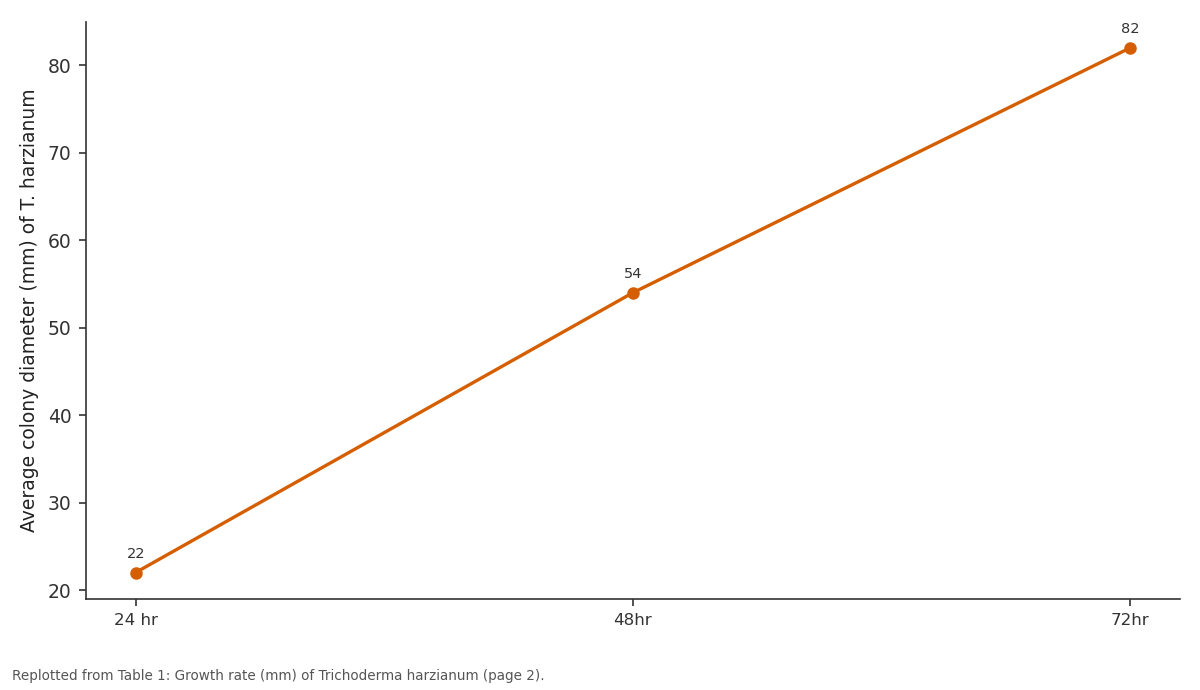
*Average colony diameter (mm) of T. harzianum: 24 hr vs 48hr vs 72hr
Replotted from Table 1 (page 2) of the original paper. Every bar is the paper's own table value.
View source evidence ↗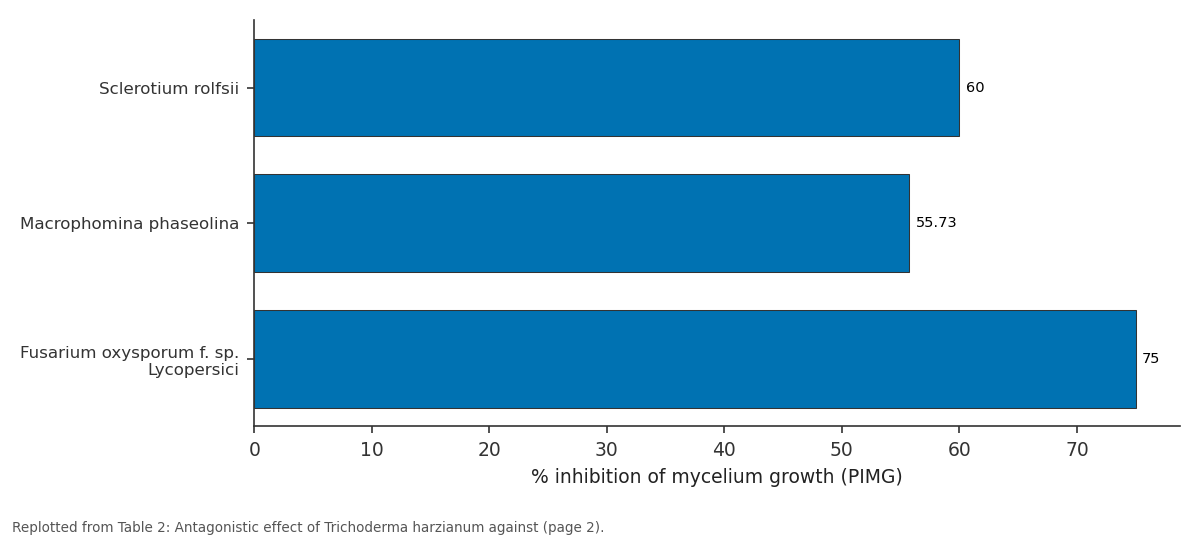
% inhibition of mycelium growth (PIMG): Sclerotium rolfsii vs Macrophomina phaseolina vs Fusarium oxysporum f....
Replotted from Table 2 (page 2) of the original paper. Every bar is the paper's own table value.
View source evidence ↗Figures & tables
From the original paper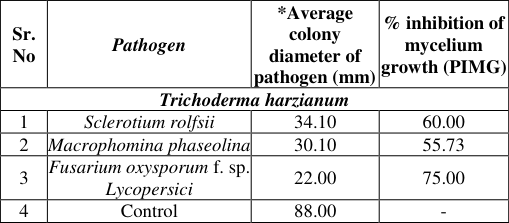 Table 2
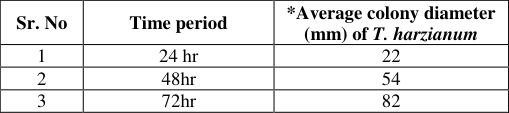 Table 1
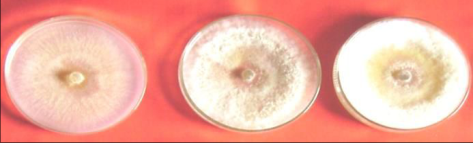 Figure 1
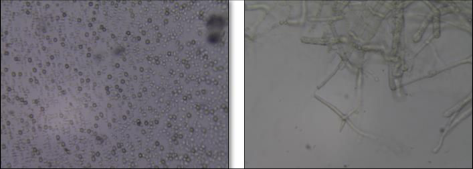 Figure 2
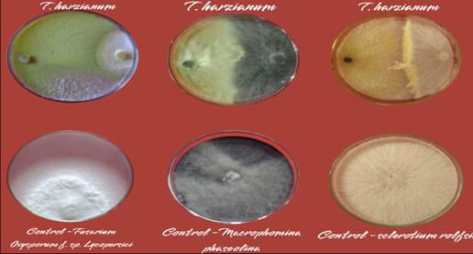 Figure 3
Introduction
According to contemporary agriculture has recently confronted the difficulty of effectively controlling plant diseases in an environmentally acceptable way. The extensive use of pesticides and organic compounds to manage plant infections has resulted in accumulation and entry into the food chain, which can be hazardous to mammals. Numerous soil-borne phytopathogenic fungus, such as Fusarium, Phytophthora, Sclerotium, Macrophomina, and others, have become widely distributed in recent years as a result of farming changes that have a negative impact on economically significant crops (Chet et al., 1997) [3]. Trichoderma species have been recognized for 70 years to act as biocontrol organisms, attack other fungus, and create antibiotics that harm other pathogenic organisms.
Trichoderma employs competition, colonization, antibiosis, and direct mycoparasitism as strategies to counteract phytopathogenic fungi (Howell, 2003) [6]. As an alternative to using chemicals to manage a variety of plant diseases, the antagonistic potential of various Trichoderma strains provides the foundation for their successful biological control applications (Chet, 1987) [2]. It has no phytotoxic effects and is environmentally benign. It creates complexes of enzymes that support the growth of plants.
Its affinity for root exudates has led to some host specificity. Through a symbiotic association akin to that of nitrogen- fixing bacteria and legume roots or that of mycorrhiza and root system, it can minimize and protect the host plant. Material Method Phenotype Characters of the Trichoderma harzianum: The morphological and cultural characteristics of Trichoderma harzianum were studied in PDA media. Mycelial discs (6 mm) of young growing culture of Trichoderma harzianum was inoculated on the Petri plates containing PDA media and incubated at 28 ± 20 C for one week.
Colony radius was measured at 24, 48 and 72 h. each growth rate experiment was repeated three times in triplicate and the results were averaged for each isolate. Additional characters i.e conidia and conidiophores was examined under a light microscope. NAAS Rating (2025): 4.97 IJAFS 2025; 7(10): 165-167 Akshaya Walunj Ph.D. Scholar Dept. of Plant Pathology SVVV Indore, Madhya Pradesh, India Narayan Gurav Asst.
Prof Dept. of Plant Pathology SVVV Indore, Madhya Pradesh, Indi Prerana Abhang Ph.D. Scholar Dept. of Plant Pathology SVVV Indore, Madhya Pradesh, India Akshaya Walunj Ph.D. Scholar Dept. of Plant Pathology SVVV Indore, Madhya Pradesh, India https://www.agriculturaljournals.com Table 2: Antagonistic effect of Trichoderma harzianum against Sclerotium rolfsii, Macrophomina phaseolina, Fusarium oxysporum f. sp. Lycopersici, by dual culture technique Sr.
| Sr. No | Pathogen | *Average colony diameter of pathogen (mm) | % inhibition of mycelium growth (PIMG) |
|---|---|---|---|
| Trichoderma harzianum | |||
| 1 | Sclerotium rolfsii | 34.10 | 60.00 |
| 2 | Macrophomina phaseolina | 30.10 | 55.73 |
| 3 | Fusarium oxysporum f. sp. Lycopersici | 22.00 | 75.00 |
| 4 | Control | 88.00 | - |
Table text extracted from the original PDF; superscript letters are shown inline. The original table image is below.
View original table image
No Pathogen % inhibition of mycelium growth (PIMG) *Average colony diameter of pathogen (mm) Trichoderma harzianum 1 Sclerotium rolfsii 34.10 60.00 2 Macrophomina phaseolina 30.10 55.73 3 Fusarium oxysporum f. sp. Lycopersici 22.00 75.00 4 Control 88.00 - Testing efficacy of Trichoderma harzianum against major soil borne pathogen under in vitro condition. Sterilized PDA was aseptically transferred into 90 mm- diameter sterilized Petri dishes. Seven day old mycelia discs (6 mm) containing an actively developing culture of the bioagent and the test pathogens were cut apart and position about 4 cm apart on solidified PDA.
In order to compare growth, the experiment was conducted four times with their controls, in which the test pathogen was exposed alone. Every plate that has been inoculated was kept at room temperature (27±20C). After seven days of incubation, the radial growth of test pathogens in treated and control plates was measured, and the Bliss formula (1934) was used to determine the percentage inhibition of the pathogens' mycelia growth. In other words, I = (C-T)/C ×100, where I is the inhibition percentage and C is the colony diameter.
Results And Discussion
Cultural characteristics: The study on cultural characteristics of T. harzianum isolates showed light green sporulation throughout the plate, green raised colony, whitish green mycelial growth and fluffy growth at margin. Table 1: Growth rate (mm) of Trichoderma harzianum Sr. No Time period *Average colony diameter (mm) of T. harzianum 1 24 hr 22 2 48hr 54 3 72hr 82 Fig 1: Initial growth of Trichoderma harzianum Fig 3: Antagonistic effect of Trichoderma harzianum against Sclerotium rolfsii, Macrophomina phaseolina, Fusarium oxysporum f. sp. Lycopersici, by dual culture technique
| Sr. No | Time period | *Average colony diameter (mm) of T. harzianum |
|---|---|---|
| 1 | 24 hr | 22 |
| 2 | 48hr | 54 |
| 3 | 72hr | 82 |
Table text extracted from the original PDF; superscript letters are shown inline. The original table image is below.
View original table image
Conclusion
Cultural characteristics of T. harzianum isolates showed light green sporulation throughout the plate and fluffy growth at margin. Trichoderma harzianum proved effective against all the test pathogens i.e. Sclerotium rolfsii, Macrophomina pheaseolina and F. oxysporum f.sp. lycopersici in tested dual culture technique. harzianum were observed maximum mycelium growth inhibition of the pathogens F. oxysporum f. sp. Lycopersici followed by Macrophomina pheaseolina and Sclerotium rolfsii.
Figures and tables from the paper
References
10 in the original paper- Bues R, Bussieres P, Dadomo M, Dumas Y, Garcia- Pomar MI, Lyannaz JP. Assessing the environmental impacts of pesticides used on processing tomato crops. Agric Ecosyst Environ. 2004;102:155-62.
- Chet I. Trichoderma—Application, mode of action, and potential as a biocontrol agent of soil-borne pathogenic fungi. In: Chet I, editor. Innovative approaches to plant disease control. New York: John Wiley and Sons; 1987. p. 137-60.
- Chet I, Inbar J, Hadar I. Fungal antagonists and mycoparasites. In: Wicklow DT, Soderstrom B, editors. The Mycota IV: Environmental and microbial relationships. Berlin: Springer-Verlag; 1997. p. 165-84.
- Cyriac A, Sible GV, Johnson JM, Aadhika NS, Krishnan G. Antagonistic efficacy of Trichoderma isolates against soil-borne plant pathogens Pythium aphanidermatum and Rhizoctonia solani. J Biol Control. 2021;35(2):48-56.
- Debnath A, Bhattacharya PM, Roy A. Standardization of antagonism index-based screening technique for determination of biocontrol potentiality of Trichoderma species. J Mycol Plant Pathol. 2011;41(2):200-6. Fig 2: Microscopic structure of conidia and conidiophores In vitro condition testing efficacy of T. harzianum against three soil borne pathogens: The T. harzianum were tested efficacy against three soil- borne pathogens viz., Sclerotium rolfsii, Macrophomina phaseolina and Fusarium oxysporum f.sp. lycopersiciby using dual culture technique. The results presented in Table 2 & Fig 3. revealed antagonists effect of pathogenic fungi. Among the T. harzianum significantly highest mycelial inhibition was observed by Fusarium oxysporum f.sp. lycopersici(75.00 %) with 22.00 mm average colony diameter after seven days of incubation which was followed by Macrophomina phaseolina (55.73%) with 30.10 mm, Sclerotium rolfsii (60.00%) isolates with average colony diameters 34.10 mm respectively. https://www.agriculturaljournals.com
- Howell CR. Mechanisms employed by Trichoderma species in the biological control of plant diseases: the history and evolution of current concepts. Plant Dis. 2003;87:4-10.
- Matloob AH. Efficiency of Trichoderma spp. against some pathogenic fungi causing broad bean root rot disease. J Phys Conf Ser. 2019;1294:1-6.
- Salaman O, Boyraz N. Efficacy of some Trichoderma isolates as biocontrol agents against Rhizoctonia solani Kühn in bean (Phaseolus vulgaris L.). Selcuk J Agric Food Sci. 2023;37(1):133-44.
- Sharma KK, Singh UH. Cultural and morphological characterization of rhizospheric isolates of fungal antagonist Trichoderma. J Appl Nat Sci. 2014;6(2):451- 6.
- Ramanujam B, Sriram S. Isolation of Trichoderma cultures and their estimation. Bangalore: NBAII; 2009. p. 1-4.