
Research article · 2025 · Full text
International Journal of Agriculture and Food ScienceStandardization of nutrient management for improved quality of Brinjal CV. local under terrace gardening
Volume 7(10) · Pages 241–245 · DOI: 10.33545/2664844x.2025.v7.i10d.879 ↗
Research areasUrban Agriculture and SustainabilityInnovations in Aquaponics and Hydroponics SystemsSoil and Land Suitability Analysis
Abstract
Author-writtenUrban agriculture is gaining prominence due to space constraints and the rising demand for fresh, residue-free vegetables. Terrace gardening provides a sustainable solution for urban households to grow vegetables, especially in areas with limited land availability. This study was undertaken to standardize nutrient management practices to enhance the growth, yield, and quality of brinjal (Solanum melongena L.) cultivated under terrace gardening conditions in Musiri, Trichy, using the local brinjal variety ‘Manapparai Uruttu’. A Completely Randomized Design (CRD) was adopted with ten treatment combinations involving various proportions of Recommended Dose of Fertilizers (RDF: 100:50:30 kg NPK/ha) and Farmyard Manure (FYM at 12 t/ha). Each treatment was replicated three times. The treatments included sole applications of RDF or FYM, as well as their combinations in varying proportions such as 75% RDF + 125% FYM, 50% RDF + 150% FYM, and up to 175% RDF + 25% FYM, among others. Observations were recorded on growth parameters including plant height, number of leaves, and other yield and quality attributes. The results aim to identify the most effective nutrient combination that optimizes plant development and fruit quality while maintaining ecological balance in urban horticulture. This research provides valuable insights for urban gardeners and agricultural practitioners in adopting sustainable and efficient nutrient strategies for brinjal cultivation on terraces.
Summary
Source-checkedPlain-language reading of the full paper, prepared with AI and checked against the text. Each point links to the authors' own words.
Why it matters
- Urban agriculture and terrace gardening are becoming more important as a sustainable way for city dwellers to produce fresh, residue-free vegetables despite limited land. View evidence ↗
- Brinjal is a nutritionally significant solanaceous vegetable containing various vitamins and minerals such as Calcium, Magnesium, Sodium, Potassium, and Iron. View evidence ↗
- There is a need to standardize fertilizer application rates for terrace gardening because home gardeners often lack clear guidance on the correct amounts to use. View evidence ↗
The question
- The study aimed to determine the best nutrient management practices to improve the growth, yield, and quality of the local brinjal variety 'Manapparai Uruttu' in terrace gardens. View evidence ↗
What they did
- The researchers used a Completely Randomized Design (CRD) consisting of 10 different nutrient treatments, each replicated three times. View evidence ↗
- The study used a Recommended Dose of Fertilizer (RDF) of 100:50:30 kg NPK/ha and Farmyard Manure (FYM) at 25 t/ha as the basis for the nutrient treatments. View evidence ↗
- Brinjal seedlings were grown in individual grow bags using coir pith as the growing medium. View evidence ↗
- The researchers measured plant height (at 30 and 60 days), number of branches, days to flowering, leaf area, and chlorophyll content (a, b, and total). View evidence ↗
What they found
- Treatment 9 resulted in the highest number of branches per plant (average 2.73), while the control group (T1) had no branches. View evidence ↗
- The maximum leaf area was achieved in Treatment 9 (average 121.75 cm²), significantly higher than the control (T1) average of 9.75 cm². View evidence ↗
- At 30 days, Treatment 9 showed the highest total chlorophyll (1.9766 mg/g), while the control (T1) showed the lowest (0.7217 mg/g). View evidence ↗
- Treatment 9 led to the fastest flowering, whereas Treatment 3 took the longest, and the control (T1) did not flower. View evidence ↗
- Statistical analysis (ANOVA) confirmed that the different nutrient treatments caused significant differences (p < 0.001) in plant height and total chlorophyll content. View evidence ↗
Visual summary
3 visualsIllustrations explain the paper; charts are replotted from the paper's own table values.
Nutrient Treatment Framework
AI-generated conceptual illustration (Brinjal plants in grow bags on a rooftop terrace). It explains the idea and does not show study data.
View source evidence ↗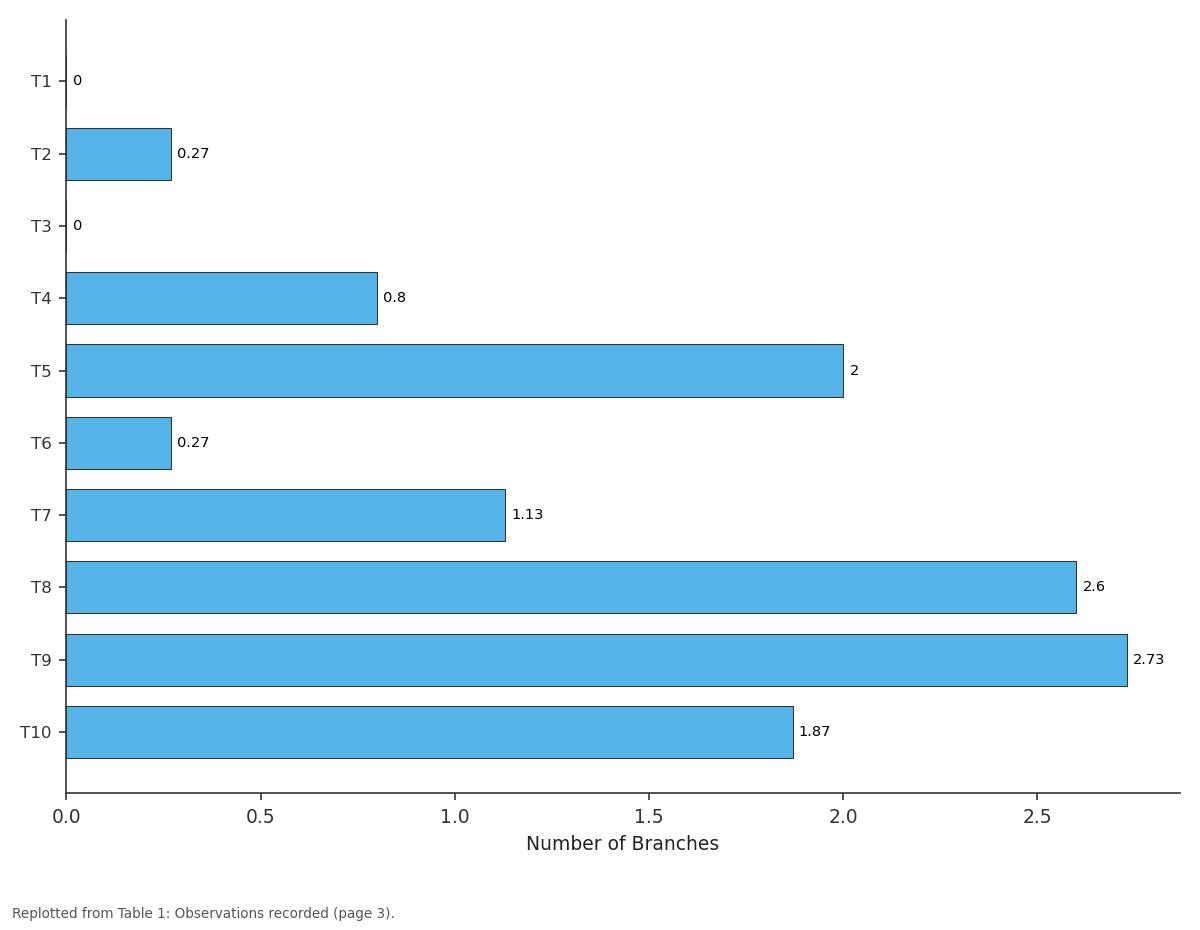
Number of Branches: T1 vs T2 vs T3 vs T4 vs T5
Replotted from Table 1 (page 3) of the original paper. Every bar is the paper's own table value.
View source evidence ↗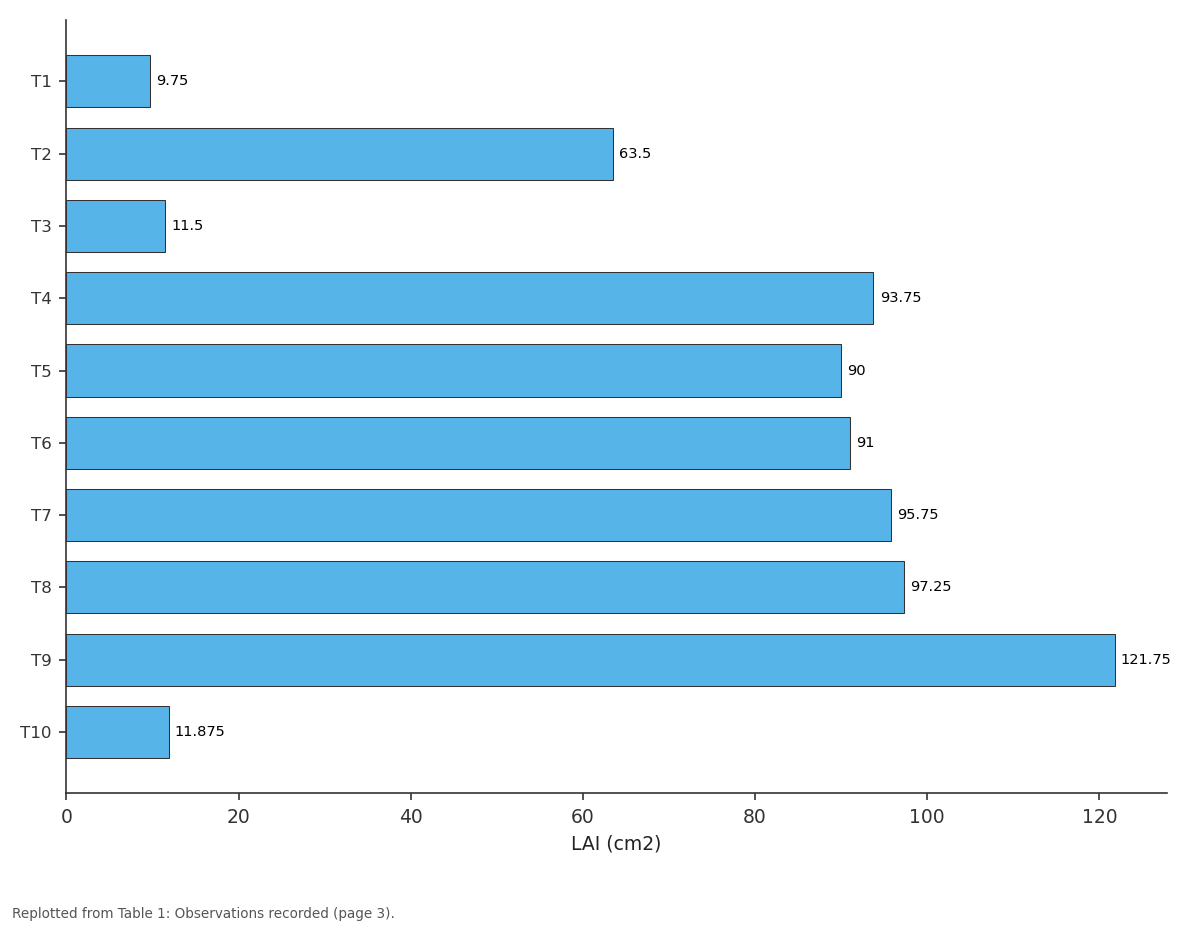
LAI (cm2): T1 vs T2 vs T3 vs T4 vs T5
Replotted from Table 1 (page 3) of the original paper. Every bar is the paper's own table value.
View source evidence ↗Figures & tables
From the original paper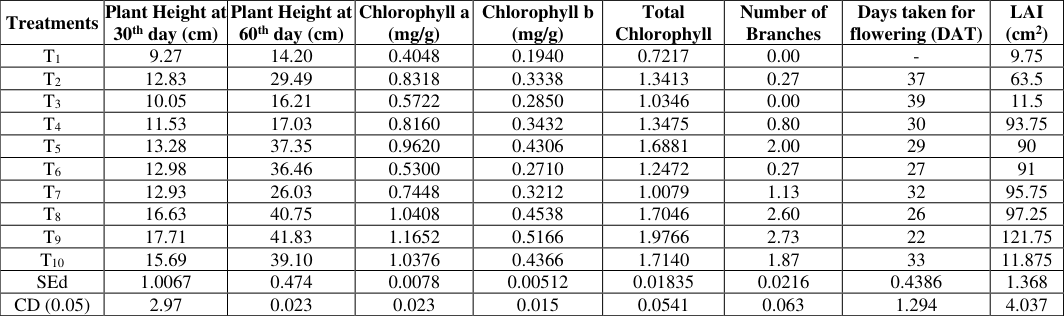 Table 1
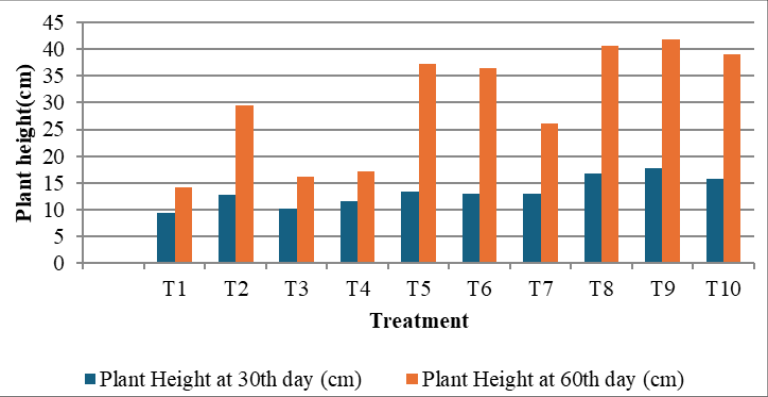 Figure 1
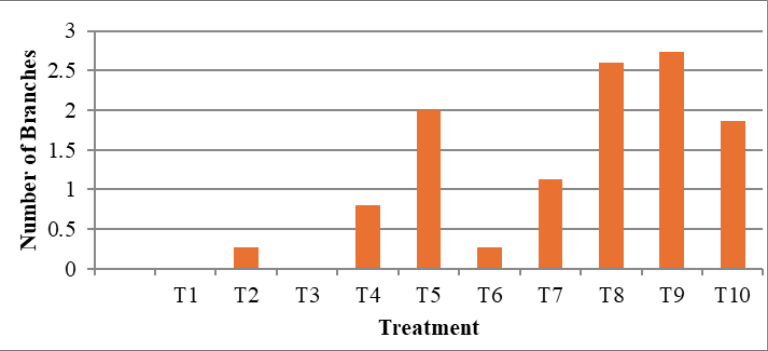 Figure 2
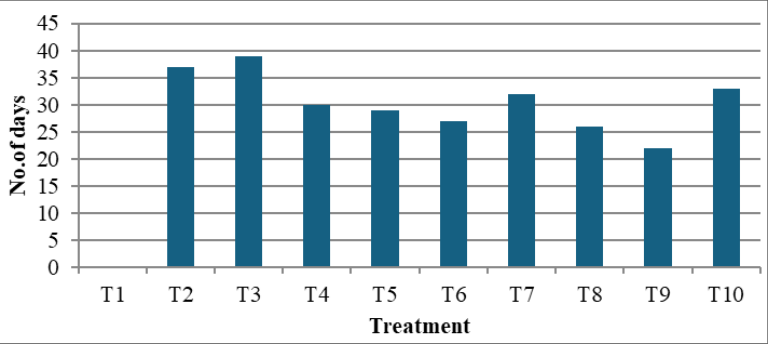 Figure 3
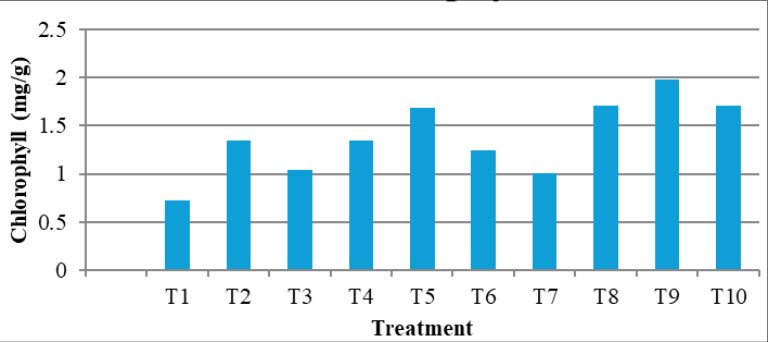 Figure 4
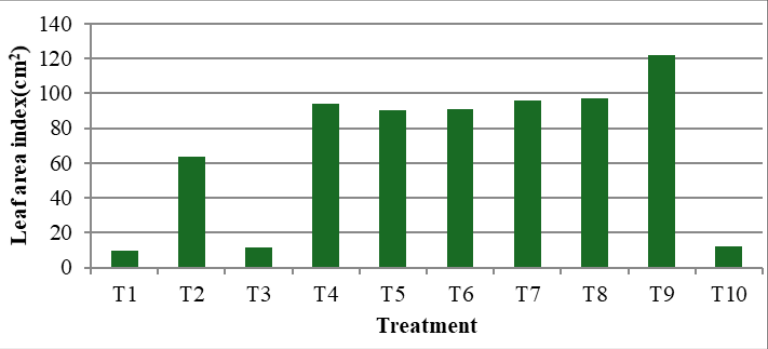 Figure 5
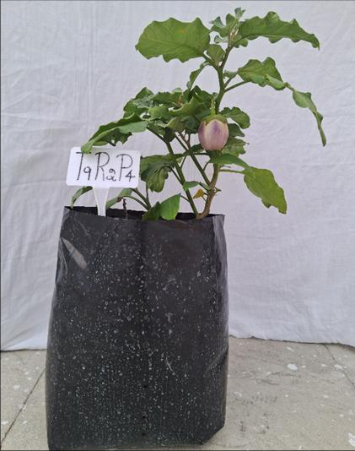 Figure 6
Introduction
Horticulture by itself is a practical and applied science, which means it can have a significance in our everyday lives. The availability of vegetables for an ever-increasing population was not sufficient to fulfil the demands of people (Pedada and Kumar (2021) [6] . To increase the availability, various measures like expanding cultivable area, use of various fertilizers to increase the growth and yield are followed, numerous experiments are carried out. But increasing cultivable area in urban areas makes it impossible. Growing vegetables in the available small area in the was more popular now-a-days. Our government also took this as an important method, for that they providing Terrace gardening kit through every agricultural office in every area. Terrace gardening is a type of gardening that involves growing plants in containers or raised beds on a terrace, balcony, rooftop or other outdoor space with limited or no access to ground soil. Terrace gardens can be small or large and can be used to grow a variety of plants, including vegetables, herbs, flowers, and small trees or shrubs. Terrace gardening is a popular option for people living in urban areas or those with limited outdoor space, as it allows them to grow their own plants and enjoy the benefits of gardening in a small, convenient space. Terrace gardens offer numerous benefits, including the reduction of food transportation distance and costs from rural to urban regions, the creation of a microclimate on terraces, and the stimulation of children's interest in agriculture and gardening activities. (Naveena KP and Sahana. R.T, 2017) [3] . Among the various crops grown in our country solanaceous vegetables, especially brinjal plays an important role in nutrition. It contains vitamins, minerals like Ca, Mg, Na, K and Fe. Being an annual crop, its cultivation can be repeated in a single year with very high yield potential. Brinjal or Eggplant (Solanum melongena L.) is one of the most important plants of the solanaceous plant, commonly grown in the tropics and subtropics. In temperate climatic regions, the crop can be raised and harvested during the summer or controlled conditions. This crop is widely identified in the Indian subcontinent by "Brinjal," derived from arabic and sanskrit. In contrast, the causative name "eggplant" was derived from the fruit of certain white varieties and resemble chicken eggs in shape.
It is also known as aubergine in Europe. Though terrace gardening was a popular one, as a layman many of them are confused with how much fertilizers they would apply for each bag, thus it must be standardized with proper experiments. The integrated nutrient management is very useful in this context. Integrated plant nutrient management is the intelligent use of optimum combination of organic and inorganic nutrient sources in a specific crop, cropping system and climatic situation so as to achieve and to sustain the optimum yield and to improve or to maintain the soils physical, biological and chemical properties (Payal Patidar and Rashmi Bajpai, 2018) [5] .With this background the current research aims to study the standardization of nutrient content for improved quality of Brinjal under Terrace gardening.
Materials and Methods
The experiment was conducted as a pot culture study at the Musiri, Trichy, to standardize nutrient management for improved yield and quality of brinjal under terrace gardening. The local brinjal variety 'Manapparai Uruttu' was selected for the study. The experiment was laid out in a Completely Randomized Design (CRD) with 10 different treatments and 3 replications. The treatments involved various combinations of inorganic fertilizers and organic manure. The Recommended Dose of Fertilizer (RDF) for brinjal was 100:50:30 kg N:P:K/ha, applied using Urea, Single super phosphate (SSP), and Muriate of potash (MOP). Organic nutrient supplementation was provided through Farmyard Manure (FYM) at a standard dose of 25 t/ha. The treatment structure included control(T 1 ), sole applications (100% RDF(T 2 ) and/or 100% FYM(T 3 )), as well as combined applications (100% RDF and 100% FYM-T 4 ), with varying proportions such as 75% RDF + 125% FYM(T 5 ), 50% RDF + 150% FYM(T 6 ), 25 % RDF + 175 % FYM(T 7 ), 125 % RDF + 75 % FYM(T 8 ), 150 % RDF + 50 % FYM(T 9 ) and 175% RDF + 25% FYM(T 10 ). About 14 days old seedlings of brinjal (local variety) were collected. Then, two seedlings were transplanted in each of the pot. The half of the recommended doses of fertilizers for the growth of brinjal were added to each pot as the first split dose, where NPK were supplied in the form of urea, SSP and MOP, respectively. Each treatment was imposed on individually labelled grow bags filled with coir pith as the base medium. After 10 -12 days of transplantation, the better one between the two seedlings was kept in each pot and allowed to grow. The pots were properly watered to maintain optimum moisture for plant growth. Weeds were removed manually. The second split dose was applied at 30 DAT. Adequate plant protection measures were taken during the growing period. Observations were recorded on growth parameters, yield, and quality attributes of brinjal.
For wider adaptability and ease of replication by the general public, the final nutrient recommendations will be standardized.
Observations recorded Growth parameters
Height of the plant at 30 and 60 days in cm. Number of branches in each plant at 60 days. Number of days taken for flowering from the date of transplanting. Leaf Area.
Quality parameters Chlorophyll a, b and total at 30 and 60 days
Quality parameters Chlorophyll a, b and total at 30 and 60 days
Chlorophyll estimation
Chlorophyll estimation was carried out at 30 and 45 th day after transplanting. Chlorophyll plays an important role by capturing sunlight and converting them into food. Chlorophyll content and the leaf surface area indicates vegetative production of crops. It is important to estimate the chlorophyll concentration for pre measuring of yield because better photosynthesizing crops give better yields and it is also used to monitor the plant stress, fertilizer application and overall vegetative growth of the crop. We estimated the chlorophyll in brinjal crop by the DMSO method. We weighed each leaf sample of 100 mg and transferred it to a test tube containing 10 ml DMSO. By keeping the test tube in the hot air oven at 60 °C for 3-4 hours and later it was cooled down to room temperature. Then we filtered the extracts to remove leaf pieces and measured the theoretical reading in the spectrophotometer at 645 nm and 663 nm. And calculated the chlorophyll content in the sample by using the formulae, Chlorophyll a = (12.7 × OD at 663) -( 2
Statistical analysis
The data collected from the experiment were analysed by one-way analysis of variance (ANOVA) to assess the impact of various treatments on different growth and yield metrics of brinjal. The significance of differences among treatment means was tested at the 5% probability level. The standard error of difference (SEd) and critical difference (CD) at 5% level were calculated to determine the least significant differences between treatment means. The results of the one-way ANOVA revealed significant differences among the treatments for all the observed parameters. For instance, plant height at 60 days showed a significant variation among treatments (F = 15.67, p < 0.001), while total chlorophyll content also differed significantly (F = 12.84, p < 0.001). Similar trends were observed for number of branches, days taken for flowering, and leaf area index (LAI) which varied notably across treatments. The analysis indicated that some treatments significantly enhanced plant growth and physiological attributes compared to the control. In particular, treatments T₈ and T₉ showed higher values for most parameters, suggesting that the applied treatments had a substantial influence on Brinjal performance.
Results and Discussion
The observation recorded had shown that the maximum plant height was noted in treatment 9 at 30th and 60th day with an average of 17.71 cm and 41.83 cm and minimum plant height observed in Treatment 1 with an average of 9.27cm and 14.20cm at 30th and 60th day observation. The chlorophyll estimation done in the laboratory shows that the maximum chlorophyll content was observed on treatment 9 at 30th day with an average of chlorophyll a with 1.1652, chlorophyll b with 0.5166 and total chlorophyll of 1.9766. Minimum chlorophyll content was observed on treatment 1 at 30th day with an average of chlorophyll a with 0.4048, chlorophyll b with 0.1940 and total chlorophyll of 0.7217. Days taken for flowering noted after transplanting shows that the minimum days taken for flowering was on Treatment 9, maximum days taken for flowering was on Treatment 3 and none was observed on Treatment 1. The number of branches noted on individual plant shows that it was maximum in Treatment 9 with an average of 2.73 and minimum in Treatment 1 with no branches. Leaf area calculated was maximum in treatment 9 with an average of 121.75(cm 2 ) and minimum in Treatment 1 with an average of 9.75 (cm 2 ). The superiority of the fertilizer application comprising of 150 % RDF + 50 % FYM was evident from the better growth of Brinjal. However, growth of plants control was in general less. Besides, nutrients supplied through inorganic sources as two split doses, lead to better growth. This made the growing media better at taking up nutrients, which in turn made plants grow better. Organic manures alone may not enhance the vegetative growth of plants, possibly due to their slower nutrient release rate. However, the combined treatment proved to be more successful than the single application of inorganic fertiliser (Ullah. M.S et al., 2008) [8] . The use of adequate organic manure and fertilizers enhances the rooting medium, allowing plants to absorb nutrients in suitable quantities, which correlates with increased plant height and number of branches. Also it was supported by Elayaraja et al., (2023) [1] , as the application of 125% NPK in conjunction with Zn + Fe fortified composted coir pith (Zn + Fe FCCP) was found to be the best among all other treatments worked by him because higher rate of NPK in conjunction with micronutrient-fortified organics will significantly improve the soil fertility as well as the nutritional quality. It was also insisted by Muhammad Usman Kasi et al., (2018) [2] , that NPK concentration shows more positive effect on growth related traits of brinjal. The al., (2019) [6] . From the study, it was found that T 9 had superior effect on plants due to corresponding influence of plant height and number of branches, and also the first fruiting appeared in treatment 9 (shown in Fig 1). So we can conclude T 9 as the best treatment to cultivate the brinjal on terrace gardens.
Conclusion
From the results, it was found that NPK concentration has shown more positive effect on the growth and yield attributes of brinjal plant growth. On the basis of above findings, treatment T 9 (150 % RDF + 50 % FYM) which stands first may be preferred for higher growth and yield in brinjal under Terrace gardening conditions.
Figures and tables from the paper
| Treatments | Plant Height at 30th day (cm) | Plant Height at 60th day (cm) | Chlorophyll a (mg/g) | Chlorophyll b (mg/g) | Total Chlorophyll | Number of Branches | Days taken for flowering (DAT) | LAI (cm2) |
|---|---|---|---|---|---|---|---|---|
| T1 | 9.27 | 14.20 | 0.4048 | 0.1940 | 0.7217 | 0.00 | - | 9.75 |
| T2 | 12.83 | 29.49 | 0.8318 | 0.3338 | 1.3413 | 0.27 | 37 | 63.5 |
| T3 | 10.05 | 16.21 | 0.5722 | 0.2850 | 1.0346 | 0.00 | 39 | 11.5 |
| T4 | 11.53 | 17.03 | 0.8160 | 0.3432 | 1.3475 | 0.80 | 30 | 93.75 |
| T5 | 13.28 | 37.35 | 0.9620 | 0.4306 | 1.6881 | 2.00 | 29 | 90 |
| T6 | 12.98 | 36.46 | 0.5300 | 0.2710 | 1.2472 | 0.27 | 27 | 91 |
| T7 | 12.93 | 26.03 | 0.7448 | 0.3212 | 1.0079 | 1.13 | 32 | 95.75 |
| T8 | 16.63 | 40.75 | 1.0408 | 0.4538 | 1.7046 | 2.60 | 26 | 97.25 |
| T9 | 17.71 | 41.83 | 1.1652 | 0.5166 | 1.9766 | 2.73 | 22 | 121.75 |
| T10 | 15.69 | 39.10 | 1.0376 | 0.4366 | 1.7140 | 1.87 | 33 | 11.875 |
| SEd | 1.0067 | 0.474 | 0.0078 | 0.00512 | 0.01835 | 0.0216 | 0.4386 | 1.368 |
| CD (0.05) | 2.97 | 0.023 | 0.023 | 0.015 | 0.0541 | 0.063 | 1.294 | 4.037 |
Table text extracted from the original PDF; superscript letters are shown inline. The original table image is below.
View original table image
References
7 in the original paper- Elayaraja D, Senthilvalavan P, Kamalakannan P. Fortified organic manure and NPK fertilizer levels: influence on soil properties, yield and micronutrients biofortification of brinjal in coastal soil. Int J Plant Soil Sci. 2023;35(19):2027-41.
- Kasi MU, Gola AQ, Bhat RA, Zimri MA, Wahocho SA, Durrani ASK, et al. Response of various varieties and rate of NPK fertilizer on brinjal (Solanum melongena L.). J Entomol Zool Stud. 2018;6(6):684-8.
- Naveena KP, Sahana RT. Organic terrace gardening, a new vista in bringing back to traditional food system: economic issues. J Rural Agric Res. 2017;17(2):11-4.
- Patidar P, Bajpai R. Effect of integrated nutrient management (INM) on yield parameters of brinjal. Int J Chem Stud. 2018;6(3):1158-60.
- Pedada S, Kumar A. Terrace farming: a way to eliminate food scarcity. J Food Nutr Disord. 2021;10(9):2.
- Waskel S, Jatav SK, Singh SS. Effect of integrated nutrient management on growth and yield attributes of brinjal. Int J Curr Microbiol Appl Sci. 2019;8(11):184953.
- Ullah MS, Islam MS, Islam MA, Haque T. Effects of organic manures and chemical fertilizers on the yield of brinjal and soil properties. J Bangladesh Agric Univ. 2008;6(2).