
Research article · 2025 · Full text
International Journal of Agriculture and Food ScienceStudies on preparation of paneer impregnated with dragon fruit
Volume 7(9) · Pages 614–621 · DOI: 10.33545/2664844x.2025.v7.i9h.800 ↗
Research areasAviation Industry Analysis and TrendsAir Traffic Management and OptimizationInternational Law and Aviation
Abstract
Author-writtenPaneer, though nutritionally rich, lacks functional compounds such as fibre, phenolics, flavonoids, and vitamins. This study aimed to enhance paneer quality by incorporating dragon fruit. Preliminary trials identified paste from the white-fleshed, pink-skinned variety as most suitable. Incorporation at 15% produced the most acceptable paneer, comparable to control in sensory scores. The optimized paneer contained 20.89% fat, 18.91% protein, 59.09% moisture, and pH 5.48, with improved vitamin C (15.0 mg/100 g), phenolics (0.49 mg GAE/g), flavonoids (0.17 mg QE/g), and dietary fibre (2.82%). Colour analysis showed enhanced red-purple tones, while texture profiling revealed reduced hardness and improved cohesiveness and springiness. Production cost decreased to ₹303.40/kg with higher recovery and benefit-cost ratio. Microbiological analysis confirmed safety. Overall, 15% dragon fruit paste significantly improved nutritional, functional, sensory, and economic qualities, making paneer a promising functional dairy product.
Summary
Source-checkedPlain-language reading of the full paper, prepared with AI and checked against the text. Each point links to the authors' own words.
Why it matters
- While paneer is nutritionally rich, it is deficient in functional compounds like vitamins, flavonoids, phenolics, and fiber. View evidence ↗
- Incorporating dragon fruit is proposed as a method to enhance the overall quality of paneer. View evidence ↗
The question
- The research aimed to determine how the addition of dragon fruit affects the quality of paneer. View evidence ↗
What they did
- The study used three varieties of ripened dragon fruit: red-fleshed, white-fleshed, and yellow-skinned white-fleshed. View evidence ↗
- Researchers tested different forms of dragon fruit, including powder, aqueous extract, and paste, against a control group. View evidence ↗
What they found
- Dragon fruit paste was found to be the most suitable form for incorporation, as it maintained sensory scores closer to the control than powder or aqueous extract. View evidence ↗
- The white-fleshed, pink-skinned variety of dragon fruit was identified as the best variety for improving the color, flavor, and acceptability of paneer. View evidence ↗
- The optimal level of dragon fruit paste for maximum overall sensory acceptability was 15%. View evidence ↗
- Higher levels of dragon fruit reduced the lightness of the paneer (from 78.06 to 71.14) while increasing redness (4.78 to 6.82) and yellowness (8.83 to 11.27). View evidence ↗
- Adding more dragon fruit reduced paneer hardness (5.47 to 2.18 kg) but increased its cohesiveness (0.48 to 1.20) and elasticity (1.03 to 1.22 cm). View evidence ↗
- Frying dragon fruit-incorporated paneer resulted in the highest overall consumer preference (score of 8.21). View evidence ↗
What it means
- The authors conclude that adding 15% white-fleshed, pink-skinned dragon fruit paste creates a superior paneer product. View evidence ↗
Figures & tables
From the original paper Table 1
 Table 2
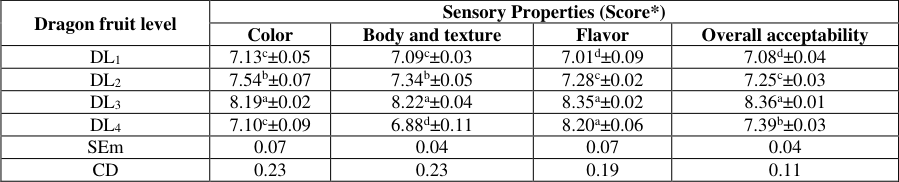 Table 3
 Table 4
 Table 5
 Table 6
 Table 7
 Table 8
 Table 9
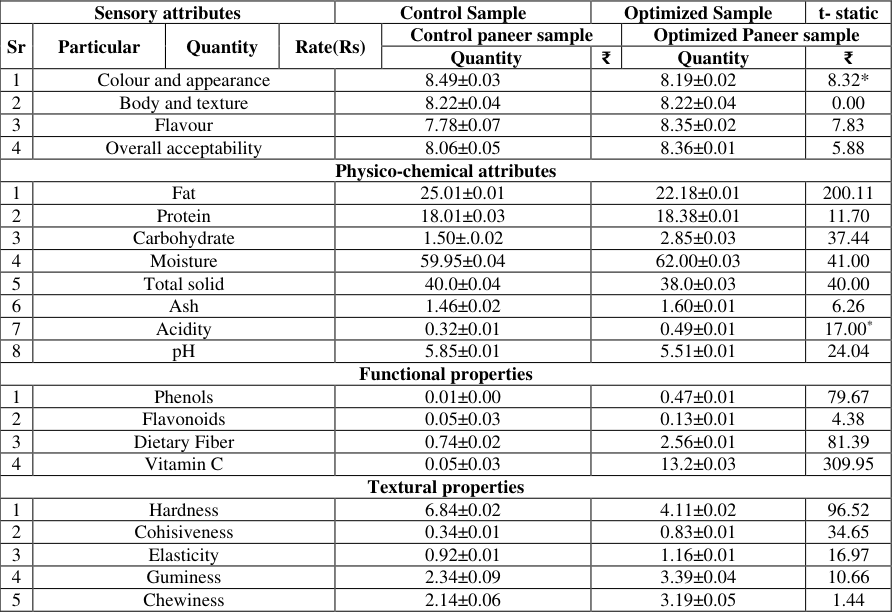 Table 10
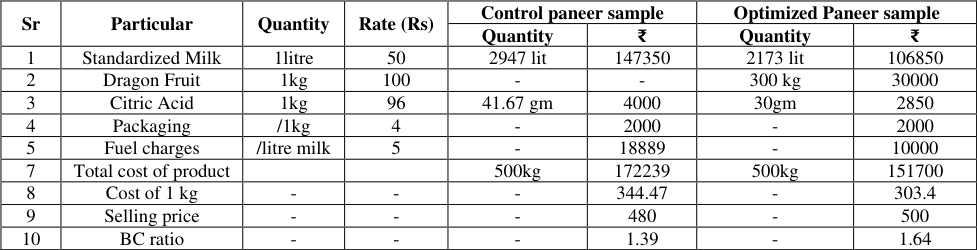 Table 11
Introduction
Introduction
Material and Methods
Material and Methods
Materials
Standardized, toned, double-toned, and skimmed milk were procured from the local dairy cooperative. Fully ripened dragon fruits of three varieties-white-fleshed (Hylocereus undatus), red-fleshed (H. costaricensis), and yellow-skinned white-fleshed (H. megalanthus) were obtained from the local market. Food-grade citric acid was used for coagulation, and refined cottonseed oil was used for frying. Muslin cloth and a stainless-steel paneer press were employed for whey drainage and block formation. Essential laboratory equipment included stainless-steel vessels, glassware, digital weighing balance, hot air oven, muffle furnace, texture analyzer, pH meter, and colour analyzer. A hand blender and mixer-grinder were used for homogenization and fruit paste preparation. For frying, a heavy-bottomed stainless-steel kadhai, skimmer, and fine mesh strainer were used. All equipment was cleaned and sterilized, and hygienic conditions were maintained throughout the study.
Methodology Preparation of different forms of dragon fruit
The aqueous form was prepared by washing, despiking, and crushing fresh dragon fruits with potable water (1:2 w/v) as per Khairnar (2024) [19] . The paste was obtained by washing, despiking, and grinding whole fruits into a fine homogenate following Susanti et al. (2022) [34] . The powder form was prepared by washing, despiking, grating, oven-drying at 65 °C, and grinding the fruit into fine powder, as described by Patel (2022) [25] . paneer was cut into 1 cm³ cubes, packed in polythene pouches, and stored at 5±1 °C for analysis.
Selection of Dragon Fruit Forms
To evaluate suitability, the white-fleshed and pink skin variety was incorporated in milk in different forms. Treatments were coded as: DF0 -control (no dragon fruit), DF 1 -paste, DF 2 -aqueous extract, and DF 3 -powder.
Selection of Dragon Fruit Varieties
After finalizing the form, dragon fruit was incorporated at 10% level to evaluate different varieties. Treatments were coded as: DV₀ -control, DV₁ -white-fleshed, DV₂ -redfleshed, and DV₃ -yellow-skinned white-fleshed. The best variety was selected based on sensory evaluation.
Optimization of Dragon Fruit Level in Paneer
The selected form and variety of dragon fruit were incorporated at different levels to assess their effect on paneer quality. Treatments included DL₀ (control), DL₁ (5%), DL₂ (10%), DL₃ (15%), and DL₄ (20%) dragon fruit paste.
Samples were evaluated for sensory, physicochemical, colour, textural, and microbial attributes, and the optimal level was identified based on sensory acceptability.
Frying Study of Dragon Fruit Paneer
Paneer cubes (1.5 × 1.5 × 1.5 cm) were prepared following Kalab et al. (1988) [18] and fried in refined oil at 175±5 °C for 5 min, ensuring uniform texture and colour development (Sharma et al., 1998) [30] . Excess oil was drained before evaluation. Treatments included F₁ (raw control), F₂ (fried control), F₃ (raw dragon fruit paneer), and F₄ (fried dragon fruit paneer). Both raw and fried samples were subjected to sensory evaluation.
Analytical Methods
Analytical Methods
Physico-chemical analysis of dragon fruit incorporated paneer:
The pH was measured using a calibrated digital pH meter (AOAC, 2012) [2] , and titratable acidity was determined by titration with 0.1 N NaOH using phenolphthalein as indicator (BIS: 1479, 1960, Part-I). Fat content was estimated by acid digestion and Mojonnier extraction (FSSAI, 2022) [11] , protein by Kjeldahl method with nitrogen-to-protein factor 6.38 (AOAC, 2012) [2] , and total carbohydrates by Lane-Eynon's method after reducing sugar extraction (IS: 1479 Part-II, 1961). Moisture was determined by oven drying at 102 ±1°C until constant weight (AOAC, 2003) [1] , ash by incineration in a muffle furnace at 550 °C (AOAC, 2012) [1] , and total solids were calculated as 100 -moisture (FSSAI, 2022) [11] .
Determination of functional properties of dragon fruit incorporated paneer:
Total phenolic content was measured by Folin-Ciocalteu method and expressed as μg GAE/mL (Kähkönen et al., 1999) [17] . Total flavonoid content was determined by aluminum chloride colorimetric method and expressed as mg QE/g (Jia et al., 1999) [16] . Dietary fiber was estimated by enzymatic-gravimetric method with sequential digestion, ethanol precipitation, and ashing (AOAC, 2012) [2] . Ascorbic acid was determined by titration with 2, 6dichlorophenolindophenol after extraction with 3% metaphosphoric acid (Ranganna, 1986) [28] .
Instrumental Hunter colour analysis of dragon fruit incorporated paneer: Colour measurements were performed using a Colour Scanning Machine (Color Flex EZ, Premier Colourscan, Thane, Maharashtra) based on the CIELAB scale with D65 illuminant. The instrument recorded L* (lightness), a* (red-green), and b* (yellowblue) values after calibration with standard white and black tiles. Hue, representing the specific shade; chroma, indicating colour intensity; and energy index, reflecting overall colour vividness, were calculated according to CIE standard Illuminate (ISO 1164-2:2007, 2006).
Texture profile analysis of dragon fruit incorporated paneer:
The texture of paneer samples was evaluated using the Stable Micro Systems TAXT2 Plus Texture Analyzer. Uniform paneer cubes (20 × 20 × 20 mm) were analyzed using a P/75 stainless steel compression plate under standardized conditions (50 kg load cell, 5 g trigger force, 10 mm/s return speed, 600 mm/min crosshead speed).
Textural parameters-including hardness, adhesiveness, springiness, cohesiveness, chewiness, and gumminesswere determined from the two-cycle compression test simulating mastication (Stable Micro Systems, 2009).
Microbial analysis of dragon fruit incorporated paneer:
Dragon fruit paneer was analyzed for Standard Plate Count (SPC) using Plate Count Agar (HiMedia, Mumbai; IS: 5402, 1969), coliform count using Violet Red Bile Agar (HiMedia, Mumbai; IS: 5887, 1976), and yeast and mold count using Potato Dextrose Agar (HiMedia, Mumbai; IS: 5401, 1969).
Comparative evaluation of control and optimized paneer: Control and 15% dragon fruit incorporated paneer were compared for sensory, physico-chemical, and textural properties to assess the impact of dragon fruit addition and identify the most acceptable formulation.
Cost of production:
The cost was calculated using current market prices of dragon fruit paste, milk, additives, fuel, and packaging, summing all expenses to estimate total production.
Statistical analysis: Data were analyzed using CRD and FCRD with four replicates, and one-and two-way ANOVA was performed to determine significant differences among means (Panse and Sukhatme, 1985) [24] .
Results and discussion
Results and discussion
Effect of Form of Whole Dragon Fruit on Sensory Attributes of Paneer
Paneer prepared with dragon fruit paste showed superior colour, texture, and flavour scores, closely matching the control, whereas aqueous extract and powder forms resulted in lower values due to pigment degradation, softer or gritty texture, and reduced flavour, findings consistent with Yankey et al. (2023) [40] , Sameem et al. (2018) [29] and Susanti et al. (2022) [34] . Overall acceptability was highest in control and paste-incorporated paneer, while aqueous extract and powder forms were significantly less acceptable, in agreement with Ojha et al. (2022) [23] . [20,35,38] . Optimization of Dragon Fruit Level in Paneer on sensory attributes: Paneer prepared with varying levels of dragon fruit showed that colour and appearance improved with increasing fruit levels, peaking at 15% due to optimal pigment saturation and homogeneous dispersion, while 20% addition reduced visual appeal, consistent with Sameem et al. 2018 [29] . Body and texture were highest at 15%, likely from balanced pectin-protein interactions and uniform moisture distribution, whereas lower firmness at 5% and structural disruption at 20% reduced scores, aligning with [15,39,41] . Flavour increased progressively, peaking at 15% and remaining high at 20%, reflecting a balance between sweetness and aromatic compounds, corroborating Susanti et al. 2022 [34] . Overall acceptability was maximal at 15%, indicating harmonious integration of sensory attributes, while minimal and excessive inclusion reduced acceptability, consistent with Tarte et al. 2023 [35] and Tong et al. 2025 [37] [26] . Protein content showed a slight decrease, reflecting minimal influence of dragon fruit on casein coagulation, in agreement with. Carbohydrate content increased with higher fruit levels, indicating additional sugars contributed by the fruit, consistent with Singh et al. 2022 [32] , while moisture content rose due to the high waterholding capacity of dragon fruit, corroborating Raibagkar et al. 2024 [27] . Ash content increased with fruit incorporation owing to its mineral richness, as reported by Lim et al. 2024 [21] , whereas total solids decreased correspondingly due to dilution from higher moisture, in agreement with Roy et al. Titratable acidity increased progressively with fruit addition because of natural organic acids, consistent with Bhagat et al. 2024 [5] , and pH decreased correspondingly, reflecting acidification of the paneer matrix, as reported by Chavan et al. 2025 [7] .
Effect of levels of dragon fruit on functional properties of paneer:
The incorporation of dragon fruit into paneer significantly enhanced its functional properties (Table 5). Total phenolic content increased from 0.24 mg GAE/g in DL 1 to 0.49 mg GAE/g in DL 4 , reflecting improved phenolic extraction, consistent with Coelho et al. (2024) [8] Total flavonoid content rose to 0.17 mg QE/g in DL 4 , indicating effective integration of bioactive compounds into the protein matrix, in agreement with Lim et al. (2024.)Vitamin C content increased from 10.2 mg to 15.0 mg, highlighting the fruit's antioxidant contribution, consistent with Bhagat et al. (2024) [5] . Dietary fiber increased from 1.88% to 2.82%, improving water retention, texture, and functional benefits, corroborating Chavan et al. (2025) [7] . These findings demonstrate that dragon fruit fortification markedly enhances the antioxidant, nutritional, and functional quality of paneer.
| Level of Dragon fruit | Functional content | — | — | — |
|---|---|---|---|---|
| Phenols(mgGAE/g) | Flavonoids(mgQE/g) | Vit c (mg/ml) | Fiber (%) | |
| DL1 | 0.24c±0.01 | 0.04b±0.01 | 10.2d±0.1 | 1.88d±0.01 |
| DL2 | 0.37b±0.02 | 0.08b±0 | 12.2c±0.2 | 2.00c±0.01 |
| DL3 | 0.47a±0.01 | 0.13a±0.01 | 13.2b±0.3 | 2.56b±0.01 |
| DL4 | 0.49a±0.01 | 0.17a±0.01 | 15.0a±0.1 | 2.82a±0.03 |
| SEm | 0.01 | 0.01 | 0.06 | 0.02 |
| CD | 0.05 | 0.03 | 0.68 | 0.06 |
Table text extracted from the original PDF; superscript letters are shown inline. The original table image is below.
View original table image
Effect of levels of dragon fruit on instrumental colour value parameter of paneer:
The instrumental colour of paneer was significantly influenced by graded dragon fruit incorporation (Table 6). Lightness (L*) decreased from 78.06 in DL₁ to 71. 14 [33,22] . Chroma rose from 8.98 to 11.43, indicating greater colour saturation, in agreement with. Hue angle slightly declined from 78.28 to 79.14, while colour index peaked at DL₂ before decreasing, suggesting an optimal pigment incorporation threshold. These results demonstrate that dragon fruit addition enhances redness and saturation while modulating lightness and hue.
| Level of Dragon fruit | Colour characteristics | — | — | — | — | — |
|---|---|---|---|---|---|---|
| L* | a* | b* | Chroma value | Hue value | Color Index | |
| DL1 | 78.06a±0.04 | 1.83d±0.02 | 8.83d±0.03 | 8.98d±0.02 | 78.28c±0.6 | 2.66c±0.03 |
| DL2 | 76.28b±0.02 | 1.97c±0.01 | 9.18c±0.01 | 9.29c±0.02 | 77.87d±0.3 | 2.81a±0.03 |
| DL3 | 74.05c±0.04 | 2.04b±0.02 | 10.12b±0.04 | 10.19b±0.5 | 78.54b±0.4 | 2.72ba±0.05 |
| DL4 | 71.14d±0.05 | 2.16a±0.02 | 11.27a±0.02 | 11.43a±0.2 | 79.14a±0.3 | 2.1d±0.05 |
| SEm | 0.04 | 0.02 | 0.04 | 0.04 | 0.05 | 0.04 |
| CD | 0.13 | 0.06 | 0.11 | 0.19 | 0.16 | 0.15 |
Table text extracted from the original PDF; superscript letters are shown inline. The original table image is below.
View original table image
Effect of levels of dragon fruit on textural properies of paneer:
The textural attributes of paneer were significantly influenced by graded incorporation of dragon fruit (Table 7). Hardness decreased from 5.47 in DL₁ to 2.18 in DL₄ due to higher moisture and fiber content disrupting the protein matrix, consistent with Wusigale et al., 2020. Cohesiveness increased from 0.48 to 1.20, reflecting reinforcement of the protein-polysaccharide network by dragon fruit polysaccharides (Thakur and Saxena, 2000) [36] . Elasticity rose from 1.03 cm to 1.22 cm, indicating enhanced resilience likely due to interactions between milk proteins and soluble fibers (Singh et al., 2020; Kalab et al., 1988) [31,18] . Gumminess peaked at DL₃ (3.39 kg/N) and declined at DL₄, showing optimal matrix integrity at moderate fruit levels (Hosseini et al., 2015) [14] . Chewiness followed a similar trend, reaching 3.91 kg•cm at DL₃ and slightly decreasing at DL₄, reflecting the balance between hardness, cohesiveness, and elasticity, which aligns with observations in fiberenriched burfi (Singh et al., 2020) [31] . Overall, moderate incorporation of dragon fruit improved textural resilience and mouthfeel, while excessive addition softened the paneer and reduced structural integrity.
| Level of Dragon Fruit | Textural Properties | — | — | — | — |
|---|---|---|---|---|---|
| Hardiness (kg) | Cohisiveness | Elasticity (cm) | Guminess s(Kg/N) | Chewiness (Kg-cm) | |
| DL1 | 5.47a±0.01 | 0.48d±0.01 | 1.03d±0.02 | 2.61bc±0.05 | 2.69c±0.08 |
| DL2 | 4.83b±0.02 | 0.58c±0.01 | 1.07c±0.01 | 2.80b±0.04 | 3.00b±0.05 |
| DL3 | 4.11c±0.02 | 0.83b±0.01 | 1.16b±0.01 | 3.39a±0.04 | 3.91a±0.05 |
| DL4 | 2.18d±0.03 | 1.20a±0.02 | 1.22a±0.01 | 2.61bc±0.06 | 3.09b±0.10 |
| SEm | 0.02 | 0.01 | 0.01 | 0.07 | 0.08 |
| CD | 0.08 | 0.05 | 0.05 | 0.19 | 0.28 |
Table text extracted from the original PDF; superscript letters are shown inline. The original table image is below.
View original table image
Effect of levels of dragon fruit on microbial count of paneer:
The microbiological evaluation of dragon fruit-incorporated paneer (Table 8) revealed a slight, yet statistically significant (p<0.05) increase in yeast and mould counts from 1.05 to 1.12 log CFU/g with progressive fruit incorporation (DL₁-DL₄), while coliforms were absent in all treatments, confirming adherence to hygienic standards. Total viable bacterial counts increased modestly from 3.14 × 10³ CFU/g in DL₁ to 3.35 × 10³ CFU/g in DL₄ but remained below spoilage thresholds, indicating minimal impact on shelf life under refrigerated conditions. The rise in microbial load may be attributed to the additional organic substrates provided by dragon fruit, whereas the betalain pigments likely exerted antimicrobial effects, limiting the proliferation of spoilage or pathogenic organisms (Manihuruk et al., 2017; Bhagat et al., 2024) [22,5] . These results demonstrate that dragon fruit incorporation maintains the microbiological safety and stability of paneer while providing bioactive benefits. [10,30,12] . Body and texture improved in F₄ (8.20) [9,12] . Overall acceptability peaked in F₄ (8.21), showing that frying combined with dragon fruit incorporation optimally enhanced consumer preference (Singh et al., 2022) [32] . The optimized dragon fruit-incorporated paneer exhibited significant improvements in sensory, physicochemical, functional, and textural attributes. Colour and appearance were slightly reduced, whereas flavour and overall acceptability increased significantly (p<0.05), likely due to the mild fruity and sweet notes imparted by dragon fruit. Moisture content increased, accompanied by a reduction in total solids and fat, while protein, carbohydrate, ash, and acidity showed notable enhancement. Functional constituents including phenolic content, flavonoids, dietary fibre, and vitamin C were markedly elevated, indicating improved nutritional value. Textural properties revealed decreased hardness with concomitant increases in cohesiveness, elasticity, and gumminess, while chewiness exhibited a non-significant rise. These findings collectively indicate that dragon fruit incorporation positively influenced the quality, nutritional profile, and consumer acceptability of paneer.
| Level of Dragon Fruit | Microbial count | — | — |
|---|---|---|---|
| Yeast And Mould Count (CFU/gm) | Coliform Count (CFU/gm) | Standard Plate Count (CFU×103/gm) | |
| DL1 | 1.05b±0.01 | N.D. | 3.14d ±0.01 |
| DL2 | 1.08a±0.01 | N.D. | 3.21c±0.01 |
| DL3 | 1.1b±0.01 | N.D. | 3.27b±0.01 |
| DL4 | 1.12a±0.0 | N.D. | 3.35a±0.02 |
| SEm | 0.01 | 0.0 | 0.02 |
| CD | 0.03 | 0.0 | 0.05 |
Table text extracted from the original PDF; superscript letters are shown inline. The original table image is below.
View original table image
Cost of production of whole dragon fruit impregnated paneer
A comparative economic evaluation of control (DL₀) and dragon fruit-incorporated (DL₃) paneer showed that both treatments produced a yield of 500 kg. The DL₃ treatment required less milk, 2173 L compared to 2947 L for DL₀, resulting in a higher recovery percentage of 23 % versus 17 %. The total production cost was lower in DL₃ at ₹151,700 compared to ₹172,239 in DL₀, leading to a reduced cost per
Acknowledgement
International Journal of Agriculture and Food Science https://www.agriculturaljournals.com GAE per gram, flavonoids 0.13 mg QE per gram, dietary fibre 2.56 percent, and vitamin C 13.2 mg per 100 grams, while maintaining microbial counts within acceptable limits.
Figures and tables from the paper
| Form of dragon fruit | Sensory Properties | — | — | — |
|---|---|---|---|---|
| Colour and appearance | Body and texture | Flavour | Overall acceptability | |
| DF0 | 8.14a±0.03 | 8.22a±0.04 | 8.21a±0.05 | 8.19a±0.02 |
| DF1 | 7.78b±0.07 | 7.86b±0.05 | 8.11a±0.06 | 7.91b±0.05 |
| DF2 | 5.28d±0.08 | 7.30c±0.08 | 7.65b±0.05 | 6.74c±0.06 |
| DF3 | 5.65c±0.06 | 5.49d±0.06 | 7.01c±0.04 | 6.05d±0.02 |
| SEm | 0.07 | 0.07 | 0.06 | 0.05 |
| CD | 0.24 | 0.23 | 0.20 | 0.15 |
Table text extracted from the original PDF; superscript letters are shown inline. The original table image is below.
View original table image
| Variety of dragon fruit | Sensory Properties | — | — | — |
|---|---|---|---|---|
| Colour and appearance | Body and texture | Flavour | Overall acceptability | |
| DV1 | 7.74a±0.06 | 7.93a±0.02 | 8.13a±0.08 | 7.94a±0.05 |
| DV2 | 5.28c±0.08 | 7.94a±0.03 | 7.65b±0.06 | 6.95b±0.04 |
| DV3 | 5.72b±0.09 | 7.91a±0.02 | 5.60c±0.04 | 6.86b±0.05 |
| SEm | 0.08 | 0.06 | 0.06 | 0.04 |
| CD | 0.30 | NS | 0.24 | 0.18 |
Table text extracted from the original PDF; superscript letters are shown inline. The original table image is below.
View original table image
| Dragon fruit level | Sensory Properties (Score*) | — | — | — |
|---|---|---|---|---|
| Color | Body and texture | Flavor | Overall acceptability | |
| DL1 | 7.13c±0.05 | 7.09c±0.03 | 7.01d±0.09 | 7.08d±0.04 |
| DL2 | 7.54b±0.07 | 7.34b±0.05 | 7.28c±0.02 | 7.25c±0.03 |
| DL3 | 8.19a±0.02 | 8.22a±0.04 | 8.35a±0.02 | 8.36a±0.01 |
| DL4 | 7.10c±0.09 | 6.88d±0.11 | 8.20a±0.06 | 7.39b±0.03 |
| SEm | 0.07 | 0.04 | 0.07 | 0.04 |
| CD | 0.23 | 0.23 | 0.19 | 0.11 |
Table text extracted from the original PDF; superscript letters are shown inline. The original table image is below.
View original table image
| Level of Dragon Fruit | Physico- chemical attributes | — | — | — | — | — | — | — |
|---|---|---|---|---|---|---|---|---|
| Fat (%) | Protein (%) | Moisture (%) | Carbohydrate (%) | Ash (%) | Total Solid (%) | Acidity (%) | pH | |
| DF1 | 24.09a±0.01 | 18.45ac±0.09 | 60.48d±0.06 | 1.75d±0.02 | 1.52c±0.01 | 39.5a±0.06 | 0.37d±0.01 | 5.69a±0.04 |
| DF2 | 23.12b±0.01 | 18.38abc±0.03 | 61.20c±0.03 | 2.30c±0.02 | 1.55bc±0.01 | 38.8b±0.03 | 0.45c±0.01 | 5.59b±0.01 |
| DF3 | 22.18c±0.01 | 18.22ab±0.01 | 62.00b±0.03 | 2.85b±0.03 | 1.60b±0.01 | 38.0c±0.03 | 0.49b±0.01 | 5.51c±0.01 |
| DF4 | 21.13d±0.01 | 18.09a±0.02 | 62.96a±0.02 | 3.40a±0.02 | 1.66a±0.01 | 37.0d±0.04 | 0.56a±0.01 | 5.43d±0.02 |
| SEm | 0.01 | 0.06 | 0.05 | 0.02 | 0.01 | 0.05 | 0.01 | 0.02 |
| CD | 0.04 | 0.20 | 0.14 | 0.09 | 0.04 | 0.20 | 0.03 | 0.08 |
Table text extracted from the original PDF; superscript letters are shown inline. The original table image is below.
View original table image
| Paneer Samples | Sensory Properties(Score)* | — | — | — |
|---|---|---|---|---|
| Colour and appearance | Body and texture | Flavour | Overall acceptability | |
| F1 | 8.03a±0.05 | 7.89b±0.03 | 8.01b±0.03 | 7.98b±0.02 |
| F2 | 8.19a±0.03 | 8.11a±0.04 | 8.22a±0.04 | 8.17a±0.03 |
| F3 | 7.61b±0.05 | 7.66c±0.07 | 7.65c±0.04 | 7.63c±0.04 |
| F4 | 8.12a±0.03 | 8.20a±0.08 | 8.31a±0.05 | 8.21a±0.04 |
| SEm | 0.05 | 0.07 | 0.05 | 0.03 |
| CD | 0.16 | 0.22 | 0.16 | 0.13 |
Table text extracted from the original PDF; superscript letters are shown inline. The original table image is below.
View original table image
| Sensory attributes | — | — | — | Control Sample | — | Optimized Sample | — | t- static |
|---|---|---|---|---|---|---|---|---|
| Sr | Particular | Quantity | Rate(Rs) | Control paneer sample | Optimized Paneer sample | |||
| Quantity | ₹ | Quantity | ₹ | |||||
| 1 | Colour and appearance | 8.49±0.03 | 8.19±0.02 | 8.32* | ||||
| 2 | Body and texture | 8.22±0.04 | 8.22±0.04 | 0.00 | ||||
| 3 | Flavour | 7.78±0.07 | 8.35±0.02 | 7.83 | ||||
| 4 | Overall acceptability | 8.06±0.05 | 8.36±0.01 | 5.88 | ||||
| Physico-chemical attributes | ||||||||
| 1 | Fat | 25.01±0.01 | 22.18±0.01 | 200.11 | ||||
| 2 | Protein | 18.01±0.03 | 18.38±0.01 | 11.70 | ||||
| 3 | Carbohydrate | 1.50±.0.02 | 2.85±0.03 | 37.44 | ||||
| 4 | Moisture | 59.95±0.04 | 62.00±0.03 | 41.00 | ||||
| 5 | Total solid | 40.0±0.04 | 38.0±0.03 | 40.00 | ||||
| 6 | Ash | 1.46±0.02 | 1.60±0.01 | 6.26 | ||||
| 7 | Acidity | 0.32±0.01 | 0.49±0.01 | 17.00* | ||||
| 8 | pH | 5.85±0.01 | 5.51±0.01 | 24.04 | ||||
| Functional properties | ||||||||
| 1 | Phenols | 0.01±0.00 | 0.47±0.01 | 79.67 | ||||
| 2 | Flavonoids | 0.05±0.03 | 0.13±0.01 | 4.38 | ||||
| 3 | Dietary Fiber | 0.74±0.02 | 2.56±0.01 | 81.39 | ||||
| 4 | Vitamin C | 0.05±0.03 | 13.2±0.03 | 309.95 | ||||
| Textural properties | ||||||||
| 1 | Hardness | 6.84±0.02 | 4.11±0.02 | 96.52 | ||||
| 2 | Cohisiveness | 0.34±0.01 | 0.83±0.01 | 34.65 | ||||
| 3 | Elasticity | 0.92±0.01 | 1.16±0.01 | 16.97 | ||||
| 4 | Guminess | 2.34±0.09 | 3.39±0.04 | 10.66 | ||||
| 5 | Chewiness | 2.14±0.06 | 3.19±0.05 | 1.44 |
Table text extracted from the original PDF; superscript letters are shown inline. The original table image is below.
View original table image
| Sr | Particular | Quantity | Rate (Rs) | Control paneer sample | — | Optimized Paneer sample | — |
|---|---|---|---|---|---|---|---|
| Quantity | ₹ | Quantity | ₹ | ||||
| 1 | Standardized Milk | 1litre | 50 | 2947 lit | 147350 | 2173 lit | 106850 |
| 2 | Dragon Fruit | 1kg | 100 | - | - | 300 kg | 30000 |
| 3 | Citric Acid | 1kg | 96 | 41.67 gm | 4000 | 30gm | 2850 |
| 4 | Packaging | /1kg | 4 | - | 2000 | - | 2000 |
| 5 | Fuel charges | /litre milk | 5 | - | 18889 | - | 10000 |
| 7 | Total cost of product | 500kg | 172239 | 500kg | 151700 | ||
| 8 | Cost of 1 kg | - | - | - | 344.47 | - | 303.4 |
| 9 | Selling price | - | - | - | 480 | - | 500 |
| 10 | BC ratio | - | - | - | 1.39 | - | 1.64 |
Table text extracted from the original PDF; superscript letters are shown inline. The original table image is below.
View original table image
References
41 in the original paper- AOAC International. Official methods of analysis of AOAC International. 17th ed. Gaithersburg (MD): AOAC International; 2003.
- AOAC International. Official methods of analysis of AOAC International. 19th ed. Washington (DC): AOAC International; 2012.
- Arivalagan M, Bhardwaj R, Prabhavathi R, Singh D. Biochemical and nutritional characterization of Hylocereus undatus (white-pulp dragon fruit) grown in India. Indian J Agric Sci. 2021;91(2):321-5.
- Badola R, Danish M, Kumar S, Fahad M, Kanade PP, Upadhayay S, et al. Effect of incorporation of black pepper and cardamom on quality characteristics of paneer. Int J Appl Sci Eng. 2018;6(2):121-7. DOI:10.30954/2322-0465.2.2018.4
- Bhagath LTS, Mathad PF, Nidoni U, Hiregoudar S, Katti P. Dragon fruit and its value addition. In: Futuristic trends in agriculture engineering & food sciences. Vol. 3. Book 15. Part 3. Chapter 8. IIP Series; 2024. p. 396-7. e-ISBN: 978-93-5747-931-8.
- Bureau of Indian Standards. IS 1479 (Part 2): Methods of test for dairy industry -Chemical analysis of milk. 2nd rev. New Delhi: BIS; 1961 [cited 2025 Sep 23]. Available from: https://www.services.bis.gov.in:8071/php/BIS_2.0/bisc onnect/standardsPage.php
- Chavan AD, Lokhande AT, Kamble DK, Kadam A. Incorporating dragon fruit in dairy: Benefits, challenges, and future prospects in product development. Int J Adv Biochem Res. 2025;9(7):101423. DOI:10.33545/26174693.2025.v9.i7m.4873
- Coelho VS, Moura DG, Aguiar LL, Ribeiro LV, Silva VDM, Correia VTV, et al. The profile of phenolic compounds identified in pitaya fruits, health effects, and food applications: An integrative review. Plants. 2024;13(21):3020. DOI:10.3390/plants13213020
- Eresam VR, Rao KJ, Reddy KS. Effect of herbal spices on microbial shelf life of paneer. Indian J Dairy Sci. 2013;66(6):505-10.
- Esquivel P, Stintzing FC, Carle R. Pigment pattern and expression of colour in fruits from different Hylocereus spp. genotypes. Innov Food Sci Emerg Technol. 2007;8(3):451-7.
- Food Safety and Standards Authority of India. Manual of methods of analysis of foods -Milk and milk products. New Delhi: FSSAI; 2022. Available from: https://www.fssai.gov.in
- Goyal S, Goyal GK. Maximizing shelf life of paneer-a review. Crit Rev Food Sci Nutr. 2016;56(8):1253-61.
- Hafiz MS, Karunanayaka KMIU, Nugraheni K, Fernando GSN. Valorisation of dragon fruit peel in drinking yoghurt: Development, physicochemical, proximate, functional properties, and shelf life evaluation. Czech J Food Sci. 2025;43:1-10. DOI:10.17221/21/2025-CJFS
- Hosseini-Parvar SH, Matia-Merino L, Golding M. Effect of basil seed gum on textural, rheological and microstructural properties of model processed cheese. Food Hydrocoll. 2015;51:557-67. DOI:10.1016/j.foodhyd.2015.06.015
- Izalin A, Zainal S, Zaliha WS, Noranizan MA. Effects of pectin and carrageenan on physical and sensory characteristics of stirred yogurt. Int Food Res J. 2016;23(1):76-83. Available from: https://www.ifrj.upm.edu.my/23%20(01)%202016/(12)
- Jia Z, Tang M, Wu J. The determination of flavonoid contents in mulberry and their scavenging effects on superoxide radicals. Food Chem. 1999;64(4):555-9. DOI:10.1016/S0308-8146(98)00102-2
- Kähkönen MP, Hopia AI, Heinonen M. Berry phenolics and their antioxidant activity. J Agric Food Chem. 1999;47(10):3954-62. DOI:10.1021/jf990146l
- Kalab M, Gupta SK, Desai HK. Development of microstructure in raw, fried, and fried and cooked paneer made from buffalo, cow, and mixed milks. Food Struct. 1988;7(1):83-91. Available from: https://digitalcommons.usu.edu/foodmicrostructure/vol 7/iss1/10
- Rahuri (IN): Mahatma Phule Krishi Vidyapeeth; 2024.
- Lande VK, Kshirsagar RB, Aralkar SS, Aralkar AS, others. A comparative analysis of red and white dragon fruit pulp and juice characteristics. J Appl Hortic. 2024;26(2):244-7. DOI:10.37855/jah.2024.v26i02.46
- Lim TW, Lim RLH, Liew PP, Tan CP, Ho CW. Evaluating the potential of stabilised betacyanins from fermented red dragon fruit (Hylocereus polyrhizus) drink: Sustainable colouration and antioxidant enhancement of stirred yoghurt. Future Foods. 2024;10:100452. DOI:10.1016/j.fufo.2024.100452
- Manihuruk FM, Suryati T, Arief II. Effectiveness of the red dragon fruit (Hylocereus polyrhizus) peel extract as the colorant, antioxidant, and antimicrobial on beef sausage. Media Peternakan. 2017;40(1):47-57. DOI:10.5398/medpet.2017.40.1.47
- Ojha A, Pawar AV, Srivastava VP. Formulation and proximate analysis of milk based sweet incorporated with dragon fruit pulp. [Unpublished]. 2022.
- Panse VG, Sukhatme PV. Statistical methods for agricultural workers. 3rd ed. New Delhi: Indian Council of Agricultural Research; 1985.
- Patel S, Mehta A, Shah T. Functional dairy products: New trends in paneer fortification using herbs and spices. Dairy Times. 2022;8(4):25-9.
- Raju PN, Pal D. Effect of dietary fibers on physicochemical, sensory and textural properties of Misti Dahi. J Food Sci Technol. 2014;51(11):3124-33. DOI:10.1007/s13197-012-0849-y
- Raibagkar R, Khanpit V, Tajane S. Optimization of extrusion conditions increases soluble dietary fiber yield from pomegranate peels with improved physicochemical and biological properties. Bioact Carbohydr Dietary Fibre. 2024;31:100415. DOI:10.1016/j.bcdf.2024.100415
- Ranganna S. Handbook of analysis and quality control for fruit and vegetable products. New Delhi: Tata McGraw-Hill; 1986.
- Sameem M, Singh A, Hossain SKA, Shaeeduddin. Studies on preparation of Shrikhand by using dragon fruit pulp. Pharma Innov J. 2018;7(8):455-8.
- Sharma HK, Singhal RS, Kulkarni PR. Characteristics of fried paneer prepared from mixtures of buffalo milk, skimmed milk, soy milk and buttermilk. Int J Dairy Technol. 1998;51(4):105-7. DOI:10.1111/j.14710307.1998.tb02511.x
- Singh J, Bais B, Ranjan R, Gadekar YP, Sharma A, Prajapat A, et al. Study on textural analysis of camel and buffalo milk based khoa burfi blended with watermelon seeds. Int J Chem Stud. 2020;8(2):12-5. DOI:10.22271/chemi.2020.v8.i2a.9413
- Singh SS, Singh Y, Singh MP. Development of functional herbal paneer using periwinkle (Catharanthus roseus) powder. J Pharmacogn Phytochem. 2022;11(2):2351-7.
- Silaturahmi Z, Zaidiyah TMR, Yuslinaini. The utilization of red dragon fruit peel extract (Hylocereus costaricencis) as a natural colorant of dried noodle. Serambi J Agric Technol. 2020;2(1):37-41. DOI:10.32672/sjat.v2i1.2037
- Susanti S, Legowo AM, Mulyani S, Pratama Y. Characteristics of yogurt ice cream fortified with red dragon fruit puree as anti-obesity functional food. J Gizi Pangan. 2022;17(2):115-22. DOI:10.25182/jgp.2022.17.2.115-122
- Tarte I, Singh A, Dar AH, Sharma A, Altaf A, Sharma P. Unfolding the potential of dragon fruit (Hylocereus spp.) for value addition: A review. J Food Process Preserv. 2023;47(12):e16831. DOI:10.1111/jfpp.16831
- Thakur S, Saxena DC. Formulation of extruded snack food (gum based cereal-pulse blend): Optimization of ingredient levels using response surface methodology. LWT Food Sci Technol. 2000;33(5):354-61. DOI:10.1006/fstl.2000.0668
- Tong YX. Addition of red dragon fruit (Hylocereus polyrhizus) on yogurt: Impact on nutrition, physicochemical properties, microbial cell count and sensory evaluation. Final Year Project (Bachelor). Malaysia: Tunku Abdul Rahman University of Management and Technology; 2025.
- Ünal G, Özer E, Akdeniz V, Sen F. Microbiological, antioxidant, and sensory properties of probiotic yoghurt enriched with different strawberry varieties. Mljekarstvo: Dairy Experts J. 2025;75(1):1-12. DOI:10.15567/mljekarstvo.2025.0104
- Wusigale, Liang L, Luo Y. Casein and pectin: Structures, interactions, and applications. Trends Food Sci Technol. 2020;97:391-403. DOI:10.1016/j.tifs.2020.01.027
- Yankey S, Mensah EO, Ankar-Brewoo GM, Ellis WO. Optimized fermentation conditions for dragon fruit yogurt. Food Human. 2023;1:343-8. DOI:10.1016/j.foohum.2023.06.012
- Zeynu N, Abeshu Y, Asefa Z, Abrha E. Development of fruit based flavored white cheese. Int J Nutr Food Sci. 2024;13(5):158-65. DOI:10.11648/j.ijnfs.20241305.11