
Research article · 2025 · Full text
International Journal of Agriculture and Food ScienceBiochemical characterization of different oilseed genotypes of Brassica species
Volume 7(9) · Pages 674–679 · DOI: 10.33545/2664844x.2025.v7.i9i.812 ↗
Research areasNanofluid Flow and Heat TransferDust and Plasma Wave PhenomenaParticle Dynamics in Fluid Flows
Abstract
Author-writtenTo evaluate the biochemical characteristics of rapeseed-mustard oilseeds genotypes were studied their seed weight, moisture content, and oil content. Significant variation was observed among the genotypes for all the evaluated traits. The thousand seed weight was varied between 2.21 to 6.05 g. Among the varieties the highest thousand seed weight was found in GM3 and the lowest thousand seed weight was found in PBN2001. The highest moisture content was observed from PC5 (5.29%); whereas the lowest moisture content was found in BCRS3 (3.10%). The variety GM1 contained significantly highest amount of oil (41.67%) with GM1, GM3, and GDM4 identified as high oil content genotypes whereas the variety BHC-46 contained lowest amount of oil (17.51%), Substantial variation was observed among the genotypes, highlighting the potential for genetic improvement and selection in oilseed Brassica crops. GM3 exhibited the highest thousand seed weight and one of the higher oil contents, suggesting a possible positive association. Conversely, genotypes with lower seed weight and higher moisture content generally exhibited reduced oil yield, indicating complex interrelationships between these traits.
Summary
Source-checkedPlain-language reading of the full paper, prepared with AI and checked against the text. Each point links to the authors' own words.
Why it matters
- Brassica species, known as rapeseed-mustard, are economically vital in India as they provide animal feed, condiments, vegetables, and edible oils. View evidence ↗
- India is the world's fourth largest oilseed producer, accounting for approximately 14.0% of global rapeseed-mustard production, which totaled 88.39 million metric tonnes in 2023-24. View evidence ↗
- Maintaining moisture levels between 4-8% for sealed storage (or up to 10% for conventional storage) is critical because high moisture increases fungal growth and seed deterioration. View evidence ↗
The question
- The study aims to evaluate thirty Brassica genotypes to identify those best suited for industrial use and breeding by analyzing variability in oil content, seed moisture, and thousand seed weight. View evidence ↗
What they did
- The researchers evaluated thirty Brassica genotypes using a randomized complete block design (RCBD) with three replications. View evidence ↗
- Thousand seed weight was measured by randomly selecting 1,000 seeds per genotype and weighing them with an electronic balance sensitive to 0.0001 g. View evidence ↗
- Moisture content was determined by drying seed samples at 105°C in a hot air oven for 3 hours and calculating the weight loss. View evidence ↗
- The Soxhlet method, based on Sadasivam and Manickam (1992) and A.O.A.C (1965), was used to determine the oil content of the seeds. View evidence ↗
What they found
- Thousand seed weight varied significantly, with GM3 recording the highest weight (6.05 g) and PBN2001 recording the lowest (2.21 g). View evidence ↗
- Seed moisture content averaged 4.44%, ranging from a low of 3.20% in BCRS3 to a high of 5.29% in PC5. View evidence ↗
- Oil content averaged 29.09%, with the highest percentage found in GM1 (41.67%) and the lowest in BHC46 (17.51%). View evidence ↗
- A positive correlation was observed between seed size and oil yield, as genotypes with high thousand seed weight (GM3, GM1, GM2, and GDM4) also had higher oil content. View evidence ↗
- A negative interaction was found between moisture and oil yield, evidenced by genotypes PBN2001 and PC5, which had lower seed weights and higher moisture content alongside lower oil yields. View evidence ↗
What it means
- The authors conclude that GM1 and GM3 are superior genotypes due to their high seed weight and oil content, making them strong candidates for breeding programs. View evidence ↗
- The authors recommend that selection for oil production should prioritize maximizing seed weight while keeping moisture levels low to moderate. View evidence ↗
Visual summary
2 visualsIllustrations explain the paper; charts are replotted from the paper's own table values.
Trait Interaction in Brassica
AI-generated conceptual illustration (Brassica napus seeds). It explains the idea and does not show study data.
View source evidence ↗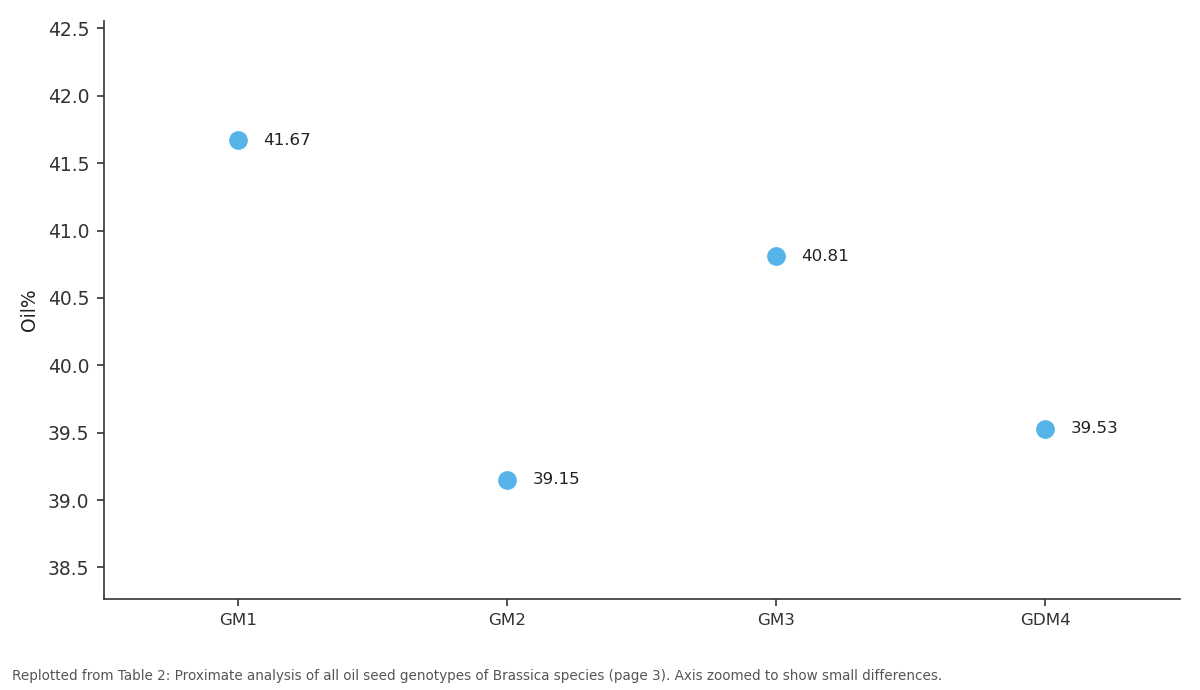
Oil%: GM1 vs GM2 vs GM3 vs GDM4
Replotted from Table 2 (page 3) of the original paper. Every bar is the paper's own table value.
View source evidence ↗Figures & tables
From the original paper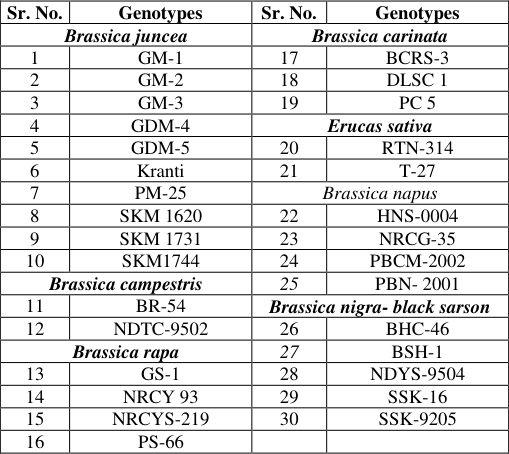 Table 1
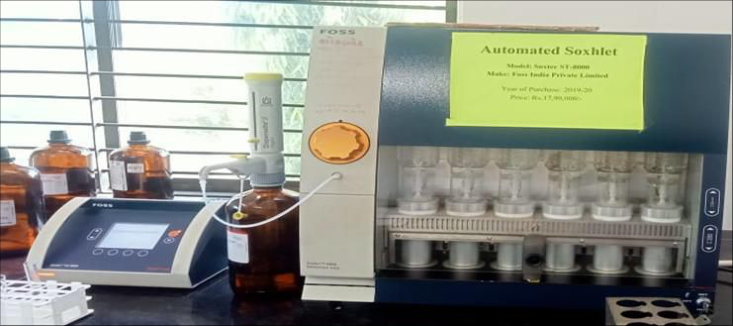 Figure 1
 Table 2
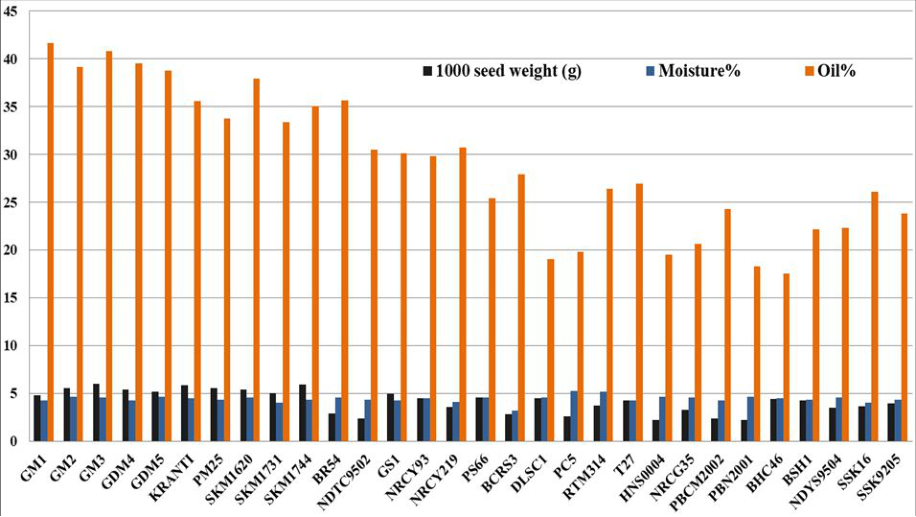 Figure 2
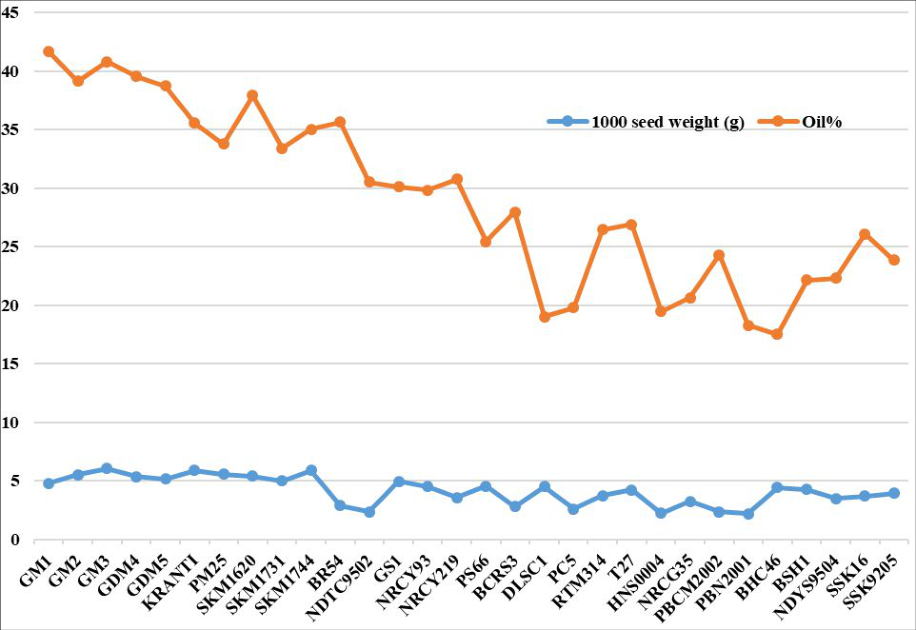 Figure 2
Introduction
Brassica is the most significant genus in Family Brassicaceae which includes 350 genera and ca. 3500 species. Species of genus Brassica had worldwide importance due to their medicinal, nutritional and pharmaceutical benefits. (Nawaz et al., 2018) [13] . The rapeseedmustard group broadly includes Indian mustard, yellow sarson, brown sarson, raya, and toria crops. Indian mustard (Brassica juncea (L.) Czernj. & Cosson) is predominantly cultivated in Rajasthan, UP, Haryana, Madhya Pradesh, and Gujarat. Brown sarson (B. rapa ssp sarson) has two ecotypes lotni and toria. Yellow sarson (B. rapa var. trilocularis) is cultivated in Assam, Bihar, Orissa, and West Bengal as rabi crop. In Punjab, Haryana, UP, Himachal Pradesh, and Madhya Pradesh, it is grown mainly as a catch crop. Taramira (Eruca sativa) is grown in the drier parts of North-West India comprising the states of Rajasthan, Haryana, and UP. Gobhi sarson (B. napus L. ssp. oleferia DC. var annua L.) and karan rai (Brassica carinata) are the new emerging oilseed crops having limited area of cultivation. (Shekhawat et al., 2012) [16] . Brassica spp., commonly known as rapeseed-mustard, plays an important role in the Indian economy by providing edible oils, vegetables, condiments and animal feed (Jat et al., 2019) [11] . India is the 4th largest oilseeds producer in the world. India is ranked fourth after European Union, Canada and China sharing about 14.0 per cent of the global rapeseed-mustard production 88.39 million metric tonnes (mmt) during 2023-24 (USDA website). In India, groundnut, soybean, and rapeseed-mustard are the major oilseeds, contributing approximately 80% of oilseed production. The major oilseed Brassicas grown in India are B. juncea, B. rapa, B. napus, and B. carinata. These crops are grown in diverse agro-climatic conditions and are consumed as vegetables, fodder, oil sources, and condiments. In India, Rajasthan is the largest production (46.63%), followed by Madhya Pradesh (14.36%), Haryana (11.63%), Uttar Pradesh (8.81%), and Gujarat (4.27%) (Anonymous, 2022) [2] . Brassica play an important role in the world agriculture as oilseeds, vegetables, forage and fodder, green manure and condiments. [19] . Safe moisture levels range from 4-8 % for sealed storage and up to 10 % for conventional storage, as elevated moisture accelerates deterioration and fungal growth (Gawrysiak-Witulska et al., (2012) [7] . Oil content varies between 29 % and 52 %, shaped by genetic and agroecological conditions; edible quality is enhanced by low erucic acid and moderated glucosinolate levels. Breeding efforts focus on combining high TSW, low moisture content, and high oil percentage to maximize productivity, storage life, and market value in diverse growing environments. Present study evaluates thirty Brassica genotypes to determine variability in thousand seed weight, seed moisture content, and oil content, thereby identifying best genotypes for breeding and industrial applications. Selection for higher seed weight and moderate moisture content can enhance oil yield and seed storage. The findings also emphasize the importance of considering trait interactions when evaluating genotypes for commercial cultivation
Materials and Methods
Experimental Material: Seven oil seed Brassica species different genotypes (Table 1) were selected for the study. The seeds were collected from the Centre for Oilseeds Research of Sardarkrushinagar Dantiwada Agricultural University, Sardarkrushinagar. Thirty genotypes of Brassica species were evaluated in a randomized complete block design (RCBD) with three replications.
| Sr. No. | Genotypes | Sr. No. | Genotypes |
|---|---|---|---|
| Brassica juncea | Brassica carinata | ||
| 1 | GM-1 | 17 | BCRS-3 |
| 2 | GM-2 | 18 | DLSC 1 |
| 3 | GM-3 | 19 | PC 5 |
| 4 | GDM-4 | Erucas sativa | |
| 5 | GDM-5 | 20 | RTN-314 |
| 6 | Kranti | 21 | T-27 |
| 7 | PM-25 | Brassica napus | |
| 8 | SKM 1620 | 22 | HNS-0004 |
| 9 | SKM 1731 | 23 | NRCG-35 |
| 10 | SKM1744 | 24 | PBCM-2002 |
| Brassica campestris | 25 | PBN- 2001 | |
| 11 | BR-54 | Brassica nigra- black sarson | |
| 12 | NDTC-9502 | 26 | BHC-46 |
| Brassica rapa | 27 | BSH-1 | |
| 13 | GS-1 | 28 | NDYS-9504 |
| 14 | NRCY 93 | 29 | SSK-16 |
| 15 | NRCYS-219 | 30 | SSK-9205 |
| 16 | PS-66 |
Table text extracted from the original PDF; superscript letters are shown inline. The original table image is below.
View original table image
Thousand seed weight:
The analysis of thousand seed weight aims to determine the average mass of 1000 seeds in the sample. The mass was determined by randomly selecting 1000 seed from selected genotypes and weighing in an electronic balance of 0.0001 g sensitivity. The weight was then converted into 1000 seed mass.
Oil content
Oil content of Brassica spp. seeds was determined by Soxhlet method developed by Sadasivam and Manickam (1992) [15]
Statistical Analysis
Analysis of variance (ANOVA) was performed to determine the significance of differences among genotypes using standard statistical software.
Results and Discussion
Thousand Seed weight: The significant variations were observed among the different varieties in terms of the effect on the thousand-grain weight (Figure 2 & Table 2). The highest weight of thousands grains was found in GM3 (6.05 g), which was followed by SKM1744 (5.91 g) and KRANTI (5.88 g). The lowest weight of thousands of grains was found in PBN2001 (2.21 g). The present values were consisted with the results reported by Tarkeshwar et al., (2022) [19] which was ranged found of weight of thousand seed 2.58 g to 6.56 g among different sixty Indian mustard genotypes. Banga et al., (2013) and Siddiqui and Firoz (2004) [5] found that the highest amount of 1000 seed weight were 5.15 g and lowest seed weight were 3.95 g.
| Sr. No. | Genotypes | 1000 seed weight (g) | Moisture% | Oil% |
|---|---|---|---|---|
| 1 | GM1 | 4.80 | 4.29 | 41.67 |
| 2 | GM2 | 5.53 | 4.63 | 39.15 |
| 3 | GM3 | 6.05 | 4.58 | 40.81 |
| 4 | GDM4 | 5.38 | 4.28 | 39.53 |
| 5 | GDM5 | 5.15 | 4.65 | 38.74 |
Table text extracted from the original PDF; superscript letters are shown inline. The original table image is below.
View original table image
Moisture content:
Moisture content is important for the shelf life of seed. Moisture percent in thirty Brassica species oil seed genotypes varied from 3.20 per cent to 5.29 per cent with an average of 4.44 per cent (Figure 2 & Table 2). The significantly higher moisture per cent was observed in PC5 (5.29 per cent) which was at par with RTM314 (5.19 per cent) while the significantly lower moisture content was observed in BCRS3 (3.20 per cent). The results are in agreement with Hossain et al., (2016) [9] who observed moisture content ranged from 4.0 per cent to 5.2 per cent in six varieties of rapeseed (Brassica campestris and Brassica napus) and mustard (Brassica juncea). Abul-Fadl et al., (2011) [1] observed the two yellow and brown mustard varieties having the 5.05 per cent and 4.98 per cent moisture, respectively. Khan et al., (2008) [12] found moisture content between 6 per cent to 7 per cent with a mean 6.27 per cent in different genotypes of Brassica. Among thirty oil seed Brassica species genotypes the moisture content is in the ranged 3.20 per cent to 5.29 per cent. The moisture content of the sample seed oils in this study are generally low indicating that the seed oils could be stored for a long period. They also limit fungal and contamination effects. The result also revealed that genotype has a high moisture content of 4.83 per cent. It is known that products that have low fat values normally have high moisture contents.
Oil content:
The total oil percent in the Brassica species genotypes ranged from 17.51 per cent to 41.67 per cent with an average of 29.09 per cent (Figure 2 & Table 2). The significantly higher oil percent was observed in GM1 (41.67 per cent) which was at par with GM3 (40.81 per cent), GDM4 (39.53 per cent), GM2 (39.15 per cent) and GDM5 (38.74 per cent) while the significantly lower oil content was observed in the genotype BHC46 (17.51 per cent) which was at par with PBN2001 (18.28 per cent), DLSC1
(19.02 per cent), HNS0004 (19.49 per cent) and PC5 (19.79 per cent). The results clearly showed that genotype GM1, GM3, GDM4, GM2 and GDM5 can be measured as better source of oil. This result was comparable with Singh (2002) [18] the Brassica oil content varied from 20.78 to 44.10 per cent. The present investigation was similar to the reported value (40.05 to 42.25 per cent). Ildiko et al., 2006 [10] found that mustard seeds contain 28 to 32 per cent fat and 28 to 36 per cent proteins. The oil yield of mustard is 20.80 to 30.88 per cent which was in comparable range to those as reported in Nutritive value of Indian foods (Gopalan et al., 1971). This showed that seed oil of mustard may be used economically and commercially. The low-oil genotypes such as BHC46, PBN2001, DLSC1, HNS0004, and PC5 recorded oil contents below 20%. This variation is comparable with prior findings by Singh (2002) [18] , Ildiko et al. (2006) [10] , who reported oil contents in the range of 20.8% to 44.1%. The high-oil genotypes also tended to have relatively higher seed weights, suggesting a positive relationship between seed mass and oil accumulation.
Interaction among Traits: An interaction among seed weight, moisture content, and oil content was observed in this study. Genotypes like GM3, GM1, GM2, and GDM4, which showed high thousand seed weight, also recorded higher oil content, indicating a positive correlation between seed size and oil yield. On the contrary, genotypes such as PBN2001 and PC5, which had both lower seed weights and higher moisture content, exhibited significantly lower oil yields. This suggests a negative interaction between moisture content and oil yield. Thousand seed weight is a strong predictor of oil yield potential in Brassica species. Higher moisture levels, though sometimes associated with freshness, may be detrimental to oil accumulation and storage quality. Genotype selection for oil production should focus on maximizing seed weight while maintaining low to moderate moisture levels.
Conclusion
The significant variability among Brassica genotypes for thousand seed weight, moisture content, and oil yield. Genotypes GM1, GM3, GDM4, GM2, and GDM5 were identified as superior in terms of oil content, while GM3 showed the highest thousand seed weight. Genotypes with lower moisture content, such as BCRS3, are suitable for long-term storage. GM3 and GM1 emerged as superior genotypes in terms of both seed weight and oil content, suggesting their potential use in breeding programs. Selection for higher seed weight and moderate moisture content can enhance oil yield and seed storage. The findings also emphasize the importance of considering trait interactions when evaluating genotypes for commercial cultivation. These findings are useful for breeding programs aimed at enhancing oil yield and seed quality in Brassica species.
Figures and tables from the paper
References
20 in the original paper- Abul-Fadl MM, El-Badry N, Ammar MS. Nutritional and chemical evaluation for two different varieties of mustard seeds. World Appl Sci J. 2011;15(9):1225-33.
- Anonymous. Agricultural Statistics at a Glance 2022. Directorate of Economics and Statistics, Department of Agriculture and Farmers Welfare, Ministry of Agriculture & Farmers Welfare, Government of India; 2022.
- Association of Official Analytical Chemists (AOAC). Official methods of analysis. 10th ed. 1965. p. 744-5.
- Association of Official Analytical Chemists (AOAC). Official methods of analysis. 17th ed. Virginia, USA: AOAC; 2000.
- Banga RS, Dhawan K, Singh D. Quality and yield of Indian mustard genotypes as influenced by different fertility levels. Oilseeds Section, Department of Plant Breeding, CCS Haryana Agricultural University, Hisar (India); 2013.
- Chowdhury MFN, Shahjahan M, Ahmed KU, Nuruddin MM, Hosen M. Study on fatty acid composition, oil and protein of different varieties and advanced line of mustard and rapeseeds. Bangladesh Res Publ J. 2010;4(1):82-6.
- Gawrysiak-Witulska M, Rudzińska M, StuperSzablewska K. The effect of temperature and moisture content of stored rapeseed on the phytosterol degradation rate. J Am Oil Chem Soc. 2012;89(7):1251-7. https://doi.org/10.1007/s11746012-2064-4
- Gopalan C, Ramasastry BV, Balasubramanyam SC. Nutritive values of Indian foods. Hyderabad, India: National Institute of Nutrition (ICMR); 1971. p.151-77.
- Hossain MD, Ahmed KU, Chowdhury FN, Roksana KM, Islam S, Barman A. Experimental study on grain weight, moisture, ash, carbohydrates, protein, oil, total energy and minerals content of different released and line cultivars of rapeseed and mustard (Brassica spp.). Int J Sci Res Publ. 2016;5(12):2250-3153.
- Ildiko SG, Klara KA, Marianna TM, Agnes B, Zsuzsanna MB, Balint C. The effect of radio frequency heat treatment on nutritional and colloid-chemical properties of different white mustard (Sinapis alba L.) varieties. Innov Food Sci Emerg Technol. 2006;7(1):74-9.
- Jat RS, Singh VV, Sharma P, Rai PK. Oilseed brassica in India: Demand, supply, policy perspective and future potential. OCL. 2019;26:8.
- Khan S, Farhatullah, Khalil IH, Khan MY, Ali N. Genetic variability, heritability and correlation for some quality traits in F3:4 Brassica populations. Sarhad J Agric. 2008;24(2):223-32.
- Nawaz H, Shad MA, Muzaffar S. Phytochemical composition and antioxidant potential of Brassica. In: Brassica Germplasm -Characterization, Breeding and Utilization. 2018. DOI:10.5772/intechopen.76120
- Rudzińska M, Hassanein MMM, Abdel-Razek AG, Ratusz K, Siger A. Cold-pressed rapeseed oil obtained from seeds with increased moisture content-oxidative stability and changes during storage. Food Chem. 2019;286:421-8.
- Sadasivam S, Manickam A. Biochemical methods for agricultural science. New Delhi: Wiley Eastern Ltd.; 1992. p.184-5.
- Shekhawat K, Rathore SS, Premi OP, Kandpal BK, Chauhan JS. Advances in agronomic management of Indian mustard (Brassica juncea (L.) Czernj. Cosson): an overview. Int J Agron. 2012;2012:408284. International Journal of Agriculture and Food Science https://www.agriculturaljournals.com
- Siddiqui MH, Fizor M. Physio-morphological analysis of rapeseed mustard cultivars. Indian J Plant Physiol. 2004;9(3):283-4.
- Singh SP, Jeena AS, Kumar R, Sachan JN. Variation for quality parameters and fatty acids in Brassica and related species. Agric Sci Dig. 2002;22(3):205-6.
- Tarkeshwar SN, Vimal SC, Chaudhary RP, Mishra G, Chaudhary AM, Singh VK. Genetic variability for seed yield and its components in Indian mustard (Brassica juncea L.) Czern and Coss genotypes. Pharma Innov J. 2022;11(7):557-60.
- United States Department of Agriculture (USDA). Oilseeds and Products Annual (GAIN Report). USDA Foreign Agricultural Service; 2024. Available from: https://fas.usda.gov/data/india-oilseeds-and-productsannual-8