
Research article · 2025 · Full text
International Journal of Agriculture and Food ScienceForaging behaviour of stingless bees on cucurbitaceous crops: Diurnal patterns, visitation rates and floral handling time
Volume 7(9) · Pages 636–640 · DOI: 10.33545/2664844x.2025.v7.i9h.804 ↗
Research areasFeminism, Gender, and Social IssuesCultural and political discourse analysisPolitical Dynamics in Latin America
Abstract
Author-writtenThe present study was conducted to evaluate the foraging behaviour of stingless bees on five cucurbitaceous crops sponge gourd (Luffa aegyptiaca), bitter gourd (Momordica charantia), spine gourd (Momordica dioica), ridge gourd (Luffa acutangula) and cucumber (Cucumis sativus) under field conditions during the Kharif season of 2024-2025 at the Instructional Farm of the Vegetable Improvement Scheme (VIS), CES Wakawali, Dapoli. The objective was to assess crop-wise and time-wise variations in three key parameters of bee foraging behaviour: diurnal activity, foraging rate and floral handling time. Diurnal foraging activity was quantified as the number of stingless bees visiting 20 flowers per 5 minutes across five time intervals. Results revealed peak activity at 10:00 h with an average of 8.58 bees, while the lowest visitation was recorded at 16:00 h (3.36 bees). Bitter gourd showed the highest crop-wise visitation rate (6.69 bees), whereas spine gourd had the lowest (4.63 bees). Foraging rate, measured as the number of flowers visited per minute, was highest at 10:00 h (2.29 flowers/min) and lowest at 14:00 h (1.87 flowers/min). Cucumber recorded the highest average foraging rate (2.40 flowers/min) and bitter gourd the lowest (1.62 flowers/min). Handling time per flower peaked at 12:00 h (35.62 seconds) and was lowest at 16:00 h (29.20 seconds), with bitter gourd showing the longest average handling time (43.14 seconds) and cucumber the shortest (25.82 seconds). These findings demonstrate that both crop species and time of day significantly influence the foraging dynamics of stingless bees, which has implications for pollination management in cucurbitaceous crops.
Summary
Source-checkedPlain-language reading of the full paper, prepared with AI and checked against the text. Each point links to the authors' own words.
Why it matters
- Cucurbitaceous vegetables, including cucumber and various gourds, depend strongly on insects for pollination because they have unisexual flowers and cannot easily self-pollinate. View evidence ↗
- Stingless bees are well-suited for open-field or semi-protected crop pollination due to their small size, floral constancy, and ability to forage in low light and high humidity. View evidence ↗
- Measuring daily foraging patterns, rates, and handling times helps researchers understand how efficient stingless bees are as pollinators. View evidence ↗
The question
- The study aimed to evaluate how stingless bee foraging behavior, specifically diurnal activity, foraging rate, and floral handling time, varied across different crops and times of day. View evidence ↗
What they did
- The study focused on five specific crops: sponge gourd, bitter gourd, spine gourd, ridge gourd, and cucumber. View evidence ↗
- Diurnal activity was measured by counting bees visiting 20 flowers every 5 minutes at five specific times (08:00, 10:00, 12:00, 14:00, and 16:00) across three spots per plot over seven weeks. View evidence ↗
- The foraging rate was determined by tracking individual bees for one minute to see how many flowers they visited. View evidence ↗
- Floral handling time was measured using a stopwatch to record the duration a bee spent on a single flower. View evidence ↗
What they found
- Across all crops, bee visitation peaked at 10:00 h, with an average of 8.58 bees visiting 20 flowers per 5 minutes. View evidence ↗
- The lowest overall bee activity was recorded at 16:00 h, with an average of 3.36 bees. View evidence ↗
- Bitter gourd had the highest average visitation rate (6.69 bees), while spine gourd had the lowest (4.63 bees). View evidence ↗
- The highest average foraging rate occurred at 10:00 h, with bees visiting 2.29 flowers per minute. View evidence ↗
- The lowest average foraging rate was recorded at 14:00 h, at 1.87 flowers per minute. View evidence ↗
- Cucumber had the highest average foraging rate (2.40 flowers/min), while bitter gourd had the lowest (1.62 flowers/min). View evidence ↗
- Floral handling time peaked at 12:00 h (35.62 seconds) and was at its lowest at 16:00 h (29.20 seconds). View evidence ↗
- Bitter gourd required the longest average handling time (43.14 seconds), whereas cucumber required the shortest (25.82 seconds). View evidence ↗
What it means
- The authors concluded that the time of day strongly influences pollinator activity, as evidenced by the consistent peak in foraging at 10:00 hours across all studied crops. View evidence ↗
- The authors recommend synchronizing the timing of crop flowering (phenology) with the active periods of pollinators to maximize pollination services. View evidence ↗
Visual summary
3 visualsIllustrations explain the paper; charts are replotted from the paper's own table values.
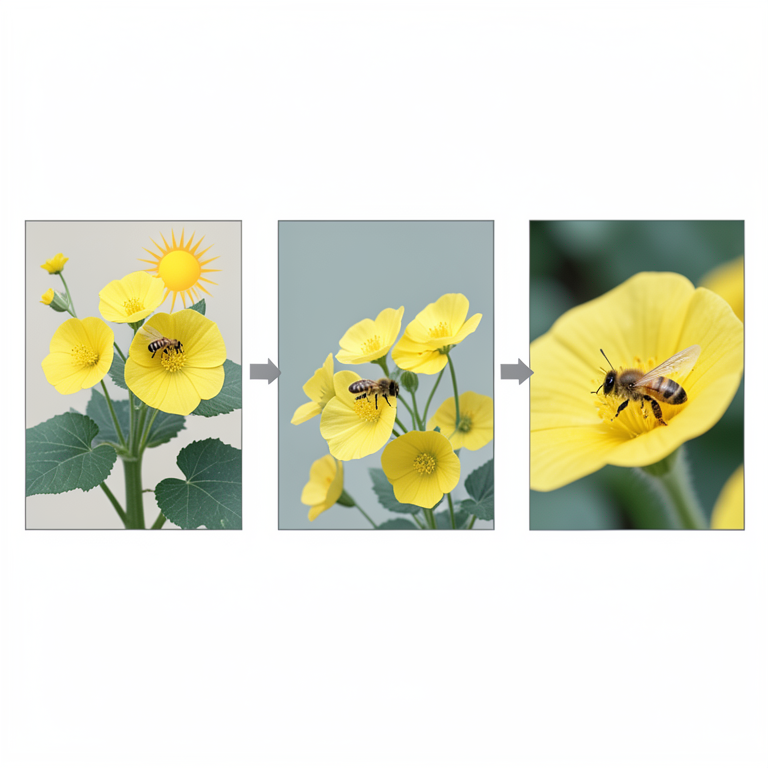
Bee Foraging Metrics
AI-generated conceptual illustration (stingless bees and cucurbitaceous crop flowers). It explains the idea and does not show study data.
View source evidence ↗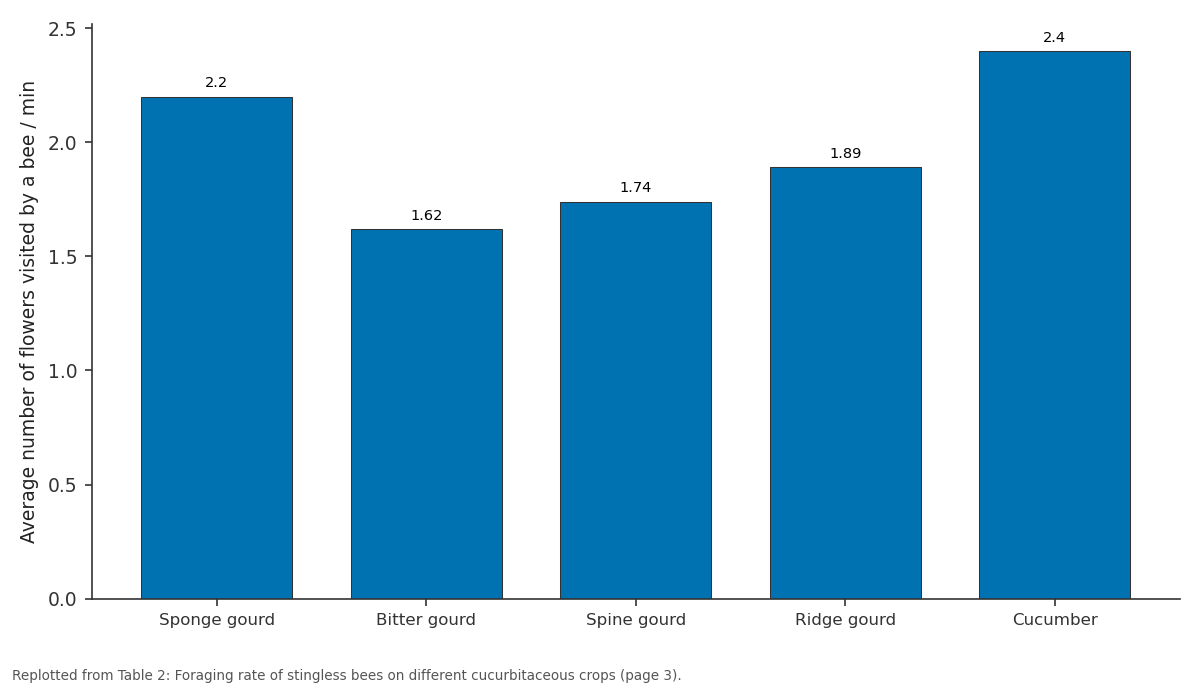
Mean: Sponge gourd vs Bitter gourd vs Spine gourd vs Ridge gourd vs Cucumber
Replotted from Table 2 (page 3) of the original paper. Every bar is the paper's own table value.
View source evidence ↗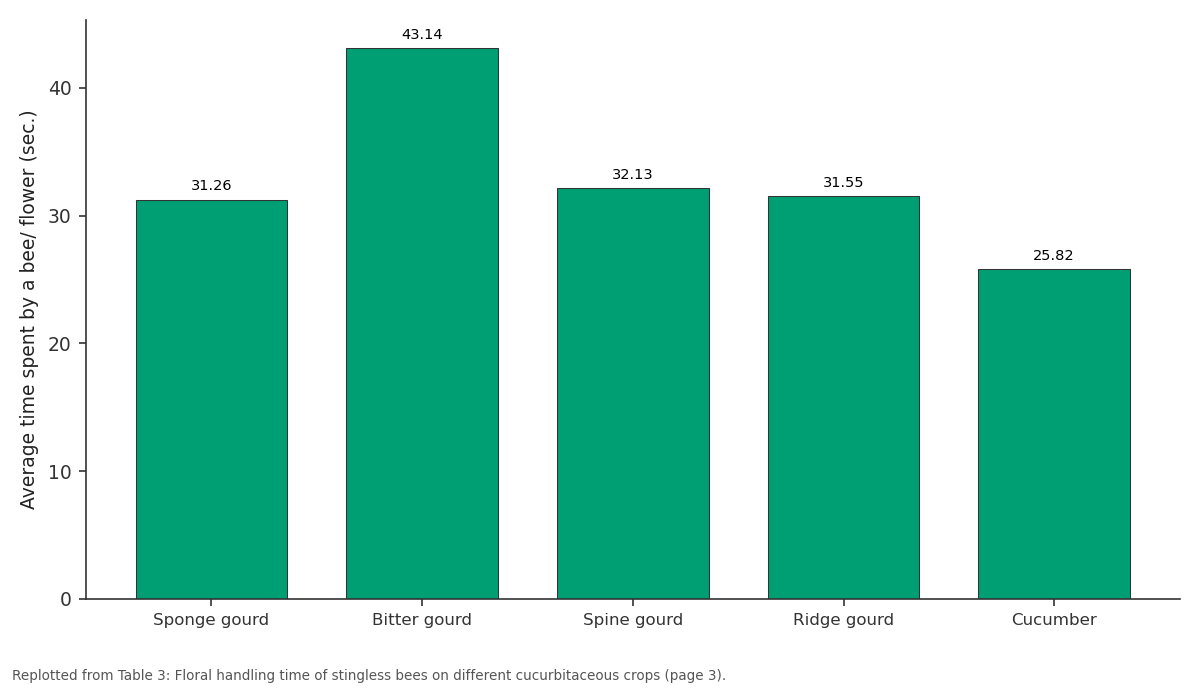
Mean: Sponge gourd vs Bitter gourd vs Spine gourd vs Ridge gourd vs Cucumber
Replotted from Table 3 (page 3) of the original paper. Every bar is the paper's own table value.
View source evidence ↗Figures & tables
From the original paper Table 1
 Table 2
 Table 3
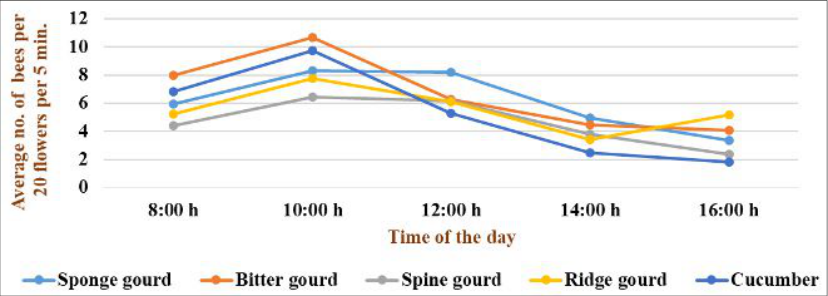 Figure 1
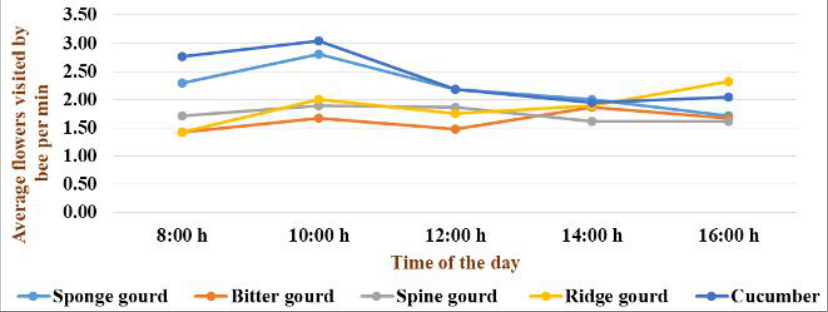 Figure 2
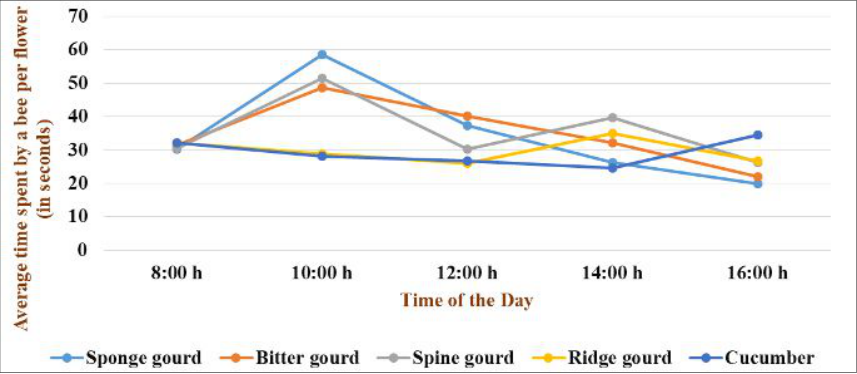 Figure 3
Introduction
Pollination is a key ecological process essential for the reproductive success of many flowering plants particularly in entomophilous agricultural crops. Among them cucurbitaceous vegetables such as sponge gourd (Luffa aegyptiaca), bitter gourd (Momordica charantia), spine gourd (Momordica dioica), ridge gourd (Luffa acutangula) and cucumber (Cucumis sativus) rely heavily on insect-mediated pollination due to their unisexual flowers and low self-pollination capacity (Klein et al. 2007) [12] . In recent years stingless bees (Meliponini) have garnered increasing attention as effective pollinators in tropical and subtropical agroecosystems. Their traits such as small body size, high floral constancy, ability to forage under low light, high humidity and moderate temperatures make them particularly suited for pollination in crops cultivated under open field or semi-protected conditions (Heard 1999; Nogueira-Neto 1997) [7,17] . While Apis species have traditionally dominated pollination studies the ecological efficiency and crop compatibility of stingless bees have been well demonstrated in crops like chilli, tomatoes, guava and cucurbits (Slaa et al. 2006; Abrol 2012) [21,1] . Time-wise or diurnal foraging activity is a critical component of pollinator ecology as it directly reflects the synchronization between pollinator behaviour and floral resource availability. For most bee species foraging activity follows a diurnal rhythm influenced by ambient temperature, light intensity, floral scent emission and nectar secretion dynamics (Stone et al. 1999; Willmer 2011) [22,23] . Previous studies have shown that stingless bees exhibit peak foraging activity during mid-morning hours typically between 09:00 to 11:00 h when floral rewards are most abundant and weather conditions are favourable (Kumar [14,9] . Such time-specific foraging patterns are crop-dependent and can vary based on the floral architecture, nectar availability and competition with other pollinators. Quantifying this diurnal behaviour along with associated foraging rate and handling time provides valuable insights into the efficiency and potential of stingless bees as pollinators. The present study was therefore undertaken to evaluate the foraging behaviour of stingless bees on five cucurbitaceous crops with specific emphasis on diurnal activity patterns in order to inform pollinator management strategies and optimize crop yield through enhanced natural pollination services.
Material and Methods
The present study on the foraging behaviour of stingless bees on cucurbitaceous crops was conducted during the Kharif season of 2024-2025 at the Instructional Farm of the Vegetable Improvement Scheme (VIS), CES Wakawali, Dapoli, Dist. Ratnagiri. Five cucurbitaceous crops sponge gourd (Luffa aegyptiaca), bitter gourd (Momordica charantia), spine gourd (Momordica dioica), ridge gourd (Luffa acutangula) and cucumber (Cucumis sativus) were selected to evaluate bee activity and pollination efficiency.
Standard pollination ecology methodologies adapted from Free (1993) [6] and Kearns and Inouye (1993) [11] were employed to assess three key behavioural parameters: diurnal foraging activity, foraging rate and handling time.
Diurnal activity was measured by counting the number of stingless bees visiting 20 flowers per 5 minutes at five time intervals (08:00, 10:00, 12:00, 14:00 and 16:00 hours) across three observation spots per crop plot with data collected weekly over seven Standard Meteorological Weeks (SMWs). Foraging rate defined as the number of flowers visited by a bee per minute was recorded by following individual bees for one minute during the same time intervals and locations. Handling time representing the duration a bee spent per flower was timed using a stopwatch for individual bees following protocols by Heinrich (1979) [8] and Willmer (2011) [23] . All observations were conducted under favourable weather to minimize environmental bias. Data were aggregated and analyzed both time-wise and crop-wise to determine diurnal patterns and crop-specific preferences of stingless bees. This multi-dimensional approach enabled a robust comparative assessment of the pollination dynamics of stingless bees across different cucurbitaceous species.
Experimental Result
The comparative analysis of stingless bee foraging behaviour on five cucurbitaceous crops revealed distinct patterns in diurnal activity, foraging rate and floral handling time. Diurnal activity observations (Table 1 and Fig. 3 and Fig. 3) showed that stingless bees spent the most time per flower at 12:00 h (35.62 seconds) and the least at 16:00 h (29.20 seconds). Among the crops, bitter gourd had the highest average handling time (43.14 seconds), while cucumber recorded the lowest (25.82 seconds). These findings suggest that both crop type and time of day significantly influence the foraging dynamics of stingless bees on cucurbitaceous flowers.
| Crops | Average number of bees/ 20 flowers/ 5min | — | — | — | — | Mean |
|---|---|---|---|---|---|---|
| 8:00h | 10:00h | 12:00h | 14:00h | 16:00h | ||
| Sponge gourd | 5.95 | 8.33 | 8.19 | 4.95 | 3.33 | 6.15 |
| Bitter gourd | 7.95 | 10.66 | 6.29 | 4.43 | 4.09 | 6.69 |
| Spine gourd | 4.38 | 6.43 | 6.14 | 3.81 | 2.38 | 4.63 |
| Ridge gourd | 5.24 | 7.76 | 6.10 | 3.43 | 5.19 | 5.54 |
| Cucumber | 6.81 | 9.71 | 5.29 | 2.48 | 1.81 | 5.22 |
| Mean | 6.07 | 8.58 | 6.40 | 3.82 | 3.36 |
Table text extracted from the original PDF; superscript letters are shown inline. The original table image is below.
View original table image
Discussion
More or less similar results were obtained by Appanch et al.
(1986) [2] who observed the foraging behaviour of T. erythrogastra in Malaysia for a period from August to November and March to May. Pollen supply was continuously available throughout the observation period from 0700 hr to 1800 hr when foraging activity approximately ceased. Kleinert-Giovannini and Imperatriz-Fonseca (1986) [13] studied the foraging activity of Melipona marginata Lepeletier took place throughout the day was most active between 1100 and 1300 h. Panda et al. (1993) [18] recorded maximum bee visitation in sunflower from 1100 h to 1200 h. Devanesan et al. (2002) [5] found that the foraging activity of T. iridipennis in Vellayani (Kerala) started at 07.00 hr with a gradual rise in activity reaching its first peak at 12.00 hr. A decline in activity was observed at 13.00 hr then increased until it reached its second peak at 15.00 hr. There was almost no activity at 18.00 hr. The maximum number of pollen foragers was observed in the morning and the nectar foragers at mid-day. The average number of incoming foragers with pollen load was 17.9 compared with nectar collectors (11.5) during the first peak at 12.00 hr. The average number of pollen and nectar foragers was 13.9 and 10.8 respectively, during the second peak at 15.00 hr. Roopa (2002) [19] from Bangalore observed that the foragers of T. iridipennis were active in all the seasons and the foraging activity was found throughout the day during all the months. Major and minor peaks were observed between 12.00-13.00 hr and 16.00-17.00 hr. Nicodemo et al. (2013) [16] recorded the visit of Nannotrigona testaceicornis(Lepeletier) bees to parthenocarpic cucumber flowers, which was from 0700 to 1600 h and the visit become more frequent between 1000 and 1200 h. Sen et al. (2023) [20] studied that in protected cucumber (Cucumis sativus) cultivation, T. iridipennis consistently visited flowers most between 08:00-09:00 h, resulting in yields five times greater than treatments excluding pollinators. Bisui et al. (2020) [4] found that managed stingless bee colonies enhanced both fruit set and quality in bitter gourd (Momordica charantia), compensating for natural pollination deficits. Another field Kamatchi Murali et al. (2020) [10] reported foraging peaks on bitter gourd at 08:00-10:00 h with 3.30 bees/5 min. Balaji et al. (2023) [3] observed floral visitor diversity and stingless bee foraging across a full flowering season on bitter gourd (Momordica charantia) and he found that the stingless bee activity was highest in mid-morning (10:00-12:00 h), followed by a tapering off by late afternoon. Lintu (2020) [15] observed foraging behavior of T. iridipennis on cucumber (Cucumis sativus) flowers, including diurnal and per-flower activity and hive entrance counts. Foraging on male flowers peaked at 6.8 visits per 5 min during 08:00-09:00 h, with maximum intensity during 10:00-11:00 h.
Hive traffic was highest at 13:00-14:00 h. He found that incoming/outgoing forager counts peaked mid-season (similar to week 35) and were lowest at early and late season periods (week 31 equivalent)
Tables
Tables
Acknowledgement
AcknowledgementThe authors sincerely acknowledge the college of agriculture, Dapoli, Dr. Balasaheb Sawant Konkan Krishi Vidyapeeth Dapoli, Maharashtra, India for providing all the necessary facilities for conducting of this research work.
Figures and tables from the paper
| Crops | Average number of flowers visited by a bee / min | — | — | — | — | Mean |
|---|---|---|---|---|---|---|
| 8:00h | 10:00h | 12:00h | 14:00h | 16:00h | ||
| Sponge gourd | 2.29 | 2.81 | 2.19 | 2.00 | 1.71 | 2.20 |
| Bitter gourd | 1.43 | 1.67 | 1.48 | 1.86 | 1.67 | 1.62 |
| Spine gourd | 1.71 | 1.90 | 1.86 | 1.62 | 1.62 | 1.74 |
| Ridge gourd | 1.43 | 2.00 | 1.76 | 1.90 | 2.33 | 1.89 |
| Cucumber | 2.76 | 3.05 | 2.19 | 1.95 | 2.05 | 2.40 |
| Mean | 1.92 | 2.29 | 1.90 | 1.87 | 1.88 |
Table text extracted from the original PDF; superscript letters are shown inline. The original table image is below.
View original table image
| Crops | Average time spent by a bee/ flower (sec.) | — | — | — | — | Mean |
|---|---|---|---|---|---|---|
| 8:00h | 10:00h | 12:00h | 14:00h | 16:00h | ||
| Sponge gourd | 30.33 | 31.33 | 30.38 | 32.15 | 32.12 | 31.26 |
| Bitter gourd | 58.53 | 48.62 | 51.49 | 28.94 | 28.12 | 43.14 |
| Spine gourd | 37.40 | 40.08 | 30.35 | 26.12 | 26.70 | 32.13 |
| Ridge gourd | 26.29 | 32.11 | 39.72 | 34.99 | 24.65 | 31.55 |
| Cucumber | 19.95 | 21.90 | 26.17 | 26.67 | 34.40 | 25.82 |
| Mean | 34.50 | 34.81 | 35.62 | 29.77 | 29.20 |
Table text extracted from the original PDF; superscript letters are shown inline. The original table image is below.
View original table image
References
23 in the original paper- Abrol DP. Pollination biology: biodiversity conservation and agricultural production. Dordrecht: Springer; 2012.
- Appanach T, Koeniger N, Koeniger G. Observations on the foraging behaviour of Trigona erythrogastra in Malaysia. Apidologie. 1986;17(1):15-25.
- Balaji S, Sridhar P, Subramanian P. Floral visitor diversity and foraging behaviour of stingless bees on bitter gourd (Momordica charantia). Journal of Pollination Ecology. 2023;32(1):45-52.
- Bisui S, Debnath B, Ghosh S, Mahapatra BS. Effect of bee pollination on fruit set and quality of bitter gourd (Momordica charantia). Indian Journal of Agricultural Sciences. 2020;90(7):1372-6.
- Devanesan S, Anithakumari P, Rajasree V. Foraging activity of stingless bee Trigona iridipennis in Kerala. Indian Bee Journal. 2002;64(1-2):39-42.
- Free JB. Insect pollination of crops. 2nd ed. London: Academic Press; 1993.
- Heard TA. The role of stingless bees in crop pollination. Annu Rev Entomol. 1999;44:183-206.
- Heinrich B. Foraging strategies of insects. Annu Rev Ecol Syst. 1979;10:393-420.
- Jha S, Jha AK. Foraging activity of stingless bee Tetragonula iridipennis on cucurbit crops and its pollination efficiency. Journal of Pollination Ecology. 2014;12(5):24-9.
- Kamatchi Murali R, Arulprakash R, Suresh T. Evaluation of stingless bees as efficient pollinators of bitter gourd (Momordica charantia L.). Journal of Entomology and Zoology Studies. 2020;8(3):2053-6.
- Kearns CA, Inouye DW. Techniques for pollination biologists. Boulder: University Press of Colorado; 1993.
- Klein AM, Vaissière BE, Cane JH, Steffan-Dewenter I, Cunningham SA, Kremen C, et al. Importance of pollinators in changing landscapes for world crops. Proc R Soc B. 2007;274(1608):303-13.
- Kleinert-Giovannini A, Imperatriz-Fonseca VL. Foraging activity of Melipona marginata Lepeletier (Hymenoptera: Apidae): influence of abiotic factors. Journal of Apicultural Research. 1986;25(1):9-15.
- Kumar S, Rana BS, Sihag RC. Foraging behaviour of stingless bees (Tetragonula spp.) on cucurbit crops in subtropical regions. Indian Journal of Entomology. 2012;74(2):180-5.
- Lintu MA. Diurnal foraging behaviour of Tetragonula iridipennis on cucumber (Cucumis sativus) under open field conditions. International Journal of Chemical Studies. 2020;8(5):1732-6.
- Nicodemo D, Nogueira-Ferreira FH, Couto RHN, Malheiros EB. Pollination efficiency of Nannotrigona testaceicornis in parthenocarpic cucumber (Cucumis sativus L.) under greenhouse conditions. Sociobiology. 2013;60(1):80-5.
- Nogueira-Neto P. Vida e criação de abelhas indígenas sem ferrão. São Paulo: Nogueirapis; 1997.
- Panda P, Panda R, Das RP. Studies on diurnal foraging activity of bees in sunflower. Environ Ecol. 1993;11(2):408-10.
- Roopa P. Seasonal foraging behaviour of stingless bee Trigona iridipennis Smith in Bangalore. Karnataka Journal of Agricultural Sciences. 2002;15(4):958-60.
- Sen D, Sinha P, Ghosh S. Impact of stingless bee (Tetragonula iridipennis) pollination on yield enhancement in protected cucumber cultivation. Vegetable Science. 2023;50(1):14-9.
- Slaa EJ, Sanchez Chaves LA, Malagodi-Braga KS, Hofstede FE. Stingless bees in applied pollination: practice and perspectives. Apidologie. 2006;37(2):293315.
- Stone GN, Willmer PG, Rowe JA. Partitioning of pollinators during flowering in an African Acacia community. Ecology. 1999;80(6):1255-70.
- Willmer P. Pollination and floral ecology. Princeton: Princeton University Press; 2011.