
Research article · 2025 · Full text
International Journal of Agriculture and Food ScienceNutritional and Proximate Composition Changes in Fermented Chicken Sausage under Different Cooking Methods
Volume 7(9) · Pages 816–820 · DOI: 10.33545/2664844x.2025.v7.i9k.829 ↗
Research areasGlobal Financial Crisis and PoliciesEconomic and Technological InnovationContemporary and Historical Greek Studies
Abstract
Author-writtenFermented chicken sausages (FCS) are gaining importance in India due to their nutritional significance, functional potential, and consumer acceptance. The present study evaluated the effect of different cooking methods here methods are oven cooking, smoking, and a combination of oven cooking with smoking on the proximate composition of FCS prepared using two starter cultures (Lactobacillus plantarum and yoghurt starter). Results revealed that cooking methods significantly influenced moisture, protein, fat, and ash contents. Oven-cooked samples showed higher moisture retention, while smoking enhanced protein, fat, and ash concentrations due to dehydration and nutrient concentration effects. Sausages fermented with yoghurt culture consistently demonstrated higher moisture and fat content compared to those with L. plantarum, suggesting better water-binding capacity. Overall, the findings highlight the role of both fermentation and cooking methods in determining the nutritional profile of FCS. This study supports the development of optimized processing strategies for health-oriented meat products tailored to Indian consumer preferences.
Summary
Source-checkedPlain-language reading of the full paper, prepared with AI and checked against the text. Each point links to the authors' own words.
Why it matters
- Fermented chicken sausages (FCS) are becoming increasingly important in India because of their nutritional value, functional potential, and acceptance by consumers. View evidence ↗
- Different cooking techniques can change the proximate composition of sausages by influencing factors like protein denaturation and water-holding capacity. View evidence ↗
- India's climate is naturally conducive to fermentation, which makes it an effective method for preserving meat. View evidence ↗
The question
- The study aimed to evaluate how oven cooking, smoking, and a combination of both affect the proximate composition of FCS made with either Lactobacillus plantarum or a yoghurt starter. View evidence ↗
What they did
- To start fermentation, a freeze-dried lactic acid bacteria (LAB) starter culture was added to the sausage batter at 10⁷ CFU/g. View evidence ↗
- Fermentation was carried out until the pH level fell below 5.2 to ensure the product was microbially safe and had a tangy taste. View evidence ↗
- The sausages were ripened until they reached a semi-dry texture with a final moisture content of about 40%. View evidence ↗
- The experimental groups included a control (cooking without fermentation), T1 (1% Lactobacillus plantarum), and T2 (3% Yoghurt Starter Culture). View evidence ↗
What they found
- Oven cooking was the most effective method for moisture retention, with the yoghurt starter group (T2) reaching 48.30 ± 0.47%. View evidence ↗
- Smoking resulted in the highest protein levels, peaking at 29.15 ± 0.21% in the T2 group. View evidence ↗
- The highest fat content was found in sausages that were smoked alone, with values of 18.68±0.03% for T1 and 18.75±0.02% for T2. View evidence ↗
- Smoking alone led to the highest ash content, with the yoghurt starter group (T2) reaching 2.82±0.14%. View evidence ↗
- Sausages using the yoghurt starter culture generally retained more moisture than those using Lactobacillus plantarum. View evidence ↗
What it means
- The authors concluded that smoking increases the concentration of protein, fat, and ash, while oven cooking is better for preserving moisture. View evidence ↗
- The authors found that the yoghurt starter culture was more effective than Lactobacillus plantarum at retaining moisture and fat. View evidence ↗
Visual summary
3 visualsIllustrations explain the paper; charts are replotted from the paper's own table values.
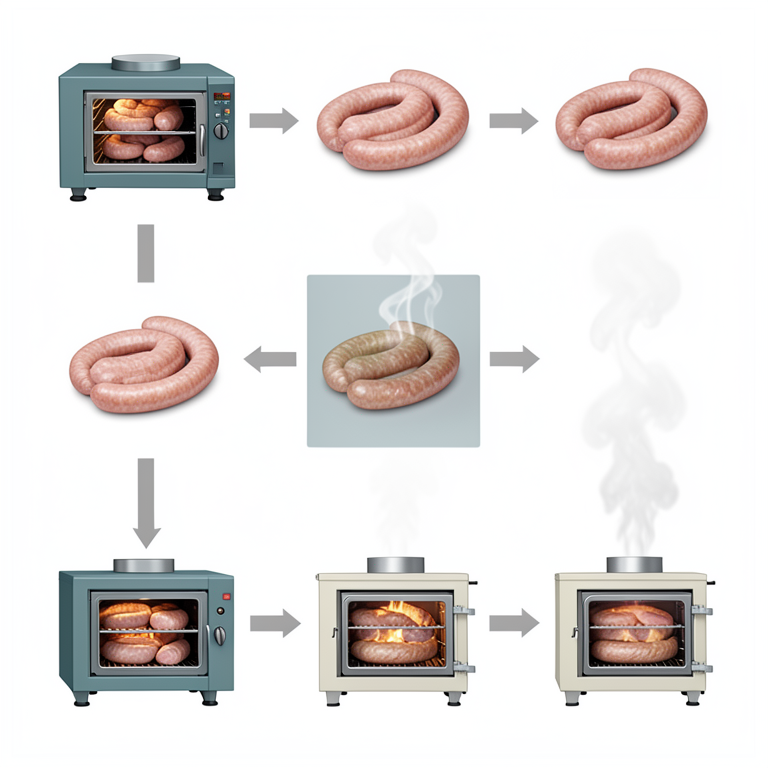
Experimental Matrix
AI-generated conceptual illustration (fermented chicken sausages). It explains the idea and does not show study data.
View source evidence ↗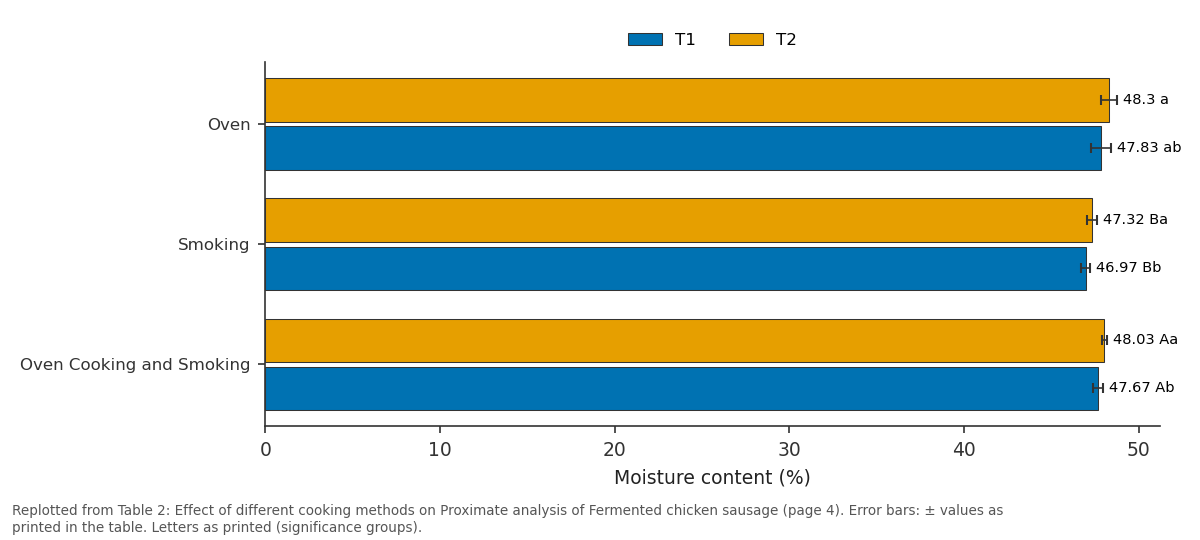
T1 and T2: Oven vs Smoking vs Oven Cooking and Smoking
Replotted from Table 2 (page 4) of the original paper. Every bar is the paper's own table value.
View source evidence ↗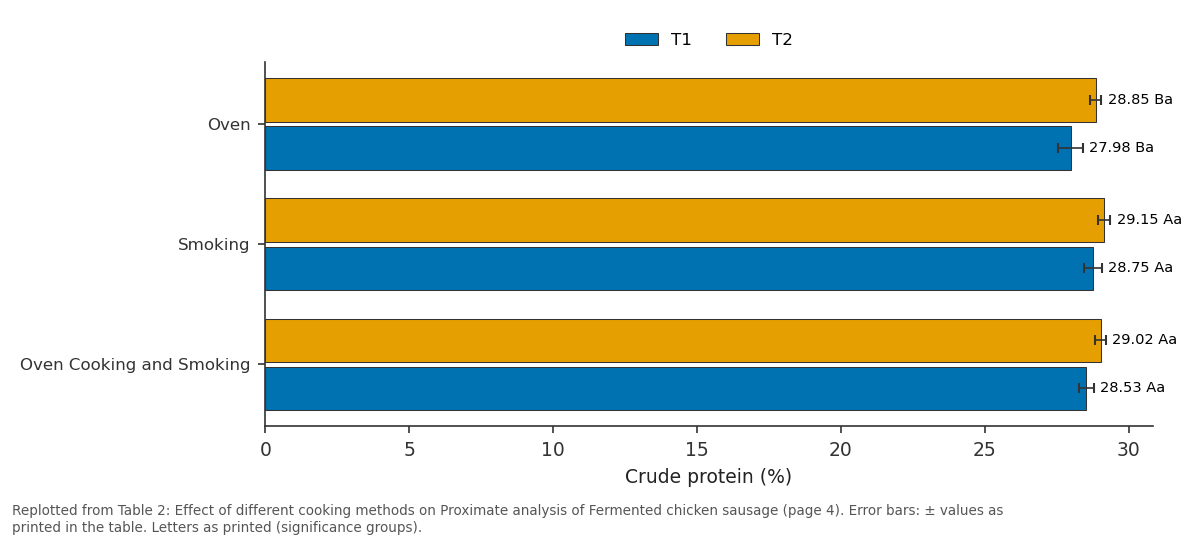
T1 and T2: Oven vs Smoking vs Oven Cooking and Smoking
Replotted from Table 2 (page 4) of the original paper. Every bar is the paper's own table value.
View source evidence ↗Figures & tables
From the original paper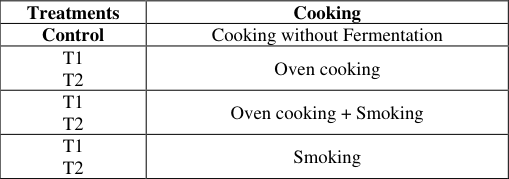 Table 1
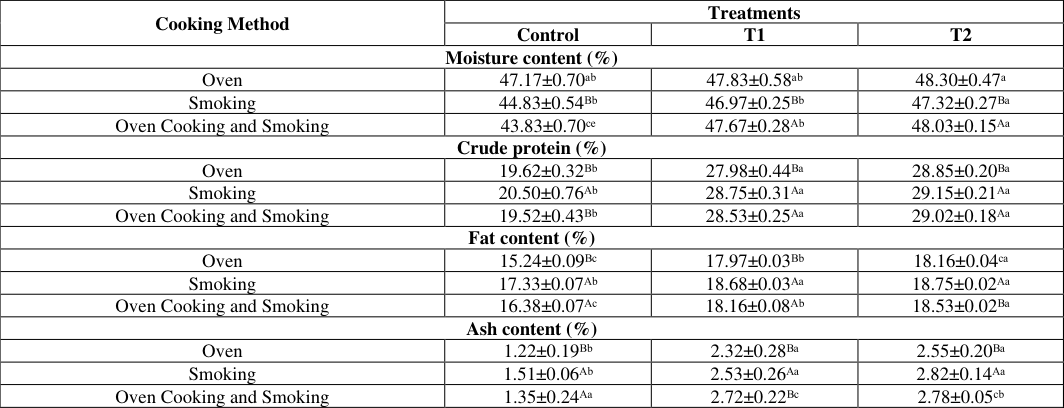 Table 2
Introduction
Fermented sausages are valued worldwide as traditional as well as modern meat significance. The combined processes of fermentation, ripening, and subsequent cooking bring about substantial shifts in their proximate and nutritional composition, which ultimately determine product quality, consumer acceptability, and health aspects. The cooking process introduces an additional layer of influence. Techniques such as boiling, steaming, grilling, and frying can alter proximate composition by affecting protein denaturation, water-holding capacity, lipid oxidation, and mineral concentration. As a result, the nutritional profile and eating quality of fermented chicken sausages may vary depending on the cooking method employed. Studying these changes is therefore crucial to optimize processing approaches that ensure both product quality and consumer health benefits. Fermented sausages are gaining research interest in India due to their nutritional significance and functional potential, particularly the inclusion of probiotic microorganisms and bioactive metabolites. These components are linked to health-promoting effects, such as supporting gut microbiota and enhancing nutrient utilization. The country's climatic conditions naturally favor fermentation, making it a suitable preservation method for meat. Recent investigations therefore, emphasize product innovation, aiming to refine sensory attributes while safeguarding nutrient density and functionality, to align with the rising demand for healthoriented meat products among Indian consumers.
Review of Literature
During fermentation and ripening, fermented sausages undergo marked modifications in their proximate composition, largely driven by microbial activity and environmental conditions (Incili et al., 2025) [4] . Among these changes, moisture reduction is the most pronounced. Initial moisture levels of approximately 60-65% may decline to nearly 30-40% in the final product (Serdaroglu et al., 2022) [7] . This progressive loss of water not only concentrates International Journal of Agriculture and Food Science https://www.agriculturaljournals.com other nutrients but also improves product stability by reducing water activity, thereby limiting microbial spoilage and extending shelf life. The decrease in moisture also contributes to firmer texture and characteristic chewiness, features that are highly valued in dry and semi-dry fermented sausages (Sirini et al., 2022) [8] . Protein content, generally in the range of 20-25%, remains stable in terms of absolute percentage (Yang et al., 2024) [12] . However, extensive proteolysis occurs during ripening, producing peptides and free amino acids. These compounds are essential contributors to flavor development and enhance digestibility, ultimately improving the nutritional quality of the sausage. Fat, typically between 20-35%, also does not show major quantitative changes, yet lipolytic activity releases free fatty acids (Sirini et al., 2022) [8] . These serve as important precursors for volatile compounds that define the aroma and taste profile of the product. Carbohydrates, particularly fermentable sugars, decline significantly since lactic acid bacteria utilize them as substrates for energy (Wang et al., 2021) [11] . This metabolism results in the formation of organic acids, mainly lactic acid, which reduces pH, improves safety, and shapes the tangy flavor associated with fermented sausages. Ash content, generally ranging between 3-5%, tends to increase slightly during ripening (Afifah et al., 2023, Akwetey et al., 2023) [1,2] . This rise is not due to the addition of minerals but rather a relative concentration effect caused by moisture loss (Vignolo et al., 2010; Roca & Incze, 1990) [10,6] .
Material and Methods
Material and Methods
Ingredients
Fresh and good-quality spices including black pepper, garlic powder, paprika, curry leaves, nutmeg, and cardamom were purchased from the local market of Bareilly, India. These spices were selected based on their traditional use in Indian meat products as well as their known sensory and preservative roles. Prior to use, all spices were subjected to drying in a hot-air oven to lower residual moisture, thereby minimizing microbial contamination and enhancing storage stability. The dried spices were then ground into fine powders to ensure uniformity and ease of blending into the sausage matrix. Other raw materials such as lean chicken meat, polyphosphate, common salt, vegetable oil, refined wheat flour, ice flakes, and sugar were procured from reliable local sources. A commercial lactic acid bacteria (LAB) starter culture was used for controlled fermentation.
Spice Mix Formulation
Two experimental spice blends were designed to evaluate their impact on the sensory profile of chicken sausages. The first blend (Mix 1) comprised black pepper (12 g), garlic powder (16 g), paprika (13 g), curry leaves (3 g), nutmeg (3 g), and cardamom (3 g), yielding a total of 50 g. The second blend (Mix 2) contained black pepper (12 g), garlic powder (13 g), paprika (10 g), curry leaves (3 g), nutmeg (3 g), and cardamom (3 g), amounting to 44 g in total. Each blend was thoroughly mixed to ensure homogeneity before being incorporated into sausage batters. Sensory evaluation was performed by a trained panel of experts specializing in meat product quality. Panelists assessed attributes including color, aroma, flavor, spiciness, saltiness, texture, mouthfeel, and overall acceptability using a structured scoring system. The formulation receiving the highest acceptability rating was selected as the optimized spice blend for further standardization and sausage preparation (Malek et al.,2025).
Sausage Formulation
For sausage production, lean chicken meat was minced and combined with essential non-meat ingredients such as polyphosphate, salt, ice flakes, vegetable oil, refined wheat flour, and sugar along with the optimized spice mix. The addition of polyphosphate improved water-holding capacity, while ice flakes helped maintain low batter temperature during mixing. A freeze-dried LAB starter culture was inoculated into the sausage batter at a concentration of 10⁷ CFU/g to initiate fermentation. The prepared meat batter was stuffed into natural or synthetic casings under hygienic laboratory conditions to minimize contamination risks and ensure uniform product quality.
Fermentation and Ripening
The stuffed sausages were initially incubated at 25-28 °C with 85-90% relative humidity, conditions favorable for LAB activity and acidification. Fermentation was continued until the pH dropped below 5.2, ensuring microbial safety and imparting characteristic tanginess. Following fermentation, the sausages were transferred to a ripening chamber maintained at 10 °C and 75-80% relative humidity. Ripening was carried out until a semi-dry texture was obtained, corresponding to a final moisture content of approximately 40%. This step was essential for flavor development, textural firmness, and product preservation. Throughout fermentation and ripening, the internal temperature of the sausages was monitored using a calibrated digital probe thermometer. After ripening, the sausages were subjected to proximate, microbiological, and sensory analyses to evaluate their physicochemical stability and consumer acceptability.
Standardization of Cooking Procedures
Once ripening is complete, the sausages undergo standardized cooking procedures, which include oven cooking, smoking and a combination of both methods. This step is critical to ensure uniform cooking and to achieve the optimum internal temperature, making the sausages safe for consumption. Standardizing these cooking procedures ensures consistent quality across different batches, as it allows precise control over the cooking conditions. Similarly, smoking process was also standardized until attained the safe temperature and optimum flavor. After that sensory evaluation was done for all products.
Proximate composition
The proximate composition of Fermented chicken sausages were analyzed using (AOAC, 2003) methods. After the digestion the flask was allowed to cool down and the contents was transferred into a 100 ml volumetric flask. The Kjeldhal flask was rinsed with small quantities of distilled water until all the contents were transferred to the volumetric flask. The volume was made up to 100 ml using distilled water.
• Distillation 2 ml of the above solution was added to the distillation assembly followed by 5 ml of 40% NaOH. 4% Boric acid solution added with Tashiro's indicator was used for collecting the ammonia produced by distillation.
. Proximate Analysis
The proximate analysis of fermented chicken sausages (FCS) assessed the levels of moisture, crude protein, fat, and ash across different treatments. The results indicated notable differences depending on the cooking approach applied.
As presented in Table 14, the moisture content of FCS varied significantly with both cooking methods and fermentation treatments. Oven-cooked samples retained the highest moisture, with T2 recording 48.30 ± 0.47%. This can be attributed to the uniform heat transfer in the oven, which supports gradual moisture retention. In contrast, smoking alone yielded the lowest values, with T1 at 46.97 ± 0.25%, likely due to enhanced evaporation during exposure to smoke. The combined method of oven cooking and smoking resulted in intermediate moisture levels. Sausages fermented with yoghurt culture generally maintained higher moisture compared to those inoculated with Lactobacillus plantarum. These findings are in agreement with observations reported by Susilo et al. (2023) [9] .
The protein content of FCS, presented in Table 14, also demonstrated significant variations depending on cooking and fermentation treatments. Among the methods, smoking produced the highest protein values, with T2 reaching 29.15 ± 0.21%. Conversely, oven cooking yielded the lowest protein levels, as seen in T2 (28.85 ± 0.20%). The combination of oven and smoking produced intermediate results. The differences observed (P<0.05) suggest that smoking may be more effective at preserving protein compared to oven cooking or the combined process. Furthermore, across all treatments, T1 consistently showed slightly higher protein content than T2, aligning with the results of Susilo et al. (2023) [9] , who reported marginally higher protein levels in sausages fermented with Lactobacillus plantarum.
Table 1 demonstrates that the fat content of FCS is significantly impacted by different cooking methods. Smoking alone resulted in the highest fat content, with T1 at 18.68±0.03% and T2 at 18.75±0.02%. In comparison, oven cooking showed lower fat contents, with T1 at 17.97±0.03% and T2 at 18.16±0.04%. The combination of oven cooking and smoking produced intermediate fat values. Significant differences (P<0.05) suggest that smoking leads to greater fat retention, likely due to its dehydrating effect, which concentrates fat content by reducing water and minimizing fat loss. Furthermore, T2 consistently exhibited higher fat content, potentially due to the yoghurt culture's waterbinding properties. The crude fat (%) of fermented sausages with yoghurt culture showed higher fat content compared to those with Lactobacillus plantarum, which is consistent with the findings of Susilo et al., (2023) [9] .
| Treatments | Cooking |
|---|---|
| Control | Cooking without Fermentation |
| T1 T2 | Oven cooking |
| T1 T2 | Oven cooking + Smoking |
| T1 T2 | Smoking |
Table text extracted from the original PDF; superscript letters are shown inline. The original table image is below.
View original table image
Ash content%
The ash content of FCS is significantly influenced by different cooking methods, as shown in Table 14. Oven cooking resulted in ash contents of 1.22±0.19% for the control, 2.32±0.28% for T1 and 2.55±0.20% for the combined oven and smoking method slightly increased ash content, with values of 1.35±0.24% for the control, 2.72±0.22% for T1 and 2.78±0.05% for T2. Smoking alone produced the highest ash content, with 1.51±0.06% for the control, 2.53±0.26% for T1, and 2.82±0.14% for T2. The higher ash content observed in the smoking method may be due to the concentration effect resulting from moisture loss during the smoking process, which reduces water content and increases the relative proportion of mineral content in FCS. Significant differences (P<0.05) across treatments suggest that smoking generally leads to higher ash content compared to oven cooking and the combined method. Ash content (%) of fermented sausages with yoghurt culture showed higher moisture content as compared to L. plantarum this study show similarity with Susilo et al., (2023) [9] .
Conclusion
The study demonstrated that both fermentation cultures and cooking methods exerted a significant influence on the proximate composition of fermented chicken sausages. Smoking enhanced protein, fat, and ash concentration, whereas oven cooking preserved moisture more effectively. Yoghurt starter culture promoted higher moisture and fat retention compared to Lactobacillus plantarum. These findings provide insights into optimizing sausage processing techniques for enhanced quality and consumer acceptability.
Future Aspects
Future research may focus on:
• Exploring the incorporation of functional bioactive compounds (e.g., dietary fibers, plant extracts) to improve nutritional and health-promoting qualities. • Investigating advanced starter cultures with probiotic potential for targeted functional benefits. • Studying consumer preferences across diverse demographic groups to refine formulations. • Evaluating shelf-life stability, oxidative changes, and microbiological safety under different storage and distribution conditions. • Scaling up the optimized formulations for industrial applications to support the growing demand for healthier fermented meat products in India.
Figures and tables from the paper
| Cooking Method | Treatments | — | — |
|---|---|---|---|
| Control | T1 | T2 | |
| Moisture content (%) | |||
| Oven | 47.17±0.70ᵃᵇ | 47.83±0.58ᵃᵇ | 48.30±0.47ᵃ |
| Smoking | 44.83±0.54ᴮᵇ | 46.97±0.25ᴮᵇ | 47.32±0.27ᴮᵃ |
| Oven Cooking and Smoking | 43.83±0.70ᶜᵉ | 47.67±0.28ᴬᵇ | 48.03±0.15ᴬᵃ |
| Crude protein (%) | |||
| Oven | 19.62±0.32ᴮᵇ | 27.98±0.44ᴮᵃ | 28.85±0.20ᴮᵃ |
| Smoking | 20.50±0.76ᴬᵇ | 28.75±0.31ᴬᵃ | 29.15±0.21ᴬᵃ |
| Oven Cooking and Smoking | 19.52±0.43ᴮᵇ | 28.53±0.25ᴬᵃ | 29.02±0.18ᴬᵃ |
| Fat content (%) | |||
| Oven | 15.24±0.09ᴮᶜ | 17.97±0.03ᴮᵇ | 18.16±0.04ᶜᵃ |
| Smoking | 17.33±0.07ᴬᵇ | 18.68±0.03ᴬᵃ | 18.75±0.02ᴬᵃ |
| Oven Cooking and Smoking | 16.38±0.07ᴬᶜ | 18.16±0.08ᴬᵇ | 18.53±0.02ᴮᵃ |
| Ash content (%) | |||
| Oven | 1.22±0.19ᴮᵇ | 2.32±0.28ᴮᵃ | 2.55±0.20ᴮᵃ |
| Smoking | 1.51±0.06ᴬᵇ | 2.53±0.26ᴬᵃ | 2.82±0.14ᴬᵃ |
| Oven Cooking and Smoking | 1.35±0.24ᴬᵃ | 2.72±0.22ᴮᶜ | 2.78±0.05ᶜᵇ |
Table text extracted from the original PDF; superscript letters are shown inline. The original table image is below.
View original table image
References
12 in the original paper- Afifah DN, Sari IR, Prastifani NT, Fulyani F, Anjani G, Widyastuti N, et al. Effect of fermentation time on nutrition content, physical properties, pH, amino acids, fatty acids composition and organoleptics on fermented mackerel sausage (Rastrelliger kanagurta Cuvier) characteristics. Int J Food Stud. 2023;12(1).
- Akwetey WY, Awuni BY, Elizabeth Y. Sensory and physicochemical characteristics of semi-dry fermented beef sausages produced with fresh ripe plantain. Turk J Agric Food Sci Technol. 2023;11(2):202-6.
- AOAC International. Official method of analysis of AOAC. 17th ed. 2nd rev. Gaithersburg (MD): Association of Official Analytical Chemists International; 2003.
- Incili GK, Akgol M, Karatepe P, Uner S, Tekin A, Kanmaz H, et al. Quantification of bioactive metabolites derived from cell-free supernatant of Pediococcus acidilactici and screening their protective properties in frankfurters. Probiotics Antimicrob Proteins. 2025;17(1):253-70.
- Malek A, Sen AR, Sangeeta, Patel S, Biswas AK, Chand S. Incorporation of Indian spices as natural antioxidants in fermented chicken sausage formulation. Int J Vet Sci Anim Husb. 2025;10(9):226-9.
- Roca M, Incze K. Fermented sausages. Food Rev Int. 1990;6:91-118.
- Serdaroglu M, Ozturk-Kerimoglu B, Zungur-Bastıoglu A, Kavuşan HS, Otleş S, Ozyurt VH. Lipid-protein oxidation and in vitro digestibility of fermented turkey sausages as affected by lipid formulation. Eur J Lipid Sci Technol. 2022;124(10):2100243.
- Sirini N, Munekata PE, Lorenzo JM, Stegmayer MA, Pateiro M, Perez-Alvarez JA, et al. Development of healthier and functional dry fermented sausages: Present and future. Foods. 2022;11(8):1128.
- Susilo A, Widyastuti ES, Evanuarini H, Apriliyani MW. Comparison of the quality of fermented sausages with the use of yogurt starter and Lactobacillus plantarum (pH, aw and proximate values). JPPIPA. 2023;9:2319-24.
- Vignolo G, Fontana C, Fadda S. Semidry and dry fermented sausages. In: Toldrá F, editor. Handbook of meat processing. 1st ed. New York (NY): Blackwell Publishing; 2010. p. 379-98.
- Wang Y, Wu J, Lv M, Shao Z, Hungwe M, Wang J, et al. Metabolism characteristics of lactic acid bacteria and the expanding applications in food industry. Front Bioeng Biotechnol. 2021;9:612285.
- Yang X, Xiao S, Wang J. Debaryomyces hansenii strains from traditional Chinese dry-cured ham as good aroma enhancers in fermented sausage. Fermentation. 2024;10(3):152.