
Research article · 2025 · Full text
International Journal of Horticulture and Food ScienceSustainable agronomic practices for jackfruit (Artocarpus heterophyllus Lam.): Nutritional value, health benefits, and utilization of non-edible by-products
Volume 7(9) · Pages 44–48 · DOI: 10.33545/26631067.2025.v7.i9a.392 ↗
Research areasAquaculture disease management and microbiotaEntomopathogenic Microorganisms in Pest ControlFungal and yeast genetics research
Abstract
Author-writtenJackfruit (Artocarpus heterophyllus. Lam.) has a big potential in enhancing nutritional security, rural livelihoods, and sustainable agricultural systems because the tree is a multipurpose tropical fruit. The importance of jackfruit is still that even with the volumes of this crop that are produced, it is estimated every year that one-third of the crop is being wasted due to improper post-harvest management, absence of infrastructure and post-processing infrastructure. This is a review of recent studies on sustainable agronomic methods, nutritional value, health benefits, and value-added use of jackfruit by-products in a circular economy.The paper identifies agronomic interventions that are environmentally friendly, like integrated nutrient management, climate-sensitive irrigation, pruning, canopy management, and integrated pest and disease management to improve productivity and environmental sustainability. Jackfruit contains carbohydrates, proteins, vitamins, minerals, and bioactive compounds, including flavonoids and carotenoids, and has a wide variety of health benefits, including antioxidant, anti-diabetic, cardioprotective, anti-obesity, gut health promotion, and anti-cancer.Also, new methods of transforming non-edible by-products, including peel, core, seeds, and latex into high-value products such as pectin, bioplastics, animal feed, nutraceuticals, and biofuels are addressed. Recommendations on practical practices to be adopted by farmers, industries, and policymakers are offered to ensure that zero-waste systems are adopted and enhance rural economies. Modern agricultural practices, processing innovations, and supportive policies can help the jackfruit cultivation to be integrated to form a sustainable horticultural model to help in food security and horticultural stability.
Summary
Source-checkedPlain-language reading of the full paper, prepared with AI and checked against the text. Each point links to the authors' own words.
Why it matters
- Jackfruit is a multipurpose tropical fruit with significant potential to improve rural livelihoods, nutritional security, and the sustainability of agricultural systems. View evidence ↗
- Significant portions of the jackfruit crop are wasted annually, with post-harvest losses estimated between 30% and 40% due to poor infrastructure and management. View evidence ↗
- Global interest in jackfruit is increasing because the tree is hardy, drought-tolerant, and capable of growing on degraded or marginal land with minimal inputs. View evidence ↗
What they did
- The authors conducted a review of recent studies focusing on sustainable agronomy, nutritional value, health benefits, and the application of a circular economy to jackfruit by-products. View evidence ↗
- The study synthesizes recommended agronomic practices, including climatic requirements, soil needs, spacing, and nutrient management. View evidence ↗
- The review compiles nutritional data for the pulp and seeds of the fruit per 100g edible portion. View evidence ↗
What they found
- Ideal growth conditions for jackfruit include temperatures between 22-35°C, annual rainfall of 1500-2500 mm, and deep, well-drained loamy soil with a pH of 6.0-7.5. View evidence ↗
- Recommended nutrient management involves applying 20-25 kg of Farm Yard Manure (FYM) per tree annually, with an N:P:K ratio of approximately 400:200:400 g per tree per year. View evidence ↗
- Cold storage at temperatures between 10-14°C and relative humidity of 85-90% can extend the shelf life of the fruit by up to 10 days. View evidence ↗
- Non-edible parts can be valorized: peels can be used for pectin extraction and bioplastics, while the core can be used for animal feed, biogas, and ethanol. View evidence ↗
- Jackfruit exhibits anti-diabetic properties through saponins, flavonoids, and resistant starch, which help improve insulin sensitivity and reduce post-prandial glucose excursions. View evidence ↗
- The resistant starch and polysaccharides in the seeds and pulp act as prebiotics that enrich beneficial gut bacteria like Bifidobacteria and Lactobacillus. View evidence ↗
- Phenolics and tannins in jackfruit can inhibit the growth of foodborne pathogens such as E. coli and Salmonella, making them useful as natural preservatives. View evidence ↗
What it means
- The authors conclude that adopting scientific agronomic practices, such as integrated nutrient management and efficient irrigation, can significantly enhance fruit yield and quality. View evidence ↗
- To fully realize the potential of jackfruit for rural development, the authors recommend strengthening market linkages, value-added processing, and post-harvest infrastructure. View evidence ↗
Visual summary
2 visualsIllustrations explain the paper; charts are replotted from the paper's own table values.
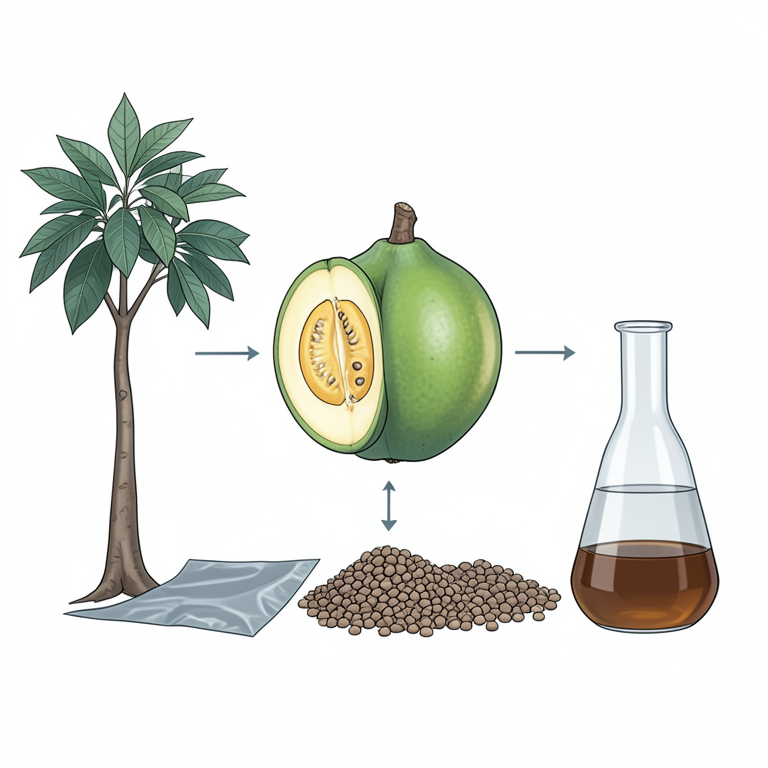
Jackfruit Circular Economy Model
AI-generated conceptual illustration (jackfruit (Artocarpus heterophyllus Lam.)). It explains the idea and does not show study data.
View source evidence ↗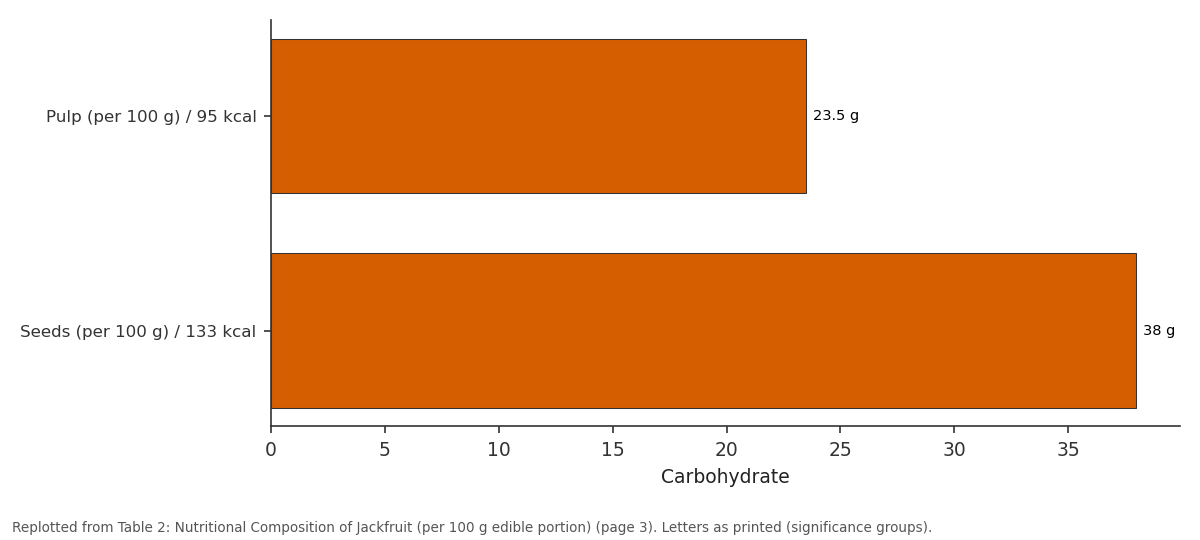
Carbohydrate: Pulp (per 100 g) / 95... vs Seeds (per 100 g) / 133...
Replotted from Table 2 (page 3) of the original paper. Every bar is the paper's own table value.
View source evidence ↗Figures & tables
From the original paper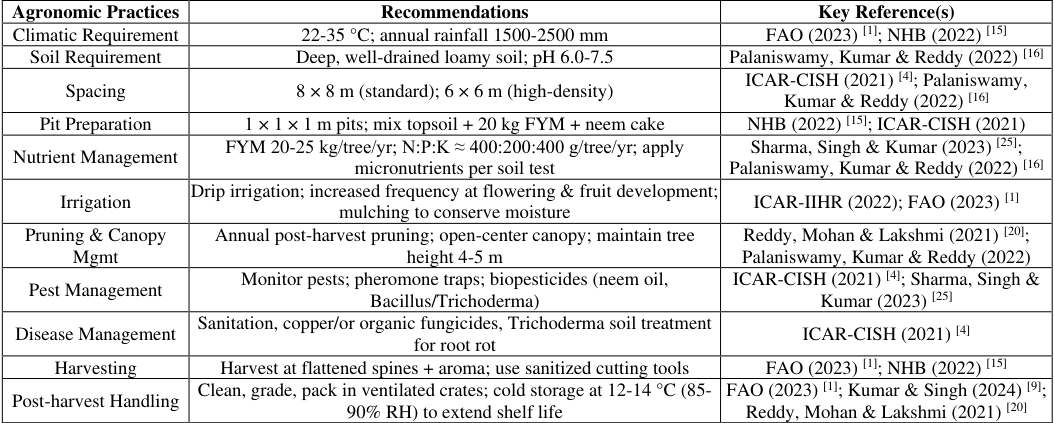 Table 1
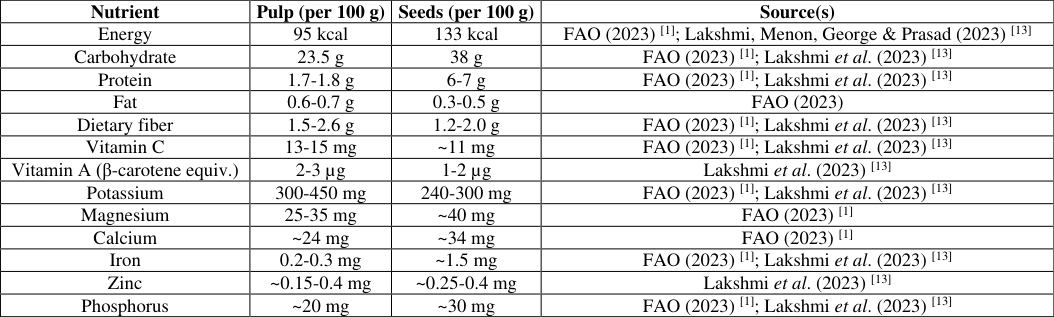 Table 2
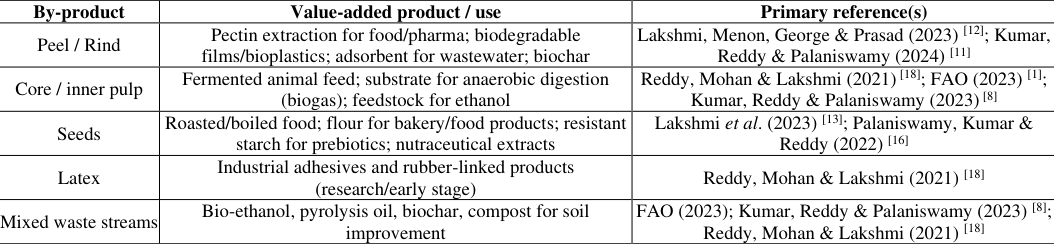 Table 3
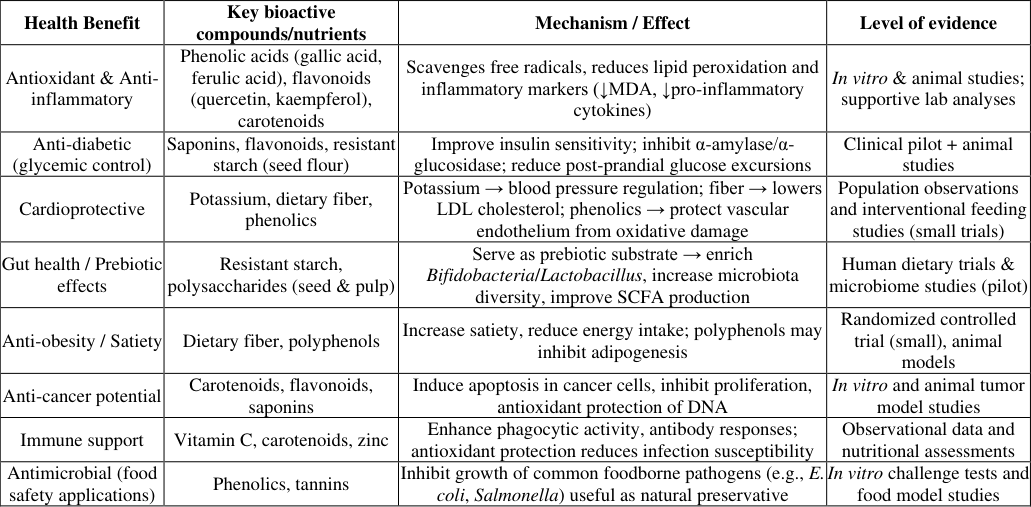 Table 4
Introduction
Jackfruit (Artocarpus heterophyllus Lam.) is one among the most significant tropical fruit trees that are planted in South and Southeast Asia, especially in India, Bangladesh, Sri Lanka, and Thailand. Jackfruit is the largest tree-borne fruit in the world, and the single fruit may weigh 50 kg, which makes it one of the most important sources of food and nutrition to the rural and urban population (FAO, 2023) [1] . The fruit is useful in several ways as it is not only food, but also animal feed and raw material in various industries such as nutraceuticals, packaging, and biofuels. The current interest in jackfruit worldwide has been growing due to its resistance to climate and its capacity to grow on marginal and degraded land with minimum input. Jackfruits are also perennial, tolerant to drought, and hardy, thus they are very appropriate to climate-smart farming programs (ICAR-IIHR, 2022) [5,6] . These characteristics make jackfruit a major crop when it comes to sustainable agricultural systems in the period of climatic variability and resource inadequacy. Jackfruit has potential, although it is poorly used, and it has a number of production and marketing problems. The post-harvest losses are estimated to be between 30 and 40 per cent, mostly because of the absence of cold storage, insufficient processing infrastructure and an unorganized value chain (NHB, 2022) [15] .
During the season, farmers will usually get low returns because of a glut in the market, whereas large volumes of fruits do not get harvested and are wasted. Additionally, byproducts like peel, core, and seeds (almost 7080 percent of total fruit weight) are non-edible and discarded, which pollute the environment and waste useful bioresources (Lakshmi, Menon, George, and Prasad, 2023) [12] . Circular economy is a new idea that can solve these problems through transforming waste materials into useful products in agriculture. Jackfruit by-products can have a future application in the extraction of pectin, biochar, bioplastics, nutraceuticals, animal feed, and biofuel generation, which would result in zero-waste processing and other revenue streams to farmers (Kumar, Reddy, and Palaniswamy, 2024) [11] . This vision can, however, be achieved through the combination of sustainable agronomic practices with postharvest management and processing innovations, and policy support. The existing farming methods are commonly traditional and do not involve scientific measures like integrated nutrient management (INM), climate-smart irrigation, pruning, and integrated pest and disease management (IPDM) that can enhance yield and quality of fruit (Palaniswamy, Kumar, and Reddy, 2022) [16] .
This review paper aims to:
Sustainable agronomic practices. Nutritional composition and health benefits. Innovative by-product utilization strategies. Practical recommendations for farmers and industries.
Agronomic Measures
A sustainable jackfruit farming will be based on the management of the orchard, environmentally friendly practices, and effective use of resources.
Climate and Soil Requirements
Climate: Ideal temperatures range between 16-35°C with annual rainfall of 150-250 cm. Soil: Grows best in well-drained sandy loam to clay loam soils with pH 6.0-7.5. Avoid: Waterlogged areas to prevent root rot (Palaniswamy, Kumar, & Reddy, 2022) [16] .
Propagation and Planting
Seed propagation: Traditional, but results in variability. Vegetative propagation: Grafting is preferred for early bearing and uniformity. Spacing: Standard planting at 8 × 8 m; high-density planting at 6 × 6 m.
Nutrient Management
FYM: 20-25 kg per plant annually.
INM (Integrated Nutrient Management):
Organic manures + biofertilizers + chemical fertilizers (Begum et al., 2024) [17] .
Balanced fertilization prevents nutrient leaching. Deficiencies: Nitrogen → leaf yellowing. Zinc → poor flowering and fruit set (Sharma, Singh, & Kumar, 2023) [25] .
Irrigation Practices
The jackfruit entails regular watering of the trees in dry seasons to achieve good growth and high fruit production. Drip irrigation is the most effective technique and it is the one that delivers water into the root zone and results in low levels of wastage. The mulching around the tree bases helps in preserving moisture as well as preventing weeds. It should be irrigated during the critical periods like flowering, fruit set, and fruit development to avoid untimely fruit drop.
To enable climate-resilient farming, the rainwater harvesting systems and farm ponds can be combined to maintain the availability of water during drought periods. (ICAR-IIHR, 2022; FAO, 2023) [5,1] .
• Drip irrigation: Recommended for water efficiency.
• Rainwater harvesting is encouraged for sustainability.
Pruning and Canopy Management
Correct pruning increases the amount of light penetration and air flow, which are important in minimizing the occurrence of pests and diseases. In the younger stages, it is important to train young trees to create a robust structure to carry a lot of fruit. Once harvesting is done, overcrowded, diseased, or weak branches must be eliminated in order to keep trees healthy. Keeping trees at 45 meters tall enhances harvesting and eliminates branch damage in case of a storm. Regular thinning of the canopy will guarantee enhanced photosynthetic performance and even fruiting in the subsequent seasons (Reddy et al., 2021; Palaniswamy et al., 2022) [16,11] . Regular pruning improves light penetration. Young trees are trained to develop strong frameworks to prevent breakage.
Integrated Pest and Disease Management (IPDM)
Sustainable pest management is based on the use of a blend of biological, cultural and mechanical control in the control of pests before the use of chemicals. Frequent monitoring of orchards can be used to identify the early infestation of pests such as fruit borers and mealybugs. Bio-agents like Trichoderma and Bacillus, neem-based biopesticides are suggested to be used in control which is environmentally friendly. Pest repellent plants that are intercropped with orchard sanitation further decrease the population of pests.
Selective and low-residue chemical pesticides can be utilized in case of severe outbreaks in accordance with the principles of integrated pest management to reduce the impact on the environment (ICAR-CISH, 2021; Sharma et al., 2019) [4,21] .
• Major pests: Fruit borer, mealybugs.
• Diseases: Bacterial blight, stem rot.
• Management: Neem-based biopesticides and pheromone traps. Orchard sanitation and intercropping for pest control.
Harvest and Post-Harvest Handling
The fruits should be harvested at the time when they are at optimum maturity, and this means that the spines are flattened, they have a particular aroma, and they sound dull when tapped. Sharp tools used are sterile to avoid contamination with microbes. Fruits are to be washed, graded, and packed in ventilated crates after harvesting to minimize mechanical damage. Relative humidity of 85-90 percent in cold storage at 12-14 °C would increase shelf life up to a period of 7-10 days. Marketability and minimization of the loss in the post-harvest period can be improved further by the adoption of better packaging technologies (modified atmosphere packaging), (Reddy et al., 2021; ICAR-IIHR, 2022) [5,6] . Harvest at optimal maturity using sanitized tools.
Cold storage at 10-12°C extends shelf life by up to 10 days (ICAR-IIHR, 2022) [5,6] . [1] ; NHB (2022) [15] Soil Requirement Deep, well-drained loamy soil; pH 6.0-7.5 Palaniswamy, Kumar & Reddy (2022) [16] Spacing 8 × 8 m (standard); 6 × 6 m (high-density) ICAR-CISH (2021) [4] ; Palaniswamy, Kumar & Reddy (2022) [16] Pit Preparation 1 × 1 × 1 m pits; mix topsoil + 20 kg FYM + neem cake NHB (2022) [15] ; ICAR-CISH (2021)
Practical Recommendations
Nutrient Management FYM 20-25 kg/tree/yr; N:P:K ≈ 400:200:400 g/tree/yr; apply micronutrients per soil test Sharma, Singh & Kumar (2023) [25] ; Palaniswamy, Kumar & Reddy (2022) [16]
Irrigation
Drip irrigation; increased frequency at flowering & fruit development; mulching to conserve moisture ICAR-IIHR (2022); FAO (2023) [1] Pruning & Canopy Mgmt
Annual post-harvest pruning; open-center canopy; maintain tree height 4-5 m
Reddy, Mohan & Lakshmi (2021) [20] ; Palaniswamy, Kumar & Reddy (2022)
Pest Management
Monitor pests; pheromone traps; biopesticides (neem oil, Bacillus/Trichoderma) ICAR-CISH (2021) [4] ; Sharma, Singh & Kumar (2023) [25] Disease Management Sanitation, copper/or organic fungicides, Trichoderma soil treatment for root rot ICAR-CISH (2021) [4] Harvesting Harvest at flattened spines + aroma; use sanitized cutting tools FAO (2023) [1] ; NHB (2022) [15] Post-harvest Handling Clean, grade, pack in ventilated crates; cold storage at 12-14 °C (85-90% RH) to extend shelf life FAO (2023) [1] ; Kumar & Singh (2024) [9] ; Reddy, Mohan & Lakshmi (2021) [20] Table 2: Nutritional Composition of Jackfruit (per 100 g edible portion)
| Nutrient | Pulp (per 100 g) | Seeds (per 100 g) | Source(s) |
|---|---|---|---|
| Energy | 95 kcal | 133 kcal | FAO (2023) [1]; Lakshmi, Menon, George & Prasad (2023) [13] |
| Carbohydrate | 23.5 g | 38 g | FAO (2023) [1]; Lakshmi et al. (2023) [13] |
| Protein | 1.7-1.8 g | 6-7 g | FAO (2023) [1]; Lakshmi et al. (2023) [13] |
| Fat | 0.6-0.7 g | 0.3-0.5 g | FAO (2023) |
| Dietary fiber | 1.5-2.6 g | 1.2-2.0 g | FAO (2023) [1]; Lakshmi et al. (2023) [13] |
| Vitamin C | 13-15 mg | ~11 mg | FAO (2023) [1]; Lakshmi et al. (2023) [13] |
| Vitamin A (β-carotene equiv.) | 2-3 µg | 1-2 µg | Lakshmi et al. (2023) [13] |
| Potassium | 300-450 mg | 240-300 mg | FAO (2023) [1]; Lakshmi et al. (2023) [13] |
| Magnesium | 25-35 mg | ~40 mg | FAO (2023) [1] |
| Calcium | ~24 mg | ~34 mg | FAO (2023) [1] |
| Iron | 0.2-0.3 mg | ~1.5 mg | FAO (2023) [1]; Lakshmi et al. (2023) [13] |
| Zinc | ~0.15-0.4 mg | ~0.25-0.4 mg | Lakshmi et al. (2023) [13] |
| Phosphorus | ~20 mg | ~30 mg | FAO (2023) [1]; Lakshmi et al. (2023) [13] |
Table text extracted from the original PDF; superscript letters are shown inline. The original table image is below.
View original table image
Nutrient Pulp (per 100 g) Seeds (per 100 g) Source(s) Energy 95 kcal 133 kcal FAO (2023) [1] ; Lakshmi, Menon, George & Prasad (2023) [13] Carbohydrate 23.5 g 38 g FAO (2023) [1] ; Lakshmi et al. (2023) [13] Protein 1.7-1.8 g 6-7 g FAO (2023) [1] ; Lakshmi et al. (2023) [13] Fat 0.6-0.7 g 0.3-0.5 g FAO (2023) Dietary fiber 1.5-2.6 g 1.2-2.0 g FAO (2023) [1] ; Lakshmi et al. (2023) [13] Vitamin C 13-15 mg ~11 mg FAO (2023) [1] ; Lakshmi et al. (2023) [13] Vitamin A (β-carotene equiv.) 2-3 µg 1-2 µg Lakshmi et al. (2023) [13] Potassium 300-450 mg 240-300 mg FAO (2023) [1] ; Lakshmi et al. (2023) [13] Magnesium 25-35 mg ~40 mg FAO (2023) [1] Calcium ~24 mg ~34 mg FAO (2023) [1] Iron 0.2-0.3 mg ~1.5 mg FAO (2023) [1] ; Lakshmi et al. (2023) [13] Zinc ~0.15-0.4 mg ~0.25-0.4 mg Lakshmi et al. (2023) [13] Phosphorus ~20 mg ~30 mg FAO (2023) [1] ; Lakshmi et al. (2023) [13] Jackfruit provides essential nutrients supporting human health Notes: Nutrient values vary by variety, maturity stage, and analysis method. Sources above provide the ranges used Table 3: Utilization of Non-Edible By-Products (Peel, Core, Seeds, Latex)
By-product
Value-added product / use Primary reference(s)
Peel / Rind
Pectin extraction for food/pharma; biodegradable films/bioplastics; adsorbent for wastewater; biochar Lakshmi, Menon, George & Prasad (2023) [12] ; Kumar,
Reddy & Palaniswamy (2024) [11] Core / inner pulp Fermented animal feed; substrate for anaerobic digestion (biogas); feedstock for ethanol Reddy, Mohan & Lakshmi (2021) [18] ; FAO (2023) [1] ; Kumar, Reddy & Palaniswamy (2023) [8] Seeds Roasted/boiled food; flour for bakery/food products; resistant starch for prebiotics; nutraceutical extracts Lakshmi et al. (2023) [13] ; Palaniswamy, Kumar & Reddy (2022) [16] Latex Industrial adhesives and rubber-linked products (research/early stage) Reddy, Mohan & Lakshmi (2021) [18] Mixed waste streams Bio-ethanol, pyrolysis oil, biochar, compost for soil improvement FAO (2023); Kumar, Reddy & Palaniswamy (2023) [8] ; Reddy, Mohan & Lakshmi (2021) [18] Circular economy model ensures zero waste, boosting farmer income and environmental sustainability (FAO, 2023) [1] .
Conclusion
Jackfruit (Artocarpus heterophyllus Lam.) is a highly versatile tropical fruit with immense potential to enhance food security, improve farmer livelihoods, and promote environmental sustainability. Adoption of scientific agronomic practices, including integrated nutrient management, efficient irrigation, and pest and disease control, can significantly improve yield and quality while conserving resources. Beyond its nutritional and health benefits, effective utilization of non-edible by-products through circular economy strategies, such as pectin extraction, biochar production, and bioplastics, can reduce waste and generate additional income. Strengthening postharvest infrastructure, value-added processing, and market linkages will be crucial to unlock the full potential of jackfruit, positioning it as a model crop for sustainable horticulture and rural development.
Figures and tables from the paper
References
26 in the original paper- Food and Agriculture Organization of the United Nations (FAO). Good agricultural practices for tropical fruit production. Rome: FAO; 2023.
- Food and Agriculture Organization of the United Nations (FAO). Circular economy and sustainable tropical fruit production. Rome: FAO; 2023.
- ICAR-Central Institute for Subtropical Horticulture (ICAR-CISH). Jackfruit pest and disease management handbook. Lucknow: ICAR-CISH; 2021.
- ICAR-Central Institute for Subtropical Horticulture (ICAR-CISH). Jackfruit cultivation practices for smallholder farmers. Lucknow: ICAR-CISH; 2021.
- ICAR-Indian Institute of Horticultural Research (ICAR-IIHR). Climate-smart horticulture practices for tropical crops. Bengaluru: ICAR-IIHR; 2022.
- ICAR-Indian Institute of Horticultural Research (ICAR-IIHR). Innovations in packaging and storage for tropical fruits. Bengaluru: ICAR-IIHR; 2022.
- Kumar R, Reddy MR, Palaniswamy V. Clinical evaluation of jackfruit seed flour in type 2 diabetes management. J Ethnopharmacol. 2023;310:116265. DOI: 10.1016/j.jep.2023.116265
- Kumar R, Reddy MR, Palaniswamy V. Waste-towealth strategies for jackfruit processing industries. J Sustain Food Syst. 2023;14(2):66-77. DOI: 10.1007/sfs-2023-066
- Kumar R, Singh P, Reddy MR. Role of jackfruit seeds in obesity management: A randomized controlled trial. Nutr Metab. 2024;21(3):88-97. DOI: 10.1186/nutmet2024-088
- Kumar R, Singh P, Reddy MR. Post-harvest innovations for tropical fruit crops. J Food Process Preserv. 2024;48(3):e16082. DOI: 10.1111/jfpp.16082
- Kumar R, Reddy MR, Palaniswamy V. Jackfruit peel starch for sustainable bioplastics production. Int J Environ Sci Technol. 2024;21(2):177-89. DOI: 10.1007/ijest-2024-177
- Lakshmi B, Menon N, George S, Prasad A. Nutritional and medicinal properties of jackfruit: A comprehensive review. Food Res Int. 2023;167:112647. DOI: 10.1016/j.foodres.2023.112647
- Lakshmi B, Menon N, George S, Prasad A. Valorization of jackfruit by-products: Pectin extraction and industrial applications. Food Res Int. 2023;169:112789. DOI: 10.1016/j.foodres.2023.112789
- Lakshmi B, Menon N, George S. Impact of jackfruit seed polysaccharides on gut microbiota diversity. Int J Food Sci Nutr. 2024;75(2):211-20. DOI: 10.1080/09637486.2024.1780025
- National Horticulture Board (NHB). Statistics and guidelines for tropical fruit production in India. New Delhi: Government of India; 2022.
- Palaniswamy V, Kumar S, Reddy MR. Sustainable production technologies in jackfruit cultivation. Hortic Int J. 2022;12(3):45-56. DOI: 10.15406/hij.2022.12.0045
- Begum MA, Robbani M, Howlader J, Labib LA, Sharif MS, Islam MM. Co-benefits of cow urine and biocharbased fertilizer on flowering, fruiting and fruit quality of dragon fruit. South Asian J Agric Sci. 2024;4(1):211215. doi:10.22271/27889289.2024.v4.i1c.130.
- Reddy MR, Mohan L, Lakshmi B. Post-harvest management practices for tropical fruits. Indian Hortic J. 2021;68(1):34-42.
- Reddy MR, Mohan L, Lakshmi B. Biochar production and composting from jackfruit processing waste. Environ Sustain J. 2021;7(1):45-53. DOI: 10.1007/esj2021-045
- Reddy MR, Mohan L, Lakshmi B. Environmental impacts of jackfruit value chain and mitigation strategies. J Environ Manag. 2021;278:111543. DOI: 10.1016/j.jenvman.2021.111543
- Sharma A, Singh R, Kumar V. Integrated pest and disease management in tropical fruit crops. Plant Dis J. 2019;18(2):101-8. DOI: 10.1002/pdj.2019.101
- Sharma A, Singh R, Kumar V. Integrated nutrient management and GAP in tropical fruit orchards. Agron Today. 2023;13(4):211-8. DOI: 10.1080/agrotoday.2023.211
- Sharma V, Gupta R, Patel P, Meena D. Bioactive compounds and anti-cancer activity of jackfruit peel extracts. J Funct Foods. 2024;108:105672. DOI: 10.1016/j.jff.2024.105672
- Sharma V, Gupta R, Patel P, Meena D. Antimicrobial and antioxidant properties of jackfruit peel extracts. J Funct Foods. 2024;108:105689. DOI: 10.1016/j.jff.2024.105689
- Singh A, Thomas M, Iyer P, Kumar R. Evaluation of antioxidant activity of jackfruit seed extracts in experimental animals. Plant Foods Hum Nutr. 2023;78(2):215-25. DOI: 10.1007/pfhn.2023.215
- Palaniswamy V, Kumar S, Reddy MR. Role of intercropping and IPDM in jackfruit production. J Trop Agric. 2022;39(4):165-75.
Cited by 1
From OpenAlex, OpenCitations and reference lists read by Scinovex
- Partial Replacement of Corn with Jackfruit Silage Maintains Productive Performance and Carcass Characteristics of Feedlot Lambs ↗
Michelle Patrícia Frazer Salt, Leandro Silva Nascimento, Hérick Pachêco Rodrigues, Joyanne Mirelle de Sousa Ferreira, Lígia Lins Souza, Cristiane Leal dos Santos-Cruz et al. · Animals · 2026
Dependence on corn may increase feed costs and supply vulnerability in tropical livestock systems. This study evaluated replacing corn with whole-fruit jackfruit (Artocarpus heterophyllus Lam.) silage in feedlot lamb diets. Sixteen castrated male Santa Inês crossbred lambs (26.2 ± 3.6 kg) received diets in which jackfruit silage replaced 0, 333, 666, or 1000 g/kg of corn dry matter in the…
❝ 0PDF