
Research article · 2025 · Full text
International Journal of Agriculture and Food ScienceDiversity and abundance of insect fauna in agricultural and riparian ecosystems of Oney Village, Nashik district, Maharashtra
Volume 7(9) · Pages 593–597 · DOI: 10.33545/2664844x.2025.v7.i9h.796 ↗
Research areasGeochemistry and Geologic MappingGeological Modeling and AnalysisElectrical and Electromagnetic Research
Abstract
Author-writtenThe study conducted over two years (2022-2024) in Oney village, Nashik district, revealed significant insect biodiversity across various habitats, including agricultural fields, markets, gardens, and riverine areas. A total of 36 species across 11 insect orders were identified, with 626 individual insects sampled. The dominant orders were Diptera, Lepidoptera, and Hymenoptera, accounting for over half of the total insect population. Diptera had the highest abundance with 130 individuals, including economically important pests like melon fly Bactrocera cucurbitae and mango fruit fly Bactrocera dorsalis, alongside forensic importance species such as blowflies. Lepidoptera, including pests like Helicoverpa armigera and Spodoptera litura, posed a considerable threat to crops. Hymenoptera, responsible for pollination and natural pest control, included species like Apis dorsata and Oecophylla ants. Other orders, such as Coleoptera, Orthoptera, and Thysanoptera, added to the ecological balance. The observed insect-host plant relationships highlight the specificity and complexity in this region’s agroecosystem. This baseline data establishes the foundation for future detailed studies incorporating statistical diversity analysis and environmental factors, aiding the design of sustainable integrated pest management and conservation strategies in the area.
Summary
Source-checkedPlain-language reading of the full paper, prepared with AI and checked against the text. Each point links to the authors' own words.
Why it matters
- Insects are the most ecologically dominant animal group and significantly impact human health, natural resources, and agriculture. View evidence ↗
- Insect survival is currently threatened by climate change, habitat fragmentation, and human-driven pressures. View evidence ↗
- The mosaic of agricultural fields and the Godavari River in the study region makes it a valuable site for researching insect biodiversity. View evidence ↗
The question
- The study aimed to document and reveal insect biodiversity across riverine areas, fruit orchards, and agricultural fields in Oney village, Maharashtra. View evidence ↗
What they did
- Sampling took place from January to December between 2022 and 2024, specifically during morning (08:00–10:00) and evening (15:00–17:00) hours. View evidence ↗
- Researchers used standard entomological techniques, including beating, shaking, and hand picking, to collect live insects. View evidence ↗
- Hemiptera were collected using sweeping nets, aerial nets, and by beating shrubs over a cloth. View evidence ↗
- Adult butterflies (Lepidoptera) were captured with butterfly nets from overripe fruits and flowers. View evidence ↗
What they found
- The study identified 626 individual insects belonging to 36 species across 12 different orders. View evidence ↗
- Diptera, Lepidoptera, and Hymenoptera were the most abundant and rich orders, making up nearly 55% of all collected individuals. View evidence ↗
- Diptera was the most abundant order with 130 individuals, including the blowfly and fruit flies (Melon and Mango). View evidence ↗
- Lepidoptera consisted of 129 individuals, dominated by the tobacco caterpillar and the gram pod/tomato fruit borer. View evidence ↗
- Hymenoptera, which included the giant honeybee and weaver ant, accounted for 91 individuals. View evidence ↗
- Other recorded abundances included 80 Coleoptera, 50 Thysanoptera, and 29 Orthoptera. View evidence ↗
- Many insect species showed specialized affiliations with economic crops, including mango, grape, soybean, sugarcane, groundnut, and tomato. View evidence ↗
What it means
- The authors conclude that this study provides a foundational understanding of the insect community necessary for ecological and agricultural planning in the region. View evidence ↗
- The authors state that future research should integrate environmental factors and statistical diversity measures to improve sustainable pest management. View evidence ↗
Visual summary
2 visualsIllustrations explain the paper; charts are replotted from the paper's own table values.

Study Site and Biodiversity Overview
AI-generated conceptual illustration (Insects in a landscape featuring a river, a fruit orchard, and an agricultural field). It explains the idea and does not show study data.
View source evidence ↗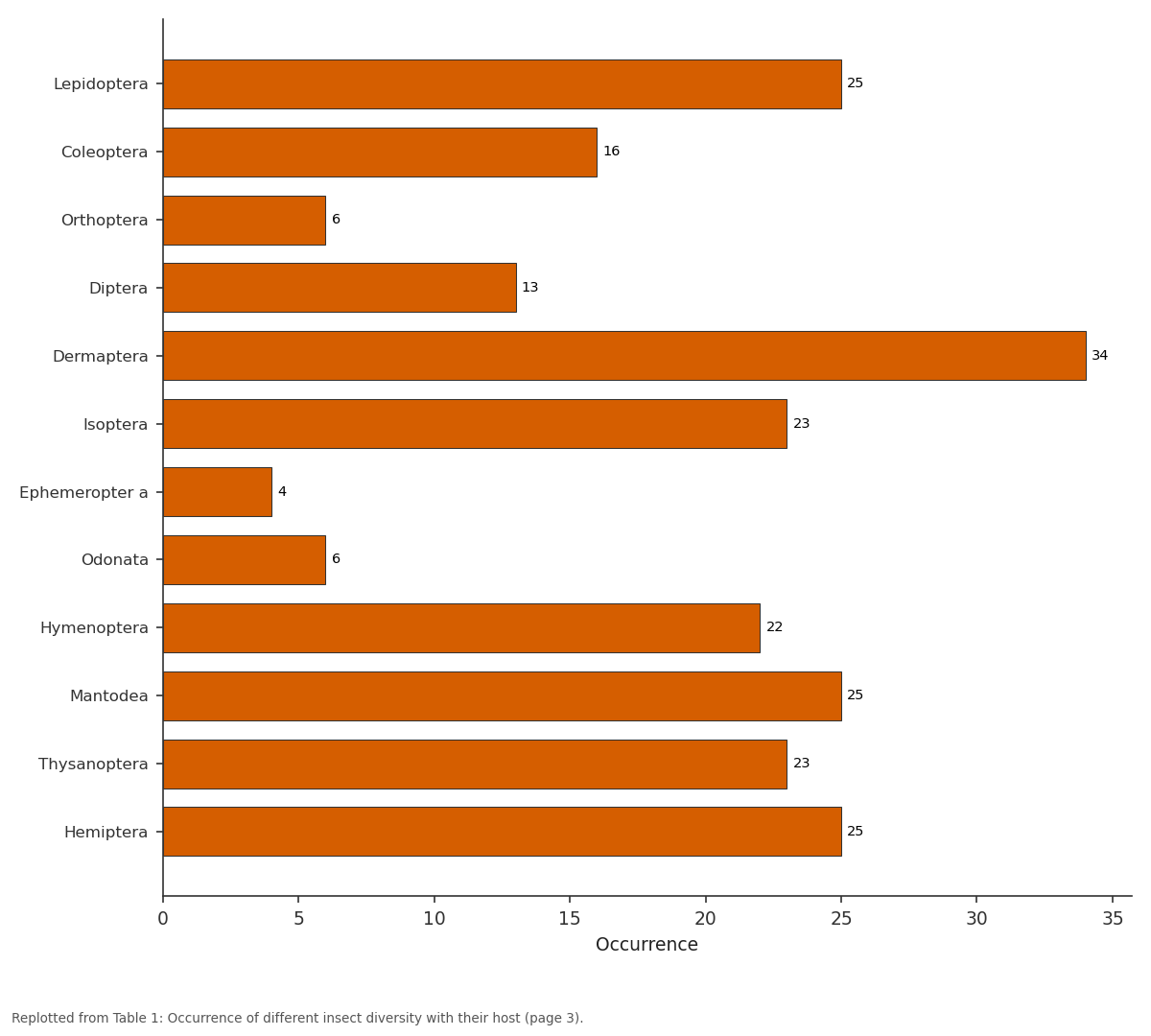
Occurrence: Lepidoptera vs Coleoptera vs Orthoptera vs Diptera vs Dermaptera
Replotted from Table 1 (page 3) of the original paper. Every bar is the paper's own table value.
View source evidence ↗Figures & tables
From the original paper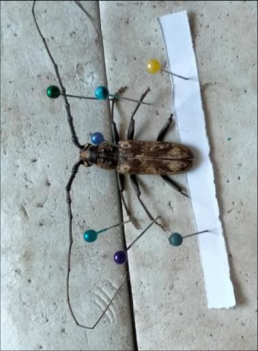 Figure 1
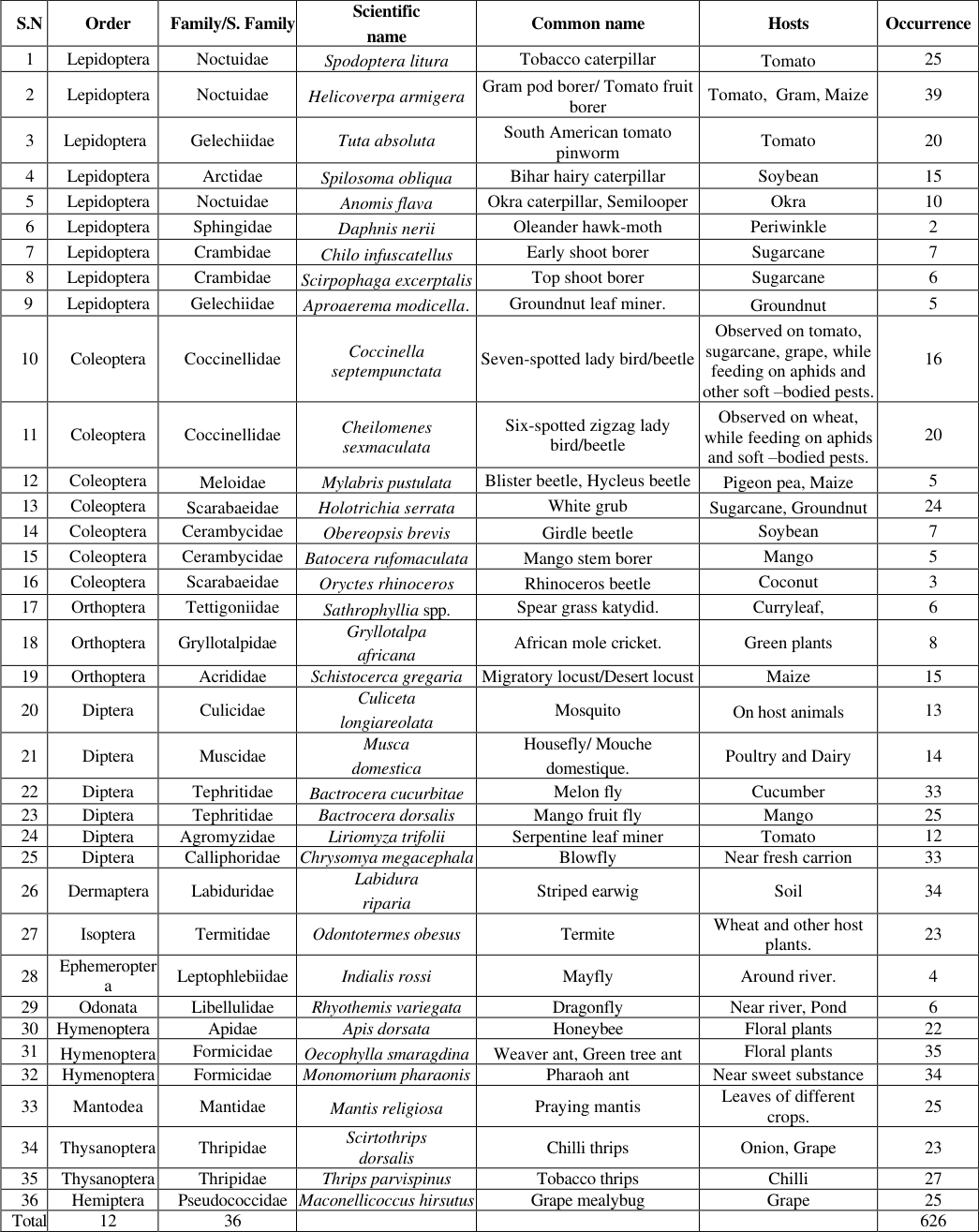 Table 1
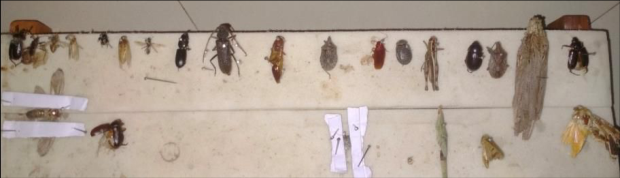 Figure 2
Introduction
Insects are the largest, most diverse, successful, and ecologically dominant group of animals on earth. They contribute significantly to ecosystem functioning and have profound impacts on agriculture, human health, and natural resources. Biodiversity, in its broadest sense, includes genetic, species, and ecosystem-level variation (Smith, 1996) [13]. Globally, it is estimated that around 5.5 million insect species exist, of which approximately 1 million species have been formally described (Basset et al. 2012) [1] . This makes insects the most species-rich taxon, accounting for more than half of all described eukaryotes. India is recognized as one of the mega diverse countries. Approximately 66,741 insect species are known from India, which represents about 6.5% of the world's insect fauna, and nearly onethird of these species are endemic (Zoological Survey of India, 2021) [16] . Such high richness highlights their ecological importance and the need for systematic biodiversity assessments. The ecological success of insects can be attributed to several features, including small body size, the presence of a chitinous exoskeleton, high fecundity, varied feeding strategies, aerial respiration, and adaptability across habitats. Their ability to fly enhances dispersal and predator avoidance (Fursov, 2004) [4] . In addition, a highly specialized nervous system enables them to see, hear, taste, smell, and sense their surroundings, making them extremely adaptive across ecosystems (Humphrey et al. 1999) [5]. Insects exhibit remarkable diversity and are classified into various groups depending on their morphology and habits: Coleoptera (Beetles): Forewings modified into hard elytra protecting hind wings; the largest order with 386,500 described species (Thakare et al. 2013) [15] . Lepidoptera (Butterflies and Moths): Possess large, often colorful wings (Muhammad, 2009) [9] . Diptera (Flies): Characterized by a single pair of wings.
Hymenoptera (Ants, Bees, Wasps): Mostly eusocial species, often with stingers; key pollinators and parasitoids. Hemiptera (True Bugs): Equipped with piercing-sucking mouthparts. Orthoptera (Grasshoppers, Crickets): Strong hind legs adapted for jumping; herbivorous (Paulraj et al. 2009) [12] . Odonata (Dragonflies, Damselflies): Predatory insects controlling populations of smaller insects. Together, the top five orders Coleoptera, Lepidoptera, Diptera, Hymenoptera, and Hemiptera account for nearly 90% of all described insect species worldwide (Stork, 2018) [14] . Biodiversity studies generally emphasize three levels: genetic, species, and ecosystem diversity (Smith, 1996) [13] . The insect community structure of a habitat strongly influences species survival, community composition, and distribution patterns (Dubey, 2004 [3] ; Johri and Johri, 2010) [6] Increasing anthropogenic pressures, habitat fragmentation, and climate change have posed challenges to insect survival (Beeson, 1941) [2] . Conservation strategies must therefore focus not only on individual species but also on the protection of communities and habitats (Kocatas, 2004) [7] . According to Magurran (2004) [8] , biodiversity should be assessed at the level of specific geographic areas, with studies comparing species richness and abundance across habitats. This approach is crucial in regions such as Oney village coordinates (Elevation): 560 meters above sea level. The selected study site is Oney village, Niphad taluka, Nashik district, Maharashtra, situated at Latitude: 20.0776° N Longitude: 74.0023° E Altitude with an average altitude of about 560 meters above mean sea level (MSL). The presence of the Banganga River, which is a tributary of the Godavari River, along with surrounding agricultural fields, creates a mosaic of habitats that support rich insect biodiversity. This makes the area a valuable site for entomological research.
Materials and Methods
The present investigation was carried out in diverse habitats such as agricultural farms, fruit orchards and other nearby localities of Oney village, Niphad taluka, Nashik district, Maharashtra -422302. This site is surrounded by agricultural fields, fruit orchards and riverine ecosystems, providing rural ecological conditions favorable for insect diversity. In addition, specimens were also collected from the surrounding Banganga River basin and adjoining local agricultural fields. Sampling was conducted throughout the year 2022-2024, from January to December, during morning hours (08:00-10:00) and evening hours (15:00-17:00), to comprehensively document the insect diversity of the study area. Insects were collected live from the sampling sites using standard entomological methods such as hand picking, shaking, and beating. The collection equipment included hair brushes, forceps, sticks, hand nets, and killing bottles. Following collection, specimens were transferred into killing bottles prepared from cylindrical glass jars. The sacrificed insects were temporarily stored in insect boxes and subsequently pinned with steel entomological pins for proper drying. To prevent fungal infestation and preserve the specimens, naphthalene balls were placed inside the insect storage boxes. (Prakhar et al. 2021) [12]
Sampling Procedures
Different insect orders were collected using standardized entomological techniques suited to their habits and habitats. Hemiptera were sampled using aerial nets (for insects in flight), sweeping nets (for low vegetation), and beating of shrubs with a long stick while placing a cloth on the ground to collect the falling insects. Sweeping or beating was performed 5-6 times per plant. Specimens obtained were preserved in 70% alcohol for identification. Orthoptera were collected using aerial nets, butterfly nets, and hand-picking with the aid of large forceps. Hymenoptera and Coleoptera were sampled by both beating and sweeping techniques. Plant parts were struck with a stick using downward strokes to dislodge insects, performed 4-5 times per plant. Larger flying hymenopterans were additionally trapped using sweep nets. Collected specimens were either stored in vials with 70% alcohol or killed in killing bottles. Lepidoptera (adult butterflies) were captured using butterfly nets from multiple microhabitats, including flowers and overripe fruits. (Prakhar et al. 2021) [12]
Results
The present study conducted in Oney village, Niphad Taluka, Nashik district, Maharashtra-422302, documented a rich and diverse insect fauna over the period from 2022 to 2024. Sampling from various habitats including agricultural farms, fruit orchards, riverine areas, and adjacent agricultural fields led to the collection of insects belonging to 12 different orders, encompassing a total of 36 specieslevel taxa (Table 1). The total number of individuals recorded was 626, indicating a considerable abundance and diversity of insect fauna in this semi-urban ecosystem characterized by a mosaic of agricultural and natural habitats. Among the insect orders recorded, the highest species richness and abundance were noted in the orders Diptera (flies), Lepidoptera (butterflies and moths), and Hymenoptera (Bees, Ants, Wasps), which collectively accounted for nearly 55% of the total individuals collected. Diptera was the most abundant order with 130 individuals, including economically important pests such as Bactrocera cucurbitae (Melon fly), Bactrocera dorsalis (Mango fruit fly), and forensic importance species like Chrysomya megacephala (Blowfly). Lepidoptera contributed 129 individuals, with species such as Helicoverpa armigera (Gram pod borer/Tomato fruit borer) and Spodoptera litura (Tobacco caterpillar) dominating the collection. Hymenoptera, comprising mostly pollinators and natural enemies like Apis dorsata (Giant honeybee), Oecophylla smaragdina (Weaver ant), and Monomorium pharaonis (Pharaoh ant), accounted for 91 individuals. Other notable orders included Coleoptera (Beetles) with 80 individuals, Thysanoptera (Thrips) with 50 individuals, and Orthoptera (Grasshoppers, Crickets) with 29 individuals. Lower abundances were recorded for Dermaptera (Earwigs), Isoptera (Termites), Ephemeroptera (Mayflies), and Odonata (Dragonflies). The total species and individual counts reflect the varied habitat types and ecological niches present in and around Oney village. The abundance data suggest specialized host-plant affiliations with many species linked to economically important crops such as tomato, sugarcane, soybean, grape, groundnut, and mango have long been recognized as major threats to crops across India and the world. Their significant presence in Oney village suggests that these pests remain persistent and require integrated pest management (IPM) strategies to mitigate crop losses. The observed richness and diversity of insect fauna in Oney village align well with previous studies conducted in similar agro-ecosystems. The dominance of key orders such as Diptera, Lepidoptera, and Hymenoptera in terms of species richness and abundance corroborates findings from several researchers. For instance, Painkra, G. and Thakare, V. G. and Zade, V. S. and Hegde, V. D. documented a comparable diversity pattern in Ground beetles (Coleoptera: Carabidae), emphasizing the ecological importance of Coleopteran species in agricultural landscapes. Similarly, Haldar, P. Bhandar, K.P. and Nath's observations on Indian grasshoppers, Acrida exaltata (Orthoptera: Acrididae), parallel the current study's findings regarding Orthopteran diversity and host plant specificity. Furthermore, Parandham, D.'s investigations into butterfly diversity across various habitats reinforce the extensive presence of Lepidopteran species reported here. Research by Muhammad, A., on moth fauna diversity, species richness, and evenness, also supports the current results, highlighting the prevalence of Lepidoptera as both economically significant pests and critical components of biodiversity. Notably, the outcomes of this study are consistent with the detailed assessments presented by Painkra, and Painkra (2018) [11] , who explored similar diversity indices, thereby offering robust external validation. Collectively, these parallels underscore the reliability of the present findings and accentuate the ecological significance of the identified insect groups in the sustainable management of agroecosystems in the region.
| S.N | Order | Family/S. Family | Scientific name | Common name | Hosts | Occurrence |
|---|---|---|---|---|---|---|
| 1 | Lepidoptera | Noctuidae | Spodoptera litura | Tobacco caterpillar | Tomato | 25 |
| 2 | Lepidoptera | Noctuidae | Helicoverpa armigera | Gram pod borer/ Tomato fruit borer | Tomato, Gram, Maize | 39 |
| 3 | Lepidoptera | Gelechiidae | Tuta absoluta | South American tomato pinworm | Tomato | 20 |
| 4 | Lepidoptera | Arctidae | Spilosoma obliqua | Bihar hairy caterpillar | Soybean | 15 |
| 5 | Lepidoptera | Noctuidae | Anomis flava | Okra caterpillar, Semilooper | Okra | 10 |
| 6 | Lepidoptera | Sphingidae | Daphnis nerii | Oleander hawk-moth | Periwinkle | 2 |
| 7 | Lepidoptera | Crambidae | Chilo infuscatellus | Early shoot borer | Sugarcane | 7 |
| 8 | Lepidoptera | Crambidae | Scirpophaga excerptalis | Top shoot borer | Sugarcane | 6 |
| 9 | Lepidoptera | Gelechiidae | Aproaerema modicella. | Groundnut leaf miner. | Groundnut | 5 |
| 10 | Coleoptera | Coccinellidae | Coccinella septempunctata | Seven-spotted lady bird/beetle | Observed on tomato, sugarcane, grape, while feeding on aphids and other soft –bodied pests. | 16 |
| 11 | Coleoptera | Coccinellidae | Cheilomenes sexmaculata | Six-spotted zigzag lady bird/beetle | Observed on wheat, while feeding on aphids and soft –bodied pests. | 20 |
| 12 | Coleoptera | Meloidae | Mylabris pustulata | Blister beetle, Hycleus beetle | Pigeon pea, Maize | 5 |
| 13 | Coleoptera | Scarabaeidae | Holotrichia serrata | White grub | Sugarcane, Groundnut | 24 |
| 14 | Coleoptera | Cerambycidae | Obereopsis brevis | Girdle beetle | Soybean | 7 |
| 15 | Coleoptera | Cerambycidae | Batocera rufomaculata | Mango stem borer | Mango | 5 |
| 16 | Coleoptera | Scarabaeidae | Oryctes rhinoceros | Rhinoceros beetle | Coconut | 3 |
| 17 | Orthoptera | Tettigoniidae | Sathrophyllia spp. | Spear grass katydid. | Curryleaf, | 6 |
| 18 | Orthoptera | Gryllotalpidae | Gryllotalpa africana | African mole cricket. | Green plants | 8 |
| 19 | Orthoptera | Acrididae | Schistocerca gregaria | Migratory locust/Desert locust | Maize | 15 |
| 20 | Diptera | Culicidae | Culiceta longiareolata | Mosquito | On host animals | 13 |
| 21 | Diptera | Muscidae | Musca domestica | Housefly/ Mouche domestique. | Poultry and Dairy | 14 |
| 22 | Diptera | Tephritidae | Bactrocera cucurbitae | Melon fly | Cucumber | 33 |
| 23 | Diptera | Tephritidae | Bactrocera dorsalis | Mango fruit fly | Mango | 25 |
| 24 | Diptera | Agromyzidae | Liriomyza trifolii | Serpentine leaf miner | Tomato | 12 |
| 25 | Diptera | Calliphoridae | Chrysomya megacephala | Blowfly | Near fresh carrion | 33 |
| 26 | Dermaptera | Labiduridae | Labidura riparia | Striped earwig | Soil | 34 |
| 27 | Isoptera | Termitidae | Odontotermes obesus | Termite | Wheat and other host plants. | 23 |
| 28 | Ephemeropter a | Leptophlebiidae | Indialis rossi | Mayfly | Around river. | 4 |
| 29 | Odonata | Libellulidae | Rhyothemis variegata | Dragonfly | Near river, Pond | 6 |
| 30 | Hymenoptera | Apidae | Apis dorsata | Honeybee | Floral plants | 22 |
| 31 | Hymenoptera | Formicidae | Oecophylla smaragdina | Weaver ant, Green tree ant | Floral plants | 35 |
| 32 | Hymenoptera | Formicidae | Monomorium pharaonis | Pharaoh ant | Near sweet substance | 34 |
| 33 | Mantodea | Mantidae | Mantis religiosa | Praying mantis | Leaves of different crops. | 25 |
| 34 | Thysanoptera | Thripidae | Scirtothrips dorsalis | Chilli thrips | Onion, Grape | 23 |
| 35 | Thysanoptera | Thripidae | Thrips parvispinus | Tobacco thrips | Chilli | 27 |
| 36 | Hemiptera | Pseudococcidae | Maconellicoccus hirsutus | Grape mealybug | Grape | 25 |
| Total | 12 | 36 | 626 |
Table text extracted from the original PDF; superscript letters are shown inline. The original table image is below.
View original table image
Conclusion
The study conducted in Oney village, Nashik district of Maharashtra state reveals a rich insect diversity spanning 12 orders and 36 species, with a total of 626 individuals recorded. Dominant orders included Diptera, Lepidoptera, and Hymenoptera, collectively accounting for over half the total insect population. Diptera, with 130 individuals, featured significant pest species like melon and mango fruit flies and forensic importance species such as blowflies. Lepidoptera included key pests like Helicoverpa armigera and Spodoptera litura, posing challenges to crop health. Hymenoptera, important for pollination and pest control, comprised species like Apis dorsata and Oecophylla ants. The strong association of insects with specific host plants indicates focused pest pressures and ecological roles. While the study offers valuable baseline data, integrating statistical diversity measures and environmental factors in future research will enhance understanding and aid sustainable pest management. This work establishes a foundational understanding of the insect community essential for effective agricultural and ecological planning in the region
Figures and tables from the paper
References
14 in the original paper- Basset Y, Cizek L, Cuenoud P, Didham RK, Guilhaumon F, Missa P, et al. Arthropod diversity in a tropical forest. Science. 2012;338(6113):1481-1484.
- Dubey V. Ecology of jungle rice (Echinochloa colonum), a weed of the rice agroecosystem: a case study in Bilaspur (Chhattishgarh). International Rice Research Notes. 2004;29(2):1.
- Fursov VN. New data on the biology and distribution of the LathromeroideasilvarumNowicki, 1937 (Chalcidoidea: Trichogrammatidae)-an egg parasitoid of water beetles (Hydrophilidae and Dytiscidae).
- Russian Entomological Journal. 2004;13(3):165-169.
- Humphrey JW, Hawes C, Peace AJ, Ferris-Kaan R, Jukes MR. Relationships between insect diversity and habitat characteristics in plantation forests. Forest Ecology and Management. 1999;113(1):11-21.
- Johri PK, Johri R. Application of Dyar's Law in Indian Predaceous Earwig, Labidurariparia (Pallas) form bengalensis (Dohrn)(Dermaptera: Labiduridae). Indian Journal of Entomology. 2010;72(2):111-113.
- Muhammad A. Diversity, Species Richness and Evenness of Moth Fauna of Peshawar. Pakistan Entomological. 2009;31:2.
- Painkra GP, Painkra KL. Biodiversity of insects in Ambikapur of Chhattisgarh. Int. J. of Scientific Res. in Sci. & Tech. 2018;4(5):451-455.
- Paulraj MG, Anbalagan V, Ignacimuthu S. Distribution of Grasshoppers (Insecta: Orthoptera) among different host plants and habitats in two districts of Tamil Nadu, India. Journal of Threatened Taxa. 2009;1(4):230-233.
- Prakhar P, Singh M, Agrawal RK. A Study of Insect Diversity in Different Habitats Found in Nearby Locality of Raipur, Chhattisgarh. International Journal of Scientific Research in Science and Technology (IJSRST). 2021;8(5):467-468.
- Smith NJH, Srivastava JP, Forno DA, editors. Biodiversity and agricultural intensification: Partners for development and conservation. Washington, DC: World Bank; 1996.
- Stork NE. How many species of insects and other terrestrial arthropods are there on earth? Annual Review of Entomology. 2018;63:31-45.
- Thakare VG, Zade VS, Hegde VD. Ground beetles (Coleoptera: Carabidae) of Melghat Tiger Reserve, Central India. New Biological Reports. 2013;2(2):173176.
- Zoological Survey of India. Animal discoveries 2021: New species and new records. Kolkata: Zoological Survey of India, Ministry of Environment, Forest and Climate Change, Government of India;c2021.