
Research article · 2025 · Full text
International Journal of Agriculture and Food ScienceBiochemical and organoleptic evaluation of lettuce varieties grown under DWC technique of aquaponics
Volume 7(9) · Pages 546–550 · DOI: 10.33545/2664844x.2025.v7.i9g.792 ↗
Research areasGeochemistry and Geologic MappingGeological Modeling and AnalysisElectrical and Electromagnetic Research
Abstract
Author-writtenResearch study was conducted to evaluate biochemical and organoleptic performance of ten lettuce varieties under deep water culture (DWC) technique of aquaponics. Lettuce varieties Lollo Bionda, Butterhead Green, Oak Leaf Red, Lollo Rossa, Batavia, Catalogna Green, Romain Paris Island Cos, Romain Little Gem, Butterhead, and Oak Leaf Green were selected as treatments. Results obtained during course of study shows that highest chlorophyll content reported in Catalogna Green and ascorbic acid in Lollo Rossa. Highest total N content reported in Catalogna Green, P concentration in Butterhead Green while total K content in variety Romain Little Gem. While nutrient uptake was dominated by Catalogna Green. In organoleptic evaluation Romain Paris Island Cos achieved the highest rating for overall acceptability.
Summary
Source-checkedPlain-language reading of the full paper, prepared with AI and checked against the text. Each point links to the authors' own words.
Why it matters
- Aquaponics is a sustainable farming method that combines aquaculture and hydroponics, using fish waste as a nutrient source for plants which in turn clean the water. View evidence ↗
- The Deep Water Culture (DWC) technique involves submerging plant roots in nutrient-dense, oxygen-rich water to promote growth and yield. View evidence ↗
- Lettuce is nutritionally valuable due to its high levels of fiber, minerals (calcium, iron, copper), and vitamins A, C, and B-complex. View evidence ↗
The question
- The study aimed to evaluate the biochemical and organoleptic (sensory) performance of ten different lettuce varieties grown using the DWC aquaponics technique. View evidence ↗
What they did
- The experiment was conducted during the 2024 Rabi season at the Landcraft Agro Aquaponics Unit in Kolhapur, Maharashtra, using ten lettuce varieties. View evidence ↗
- The researchers measured biochemical parameters including moisture, chlorophyll, ascorbic acid, and the concentrations of nitrogen, phosphorus, and potassium. View evidence ↗
- Sensory (organoleptic) evaluation was performed by a panel of seven judges using a nine-point Hedonic scale. View evidence ↗
What they found
- Catalogna Green had the highest nitrogen concentration at 3.97%, while Oak Leaf Green had the lowest at 2.29%. View evidence ↗
- Butterhead Green exhibited the maximum phosphorus content (0.42%), whereas Batavia showed the minimum (0.20%). View evidence ↗
- The highest potassium concentration was found in Romain Little Gem (2.18%) and the lowest in Oak Leaf Green (1.67%). View evidence ↗
- In terms of nutrient uptake, Catalogna Green had the highest nitrogen uptake (0.530 kg), and Oak Leaf Green had the lowest (0.165 kg). View evidence ↗
- Catalogna Green showed the highest potassium uptake (0.276 kg), while Butterhead Green showed the minimum (0.110 kg). View evidence ↗
- Butterhead Green had the highest moisture content (96.06%), while Catalogna Green had the lowest (93.87%). View evidence ↗
- Catalogna Green had the highest leaf chlorophyll content (2.23 mg/g), whereas Butterhead lettuce had the lowest (1.14 mg). View evidence ↗
- Lollo Rossa had the highest ascorbic acid content (8.80 mg), followed by Romain Little Gem (7.26 mg). View evidence ↗
- Romain Paris Island Cos was rated as the most acceptable variety overall in the sensory evaluation. View evidence ↗
What it means
- The authors conclude that Catalogna Green is a top performer for productivity and nutrient density due to its high chlorophyll, nitrogen, and nutrient uptake. View evidence ↗
- For consumer preference and palatability, the authors recommend Romain Paris Island Cos. View evidence ↗
Visual summary
3 visualsIllustrations explain the paper; charts are replotted from the paper's own table values.
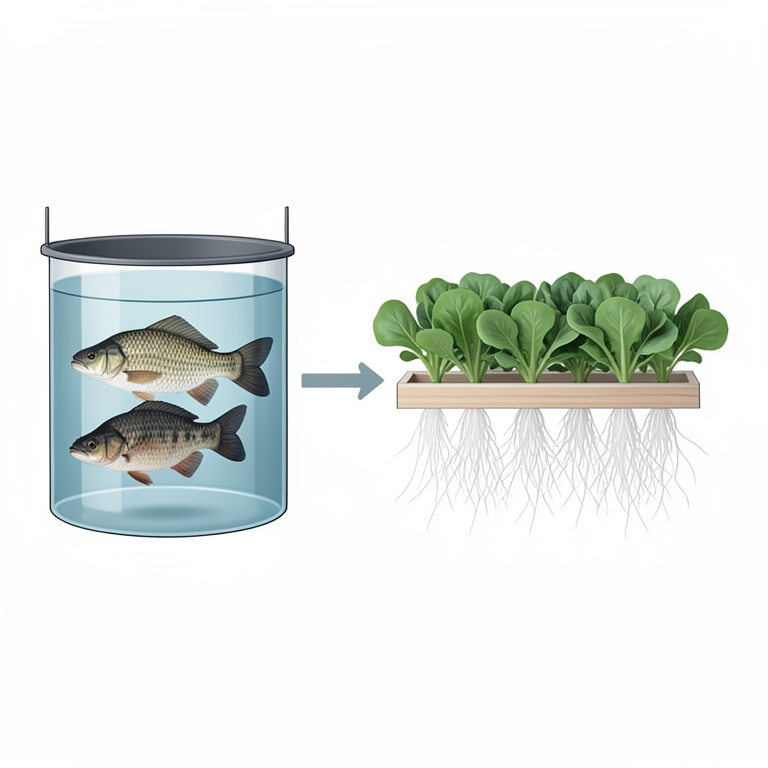
Aquaponics DWC System Concept
AI-generated conceptual illustration (lettuce plants and tilapia fish in a deep water culture aquaponics system). It explains the idea and does not show study data.
View source evidence ↗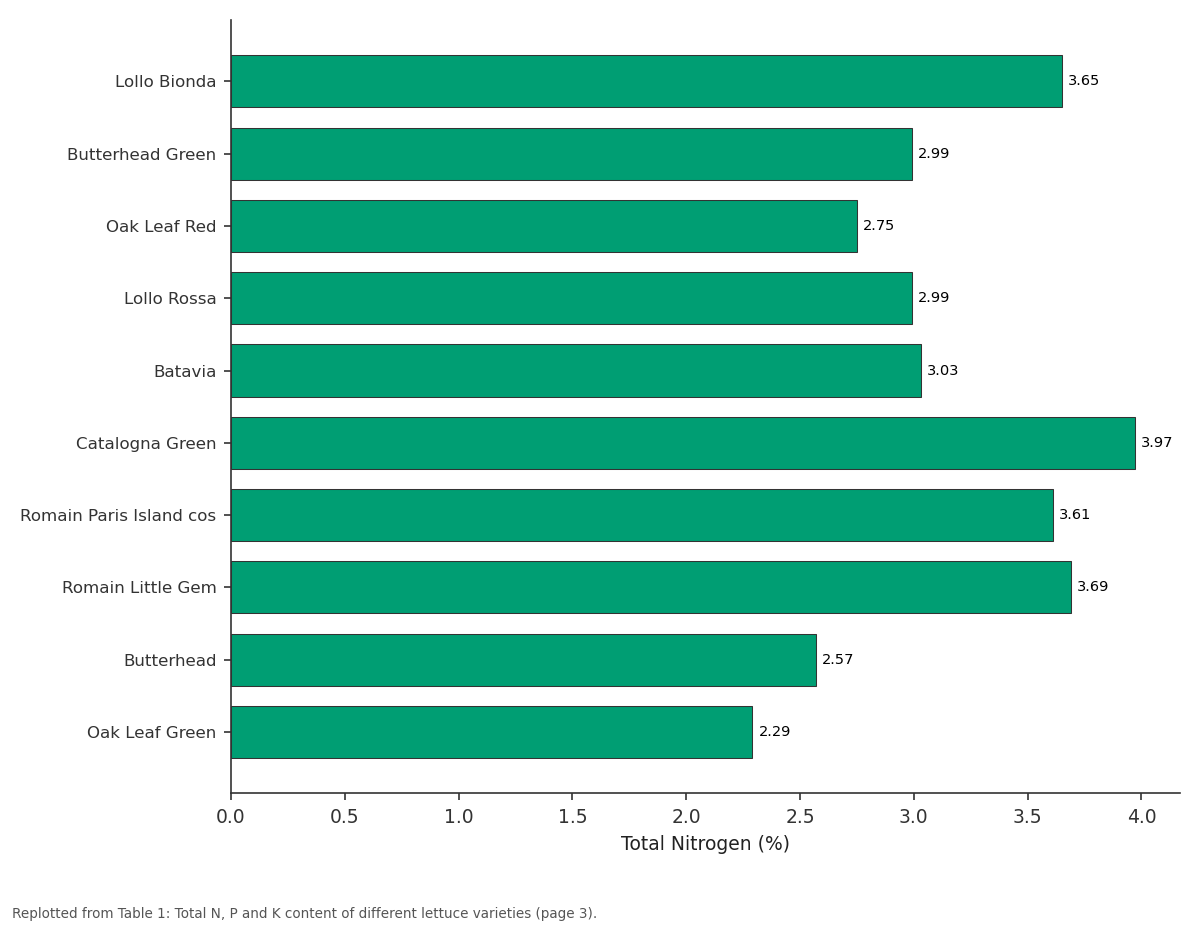
Total Nitrogen (%): Lollo Bionda vs Butterhead Green vs Oak Leaf Red vs Lollo Rossa vs Batavia
Replotted from Table 1 (page 3) of the original paper. Every bar is the paper's own table value.
View source evidence ↗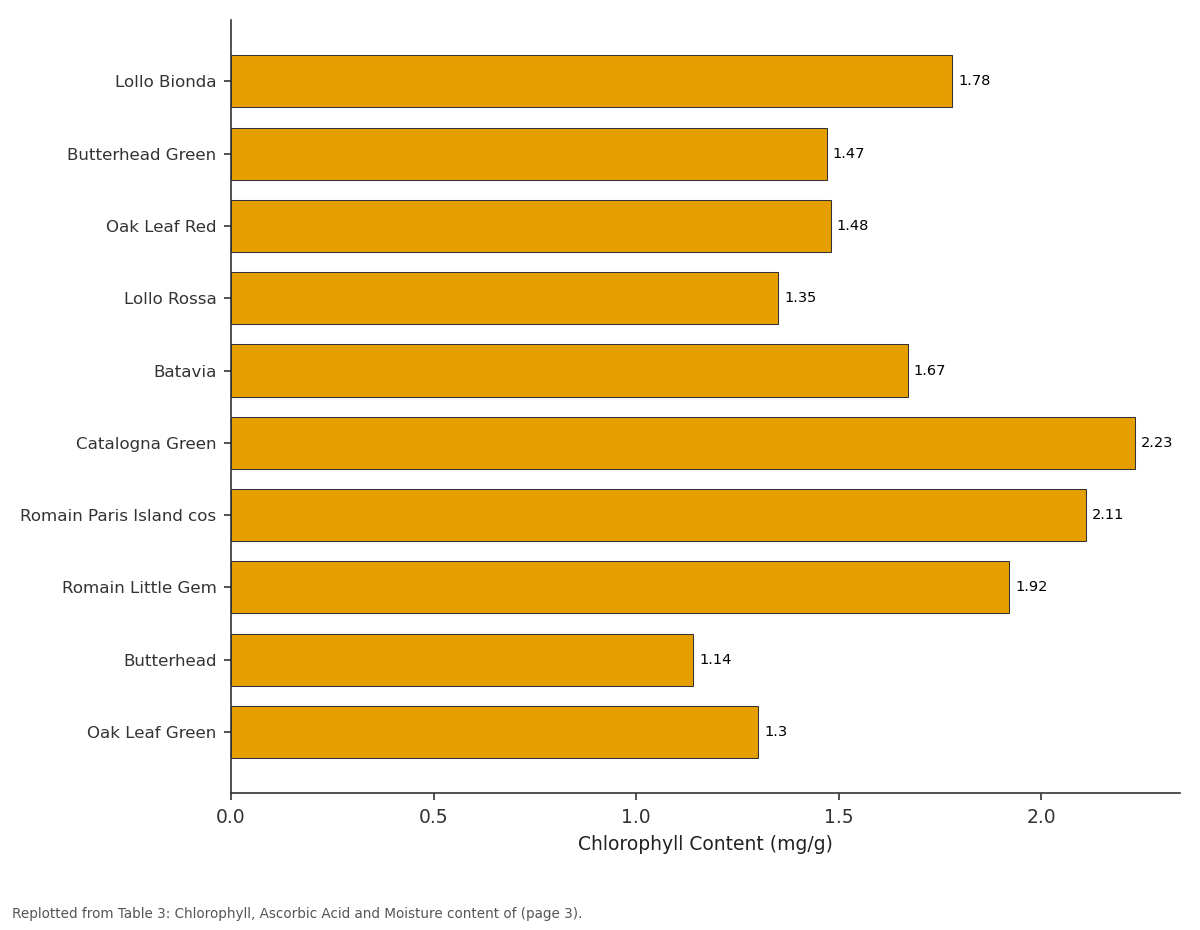
Chlorophyll Content (mg/g): Lollo Bionda vs Butterhead Green vs Oak Leaf Red vs Lollo Rossa vs Batavia
Replotted from Table 3 (page 3) of the original paper. Every bar is the paper's own table value.
View source evidence ↗Figures & tables
From the original paper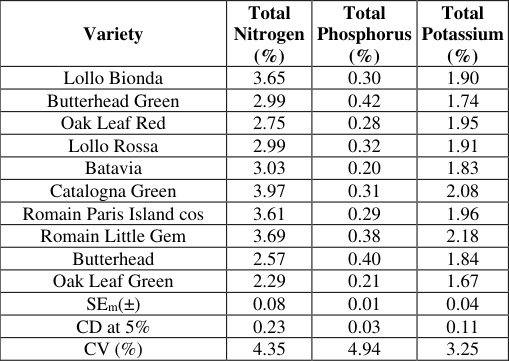 Table 1
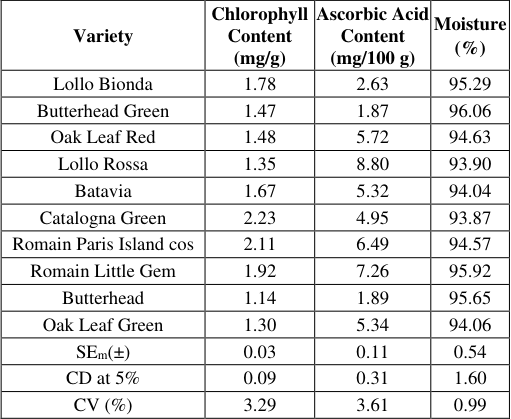 Table 3
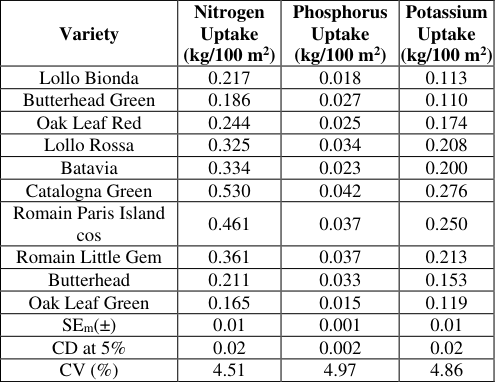 Table 2
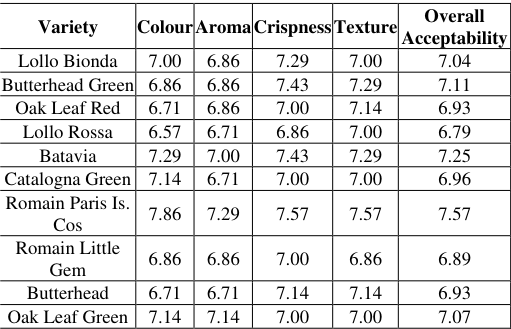 Table 4
Introduction
Aquaponics is a sustainable, soil-free farming method that integrates aquaculture and hydroponics. Fish waste provides nutrients source for plants, while plants filter and clean the water for reuse (Surnar et al., 2015) [27] . Beneficial bacteria convert ammonia into plantusable forms, supporting healthy growth. Aquaponics offers efficient water use, space optimization, dual harvests and reduced soil-borne issues (Amrita Sengupta & Banerjee, 2012) [2] . It's particularly useful in areas with limited fertile land. In DWC, roots are submerged in oxygen-rich, nutrient-dense water, fostering growth and yield (Nursyahid et al., 2021) [19] . The stable root environment supports efficient nutrient uptake. This method suits various high value crops like leafy greens and herbs. Lactuca sativa (2n=18), a leafy vegetable in the Asteraceae family, is a self-pollinating species believed to be originated in ancient Egypt and Iran (Kristkova, 2008) [12] . The name lettuce is derived from the Latin lactuca, a reference to the characteristic milky exudate produced upon cutting. The plant flourishes in cool-season conditions, with optimal daytime and nighttime temperatures ranging from 18-25 °C and 10-15 °C, respectively (Ryder, 1998) [24] . Selective breeding has resulted in significant morphological variation in lettuce, encompassing a wide range of colors, shapes and textures. This diversity has facilitated its categorization into distinct types, including butterhead, crisphead, loose-leaf, and romaine along with numerous subtypes and cultivars (Kim et al., 2016; Tudela et al., 2013) [11,30] . From a nutritional point of view, lettuce is notable for its high content of vitamins (A, C, Bcomplex), fiber, and minerals such as calcium, iron, and copper. It also contains significant levels of antioxidants and phenolic compounds, which have been shown to possess antiinflammatory and neuroprotective properties and may help prevent conditions like cancer and heart disease (Kim et al., 2016; Lal et al., 2020) [11,14] . The growing consumption of lettuce in India reflects advancing consumer preferences and an increased emphasis on health-conscious eating habits (Ogden et al., 2007) [20] . Lettuce is ideal for soilless farming due to its fast growth, shallow roots and efficient nutrient use. It thrives in systems like NFT and deep water culture (Johnson et al., 2000) [10] , with reduced pest risks and minimal pesticide needs (Fussy & Papenbrock, 2022) [5] . Its compact form supports space-efficient, year-round production in controlled environments (Gargaro et al., 2023) [6] . Green were selected as treatments. Biochemical parameters, including nitrogen, phosphorus, potassium, moisture, chlorophyll and ascorbic acid content, were analyzed using standard protocols. Organoleptic evaluation was conducted using a nine-point Hedonic scale by a panel of seven judges. Data were statistically analyzed using Analysis of Variance (ANOVA) as per Panse and Sukhatme (1985) [22] and treatment means were compared using the critical difference at 5% level of significance.
Total nutrient content
Total nitrogen content (%) in plant sample was analysed by Micro Kjeldahl method (Digestion-Distillation) given by Bremner and Mulvaney (1982) [3] . Phosphorus content (%) by vanadomolybdate yellow colour in nitric acid system given by Jackson (1973) [3] . While Potassium content by Flame photometry method (Jackson, 1973) [3] .
Nutrient uptake
Nitrogen, phosphorus and potassium uptake (kg/100m 2 ) was calculated using following formula, Nutrient Uptake = Dry matter yield x [Nutrient concentration (%)/100]
Chlorophyll content at harvest
The total chlorophyll content (mg/g) in lettuce leaves was estimated as per the standard procedure given by Sadashivam and Manickam (1992) [25] in terms of mg per gram. The known sample of lettuce was macerated in Mortar and Pestle by using 80% acetone and the absorbance was measured at 645, 652 and 663 nm using instrument Spectrophotometer.
Ascorbic acid content at harvest
Ascorbic acid content (mg/100 g) in lettuce leaves was determined by using Dichlorophenol-Indophenol dye method. In this method sample of known weight is macerated in mortar and pestle with excess of metaphosphoric acid (1:10 w/v), centrifuged and titrated with 2, 6-dichlorophenol-indophenol dye.
Moisture content
Moisture content (%) in different lettuce varieties was obtained by oven dry method and calculated by formula, Moisture content = [(Initial weight-Final weight)/Initial weight] x 100
Organoleptic Evaluation
Fresh samples of lettuce were evaluated organoleptically for colour, texture and aroma with the aid of sensory organs. It was performed by a panel of seven judges using nine-point Hedonic scale (Amerine et al., 1965) [1] .
Results and Discussion
Total Nitrogen Content Significantly highest nitrogen concentration (3.97%) was observed in Catalogna Green, followed by Romain Little Gem (3.69%) and Lollo Bionda (3.65%). Whereas, Oak Leaf Green recorded significantly lowest N concentration (2.29%). Variation in nitrogen content could be associated with the genetic makeup and nutrient use efficiency of particular variety. Significant variation in nitrogen concentration in different varieties in the study is supported by the earlier work of Pooja Dhikale (2022) [23] ; Grzegorzewska et al. (2023) [7] ; Matysiak et al. (2023) [18] ; Paes et al. (2023) [21] ; Tadevosyan et al. (2025) [28] .
Total Phosphorus Content
Phosphorus concentration varied significantly with varieties and ranged from 0.20 to 0.42 percent. The maximum phosphorus content (0.42%) was recorded in the plants of Butterhead Green and minimum amount of phosphorus (0.20%) was reported in plants of Batavia. Similar variation was reported in phosphorus content by Pooja Dhikale (2022) [23] , Grzegorzewska et al. (2023) [7] , Paes et al. (2023) [21] , and Tadevosyan et al. (2025) [28] in lettuce.
Total Potassium Content
Romain Little Gem recorded maximum concentration of potassium (2.18%) while lower concentration was observed in Oak Leaf Green (1.67%). Potassium concentration recorded in the investigation is in close relation with the results by Pooja Dhikale (2022) [23] , Grzegorzewska et al. (2023) [7] , Matysiak et al. (2023) [18] , and Tadevosyan et al. (2025) [28] .
Nitrogen Uptake
Catalogna Green reported significantly highest (0.530 kg) nitrogen uptake. While, lowest nitrogen uptake (0.165 kg) was recorded by Oak Leaf Green. Genetic factors are the primary reason for the variation in nutrient uptake. Each variety has a unique genetic code that determines its root system architecture, affecting its ability to forage for nutrients, and the efficiency of its transporter proteins, which are responsible for absorbing specific nutrients.
Phosphorus Uptake
Catalogna Green recorded significantly highest (0.042 kg) phosphorus uptake, followed by Romain Paris Island cos, and Romain Little Gem (0.037 kg) and significantly lowest uptake (0.015 kg) was recorded by Oak Leaf Green.
Potassium Uptake
Catalogna Green recorded significantly highest potassium uptake (0.276 kg) followed by Romain Paris Island cos (0.250 kg), Romain Little Gem (0.213 kg). While, minimum potassium uptake (0.110 kg) was recorded in variety Butterhead Green. [26] , Thomas et al. (2021) [29] , Pooja Dhikale (2022) [23] , Idelbe et al. (2023) [8] , Lima et al. (2023) [15] , Matysiak et al. (2023) [18] and Maia et al. (2024) [16] in lettuce.
Ascorbic Acid Content at Harvest
Lollo Rossa recorded significantly highest (8.80 mg) ascorbic acid content, followed by Romain Little Gem (7.26 mg), Romain Paris Island cos (6.49 mg) and others.
Results of the experiment were in conformation with results obtained by Mampholo et al. (2016) [17] ; Kumar (2022) [17] ;
Matysiak et al. (2023) [18] ; Paes et al. (2023) [21] ; Tadevosyan et al. (2025) [28] .
Moisture Content
Maximum moisture content (96.06%) was recorded in Butterhead Green, statistically comparable to Romain Little Gem (95.92%), Butterhead (95.65%) and three other varieties whereas, minimum moisture content (93.87%) was observed in plants of Catalogna Green. Variation in moisture content is due to genetic makeup, root structure and water use efficiency of that specific variety. Similar variations for moisture content of different cultivars were also recorded by Kumar (2022) [17] in lettuce and Dalave (2022) [4] in dill crop in their experiments.
Conclusion
Catalogna Green emerged as a top performer, demonstrating the highest levels of chlorophyll and total nitrogen content and dominating nutrient uptake. This suggests its potential as a highly productive and nutrient-dense crop. However, no single variety excelled in all aspects. While Catalogna Green led in several metrics, Lollo Rossa was notable for its high ascorbic acid content, and Romain Little Gem for its high potassium content. Butterhead Green also showed its strength with the highest phosphorus concentration.
In terms of consumer preference, the study found that Romain Paris Island Cos was the most palatable variety, receiving the highest ratings for overall acceptability.
Acknowledgement
I extend my sincere gratitude to my colleagues and the entire staff of the Department of Horticulture, College of Agriculture, Kolhapur, for their invaluable cooperation and intellectual support. I also wish to express my appreciation to the team at the Landcraft Agro-Aquaponics Unit, Hatkanangale, Kolhapur, for their technical assistance and for granting access to their facilities, which were essential for the completion of this research.
Figures and tables from the paper
| Variety | Chlorophyll Content (mg/g) | Ascorbic Acid Content (mg/100 g) | Moisture (%) |
|---|---|---|---|
| Lollo Bionda | 1.78 | 2.63 | 95.29 |
| Butterhead Green | 1.47 | 1.87 | 96.06 |
| Oak Leaf Red | 1.48 | 5.72 | 94.63 |
| Lollo Rossa | 1.35 | 8.80 | 93.90 |
| Batavia | 1.67 | 5.32 | 94.04 |
| Catalogna Green | 2.23 | 4.95 | 93.87 |
| Romain Paris Island cos | 2.11 | 6.49 | 94.57 |
| Romain Little Gem | 1.92 | 7.26 | 95.92 |
| Butterhead | 1.14 | 1.89 | 95.65 |
| Oak Leaf Green | 1.30 | 5.34 | 94.06 |
| SEm(±) | 0.03 | 0.11 | 0.54 |
| CD at 5% | 0.09 | 0.31 | 1.60 |
| CV (%) | 3.29 | 3.61 | 0.99 |
Table text extracted from the original PDF; superscript letters are shown inline. The original table image is below.
View original table image
| Variety | Nitrogen Uptake (kg/100 m2) | Phosphorus Uptake (kg/100 m2) | Potassium Uptake (kg/100 m2) |
|---|---|---|---|
| Lollo Bionda | 0.217 | 0.018 | 0.113 |
| Butterhead Green | 0.186 | 0.027 | 0.110 |
| Oak Leaf Red | 0.244 | 0.025 | 0.174 |
| Lollo Rossa | 0.325 | 0.034 | 0.208 |
| Batavia | 0.334 | 0.023 | 0.200 |
| Catalogna Green | 0.530 | 0.042 | 0.276 |
| Romain Paris Island | 0.037 | 0.250 | |
| 0.461 | |||
| cos | |||
| Romain Little Gem | 0.361 | 0.037 | 0.213 |
| Butterhead | 0.211 | 0.033 | 0.153 |
| Oak Leaf Green | 0.165 | 0.015 | 0.119 |
| SEm(±) | 0.01 | 0.001 | 0.01 |
| CD at 5% | 0.02 | 0.002 | 0.02 |
| CV (%) | 4.51 | 4.97 | 4.86 |
Table text extracted from the original PDF; superscript letters are shown inline. The original table image is below.
View original table image
| Variety | Colour | Aroma | Crispness | Texture | Overall Acceptability |
|---|---|---|---|---|---|
| Lollo Bionda | 7.00 | 6.86 | 7.29 | 7.00 | 7.04 |
| Butterhead Green | 6.86 | 6.86 | 7.43 | 7.29 | 7.11 |
| Oak Leaf Red | 6.71 | 6.86 | 7.00 | 7.14 | 6.93 |
| Lollo Rossa | 6.57 | 6.71 | 6.86 | 7.00 | 6.79 |
| Batavia | 7.29 | 7.00 | 7.43 | 7.29 | 7.25 |
| Catalogna Green | 7.14 | 6.71 | 7.00 | 7.00 | 6.96 |
| Romain Paris Is. Cos | 7.86 | 7.29 | 7.57 | 7.57 | 7.57 |
| Romain Little Gem | 6.86 | 6.86 | 7.00 | 6.86 | 6.89 |
| Butterhead | 6.71 | 6.71 | 7.14 | 7.14 | 6.93 |
| Oak Leaf Green | 7.14 | 7.14 | 7.00 | 7.00 | 7.07 |
Table text extracted from the original PDF; superscript letters are shown inline. The original table image is below.
View original table image
References
30 in the original paper- Amerine MA, Pangborn RM, Roessler EB. Principles of sensory evaluation of food. New York: Academic Press; 1965.
- Sengupta A, Banerjee H. Soil-less culture in modern agriculture. World Journal of Science and Technology. 2012;2(7):103-108.
- Bremner JM, Mulvaney CS. Nitrogen-Total. In: Page AL, Miller RH, Keeney DR, editors. Methods of Soil Analysis, Part 2: Chemical and Microbiological Properties. 2nd ed. Madison, WI: American Society of Agronomy, Soil Science Society of America; 1982. p. 595-624.
- Dalave VG. Standardization of production technology for dill (Anethum graveolens L.) under DWC technique of aquaponics [MSc (Hort) thesis]. Rahuri, India: Mahatma Phule Krishi Vidyapeeth; 2022. p. 111.
- Fussy A, Papenbrock J. An overview of soil and soilless cultivation techniques-chances, challenges and the neglected question of sustainability. Plants. 2022;11(9):1-32.
- Gargaro M, Murphy RJ, Harris ZM. Let-Us Investigate; a meta-analysis of influencing factors on lettuce crop yields within controlled-environment agriculture Systems. Plants. 2023;12(14):2623. doi:10.3390/plants12142623.
- Grzegorzewska M, Badełek E, Matysiak B, Kaniszewski S, Dyśko J, Kowalczyk W, et al. Assessment of romaine lettuce cultivars grown in a vertical hydroponic system at two levels of LED light intensity. Sci Hortic. 2023; 313:111913. doi: 10.1016/j.scienta.2023.111913.
- Idelbe A, Obead H, Baladiah R. Evaluation of the response of some lettuce cultivars to growth, production, and quality indicators using hydroponic systems. Future Food J Food Agric Soc. 2023;11(5):117.
- Jackson ML. Soil chemical analysis. New Delhi: Prentice Hall of India; 1973. p. 498.
- Johnson WC, Jackson LE, Ochoa O, Wijk RV, Peleman J, St. Clair DA, Michelmore RW. Lettuce, a shallowrooted crop, and Lactuca serriola, its wild progenitor, differ at QTL determining root architecture and deep soil water exploitation. Theor Appl Genet. 2000;101:1066-1073.
- Kim MJ, Moon Y, Tou JC, Mou B, Waterland NL. Nutritional value, bioactive compounds and health benefits of lettuce (Lactuca sativa L.). J Food Compos Anal. 2016;49:19-34.
- Kristkova E, Dolezalova I, Lebeda A, Vinter V, Novotna A. Description of morphological characters of lettuce (Lactuca sativa L.). HortScience (Prague). 2008;35(3):113-129.
- Kumar A. Evaluation of lettuce (Lactuca sativa L.) genotypes in a controlled hydroponic system [MSc (Agri) thesis]. Palampur, India: Chaudhary Sarwan Kumar Himachal Pradesh Krishi Vishvavidyalaya; 2022. p. 81.
- Lal B, Dwivedi DH, Yadav MK. Effect of integrated nutrient management on reproductive growth and yield performance of lettuce (Lactuca sativa L.) in central (Uttar Pradesh). Int J Bot Stud. 2020;5(6):5-10.
- Lima BMD, Noboa CS, Lima FMD, Mello SDC, Purquerio LFV, Sala FC. Agronomic biofortification with zinc in hydroponically cultivated lettuce. Aust J Crop Sci. 2023;17(2):198-205.
- Maia JP, de Almeida Silva BE, Smaniotto AO, Teixeira IR, Mota JH. Rev Obs Econ Latinoam. 2024;22(4):117.
- Mampholo BM, Maboko MM, Soundy P, Sivakumar D. Phytochemicals and overall quality of leafy lettuce (Lactuca sativa L.) varieties grown in closed hydroponic system. J Food Qual. 2016; 39:1-11.
- Matysiak B, Kaniszewski S, Mieszczakowska-Frąc M. Growth and quality of leaf and Romaine lettuce grown on a vertical farm in an aquaponics system: Results of Farm Research. Agriculture. 2023;13:897.p. 1-13.
- Nursyahid A, Setyawan T, Sa'diyah K, Wardihani E, Helmy H, Hasan A. Analysis of Deep Water Culture (DWC) hydroponic nutrient solution level control systems. IOP Conf Ser Mater Sci Eng. 2021;1108: 012032.
- Ogden CL, Carroll MD, McDowell MA, Flegal KM. Obesity among adults in the United States. NCHS data brief, no. 1. Hyattsville (MD): National Center for Health Statistics; 2007. p. 1-8.
- Paes ES, Pavan CS, Tonial GMB, Gatto N, dos Santos CGT, Zanuzo MR, et al. Interference of cultivar and ways of cultivation in lettuce (Lactuca sativa) yield and conservation. Afr J Food Sci. 2023;17(10):223-232. doi:10.5897/AJFS2023.2269.
- Panse VG, Sukhatme PV. Statistical methods for agricultural workers. New Delhi: Indian Council of Agricultural Research; 1985. p. 87-89.
- Rahuri, India: Mahatma Phule Krishi Vidyapeeth; 2022. p. 71.
- Ryder EJ. Lettuce, Endive and Chicory. Wallingford, UK: CABI Publishing; 1998. p. 208.
- Sadashivam S, Manickam A. Biochemical methods for Agricultural Sciences. New Delhi: Wiley Eastern Ltd; 1992. p. 184-185.
- Santos CP, Noboa CS, Martinez M, Cardoso JC, Sala FC. Morphological evaluation of lettuce genotypes grown under hydroponic system. Hortic Bras. 2021;39(3):312-318. doi:10.1590/s0102-0536-20210311.
- Surnar S, Sharma O, Saini VP. Aquaponics: Innovative farming. Int J Fish Aquat Stud. 2015;2:261-263.
- Tadevosyan A, Martirosyan G, Tovmasyan G, Terteryan H, Gasparyan N. Evaluation of several lettuce varieties based on economically valuable traits and nutritional value under vertical hydroponic cultivation conditions. Bioactive Compounds in Health Dis. 2025;8(3):104-113.
- Thomas T, Biradar MS, Chimmad VP, Janagoudar BS. Growth and physiology of lettuce (Lactuca sativa L.) cultivars under different growing systems. Plant Physiol Rep. 2021;26(3):526-534. doi:10.1007/s40502-021-00591-3.
- Tudela JA, Marín A, Martínez-Sánchez A, Luna MC, Gil MI. Preharvest and postharvest factors related to off-odours of fresh-cut iceberg lettuce. Postharvest Biology and Technology. 2013;86:463-471.