
Research article · 2025 · Full text
International Journal of Agriculture and Food ScienceAn Analysis of Constraints Encountered by Groundnut Growers in Cuddalore District
Volume 7(9) · Pages 517–518 · DOI: 10.33545/2664844x.2025.v7.i9g.787 ↗
Research areasGeochemistry and Geologic MappingGeological Modeling and AnalysisElectrical and Electromagnetic Research
Abstract
Author-writtenGroundnut (Arachis hypogaea), locally known as “Mallattai” in Tamil, is a vital cash crop in India. Despite its significance, cultivation often faces challenges such as inconsistent yields, high input costs, and systemic inefficiencies. This study identifies major constraints encountered by groundnut growers in Cuddalore district, Tamil Nadu. Using structured interviews with 80 farmers from Parangipettai and Kurinjipadi blocks, the research categorizes challenges into bio-physical, socio-economic, technological, and institutional domains. Findings indicate non-availability of high-yielding varieties, elevated labor costs, insufficient technical guidance, and weak infrastructure as key issues. The study emphasizes the need for strategic policy actions and robust extension services to improve productivity and farm income.
Summary
Source-checkedPlain-language reading of the full paper, prepared with AI and checked against the text. Each point links to the authors' own words.
Why it matters
- Groundnut is a critical oilseed crop for India, supporting rural livelihoods through its contributions to nutritional security and edible oil production. View evidence ↗
- Despite being the world's second-largest producer, India's groundnut sector suffers from significant post-harvest losses, estimated between 10.00% and 25.00%. View evidence ↗
- In the Cuddalore District of Tamil Nadu, farmers primarily rely on traditional methods like manual threshing, sun drying, and basic storage. View evidence ↗
The question
- The study aims to analyze the socio-economic traits of groundnut growers and identify the primary barriers preventing them from adopting post-harvest technologies. View evidence ↗
What they did
- The researchers used purposive sampling to select villages and randomly selected 120 groundnut growers as study participants. View evidence ↗
- Data were gathered via structured interviews using a pre-tested questionnaire that focused on socio-economic profiles, technology adoption, and constraints. View evidence ↗
- The study employed percentage analysis to measure adoption rates and ranking techniques to prioritize the constraints faced by farmers. View evidence ↗
What they found
- Groundnut growers in the study area demonstrated a moderate level of knowledge and adoption regarding post-harvest practices. View evidence ↗
- The most significant barrier was the high cost of machinery, reported by 86.67% of the respondents. View evidence ↗
- A lack of technical training on how to use post-harvest machinery was cited by 79.17% of the farmers. View evidence ↗
- Insufficient and unsafe facilities for drying and storage were reported by approximately 70.83% of the farmers. View evidence ↗
- Labour shortages during peak post-harvest periods affected 65.00% of the respondents. View evidence ↗
- Limited local availability of essential machinery, such as dryers and threshers, was reported by 58.33% of farmers. View evidence ↗
What it means
- The authors recommend implementing subsidized machinery programs, improving extension services, and launching awareness campaigns to increase technology adoption. View evidence ↗
- The authors conclude that reducing post-harvest losses requires a combination of research into cost-effective technologies and better collaboration between policymakers, researchers, and farmers. View evidence ↗
Visual summary
1 visualsIllustrations explain the paper; they do not show study data.
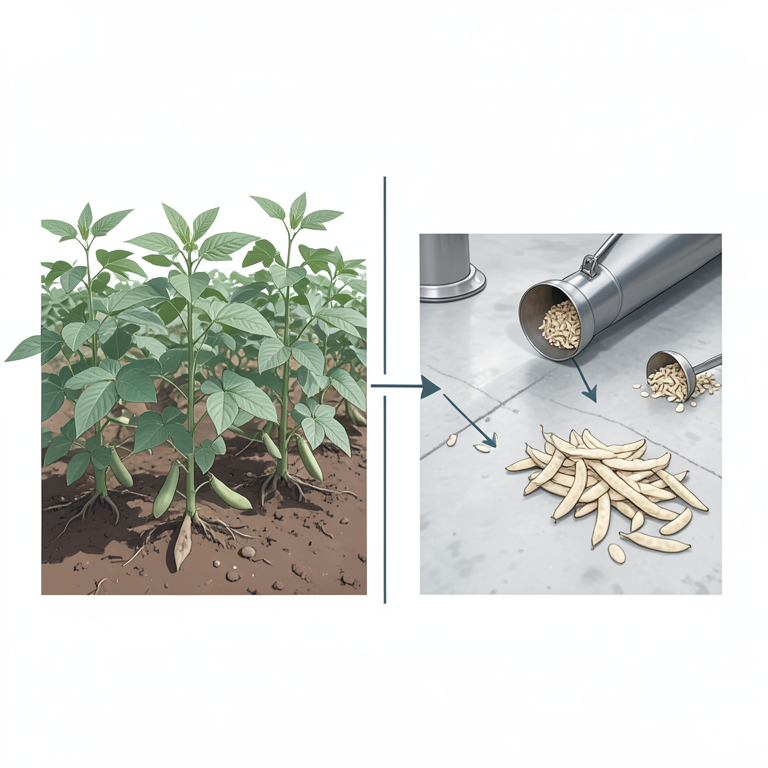
Study overview
AI-generated conceptual illustration (groundnut plants in a field). It explains the idea and does not show study data.
View source evidence ↗Introduction
Groundnut (Arachis hypogaea L.), a vital oilseed crop, plays a pivotal role in India's agricultural economy and rural livelihoods by contributing significantly to both edible oil production and nutritional security. India ranks as the second-largest groundnut producer globally, yet the sector faces persistent challenges, particularly substantial post-harvest losses that range from 10.00 percent to 25.00 percent. These losses critically affect farmers' income, reduce product quality, and impair market competitiveness. In Cuddalore District of Tamil Nadu, groundnut cultivation is widespread; however, traditional post-harvest practices such as sun drying, manual threshing, and rudimentary storage are predominantly employed. These conventional methods result in considerable deterioration of groundnut quality, increased risk of aflatoxin contamination, and significant economic losses due to poor infrastructure and limited technological intervention. Addressing post-harvest constraints is imperative for improving groundnut yield value, enhancing product quality, increasing marketability, and securing farmers' welfare. This study is designed to systematically analyze the socio-economic characteristics of groundnut growers, assess their knowledge and adoption levels of post-harvest technologies, and critically identify the major constraints they face in the adoption process. The rationale for this research lies in providing robust, data driven insights to inform policymakers and extension workers. The aim is to design and implement targeted policy measures, capacity-building programs, and sustainable extension strategies that effectively promote the adoption of post-harvest technologies among groundnut farmers, thereby enhancing agricultural sustainability and improving farmer livelihoods in the region.
Objectives
To identify and analyze the major constraints faced by groundnut growers in adopting postharvest technology practices.
Methodology
The present study was conducted in Cuddalore District, Tamil Nadu, which is a major groundnut-growing area, to identify the constraints faced by farmers in adopting postharvest technologies. A purposive sampling technique was employed to select villages with significant groundnut cultivation, and 120 groundnut growers were randomly chosen as respondents. Primary data were collected through structured interviews using a pre-tested questionnaire covering socio-economic characteristics, adoption of postharvest practices, and constraints faced. Secondary data were sourced from government reports, research articles, and previous studies on groundnut production and postharvest management. The collected data were analyzed using percentage analysis to determine the extent of adoption and ranking techniques to prioritize constraints, while tables and figures were used for clear presentation. The study focused on economic, technical, infrastructural, labour, and accessibility factors influencing the adoption of post-harvest technologies, providing insights to suggest policy measures, extension interventions, and capacitybuilding strategies to enhance adoption and reduce postharvest losses.
Results and Discussion
The adoption of post-harvest technology practices among groundnut growers is significantly influenced by several economic, technical, and infrastructural constraints. These barriers limit the effective utilization of improved technologies, reduce efficiency, and increase post-harvest losses. The study identified the most significant challenges faced by farmers, including high machinery costs, inadequate training, insufficient drying and storage facilities, labour shortages, and limited availability of essential machines. The constraints are described in detail below.
High Cost of Post-Harvest Machines
The most prominent constraint reported by 86.67 percent of respondents was the high cost of post-harvest agricultural machines. Small and marginal farmers often lack the financial resources to invest in mechanized solutions such as threshers and dryers, which are essential for efficient processing and reducing post-harvest losses. This economic limitation restricts farmers from adopting improved technologies that could enhance productivity and quality.
Lack of Training on Machine Usage
About 79.17 percent of respondents indicated inadequate training on the use of post-harvest machines. This reflects a critical knowledge gap, as farmers are unable to utilize the available technologies effectively, resulting in suboptimal operations and decreased efficiency. Extension programs and practical skill development are needed to bridge this gap.
Inadequate Drying and Storage Facilities
Approximately 70.83 percent of farmers reported insufficient and unsafe drying and storage facilities, leading to increased post-harvest losses, deterioration of produce quality, and reduced marketability. The absence of proper infrastructure prevents the maintenance of groundnut quality, which negatively impacts farmers' income and product value.
Labour Shortages
Labour shortages during peak post-harvest seasons were experienced by 65.00 percent of respondents. This constraint delays critical post-harvest operations such as drying, threshing, and storage, forcing farmers to rely heavily on manual labour, which is costly and inefficient. Mechanization support can help reduce dependence on human labour and improve timely processing.
Non-Availability of Essential Machinery
Finally, 58.33 percent of farmers reported that essential machinery such as threshers and dryers are not easily available in their locality. Limited access to modern equipment restricts the timely adoption of improved postharvest practices and reduces overall efficiency in groundnut processing.
These findings indicate that financial limitations, lack of technical knowledge, inadequate infrastructure, labour shortages, and restricted access to machinery collectively hinder the adoption of improved post-harvest technologies. Addressing these constraints through financial support, capacity-building programs, infrastructure development, and accessible mechanization services is essential to reduce post-harvest losses, maintain produce quality, and enhance the economic well-being of groundnut farmers.
Conclusion
The study on post-harvest technology adoption among groundnut growers in Cuddalore District revealed several significant constraints that limit the effective use of improved practices. The major challenges identified were the high cost of machines (86.67 percent), lack of training on machine usage (79.17 percent), inadequate drying and storage facilities (70.83 percent), labour shortages during post-harvest periods (65.00 percent), and the nonavailability of essential machines in local areas (58.33 percent). These findings indicate that financial limitations, insufficient technical knowledge, inadequate infrastructure, and labour-related issues collectively hinder adoption. To address these barriers, it is essential to provide training and capacity-building programs, ensure financial support and access to mechanized equipment, improve drying and storage facilities, promote market linkages and value addition, and implement supportive policies. Strengthening research on cost-effective technologies and fostering collaboration among farmers, extension agencies, research institutions, and policymakers can reduce post-harvest losses, improve produce quality, and enhance the economic well-being of groundnut growers.
References
12 in the original paper- Nigam SN, Santhoshkumar G, Rao PS. Groundnut cultivation: practices and technologies. Indian J Agric Sci. 2012;82(4):345-352.
- Patil RT, Jain S. Advances in groundnut research. Agric Rev. 2020;41(1):12-25.
- Sahoo RK, Kanungo D. Nutritional and economic importance of groundnut. J Oilseed Res. 2020;37(2):101-109.
- Bonabana-Wabbi J, Kirinya J, Kasenge V, Semalulu O, Mugonola B. Smallholder farmers' access to improved groundnut production and value addition technologies in Eastern Uganda. J Agric Ext Rural Dev. 2015;7(8):247-256.
- Jaganathan D, Bahal R, Roy Burman R, Lenin V. Knowledge level of farmers on organic farming in Tamil Nadu. Indian Res J Ext Educ. 2012;12(3):70-73.
- Joshi AB, Patil JP, Desale GD. Influence of postharvest handling knowledge on safflower yield and oil content. Legume Res. 2019;42(4):507-512.
- Mehta R, Patel MR, Soni K. Knowledge and adoption of post-harvest technologies among oilseed farmers of Gujarat. Agric Update. 2014;9(3):401-406.
- Natarajan K, Hanif NAKA, Jayakumar J, Senguttuvan K, Gayathry G, Kumar KB, et al. A study on yield and value sustainability in groundnut (Arachis hypogaea) through cluster frontline demonstrations approach in Cuddalore District of Tamil Nadu. Legume Res. 2024;47(7):1172-1178.
- Patil HR, Desai BJ. Constraints faced by farmers in adoption of modern agricultural practices. Indian Res J Ext Educ. 2017;17(1):45-50.
- Tsusaka TW, Oikeh SO, Gunaratna NS, Diagne M, Siambi M. Willingness to pay for post-harvest technologies in Malawi: evidence from groundnut farmers. J Dev Agric Econ. 2017;9(5):123-134.
- Tripathi P, Sharma A. Technological adoption in groundnut post-harvest sector. J Agric Sci. 2021;13(4):214-222.
- World Bank. Agricultural technology adoption and its determinants in developing countries. Washington (DC): World Bank Publications; 2018.