
Research article · 2025 · Full text
International Journal of Agriculture and Food ScienceAssessing the agronomic and economic effect of herbicides on growth and yield of wheat (Triticum aestivum L. emend. Fiori & Paol)
Volume 7(7) · Pages 492–495 · DOI: 10.33545/2664844x.2025.v7.i7g.548 ↗
Research areasGeochemistry and Geologic MappingGeological Modeling and AnalysisSeismic Imaging and Inversion Techniques
Abstract
Author-writtenA field experiment was conducted at Research Farm of Mewar University, Chittorgarh (Rajasthan) during rabi season of 2024-25 on loamy sand soil, which consisted nine treatments viz., T0: Weed Check, T1: 2,4-D @ 0.5 kg/ha 30 DAS, T2: Clodinafop-propargyl @ 60 g a.i. at 30 DAS, T3: Pendimethalin 1.0 kg/ha (Pre-emergence), T4: Sulfosulfuron @ 25 g a.i. at 35 DAS, T5: Metsulfuronmethyl @ 4g/ha at 35 DAS, T6: Sulfosulfuron 75% + Metsulfuron Methy l5% WG @ 32 g at 35 DAS, T7: Clodinafop- propargyl15% + Metasulfuron methyl at 1% @ 64 g a.i./ha at 35 DAS and T8: Carfentrazoneethyl @ 15g/ha at 35 DAS were applied to the wheat var. DBW-303. in randomized block design (RBD). Results showed that the growth parameters of wheat viz. plant height (cm) at harvest and number of tillers/plant at harvest significantly higher recorded under T6: Sulfosulfuron 75% + Metsulfuron Methy l5% WG @ 32 g at 35 DAS over control. Similarly, maximum yield parameters viz. spike length and grain yield also recorded under T6: Sulfosulfuron 75% + Metsulfuron Methy l5% WG @ 32 g at 35 DAS.
Summary
Source-checkedPlain-language reading of the full paper, prepared with AI and checked against the text. Each point links to the authors' own words.
Why it matters
- Wheat is a critical global staple crop, providing approximately 20% of the total food calories for about one billion people. View evidence ↗
- Weed infestation is a major constraint in wheat production, typically causing yield losses between 20% and 50%, and potentially leading to total crop failure. View evidence ↗
- Manual weed control is often impractical due to high costs and a lack of available agricultural labor. View evidence ↗
The question
- The study aims to identify suitable chemical herbicide management strategies to maintain profitability and productivity in wheat production. View evidence ↗
What they did
- The experiment was conducted during the 2024-25 rabi season on loamy sand soil at the Mewar University Research Farm in Chittorgarh, Rajasthan. View evidence ↗
- Using a randomized block design, nine treatments were applied to wheat variety DBW-303, including a weed check (T0), various single herbicides (T1-T5, T8), and two herbicide combinations (T6, T7). View evidence ↗
- Data were recorded at harvest and analyzed using statistical methods based on Fisher (1950). View evidence ↗
What they found
- The highest spike length (11.96 cm) and grain yield (37.42 q/ha) were recorded under treatment T6. View evidence ↗
- The weed check (T0) produced the lowest grain yield at 25.89 q/ha and the shortest spike length at 8.01 cm. View evidence ↗
- The success of T6 is attributed to its ability to provide broad-spectrum control of both grassy and broadleaf weeds. View evidence ↗
What it means
- The authors conclude that applying 40 kg of nitrogen and 80 kg of phosphorus per hectare is suitable for producing a good wheat yield. View evidence ↗
Visual summary
2 visualsIllustrations explain the paper; charts are replotted from the paper's own table values.
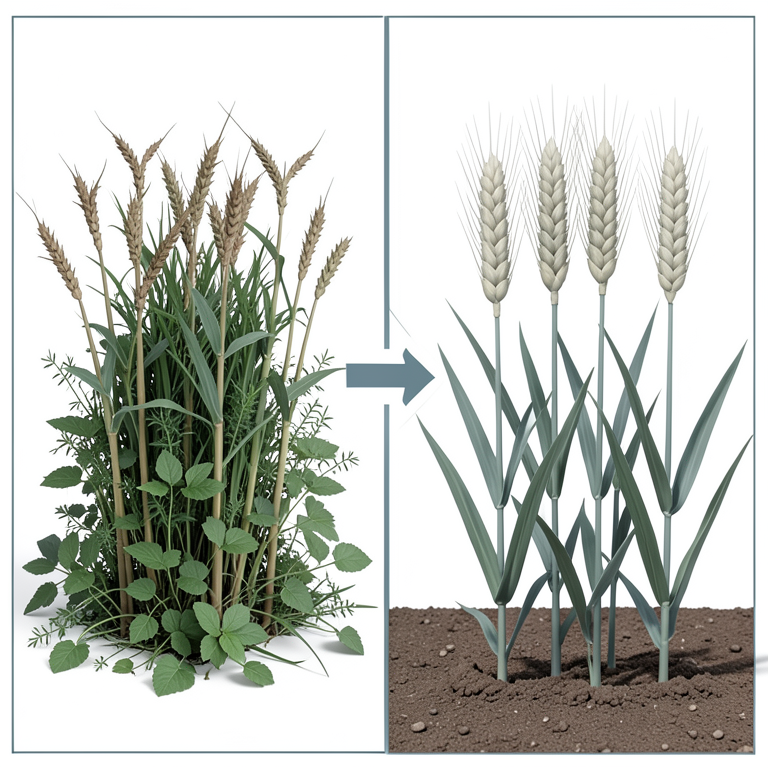
Herbicide Treatment Comparison
AI-generated conceptual illustration (wheat plants (Triticum aestivum)). It explains the idea and does not show study data.
View source evidence ↗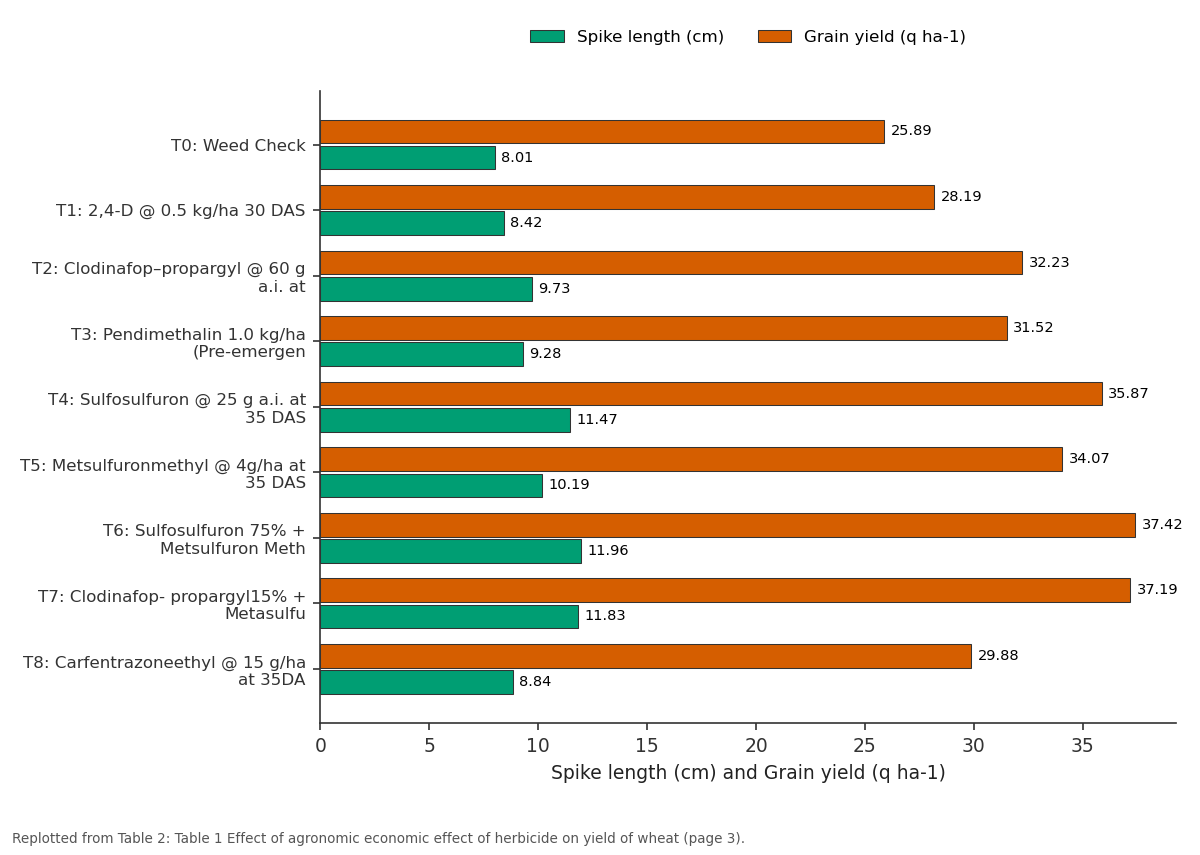
Spike length (cm) and Grain yield (q ha-1): T0: Weed Check vs T1: 2,4-D @ 0.5 kg/ha... vs T2:... vs T3: Pendimethalin 1.0... vs T4: Sulfosulfuron @ 25...
Replotted from Table 2 (page 3) of the original paper. Every bar is the paper's own table value.
View source evidence ↗Figures & tables
From the original paper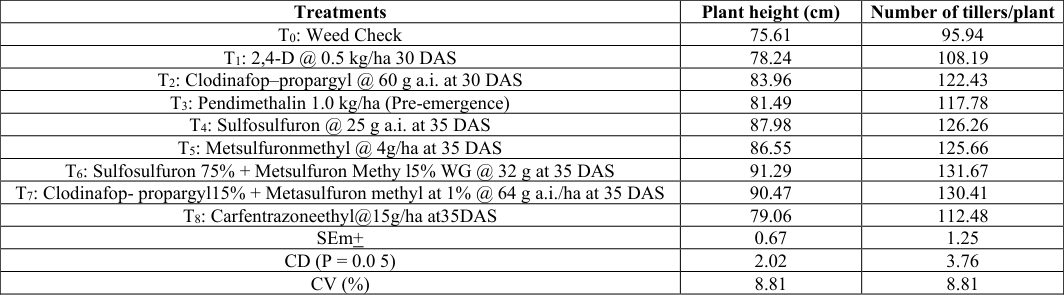 Table 1
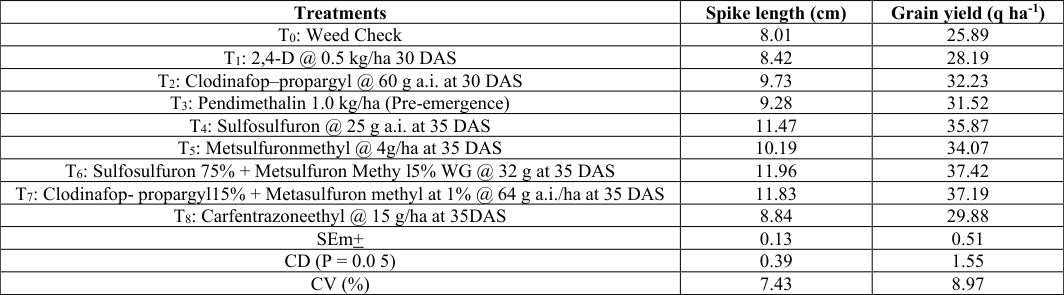 Table 2
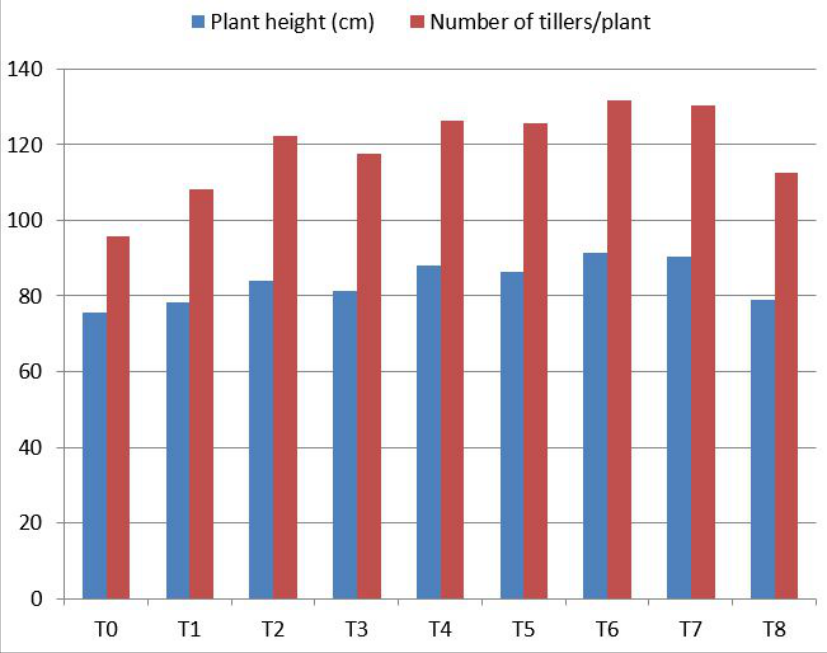 Figure 1
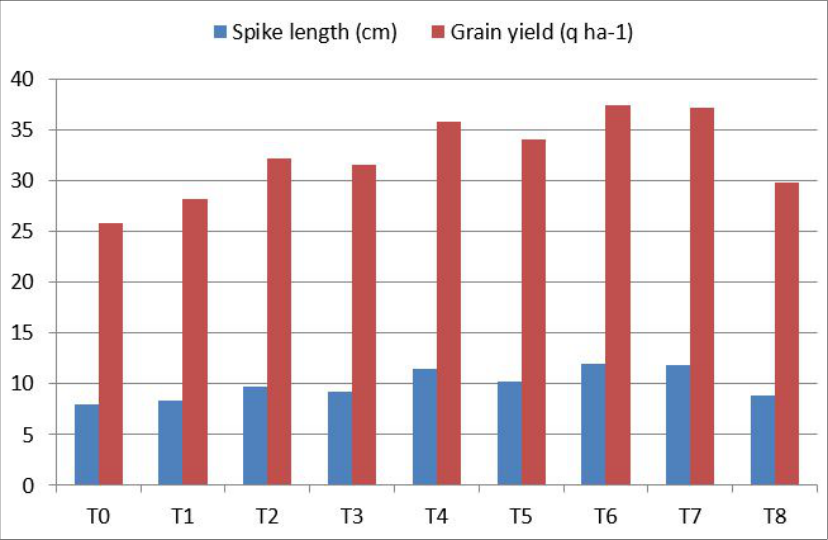 Figure 2
Introduction
Wheat (Triticum aestivm L.) belongs to family "Gramineae" and genus "Triticum". It is the most important grain crop both in regard to its antiquity and its use as a source of human food. Wheat serves as a staple food for about one billion people in as many countries of the world. It provides about 20% of total food calories for the human race. Among the cereal crops grown in India, wheat comes next only to rice in terms of area and production. It is believed to be originated from the Middle East region of Asia (Nanher et al., 2015) [9] . India is the second largest producer of wheat in the world after China. The total area under wheat in India is about 30.31 million hectares during 2019-20 with production of 100.42 million tonnes and productivity 3314 kg ha -1 . Among the state in India, highest area under wheat in Uttar Pradesh followed by Rajasthan and production of wheat is in Uttar Pradesh followed by Madhya Pradesh and Punjab. The productivity of wheat is highest in Punjab followed by Haryana. In Maharashtra area under wheat cultivation is 11.03 million hectares and production 8.68 million tonnes with productivity of wheat is 1163 kg ha -1 in year 2022-23 (Anonymous, 2023) [1] . Wheat provides nearly 55% of carbohydrate and 20% of the food calories. It contains carbohydrate 78.10%, protein 14.70%, fat 2.10%, minerals 2.10% and considerable proportions of vitamins (thiamine and vitamin-B) and minerals (zinc, iron). Wheat is also a good source of traces minerals like selenium and magnesium. In the endosperm of the seed, about 72% of the protein is stored, which forms 8-15% of total protein per grain weight. Wheat grains are also rich in pantothenic acid, riboflavin and some minerals, sugars etc. The bran is a dietary source for fiber, potassium, phosphorous, magnesium, calcium, niacin, etc. in small quantities (Kumar et al., 2011) [8] . Wheat (Triticum aestivum) continues to be a crucial food crop worldwide due to its adaptability and nutritional profile.
In the 2023-24 season, India's wheat production is estimated at 111.32 million tonnes, an increase from the 109.52 million tonnes harvested in the previous season. This boost is attributed to favorable government policies, such as the minimum support price (MSP) and improvements in farming technology and seed varieties, which have driven productivity growth across major wheat-producing states like Uttar Pradesh, Madhya Pradesh, and Punjab. Over the past few decades, wheat production has continued to rise, feeding a substantial portion of the world's population, and providing a valuable source of protein (12.60%) and carbohydrates (78.10%). Weed is a plant grown where not necessary which is constraint in crop production, Losses caused by weeds in wheat vary from 20-50%, but there could be complete crop failure in extreme cases. Herbicide resistance is the major cause of yield loss as continuous use of herbicides of same site of action resulted in multiple herbicide resistance. Wheat is infested with both grassy and broadleaf weeds and effective weed management require an integrated approach using both chemical and non-chemical approaches. Cropweed interference is affected by cultural practices like method of sowing, crop density and plant geometry (Kamboj et al., 2017) [5] . Weeds emerge with crop if not controlled in the critical stages of crop growth and these may cause reduction in yield from 10 to 40% depending upon the intensity and kind of weed infestation in crop. Weed control by manual weeding is highly expansive which can't be feasible and also non availability of agricultural labour is another crucial issue. Therefore, we need to select or opt the suitable chemical/herbicidal management in wheat-based production system to sustain the profitability at reasonable cost. Chemical weed control has become increasingly popular due to its effectiveness and costefficiency. Initially, herbicides like isoproturon were widely used since the 1980s to combat grassy weeds like Phalaris minor. However, continuous usage led to resistant weed biotypes, particularly in North-Western India. More recently, carfentrazone-ethyl, a contact herbicide from the triazolinone group, has shown efficacy against hard-tocontrol weeds like Convolvulus arvensis and Malva parviflora, offering a targeted approach as a foliar spray. Chemical weed management methods are the most perfect, useful, actual, time-saving, and efficient means of dipping early weed competition and crop production injuries Ashiq et al., (2007) [2] .
Materials and Methods
The field experiments were carried out during summer season (2025) to study the "Assessing the agronomic and economic effect of herbicides on growth and yield of wheat (Triticum aestivum L. emend. Fiori & Paol)" in randomized block design (RBD) with consisted nine treatments viz., T0: Weed Check, T1: 2,4-D @ 0.5 kg/ha 30 DAS, T2: Clodinafop-propargyl @ 60 g a.i. at 30 DAS, T3: Pendimethalin 1.0 kg/ha (Pre-emergence), T4: Sulfosulfuron @ 25 g a.i. at 35 DAS, T5: Metsulfuronmethyl @ 4g/ha at 35 DAS, T6: Sulfosulfuron 75% + Metsulfuron Methy l5% WG @ 32 g at 35 DAS, T7: Clodinafop-propargyl15% + Metasulfuron methyl at 1% @ 64 g a.i./ha at 35 DAS and T8: Carfentrazoneethyl @ 15g/ha at 35 DAS at Research Farm, Mewar University, Chittorgarh (Rajasthan). The experimental farm is geographically located at 075 o 88'99" E longitude and 26 o 81'17" N latitude and this region falls under agro-climatic zone IV A of Rajasthan. The experimental fields were clay loam and the soil fertility status contained available nitrogen (137.8 kg ha -1 ) by Subia and Asija 1996 [13] , available phosphorus (16.3 kg ha -1 ) by Olsen et al. 1954 [10] and available potassium (250.12 kg ha - 1 ). The organic carbon content was from 0.34-0.38 percent. The weekly mean maximum and minimum temperatures were of temperature during both summers (40.6 º C) and winters (2.7 º C). The mean relative humidity fluctuated from 63.50 to 91 percent during the crop season. The average rainfall is 557 mm per annum, which is mostly received during july to september. The sporadic showers during winters are also common, which are probably observed during this period. The observation were recorded at harvest was analysed by statistical methods (Fisher, R.A. 1950) [3] .
Results and Discussion
It is clear from the result of present study that, growth parameters of wheat viz. plant height (91.29 cm) at harvest and number of tillers/plant (131.67) at harvest significantly higher recorded under T6: Sulfosulfuron 75% + Metsulfuron Methy l5% WG @ 32 g at 35 DAS over control which was remained statistically at par with 20 and 30 kg nitrogen ha -1 (Table -1). The superior performance of T₆ can be attributed to the broad-spectrum control of grassy and broadleaf weeds offered by the sulfosulfuron + metsulfuron combination. Sulfosulfuron effectively controls Phalaris minor (a major weed in wheat), while metsulfuron complements it by targeting broadleaf weeds like Chenopodium album and Melilotus indica, thereby ensuring minimal crop-weed competition. Similar findings have been reported by Singh et al. (2017) [6] and Yadav et al. (2020) [14] , who observed that integrated weed management practices, particularly those involving sulfosulfuron and metsulfuron, led to significant improvements in wheat growth attributes due to enhanced resource availability. Additionally, Gupta et al. (2016) [4] emphasized the role of post-emergence herbicides in improving tillering, an important yield-determining trait in wheat. Further yield attributes and yields like spike length (11.96 cm) and grain yield (37.42 q/ha) also recorded under T6: Sulfosulfuron 75% + Metsulfuron Methy l5% WG @ 32 g at 35 DAS which being statistically remained at par with T7: Clodinafop-propargyl15% + Metasulfuron methyl at 1% @ 64 g a.i./ha at 35 DAS and superior to the rest of the treatments. The increased spike length is indicative of better spikelet development, which is directly influenced by efficient photosynthate partitioning under reduced competition from weeds. Moreover, effective weed suppression likely enhanced nutrient availability and uptake during critical reproductive stages, leading to improved sink development and grain filling. The grain yield observed under T₆ reflects the cumulative positive effects of enhanced plant height, higher tiller numbers, and better spike morphology. This supports the notion that timely application of effective post-emergence herbicide mixtures can significantly boost yield by mitigating early weed competition. The performance of T₇, although statistically at par, may be attributed to the targeted control of both grass weeds (by clodinafop-propargyl) and broadleaf weeds (by metsulfuron methyl), similar to the spectrum covered by T₆.
These findings are consistent with previous reports by Rathod et al. (2018) [11] and Kumar et al. (2020) [7] , who observed that herbicide combinations targeting mixed weed flora significantly improved yield attributes and productivity in wheat. Kaur and Singh (2017) [6] further reported that the use of sulfosulfuron + metsulfuron not only improved weed control efficiency but also contributed to significant economic returns due to higher yields and reduced manual weeding costs.
Conclusion
Based on the results of one year experimentation, it may be concluded that the Application of 40 kg nitrogen and 80 kg phosphorus ha -1 found suitable to produce good yield of wheat.
Acknowledgement
AcknowledgmentsA feeling of sincere and heartfelt gratitude envelops me as I draft this acknowledgement. I acknowledge my esteemed Major Advisor, advisory committee, Head, Department of Agronomy, faculty members and non-teaching staff of Department of Agriculture (Agronomy), Mewar University, Chittorgarh for providing me the necessary help and suggestions during the course of the study.
Figures and tables from the paper
| Treatments | Plant height (cm) | Number of tillers/plant |
|---|---|---|
| T0: Weed Check | 75.61 | 95.94 |
| T1: 2,4-D @ 0.5 kg/ha 30 DAS | 78.24 | 108.19 |
| T2: Clodinafop–propargyl @ 60 g a.i. at 30 DAS | 83.96 | 122.43 |
| T3: Pendimethalin 1.0 kg/ha (Pre-emergence) | 81.49 | 117.78 |
| T4: Sulfosulfuron @ 25 g a.i. at 35 DAS | 87.98 | 126.26 |
| T5: Metsulfuronmethyl @ 4g/ha at 35 DAS | 86.55 | 125.66 |
| T6: Sulfosulfuron 75% + Metsulfuron Methy l5% WG @ 32 g at 35 DAS | 91.29 | 131.67 |
| T7: Clodinafop- propargyl15% + Metasulfuron methyl at 1% @ 64 g a.i./ha at 35 DAS | 90.47 | 130.41 |
| T8: Carfentrazoneethyl@15g/ha at35DAS | 79.06 | 112.48 |
| SEm+ | 0.67 | 1.25 |
| CD (P = 0.0 5) | 2.02 | 3.76 |
| CV (%) | 8.81 | 8.81 |
Table text extracted from the original PDF; superscript letters are shown inline. The original table image is below.
View original table image
| Treatments | Spike length (cm) | Grain yield (q ha-1) |
|---|---|---|
| T0: Weed Check | 8.01 | 25.89 |
| T1: 2,4-D @ 0.5 kg/ha 30 DAS | 8.42 | 28.19 |
| T2: Clodinafop–propargyl @ 60 g a.i. at 30 DAS | 9.73 | 32.23 |
| T3: Pendimethalin 1.0 kg/ha (Pre-emergence) | 9.28 | 31.52 |
| T4: Sulfosulfuron @ 25 g a.i. at 35 DAS | 11.47 | 35.87 |
| T5: Metsulfuronmethyl @ 4g/ha at 35 DAS | 10.19 | 34.07 |
| T6: Sulfosulfuron 75% + Metsulfuron Methy l5% WG @ 32 g at 35 DAS | 11.96 | 37.42 |
| T7: Clodinafop- propargyl15% + Metasulfuron methyl at 1% @ 64 g a.i./ha at 35 DAS | 11.83 | 37.19 |
| T8: Carfentrazoneethyl @ 15 g/ha at 35DAS | 8.84 | 29.88 |
| SEm+ | 0.13 | 0.51 |
| CD (P = 0.0 5) | 0.39 | 1.55 |
| CV (%) | 7.43 | 8.97 |
Table text extracted from the original PDF; superscript letters are shown inline. The original table image is below.
View original table image
References
14 in the original paper- Anonymous. Agricultural Statistics at a Glance -2023. Department of Agriculture and Farmers Welfare, Ministry of Agriculture and Farmers Welfare, Government of India; c2023.
- Ashiq M, Hassan G, Khan MI, Baloch MS. Evaluation of various herbicides for weed control in wheat crop. Pak J Weed Sci Res. 2007;13(1-2):93-98.
- Fisher RA. Statistical methods for research workers. Edinburgh, London: Oliver and Boyd; 1950.
- Gupta N, Sharma R, Meena SR, Singh R. Effect of different herbicides on growth and yield attributes of wheat (Triticum aestivum L.). Indian J Weed Sci. 2016;48(2):141-144.
- Kamboj R, Sharma R, Mehla DS, Yadav R. Integrated weed management in wheat: A review. Agric Rev. 2017;38(2):128-134.
- Kaur R, Singh S. Weed management in wheat through new-generation herbicide combinations. J Appl Nat Sci. 2017;9(3):1611-1616.
- Kumar A, Verma H, Pandey PC. Effect of different herbicide combinations on weed control and productivity of wheat. Int J Chem Stud. 2020;8(2):1698-1702.
- Kumar S, Tomar SK, Meena RK. Nutritional quality and processing potential of wheat. Indian Farming. 2011;61(11):18-20.
- Nanher AH, Shukla G, Kumar V, Verma RPS. Genetic variability, heritability and genetic advance for yield and yield components in wheat (Triticum aestivum L.). Prog Agric. 2015;15(2):188-191.
- Olsen SR, Cole CV, Wataonable FS, Dean LA. Estimation of available phosphorus in soils by extraction with sodium carbonate. Circular USDA. 1954;939.
- Rathod TR, Patel AM, Patel RB. Integrated weed management in wheat (Triticum aestivum L.) under middle Gujarat conditions. Int J Curr Microbiol Appl Sci. 2018;7(6):3590-3595.
- Singh D, Singh M, Singh R. Efficacy of herbicide mixtures on weeds and productivity of wheat. Ann Agric Res. 2017;38(2):202-206.
- Subbiah BV, Asija GL. A rapid procedure for estimation of available nitrogen in soils. Curr Sci. 1956;25:259-260.
- Yadav RS, Meena RP, Choudhary RS. Influence of weed management practices on weed dynamics, growth and yield of wheat (Triticum aestivum L.). J Pharmacogn Phytochem. 2020;9(3):1729-1734.