
Research article · 2025 · Full text
International Journal of Agriculture and Food ScienceUnveiling the medicinal and nutritional potential of Jamun (Syzygium cumini L.): A comprehensive review
Volume 7(9) · Pages 587–592 · DOI: 10.33545/2664844x.2025.v7.i9h.795 ↗
Research areasGeochemistry and Geologic MappingGeological Modeling and AnalysisElectrical and Electromagnetic Research
Abstract
Author-writtenJamun (Syzygium cumini L.) is an evergreen tropical tree, enriched with ample nutritive values and medicinal properties. The highest population of diabetic, cancer and heart patients is in India, shows the worsen health condition of the nation. Review studies have reported the potential of jamun tree in mitigating these diseases. Considering this health situation, many jamun orchards are being planted as well as few pharmacy companies have brought jamun tree products in the market but still there is very need of harnessing the potential of this tree to overcome these dreadful diseases by following simpler, cheaper and safer alternatives amply available in Indian continent. It is reported that jambolin, phenolic acids, polyphenols, antioxidants are available in fruits and leaves of jamun tree. It is also reported that jamun tree is a major and cheaper source of manganese, calcium, iron, potassium and sodium. It is found that inclusion of jamun in diet may naturally reduce the amount of sugar in blood. Jamun is highly perishable fruit, only 125 - 150 kg/ tree yield, have problems and losses in harvesting. But Jamun leaves are available round the year, non-perishable and have nutritional and medicinal properties like anti-inflammatory, anti-oxidants, anti-microbial, cardio-protective, anti-allergic, anti-diabetic, anti-cancer, and anti-fungal and benefits like it is great for diabetes and renal diseases, promotes intensive cleaning, reduce blood pressure, detoxification, improves digestion and healthy for skin. It is necessary to convert the leaves into different value added products like powder, health tonic, herbal tea, fortified products like cookies, biscuits, chocolates, cubes, snacks, etc. which will make available immense valuable products to every Indians, in affordable prices, enhance the employment and entrepreneurship opportunities and radically modified the rural economy of India.
Summary
Source-checkedPlain-language reading of the full paper, prepared with AI and checked against the text. Each point links to the authors' own words.
Why it matters
- India faces a significant health burden with high populations of patients suffering from cancer, heart disease, and diabetes. View evidence ↗
- The Jamun tree is recognized in review studies for its potential to help mitigate these chronic diseases. View evidence ↗
- Jamun fruits are highly perishable and suffer from harvesting losses, with typical yields ranging from 125 to 150 kg per tree. View evidence ↗
The question
- The authors aim to highlight the need to harness the potential of the Jamun tree as a simple, cheap, and safe alternative for treating chronic diseases. View evidence ↗
What they did
- This study is a comprehensive review that synthesizes existing knowledge on the nutritional and medicinal properties of the Jamun tree. View evidence ↗
- The review notes that India is the world's second-largest producer of Jamun, accounting for 15.4% of the estimated 13.5 million tons of global production. View evidence ↗
What they found
- Jamun fruit contains significant amounts of tannins (201.50-386.25 mg) and anthocyanins (115.38-210.76 mg). View evidence ↗
- Jamun seeds are composed of 53% moisture, 31.62% carbohydrates, 7.01% raw fiber, 3.84% crude protein, and 1.02% crude fat. View evidence ↗
- Extracts from Jamun seeds have been reported to reduce blood pressure by approximately 34.6%. View evidence ↗
- Including Jamun in the diet may naturally lower blood sugar levels. View evidence ↗
- Jamun leaves possess a wide range of medicinal properties, including anti-diabetic, anti-cancer, anti-inflammatory, and anti-microbial activities. View evidence ↗
- The seeds contain jamboline, glucoside, and ellagic acid, which can inhibit the conversion of starch into sugar. View evidence ↗
- Traditional harvesting methods, such as using bamboo sticks with nets, result in approximately 5-10% fruit damage. View evidence ↗
What it means
- The authors recommend converting Jamun leaves into value-added products such as herbal teas, powders, and fortified foods to increase accessibility and economic value. View evidence ↗
- The authors conclude that fully utilizing the medicinal and nutritional potential of Jamun can benefit public health and drive economic growth. View evidence ↗
- The resource remains underexploited primarily because of the fruit's high perishability and a lack of advanced post-harvest handling techniques. View evidence ↗
Visual summary
1 visualsIllustrations explain the paper; they do not show study data.
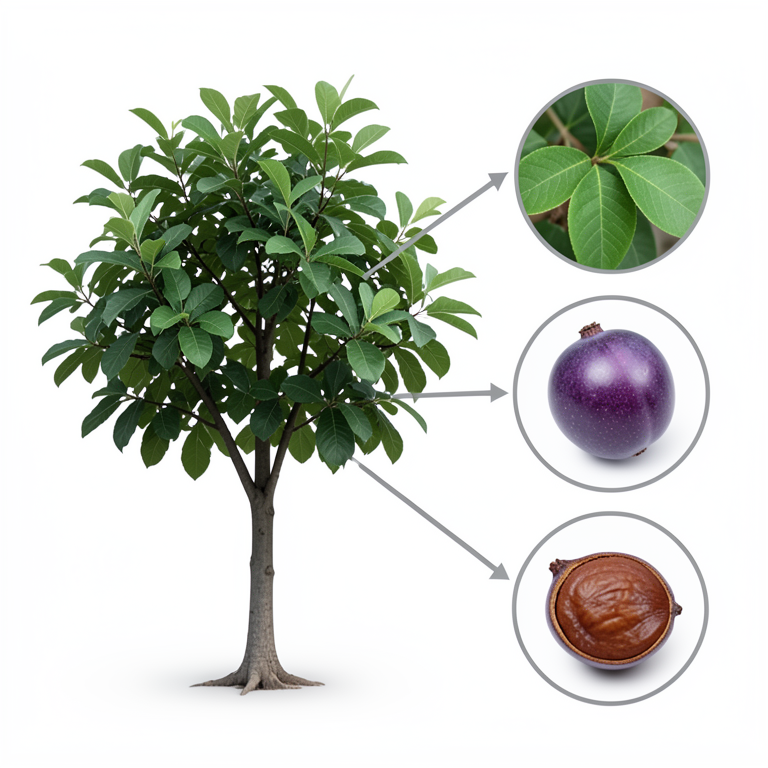
Medicinal Components of the Jamun Tree
AI-generated conceptual illustration (Jamun tree (Syzygium cumini)). It explains the idea and does not show study data.
View source evidence ↗Figures & tables
From the original paper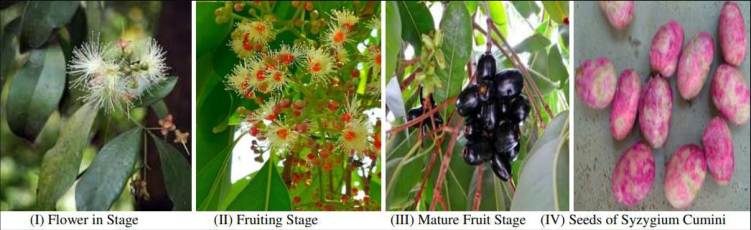 Figure 1
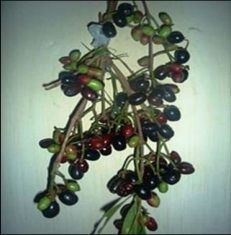 Figure 2
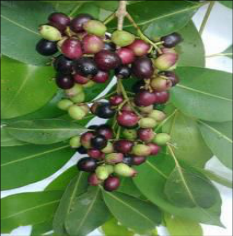 Figure 2
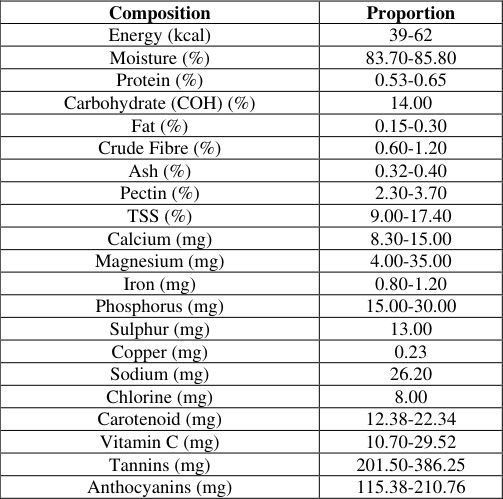 Table 1
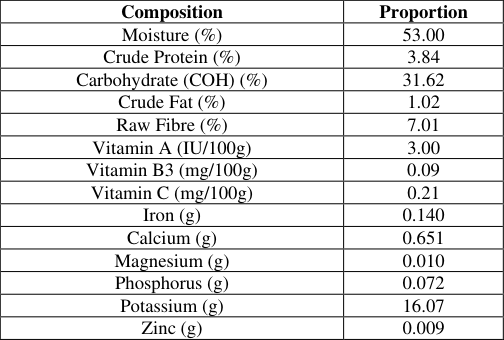 Table 2
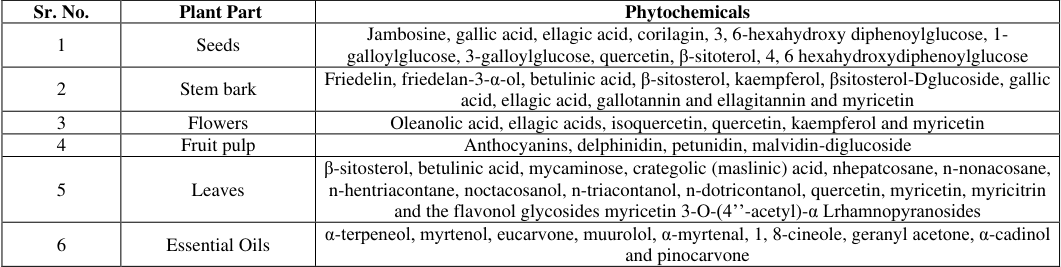 Table 3
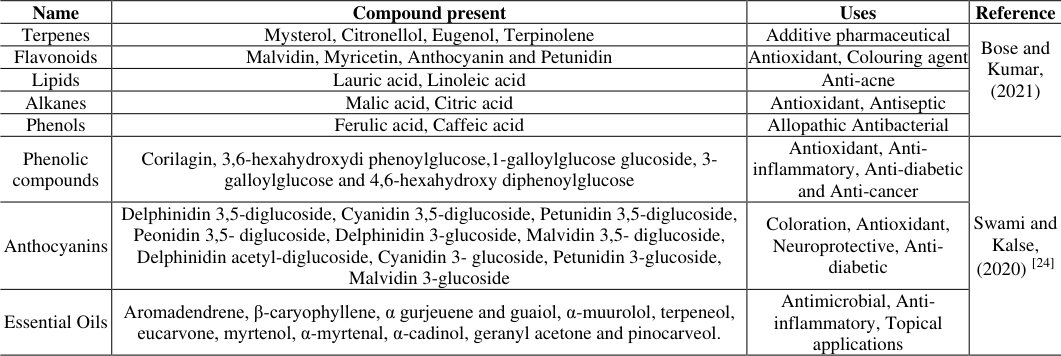 Table 4
Introduction
Jamun (Syzygium cumini L.) known as "Fruit of the Gods" is evergreen tropical tree, belongs to family Myrtaceae and widely grown around the world as horticultural crop distributed in India, Srilanka, Malaysia, Australia, China, Philippines, Russia, Nepal, Bangladesh, Thailand and other countries etc. (Akhila and Umadevi, 2018) [1] . Jamun can be grown successfully under tropical and subtropical climates in kingdom Plantae, order Myrtales, family Myrtaceae, genus Syzygium and species Cumini and favoured for its fruit, timber and ornamental value. Jamun tree consists of leaves, flowers, stem, fruit pulp, seeds and essential oils (Ramteke et al., 2015) [20] . It can be grown successfully in semi-arid subtropical regions with an annual rainfall varying from 350 to 500 mm. India ranks second in production in the world. Within India, Maharashtra is the major producer followed by Uttar Pradesh, Tamil Nadu, Gujarat and Assam. Jamun is commonly known as Ram Jamun (Hindi), Nerale (Kannada), Neredu pandu (Telugu), Naaval pazham (Tamil) and Jambhul (Marathi) (Tripathi, 2020) [25] . The Jamun tree is capable of thriving in a variety of soils, with deep loam and well-drained soils that retain sufficient moisture being ideal for optimal growth and high fruit yield. It can also grow well in poor soils with minimal cultivation. The tree tolerates sodic and saline conditions, especially in ravines and degraded areas, and can even survive in waterlogged environments. Research shows that Jamun performs better under conditions of lower salinity and shallower water tables (Hebbara, 2002) [10] . Additionally, Jamun plants can endure alkali soils with a pH of up to 10.5 (Singh et al., 1997) [23] . The abundant phytochemicals in Jamun leaves highlight their antioxidant and anti-inflammatory benefits (Ghosh et al., 2017) [9] . This foundational research has spurred further investigations into the potential for converting Jamun leaves into value-added products. India stands as the second largest producer of Jamun in the world, contributing 15.4% to the global production estimate of 13.5 million tons. The "Konkan Bahadoli" variety is particularly renowned, with an average yield of 125-150 kg per tree (Joshi, 2011) [12] and it is primarily cultivated in the Konkan region (Patil et al., 2012) [19] . Despite India's significant production of Jamun, substantial quantities are lost due to rainfall or during sorting and grading to meet quality standards for fresh fruit exports, which could instead be utilized for processing. There are two to three morphological types of Jamun such as 'Katha Jamun', which are small and extremely acidic in nature, 'Adaka Jamun' which are medium Jamun having large seeds and pink colour pulp. 'Jumbo Jamun' has seeds which are moderate to small in size, and they have ample amount of pulp. Jamun fruit can be processed to make various food products such as jam, cheese, vinegar, ready to serve (RTS) drinks, ice cream, beverages (fermented and non-fermented), jelly, toffee, wine, squash, and so on. Jamun pulp is used to prepare fortified food products (Dagadkhair et al., 2017) [8] by converting into powder and then mixing with different food materials e.g. Chapatti, flatbread, tablets, cubes, etc. (Kapoor et al., 2015) [13] . Jamun seeds and bark also has medicinal properties and can be used by mixing with other constituents. It is reported that Jamun leaves have a tremendous potential of curing many diseases with the help of phytochemicals in it. It can be converted into many value added products, fortified products and functional foods.
Material and Methodology 1. Post-harvest handling i. Harvesting
Harvest is the process of taking food out of its growing medium. Post-harvest operations are any activities that come after harvest. Harvesting Jamun provides various obstacles, including the uneven form and tiny size of fruits, asynchronous ripening, susceptibility to environmental variables and the necessity for careful handling due to the fragility of the fruit. In addition, the uneven maturity and the existence of partially green fruits with tiny protrusion and grooves make it difficult to recognise and select mature fruits. The height of jamun trees, their brittle branches and the weather make the harvesting process complex and necessitate the use of specialised tools and techniques for safe, efficient and profitable harvest. Jamun fruits are harvested by climbing on the tree in the morning time only. Sometime growers use the bamboo stick with metal ring fastened with nylon netting to make it basket. Fruit bunches are located in baskets and fruits are detached by placing the ring behind it and pulling it sharply to snap the pedicle. Fruit drops in the basket and is emptied in the container on the ground when it is filled. Jamun fruits are in bunches with ripened, green and semi-ripened fruits. While applying jerk to the bunch, some of the ripe fruits drop down on the ground which cause injury and outright loss of produce. Near about 5-10% fruits get damaged due to this method of harvesting; also, fruits harvested are without pedicel hence their shelf life is less and more prone to be attacked by microbes (Joshi, 2011) [12] .
ii. Sorting and Grading
Sorting and grading are done manually by visual inspection into bold size fruits and small size fruits. The uneven shape, small size, partially green and fruits with small projection and grooves should be removed from harvested fruit is called sorting. Fruits without pedicel are ignored and added into the graded fruits (Joshi, 2011) [12] . It was observed that in the movement of Jamun fruits from Jamun growers to ultimate consumer, the village traders, pre-harvest contractors, commission agents/wholesalers, retailers/ hawkers are involved as intermediaries.
iii. Fruit pulp extraction
The process typically involves extraction of the edible flesh of the fruit, fibres and other components. After harvesting, fruits go through various stages of handling, during which they can become mixed with dirt, dust, foreign materials, and microbes. To remove these foreign objects from the surface, fruits are cleaned with water containing 3% CaCl 2 . Once the water on the surface of fruits is removed after air drying, the seeds are removed. The pulp is then squeezed and blended at high speed for about five minutes. After extraction, the juice is filtered through nylon cloth. It is then refrigerated for later use in making jelly, squash, ice cream, drinks, yogurt and shrikhand (Akter et al., 2019) [2] .
Nutritional composition of Jamun Plant
Jamun fruits are abundant in various compounds, including raffinose, glucose, fructose, citric acid, malic acid, gallic acid, anthocyanins, delphinidin-3-gentiobioside, malvidin-3laminaribioside, etunidin-3-gentiobioside, cyanidin diglycoside, petunidin and malvidin (Ayyanar and Subash-Babu, 2012) [4] . The fruit's composition includes 83.70-85.80 g moisture, 0.53-0.65 g protein, 0.15-0.30 g fat, 0.60-1.20 g crude fiber, 14 g COH, 0.32-0.40 g ash, 8.30-15 mg calcium, 35 mg magnesium, 15-16.20 mg phosphorus, 1.20-1.62 mg iron, 26.20 mg sodium, 55 g potassium, 0.23 mg copper, 13 mg sulphur, 8 mg chlorine, 80 IU vitamin A, 0.01-0.03 mg thiamine, 0.009-0.01 mg riboflavin, 0.20-0.29 mg niacin, 5.70-18 mg ascorbic acid, 7 mg choline, and 3 mcg folic acid per 100 g edible portion (Kumawat, 2018) [16] (Table 1). Jamun seed contains 53% moisture, 1.02% crude fat, 3.84% crude protein, 31.62% COH, 7.01% raw fibre, vitamin A (3 IU/100g), B3 (0.09 mg/100g) and C (0.21mg/100g). Also, 0.140 g iron, 0.651 calcium, 0.010 g magnesium, 0.072 g phosphorus, 16.07 g potassium, 0.009 g zinc per 100 g. Jamun or Java plum seed was found to be long, wide and weight (18.20 mm, 11.05 mm and 1.62 g) (Mahalakshmi et al., 2022) [17] (Table 2).
| Composition | Proportion |
|---|---|
| Moisture (%) | 53.00 |
| Crude Protein (%) | 3.84 |
| Carbohydrate (COH) (%) | 31.62 |
| Crude Fat (%) | 1.02 |
| Raw Fibre (%) | 7.01 |
| Vitamin A (IU/100g) | 3.00 |
| Vitamin B3 (mg/100g) | 0.09 |
| Vitamin C (mg/100g) | 0.21 |
| Iron (g) | 0.140 |
| Calcium (g) | 0.651 |
| Magnesium (g) | 0.010 |
| Phosphorus (g) | 0.072 |
| Potassium (g) | 16.07 |
| Zinc (g) | 0.009 |
Table text extracted from the original PDF; superscript letters are shown inline. The original table image is below.
View original table image
| Composition | Proportion |
|---|---|
| Energy (kcal) | 39-62 |
| Moisture (%) | 83.70-85.80 |
| Protein (%) | 0.53-0.65 |
| Carbohydrate (COH) (%) | 14.00 |
| Fat (%) | 0.15-0.30 |
| Crude Fibre (%) | 0.60-1.20 |
| Ash (%) | 0.32-0.40 |
| Pectin (%) | 2.30-3.70 |
| TSS (%) | 9.00-17.40 |
| Calcium (mg) | 8.30-15.00 |
| Magnesium (mg) | 4.00-35.00 |
| Iron (mg) | 0.80-1.20 |
| Phosphorus (mg) | 15.00-30.00 |
| Sulphur (mg) | 13.00 |
| Copper (mg) | 0.23 |
| Sodium (mg) | 26.20 |
| Chlorine (mg) | 8.00 |
| Carotenoid (mg) | 12.38-22.34 |
| Vitamin C (mg) | 10.70-29.52 |
| Tannins (mg) | 201.50-386.25 |
| Anthocyanins (mg) | 115.38-210.76 |
Table text extracted from the original PDF; superscript letters are shown inline. The original table image is below.
View original table image
Phytochemicals present in Jamun tree
Jamun belongs to the category of minor or underutilized fruit crops and are nutritious having many pharmaceuticals properties. Jamun fruits are used for table purpose but its importance for diabetes patients is well known as a traditional medicinal plant having essential bioactive compounds which are present in all parts of the plant. The major bioactive compounds present in the Jamun skeel (edible portion) are phytosterols, flavonoids, carotenoids, myricetin, oxalic acid, and gallic acid, citronellol, cyanidin diglucoside, hotrienol and polyphenols as well as micronutrients having many health benefits (Swami and Kalse, 2020) [24] .
Jamun seeds are rich in alkaloid, glycoside jambolin and jambosine, which terminates the diastatic transformation of starch into sugar. It is beneficial in lowering blood pressure by about 34.6% due to the presence of ellagic acid. Jamun seed extract can reduce blood pressure by around 34.6%. The seed is a strong source of calcium and protein and it contains phenolic, flavonoids, and antioxidants (Ayyanar and Subash-Babu, 2012) [4] . Jamun leaves contain many active phytochemical compounds such as crategolic acid, mycaminose, betulinic acid, ß-sitosterol, n-nonacosane, n-hepatcosane, nhentriacontane, n-dotricontanol, n-triacontanol, noctacosanol, myricetin, quercetin, octacosane, octadecane, eicosane, tannins, triterpenoids, acylated flavonol glycosides and rhamnopyranosides (Rita and Sy, 2021) [21] . [20]
Medicinal properties and health benefits of Jamun tree
Plants have provided mankind with herbal remedies for many diseases from ancient days and even today. They continue to play a major role in primary healthcare as therapeutic remedies in developing countries. In India herbal medicines have been the bases of treatment and cure for various diseases in traditional methods practiced such as Ayurveda (Jadhav et al., 2009) [11] . Jamun fruit pulp, seed with seed coat and kernel, alone kernel, bark and leaves all parts are used in many health conditions (Sharma et al., 2019) [22] . While both the fruit and leaves of the Jamun tree offer various health benefits, the leaves stand out for their distinct medicinal properties. Unlike the fruit, which primarily provides nutritional value and natural sugars, Jamun leaves are particularly rich in bioactive compounds such as flavonoids, phenolic compounds, and alkaloids.
It is found that the bioactive component responsible for the hypoglycaemic effects of Jamun leaves suggests its potential role in managing diabetes. The processing of Jamun leaves into powder and extract adds a practical dimension to their utilization. It is reported that the Jamun leaf powder has immense immune modulatory potential. The medicinal properties of Jamun leaves reported are anti-inflammatory, anti-oxidants, anti-microbial, cardio-protective, anti-allergic, anti-diabetic, anti-cancer and anti-fungal and benefits like it is great for diabetes and renal diseases, promotes intensive cleaning, reduce blood pressure, detoxification, improves digestion and healthy for skin (Bose and Kumar, 2021). Additionally, the peel powder of Jamun can be utilized as a colorant in foods and pharmaceuticals, and the anthocyanin pigments extracted from the fruit peels have been studied for their antioxidant efficacy and stability in formulations (Kumawat, 2018) [16] .
Swami and
Kalse, (2020) [24] Anthocyanins Delphinidin 3,5-diglucoside, Cyanidin 3,5-diglucoside, Petunidin 3,5-diglucoside, Peonidin 3,5-diglucoside, Delphinidin 3-glucoside, Malvidin The clinical effectiveness of the Jamun seeds proved in diabetes (Bose and Sepaha, 1956) [7] . Also, a polyherbal preparation containing Jamun to be clinically effective in the treatment of diabetes (Karnic, 1991) [14] . Kohli and Singh, (1993) [15] has carried out clinical trial of Jamun seed powder in Non-Insulin Dependent Diabetes Mellitus (NIDDM). The effect was observed of composite of tulsi (Ocimum Sanctum) leaves, bitter ground (Momordica charantia), Amla (Emblica officinalis), Gurmur (Gymnema sylvestre) leaves and Jamun (Syzygium cumini) fruit and its seed on mild diabetic patients application of the composite results in reduction of fasting blood sugar (Mitra, 2007) [18] .
Application of Jamun tree to cure different diseases has been reported initially in Ayurveda and by many scientists, few of them are given as below.
1. In Ayurvedic medicine, 1-3 g of dried seed powder is usually given orally to humans to treat diabetic conditions. 2. The fruit juice is useful for treating enlarged spleen and resolving urinary problems. 3. The leaf juice and poultice of the leaves are effective in the treatment of dysentery and skin disorders. 4. The leaves have long been used to treat diabetes, constipation, and leucorrhoea, as well as to prevent blood from leaking into the faces. 5. The bark contains tannins and carbohydrates, accounting for its long-term use as an astringent to combat ailments like dysentery. 6. The seeds have also shown anti-inflammatory effects in rats and antioxidant properties in diabetes. 7. Jamun fruit reduces the sugar in the blood and is very good in the control of diabetes. Its seeds contain Glucoside, Jamboline and Ellagic acid, which are reported to have the ability to check the conversion of starch into sugar in case of excess production of glucose (Giri et al., 1985). 8. The Jamun is acts as a mild astringent, digestive stimulant and liver stimulant (Sharma et al., 2019) [22] . 9. The extracts of the bark, seeds and leaves are used for the treatment of diabetes and for ringworm treatment, water diluted juice is used as lotion. 10. The leaves have antibacterial properties and used for strengthening teeth and gums (Bhowmik et al., 2013) [5] .
Conclusion
Jamun is an underutilized yet nutrient-dense tropical tree offering a plethora of medicinal properties and health benefits. The fruit, leaves, seeds, and bark of Jamun have been traditionally used in Ayurvedic and Unani medicine to combat various ailments, particularly diabetes. The presence of bioactive compounds such as flavonoids, phenolic acids, and alkaloids in Jamun leaves underscores their potential in preventing and managing chronic diseases. The nutritional profile of Jamun fruit is impressive, rich in essential minerals, vitamins, and antioxidants. The seeds, in particular, have shown anti-diabetic properties by inhibiting the conversion of starch into sugar. The leaves' antibacterial, anti-inflammatory, and antioxidant activities further solidify Jamun's status as a valuable medicinal plant. Despite its potential, Jamun remains an underexploited resource due to high perishability and limited post-harvest handling techniques. Value-added products such as jams, jellies, wines, and powders from Jamun fruit and leaves can enhance its economic contribution and nutritional impact.
In conclusion, Jamun is a treasure trove of medicinal and nutritional properties, awaiting comprehensive exploration and utilization. Harnessing its potential can contribute significantly to public health, economic growth, and sustainable development. It highlights the significance of Jamun in medicine and fruits, emphasizing its potential, challenges, and future directions for research and development.
Figures and tables from the paper
References
25 in the original paper- Akhila H, Umadevi SH. Storage effects on vitamin C, anthocyanins, total phenolic and antioxidant capacity of processed Jamun fruit products. Int. J. Pure App. Biosci. 2018;6(6):1335-1347.
- Akter S, Rabby G, Biswas M, Islam N, Hasan M. Development of Jelly, Ice-cream, Yogurt, Squash and Drink from Black Jamun. Environmental and Biological Research. 2019;1(1):54-60.
- Anjum Z, Khursheed N, Ashfaq A. Jamun {Syzygium cumini (L.)}: A seasonal fruit with numerous health benefits. Just Agriculture Multidisciplinary enewspaper. 2021;1(11):1-5.
- Ayyanar M, Subash-Babu P. Syzygium cumini (L.) Skeels: A review of its phytochemical constituents and traditional uses. Asian Pacific Journal of Tropical Biomedicine. 2012;2(3):240-246.
- Bhowmik D, Gopinath H, Kumar BP, Duraivel S, Aravind G, Kumar KP. Traditional and medicinal uses of Indian Black Berry. Journal of Pharmacognosy and Phytochemistry. 2013;1(5):36-41.
- Bose G, Kumar Y. Medicinal use and properties of Syzygium cumini (Jamun). Just Agriculture Multidisciplinary e-newspaper. 2021;2(6):1-4.
- Bose SN, Sepaha GC. Clinical observation on the antidiabetic properties of Petrocarpus maruspium and Eugenia jambolana. Journal of Indian med. Assoc. 1956;27(11):388-391.
- Dagadkhair AC, Pakhare KN, Todmal AD, Andhale RR. Jamun (Syzygium cumini) Skeels: A traditional therapeutic tree and its processed food products. Int. J. Pure App. Biosci. 2017;5(5):1202-1209.
- Ghosh PP, Radha RC, Mishra S, Patel AS, Kar A. Physicochemical and nutritional characterization of Jamun (Syzygium cumini). Current Research in Nutrition and Food Science Journal. 2017;5(1):25-35.
- Hebbara M. Performance of fruit species in saline-water logged soils. Karnataka Journal of Agricultural Sciences. 2002;15:94-98.
- Jadhav VM, Kamble SS, Kadam VJ. Herbal medicine: Syzygium cumini: A review. Journal of Pharmacy Research. 2009;2(8):1212-1219.
- Joshi VP. Post-harvest handling and marketing of Jamun (Syzygium cumini) in Sindhudurg District of Maharashtra state. International Journal of Commerce and Business Management. 2011;4(2):249-253.
- Kapoor S, Ranote PS, Sharma S. Antioxidant potentials and quality aspects of Jamun (Syzygium cumini L.) supplemented unleavened flat bread (Indian chapatti). Journal of Applied and Natural Science. 2015;7(1):309315.
- Karnic CR. A clinical trial of a composite herbal drug in treatment of diabetic mellitus.(madhumeha). Aryavaidyan. 1991;5(1):36-46.
- Kohli KR, Singh RH. A clinical trial of jambu (Eugenia jambolana) in non-insulin dependent diabetes mellitus. Journal of research in ayurveda and sidha. 1993;14(34):89-97.
- Kumawat M, Damor J, Kachchhwaha J, Garg AK, Singh C. Pharmacological properties & therapeutic potential of Syzygium cumini (Jamun): A review. World Journal of Pharmaceutical Research. 2018;7(3):312322.
- Mahalakshmi R, Devisri S, Wins JA, Ganguly P, Chawla N, Ahamed MI N. Formulation of value-added products from jamun seed without loss in the physicochemical and medical properties. Turkish Journal of Physiotherapy and Rehabilitation. 2022;32(2):3143-3149.
- Mitra A. Effects of a composite of Tulsi leaves, Amla, Bitter Gourd, Gurmur leaves, Jamun fruit and seed in Type 2 Diabetic Patients. Journal of clinical and Diagnostic Research. 2007;1(6):511-520.
- Patil SS, Throat RM, Rajasekaran P. Utilization of jamun fruit (Syzygium cumini) for production of red wine. Journal of Advanced Laboratory Research in Biology. 2012;3(3):201-203.
- Ramteke V, Kurrey VK, Kar S. Jamun A traditional fruit and medicine. Popular Kheti. 2015;3(3):188-190. International Journal of Agriculture and Food Science https://www.agriculturaljournals.com
- Rita RS, Sy E. Syzygium cumini leaves extract from West Sumatra Indonesia alleviate oxidative stress by decreasing malondialdehyde level and enhancing catalase activity in rat induced by lead, acetate. Pharmacogn J. 2021;13(6):1408-1412.
- Sharma VB, Soni MK, Onkar JN, Sharma O. Medicinal uses of Jamun (Syzygium cumini (Linn) Skeels.): A review article. World Journal of Pharmaceutical & Medical Research. 2019;5(8):89-90.
- Singh G, Dagar JC, Singh NT. Growing fruit trees in highly alkaline soils-a case study. Land Degradation and Development. 1997;8:257-268.
- Swami SB, Kalse SB. Bioactive compounds in jamun (Syzygium cumini L.) Skeels. The Pharma Innovation Journal. 2020;9(11):161-167.
- Tripathi PC. Jamun Cultivation, Indian Institute of Horticultural Research. 2020:1-29.