
Research article · 2025 · Full text
International Journal of Agriculture and Food ScienceIsolation and characterization of phosphate solubilizing bacteria from western Maharashtra
Volume 7(9) · Pages 558–561 · DOI: 10.33545/2664844x.2025.v7.i9g.794 ↗
Research areasSatellite Image Processing and Photogrammetry3D Surveying and Cultural HeritageGeochemistry and Geologic Mapping
Abstract
Author-writtenPhosphate solubilizing bacteria (PSB) serve as eco friendly biofertilizers by converting insoluble soil phosphorus—often bound with aluminum, iron, calcium, or magnesium—into plant available forms. They achieve this by secreting low molecular weight organic acids that chelate metal ions, thus releasing phosphate ions for uptake. In a survey of soils from Satara and Sangli districts in Western Maharashtra, forty two samples yielded ten PSB isolates selected based on phosphate solubilization index (SI ranging 1.00-4.08) and solubilization efficiency (PSE up to 308%). When cultured in Pikovskaya’s broth containing tricalcium phosphate (TCP), phosphate release ranged from 52.7 to 180.5 mg/L, with isolate Tas 1 achieving the highest (180.5 mg/L). Morphological, cultural, and biochemical tests identified six isolates (Pal 1, Pal 2, Tas 1, Is 1, Pat 2, Ane 1) as Bacillus spp., and four (Kde 1, Wa 2, Sat 1, Kr 1) as Pseudomonas spp. All isolates tested positive for catalase, oxidase, and citrate utilization; several showed bromothymol blue reaction, ammonia production, and motility. Five isolates exceeded 100 mg/L phosphate solubilization, highlighting Tas 1 as a highly promising candidate for agricultural biofertilizer development.
Summary
Source-checkedPlain-language reading of the full paper, prepared with AI and checked against the text. Each point links to the authors' own words.
Why it matters
- Phosphate-solubilizing bacteria (PSB) act as environmentally friendly biofertilizers by transforming insoluble soil phosphorus into forms that plants can use. View evidence ↗
- PSB release phosphate ions by secreting low-molecular-weight organic acids that chelate metal ions. View evidence ↗
- Using PSB can reduce the agricultural reliance on synthetic chemical fertilizers, providing a more sustainable alternative. View evidence ↗
The question
- The study aimed to isolate and characterize phosphate-solubilizing bacteria from soil samples collected in the Satara and Sangli regions of western Maharashtra. View evidence ↗
What they did
- Bacteria were isolated by suspending 1g of rhizosphere soil in 100ml of distilled water and inoculating decimal dilutions onto Pikovskaya's medium at 30°C. View evidence ↗
- The effect of the bacteria on medium acidity was monitored by recording the pH on the day of inoculation and on the 3rd, 6th, and 9th days. View evidence ↗
What they found
- Isolate Tas-1 demonstrated the highest phosphate solubilization efficiency at 308.6% and the highest solubilization index at 4.08. View evidence ↗
- Quantitative phosphate release ranged from 52.7 to 180.5 mg/L, with isolate Tas-1 producing the maximum amount of 180.5 mg/L. View evidence ↗
What it means
- The authors concluded that PSB, particularly isolates Tas-1, Pal-1, and Pal-2, have significant potential for releasing soluble phosphate for plant use. View evidence ↗
- Because five isolates exceeded 100 mg/L of phosphate solubilization, the authors highlight Tas-1 as a highly promising candidate for developing agricultural biofertilizers. View evidence ↗
Visual summary
3 visualsIllustrations explain the paper; charts are replotted from the paper's own table values.
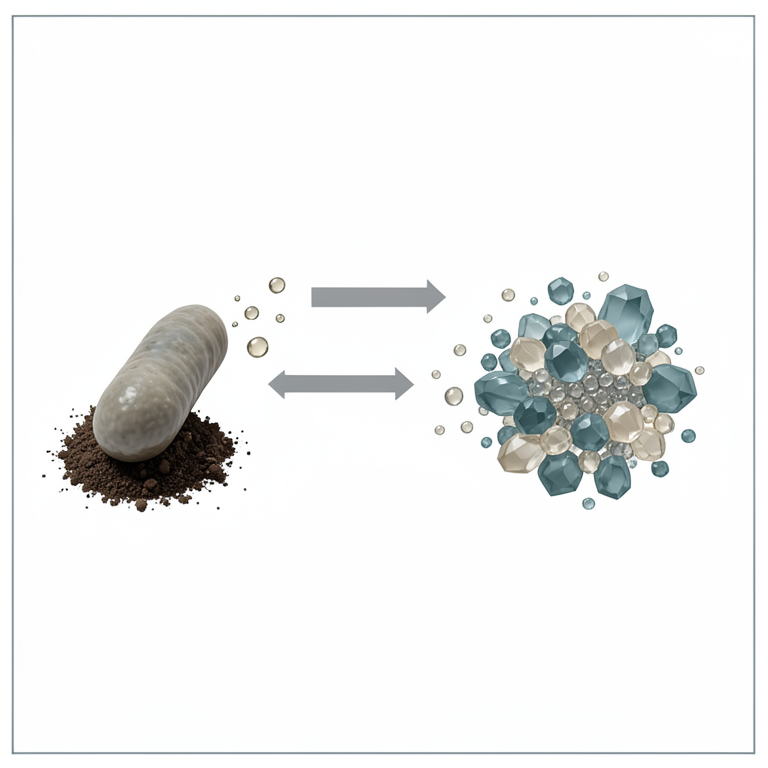
Mechanism of Phosphate Solubilization
AI-generated conceptual illustration (soil bacteria and mineral phosphate crystals). It explains the idea and does not show study data.
View source evidence ↗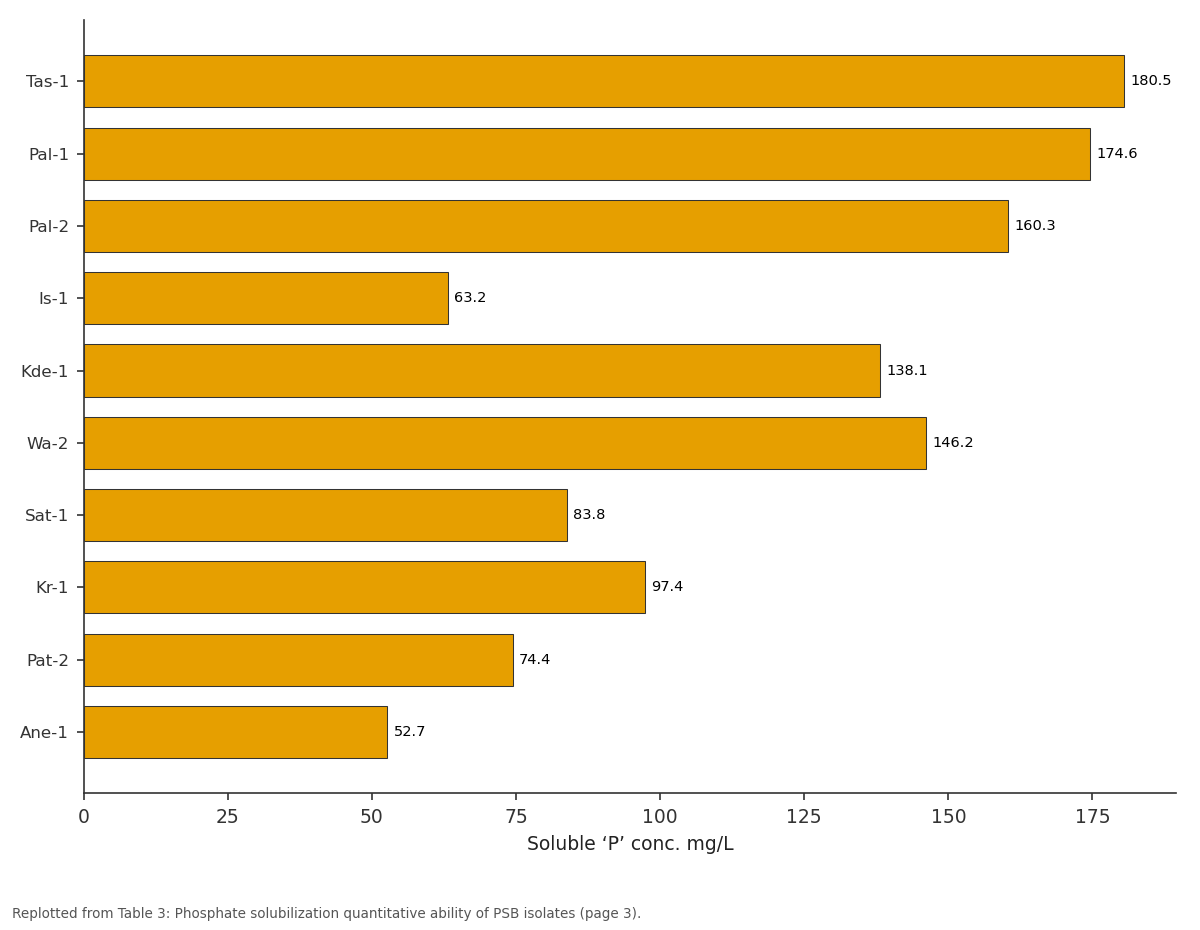
Soluble ‘P’ conc. mg/L: Tas-1 vs Pal-1 vs Pal-2 vs Is-1 vs Kde-1
Replotted from Table 3 (page 3) of the original paper. Every bar is the paper's own table value.
View source evidence ↗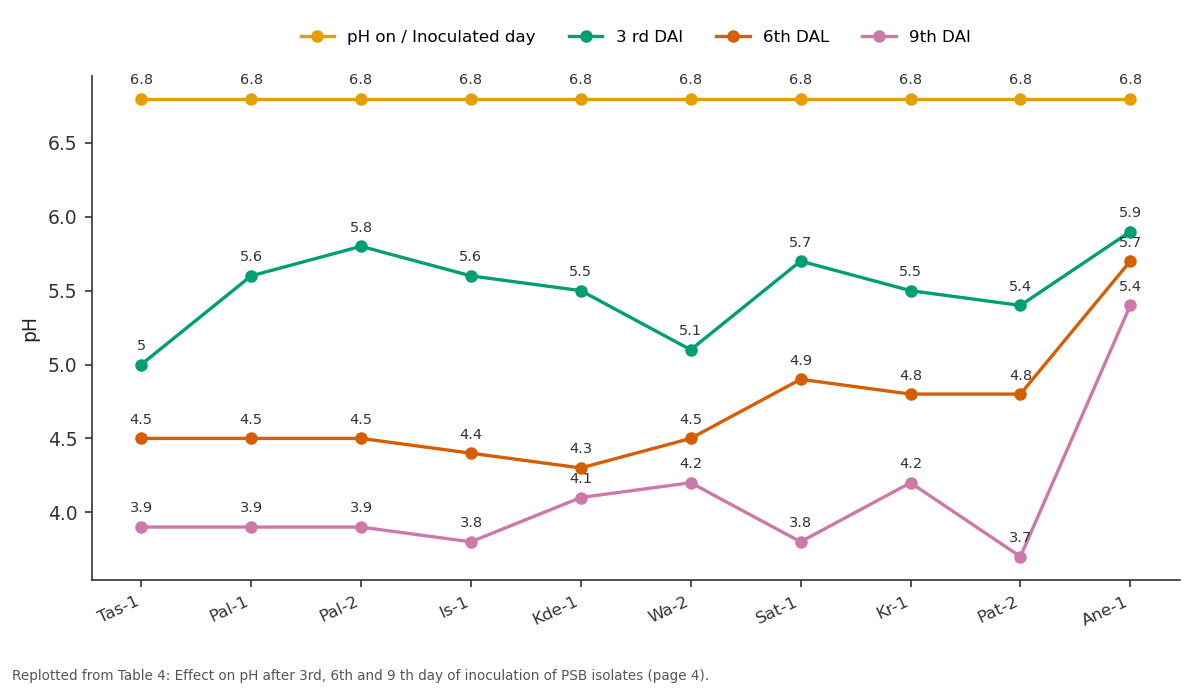
pH on / Inoculated day and 3 rd DAI and more: Tas-1 vs Pal-1 vs Pal-2 vs Is-1 vs Kde-1
Replotted from Table 4 (page 4) of the original paper. Every bar is the paper's own table value.
View source evidence ↗Figures & tables
From the original paper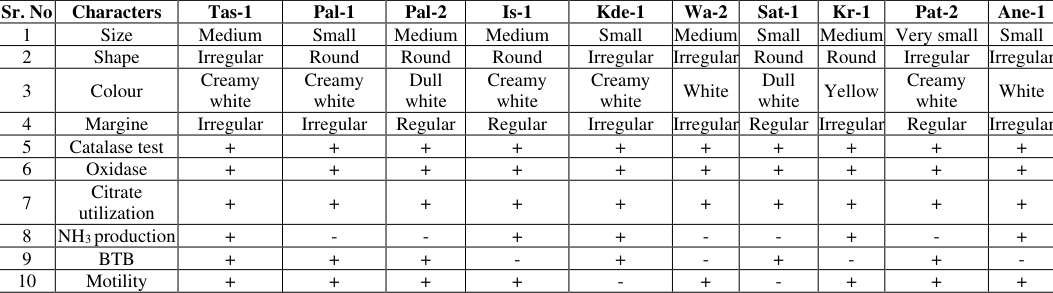 Table 1
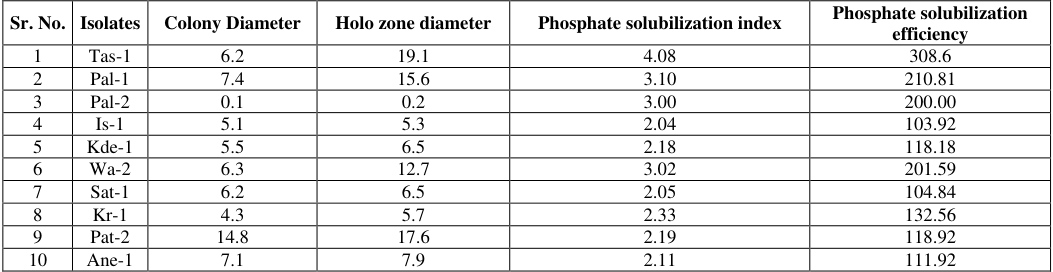 Table 2
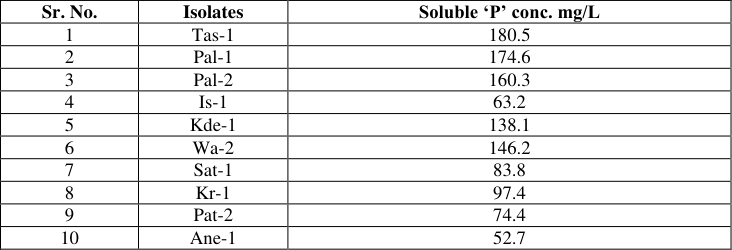 Table 3
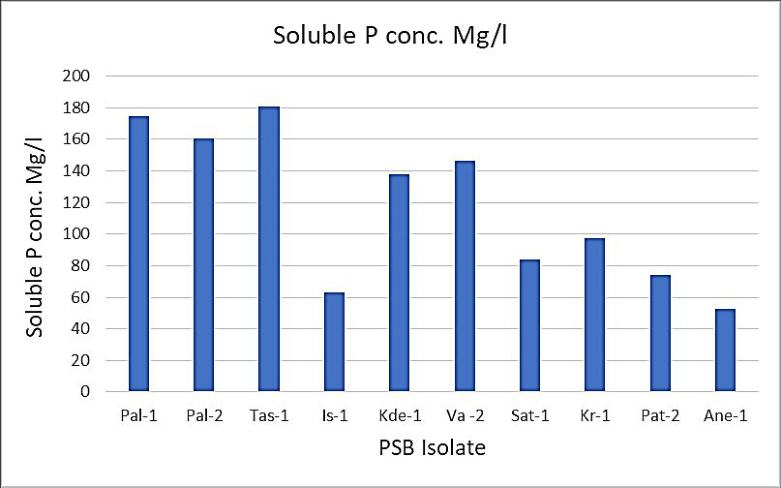 Figure 1
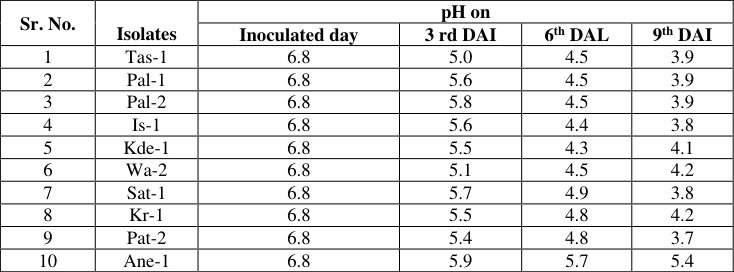 Table 4
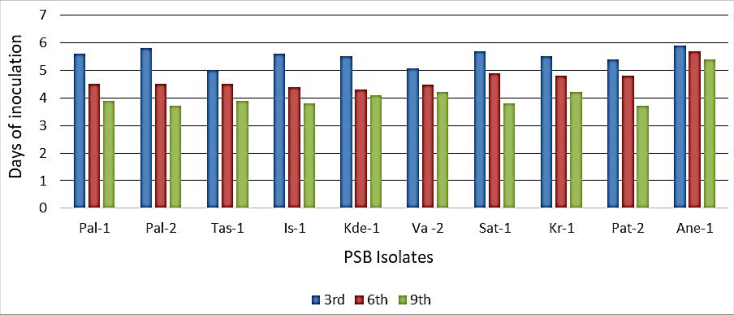 Figure 2
Introduction
Soil was created thousands of years ago by a combination of physical, chemical, and biological processes. A significant improvement in agricultural output is required to feed the expanding population. Numerous bacterial species, especially those present in the rhizosphere of plants, have the ability to favourably affect plant growth. Pseudomonas, Serratia, Azospirillum, Burkholderia, Bacillus, Enterobacter, Rhizobium, Erwinia, Alcaligenes, Arthrobacter, Acinetobacter, and Flavobacterium are among the genera with strains of these bacteria, which are referred to as "plant growth-promoting rhizobacteria" (PGPR) (Rodríguez et al., 1999) [9] . Many of these microorganism's function as phosphate-solubilizing agents, converting insoluble phosphorus into soluble forms (HPO₄²⁻ and H₂PO₄⁻) by producing acids, facilitating ion exchange and acidification, chelating metal ions, and forming polymeric substances (Delvasto et al., 2008) [2] . Consequently, they reduce dependency on chemical fertilizers and are increasingly seen as a sustainable alternative to conventional synthetic fertilization. One essential macronutrient required for plant growth and development is phosphorus (P). According to Khan et al. (2009) [5] , it is a component of biological molecules such as ATP, phospholipids, DNA, and RNA. By encouraging the growth of deeper roots, phosphorus is a crucial component that contributes significantly to plant nutrition. (Gaur 1990). Since the 1950s, phosphate-soluble bacteria (PSB) have been used as biofertilizers (Kudashev, 1956) [6] . One important factor affecting P availability in soils is the release of phosphorus (P) by PSB from insoluble and fixed/adsorbed forms. A broad category of microorganisms known as phosphate solubilizing microorganisms (PSMs) help make soil phosphorus (P) accessible. Because they solubilize inorganic P minerals, mineralize organic P, and store large amounts of P in their biomass, they are essential to the soil P cycle. PSMs can transform soil P into soluble and plant-available orthophosphate forms, such as PO 4 3-, HPO 4 2-, and H 2 PO 4-, by releasing phosphatase enzymes and organic acids, decreasing soil pH, and improving chelation activities with extra P adsorption sites. In current investigation soil samples were collected from western Maharashtra specially from Satara and Sangli region.
Materials and methods
Materials and methods
Collection of soil sample
The soil samples were collected from Satara and Sangli region from the agricultural land. Soil samples were collected from rhizosphere of various soils and crops. Collected soil samples were stored in polythene bags aseptically and maintained at the laboratory for further study.
Isolation of strain
For isolation of Phosphate Solubilizing Microbes, 1g rhizosphere soil was suspended in 100ml of distilled water. An aliquot (100 -l ) from decimal dilutions was inoculated on Picovskaya s medium by pour plate technique and incubated at 30 o C. Colonies showing phosphate solubilizing zone around them were considered as PSB. Single colonies appearing on Picovskaya s agar plates were transferred in liquid broth of Picovskaya s and on agar slants for further study. Aneja 2003 [1] .
Analysis of phosphate solubilization ability
From the isolates, larger halo zone producing strains were selected for further study. The qualitative as well as quantitative analyses of phosphate solubilizing activity of the selected isolates were conducted by plate screening method and broth culture method.
Qualitative method
All the suspected colonies were screened for phosphate solubilization on Pikovskayas medium. Isolates showing phosphate solubilizing ability were spot inoculated at the centre Pikovskaya s plate and incubated at 37 0 C.Diameter of clearance zone was measured successively after 24 hours, up to 7 days. The Phosphate Solubilization Efficiency (PSE) is the ratio of total diameter. i.e. clearance zone including bacterial growth and the colony diameter. (Premono et al., 1996) [8] .
All the observations were recorded in triplicate. Strains developing clear zones around their colonies could easily identify as PSB.
Quantitative method
Pikovskaya s broth medium (100 ml) with Tricalcium phosphate (0.3g/100ml) was prepared and sterilized; 1ml of each isolates was inoculated into the broth medium. Then the inoculated sample were incubated for 5 days on rotatory shaker 37 0 C after incubation, culture broth was centrifuged at 10,000 rpm for 30 min. Uninoculated broth served as control. The available Phosphorous was determined using calorimetrically at 410 nm with standard KH 2 PO 4 .
Assesment of pH change
Isolated PSB culture were inoculated in Pikovaskaya's broth pH on inoculated day was recorded. The progressive reduction in pH on 3 rd , 6 th and 9 th day was recorded.
Result and discussion
Isolation and identification of PSB In Pikovskaya's agar medium, the phosphate-solubilizing microbes in the soil samples were assessed. Using insoluble tri-calcium phosphate (TCP) from soil in western Maharashtra, 42 phosphate-soluble bacterial colonies were recovered on Pikovskaya's agar medium. Ten isolates with the highest Phosphate Solubilization Index (PSI), ranging from 2.11 to 4.08, out of 42 microbial isolates were chosen for more research. Phosphate solubilization was identified in colonies that displayed distinct halo zones surrounding the microbial growth. Following a series of morphological and biochemical reactions, the bacterial isolates were further identified as Pseudomonas sp. and Bacillus sp. the biochemical and physical traits of these isolates. Table 1 Analysis of phosphate solubilizing activity Larger strains that produced halo zones were chosen from the isolates for more investigation. The chosen isolates' phosphate solubilizing activity was analyzed both qualitatively and quantitatively using the broth culture and plate screening methods.
| Sr. No | Characters | Tas-1 | Pal-1 | Pal-2 | Is-1 | Kde-1 | Wa-2 | Sat-1 | Kr-1 | Pat-2 | Ane-1 |
|---|---|---|---|---|---|---|---|---|---|---|---|
| 1 | Size | Medium | Small | Medium | Medium | Small | Medium | Small | Medium | Very small | Small |
| 2 | Shape | Irregular | Round | Round | Round | Irregular | Irregular | Round | Round | Irregular | Irregular |
| 3 | Colour | Creamy white | Creamy white | Dull white | Creamy white | Creamy white | White | Dull white | Yellow | Creamy white | White |
| 4 | Margine | Irregular | Irregular | Regular | Regular | Irregular | Irregular | Regular | Irregular | Regular | Irregular |
| 5 | Catalase test | + | + | + | + | + | + | + | + | + | + |
| 6 | Oxidase | + | + | + | + | + | + | + | + | + | + |
| 7 | Citrate utilization | + | + | + | + | + | + | + | + | + | + |
| 8 | NH3 production | + | - | - | + | + | - | - | + | - | + |
| 9 | BTB | + | + | + | - | + | - | + | - | + | - |
| 10 | Motility | + | + | + | + | - | + | - | + | + | + |
Table text extracted from the original PDF; superscript letters are shown inline. The original table image is below.
View original table image
Qualitative method
All the selected isolates were found to be potent phosphate solubilizers showing clear zone around their colonies. Out of 42 microbial isolates 10 isolates showed highest Phosphate Solubilization Index (PSI) ranged from 2.11-4.08 were selected for further studies. These findings are consistent with those of Karpagam and Nagalakshmi (2014) [4] and Roy et al. (2013) [10] . Among these 10 potent isolates, 3 showed maximum PSI of Tas-1, Pal-1 and Pal-2 in agar plates. The PSI measurement was shown in the Table 2.
| Sr. No. | Isolates | Colony Diameter | Holo zone diameter | Phosphate solubilization index | Phosphate solubilization efficiency |
|---|---|---|---|---|---|
| 1 | Tas-1 | 6.2 | 19.1 | 4.08 | 308.6 |
| 2 | Pal-1 | 7.4 | 15.6 | 3.10 | 210.81 |
| 3 | Pal-2 | 0.1 | 0.2 | 3.00 | 200.00 |
| 4 | Is-1 | 5.1 | 5.3 | 2.04 | 103.92 |
| 5 | Kde-1 | 5.5 | 6.5 | 2.18 | 118.18 |
| 6 | Wa-2 | 6.3 | 12.7 | 3.02 | 201.59 |
| 7 | Sat-1 | 6.2 | 6.5 | 2.05 | 104.84 |
| 8 | Kr-1 | 4.3 | 5.7 | 2.33 | 132.56 |
| 9 | Pat-2 | 14.8 | 17.6 | 2.19 | 118.92 |
| 10 | Ane-1 | 7.1 | 7.9 | 2.11 | 111.92 |
Table text extracted from the original PDF; superscript letters are shown inline. The original table image is below.
View original table image
Quantitative method
Pikovskaya s broth medium (100 ml) with Tricalcium phosphate (0.3g/100ml) was prepared and sterilized; 1ml of each isolates was inoculated into the broth medium. It was observed that isolates Tas-1, Pal-1 and Pal-2 showed highest percent P solubilization Panda et al. (2013) [7] showed similar result. The results were showed in the Table 3 and figure 1.
| Sr. No. | Isolates | Soluble ‘P’ conc. mg/L |
|---|---|---|
| 1 | Tas-1 | 180.5 |
| 2 | Pal-1 | 174.6 |
| 3 | Pal-2 | 160.3 |
| 4 | Is-1 | 63.2 |
| 5 | Kde-1 | 138.1 |
| 6 | Wa-2 | 146.2 |
| 7 | Sat-1 | 83.8 |
| 8 | Kr-1 | 97.4 |
| 9 | Pat-2 | 74.4 |
| 10 | Ane-1 | 52.7 |
Table text extracted from the original PDF; superscript letters are shown inline. The original table image is below.
View original table image
Effect on pH in broth medium after inoculation of PSB isolates
These results reinforce the hypothesis that organic acid production, leading to medium acidification, plays a central role in mobilizing insoluble phosphates by lowering the pH and chelating cations such as calcium, iron, or aluminum that bind phosphate. Isolates like Tas-1 and Pal-1 with robust acid-producing capacity, hold promise for bioformulation development aimed at enhancing phosphorus availability in acidic and calcareous soils. These findings concur with those of Ma. Esther Sanchez-Gonzalez et al. (2023) [11] . The results were showed in the Table 4 and figure 2.
| Sr. No. | Isolates | pH on | — | — | — |
|---|---|---|---|---|---|
| Inoculated day | 3 rd DAI | 6th DAL | 9th DAI | ||
| 1 | Tas-1 | 6.8 | 5.0 | 4.5 | 3.9 |
| 2 | Pal-1 | 6.8 | 5.6 | 4.5 | 3.9 |
| 3 | Pal-2 | 6.8 | 5.8 | 4.5 | 3.9 |
| 4 | Is-1 | 6.8 | 5.6 | 4.4 | 3.8 |
| 5 | Kde-1 | 6.8 | 5.5 | 4.3 | 4.1 |
| 6 | Wa-2 | 6.8 | 5.1 | 4.5 | 4.2 |
| 7 | Sat-1 | 6.8 | 5.7 | 4.9 | 3.8 |
| 8 | Kr-1 | 6.8 | 5.5 | 4.8 | 4.2 |
| 9 | Pat-2 | 6.8 | 5.4 | 4.8 | 3.7 |
| 10 | Ane-1 | 6.8 | 5.9 | 5.7 | 5.4 |
Table text extracted from the original PDF; superscript letters are shown inline. The original table image is below.
View original table image
Acknowledgement
AcknowledgementThe authors would like to thank Mahatma Phule Krishi Vidyapeeth Rahuri, Biological Nitrogen fixation scheme and Department of Plant Pathology, College of Agriculture Pune for providing necessary research facilities.
References
9 in the original paper- Delvasto P, Valverde A, Ballester A, Muñoz JA, González F, Blázquez ML, et al. Diversity and activity of phosphate bioleaching bacteria from a highphosphorus iron ore. Hydrometallurgy. 2008;92:124129.
- Karpagam T, Nagalakshmi PK. Isolation and characterization of phosphate solubilizing microbes from agricultural soil. International Journal of Current Microbiology and Applied Sciences. 2014;3(3):601614.
- Khan AA, Jilani G, Akhtar MS, Naqvi SMS, Rasheed M. Phosphorus solubilizing bacteria: occurrence, mechanisms and their role in crop production. Journal of Agriculture and Biological Sciences. 2009;1:48-58.
- Kudashev IS. The effect of phosphobacterin on the yield and protein content in grains of Autumm wheat, maize and soybean. Doklady Vsesoyuznoi Akademii Sel'sko-khozyaistvennykh Nauk. 1956;8:20-23.
- Panda B, Rahman H, Chatlod LR, Jagabandhu P. Isolation and characterization of phosphate solubilizing bacteria from the soils of Sikkim, India. International Journal of Bio-resource and Stress Management. 2013;4(2):255-262.
- Premono ME, Moawad AM, Vlek PLG. Effect of phosphate-solubilizing Pseudomonas putida on the growth of maize and its survival in the rhizosphere. Indonesia Journal of Crop Science. 1996;11:13-23.
- Rodriguez H, Fraga R. The use of phosphate solubilizing bacteria as inoculants simultaneously increases P uptake by the plant and crop yield. Biotechnology Advances. 1999;17:319-339.
- Roy M, Sharma GD, Ramana CV. Isolation and characterization of phosphate solubilizing Pseudomonas sp. from rhizospheric soil of rice. Indian Journal of Applied Research. 2013;3(9):1-3.
- Sanchez-Gonzalez ME, Mora-Herrera ME, WongVillarreal A, De La Portilla-López N, Sanchez-Paz L, Lugo J, et al. Effect of pH and carbon source on phosphate solubilization by bacterial strains in pikovskaya medium. Microorganisms. 2022;11(1):49.