
Research article · 2025 · Full text
International Journal of Agriculture and Food ScienceDigital and biotechnological interventions in floriculture: A comprehensive review
Volume 7(5) · Pages 385–389 · DOI: 10.33545/2664844x.2025.v7.i5f.773 ↗
Research areasGeochemistry and Geologic MappingGeological Modeling and AnalysisElectrical and Electromagnetic Research
Abstract
Author-writtenFloriculture, a rapidly expanding sector of horticulture, plays a vital role in global trade, cultural traditions, employment generation, and economic diversification. However, the industry faces significant challenges including climate variability, pest and disease outbreaks, post-harvest losses, and limitations of conventional breeding. Recent advances in biotechnology such as genetic engineering, CRISPR/Cas9 genome editing, molecular marker-assisted breeding, and tissue culture have enabled the development of ornamentals with novel colors, enhanced fragrance, extended vase life, and improved stress tolerance. In parallel, digital technologies like artificial intelligence (AI), Internet of Things (IoT), smart sensors, robotics, and big data analytics are driving precision floriculture, optimizing input use, and enhancing quality monitoring. The integration of these approaches is reshaping floriculture into a science-driven, technology-enabled, and globally competitive industry. Despite regulatory barriers, high infrastructure costs, and adoption challenges in developing regions, the synergistic application of digital and biotechnological interventions offers transformative potential for sustainability, climate resilience, and market innovation. This review provides a comprehensive overview of recent developments, challenges, and future perspectives, highlighting the role of integrated innovations in advancing global floriculture.
Summary
Source-checkedPlain-language reading of the full paper, prepared with AI and checked against the text. Each point links to the authors' own words.
Why it matters
- Floriculture is a fast-growing part of horticulture that is important for global trade, economics, and cultural traditions. View evidence ↗
- The floriculture industry is hindered by climate change, pests, diseases, and the inefficiency of traditional breeding methods. View evidence ↗
- Traditional breeding is difficult in ornamental plants because of their complex genetics and long juvenile periods. View evidence ↗
The question
- The paper aims to review recent biotechnological and digital developments and their integrated role in advancing the global floriculture industry. View evidence ↗
What they did
- The authors used a systematic review approach to synthesize existing literature on digital and biotech interventions. View evidence ↗
- The review included peer-reviewed articles, case studies, and reports published from 2000 to 2024. View evidence ↗
What they found
- Overexpressing carotenoid biosynthesis genes in marigolds and chrysanthemums increased pigment accumulation by up to 50%. View evidence ↗
- Using CRISPR to knock out ethylene biosynthesis genes in orchids extended flower longevity by 25-30%. View evidence ↗
- In India, micropropagation of carnations and gerberas in protected cultivation increased productivity by 20-25% over conventional methods. View evidence ↗
- Meristem culture in roses and chrysanthemums reduced disease incidence in commercial nurseries by up to 70%. View evidence ↗
- Overexpressing the BEAT gene in petunias increased the emission of floral volatile compounds by 60%. View evidence ↗
- Roses engineered with chitinase and glucanase genes showed a 70% reduction in susceptibility to black spot and powdery mildew. View evidence ↗
- Smart irrigation and automated fertigation systems can reduce input costs by 30-40% compared to conventional methods. View evidence ↗
- Automated polyhouse rose cultivation in India increased yields by 20-25% and reduced pesticide use by nearly 35%. View evidence ↗
- Deep learning models can detect nutrient deficiencies and diseases like botrytis and powdery mildew in ornamentals with over 90% accuracy. View evidence ↗
- A pilot project in Bangalore combining IoT greenhouses with CRISPR-modified marigolds achieved a 25% higher carotenoid yield than conventional cultivation. View evidence ↗
What it means
- The authors conclude that integrating biotechnology and digital agriculture is the most effective path toward sustainable floriculture. View evidence ↗
- High infrastructure costs ($10,000 to $50,000 per hectare) limit the adoption of digital tools for smallholders, who make up over 70% of Indian floriculturists. View evidence ↗
- Over 60% of floriculture enterprises in India and the Netherlands report a lack of skilled personnel to manage smart farming systems. View evidence ↗
Visual summary
1 visualsIllustrations explain the paper; they do not show study data.
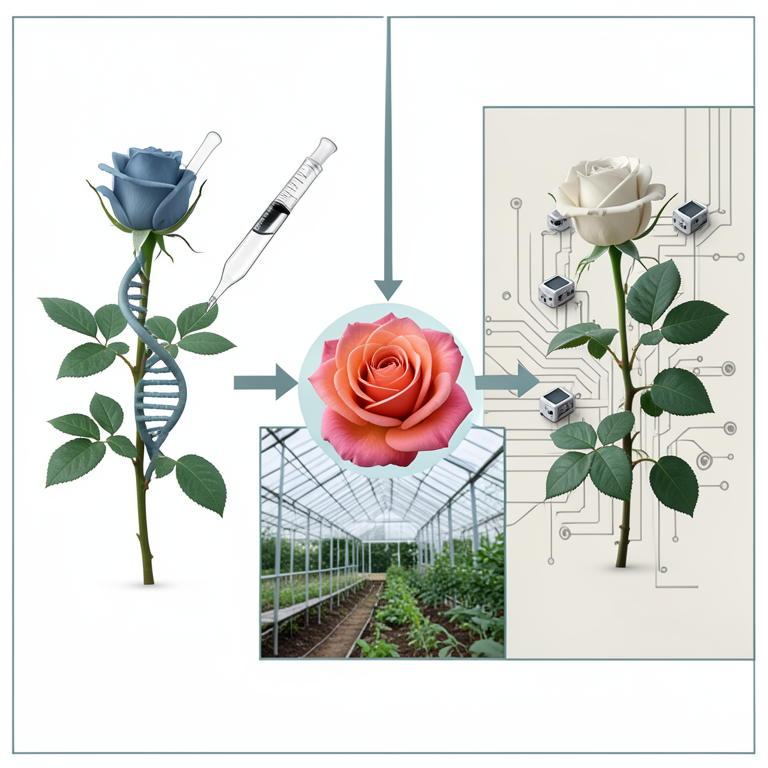
Synergy of Biotech and Digital Tools
AI-generated conceptual illustration (Cut roses and greenhouse sensors). It explains the idea and does not show study data.
View source evidence ↗Figures & tables
From the original paper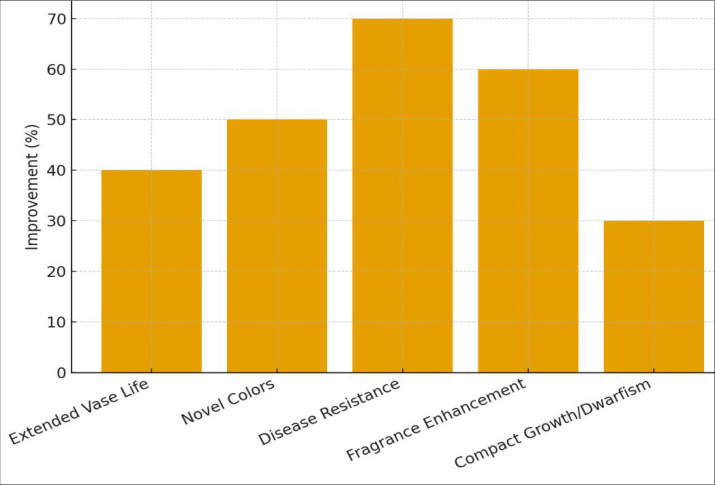 Figure 1
Introduction
Floriculture, a specialized branch of horticulture, deals with the cultivation, processing, and marketing of flowers and ornamental plants. It has emerged as one of the fastest-growing segments of agriculture worldwide, contributing not only to aesthetic enrichment and cultural traditions but also to employment generation, income diversification, and foreign exchange earnings. Globally, the floriculture industry is valued in billions of dollars, with developing countries such as India, Kenya, and Ethiopia increasingly becoming major players due to their favorable climatic conditions, cost-effective labor, and expanding export potential. Within India, the sector has witnessed rapid expansion under initiatives like the Mission for Integrated Development of Horticulture (MIDH), which has encouraged greenhouse cultivation, polyhouse farming, and export-oriented production systems. The demands of the modern flower industry have shifted from traditional uses in festivals, rituals, and decorations to more sophisticated requirements such as cut flowers with extended vase life, novel colors, fragrance enhancement, stress-tolerant varieties, and disease-resistant plants. Consumers increasingly seek value-added floral products such as essential oils, nutraceutical extracts, natural dyes, and eco-friendly packaging, widening the scope of floriculture from ornamentals to multifunctional crops with industrial applications. However, the sector faces persistent challenges. Conventional breeding approaches are limited due to the long juvenile phase, high heterozygosity, and complex genetic background of many ornamental species. In addition, climate change, pest outbreaks, water scarcity, and soil degradation further threaten production and profitability. Post-harvest losses remain high due to inadequate cold-chain infrastructure and inefficiencies in supply chains. Thus, there is a strong need for innovative interventions that can accelerate breeding cycles, improve crop resilience, and integrate real-time management systems.
In this context, digital and biotechnological interventions have emerged as transformative solutions. Biotechnological tools such as genetic engineering, CRISPR/Cas-mediated genome editing, molecular marker-assisted breeding, and tissue culture offer unprecedented opportunities for trait enhancement and rapid multiplication. At the same time, digital technologies including artificial intelligence (AI), Internet of Things (IoT), smart sensors, and robotics are revolutionizing cultivation practices by enabling precision floriculture, resource efficiency, and quality monitoring. The convergence of these two domains is reshaping floriculture into a science-driven, technology-enabled industry that aligns with the global goals of sustainability, climate resilience, and economic competitiveness.
Research Methodology
This study adopts a systematic review approach to analyze and synthesize the existing body of literature on digital and biotechnological interventions in floriculture. The methodology followed includes the following steps:
Research Design
The review is qualitative in nature and follows a descriptive and analytical design, focusing on published research, policy documents, and case studies. The purpose was to integrate findings from biotechnology and digital agriculture to provide a holistic perspective on their applications in floriculture.
Data Sources
Data Sources
Data Extraction and Analysis
Extracted data on key themes such as genetic engineering, genome editing, marker-assisted breeding, tissue culture, AI applications, IoT, robotics, and smart greenhouses. Quantitative outcomes (e.g., % yield increase, % reduction in post-harvest loss, vase life extension) were documented where available.
Qualitative synthesis involved identifying challenges, constraints, and policy perspectives across global and regional studies.
Review Framework
The findings were organized under the following thematic areas:
Enhancement of Floral Traits
Biotechnology has been pivotal in tailoring floral attributes for market-driven demands: Fragrance: Overexpression of the BEAT gene (benzyl alcohol acetyltransferase) in petunia increased emission of floral volatile compounds by 60%, enhancing consumer appeal. Extended vase life: Carnations transformed with antiethylene genes (ACC oxidase suppression) showed a two-fold increase in vase life, reducing post-harvest losses significantly. Disease resistance: Roses expressing chitinase and glucanase genes exhibited 70% reduced susceptibility to powdery mildew and black spot diseases. Morphological modifications: Biotechnology has introduced dwarfism, compact plant architecture, and altered flower forms. For instance, engineered compact petunias require 30% less space during cultivation and transportation, reducing logistics costs.
These advancements not only benefit consumers (with novel, longer-lasting, and higher-quality flowers) but also support growers and exporters by reducing costs, minimizing losses, and improving sustainability in the global floriculture supply chain.
Digital Interventions & Precision Floriculture Precision Agriculture & Automation
The adoption of precision agriculture technologies in floriculture has transformed traditional greenhouse and open-field flower cultivation into highly data-driven production systems. Smart irrigation systems using soil moisture sensors and automated fertigation units ensure optimal water and nutrient delivery, reducing input costs by up to 30-40% compared to conventional methods (FAO, 2022) [6] . Similarly, climate control systems equipped with temperature, humidity, and CO₂ sensors maintain ideal growth environments, leading to significant yield improvements in flowers such as roses and gerberas.
In India, studies have shown that automated polyhouse cultivation of roses increases flower yield by 20-25% while reducing pesticide usage by nearly 35%, contributing to sustainability and export competitiveness. Global market estimates suggest that the smart agriculture market in
Integration: Merging Digital & Biotech Approaches
The future of floriculture lies in the synergistic integration of digital and biotechnological interventions. For instance: Smart Breeding Programs: Bioengineered traits such as drought tolerance or novel pigments can be rapidly evaluated using digital phenotyping platforms that collect high-throughput data on growth, color, and morphology. Robotics in Tissue Culture: Robotic arms and AIcontrolled systems are being tested to automate micropropagation and in vitro regeneration, significantly reducing labor costs and contamination risks. Data-Driven Cultivation: AI-based predictive models use sensor and genomic data to fine-tune nutrient and environmental regimes for genetically enhanced varieties, ensuring expression of desired traits.
A recent pilot project in Bangalore, India, combining CRISPR-modified marigold lines with IoT-enabled smart greenhouses, demonstrated 25% higher carotenoid yield compared to conventional cultivation, highlighting the transformative potential of this convergence.
Challenges & Constraints
Despite the enormous potential of digital and biotechnological interventions, several challenges continue to limit their large-scale adoption in floriculture:
Regulatory Barriers for GM Ornamentals
The commercialization of genetically modified (GM) ornamental crops faces strict biosafety regulations and consumer skepticism. For example, the "blue rose" (Applause™) developed by Suntory in Japan took over 20 years of R&D and nearly $30 million investment before it was approved and released in 2009. Even today, only a handful of countries allow marketing of transgenic ornamentals due to bioethical concerns and import restrictions.
High Cost of Digital Infrastructure
Advanced tools such as AI-driven imaging systems, IoTbased greenhouse automation, and robotics involve capital investments ranging from $10,000 to $50,000 per hectare of protected cultivation. This makes them accessible primarily to large-scale commercial growers, while over 70% of floriculturists in India are smallholders cultivating less than 1 hectare.
Lack of Skilled Workforce
Integration of digital technologies with biotech approaches requires multidisciplinary expertise in plant sciences, data analytics, robotics, and bioinformatics. Surveys in the Netherlands and India highlight that over 60% of floriculture enterprises report a shortage of trained personnel capable of operating and maintaining smart farming systems.
Adoption Barriers in Developing Regions
In Most importantly, the integration of biotechnology and digital agriculture offers a synergistic pathway toward sustainable floriculture. Smart phenotyping systems can accelerate the evaluation of genetically enhanced varieties, while robotics can automate tissue culture and propagation. Data-driven cultivation strategies tailored to bioengineered traits will allow growers to maximize yield and quality with minimal inputs. However, the true impact of these innovations will depend on equitable access, supportive policies, and capacity building among growers, particularly in developing countries where resource constraints remain significant. If these barriers are addressed, the combined power of biotechnology and digital tools can establish floriculture as not only a profitable industry but also a driver of sustainable development, contributing to global goals of food security, rural employment, and environmental resilience. Thus, the future of floriculture lies in embracing science-led, technology-enabled solutions, positioning the sector as a globally competitive, innovation-driven, and ecologically responsible industry.
Figures and tables from the paper
References
30 in the original paper- Ahn JH, Kim JY, Kim SH. Genome editing in horticultural crops: Current status and future prospects. Front Plant Sci. 2021;12:676019. doi:10.3389/fpls.2021.676019
- Bhatia R, Singh KP, Jhang T, Sharma TR. Biotechnological interventions in ornamental plants: Advances and prospects. Sci Hortic. 2018;240:310-20. doi:10.1016/j.scienta.2018.06.017
- Choudhary ML, Kumar R. Protected cultivation of floricultural crops in India: Current status and future prospects. Indian J Hortic. 2020;77(1):1-10. doi:10.5958/0974-0112.2020.00001.3
- Debnath SC, Teixeira da Silva JA. Tissue culture technology in floriculture: Advances and prospects. Plant Cell Tissue Organ Cult. 2018;132(1):1-18. doi:10.1007/s11240-017-1335-1333
- Dwivedi AK, Barman D. Digital technologies for sustainable floriculture in India: Opportunities and challenges. J AgriSearch. 2019;6(4):229-236. doi:10.21921/jas.v6i4.637
- Food and Agriculture Organization (FAO). The state of food and agriculture: Leveraging automation in agriculture. Rome: FAO; 2022. Available from: https://www.fao.org/publications
- Gaurav A, Singh N. CRISPR/Cas-mediated genome editing for crop improvement: Opportunities and challenges. Plant Biotechnol J. 2019;17(6):1165-1179. doi:10.1111/pbi.13018
- Ghosh A, Pal P. Post-harvest handling and value addition in floriculture: An Indian perspective. Acta Hortic. 2019;1249:215-224. doi:10.17660/ActaHortic.2019.1249.28
- Indian Council of Agricultural Research (ICAR). Vision 2050: Horticulture research in India. New Delhi: ICAR; 2021.
- Jain SM, Ochatt SJ. Biotechnology of neglected and underutilized crops for the 21st century. Dordrecht: Springer; 2010.
- Kadam US, Jangid K. Marker-assisted breeding in chrysanthemum: Current status and prospects. Floricult Ornamental Biotechnol. 2022;16:45-52.
- Khosla S, Bhattacharya A. Tissue culture techniques for large-scale propagation of gerbera in India. Indian J Agric Sci. 2019;89(7):1125-1130.
- Kumar A, Vanitha C. Internet of Things (IoT) and artificial intelligence applications in precision horticulture: A review. J Hortic Sci Biotechnol. 2023;98(3):245-256. doi:10.1080/14620316.2022.2114782
- Kumar R, Sharma V. Role of robotics and automation in protected floriculture. Int J Agric Eng. 2018;11(1):44-50.
- Ministry of Agriculture and Farmers Welfare (MIDH). Mission for Integrated Development of Horticulture: Annual report 2020-21. New Delhi: Government of India; 2021.
- Mithila J, Hall JC. Precision agriculture and its application in ornamental crops. HortTechnology. 2018;28(6):682-690. doi:10.21273/HORTTECH0404518
- Nishihara M, Nakatsuka T. Genetic engineering of flavonoid pigments to modify flower color in floricultural plants. Biotechnol Lett. 2011;33(3):433-41. doi:10.1007/s10529-010-0461-z
- Patil PR, More AD. Application of CRISPR/Cas9 for trait improvement in ornamental plants. Indian J Biotechnol. 2021;20:155-164.
- Pattnaik S, Chand PK. In vitro propagation of ornamental plants: A review. Plant Cell Rep. 1996;15:555-71. doi:10.1007/BF00232201
- Reddy MP, Rao VK. Smart greenhouse technologies for floriculture. Int J Curr Microbiol Appl Sci. 2020;9(8):145-54. doi:10.20546/ijcmas.2020.908.018
- Roy R, Mandal S. Applications of artificial intelligence in floriculture: Opportunities and challenges. Acta Hortic. 2020;1285:147-156. doi:10.17660/ActaHortic.2020.1285.20
- Saini R, Kaushik P. Biotechnological applications in rose breeding: Current trends and future prospects. Front Plant Sci. 2021;12:647835. doi:10.3389/fpls.2021.647835
- Saxena S, Kumar R. Cold chain logistics in floriculture: Constraints and prospects in India. Indian J Agric Mark. 2019;33(2):94-103.
- Sharma A, Dwivedi P. Artificial intelligence and machine learning for crop disease detection in ornamental plants. Comput Electron Agric. 2022;200:107230. doi:10.1016/j.compag.2022.107230
- Suntory Flowers Ltd. World's first blue rose "Applause" launched. Tokyo: Suntory; 2009. Available from: https://www.suntory.com/news
- Thakur M, Sood A. Tissue culture and micropropagation techniques in floriculture: A review. Ornamental Hortic. 2019;25(4):428-438. doi:10.14295/oh.v25i4.2020
- Verma S, Singh R. Big data analytics for smart floriculture supply chains. Int J Inf Technol. 2020;12:1045-53. doi:10.1007/s41870-020-00461-3
- Wang Y, Chen X, Li J. Big data analytics and machine learning applications in smart greenhouses: A review. Comput Electron Agric. 2022;198:107085. doi:10.1016/j.compag.2022.107085
- Yadav SK, Yadav D. Biotechnology in ornamental crops: Recent advances and prospects. Indian J Genet Plant Breed. 2021;81(4):546-555. doi:10.31742/IJGPB.81.4.2
- Zeng S, Wu K, Teixeira da Silva JA. Genome sequencing and molecular breeding in ornamental plants: Progress and future perspectives. Front Genet. 2020;11:59322. doi:10.3389/fgene.2020.59322