
Research article · 2025 · Full text
International Journal of Agriculture and Food ScienceMorphological footprints of jackfruit (Artocarpus heterophyllus Lam) in Konkan belt of Maharashtra: A comparative study
Volume 7(8) · Pages 1187–1191 · DOI: 10.33545/2664844x.2025.v7.i8k.692 ↗
Research areasGeochemistry and Geologic MappingGeological Modeling and AnalysisElectrical and Electromagnetic Research
Abstract
Author-writtenThe present investigation focused on the morphological evaluation of five distinct jackfruit (Artocarpus heterophyllus Lam.) genotypes, namely Kadrekar Kapa, Joshi Kapa, Palur-1, Konkan Prolific, and Kerala Type, with the aim of identifying their unique vegetative characteristics. Detailed observations were recorded on crown architecture, leaf dimensions, leaf blade and apex shapes, base form, orientation, posture, and surface texture. Tree crown shape varied from broadly pyramidal in Joshi Kapa and Palur-1 to elliptical in Konkan Prolific and Kerala Type, while Kadrekar Kapa showed a distinct pyramidal form. Leaf blade length ranged from short in Kadrekar Kapa (93 mm) and Joshi Kapa (97 mm) to medium in the other genotypes (105-110 mm), with widths spanning narrow (50 mm in Joshi Kapa) to broad (77 mm in Kerala Type). Leaf blade shape was predominantly obovate or oblong, except in Konkan Prolific, which exhibited an elliptical form. Apex shape was consistently acuminate across genotypes, while the base showed variation between oblique and rounded forms. Orientation differed, with horizontal positioning in Kadrekar Kapa and Joshi Kapa, and erect leaves in the remaining types. Posture was mostly flattened, except for Palur-1 (revolute) and Konkan Prolific (conduplicate). Regardless of variation in other traits, all genotypes shared a smooth upper leaf surface.
Summary
Source-checkedPlain-language reading of the full paper, prepared with AI and checked against the text. Each point links to the authors' own words.
Why it matters
- Jackfruit is a highly productive evergreen tree native to India's Western Ghats and grown in tropical and subtropical areas. View evidence ↗
- The crop's heterozygous and cross-pollinated nature leads to significant morphological variability, which presents a challenge for cultivation. View evidence ↗
- Systematic morphological characterization is necessary to identify elite types and establish a basis for future breeding programs. View evidence ↗
The question
- The study aimed to identify the unique vegetative characteristics of five jackfruit genotypes: Kadrekar Kapa, Joshi Kapa, Palur-1, Konkan Prolific, and Kerala Type. View evidence ↗
What they did
- Researchers recorded detailed observations on crown architecture, leaf dimensions, shapes (blade and apex), base form, orientation, posture, and surface texture. View evidence ↗
- To ensure consistency in growth and fruiting, the study selected trees between 10 and 20 years of age. View evidence ↗
- The study was conducted during the 2024-2025 academic year at the Colleges of Horticulture in Dapoli and Mulde, Maharashtra. View evidence ↗
What they found
- Joshi Kapa and Palur-1 had broadly pyramidal crowns (spreading habit), while Kadrekar Kapa, Konkan Prolific, and Kerala Type had elliptical shapes (upright/compact canopy). View evidence ↗
- Leaf blade length varied from short in Kadrekar Kapa (93 mm) and Joshi Kapa (97 mm) to medium in Palur-1, Konkan Prolific, and Kerala Type (105-110 mm). View evidence ↗
- Leaf blade width ranged from the narrowest in Joshi Kapa (50 mm) to the broadest in Kerala Type (77 mm), with others falling in the medium range (55-70 mm). View evidence ↗
- Leaf blade shapes differed by genotype: Kadrekar Kapa, Palur-1, and Kerala Type were obovate, Joshi Kapa was oblong, and Konkan Prolific was elliptical. View evidence ↗
- Most genotypes (Kadrekar Kapa, Joshi Kapa, Palur-1, and Konkan Prolific) had oblique leaf bases, while the Kerala Type had a rounded base. View evidence ↗
- Leaf orientation was horizontal for Kadrekar Kapa and Joshi Kapa, and erect for Palur-1, Konkan Prolific, and Kerala Type. View evidence ↗
- Leaf posture varied from flattened (Kadrekar Kapa, Joshi Kapa, Kerala Type) to revolute (Palur-1) or conduplicate (Konkan Prolific). View evidence ↗
- Joshi Kapa was the only genotype with an inflated stalk attachment; the other four genotypes had flattened attachments. View evidence ↗
- All five genotypes shared three common traits: acuminate leaf apexes, smooth upper leaf surfaces, and a cluster bearing habit. View evidence ↗
What it means
- The authors concluded that there is substantial variability in both vegetative and reproductive traits among the five studied jackfruit genotypes. View evidence ↗
- The authors state that differences in crown shape, leaf architecture, and fruiting position reflect adaptive strategies and offer potential for selection based on structural traits. View evidence ↗
Visual summary
1 visualsIllustrations explain the paper; they do not show study data.
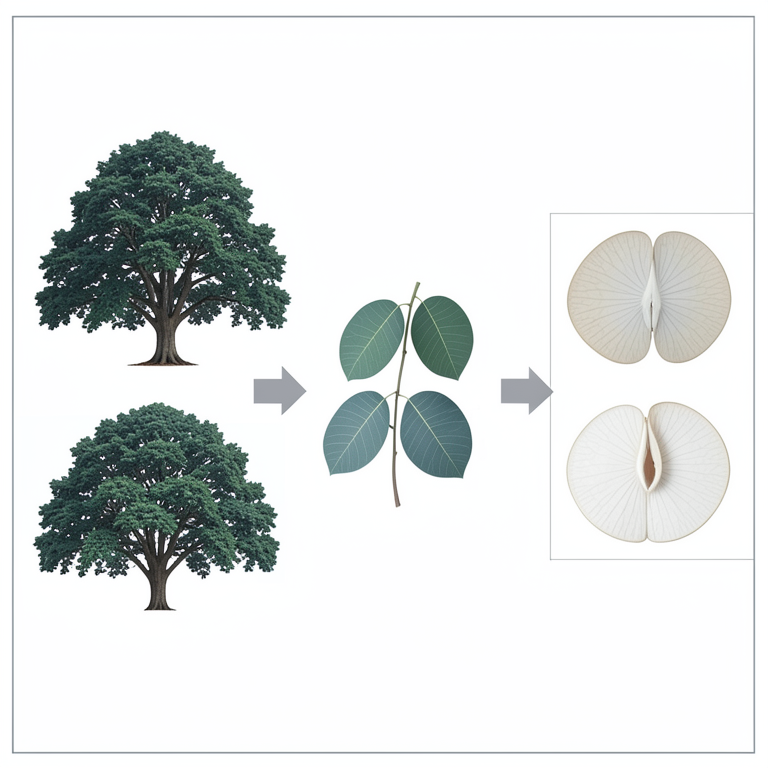
Morphological Diversity Overview
AI-generated conceptual illustration (Jackfruit trees (Artocarpus heterophyllus)). It explains the idea and does not show study data.
View source evidence ↗Figures & tables
From the original paper Table 1
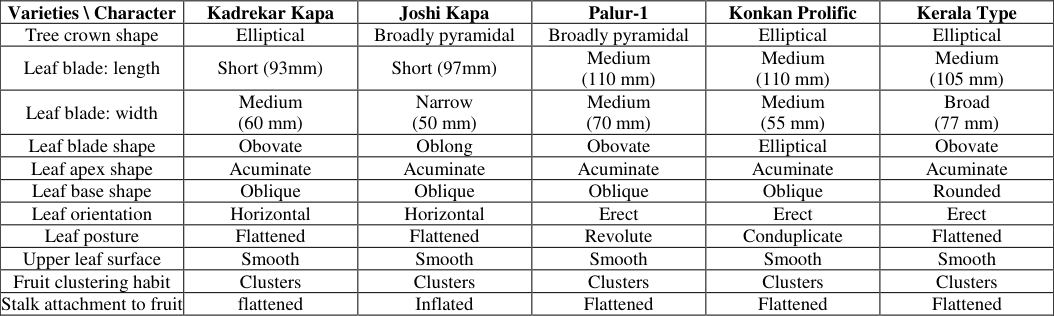 Table 2
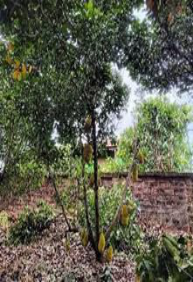 Figure 1
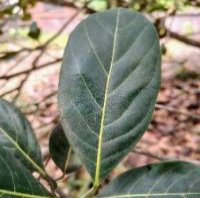 Figure 2
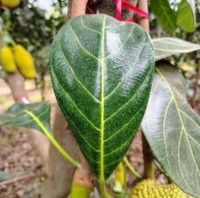 Figure 2
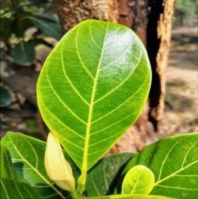 Figure 2
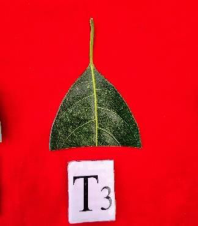 Figure 3
 Figure 4
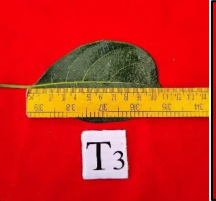 Figure 5
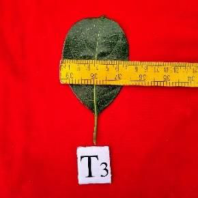 Figure 6
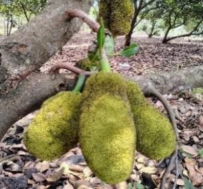 Figure 7
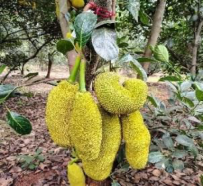 Figure 7
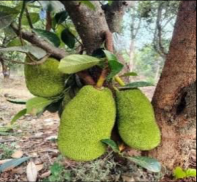 Figure 7
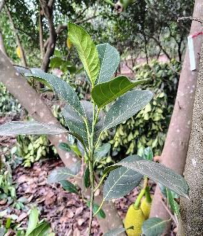 Figure 8
Introduction
Jackfruit (Artocarpus heterophyllus Lam.), a member of the Moraceae family, is a highly productive evergreen tree native to the Western Ghats of India and widely cultivated across tropical and subtropical regions. It is renowned for producing the largest edible fruit in the plant kingdom, with individual fruits weighing up to 35 kg, and for yielding more prolifically than most other tree crops. Owing to its adaptability to diverse agro-climatic conditions and minimal input requirements, jackfruit holds great promise in traditional agroforestry systems as well as commercial cultivation. Despite its growing economic and nutritional importance, jackfruit remains largely underutilized and under-researched, particularly in terms of varietal improvement. One of the major challenges in jackfruit cultivation is its highly heterozygous and cross-pollinated nature, which results in wide morphological variability in traits such as fruit size, shape, rind texture, bulb type, color, and maturity period. This genetic diversity, though complex, offers immense potential for crop improvement and selection of superior genotypes suited for specific end-uses. Therefore, systematic morphological characterization is essential for identifying and conserving elite types, standardizing descriptors, and laying the foundation for future breeding programs.
Material and Methods
A research study titled "Morphological footprints of Jackfruit (Artocarpus heterophyllus Lam) in twin terrains of the Konkan belt of Maharashtra: A Comparative Study" was undertaken during the academic year 2024-2025 at two prominent research centres of Dr. Balasaheb Sawant Konkan Krishi Vidyapeeth (DBSKKV), namely the College of Horticulture, Dapoli (Ratnagiri) and the College of Horticulture, Mulde, Kudal (Sindhudurg), Maharashtra. The investigation focused on five distinct jackfruit genotypes namely Kadrekar Kapa, Joshi Kapa, Palur-1, Konkan Prolific and Kerala type, meticulously evaluating a wide range of morphometric parameters. This comparative assessment aimed to explore the inherent genetic diversity and identify promising genotypes based on their physical and qualitative attributes. The research was carried out at two research centres under Dr. Balasaheb Sawant Konkan Krishi Vidyapeeth (DBSKKV), in the Konkan region of Maharashtra. The first location, the College of Horticulture, Dapoli (17.76° N latitude, 73.18° E longitude; 244 m above mean sea level), is situated in a moderately elevated zone and receives an average annual rainfall of approximately 2,700 mm, predominantly during the monsoon months from June to October, spanning nearly 100 rainy days. The relative humidity in this region averages around 80%, contributing to a moist subtropical climate. The second site, the College of Horticulture, Mulde, located in Kudal, Sindhudurg district (16.02° N, 73.42° E; elevation 18 m AMSL), falls within the coastal lowland zone of southern Konkan. This location is characterized by higher rainfall, with annual precipitation ranging from 3,000 mm to 3,200 mm, and maintains a consistently high relative humidity of about 86% to 90% during the southwest monsoon period. The genotypes were selected and tagged at both experimental sites. Trees aged between 10 to 20 years were chosen to maintain consistency in growth and fruiting stage. Morphological observations were recorded systematically to evaluate variation among the genotypes.
Result and discussion
In the present investigation, an attempt was made to identify superior genotypes of jackfruit collected from the Konkan region of Maharashtra. The evaluation was based on key morphological features and fruit quality parameters. The results obtained from the study are analysed and discussed in this section under relevant subheadings.
Tree crown shape
The observations revealed that the Joshi Kapa and Palur-1 genotypes exhibited a broadly pyramidal crown shape, indicating a more spreading growth habit. In contrast, the Kadrekar Kapa, Konkan Prolific and Kerala Type varieties were characterized by an elliptical tree shape, suggesting a relatively upright and compact canopy structure. Similar variation was observed by Gwokyalya et al. (2024) [2] and Singh et al. (2023) [4] .
Leaf blade length
Variation in leaf blade length was observed across the five jackfruit genotypes. Kadrekar Kapa and Joshi Kapa recorded short leaf blades, measuring 93 mm and 97 mm respectively. In contrast, Palur-1, Konkan Prolific, and Kerala Type showed medium-length leaf blades, ranging from 105 mm to 110 mm, indicating noticeable morphological differences among the genotypes.
Leaf blade width
The genotypes exhibited noticeable variation in leaf blade width. Joshi kapa recorded the narrowest leaf blade at 50 mm, whereas Kerala type showed the broadest blade measuring 77 mm. Kadrekar kapa (60 mm), Palur-1 (70 mm), and Konkan Prolific (55 mm) were categorized as having medium width leaves, indicating moderate variation among the genotypes in terms of leaf breadth.
Leaf blade shape
Distinct differences in leaf blade shape were recorded among the evaluated jackfruit genotypes. Obovate leaf shapes were observed in Kadrekar Kapa, Palur-1, and Kerala Type, characterized by a wider tip than base. whereas, Joshi Kapa exhibited an oblong leaf form, and Konkan Prolific showed an elliptical blade shape, highlighting the morphological diversity among the varieties. Similar variation was seen by Kisepa et al. (2024) [3]
Acknowledgement
AcknowledgementsSincere gratitude is extended to Dr. Balasaheb Sawant Konkan Krishi Vidyapeeth, Dapoli for providing the facilities and constant support that made this work possible. The cooperation and encouragement of co-workers have been invaluable, along with the timely help and guidance received from staff members, both working and non-working. Appreciation is also due to the field assistants whose dedicated efforts ensured the smooth execution of the research. Heartfelt thanks are offered to all who contributed, directly or indirectly, to the successful completion of this work.
Figures and tables from the paper
| Sr. no. | Genotypes | Source | State |
|---|---|---|---|
| 1 | Kadrekar Kapa | Ratnagiri | Maharashtra |
| 2 | Joshi Kapa | Ratnagiri | Maharashtra |
| 3 | Palur-1 | Ratnagiri | Maharashtra |
| 4 | Konkan Prolific | Ratnagiri | Maharashtra |
| 5 | Kerala Type | Ratnagiri | Maharashtra |
Table text extracted from the original PDF; superscript letters are shown inline. The original table image is below.
View original table image
| Varieties \ Character | Kadrekar Kapa | Joshi Kapa | Palur-1 | Konkan Prolific | Kerala Type |
|---|---|---|---|---|---|
| Tree crown shape | Elliptical | Broadly pyramidal | Broadly pyramidal | Elliptical | Elliptical |
| Leaf blade: length | Short (93mm) | Short (97mm) | Medium (110 mm) | Medium (110 mm) | Medium (105 mm) |
| Leaf blade: width | Medium (60 mm) | Narrow (50 mm) | Medium (70 mm) | Medium (55 mm) | Broad (77 mm) |
| Leaf blade shape | Obovate | Oblong | Obovate | Elliptical | Obovate |
| Leaf apex shape | Acuminate | Acuminate | Acuminate | Acuminate | Acuminate |
| Leaf base shape | Oblique | Oblique | Oblique | Oblique | Rounded |
| Leaf orientation | Horizontal | Horizontal | Erect | Erect | Erect |
| Leaf posture | Flattened | Flattened | Revolute | Conduplicate | Flattened |
| Upper leaf surface | Smooth | Smooth | Smooth | Smooth | Smooth |
| Fruit clustering habit | Clusters | Clusters | Clusters | Clusters | Clusters |
| Stalk attachment to fruit | flattened | Inflated | Flattened | Flattened | Flattened |
Table text extracted from the original PDF; superscript letters are shown inline. The original table image is below.
View original table image
References
4 in the original paper- Gladis B, B Ramesh Babu, Ashok P, Harsha Vardhan A, DR Salomi Suneetha. Morphological characterization of surveyed jackfruit genotypes in Godavari zone of Andhra Pradesh. Pharma Innov J. 2022;11(8):513-518.
- Gwokyalya R, Ann Nanteza WH, Kayondo SI, Kazigaba D, Nakabonge G. Morphological and genetic characterization of jackfruit (Artocarpus heterophyllus) in the Kayunga and Luwero districts of Uganda. BMC Plant Biol. 2024; 24:355. https://doi.org/10.1186/s12870-024-05064-x.
- Kisepa MM, Zharare EG, Zimudzi C, Akweni AL. Morphological diversity and fruit production of wild Salacia kraussii (Celastraceae) on the Northern Coast of KwaZuluNatal, South Africa. Heliyon. 2024; e25332. https://doi.org/10.1016/j.heliyon.2024.e25332.
- Singh P, Pandey SK, Pandey CS, Rai RK, Parmar M. Evaluation of Guava (Psidium guajava L.) Genotypes for Tree Morphology and Fruit characteristics. Biol Forum. 2023;15(10):548-553.
Cited by 1
From OpenAlex, OpenCitations and reference lists read by Scinovex
- Multiple correspondence analysis and phenotypic fingerprinting for varietal identification of jackfruit (Artocarpus heterophyllus Lam.) genotypes based on IPGRI descriptors ↗
Meghana Kanihalli Gurumurthy, Sreekanth Halli Subrayagowda, Swamy G.S.K., Suresha Jayappa Gouda, Ambika Dasannanamalige Siddeshi, Asif Sha · Discover Plants. · 2026
Jackfruit is an important tropical fruit crop with high nutritional and economic value, but efficient morphological characterization of germplasm remains limited, which impedes varietal identification and breeding efforts. Hence, the present study aimed to assess morphological diversity and develop phenotypic fingerprinting of thirty jackfruit genotypes using twenty-three qualitative traits based on IPGRI descriptors (IPGRI, Rome, Italy). The study was conducted…
❝ 0PDF