
Research article · 2025 · Full text
International Journal of Agriculture and Food ScienceImpact of foliar application of nitrogen on growth and yield attributes in maize (Zea mays) through drone
Volume 7(12) · Pages 459–464 · DOI: 10.33545/2664844x.2025.v7.i12f.1077 ↗
Research areasCrop Yield and Soil FertilityGreenhouse Technology and Climate ControlHumic Substances and Bio-Organic Studies
Abstract
Author-writtenA field experiment was conducted at Climate Smart Research Block of Centre of Excellence on Digital Technologies for Climate Smart Agriculture (CoE-DTSPA), Mahatma Phule Krishi Vidyapeeth, Rahuri, during Kharif-2024 with to assess efficacy of foliar application of nitrogen on growth, yield attributes and cost economics in maize (Zea mays) through drone. The experiment was carried out in a Randomized Block Design with ten treatments replicated three times. A hexacopter drone with 10 L capacity was used for the foliar application of nitrogen as per the treatments. The results revealed that ttreatment T7 with foliar application of conventional urea @ 1.0% + Micrograde II @ 0.5% at 30, 45 and 70 DAS recorded highest grain yield (69.09 q ha-1). However, treatment T9 (Foliar application of NU @ 2.5% + Micrograde II @ 0.5% at 30, 45 and 70 DAS) and treatment T6 (Foliar application of conventional urea @ 2.5% at 30, 45 and 70 DAS) which recorded (66.67 q ha-1) and (65.76 q ha-1) grain yield, respectively and at par with treatment T7. Treatment T1 (100% GRDF) recorded highest stover yield (79.96 q ha-1). However, treatment T3 (Foliar application of conventional urea @ 1.0% at 30, 45 and 70 DAS) and treatment T8 (Foliar application of NU @ 2.5% at 30, 45 and 70 DAS) were at par with treatment T1 (100% GRDF) with (76.87 q ha-1) and (76.71 q ha-1) stover yield respectively. Treatment T7 (Foliar application of conventional urea @ 1.0% + Micrograde II @ 0.5% at 30, 45 and 70 DAS) resulted into higher gross monetary return (₹ 171851.61 ha-1), net monetary returns (₹ 77000.71 ha-1), B:C ratio (1.81). However, treatment T9 (Foliar application of NU @ 2.5% + Micrograde II @ 0.5% at 30, 45 and 70 DAS) was at par with T7 and recorded gross monetary return (₹ 167099.63 ha-1), net monetary returns (₹73415.78 ha-1), B:C ratio (1.78).
Summary
Source-checkedPlain-language reading of the full paper, prepared with AI and checked against the text. Each point links to the authors' own words.
Why it matters
- Maize is a globally significant cereal crop that provides essential calories and protein to over a billion people. View evidence ↗
- Nitrogen is a vital nutrient for maize, directly impacting its growth, biomass, and final grain yield. View evidence ↗
- Using drones for spraying allows for more uniform fertilizer application and reduces labor needs, especially in tall crops like maize. View evidence ↗
The question
- The study aimed to evaluate how applying nitrogen to maize leaves via drone affects the plant's growth and yield. View evidence ↗
What they did
- The field experiment took place during the Kharif-2024 season at the CoE-DTSPA in Rahuri. View evidence ↗
- The researchers used a Randomized Block Design consisting of ten different treatments, each replicated three times. View evidence ↗
- A battery-powered hexacopter drone with a 10-liter tank was used to apply the nitrogen treatments. View evidence ↗
What they found
- The highest plant height at harvest (222 cm) was achieved by the 100% General Recommended Dose of Fertilizer (T1). View evidence ↗
- Treatment T7, combining 1.0% conventional urea and 0.5% Micrograde II, produced the most cobs per plant (1.4). View evidence ↗
- The highest benefit-cost (B:C) ratio of 1.81 was observed in treatment T7. View evidence ↗
What it means
- The study highlights drone-assisted nutrient delivery as a precise and sustainable alternative to traditional fertilization. View evidence ↗
Visual summary
2 visualsIllustrations explain the paper; charts are replotted from the paper's own table values.
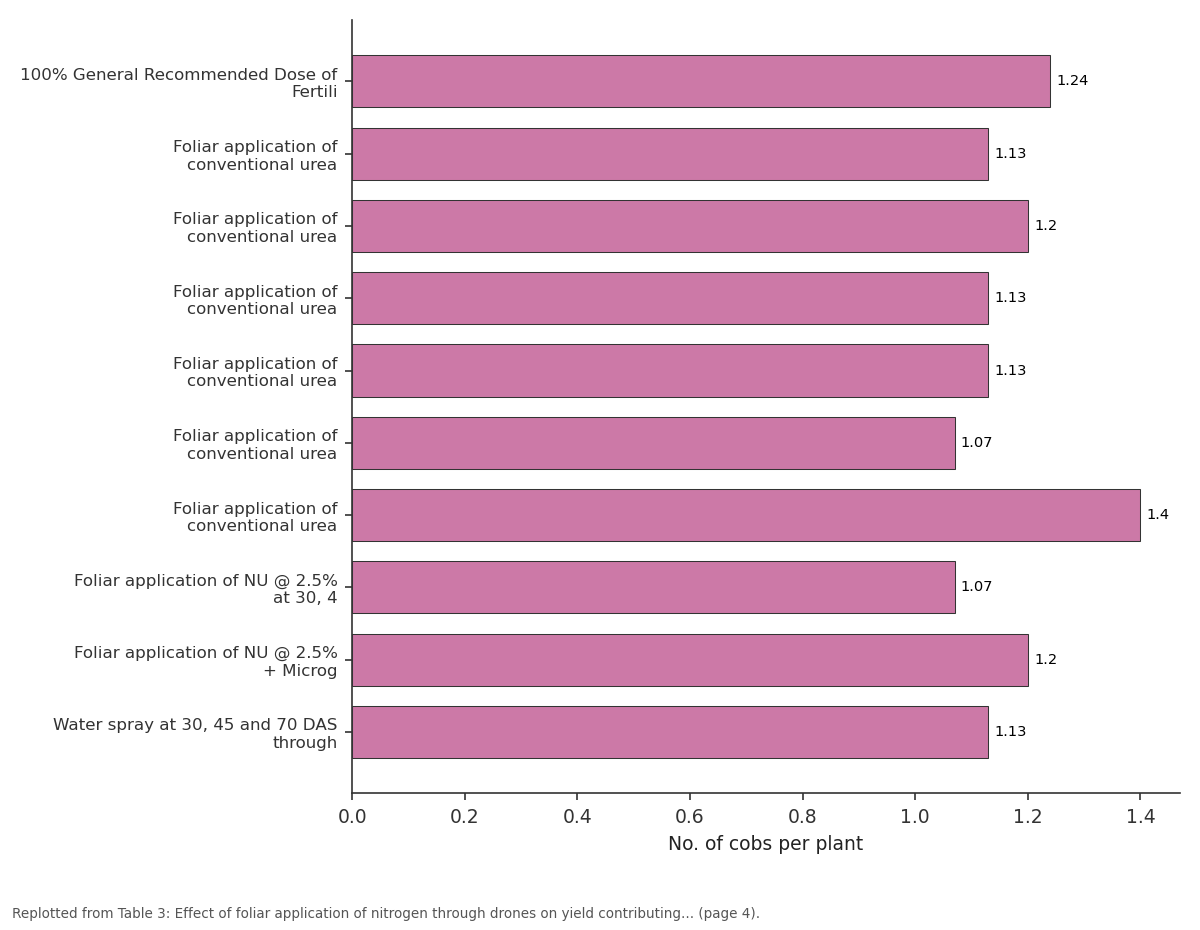
No. of cobs per plant: 100% General... vs Foliar application of... vs Foliar application of... vs Foliar application of... vs Foliar application of...
Replotted from Table 3 (page 4) of the original paper. Every bar is the paper's own table value.
View source evidence ↗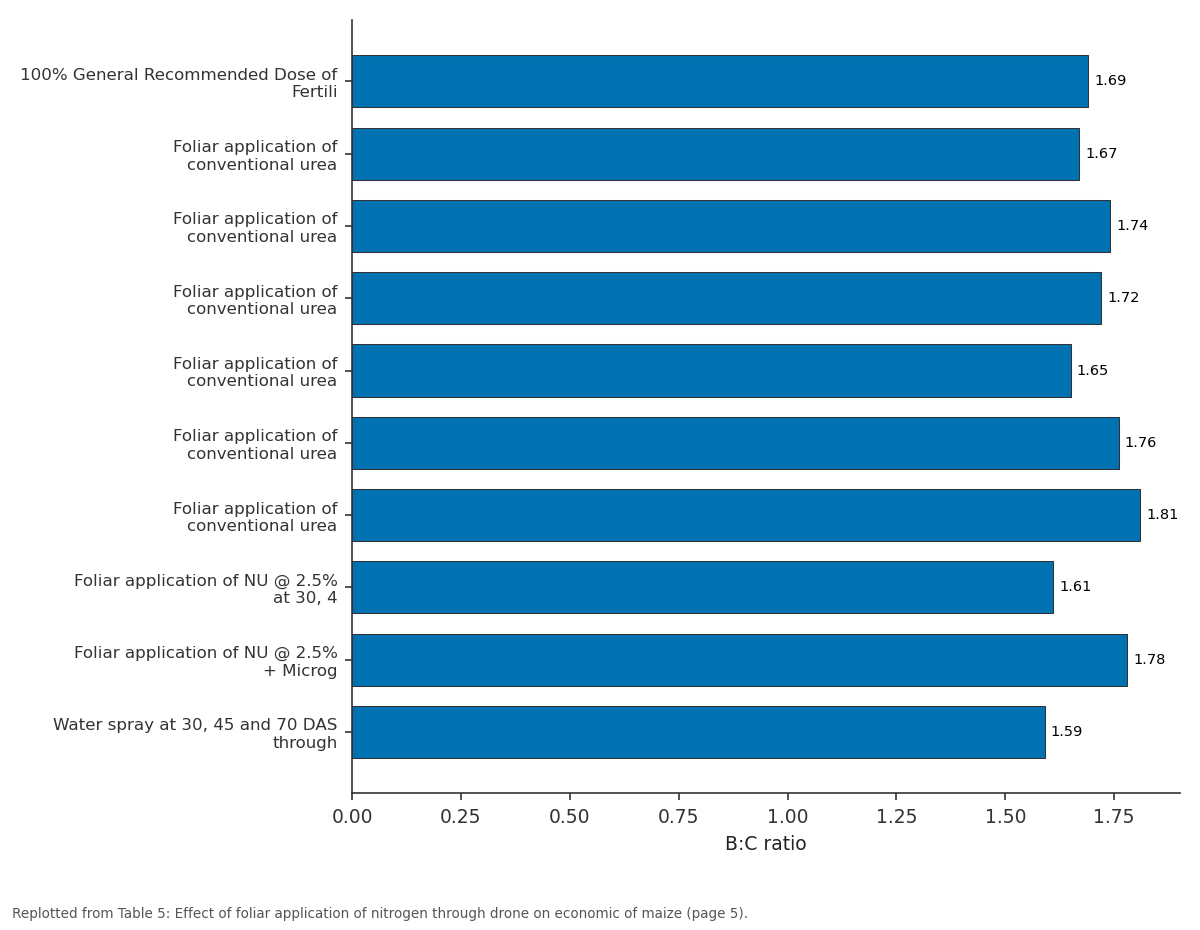
B:C ratio: 100% General... vs Foliar application of... vs Foliar application of... vs Foliar application of... vs Foliar application of...
Replotted from Table 5 (page 5) of the original paper. Every bar is the paper's own table value.
View source evidence ↗Figures & tables
From the original paper Table 1
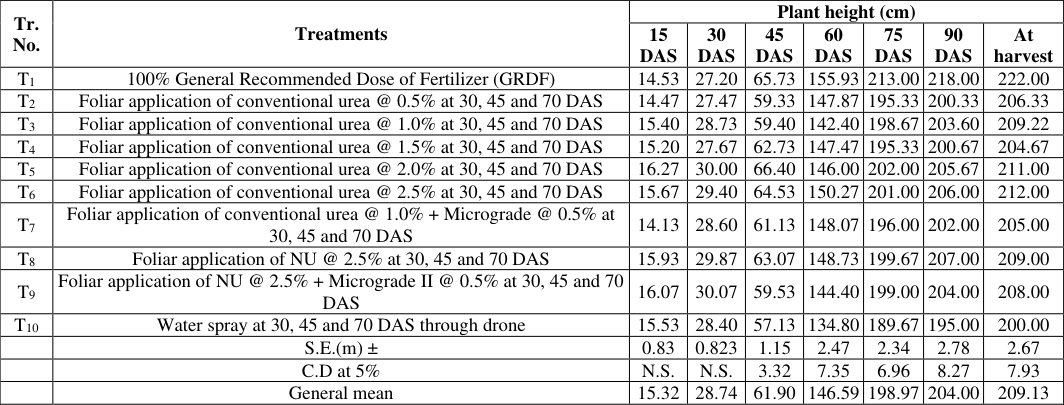 Table 2
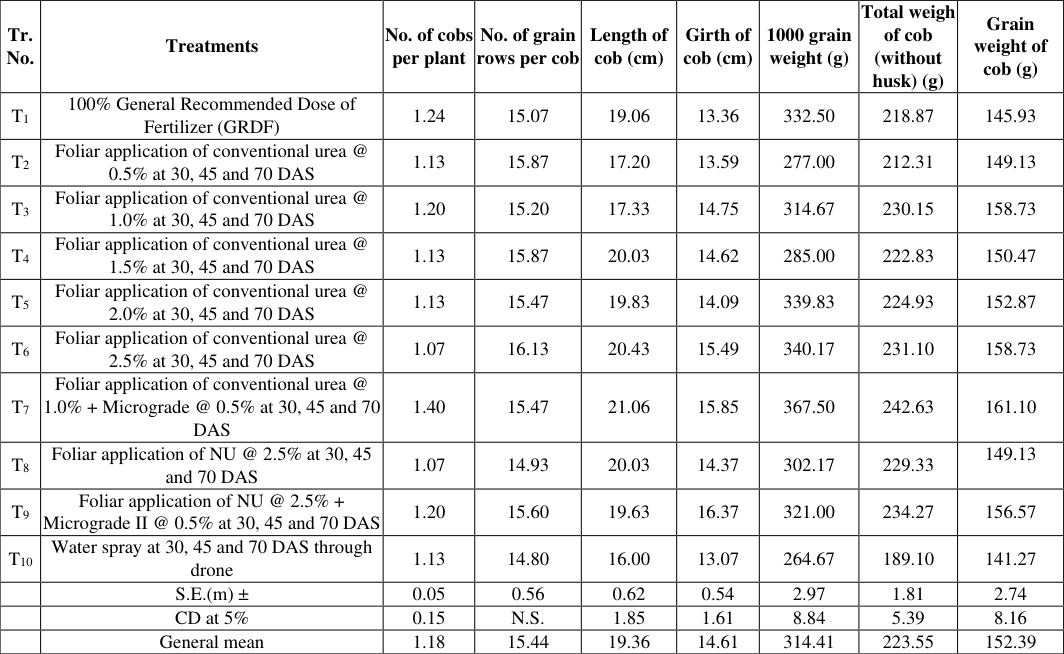 Table 3
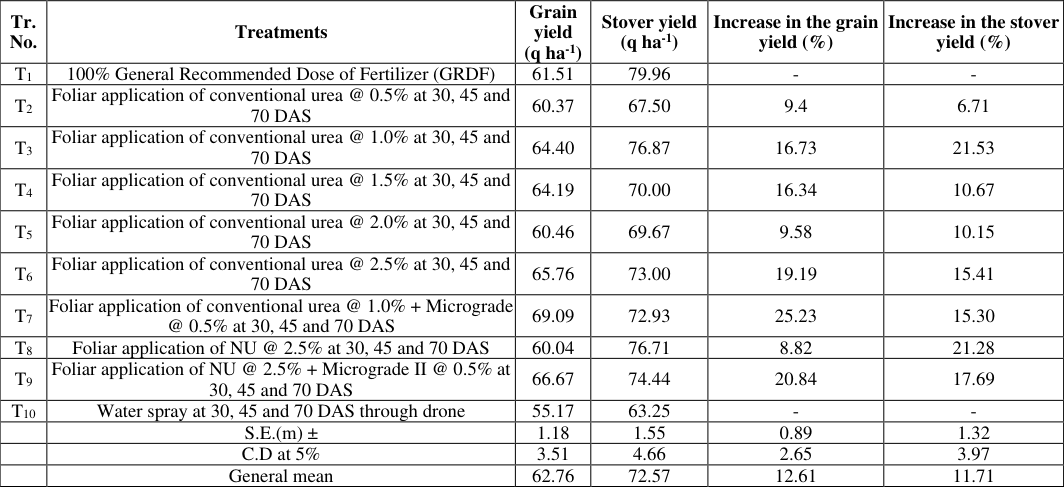 Table 4
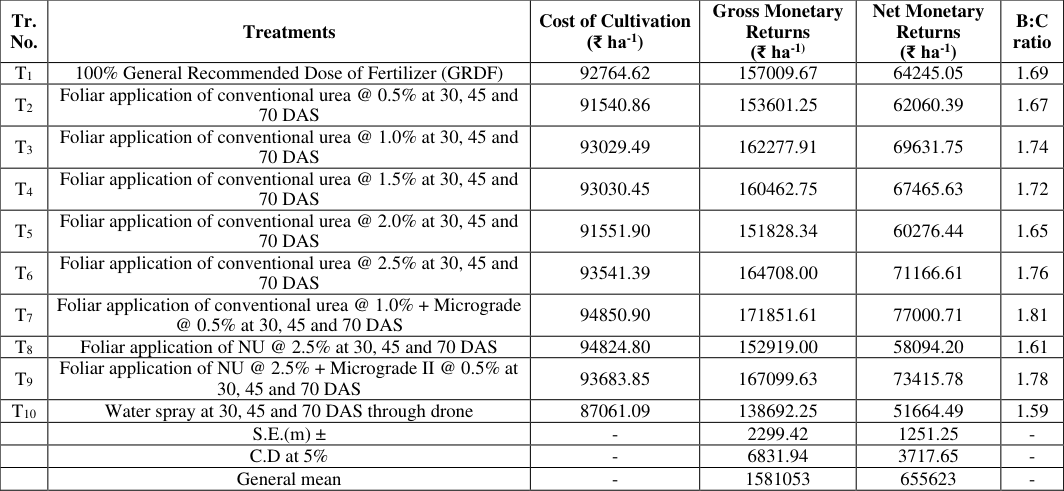 Table 5
Introduction
Maize (Zea mays L.) is one of the most cultivated cereal crop globally and serves as a major source of calories and protein for more than a billion people. Taxonomically, it belongs to the family Poaceae, subfamily Panicoideae, with a chromosome number of 2n=20. Owing to its exceptional yield potential, maize is often regarded as the "queen of cereals" and a "miracle crop" (Ikramullah et al., 2011) [9] . Globally, maize production has reached 1220.3 million metric tonnes, cultivated over 205.4 million hectares with an average productivity of 5.95 t ha⁻¹ (Anonymous, 2023) [2] . The United States (31.9%), China (23.7%), Brazil (10.8%), Argentina (3.4%), and India (3.1%) are the leading producers, placing India fifth in global maize production. In India, the maize-growing area during 2023-24 was 9.96 million hectares (Anonymous, 2024) [3] , with Madhya Pradesh and Karnataka contributing the largest acreage. Karnataka ranks first in maize production (43.29 lakh tonnes), followed by Madhya Pradesh and Maharashtra. In Maharashtra, maize is cultivated over 0.92 million hectares with a production of 1.441 million tonnes and a productivity of 1.58 t ha⁻¹, which remains below the national average (Anonymous, 2024) [4] . Nitrogen is a critical nutrient that significantly influences maize growth, biomass accumulation, and grain yield. Application of nitrogen has been reported to enhance maize grain yield by 43-68% and biomass by 25-42% (Ogola et al., 2002) [14] . Because nitrogen plays a central role in physiological and metabolic processes, its efficient and balanced application is essential for achieving optimal crop performance (Fathi and Zeidali, 2021) [8] . Foliar application of nutrients directly to plant foliage offers improved nutrient uptake efficiency, particularly for macro-and micronutrients, when compared to soil application (Arif et al., 2006; Ali et al., 2008) [5,1] . Recent technological advancements have enabled the use of Unmanned Aerial Vehicles (UAVs) or drones for precise foliar application. Drone-based spraying facilitates uniform application of water-soluble fertilizers, reduces labour dependence, and overcomes the limitations of manual spraying in tall crops like maize. It also minimizes chemical usage and enhances operational efficiency and sustainability (Kanisha et al., 2022) [10] . Considering these advantages, the present study was undertaken to evaluate the impact of foliar application of nitrogen on growth and yield attributes in maize through drone.
Materials and Methods
Materials and Methods
Experimental Design and Treatment Details
A field experiment was carried out in Kharif-2024. The experiment was laid out in Randomized Block Design (RBD) with 10 treatments and 3 replications, with gross plot size 66.00 m x 33.00 m and net plot size 10.00 m x 5.25 m. The maize variety Phule Champion developed by MPKV, Rahuri was taken as experimental material with spacing of 75 cm x 20 cm. The treatment details are as follows: T 1 -100% GRDF, T 2 -Foliar application of conventional urea @ 0.5% at 30, 45 and 70 DAS, T 3 -Foliar application of conventional urea @ 1.0% at 30, 45 and 70 DAS, T 4 -Foliar application of conventional urea @ 1.5% at 30, 45 and 70 DAS, T 5 -Foliar application of conventional urea @ 2.0% at 30, 45 and 70 DAS, T 6 -Foliar application of conventional urea @ 2.5% at 30, 45 and 70 DAS, T 7 -Foliar application of conventional urea @ 1.0% + Micrograde II @ 0.5% at 30, 45 and 70 DAS, T 8 -Foliar application of NU @ 2.5% at 30, 45 and 70 DAS, T 9 -Foliar application of NU @ 1.0% + Micrograde II @ 0.5% at 30, 45 and 70 DAS, T 10 -Water spray at 30, 45 and 70 DAS through drone whereas 100% P 2 O 5 : K 2 O with FYM 10 t ha -1 were common to all treatments.
Fertilizer Details
The fertilizers viz., urea, contains 46% of N, SSP contains 16% P 2 O 5 and MOP containing 60% K 2 O, NU (20% N w/v), Micrograde II (0.5%) and FYM were applied as per treatment with 50% N, 100% P 2 O 5 and K 2 O and 10 tons FYM/ ha were applied as basal dose to each treatment and remaining 50% dose of nitrogen was applied only for treatment T 1 one month after sowing.
Technical parameters of spraying drone
A battery-operated hexacopter drone with a 10-litre tank capacity was used for the foliar application of nitrogen on the maize crop during the experiment. The technical parameters of the drone are given in Table 1.
| Sr. No. | Classification | Parameters |
|---|---|---|
| 1. | Dimensions (mm) | 1800 X 1800 X 500 |
| 2. | Nozzle type | Flat fan |
| 3. | Tank capacity (lit.) | 10 |
| 4. | Battery capacity | 16000mAh X 2 (50V) |
| 5. | Spraying width (m) | 4 |
| 6. | Flying height (m) above crop canopy | 2 |
| 7. | Number of nozzles | 4 |
| 8. | Drone Speed (m/s) | 3.5 |
Table text extracted from the original PDF; superscript letters are shown inline. The original table image is below.
View original table image
Result and Discussion
Result and Discussion
Growth Parameters
The growth parameters studied in the experiment, viz. plant height and cob placement were evaluated to assess the impact of foliar nitrogen application through drone on maize crop and are depicted in Table 2.
| Tr. No. | Treatments | Plant height (cm) | — | — | — | — | — | — |
|---|---|---|---|---|---|---|---|---|
| 15 DAS | 30 DAS | 45 DAS | 60 DAS | 75 DAS | 90 DAS | At harvest | ||
| T1 | 100% General Recommended Dose of Fertilizer (GRDF) | 14.53 | 27.20 | 65.73 | 155.93 | 213.00 | 218.00 | 222.00 |
| T2 | Foliar application of conventional urea @ 0.5% at 30, 45 and 70 DAS | 14.47 | 27.47 | 59.33 | 147.87 | 195.33 | 200.33 | 206.33 |
| T3 | Foliar application of conventional urea @ 1.0% at 30, 45 and 70 DAS | 15.40 | 28.73 | 59.40 | 142.40 | 198.67 | 203.60 | 209.22 |
| T4 | Foliar application of conventional urea @ 1.5% at 30, 45 and 70 DAS | 15.20 | 27.67 | 62.73 | 147.47 | 195.33 | 200.67 | 204.67 |
| T5 | Foliar application of conventional urea @ 2.0% at 30, 45 and 70 DAS | 16.27 | 30.00 | 66.40 | 146.00 | 202.00 | 205.67 | 211.00 |
| T6 | Foliar application of conventional urea @ 2.5% at 30, 45 and 70 DAS | 15.67 | 29.40 | 64.53 | 150.27 | 201.00 | 206.00 | 212.00 |
| T7 | Foliar application of conventional urea @ 1.0% + Micrograde @ 0.5% at 30, 45 and 70 DAS | 14.13 | 28.60 | 61.13 | 148.07 | 196.00 | 202.00 | 205.00 |
| T8 | Foliar application of NU @ 2.5% at 30, 45 and 70 DAS | 15.93 | 29.87 | 63.07 | 148.73 | 199.67 | 207.00 | 209.00 |
| T9 | Foliar application of NU @ 2.5% + Micrograde II @ 0.5% at 30, 45 and 70 DAS | 16.07 | 30.07 | 59.53 | 144.40 | 199.00 | 204.00 | 208.00 |
| T10 | Water spray at 30, 45 and 70 DAS through drone | 15.53 | 28.40 | 57.13 | 134.80 | 189.67 | 195.00 | 200.00 |
| S.E.(m) ± | 0.83 | 0.823 | 1.15 | 2.47 | 2.34 | 2.78 | 2.67 | |
| C.D at 5% | N.S. | N.S. | 3.32 | 7.35 | 6.96 | 8.27 | 7.93 | |
| General mean | 15.32 | 28.74 | 61.90 | 146.59 | 198.97 | 204.00 | 209.13 |
Table text extracted from the original PDF; superscript letters are shown inline. The original table image is below.
View original table image
Plant Height
The plant height was significantly influenced by different treatments. T 1 with 100% GRDF recorded significantly highest plant height (222 cm) at harvest. Among the foliar applications, T 6 (Foliar application of conventional urea @ 2.5% at 30, 45 and 70 DAS through drone) showed notable plant height (212 cm). Treatment T 10 (50% N + 100% P 2 O 5 and K 2 O as a basal dose) recorded the lowest plant height (200 cm) at harvest. Similar trend of plant height was also recorded at 60, 75 and 90 DAS of maize crop. Comparable results on plant height were observed by Veeresh et al.
(2024) [17] in finger millet and by Devekar et al. (2024) [6] in maize, where application of 100% recommended dose of nitrogen (RDN) significantly increased plant height.
Height of Cob Placement
Cob placement height was measured from ground level to the point of first cob emergence using a metric scale on five randomly selected plants from each treatment. The highest cob placement height (115.80 cm) was recorded in treatment T 1 (100% GRDF) at 65 DAS followed by treatment T 5 (Foliar application of conventional urea @ 2.0% at 30, 45 and 70 DAS), treatment T 2 (Foliar application of conventional urea @ 0.5% at 30, 45 and 70 DAS), treatment T 7 (Foliar application of conventional urea @1.0% + Micrograde II @ 0.5% at 30, 45 and 70 DAS) and treatment T 6 (Foliar application of conventional urea @ 2.5% at 30, 45 and 70 DAS) and were statistically at par with treatment T 1 (100% GRDF) with 114.60 cm, 113.87 cm, 113.07 cm, 112.47 cm cob placement height respectively.
Yield Contributing Parameters
The data on yield contributing characters like number of cobs per plant, Number of grain rows per cob, Length of cob, Girth of cob, 1000 grain weight, Total weight of cob (without husk), Grain weight per cob affected by foliar application of nitrogen through drone is presented in Table 3.
| Tr. No. | Treatments | No. of cobs per plant | No. of grain rows per cob | Length of cob (cm) | Girth of cob (cm) | 1000 grain weight (g) | Total weigh of cob (without husk) (g) | Grain weight of cob (g) |
|---|---|---|---|---|---|---|---|---|
| T1 | 100% General Recommended Dose of Fertilizer (GRDF) | 1.24 | 15.07 | 19.06 | 13.36 | 332.50 | 218.87 | 145.93 |
| T2 | Foliar application of conventional urea @ 0.5% at 30, 45 and 70 DAS | 1.13 | 15.87 | 17.20 | 13.59 | 277.00 | 212.31 | 149.13 |
| T3 | Foliar application of conventional urea @ 1.0% at 30, 45 and 70 DAS | 1.20 | 15.20 | 17.33 | 14.75 | 314.67 | 230.15 | 158.73 |
| T4 | Foliar application of conventional urea @ 1.5% at 30, 45 and 70 DAS | 1.13 | 15.87 | 20.03 | 14.62 | 285.00 | 222.83 | 150.47 |
| T5 | Foliar application of conventional urea @ 2.0% at 30, 45 and 70 DAS | 1.13 | 15.47 | 19.83 | 14.09 | 339.83 | 224.93 | 152.87 |
| T6 | Foliar application of conventional urea @ 2.5% at 30, 45 and 70 DAS | 1.07 | 16.13 | 20.43 | 15.49 | 340.17 | 231.10 | 158.73 |
| T7 | Foliar application of conventional urea @ 1.0% + Micrograde @ 0.5% at 30, 45 and 70 DAS | 1.40 | 15.47 | 21.06 | 15.85 | 367.50 | 242.63 | 161.10 |
| T8 | Foliar application of NU @ 2.5% at 30, 45 and 70 DAS | 1.07 | 14.93 | 20.03 | 14.37 | 302.17 | 229.33 | 149.13 |
| T9 | Foliar application of NU @ 2.5% + Micrograde II @ 0.5% at 30, 45 and 70 DAS | 1.20 | 15.60 | 19.63 | 16.37 | 321.00 | 234.27 | 156.57 |
| T10 | Water spray at 30, 45 and 70 DAS through drone | 1.13 | 14.80 | 16.00 | 13.07 | 264.67 | 189.10 | 141.27 |
| S.E.(m) ± | 0.05 | 0.56 | 0.62 | 0.54 | 2.97 | 1.81 | 2.74 | |
| CD at 5% | 0.15 | N.S. | 1.85 | 1.61 | 8.84 | 5.39 | 8.16 | |
| General mean | 1.18 | 15.44 | 19.36 | 14.61 | 314.41 | 223.55 | 152.39 |
Table text extracted from the original PDF; superscript letters are shown inline. The original table image is below.
View original table image
Number of Cobs per Plant
The treatment T 7 (Foliar application of conventional urea @ 1.0% + Micrograde II @ 0.5% at 30, 45 and 70 DAS) recorded highest number of cobs per plant (1.4) which was significantly superior over rest of the treatments. The lowest number of cobs per plant (1.07) were recorded in treatment T 6 (Foliar application of conventional urea @ 2.5% at 30, 45 and 70 DAS) and treatment T 8 (Foliar application of NU @ 2.5% at 30, 45 and 70 DAS), respectively.
Number of Grain Rows per Cob
The effect of different treatments on the number of grain rows per cob was statistically non-significant. Treatment T 6 with foliar application of conventional urea @ 2.5% at 30, 45 and 70 DAS recorded highest mean value for number of grain rows per cob (16.13). Conversely, the lowest number of grain rows per cob (14.80) was observed under Treatment T 10 , which involved water spray at 30, 45, and 70 DAS along with 50% nitrogen and full basal application of phosphorus and potassium.
Length of Cob
Treatment T 7 (foliar application of conventional urea @ 1.0% + Micrograde II @ 0.5% at 30, 45, and 70 DAS) produced the maximum cob length (21.06 cm) and was significantly superior to T 1 , T 2 , T 3 , and T 10 . Treatments T 6 , T 4 , T 8 , T 5 , and T 9 were statistically at par with T 7 , recording cob lengths ranging from 19.63 to 20.43 cm. These results corroborate the findings of Ninama et al. (2023) [12] , who reported enhanced cob length in maize with zinc application (30 kg ha⁻¹) combined with NU (4 ml L⁻¹). The minimum cob length (16.00 cm) was observed in T 10 (water spray at 30, 45, and 70 DAS + 50% N + full basal P and K).
Girth of Cob
Treatment T 9 (foliar application of NU @ 2.5% + Micrograde II @ 0.5% at 30, 45, and 70 DAS) recorded the maximum cob girth (16.37 cm) and was significantly superior to T 1 , T 2 , T 3 , T 4 , T 5 , T 8 , and T 10 . Treatments T 7 (urea @ 1.0% + Micrograde II @ 0.5%) and T 6 (urea @ 2.5%) were statistically at par with T 9 , recording cob girths of 15.85 cm and 15.49 cm, respectively. These findings align with Arya (2024), who reported that application of 50% RDN with two sprays of 0.5% NU resulted in maximum ear head girth in pearl millet. The lowest cob girth (13.07 cm) was observed in T 10 (water spray + 50% N + full basal P and K).
Grain Weight
Treatment T 7 with foliar application of conventional urea @ 1.0% + Micrograde II @ 0.5% at 30, 45 and 70 DAS recorded maximum 1000 grain weight (367.50 g) showing significant superiority over all other treatments. In contrast, the minimum 1000 grain weight (264.67 g) recorded in treatment T 10 (water spray at 30, 45, 70 DAS + 50% N + 100% P 2 O 5 and K 2 O as a basal dose).
Total Weight of Cob (Without Husk)
Treatment T 7 with foliar application of conventional urea @ 1.0% + Micrograde II @ 0.5% at 30, 45 and 70 DAS recorded maximum total weight of cob (242.63 g) which was significantly superior over rest of the treatments. In contrast, the minimum total weight of cob (189.10 g) recorded in treatment T 10 (water spray at 30, 45, 70 DAS + 50% N + 100% P 2 O 5 and K 2 O as a basal dose).
Grain Weight per Cob
Treatment T 7 (foliar application of conventional urea @ 1.0% + Micrograde II @ 0.5% at 30, 45, and 70 DAS) recorded the highest grain weight per cob (161.10 g), showing significant superiority over T 1 , T 2 , T 4 , T 5 , T 8 , and T 10 . Treatments T 6 (urea @ 2.5%), T 3 (urea @ 1.0%) and T 9 (NU @ 2.5% + Micrograde II @ 0.5%) were statistically at par with T 7 , recording 158.73 g, 158.73 g, and 156.57 g grain weight per cob, respectively. These findings corroborate the results of Dhawne et al. (2023) [7] , who reported maximum grain weight per panicle in rice with 50% RDN and two sprays of NU @ 3 ml. The lowest grain weight per cob (141.27 g) was observed in T 10 (water spray + 50% N + full basal P and K).
Yield
The data on grain yield (q ha⁻¹), stover yield (q ha⁻¹) and the percentage increase (%) in these yield parameters as affected by the various treatments was depicted in table 4.
| Tr. No. | Treatments | Grain yield (q ha-1) | Stover yield (q ha-1) | Increase in the grain yield (%) | Increase in the stover yield (%) |
|---|---|---|---|---|---|
| T1 | 100% General Recommended Dose of Fertilizer (GRDF) | 61.51 | 79.96 | - | - |
| T2 | Foliar application of conventional urea @ 0.5% at 30, 45 and 70 DAS | 60.37 | 67.50 | 9.4 | 6.71 |
| T3 | Foliar application of conventional urea @ 1.0% at 30, 45 and 70 DAS | 64.40 | 76.87 | 16.73 | 21.53 |
| T4 | Foliar application of conventional urea @ 1.5% at 30, 45 and 70 DAS | 64.19 | 70.00 | 16.34 | 10.67 |
| T5 | Foliar application of conventional urea @ 2.0% at 30, 45 and 70 DAS | 60.46 | 69.67 | 9.58 | 10.15 |
| T6 | Foliar application of conventional urea @ 2.5% at 30, 45 and 70 DAS | 65.76 | 73.00 | 19.19 | 15.41 |
| T7 | Foliar application of conventional urea @ 1.0% + Micrograde @ 0.5% at 30, 45 and 70 DAS | 69.09 | 72.93 | 25.23 | 15.30 |
| T8 | Foliar application of NU @ 2.5% at 30, 45 and 70 DAS | 60.04 | 76.71 | 8.82 | 21.28 |
| T9 | Foliar application of NU @ 2.5% + Micrograde II @ 0.5% at 30, 45 and 70 DAS | 66.67 | 74.44 | 20.84 | 17.69 |
| T10 | Water spray at 30, 45 and 70 DAS through drone | 55.17 | 63.25 | - | - |
| S.E.(m) ± | 1.18 | 1.55 | 0.89 | 1.32 | |
| C.D at 5% | 3.51 | 4.66 | 2.65 | 3.97 | |
| General mean | 62.76 | 72.57 | 12.61 | 11.71 |
Table text extracted from the original PDF; superscript letters are shown inline. The original table image is below.
View original table image
Grain Yield
Treatment T 7 (foliar application of conventional urea @ 1.0% + Micrograde II @ 0.5% at 30, 45 and 70 DAS) recorded the highest grain yield (69.09 q ha⁻¹) and was significantly superior over all the treatments. However, treatments T 9 (nano urea @ 2.5% + Micrograde II @ 0.5%) and T 6 (conventional urea @ 2.5%) with 66.67 q ha⁻¹ and 65.76 q ha⁻¹ yield, respectively were statistically found at par with T 7 . The lowest grain yield (55.17 q ha⁻¹) was obtained in T 10 (water spray + 50% N + 100% P₂O₅ and K₂O as basal). Treatment T 7 (foliar application of conventional urea @ 1.0% + Micrograde II @ 0.5% at 30, 45 and 70 DAS) recorded the highest percent increase in grain yield (25.23%) over T 10 . The lowest percent increase (9.40%) was observed under T 2 (foliar application of conventional urea @ 0.5% at 30, 45 and 70 DAS) over T 10 . The higher yield under T 7 may be attributed to improved nutrient absorption and utilization through drone-assisted foliar delivery, which enhances cuticular penetration, ensures targeted application, and improves nutrient-use efficiency. The additional supply of micronutrients likely further supported physiological processes contributing to yield improvement. These findings align with the observations of Nirere et al. (2019) [13] , who reported significantly higher yield with foliar application of water-soluble fertilizers, as well as those of Samui et al.
(2022) [16] . The results also concur with Ninama et al. (2023) [12] , who reported yield enhancement with combined foliar application of zinc and nano urea.
Stover yield
Treatment T 1 (100% GRDF) recorded the highest stover yield (79.96 q ha⁻¹) and was significantly superior over all treatments. However, treatments T 3 (foliar application of conventional urea @ 1.0% at 30, 45 and 70 DAS) and T 8 (foliar application of NU @ 2.5% at the same intervals) recorded 76.87 q ha⁻¹ and 76.71 q ha⁻¹, respectively and found statistically at par with T 1 . The higher stover yield under these treatments may be attributed to greater nutrient absorption and allocation towards vegetative growth rather than reproductive development. Similar findings were reported by Kumar et al. (2024) [11] and Devekar et al.
(2024) [6] , who observed higher stover yield in maize with 100% RDF. The lowest stover yield (63.25 q ha⁻¹) was obtained in T 10 (water spray + 50% N + 100% P₂O₅ and K₂O as basal), likely due to insufficient nutrient supply. In terms of percent increase in yield over T 10 , treatment T 3 recorded the highest improvement (21.53%), followed by T 8 (21.28%) and T 9 (17.69%). The lowest percent increase in yield (6.71%) was observed under T 2 (foliar application of conventional urea @ 0.5% at 30, 45 and 70 DAS).
Table 4: Effect of foliar application of nitrogen through drone on grain yield (q ha -1 ) and stover yield (q ha -1 ) of maize crop
Tr. No. Treatments
Grain yield (q ha -1 ) Stover yield (q ha -1 )
Increase in the grain yield (%)
Increase in the stover yield (%)
B: C Ratio
A benefit-cost (B:C) ratio greater than 1 indicates economic profitability, while a value below 1 denotes economic loss; a ratio of exactly 1 implies no profit or loss. The B:C ratio of maize was influenced significantly by foliar application of nitrogen through drone at variable rates. Treatment T 7 (foliar application of conventional urea @ 1.0% + Micrograde II @ 0.5% at 30, 45 and 70 DAS) recorded the highest B:C ratio (1.81), followed by T 9 (NU @ 2.5% + Micrograde II @ 0.5%) with a ratio of 1.78. The lowest B:C ratio (1.59) was observed under T 10 (water spray at 30, 45 and 70 DAS + 50% N + 100% P₂O₅ and K₂O as basal). These findings are in close agreement with Rajesh et al. (2021), who reported higher net monetary returns and B:C ratio with 75% RDN + 100% P₂O₅ and K₂O along with foliar spray of nano urea @ 4 mL L⁻¹ and zinc @ 2 mL L⁻¹.
Conclusion
The study clearly demonstrates that foliar application of nitrogen through drone has a positive influence on growth and productivity of maize. Growth parameters, particularly plant height and cob placement, were significantly superior under T 1 (100% GRDF), indicating the effectiveness of adequate soil-applied nutrients in supporting vegetative development. Foliar nutrient application through drone showed pronounced effects on yield attributes and grain yield. Treatment T 7 (conventional urea @ 1.0% + Micrograde II @ 0.5% at 30, 45 and 70 DAS) produced the highest grain yield (69.09 q ha⁻¹), while treatments T 9 and T 6 recorded statistically comparable yields (66.67 q ha⁻¹ and 65.76 q ha⁻¹, respectively). Stover yield was highest under T 1 (79.96 q ha⁻¹), with treatments T 3 and T 8 performing at par. Economic analysis further highlighted the superiority of drone-assisted foliar nutrition. Treatment T 7 resulted in the maximum gross monetary return (₹ 171,851.61 ha⁻¹), net monetary return (₹ 77,000.71 ha⁻¹), and B:C ratio (1.81).
Treatment T 9 remained statistically comparable, reinforcing the effectiveness of drone-based foliar application of nitrogen and micronutrients. Overall, the findings suggest that foliar application of conventional urea @ 1.0% + Micrograde II @ 0.5% at 30, 45 and 70 DAS through drone, along with a basal dose of 50% N (60 kg ha⁻¹) and 100% P₂O₅ (60 kg ha⁻¹) and K₂O (40 kg ha⁻¹), is a highly effective strategy for improving growth, yield, and economic returns in maize. The study underscores the potential of droneassisted nutrient delivery as an efficient, precise, and sustainable alternative to traditional fertilization methods in modern maize cultivation.
Figures and tables from the paper
| Tr. No. | Treatments | Cost of Cultivation (₹ ha-1) | Gross Monetary Returns (₹ ha-1) | Net Monetary Returns (₹ ha-1) | B:C ratio |
|---|---|---|---|---|---|
| T1 | 100% General Recommended Dose of Fertilizer (GRDF) | 92764.62 | 157009.67 | 64245.05 | 1.69 |
| T2 | Foliar application of conventional urea @ 0.5% at 30, 45 and 70 DAS | 91540.86 | 153601.25 | 62060.39 | 1.67 |
| T3 | Foliar application of conventional urea @ 1.0% at 30, 45 and 70 DAS | 93029.49 | 162277.91 | 69631.75 | 1.74 |
| T4 | Foliar application of conventional urea @ 1.5% at 30, 45 and 70 DAS | 93030.45 | 160462.75 | 67465.63 | 1.72 |
| T5 | Foliar application of conventional urea @ 2.0% at 30, 45 and 70 DAS | 91551.90 | 151828.34 | 60276.44 | 1.65 |
| T6 | Foliar application of conventional urea @ 2.5% at 30, 45 and 70 DAS | 93541.39 | 164708.00 | 71166.61 | 1.76 |
| T7 | Foliar application of conventional urea @ 1.0% + Micrograde @ 0.5% at 30, 45 and 70 DAS | 94850.90 | 171851.61 | 77000.71 | 1.81 |
| T8 | Foliar application of NU @ 2.5% at 30, 45 and 70 DAS | 94824.80 | 152919.00 | 58094.20 | 1.61 |
| T9 | Foliar application of NU @ 2.5% + Micrograde II @ 0.5% at 30, 45 and 70 DAS | 93683.85 | 167099.63 | 73415.78 | 1.78 |
| T10 | Water spray at 30, 45 and 70 DAS through drone | 87061.09 | 138692.25 | 51664.49 | 1.59 |
| S.E.(m) ± | - | 2299.42 | 1251.25 | - | |
| C.D at 5% | - | 6831.94 | 3717.65 | - | |
| General mean | - | 1581053 | 655623 | - |
Table text extracted from the original PDF; superscript letters are shown inline. The original table image is below.
View original table image
References
16 in the original paper- Ali S, Khan AR, Mairaj G, Arif M, Fida M, Bibi S. Assessment of different crop nutrients management practices for improvement of crop yield. Australian Journal of Crop Science. 2008;2(3):150-157.
- Anonymous. Agricultural and Processed Food Products Export Development Authority [Internet]. 2024 [cited year not specified]. Available from: http://www.apeda.gov.in
- Anonymous. Department of Agriculture, Government of Maharashtra [Internet]. 2024 [cited year not specified]. Available from: http://www.krishi.maharashtra.gov.in
- Arif M, Chohan MA, Ali S, Gul R, Khan S. Response of wheat to foliar application of nutrients. International Journal of Agriculture and Biology. 2006;1(4):30-34.
- Devekar MM, Kale KD, Mane MS, Khedkar DD. Effect of foliar spray of super nano urea on growth and economics of hybrid maize in inceptisols. International Journal of Research Publication and Reviews. 2024;5(12):4937-4944.
- Dhawne MN, Shamkuwar GR, Shamkuwar SG, Landge NH, Sable AD, Tinpayle AD. Influence of foliar applications of nano urea on morpho-physiological and yield parameters in rice (Oryza sativa L.). Biological Forum -An International Journal. 2023;15(11):548553.
- Fathi A, Zeidali E. Conservation tillage and nitrogen fertilizer: a review of corn growth and yield and weed management. Central Asian Journal of Plant Science Innovation. 2021;1(3):121-142.
- Ikramullah, Hussain I, Noor M, Kausar M, Shah N, Khalil H, et al. Heterotic effects for yield and protein content in white quality protein maize. Sarhad Journal of Agriculture. 2011;27(3):403-409.
- Kanisha K, Jagadeeswaran R, Kumaraperumal R, Ragunath K, Balaji K, Muthumanickam D, Pazhanivelan S. Impact of drone spraying of nutrients on growth and yield of maize crop. International Journal of Environment and Climate Change. 2022;12(11):274-282.
- Kumar AMR, Fathima PS, Yogananda SB, Sowmyalatha BS. Comparative evaluation of nano urea and urea foliar sprays on nutrient uptake and soil fertility in fodder maize (Zea mays L.) production. Journal of Scientific Research and Reports. 2024;30(5):939-946.
- Ninama J, Debbarma V, Bhakher R, Meena RK. Response of zinc and nano urea on growth and yield of maize (Zea mays L.). International Journal of Environment and Climate Change. 2023;13(9):10461052.
- Nirere D, Murthy K, Lalitha KN, Murukannappa BS, Murorunkwere F. Effect of foliar application of water soluble fertilizers on growth and yield of maize. Rwanda Journal of Agricultural Sciences. 2019;1(1):4451.
- Ogola JBO, Wheeler TR, Harris PM. Effects of nitrogen and irrigation on water use of maize crops. Field Crops Research. 2002;78(2-3):105-117.
- Rajesh H, Yadahalli GH, Chittapur BM, Halepyati AS, Hiregoudar S. Growth, yield and economics of sweet corn (Zea mays L. saccarata) as influenced by foliar sprays of nano fertilisers. Journal of Farm Sciences. 2021;4:381-385.
- Samui S, Sagar L, Sankar T, Manohar A, Adhikary R, Maitra S, Praharaj S. Growth and productivity of rabi maize as influenced by foliar application of urea and nano-urea. Crop Research. 2022;57(3):136-140.
- Veeresh H, Ravi S, Srinivasa DK, Kumar A. Effect of nano urea on growth, yield and nutrient uptake of finger millet (Eleusine coracana L.). International Journal of Plant and Soil Science. 2024;36(9):660-667.