
Research article · 2025 · Full text
International Journal of Agriculture and NutritionUnveiling the soil properties in Khandesh region of Maharashtra: A comprehensive review
Volume 7(12) · Pages 34–39 · DOI: 10.33545/26646064.2025.v7.i12a.324 ↗
Research areasSoil and Land Suitability AnalysisAgricultural Science and FertilizationIndigenous Knowledge Systems and Agriculture
Abstract
Author-writtenThis review paper explores the soil properties of the Khandesh region, considering their implications on agricultural productivity and environmental sustainability. The paper elucidates the different soil properties and nutrient levels. The region is situated in the northwest part of Maharashtra, India, and holds a distinctive geographical and cultural significance which the Satpura Range borders to the north and the Tapti River to the south. The region encompasses a diverse landscape ranging from fertile plains to hilly terrains known for its rich agricultural heritage, Khandesh boasts a vibrant agrarian economy driven by its fertile soils and favourable climatic conditions. The region experiences a semi-arid climate characterized by hot summers and moderate winters, with an average annual rainfall ranging from 600 to 800 mm. The region is renowned for producing various crops including cotton, pulses, millets, oilseeds, and bananas, and thrives on its vibrant agricultural economy. The synergy between the region's soils and the resourcefulness of its farmers has solidified its reputation as a key agricultural center within Maharashtra, India. The soils of this area, coupled with the ingenuity of its farmers, have contributed to its reputation as a significant agricultural hub within the state. This review aims to provide an overview of the soil properties of the region, shedding light on its potential, challenges, and the need for sustainable soil management practices.
Summary
Source-checkedPlain-language reading of the full paper, prepared with AI and checked against the text. Each point links to the authors' own words.
Why it matters
- Soil properties are fundamental to determining how productive agriculture can be and how sustainable the environment remains. View evidence ↗
- The Khandesh region is located in northwest Maharashtra, India, bordered by the Satpura Range to the north and the Tapti River to the south. View evidence ↗
- Khandesh is a key agricultural hub known for producing oilseeds, millets, pulses, cotton, and bananas. View evidence ↗
The question
- The review aims to summarize the soil properties of the Khandesh region to identify its agricultural potential, existing challenges, and requirements for sustainable management. View evidence ↗
What they did
- The authors conducted a comprehensive review by synthesizing existing knowledge and current scientific records regarding the region's soil. View evidence ↗
- The study focused on identifying physical characteristics (texture, structure, color, porosity) and chemical properties (pH, organic matter, plant nutrients). View evidence ↗
What they found
- Soil textures in the region range from sandy loam to clay loam, typically consisting of 40-50% sand, 30-40% silt, and 20-30% clay. View evidence ↗
- The soils exhibit a bulk density between 1.0 and 1.5 g/cm³ and a particle density between 2.5 and 2.8 g/cm³. View evidence ↗
- Soil pH ranges from 5.5 to 7.5, with an average of 6.0 to 7.0, indicating conditions that are neutral to slightly acidic. View evidence ↗
- Soil organic matter content averages between 1.0% and 2.0%, with a total range from 0.5% to 3.0%. View evidence ↗
- Macro-nutrient levels vary, with available nitrogen between 88-270 kg ha-1, phosphorus between 23-42 kg ha-1, and potassium between 124-465 kg ha-1. View evidence ↗
- Micro-nutrient levels show variability, with iron (5-50 ppm), manganese (1-20 ppm), and zinc (0.5-5 ppm). View evidence ↗
- Soils along the Tapti River are predominantly alluvial (Entisols or Inceptisols), while other areas feature black cotton soils (Vertisols). View evidence ↗
- The region suffers from water scarcity, deforestation, habitat fragmentation, and soil degradation caused by climate change and unsustainable land use. View evidence ↗
What it means
- The authors conclude that overcoming soil challenges requires a multifaceted strategy involving sustainable land-use, optimized nutrient management, and effective conservation. View evidence ↗
- The authors identify a need for more comprehensive soil health assessments to better understand microbial communities, nutrient dynamics, and soil degradation. View evidence ↗
Visual summary
1 visualsIllustrations explain the paper; they do not show study data.
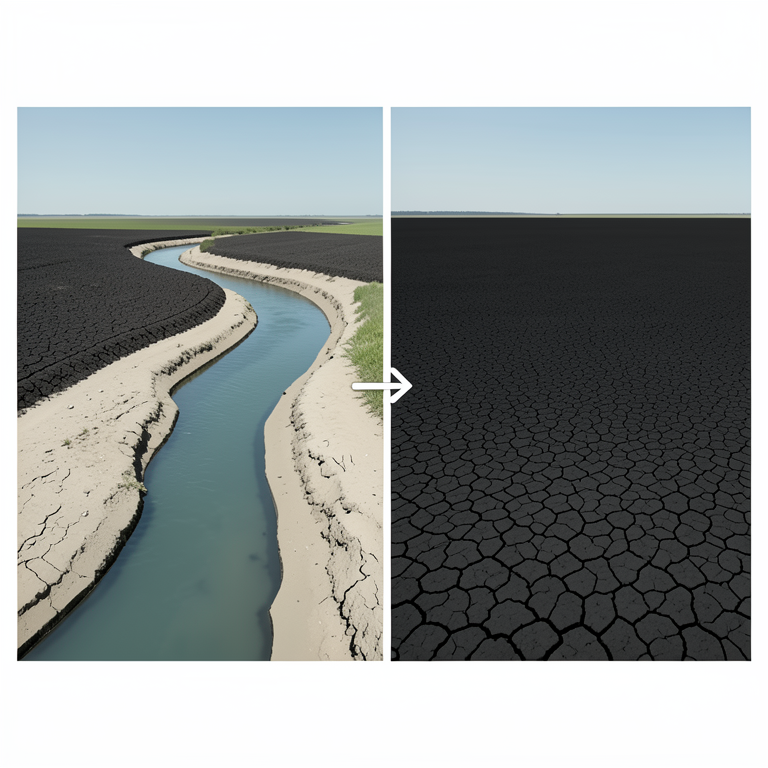
Soil Distribution Map Concept
AI-generated conceptual illustration (Tapti River basin landscape in Maharashtra). It explains the idea and does not show study data.
View source evidence ↗Figures & tables
From the original paper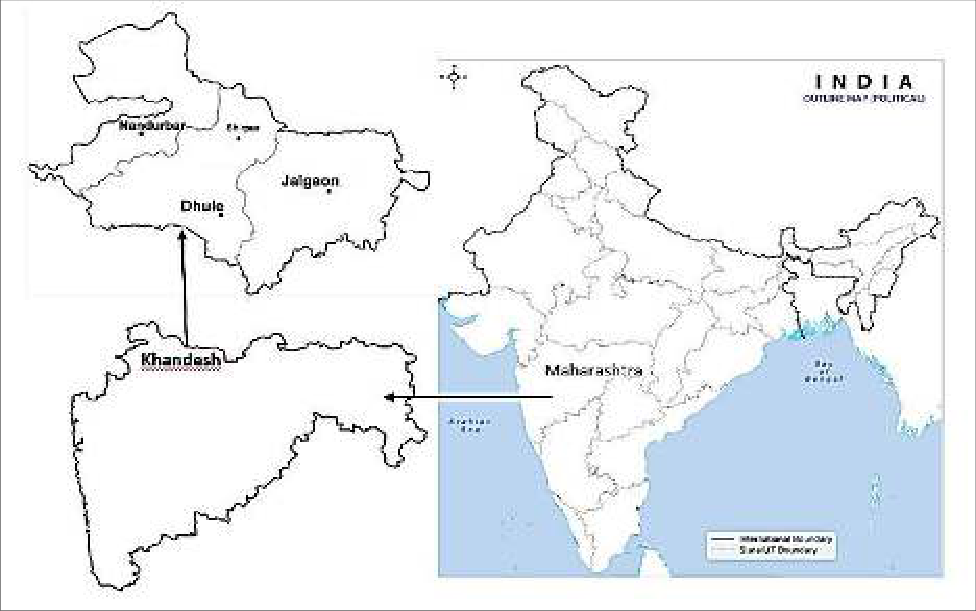 Figure 1
Introduction
Soil properties play an important role in shaping agricultural productivity and environmental sustainability. Soil properties like soil texture, soil structure, density, pH levels, and plant nutrient content directly impact crop growth, nutrient uptake, and the overall productivity (Sahrawat et al., 2010) [33] . By assessing soil properties such as soil organic matter, nitrogen, phosphorus, and potassium levels in soil, farmers can adapt fertilization plans to replenish nutrient deficiencies and maintain soil health (Fang & Su, 2019) [10] . Moreover, soil properties influence water management practices by affecting soil water infiltration, retention, and drainage characteristics which are crucial for soil water management, irrigation efficiency, and soil conservation (Wang et al., 2021) [46] . Soil texture influences yield variability, especially in rainfed agriculture (Gupta et al., 2022) [14] , and compaction impacts productivity (Piché & Kelting, 2015) [31] . Understanding soil quality indicators helps land use planning (Zebire et al., 2019) [51] , and gauging sustainable productivity (Farhate et al., 2018) [11] . Soil properties are crucial for maintaining environmental quality and implementing sustainable land management practices and play an important role in controlling processes like carbon storage, nutrient recycling, and filtering pollutants, which are vital for preventing environmental damage (Seifu & Elias, 2018) [36] . They also help and guide the prevention of soil erosion, which is an important factor for keeping soil healthy, and productive and minimizing land degradation (Hailu Leta, 2019) [15, ] . Assessing soil quality means looking at its physical, chemical, and biological parameters to see if something is preventing it from working appropriately or to monitor how changes affect its functions (Seifu & Elias, 2018) [36] . Soil quality refers to how well soil can support plant and animal life, maintain water and air quality, and keep people healthy (Ghimire et al., 2018) [13] . Adopting good practices like soil conservation, erosion control, and careful nutrient management is crucial for keeping soil healthy to ensure sustainable agriculture productivity (Peigné et al., 2007) [30] .
It is important to note that the interpretation of soil health indicators needs to account for inherent soil characteristics related to soil forming factors, including parent material, vegetation, climate, topography, and time (Zuber et al., 2020) [54] . This review aims to explore the soil quality information of the area to establish key objectives regarding soils and agricultural sustainability and to find physical characteristics like soil texture, structure, color, and porosity, as well as chemical properties such as soil pH, organic matter, and important plant nutrients, as these factors are crucial for understanding their impact on agricultural productivity (Conley, 1999) [5] , aiming to enhance nutrient management strategies and promote sustainable farming practices in Khandesh and to provide insights into the current condition of soil health, essential for effective farming practices (Shehu et al., 2023) [38] .
Geographical and Climatic Overview of the Khandesh Region:
The Khandesh region, nestled between the Satpura Range and the Tapti River, and bordered by the Narmada River, showcases a richly varied and enthralling landscape. The Tapti River flows through the Jalgaon, Dhule, and Nandurbar districts of Khandesh, lined by thick alluvial deposits. While the majority of the area is blanketed by the Deccan traps, there are narrow bands of alluvial terrain on either side of the Tapti River. It features fertile plains, rolling hills, and expansive plateaus, creating a picturesque blend of agricultural scenery. Despite its semi-arid climate, characterized by scorching summers exceeding 40°C and mild winters averaging 10-15°C, the region undergoes distinct seasonal changes (Khan et al., 2022) [21] . Understanding these climatic patterns is essential for comprehending the conditions (Athare et al., 2023) [2] that impact agriculture (Patil, 2016) [29] in the region. The monsoon, spanning from June to September, blesses the region with plentiful rainfall ranging from 600 to 800 mm, albeit with variations in space and time (Athare et al., 2023) [2] . In this climatic diversity, Khandesh boasts a diverse range of vegetation, including dry deciduous forests, thorny scrublands, and extensive grasslands (Khairnar et al., 2023) [20] . However, human activities such as agriculture, deforestation, and urbanization have significantly altered the region's natural landscape. The region is renowned for its agricultural productivity, supported by fertile soils irrigated by rivers like the Tapti and groundwater reservoirs. This fertile environment sustains a diverse agricultural landscape, encompassing crops such as cotton, pulses, millets, oilseeds, sugarcane, bananas, etc. Despite its agricultural success, the region faces challenges such as soil degradation, water scarcity, deforestation, and habitat fragmentation, aggravated by unsustainable land-use practices and climate change (Kalu Ahire, 2022) [18] .
Fig 1: Geographical location of the Khandesh Region
Fig 1: Geographical location of the Khandesh Region
Soil Formation and Classification
Soil formation is a complex process influenced by various factors, including climate, parent material, topography, vegetation, and time (Bhattacharyya et al., 2013) [4] . These factors play a crucial role in the development of soils from parent materials under the effects of climate, organisms, relief, and time (Shepard et al., 2018) [39] . Additionally, the influence of climate, vegetation/land use, topography, parent material, and time on soil properties is well established (Van Zijl & Le Roux, 2014) [44] . Khandesh region is characterized by a semi-arid climate with hot summers and moderate rainfall (Yeola, 2020) [49] , these factors influence soil properties through temperature fluctuations, moisture availability (Onwuka, 2016) [28] , and weathering processes (Weil & Brady, 2017) [47] . The composition and characteristics of the underlying parent material, such as weathered rock and sedimentary formations, further influence soil development, alongside relief features like slope and elevation, which affect drainage patterns and erosion rates (Dixon, 2013) [8] . Vegetation plays a crucial role in soil formation by contributing organic matter and influencing soil structure, nutrient cycling, and microbial activity (Fortuna, 2012) [12] . Over time, soil properties evolve in response to environmental changes and anthropogenic activities. Soil classification systems, such as the Indian Soil Classification System (Velayutham M. et al., 2017) [45] , categorize soils based on criteria like texture, color, and structure, providing insights into their suitability for different land uses and conservation measures. In the Khandesh region, the soils found along the banks of the Tapti River are predominantly alluvial and are generally classified as Entisols or Inceptisols, whereas other areas have black cotton soils and are typically classified as Vertisols. Studying soil formation and classification is vital for assessing soil fertility, land suitability, and management practices, facilitating sustainable agricultural productivity, and land-use planning in the region. Studying the soil types of a region is crucial for evaluating soil fertility, determining land suitability for supporting sustainable agriculture and better land-use planning (Kalu Ahire, 2022) [18] to promote productivity and resilience in the region's agricultural landscapes (Yu & Ramanathan, 2016) [50] .
Physical Properties of Soil in the Khandesh Region
The physical properties of soil in the Khandesh region of Maharashtra, India, are characterized by a rich tapestry of quantitative data gleaned from various research endeavors. Soil texture analyses reveal the prevalence of different soil types, with typical ranges including 40-50% sand, 30-40% silt, and 20-30% clay, with soil textures ranging from sandy loam to clay loam (Ingle S. et al., 2018) [17] with structures such as granular, blocky, prismatic, and platy, which impact soil aeration, root development, and water movement (van Lanen et al., 1992) [43] . Soil porosity parameters show values ranging from 40-50% for total porosity, highlighting the importance of pore size distribution in regulating water infiltration (Sahu et al., 2022) [34] and root growth. Soil color ranges from light brown to reddish-brown, influenced by factors such as iron oxide content (Deshmukh et al., 2023) [7] and waterlogging. The bulk density of soils ranges from 1.0 to 1.5 g/cm³ and particle density from 2.5 to 2.8 g/cm³ (Sudharshana et al., 2021) [40] , reflecting variations in soil compaction levels and mineral composition across different land-use types and soil depths (Deshmukh et al., 2023) [7] with seasonal fluctuations and spatial heterogeneity in soil moisture distribution (Meena et al., 2020) [25] in the region.
Chemical Properties of Soil in the Khandesh Region
The chemical properties of soils in the region exhibit a diverse range of values, reflecting variations in soil fertility and nutrient availability across different land-use types. Soil pH, a crucial indicator of soil acidity or alkalinity, ranges from approximately 5.5 to 7.5, with an average range of 6.0 to 7.0, indicating slightly acidic to neutral conditions (Naphade et al., 2021) [26] conducive to plant growth. Soil organic matter content, essential for soil fertility and moisture retention, ranges from approximately 0.5% to 3.0%, with an average range of 1.0% to 2.0%, highlighting the importance of organic inputs in sustaining soil health (Ingle S. et al., 2018; Sudharshana et al., 2021) [17,40] . This underscores the significance of organic inputs in maintaining soil health (Sarkar et al., 2003) [35] . Studies have shown the adoption of conservation agriculture practices to enhance soil organic matter content, which improves the water-holding capacity (Sahu et al., 2022) [34] and has a dominant effect on soil densities (Adams, 1973) [1] . Macro-nutrient levels, including nitrogen (N), phosphorus (P), and potassium (K), vary considerably, the available nitrogen of the region varies from 88 -270 kg ha-1, the available phosphorus from 23-42 kg ha-1, and the available potassium is in the range of 124 to 465 kg ha-1 (Das et al., 2022) [6] . Micro-nutrient levels, such as iron (Fe), manganese (Mn), and zinc (Zn), also exhibit significant variability, with iron levels ranging from 5 ppm to 50 ppm, manganese levels ranging from 1 ppm to 20 ppm, and zinc levels range from 0.5 ppm to 5 ppm (Naphade et al., 2021) [26] . This wide-ranging available micronutrient suggests the need for site-specific nutrient management strategies to optimize crop productivity and soil fertility in the region.
Impact of Soil Properties on Agriculture and Environment
Conventional soil management exhibits a negative impact on soil quality (Bedolla-Rivera et al., 2023) [3] . The impact of soil properties on agriculture in the region, is complex and intense, determining agricultural productivity (Fang & Su, 2019; Tadesse et al., 2013) [10,41] . Soil properties like soil texture, soil structure, pH, and important plant nutrient levels exert influence on crop growth, yield, and quality. Well-drained soils with optimal pH and nutrient levels facilitate robust root development and efficient nutrient uptake, ultimately leading to enhanced crop yields (Weil & Brady, 2017) [47] . Soil properties also play an important role in water management, influencing water infiltration, retention, and drainage (Lal, 2015a) [22] . Soils with good water-holding capacity and infiltration rates mitigate the risks of waterlogging or drought stress on crops (Kaur et al., 2020) [19] , ensuring efficient water use and sustainable irrigation practices (Rosa et al., 2020; Zhang, 2022) [32,52] . Soil fertility, determined by soil organic matter content and plant nutrient availability, is vital for maintaining agricultural productivity. Soils rich in organic matter and balanced nutrients foster vigorous plant growth, reducing the dependency on external inputs and promoting long-term soil health (Lal, 2015b) [23] . Furthermore, soil properties influence pest and disease dynamics in agricultural systems (Lori et al., 2017) [24] , with factors like soil moisture levels and organic matter content impacting the prevalence of soilborne pathogens and the activity of beneficial soil organisms that contribute to pest control (Hartmann et al., 2015) [16] . Soil properties also play an important role in erosion control, nutrient availability and cycling, carbon sequestration, and water quality regulation (Weil & Brady, 2017) [47] . Moreover, soil properties influence nutrient cycling processes essential for maintaining soil fertility and ecosystem functioning. Healthy soils with diverse microbial populations and adequate organic matter content support efficient nutrient cycling and recycling, contributing to ecosystem resilience. Additionally, soils serve as a reservoir for carbon, with properties like organic matter content and aggregation influencing carbon sequestration rates (Yadav et al., 2020; Zhao et al., 2022) [48,53] . Well-structured soils and high organic matter content facilitate carbon storage, mitigating greenhouse gas emissions and contributing to climate regulation (Don et al., 2024; Nazir et al., 2024) [9,27] .
Future prospects
As we envision the trajectory of future research in the region, there are numerous possibilities for exploration and prioritization. Comprehensive soil health assessments stand as a cornerstone, providing invaluable insights into the prevailing state of soil degradation, nutrient dynamics, and microbial communities across diverse land-use systems (Lal, 2015b) [23] . Concurrently, an in-depth investigation of soil properties is imperative, necessitating a nuanced understanding of changes in temperature, precipitation patterns, and extreme weather events on soil erosion, moisture dynamics, and nutrient cycling (Weil & Brady, 2017) [47] . Moreover, an exploration of soil-water interactions and irrigation management strategies holds paramount importance, particularly in the context of enhancing water-use efficiency ( [2,15,22,33] and drought resilience amidst changing climatic conditions. Equally significant is the evaluation of soil nutrient status and the development of site-specific nutrient management strategies, aiming to optimize fertilizer usage, enhance nutrient uptake efficiency (Tisdale et al., 1993) [42] , and mitigate environmental impacts. Lastly, the integration of traditional agricultural practices with modern soil science methodologies emerges as a promising avenue, offering context-specific and culturally relevant solutions to soil management challenges (Sekhar et al., 2024) [37] . Through interdisciplinary collaborations and community engagement, the journey towards sustainable soil management in the region is not merely a scientific endeavor but a socioeconomic imperative intertwined with environmental stewardship.
Discussion and conclusion
This review has offered valuable insights into the soil properties of the Khandesh region of Maharashtra, India.
Figures and tables from the paper
References
51 in the original paper- Adams WA. The effect of organic matter on the bulk and true densities of some uncultivated podzolic soils. Journal of Soil Science. 1973;24(1):10-17. doi:10.1111/j.1365-2389.1973.tb00737.x
- Athare PG, Singh DR, Kumar NR, Jha GK, Venkatesh P, Chakrabarti B. Spatio-Temporal Analysis of Rainfall and Temperature Trends in Maharashtra State, India (Asia). International Journal of Environment and Climate Change. 2023;13(9):552-561. doi:10.9734/ijecc/2023/v13i92270
- Bedolla-Rivera HI, Negrete-Rodríguez MLX, GámezVázquez FP, Álvarez-Bernal D, Conde-Barajas E. Analyzing the Impact of Intensive Agriculture on Soil Quality: A Systematic Review and Global MetaAnalysis of Quality Indexes. Agronomy. 2023;13(8):2166. doi:10.3390/agronomy13082166
- Bhattacharyya T, Pal DK, Mandal C, Chandran P, Ray SK, Sarkar D, et al. Soils of India: Historical perspective, classification and recent advances. Current Science. 2013;104(10):1354-1368.
- Conley DJ. Biogeochemical nutrient cycles and nutrient management strategies. In: Man and River Systems. Springer Netherlands; 1999. p. 87-96. doi:10.1007/97894-017-2163-9_10
- Das BM, Raut M, Badge S, Mareddy N, Bhoyar K. Fertility Status of Rice Growing Soils… International Journal of Plant & Soil Science. 2022;34(24):283-289. doi:10.9734/ijpss/2022/v34i242640
- Deshmukh U, Al P, Bd B, Ag D. Impact of different land use on depth wise soil physical properties… The Pharma Innovation Journal. 2023;SP-12(6):465-471.
- Dixon JC. Pedogenesis with Respect to Geomorphology. In: Treatise on Geomorphology. Elsevier; 2013. p. 27-43. doi:10.1016/B978-0-12374739-6.00058-0
- Don A, Seidel F, Leifeld J, et al. Carbon sequestration in soils and climate change mitigation. Global Change Biology. 2024;30(1):1-15. doi:10.1111/gcb.16983
- Fang J, Su Y. Effects of Soils and Irrigation Volume on Maize Yield… Scientific Reports. 2019;9:7740. doi:10.1038/s41598-019-41447-z
- Farhate CVV, Souza ZM, Guimarães Jr WS, et al. Soil Physical Quality in Sugarcane Field… Journal of Agricultural Science. 2018;10(11):489-499. doi:10.5539/jas.v10n11p489
- Fortuna A. The Soil Biota. Nature Education Knowledge. 2012;3(10):1-10.
- Ghimire P, Bhatta B, Pokhrel B, Shrestha I. Assessment of soil quality… Journal of Agriculture and Natural Resources. 2018;1(1):32-42. doi:10.3126/janr.v1i1.22220
- Gupta S, Bonetti S, Lehmann P, Or D. Limited role of soil texture… Environmental Research Letters. 2022;17(3):034012. doi:10.1088/1748-9326/ac5206
- Hailu Leta. Effects of Soil and Water Conservation… Journal of Environment and Earth Science. 2019;9(5):112. doi:10.7176/JEES/9-5-02
- Hartmann M, Frey B, Mayer J, et al. Distinct soil microbial diversity… The ISME Journal. 2015;9(5):1177-1194. doi:10.1038/ismej.2014.210
- Ingle S, Patil SN, Kolhe PM, Marathe NP, Kachate NR. Evaluation of Agricultural Soil Quality… Nature Environment and Pollution Technology. 2018;17(4):1147-1160.
- Kalu Ahire D. Geographical Analysis of Crop Concentration… Journal of Geography, Environment and Earth Science International. 2022;26(2):11-16. doi:10.9734/jgeesi/2022/v26i230334
- Kaur G, Singh G, Motavalli PP, et al. Impacts and management strategies… Agronomy Journal. 2020;112(3):1475-1501. doi:10.1002/agj2.20093
- Khairnar SB, Patil MV, Patil DA. Biodiversity of vegetable sources… International Journal of Researches in Biosciences and Agriculture Technology. 2023;10(1):1-7.
- Khan TA, Chaudhari RY, Bagwan SA. Occurrence of Riccia cavernosa… Plant Archives. 2022;22(1):246248. doi:10.51470/plantarchives.2022.v22.no1.038
- Lori M, Symnaczik S, Mäder P, et al. Organic farming enhances soil microbial abundance… PLOS ONE. 2017;12(7):e0180442. doi:10.1371/journal.pone.0180442
- Meena A, Hanief M, Dinakaran J, Rao KS. Soil moisture controls soil respiration… Ecological Processes. 2020;9:15. doi:10.1186/s13717-020-0218-0
- Naphade M, Sidhu GS, Patil VD, Shinde R. Assessment of Physico-chemical Properties… International Journal of Current Microbiology and Applied Sciences. doi:10.20546/ijcmas.2021.1003.009
- Nazir MJ, Li G, Nazir MM, et al. Harnessing soil carbon sequestration… Soil and Tillage Research. 2024;237:105959. doi:10.1016/j.still.2023.105959
- Onwuka B. Effects of soil temperature on Some Soil properties… Journal of Agricultural Science and Technology. 2016;Page numbers not provided.
- Patil S. Study climate and impact of ICT… International Journal of Research in Engineering and Technology. 2016;5(2):243-244. doi:10.15623/ijret.2016.0502043
- Peigné J, Ball BC, Roger-Estrade J, David C. Is conservation tillage… Soil Use and Management. 2007;23(2):129-144. doi:10.1111/j.14752743.2006.00082.x
- Piché N, Kelting DL. Recovery of soil productivity… Restoration Ecology. 2015;23(5):645-654. doi:10.1111/rec.12241
- Rosa L, Chiarelli DD, Rulli MC, et al. Global agricultural economic water scarcity. Science Advances. 2020;6(18):1-10. doi:10.1126/sciadv.aaz6031
- Sahrawat KL, Wani SP, Pathak P, Rego TJ. Managing natural resources… Agricultural Water Management. 2010;97(3):375-381. doi:10.1016/j.agwat.2009.10.012
- Sahu V, Srivastava SK, Pandey A. Role of porosity and water holding capacity… International Journal of Health Sciences. 2022;6(S1):8840-8847. doi:10.53730/ijhs.v6nS1.7027
- Sarkar S, Singh SR, Singh RP. Organic and inorganic fertilizers. Journal of Agricultural Science. 2003;140(4):419-425. doi:10.1017/S0021859603003186
- Seifu W, Elias E. Soil Quality Attributes. International Journal of Plant & Soil Science. 2018;26(3):1-26. doi:10.9734/IJPSS/2018/41589
- Sekhar M, Rastogi M, Rajesh CM, et al. Exploring Traditional Agricultural Techniques… Journal of Scientific Research and Reports. 2024;30(3):185-198. doi:10.9734/jsrr/2024/v30i31871
- Shehu BM, Garba II, Jibrin JM, et al. Compositional nutrient diagnosis… Soil Science Society of America Journal. 2023;87(1):63-81. doi:10.1002/saj2.20472
- Shepard C, Pelletier JD, Schaap MG, Rasmussen C. Signatures of Obliquity… Geophysical Research Letters. 2018;45(20):1-10. doi:10.1029/2018GL078583
- Sudharshana C, Dhotre M, Didal VK. Land Inventorization. International Journal of Environment and Climate Change. 2021;11(12):331-343. doi:10.9734/ijecc/2021/v11i1230584
- Tadesse T, Dechassa N, Bayu W, Gebeyehu S. Effects of Farmyard Manure… American Journal of Plant Sciences. 2013;4(2):309-316. doi:10.4236/ajps.2013.42041
- Tisdale SL, Nelson WL, Beaton JD. Soil Fertility and Fertilizers. New York: Macmillan Publishing Co.; 1993. 43.
- van Lanen HAJ, Reinds GJ, Boersma OH, Bouma J. Impact of soil management systems… Soil and Tillage Research. 1992;23(3):203-220. doi:10.1016/01671987(92)90101-G
- Van Zijl G, Le Roux P. Conceptual hydrological soil response map… Water SA. 2014;40(2):331-340. doi:10.4314/wsa.v40i2.15
- Velayutham M, Bhattacharyya T, Pal DK. Classification Systems: Indian. In: Encyclopedia of Soil Science. CRC Press; 2017. p. 398-401. doi:10.1081/EESS3-120053879
- Weil R, Brady N. The Nature and Properties of Soils. 15th ed. Pearson; 2017.
- Yadav S, Kumar R, Chandra MS, et al. Soil Organic Carbon Sequestration… International Research Journal of Pure and Applied Chemistry. 2020;21(24):122-136. doi:10.9734/irjpac/2020/v21i2430341
- Yeola M. Analysis of rainfall trends for the Khandesh region… AIP Conference Proceedings. 2020;030030:16. doi:10.1063/5.0016843
- Yu W, Ramanathan R. Environmental management practices. Industrial Management & Data Systems. 2016;116(6):1201-1222. doi:10.1108/IMDS-09-2015-
- Zebire DA, Ayele T, Ayana M. Characterizing soils… Journal of Ecology and Environment. 2019;43(1):15. doi:10.1186/s41610-019-0104-9
- Zhang JX. Study on the Effect of Straw Mulching… Journal of Environmental and Public Health. 2022;2022:1-8. doi:10.1155/2022/3101880
- Zhao Z, Zhang C, Yang Q, et al. Spatial-Temporal Variability. Agriculture. 2022;12(8):1073. doi:10.3390/agriculture12081073
- Zuber SM, Veum KS, Myers RL, Kitchen NR, Anderson SH. Role of inherent soil characteristics… Agricultural & Environmental Letters. 2020;5(1):1-6. doi:10.1002/ael2.20021