
Research article · 2025 · Full text
International Journal of Agriculture and NutritionUse of genomic prediction and GWAS to breed for drought tolerance in common beans: Nurturing resilient crops in a thirsty world - A review
Volume 7(12) · Pages 11–19 · DOI: 10.33545/26646064.2025.v7.i12a.321 ↗
Research areasPlant pathogens and resistance mechanismsGenetics and Plant BreedingSoybean genetics and cultivation
Abstract
Author-writtenCommon beans (Phaseolus vulgaris L.), play a crucial role in enhancing food security and promoting sustainable agriculture in developing countries. Its production has however been significantly impacted by drought in the Sub-Saharan Africa, exacerbating the problems of food security and economic stability across various regions. This has necessitated tailored adaptation strategies to mitigate the adverse effects of drought on its production and food security in the region that include breeding for drought tolerance. Drought tolerance in agriculture holds significant potential for enhancing crop resilience and ensuring food security, particularly in the face of climate change and increasing water scarcity. Integrating drought tolerance into breeding programs should involve several advanced strategies that include Genomic prediction and Genome-Wide Association Studies (GWAS) as exceptionally powerful and sophisticated instruments for dissecting and elucidating the complex genetic underpinnings associated with drought tolerance. In the realm of agricultural research, it is imperative that future investigations meticulously integrate multi-environment phenotyping techniques alongside comprehensive genomic data in order to more effectively elucidate the intricate interactions between genotype and environment, with a particular emphasis on the vast and diverse gene pools of bean varieties.
Summary
Source-checkedPlain-language reading of the full paper, prepared with AI and checked against the text. Each point links to the authors' own words.
Why it matters
- Common beans are essential for food security and sustainable farming in developing nations. View evidence ↗
- Drought in Sub-Saharan Africa significantly hinders bean production, which threatens regional economic stability and food security. View evidence ↗
- Low-income populations are particularly vulnerable to drought, experiencing income losses of up to 40%. View evidence ↗
The question
- The review examines how Genomic Prediction and Genome-Wide Association Studies (GWAS) can be used to understand and breed for drought tolerance in common beans. View evidence ↗
What they did
- The review discusses the use of molecular tools like QTL mapping and GWAS to identify genes associated with drought tolerance. View evidence ↗
- High-Throughput Phenotyping Platforms (HTPPs) are used to evaluate how plants respond physiologically to drought during early growth. View evidence ↗
- The GBLUP model is a common statistical tool used in genomic selection to estimate the effects of genetic markers. View evidence ↗
- Bayesian methods, such as BayesA, BayesB, BayesC, and IBLASSO, are frequently employed for genomic prediction. View evidence ↗
What they found
- Specific improved bean varieties, Flor de Mayo Eugenia and Negro 8025, achieved yields of 1,905 and 1,843 kg ha-1 under drought conditions. View evidence ↗
- Trait heritability in common beans ranges from 0.67 to 0.92, indicating that these traits are polygenic. View evidence ↗
- The SBayesRC method improves prediction accuracy by 14% in European ancestry and up to 34% in cross-ancestry contexts by combining GWAS statistics with functional annotations. View evidence ↗
- The GWABLUP approach can provide predictions up to 10% more reliable than standard GBLUP models by weighting SNPs based on GWAS data. View evidence ↗
- In wheat breeding for Septoria tritici blotch resistance, integrating 24 GWAS marker-trait associations with genomic prediction increased accuracy from 0.49 to 0.58. View evidence ↗
- Integrating environmental data with genomic and phenomic data in wheat breeding programs resulted in average prediction accuracy gains of 49.19%. View evidence ↗
What it means
- The authors conclude that GP and GWAS are powerful tools for understanding the genetics of drought tolerance and accelerating the breeding of resilient bean varieties. View evidence ↗
- The authors recommend that future research integrate multi-environment phenotyping with genomic data to better understand genotype-environment interactions. View evidence ↗
- The implementation of genomic selection is limited by high genotyping costs and the requirement for large training populations, especially in resource-limited public sector programs. View evidence ↗
Visual summary
1 visualsIllustrations explain the paper; they do not show study data.
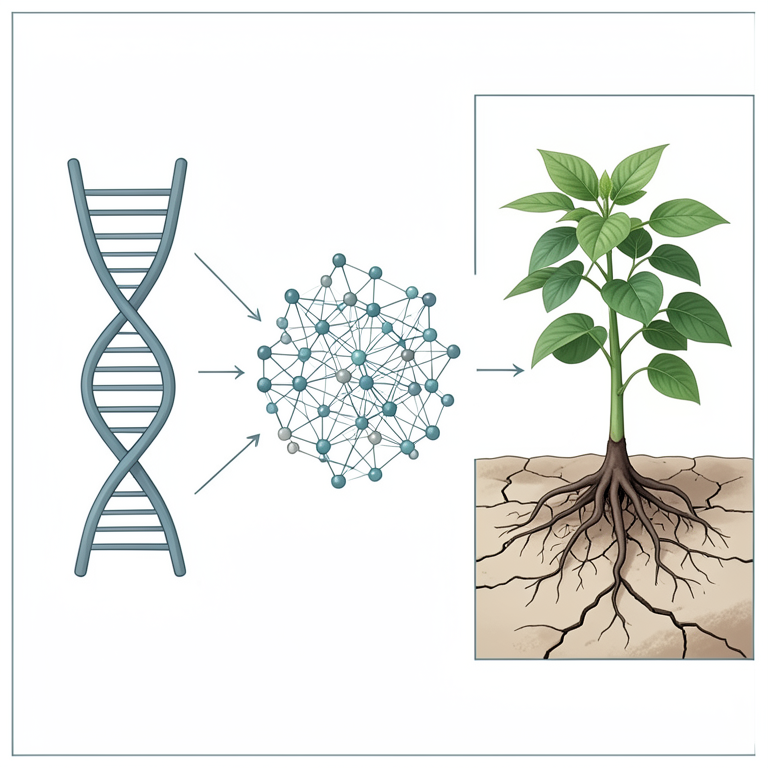
Integration of GWAS and Genomic Prediction
AI-generated conceptual illustration (common bean plants (Phaseolus vulgaris)). It explains the idea and does not show study data.
View source evidence ↗Introduction
Legumes, particularly common beans (Phaseolus vulgaris L.), play a crucial role in enhancing food security and promoting sustainable agriculture in developing countries. They are nutrient-dense, providing high levels of protein, dietary fiber, and essential minerals, which are vital for combating malnutrition in low-income populations (Uebersax et al., 2022, Lisciani et al., 2024) [81,46] . Legumes also contribute to sustainable agricultural practices through symbiotic nitrogen fixation, reducing the need for chemical fertilizers and improving soil health (Islam et al., 2022, Uebersax et al., 2022) [77,81] . Their short growth cycle allows for crop diversification, which is essential in adapting to climate variability and ensuring stable food production (Uebersax et al., 2022, Wondaferew et al., 2024) [81,91] . Additionally, underutilized legumes like marama beans and Bambara groundnuts exhibit high drought tolerance and nutritional value, presenting opportunities for sustainable food sources in regions facing climate challenges (Aderinola & Duodu, 2024) [1] . Overall, the integration of legumes into agricultural systems supports both nutritional needs and environmental sustainability, making them a key component in addressing food security issues in developing nations. Drought significantly impacts bean production in Sub-Saharan Africa, exacerbating the problems of food security and economic stability across various regions. The frequency and intensity of drought events have escalated, particularly post-1990, leading to increased crop failures and water scarcity, with the Sahara region experiencing the most severe trends (Ogunrinde et al., 2025, Lombe et al., 2024) [57,47] . Vulnerable populations, especially those in lower income brackets, face income reductions of up to 40%, as they lack the resources to adapt or recover from drought impacts (Pignède, 2025). The effects vary regionally; for instance, Central Africa experiences heightened nutritional risks linked to socio-economic instability, while Northern Africa faces severe agricultural and water insecurity due to extreme drought conditions (Sharma et al., 2024) [73] . Overall, the complex interplay of [47,73] .
Drought tolerance in common beans
Drought tolerance in common beans (Phaseolus vulgaris L.) is a multifaceted trait influenced by genetic, physiological, and agronomic factors. Research has identified specific genotypes, such as CAL96 and DAB541, that exhibit enhanced drought resilience through mechanisms like the overexpression of drought-responsive genes (PvDREB1F and PvDREB5A) and improved antioxidative stress responses, which correlate with biomass production under drought conditions (Pholo-Tait et al., 2024) [59] .
Additionally, studies on landrace accessions from Italy revealed significant variability in drought tolerance, with certain genotypes maintaining higher yields under water scarcity, emphasizing the importance of morphophysiological traits in predicting drought resilience (Alicandri et al., 2024) [3] . Furthermore, the application of foliar treatments, such as iron nanoparticles and ascorbic acid, has been shown to enhance growth and antioxidant defenses, thereby mitigating drought stress effects (Yılmaz, 2024) [95] . Agronomic evaluations of Andean genotypes highlighted the role of water use efficiency and assimilate partitioning in achieving drought tolerance, with specific genotypes identified as promising candidates for breeding programs (Hamabwe et al., 2024) [28] . Lastly, the diversity in stomatal and hydraulic responses among common bean genotypes suggests that both isohydric and anisohydric strategies contribute to drought resilience, indicating a complex interplay of physiological adaptations (Buckley et al., 2024) [9] . In Uganda, the cultivation of drought-tolerant bean varieties is crucial due to the frequent occurrence of drought conditions that significantly impact agricultural productivity. Recent studies have identified several bean genotypes with enhanced drought resistance, which are being integrated into breeding programs to improve yields under water-scarce conditions. The Lechinta genotype, known for its high drought stress resistance, has shown superior adaptability compared to other genotypes like M-2087 and A-1988, which originate from the Mesoamerican and Andean gene pools, respectively (Galan et al., 2024) [20] . Additionally, improved varieties such as Flor de Mayo Eugenia and Negro 8025 have demonstrated significant drought tolerance, with yields of 1,905 and 1,843 kg ha-1 under drought conditions, respectively, compared to higher yields under irrigated conditions (Rivera, 2024) [19] . These varieties have been developed through breeding programs that focus on traits such as water use efficiency, relative water content, and root/shoot ratio, which are crucial for drought resistance (Verheyen et al., 2024) [82] . The integration of genetic and molecular insights, such as the expression of genes related to stress response and signaling, further enhances the development of drought-tolerant varieties (Ponce et al., 2024) [61] . The use of the Target Population of Environments (TPE) approach has also been instrumental in identifying and targeting genotypes that perform well under specific drought conditions in East Africa, including Uganda (Jha et al., 2024) [35] . These efforts collectively aim to ensure sustainable bean production and food security in the face of climate change.
Physiology & phenotyping of drought tolerance
Drought tolerance in agriculture holds significant potential for enhancing crop resilience and ensuring food security, particularly in the face of climate change and increasing water scarcity. Integrating drought tolerance into breeding programs involves several advanced strategies. Molecular breeding tools, such as Quantitative Trait Loci (QTL) mapping and Genome-Wide Association Studies (GWAS), have been instrumental in identifying genes linked to drought tolerance in crops like maize, which can be exploited for breeding applications (Rasheed et al., 2023) [63] . Marker-Assisted Selection (MAS) and Genomic Selection (GS) are pivotal in reducing environmental impacts and enhancing the efficiency of breeding programs by facilitating the introgression of valuable traits from diverse germplasm collections (Rauf et al., 2016) [64] . Additionally, the use of High-Throughput Phenotyping Platforms (HTPPs) allows for the evaluation of physiological responses to drought at early growth stages, improving the efficiency of breeding drought-tolerant wheat varieties (Khadka et al., 2020) [41] . The integration of conventional and molecular breeding methods, alongside the introduction of drought-tolerant, underutilized crops, can enhance agricultural resilience to water deficiency (Rosero et al., 2020) [67] . At institutions like ICRISAT, efforts are focused on identifying and mapping QTL for specific drought-tolerance traits, such as stay-green in sorghum and root traits in chickpea, to improve crop performance under water-limited conditions (Serraj et al., 2005) [72] . These comprehensive approaches, combining advanced genetic tools and phenotyping techniques, are crucial for developing drought-tolerant cultivars that can sustain productivity in challenging environments. Drought tolerance in plants involves a complex interplay of physiological, biochemical, and molecular mechanisms that enable them to survive water scarcity. Key strategies include osmotic adjustment, which helps maintain cellular turgor, and the synthesis of protective proteins such as dehydrins that mitigate dehydration stress (Haghpanah et al., 2024) [26] . Additionally, plants enhance their root systems for improved water uptake and exhibit morphological adaptations like leaf rolling and increased cuticle thickness to reduce transpiration (Shil, 2023) [74] . Hormonal signaling, particularly involving abscisic acid, plays a crucial role in regulating stomatal closure and water conservation (Ilyas et al., 2021) [32] . Antioxidant systems are activated to counteract oxidative stress caused by reactive oxygen species, with enzymes like superoxide dismutase and catalase being pivotal in this defense (Hashmi et al., 2023) [29] . Furthermore, the integration of genetic approaches, including transgenic methods, is being explored to enhance drought resilience in crops, ensuring food security in the face of climate change (Batool et al., 2024, Shil, 2023) [5,74] . Phenotyping techniques play a crucial role in identifying and characterizing drought-tolerant traits in crops by enabling the assessment of various physiological and morphological traits that contribute to drought resilience. Root phenotyping, for instance, allows researchers to evaluate Root System Architecture (RSA), which is vital for water uptake and recovery from drought stress, highlighting traits such as root length and surface area that are linked to genetic loci associated with drought tolerance (Dutta & Sarma, 2022) [17] . High-Throughput Phenotyping (HTP) methods facilitate the non-destructive analysis of large-scale phenotypic data, thus enhancing the understanding of plant responses to drought and enabling the identification of key traits like limited transpiration, which conserves water during stress (Kim et al., 2021, Sarkar et al., 2022) [43,70] . Furthermore, comprehensive phenotyping approaches have led to the identification of consistent markers, such as stomatal density and canopy temperature depression, which can be utilized for early selection in breeding programs aimed at developing drought-tolerant cultivars (Tuberosa, 2012, Toum et al., 2022) [80,79] . Collectively, these techniques provide a robust framework for dissecting the genetic basis of drought tolerance, ultimately guiding the development of resilient crop varieties.
GWAS results in common bean (Plus comparative legume examples)
Genome-Wide Association Studies (GWAS) in common bean (Phaseolus vulgaris) significantly enhance the understanding of genetic variation in legume crops by identifying key genetic loci associated with important agronomic traits. For instance, GWAS has revealed SNPs linked to traits such as cooking time, water uptake, and micronutrient concentrations (Fe and Zn), which are crucial for addressing nutritional deficiencies in human diets (Binagwa et al., 2020) [6] . Additionally, studies have identified major QTLs for disease resistance, such as rust and scab, highlighting the genetic basis for resilience against pathogens, which is vital for crop yield stability (Wu et al., 2022, Oriama et al., 2024) [92,58] . Furthermore, GWAS has facilitated the discovery of Quantitative Trait Nucleotides (QTNs) associated with seed mineral content, thereby providing genetic resources for breeding programs aimed at improving nutritional quality (Gunjača et al., 2021) [23] .
Collectively, these findings underscore the utility of GWAS in dissecting the complex genetic architecture of common bean, paving the way for enhanced breeding strategies in legume crops (Jurado et al., 2024) [40] . Genome-Wide Association Studies (GWAS) in common bean (Phaseolus vulgaris) reveal both similarities and differences when compared to other legume species. A notable similarity is the identification of significant SNPs associated with various traits, such as root traits under aluminum toxicity, micronutrient content, and disease resistance, which is also observed in legumes like soybean and pea (Ambachew & Blair, 2021, Binagwa et al., 2020, Izquierdo et al., 2023) [4,6,33] . However, differences arise in the specific genetic loci and candidate genes identified; for instance, common bean studies have highlighted unique QTLs for rust resistance and aluminum tolerance that differ from those found in other legumes (Wu et al., 2022, Izquierdo et al., 2023) [92,33] . Additionally, the heritability of traits in common bean, ranging from 0.67 to 0.92, suggests a polygenic inheritance pattern that may vary in other legumes (Ambachew & Blair, 2021) [4] . Overall, while GWAS findings in common bean align with broader legume research, they also underscore the distinct genetic architecture and adaptive strategies of this species. Comparative analysis of GWAS results across legume species, including the common bean, can indeed accelerate the discovery of novel genes by leveraging the genetic diversity and shared evolutionary history among these crops.
The integration of GWAS with interspecific lines, as demonstrated in the study of common bean and tepary bean, has already identified novel loci associated with drought tolerance, highlighting the potential of cross-species analysis to uncover adaptive genetic variations (López-Hernández et al., 2022) [48] . Furthermore, the use of metaanalysis and comparative genomics, as seen in the identification of orthologous MQTL-YC shared across common bean, soybean, and pea, underscores the value of cross-species approaches in refining genomic regions related to seed yield components (Izquierdo et al., 2023) [33] . The development of methods to identify conserved genes underlying GWAS loci across multiple species, as applied to ionomic traits in various crops, further supports the notion that comparative genomics can reveal previously unknown genes by focusing on evolutionarily conserved regions (Whitt et al., 2023) [87] . Additionally, the challenges and advancements in GWAS, such as the integration of multiomics data and machine learning, are crucial for enhancing the resolution of genetic mapping and facilitating the discovery of novel genes across leguminous crops (Ding, n.d.). These approaches collectively suggest that comparative GWAS can significantly contribute to molecular breeding by identifying candidate genes that are conserved across species, thereby accelerating the development of improved legume varieties with enhanced traits such as yield, nutrient content, and stress resistance.
Genomic prediction: Theory and applied studies in beans and other legumes
Key factors influencing genomic prediction accuracy in beans and other legumes include training population size, genetic diversity, and the choice of genomic prediction models. Research indicates that optimal training population size is crucial, as larger populations can enhance prediction accuracy, but diminishing returns may occur beyond a certain threshold (Alemu et al., 2024) [2] . Additionally, the inclusion of Genotype × Environment Interactions (GEI) in models has been shown to significantly improve accuracy, particularly for traits with low heritability (Haile et al., 2020) [27] . The effectiveness of different statistical models, such as Bayesian methods and GBLUP, also plays a vital role, with some models outperforming others depending on the presence of large effect Quantitative Trait Loci (QTL), Silva et al., 2021) [75] . Furthermore, environmental covariates may not always enhance prediction accuracy, especially in extreme conditions (Widener et al., 2021) [88] . Overall, a combination of these factors is essential for optimizing genomic prediction in breeding programs. Applied studies in genomic prediction significantly enhance crop yield and disease resistance in legume species by leveraging advanced genomic tools and methodologies. Genome-Wide Association Studies (GWAS) have identified key genetic markers associated with disease resistance, such as those linked to Phakopsora pachyrhizi resistance in soybeans, which can improve selection accuracy in breeding programs (Xiong et al., 2023) [93] . Additionally, genomic selection models, including Bayesian LASSO, have demonstrated high predictive accuracy for complex traits, facilitating the rapid development of disease-resistant cultivars (Xiong et al., 2023) [93] . The integration of genomic resources and high-throughput phenotyping technologies allows for the identification of genetic determinants of resistance to diseases like Ascochyta blight and Fusarium wilt in various legumes (Jha et al., 2022, Jha et al., 2023) [36,37] . Furthermore, the application of these genomic approaches not only accelerates breeding cycles but also contributes to sustainable agricultural practices by reducing reliance on chemical inputs (Ding, n.d.). Overall, these advancements are crucial for improving food security and agricultural resilience in the face of climate change and increasing disease pressures (James & Bala, 2024, Jha et al., 2022) [34,37] . Genomic prediction in legumes is underpinned by various theoretical frameworks that leverage advanced genomic technologies and statistical models. Key approaches include Genomic Selection (GS), which utilizes marker profiles to predict the performance of untested genotypes, thereby facilitating the selection process in breeding programs (Howard et al., 2022) [31] . The integration of Machine Learning (ML) methods, such as Random Forest and Extreme Gradient Boosting, has shown promise in enhancing predictive performance, particularly for nonlinear phenotypes, compared to traditional parametric methods (Farooq et al., 2023) [18] . Additionally, robust statistical models, like the minimum density power divergence estimator, have been developed to address complexities in genomic data, improving heritability estimation and prediction accuracy (Chowdhury et al., 2024) [10] . Compared to other plant species, legumes benefit from a rich genomic resource base, including reference genomes and highdensity molecular markers, which are crucial for optimizing breeding strategies and improving crop yields in challenging environments (Bohra et al., 2020, Dai et al., 2021) [8,14] . The widespread adoption of Genomic Selection (GS) in legume breeding programs faces several significant challenges. High genotyping costs and the necessity for large training populations hinder effective implementation, as many breeding programs, particularly in the public sector, struggle with limited resources and funding (M et al., 2024, Wartha & Lorenz, 2022) [85] . Additionally, the complexity of genetic architectures in legumes, characterized by multiple minor effect alleles, complicates the accurate prediction of traits, making it difficult to achieve reliable results across diverse environments and populations (Haile et al., 2020, Merrick et al., 2022) [27,51] . Furthermore, the integration of GS into traditional breeding practices requires optimization of existing methodologies, including field designs and data management, which can be resource-intensive (Sdasd, 2022). Lastly, ethical concerns regarding genetic diversity and data access further complicate the landscape for adopting GS in legume breeding (M et al., 2024).
Models used in genomic selection
In Genomic Selection (GS), several statistical models are commonly employed to predict Genomic Estimated Breeding Values (GEBVs). The Genomic Best Linear Unbiased Prediction (GBLUP) model is widely used due to its effectiveness in estimating marker effects across various traits (Mrode and Pocrnic, 2023, Terakado et al., 2021) [21,78] . Bayesian methods, including BayesA, BayesB, BayesC, and improved Bayesian least absolute shrinkage and selection operator (IBLASSO), have also gained popularity, often providing superior prediction accuracy, particularly in the presence of large effect quantitative trait loci (QTL) (Mrode and Pocrnic, 2023, Terakado et al., 2021, Khan et al., 2023) [21,78,42] . Additionally, machine learning approaches, such as Support Vector Machines (SVM) and ensemble methods like Multiple Kernel Ensemble (MKE), have shown promising results, enhancing prediction performance through optimized hyperparameters (Wang et al., 2023) [84] . Overall, the choice of model can significantly influence prediction accuracy, with Bayesian methods and GBLUP being among the most prevalent in current genomic selection practices (Mrode and Pocrnic, 2023, Khan et al., 2023) [21,42] . Machine Learning (ML) models and traditional linear models exhibit distinct differences in accuracy and computational efficiency within Genomic Selection (GS). While traditional methods, such as linear mixed models and regularized regression, have demonstrated strong predictive performance and computational efficiency, particularly in handling high-dimensional data, ML models often provide enhanced accuracy by accommodating complex, non-linear relationships (Sinha & Desai, 2023, Hay, 2024, Lourenço et al., 2024) [76,30,49] . However, the computational demands of ML can be significant, with increased complexity leading to higher costs without guaranteed improvements in predictive accuracy (John et al., 2022, Lourenço et al., 2024) [38,49] . For instance, while the GBLUP model outperformed ML models in certain scenarios, ML techniques like Random Forest showed superior performance in specific traits (Hay, 2024) [30] . Overall, the choice between ML and traditional models in GS should consider the specific dataset and trait characteristics, as both approaches have their merits and limitations (Jones et al., 2023, Lourenço et al., 2024) [39,49] .
Combining GWAS and genomic prediction: Strategies and case studies
Current strategies for integrating Genome-Wide Association Studies (GWAS) with genomic prediction to enhance accuracy in complex trait prediction focus on leveraging functional genomic annotations and advanced statistical models. One prominent method, SBayesRC, combines GWAS summary statistics with functional annotations, significantly improving prediction accuracy by 14% in European ancestry and up to 34% in cross-ancestry contexts, outperforming traditional methods like SBayesR and LDpred (Zheng et al., 2024, Zeng et al., 2023) [99,97] . Additionally, the GWABLUP approach enhances genomic predictions by weighting SNPs based on GWAS findings, yielding up to 10% more reliable predictions compared to standard GBLUP models (Meuwissen et al., 2024) [52] . Furthermore, integrating biological prior knowledge from GWAS into Bayesian models has shown to optimize genomic selection accuracy for traits in livestock, achieving improvements of up to 14.60% (Zhao et al., 2024) [98] . These strategies highlight the importance of combining genomic data with functional insights to refine predictions for complex traits across diverse populations.
Combining Genome-Wide Association Studies (GWAS) with genomic prediction techniques enhances the identification of causal variants and genes associated with complex diseases by integrating diverse data sources and methodologies. Recent advancements propose frameworks that leverage GWAS summary statistics alongside gene expression and biological pathway data, significantly improving gene prioritization accuracy. For instance, methods like FLAMES integrate SNP-to-gene linking and network-based approaches, allowing for more precise predictions of causal genes in complex loci, particularly where traditional methods struggle (Weeks et al., 2020,
Schipper & Posthuma, 2023) [86,71] . Additionally, unified statistical frameworks have been developed to compute the probability of each gene being affected by causal variants, facilitating the rediscovery of known disease genes and uncovering novel ones with biological relevance (McManus et al., 2022, Gonin, 2022) [50,22] . This multifaceted approach not only enhances the understanding of genetic architecture but also addresses the limitations of association signals in revealing underlying causal mechanisms (Simone, 2022). Successful case studies demonstrating the effectiveness of combining GWAS and Genomic Prediction (GP) in breeding programs are evident across various crops and livestock. For instance, a study on wheat breeding for Septoria tritici blotch resistance identified 24 marker-trait associations through GWAS, which, when integrated with GP, improved prediction accuracy from 0.49 to 0.58, showcasing the potential for selecting superior lines based on Genomic-Estimated Breeding Values (GEBVs, Zakieh et al., 2023) [96] . Similarly, research on pre-harvest sprouting tolerance in wheat revealed 171 Main-Effect Quantitative Trait Nucleotides (M-QTNs) and achieved genomic prediction accuracies ranging from 0.41 to 0.55, highlighting the utility of GWAS in enhancing GP models (Kumar et al., 2022). Furthermore, a comprehensive analysis across 14 datasets indicated an average increase of 26.31% in prediction accuracy when genomic information was utilized, underscoring the critical role of genomic data in improving breeding outcomes (Montesinos-López et al., 2023) [54] . These examples illustrate the synergistic benefits of integrating GWAS and GP in both plant and animal breeding programs (Ren et al., 2024) [65] .
Breeding pipelines: MAS, MABC, GS, genomic mating
The integration of Marker-Assisted Selection (MAS) and Marker-Assisted Backcrossing (MABC) with Genomic Selection (GS) significantly enhances the efficiency of breeding pipelines by leveraging the strengths of each method. MAS utilizes molecular markers to identify and select for specific traits, while GS employs genome-wide data to predict genetic merit, thus improving accuracy in selecting complex traits (Verma et al., 2024, M et al., 2024) [83] . This combined approach allows breeders to exploit both simple and polygenic traits, leading to faster development of superior cultivars and improved crop yields (Kumar et al., 2024, Sandhu et al., 2022) [44,69] . Moreover, the integration facilitates the use of advanced genomic tools, such as highthroughput phenotyping and machine learning, which further accelerates breeding cycles and enhances genetic diversity management (Degen & Müller, 2023, Sandhu et al., 2022) [15,69] . Overall, this synergy not only streamlines the breeding process but also addresses challenges related to genetic architecture and resource allocation, ultimately promoting sustainable agricultural practices (M et al., 2024, Degen & Müller, 2023) [15] . Genomic mating strategies offer several advantages over traditional Marker-Assisted Selection (MAS) and Marker-Assisted Backcrossing (MABC) approaches in crop and animal breeding. These strategies leverage genome-wide marker data to predict genetic potential with high accuracy, enhancing breeding efficiency and enabling the selection of complex traits such as yield and disease resistance more effectively than MAS, which relies on specific markers for simpler traits (Verma et al., 2024, M et al., 2024) [83] . Additionally, Genomic Selection (GS) can accelerate breeding cycles and improve genetic diversity, addressing long-term sustainability concerns (Moeinizade et al., 2020) [53] . [90,53] . Thus, while genomic strategies present transformative opportunities, they also require careful implementation to balance immediate and future breeding goals. [7,56] . The combination of GS with MAS allows for a more comprehensive selection process by exploiting genetic markers for both simple and polygenic traits, thereby improving functional trait development and breeding efficiency (Verma et al., 2024) [83] . In sugarcane, an integrated approach that combines GS with highthroughput phenotyping and genotyping, machine learning, and speed breeding has been proposed to overcome challenges related to its complex genome, thus accelerating genetic gain (Sandhu et al., 2022) [69] . Furthermore, the application of GS in plant breeding, inspired by its success in livestock, highlights its potential to enhance genetic improvement of complex traits, especially when integrated with other breeding tools and platforms (Xu et al., 2020) [94] . The synergy between these methods not only expedites the development of superior cultivars but also supports sustainable agriculture and global food security by promoting the rapid recycling of parents and increasing the rate of genetic improvement (Biswas et al., 2023, Verma et al., 2024) [7,83] . [66,11] . The application of landscape genomics further aids in understanding adaptive potential and genomic vulnerabilities, allowing for tailored conservation strategies that enhance resilience in species facing climate stressors (Li et al., 2025, Ruegg et al., 2018) [45, 68] . Additionally, incorporating genotype by-environment interactions into genomic prediction models is crucial for optimizing breeding outcomes, as these interactions can influence trait expression across varying conditions (Crossa et al., 2022) [13] . Collectively, these advancements suggest a promising future for genomic prediction, emphasizing the need for interdisciplinary approaches that combine genomics, ecology, and agronomy to address the challenges posed by climate change and biodiversity loss.
The integration of enviromics into genomic prediction significantly enhances the accuracy of climate-resilient crop and animal breeding programs by addressing genotype-byenvironment interactions (G×E) and improving selection efficiency. Enviromics, which encompasses high throughput environmental data, allows for a more nuanced understanding of how environmental factors influence phenotypic expression and performance across diverse conditions. For instance, studies have shown that incorporating environmental information alongside genomic and phenomic data can lead to substantial improvements in prediction accuracy, with gains averaging 49.19% in wheat breeding programs (Montesinos-López et al., 2024) [55] . Additionally, the development of Environment-Phenotype Associations (EPA) facilitates the recycling of historical G×E data, enhancing the predictive power of models by reducing dimensionality and connecting phenotypic responses to environmental variations (Costa-Neto et al., 2022) [12][13] . This approach not only aids in identifying candidate genes for stress resilience but also optimizes resource allocation in breeding programs, ultimately contributing to the development of crops and animals better suited to withstand climate change challenges (Winans et al., 2024).
Conclusions & recommendations
Drought serves as a significant and formidable constraint on the production of common beans, particularly in regions where water resources are severely limited and scarcity is a prevalent concern. The methodologies of Genomic Prediction (GP) and Genome-Wide Association Studies (GWAS) function as exceptionally powerful and sophisticated instruments for dissecting and elucidating the complex genetic underpinnings associated with drought tolerance, thereby hastening the breeding process aimed at producing resilient and robust varieties of beans. By enhancing the precision of selection processes and effectively shortening the duration of breeding cycles, these advanced genomic approaches pave the way for the development of bean cultivars that are capable of maintaining yield and productivity even under conditions of constrained water availability.
In the realm of agricultural research, it is imperative that future investigations meticulously integrate multienvironment phenotyping techniques alongside comprehensive genomic data in order to more effectively elucidate the intricate interactions between genotype and environment, with a particular emphasis on the vast and diverse gene pools of bean varieties. The confluence of Genomic Prediction (GP) methodologies and Genome-Wide Association Studies (GWAS) with additional genomics approaches holds the potential to substantially enhance our understanding of the underlying mechanisms that confer drought tolerance in these vital crops. Furthermore, it is crucial for policymakers and relevant stakeholders to allocate appropriate resources and investments towards the education and training of breeders, the development of easily accessible genomic resources, and the fortification of seed systems, so as to guarantee that the enhanced varieties of drought-tolerant crops are successfully disseminated to farmers who are situated in regions that are particularly vulnerable to climate variability. Ultimately, such comprehensive efforts are essential to ensure that advancements in agricultural science translate into practical benefits for those who rely on these crops for their livelihoods, particularly in the face of escalating environmental challenges.
References
89 in the original paper- Alemu A, Åstrand J, Montesinos-López OA, Sánchez JIY, Fernández González J, Tadesse W, et al. Genomic selection in plant breeding: key factors shaping two decades of progress. Mol Plant; 2024. DOI:10.1016/j.molp.2024.03.007.
- Alicandri E, Badiani E, Paolacci AR, Lo Presti E, Caridi R, Rea R, et al. Screening for drought tolerance within a common bean (Phaseolus vulgaris L.) landrace accessions core collection from the Lazio region of Italy. Plants. 2024;13(22):3132. DOI:10.3390/plants13223132.
- Ambachew D, Blair MW. Genome wide association mapping of root traits in the Andean genepool of common bean (Phaseolus vulgaris L.) grown with and without aluminum toxicity. Front Plant Sci. 2021;12:628687. DOI:10.3389/fpls.2021.628687.
- Batool A, Yue DX, Xiao YL, Li SS, Duan HX, Haq Z, et al. Plant tolerance to drought stress: complexity and mechanism across physiological, molecular and biochemical scales. Int J Appl Exp Biol. 2024;1(1). DOI:10.56612/ijaaeb.v1i1.92.
- Binagwa PH, Bonsi CK, He G, Traore SM, Chen X, Bonsi EA, et al. Genome-wide association study of multi-traits in common bean (Phaseolus vulgaris L.); 2020. DOI:10.21203/rs.3.rs-78845/v1.
- Biswas PS, Ahmed MS, Afrin W, Rahman A, Shalahuddin AKM, Islam R, et al. Enhancing genetic gain through the application of genomic selection in developing irrigated rice for the favorable ecosystem in Bangladesh. Front Genet. 2023;14. DOI:10.3389/fgene.2023.1083221.
- Chowdhury U, Bhattacharjee R, Das S, Ghosh A. Robust genomic prediction and heritability estimation using density power divergence. Crop Sci. 2024;65(1). DOI:10.1002/csc2.21430.
- Cooper ME, Messina CD. Can we harness "enviromics" to accelerate crop improvement by integrating breeding and agronomy? Front Plant Sci. 2021;12:735143. DOI:10.3389/fpls.2021.735143.
- Costa-Neto G, Crespo-Herrera L, Fradgley N, Gardner KA, Bentley AR, Dreisigacker S, et al. Envirome-wide associations enhance multi-year genome-based International Journal of Agriculture and Nutrition https://www.agriculturejournal.net prediction of historical wheat breeding data. bioRxiv; 2022. DOI:10.1101/2022.08.14.503901.
- Crossa J, Montesinos-López OA, Pérez-Rodríguez P, Costa-Neto G, Fritsche-Neto R, Ortiz R, et al. Genome and environment-based prediction models and methods of complex traits incorporating genotype × environment interaction. Methods Mol Biol. 2022;2467:245-283. DOI:10.1007/978-1-0716-2205-6_9.
- Dai X, Zhuang Z, Boschiero C, Dong Y, Zhao PX. LegumeIP V3: from models to crops-an integrative gene discovery platform for translational genomics in legumes. Nucleic Acids Res. 2021;49. DOI:10.1093/nar/gkaa976.
- Degen B, Müller NA. Advanced marker-assisted selection versus genomic selection in breeding programs. bioRxiv; 2023. DOI:10.1101/2023.02.20.529263.
- Ding D. Key genetic markers discovered through GWAS in leguminous crops and their application in molecular breeding. Legume Genomics Genet. 2024;15. DOI:10.5376/lgg.2024.15.0002.
- Dutta C, Sarma RN. Role of root traits and root phenotyping in drought tolerance. Int J Environ Clim Change. 2022;12:2300-2309.
- Farooq M, van Dijk ADJ, Nijveen H, Mansoor S, de Ridder D. Genomic prediction in plants: opportunities for ensemble machine learning based approaches. F1000Research. 2023;11:802. DOI:10.12688/f1000research.122437.2.
- Rivera MF. Response of improved common bean (Phaseolus vulgaris L.) varieties to intermittent drought. Agro Productividad; 2024. DOI:10.32854/agrop.v17i5.2573.
- Galan PM, Ivanescu L, Leti LI, Zamfirache MM, Gorgan DL. Comparative effects of water scarcity on the growth and development of two common bean (Phaseolus vulgaris L.) genotypes. Plants. 2024;13. doi:10.3390/plants13152111.
- Gonin A. A unifying statistical framework to discover disease genes from GWAS. bioRxiv; 2022. DOI:10.1101/2022.04.28.489887.
- Gunjača J, Carović-Stanko K, Lazarević B, Vidak M, Petek M, Liber Z, et al. Genome-wide association studies of mineral content in common bean. Front Plant Sci. 2021;12:636484. DOI:10.3389/fpls.2021.636484.
- Gupta PK. GWAS and genomic prediction for preharvest sprouting tolerance in spring wheat; 2022. DOI:10.21203/rs.3.rs-1757286/v1.
- H M HK, Patil N, Bankar AH, Changdeo WB, Kumar M. Balancing genomic selection efforts for allogamous plant breeding. Plant Cell Biotechnol Mol Biol. 2024;25(11-12):107-123. DOI:10.56557/pcbmb/2024/v25i11-128899.
- Haghpanah M, Hashemi H, Arzani A, Araniti F. Drought tolerance in plants: Physiological and molecular responses. Plants. 2024;13(21):2962. DOI:10.3390/plants13212962.
- Haile TA, Heidecker T, Wright DM, Neupane S, Ramsay L, Vandenberg A, et al. Genomic selection for lentil breeding: Empirical evidence. Plant Genome. 2020;13(1). DOI:10.1002/tpg2.20002.
- Hamabwe S, Otieno NA, Odhiambo JA, Parker T, Kamfwa K. Agronomic and morpho-physiological response of Andean genotypes of common bean to terminal drought. Crop Sci.; 2024. DOI:10.1002/csc2.21362.
- Hashmi QA, Ahmad E, Tariq M, Rafeh A, Awais M. Exploring drought tolerance in wheat: biochemical, morphological, and physiological responses. Asian J Res Crop Sci.; 2023. DOI:10.9734/ajrcs/2023/v8i4216.
- Hay EH. Machine learning for the genomic prediction of growth traits in a composite beef cattle population. Animals. 2024;14(20):3014. DOI:10.3390/ani14203014.
- Howard R, Jarquin D, Crossa J. Overview of genomic prediction methods and associated assumptions. Methods Mol Biol. 2022;2467:139-156. DOI:10.1007/978-1-0716-2205-6_5.
- Ilyas A, Nisar M, Khan N, Hazrat A, Khan AH, Hayat K, et al. Drought tolerance strategies in plants: A mechanistic approach. J Plant Growth Regul. 2021;40(3):926-944. DOI:10.1007/s00344-020-101745.
- Izquierdo P, Kelly JP, Beebe SE, Cichy KA. Metaanalysis of QTL and GWAS for seed yield in common bean. Plant Genome. 2023;16(2). DOI:10.1002/tpg2.20328.
- James TPG, Bala K. Utilizing genomic prediction algorithms for enhancing resistance to fungal root rot in vertical soilless farming. Proc IEEE. 2024:1-6. DOI:10.1109/icpects62210.2024.10780039.
- Jha PK, Beebe S, Urban MO, Soto J, Assefa T, Ramírez-Villegas J. Model-based multi-genotype characterization of drought stress target environments for common bean. Crop Sci.; 2024. DOI:10.1002/csc2.21290.
- Jha UC, Sharma K, Nayyar H, Parida SK, Siddique KHM. Breeding and genomics interventions for Ascochyta blight resistance. Int J Mol Sci. 2022;23(4):2217. DOI:10.3390/ijms23042217.
- John M, Haselbeck F, Dass R, Malisi C, Ricca P, Dreischer C, et al. Comparison of classical and machine learning-based phenotype prediction methods. Front Plant Sci. 2022;13. DOI:10.3389/fpls.2022.932512.
- Jones DAB, Fornarelli R, Derbyshire MC, Gibberd MR, Barker K, Hansen J. Machine learning for genetic gain via genomic prediction. Front Genet. 2023;14. DOI:10.3389/fgene.2023.1186782.
- Jurado M, García-Fernández C, Campa A. Identification of QTL and candidate genes for seed traits in common bean. Theor Appl Genet. 2024;137(6):143. DOI:10.1007/s00122-024-04638-5.
- Khadka K, Earl HJ, Raizada MN, Navabi A. Physiomorphological traits for breeding drought-tolerant wheat. Front Plant Sci. 2020;11:715. DOI:10.3389/fpls.2020.00715.
- Khan MA, Rai A, Mishra DC, Budhlakoti N, Satpathy S, Majumdar SG. Comparative study of multi-trait International Journal of Agriculture and Nutrition https://www.agriculturejournal.net genomic and phenotypic selection indexes; 2023. DOI:10.31742/isgpb.83.1.11.
- Kim M, Lee C, Hong S, Kim SL, Baek JH, Kim KH. High-throughput phenotyping methods for drought tolerance. Int J Mol Sci. 2021;22(15):8266. DOI:10.3390/ijms22158266.
- Kumar R, Das SP, Choudhury BU, Kumar A, Prakash NR, Verma R, et al. Advances in genomic tools for plant breeding. Biol Res. 2024;57(1). DOI:10.1186/s40659-024-00562-6.
- Li F, Wang C, Zhou L, Wang Y, Wang J, Wang Z, et al. Harnessing landscape genomics to evaluate genomic vulnerability and climate resilience. bioRxiv; 2025. DOI:10.1101/2025.01.19.633819.
- Lisciani S, Marconi S, Le Donne C, Camilli E, Aguzzi A, Gabrielli P, et al. Legumes and common beans in sustainable diets. Front Nutr.; 2024. DOI:10.3389/fnut.2024.1385232.
- Lombe PAC, Carvalho E, P. Drought dynamics in Sub-Saharan Africa: impacts and adaptation strategies. Sustainability. 2024;16(22):9902. DOI:10.3390/su16229902.
- López-Hernández F, Burbano-Erazo E, León-Pacheco RI, Cordero-Cordero CC, Villanueva-Mejía DF, Tofiño-Rivera A, et al. Multi-environment GWAS of yield traits in common bean × tepary bean lines. bioRxiv; 2022. DOI:10.1101/2022.08.03.502649.
- Lourenço VM, Ogutu JO, Rodrigues RAP, Posekany A, Piepho HP. Genomic prediction using machine learning. BMC Genomics. 2024;25. DOI:10.1186/s12864-023-09933-x.
- McManus JNJ, Lovelett RJ, Lowengrub D, Christensen S. A unifying statistical framework to discover disease genes from GWASs. bioRxiv; 2022. DOI:10.1016/j.xgen.2023.100264.
- Merrick L, Herr A, Sandhu KS, Lozada DN, Carter AH. Optimizing plant breeding programs for genomic selection. Agronomy; 2022. DOI:10.20944/preprints202202.0048.v1.
- Meuwissen T, Eikje LS, Gjuvsland AB. GWABLUP: genome-wide association assisted best linear unbiased prediction of genetic values. Genet Sel Evol. 2024;56(1). DOI:10.1186/s12711-024-00881-y.
- Moeinizade S, Wellner M, Hu G, Wang L. Complementarity-based selection strategy for genomic selection. Crop Sci. 2020;60(1):149-156. DOI:10.1002/csc2.20070.
- Montesinos-López OA, Bentley AR, Saint Pierre C, Crespo-Herrera L, Valladares-Celis PE, Lillemo M, et al. Efficacy of plant breeding using genomic information. Plant Genome. 2023;16(2). DOI:10.1002/tpg2.20346.
- Montesinos-López OA, Montesinos-López A, Crossa J. Enhancing winter wheat prediction with genomics, phenomics and environmental data. BMC Genomics. 2024;25(1). DOI:10.1186/s12864-024-10438-4.
- O'Connor K, Hayes BJ, Hardner C, Alam M, Henry RJ, Topp B. Genomic selection and genetic gain for nut yield in an Australian macadamia breeding population. BMC Genomics. 2021;22(1):370. DOI:10.1186/s12864-021-07694-z.
- Ogunrinde AT, Ayodele AP, Xue X, Dairaku K, Jing Q. Spatiotemporal analysis of drought patterns and trends across Africa: a multi-scale SPEI approach (19602018). Int J Digit Earth. 2025;18(1). DOI:10.1080/17538947.2024.2447342.
- Oriama SO, Kulohoma BW, Nyaboga E, Masheti YO, Otsyula RM. Genetic analysis of scab disease resistance in common bean using GWAS and functional genomics. CABI Agric Biosci.; 2024. DOI:10.1186/s43170-024-00237-y.
- Pholo-Tait M, Lekgari L, Ithuteng IM. Drought-induced expression of PvDREB1F and PvDREB5A enhances drought tolerance in common bean. Acta Agric Slov. 2024;120(4). DOI:10.14720/aas.2024.120.4.18648.
- Pignède E. Who carries the burden of climate change? Heterogeneous impact of droughts in sub-Saharan Africa. Am J Agric Econ.; 2025. DOI:10.1111/ajae.12507.
- Ponce TP, Bugança MS, Silva VS, Souza RF, ModaCirino V, Tomaz JP. Differential gene expression in contrasting common bean cultivars for drought tolerance. Genes. 2024;15(7):935. DOI:10.3390/genes15070935.
- R AM, Amir M. Integrating omics approaches for climate-resilient crops: a comprehensive review. J Adv Biol Biotechnol.; 2024. DOI:10.9734/jabb/2024/v27i6895.
- Rasheed A, Jie H, Ali B, Zhao L, Ma YK, Xing HC, et al. Breeding drought-tolerant maize using molecular breeding tools. Agronomy. 2023;13(6):1459. DOI:10.3390/agronomy13061459.
- Ren JR, Gao Z, Lu Y, Li M, Hong J, Wu J, et al. Application of GWAS and mGWAS in livestock and poultry breeding. Animals. 2024;14(16):2382. DOI:10.3390/ani14162382.
- Resende RT, Piepho HP, Rosa GJM, Silva-Junior OB, Silva FF, Resende MDV, et al. Enviromics in breeding: applications and perspectives. Theor Appl Genet. 2021;134(1):95-112. DOI:10.1007/s00122-020-03684z.
- Rosero A, Granda L, Berdugo-Cely JA, Šamajová O, Šamaj J, Cerkal R. Dual strategy for breeding drought tolerance and introducing underutilized crops. Plants. 2020;9(10):1263. DOI:10.3390/plants9101263.
- Ruegg K, Bay RA, Anderson EC, Saracco JF, Harrigan RJ, Whitfield MJ, et al. Ecological genomics predicts climate vulnerability in an endangered songbird. Ecol Lett. 2018;21(7):1085-1096. DOI:10.1111/ele.12977. Sandhu KS, Shiv A, Kaur GK, Meena MR, Raja A, Vengavasi K, et al. Integrated genomic selection approach in sugarcane. Plants. 2022;11(16):2139. DOI:10.3390/plants11162139.
- Sarkar S, Shekoofa A, McClure AM, Gillman JD. Phenotyping and QTL analysis for limited transpiration in soybean. Front Plant Sci. 2022;12. DOI:10.3389/fpls.2021.779834.
- Schipper M, Posthuma D. Prediction of causal genes in complex trait loci. Eur Neuropsychopharmacol. 2023;75. DOI:10.1016/j.euroneuro.2023.08.452.
- Serraj R, Hash TC, Buhariwalla HK, Bidinger FR, Olkertsma RTF, Chandra S, et al. Marker-assisted breeding for crop drought tolerance at ICRISAT: achievements and prospects. Plant Prod Sci.; 2005. International Journal of Agriculture and Nutrition https://www.agriculturejournal.net
- Sharma T, Amarnath G, Amarasinghe UA, Seid A. Footprints of drought risk on Africa's agricultural, water and nutritional security. Environ Res Lett. 2024;19(10):104046. DOI:10.1088/1748-9326/ad7478.
- Silva EDB, Xavier A, Faria MV. Impact of genomic prediction model and selection intensity in soybean. Front Genet. 2021;12:637133. DOI:10.3389/fgene.2021.637133.
- Islam MS, Muhyidiyn I, Islam MR, Hasan MK, Hafeez ASMG, Hosen MM, et al. Soybean and sustainable agriculture for food security. IntechOpen; 2022. DOI:10.5772/intechopen.104129.
- Terakado APN, Costa RB, Irano N, Bresolin T, Oliveira HN, Carvalheiro R, et al. Genomic breeding value prediction in Nellore cattle. Trop Anim Health Prod. 2021;53(3):349. DOI:10.1007/s11250-021-02785-1.
- Toum L, Pérez-Borroto LS, Peña-Malavera A, Luque CA, Welin B, Berenstein AJ, et al. Selecting droughttolerance markers in soybean. Sci Rep. 2022;12(1). DOI:10.1038/s41598-022-14334-3.
- Tuberosa R. Phenotyping for drought tolerance in the genomics era. Front Physiol. 2012;3:347. DOI:10.3389/fphys.2012.00347.
- Uebersax MA, Cichy KA, Gomez FE, Porch TG, Heitholt JJ, Osorno JM, et al. Dry beans as a component of sustainable agriculture. Legume Sci. 2022;5(1). DOI:10.1002/leg3.155.
- Verheyen J, Dhondt S, Abbeeloos R, Eeckhout J, Janssens S, Leyns F, et al. High-throughput phenotyping of drought responses in Phaseolinae beans. Front Plant Sci. 2024;15. DOI:10.3389/fpls.2024.1385985.
- Wang Z, Wang H, Yu T, Zhang W, Han J, Li F. Multiple kernel ensemble approach for genomic prediction. Proc SPIE. 2023;12609:1260916. DOI:10.1117/12.2671691.
- Wartha CA, Lorenz AJ. Implementation of genomic selection in public-sector breeding programs. Figshare; 2022. DOI:10.6084/m9.figshare.20038576.
- Weeks EM, Ulirsch JC, Cheng N, Trippe BL, Fine RS, Miao J, et al. Predicting genes underlying complex traits using polygenic enrichment. medRxiv; 2020. DOI:10.1101/2020.09.08.20190561.
- Whitt L, Mahood EH, Ziegler G, Luebbert C, Gillman JD, Norton GJ, et al. Comparative selection of orthologous candidate genes from GWAS. bioRxiv; 2023. DOI:10.1101/2023.10.05.561051.
- Widener S, Graef GL, Lipka AE, Jarquin D. Factors influencing genomic prediction accuracy across environments. Front Genet. 2021;12:689319. DOI:10.3389/fgene.2021.689319.
- Wöckel S. Genome-wide causation studies of complex diseases. J Comput Biol. 2022;29(8):908-931. DOI:10.1089/cmb.2021.0676.
- Wolfe MD, Chan AW, Kulakow P, Rabbi IY, Jannink JL. Genomic mating in outbred species. Genetics. 2021;219(3). DOI:10.1093/genetics/iyab122.
- Wondaferew D, Mullualem D, Bitewlgn W, Kassa Z, Abebaw Y, Ali H, et al. Multi-environment evaluation of faba bean genotypes in Ethiopia. BMC Plant Biol. 2024;24(1). DOI:10.1186/s12870-024-05829-4.
- Wu X, Wang B, Xin Y, Wang Y, Tian S, Wang J, et al. Genetic architecture of rust resistance in common bean. Plants. 2022;11(7):953. DOI:10.3390/plants11070953.
- Xiong H, Chen Y, Pan YB, Wang J, Lu W, Shi A. GWAS and genomic prediction for rust resistance in soybean. Front Plant Sci. 2023;14. DOI:10.3389/fpls.2023.1179357.
- Xu Y, Xu Y, Liu X, Fu J, Wang H, Wang J, et al. Enhancing genetic gain through genomic selection. XPLANT. 2020;1(1):100005. DOI:10.1016/j.xplc.2019.100005.
- Yılmaz H. Foliar application of ascorbic acid and nano iron enhances drought tolerance in common bean. Black Sea J Agric. 2024. DOI:10.47115/bsagriculture.1556862.
- Zakieh M, Alemu A, Henriksson T, Pareek N, Singh PK. GWAS and genomic prediction for Septoria tritici blotch resistance. Sci Rep. 2023;13. DOI:10.1038/s41598-023-42856-x.
- Zeng J, Zheng Z, Liu S, Sidorenko J, Yengo L, Turley P, et al. Improving polygenic prediction using functional annotations. Eur Neuropsychopharmacol. 2023;75:S29-S30. DOI:10.1016/j.euroneuro.2023.08.063.
- Zhao Z, Niu Q, Wu T, Liu F, Wang Z, Gao H, et al. Comparative genomic prediction using annotation and GWAS in beef cattle. Agriculture. 2024;14(12):2255. DOI:10.3390/agriculture14122255.
- Zheng Z, Liu S, Sidorenko J, Wang Y, Lin T, Yengo L, et al. Leveraging functional genomic annotations to improve polygenic prediction. Nat Genet.; 2024. DOI:10.1038/s41588-024-01704-y.
Cited by 2
From OpenAlex, OpenCitations and reference lists read by Scinovex
- Optimizing genomic selection for drought tolerance in common bean: Multi-trait models and environment-specific strategies ↗
Ronald Buwa, Arinaitwe Byarugaba Abel, S. O. Osiru David · African Journal of Agricultural Research · 2026
Drought tolerance in common bean (Phaseolus vulgaris L.) is critical for food security in water-limited regions, yet breeding progress is hindered by complex trait inheritance and genotype-by-environment interactions. This study evaluated the efficacy of genomic selection (GS) models to identify optimal strategies for accelerating genetic gain. A diverse panel of 350 genotypes was phenotyped under well-watered and drought-stress conditions for…
❝ 0PDF - Genomic insights into drought tolerance in common bean (Phaseolus vulgaris L.): A GWAS-based approach for marker-assisted breeding ↗
Ronald Buwa, Arinaitwe Byarugaba Abel, S. O. Osiru David · African Journal of Plant Science · 2026
Drought stress severely limits common bean (Phaseolus vulgaris L.) productivity, yet the genetic basis of drought tolerance remains poorly understood. A genome-wide association study (GWAS) was performed to analyze the genetic basis of drought tolerance in a diverse collection of 280 common bean genotypes. Phenotypic data were gathered under well-watered and drought-stress conditions, with an emphasis on yield components, physiological…
❝ 0PDF