
Research article · 2025 · Full text
International Journal of Agriculture and NutritionA effect of organic vs. inorganic fertilization on nutritional quality (minerals and macro nutrients) and seed yield of Dracocephalum moldavica L.
Volume 7(10) · Pages 110–114 · DOI: 10.33545/26646064.2025.v7.i10b.320 ↗
Research areasPlant nutrient uptake and metabolismPlant Growth Enhancement TechniquesBioenergy crop production and management
Abstract
Author-writtenThis research investigates the effect of organic versus inorganic fertilization on the nutritional quality (minerals and macro-nutrients) and seed yield of Dracocephalum moldavica L. (Dragonhead), an aromatic herb with significant therapeutic properties. The research was conducted on a small-scale cultivation system over one growing season, comparing the impact of organic and inorganic fertilization regimes on soil health, plant nutrition, and seed productivity. Organic fertilizers, such as compost and bio-based additives, were compared with synthetic chemical fertilizers typically used in conventional agricultural practices. The research aimed to determine whether organic fertilizers could enhance the mineral and macro-nutrient content of the herb while maintaining or improving seed yield. Key parameters, including soil pH, organic matter content, nutrient availability, and plant growth indicators, were measured at various stages of growth. The results indicate that organic fertilization significantly enhanced the mineral content in the plant, particularly in calcium, magnesium, and potassium, when compared to inorganic fertilizers. Moreover, organic fertilization improved the soil's long-term fertility, suggesting sustainable agricultural practices. On the other hand, inorganic fertilization resulted in higher seed yield but with lower nutritional value. This research highlights the trade-offs between the yield and nutritional quality of D. moldavica, which is crucial for both commercial agriculture and herbal medicine applications. These findings offer valuable insights into sustainable farming practices, advocating for balanced fertilization strategies to optimize both yield and quality in medicinal plant cultivation.
Summary
Source-checkedPlain-language reading of the full paper, prepared with AI and checked against the text. Each point links to the authors' own words.
Why it matters
- Dracocephalum moldavica L. (dragonhead) is an aromatic herb valued for its antimicrobial, antioxidant, and anti-inflammatory medicinal properties. View evidence ↗
- The therapeutic effectiveness of the plant is closely linked to its nutritional quality, specifically its macro-nutrient and mineral composition. View evidence ↗
- While inorganic fertilizers can increase short-term yields, they may cause soil degradation over time. View evidence ↗
The question
- The study aimed to compare organic and inorganic fertilizers to determine their effects on seed yield and nutritional content to find an optimal strategy for both. View evidence ↗
What they did
- The research was conducted during the 2023 growing season at the Department of Horticulture's research field. View evidence ↗
- The study used a randomized complete block design with 15 experimental units (plots of 2 m x 2 m) across three replications. View evidence ↗
- Treatments included organic fertilizers (composted manure, organic mulch, and fish meal) and an inorganic NPK fertilizer with a 20:10:10 ratio. View evidence ↗
- Researchers measured seed nutritional quality by analyzing macro-nutrients (nitrogen, phosphorus, sulfur) and minerals (calcium, magnesium, potassium, iron, zinc). View evidence ↗
What they found
- Inorganic fertilization produced the highest seed yield at 32.2 g per plant, compared to 25.5 g for organic and 18.9 g for the control. View evidence ↗
- Organic fertilization resulted in higher calcium content (3.2 mg/g) than inorganic fertilization (2.5 mg/g). View evidence ↗
- Organic fertilization consistently produced higher levels of magnesium (1.5 mg/g), potassium (4.1 mg/g), iron (1.0 mg/g), and zinc (0.5 mg/g) compared to inorganic and control groups. View evidence ↗
What it means
- The authors conclude that there is a trade-off where inorganic fertilization increases yield but compromises the nutritional quality of the seeds. View evidence ↗
- The authors recommend exploring an integrated approach using both organic and inorganic fertilizers to optimize both soil health and seed productivity. View evidence ↗
- The authors state that future research should investigate the long-term effects of these fertilization practices on soil health and crop productivity. View evidence ↗
Visual summary
3 visualsIllustrations explain the paper; charts are replotted from the paper's own table values.
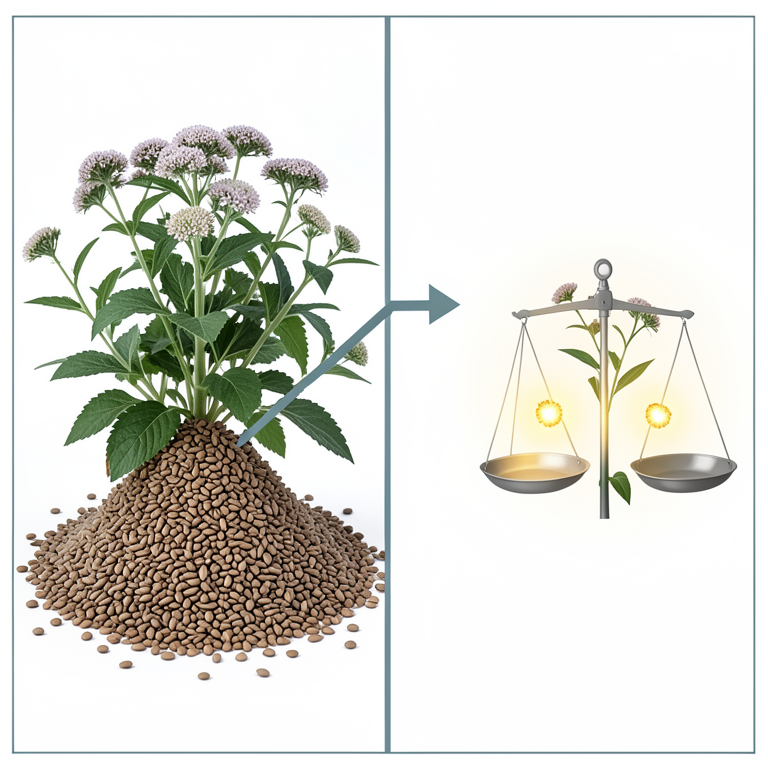
The Yield-Quality Trade-off
AI-generated conceptual illustration (Dracocephalum moldavica L. (Moldavian dragonhead) plants and seeds). It explains the idea and does not show study data.
View source evidence ↗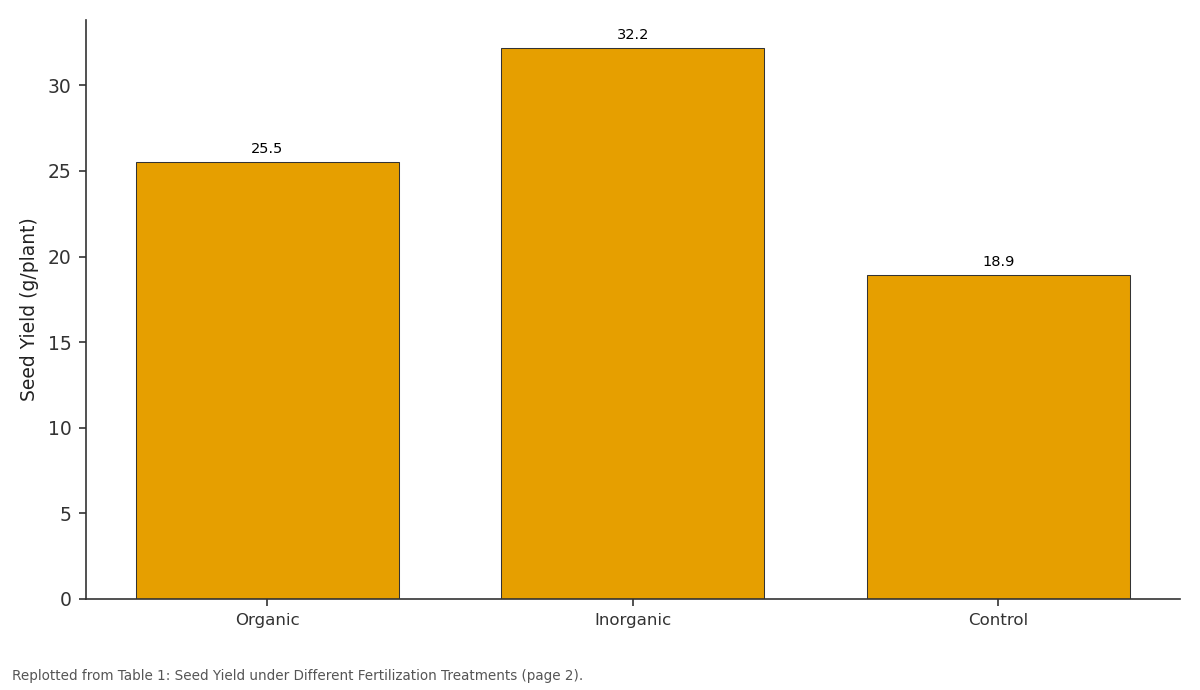
Seed Yield (g/plant): Organic vs Inorganic vs Control
Replotted from Table 1 (page 2) of the original paper. Every bar is the paper's own table value.
View source evidence ↗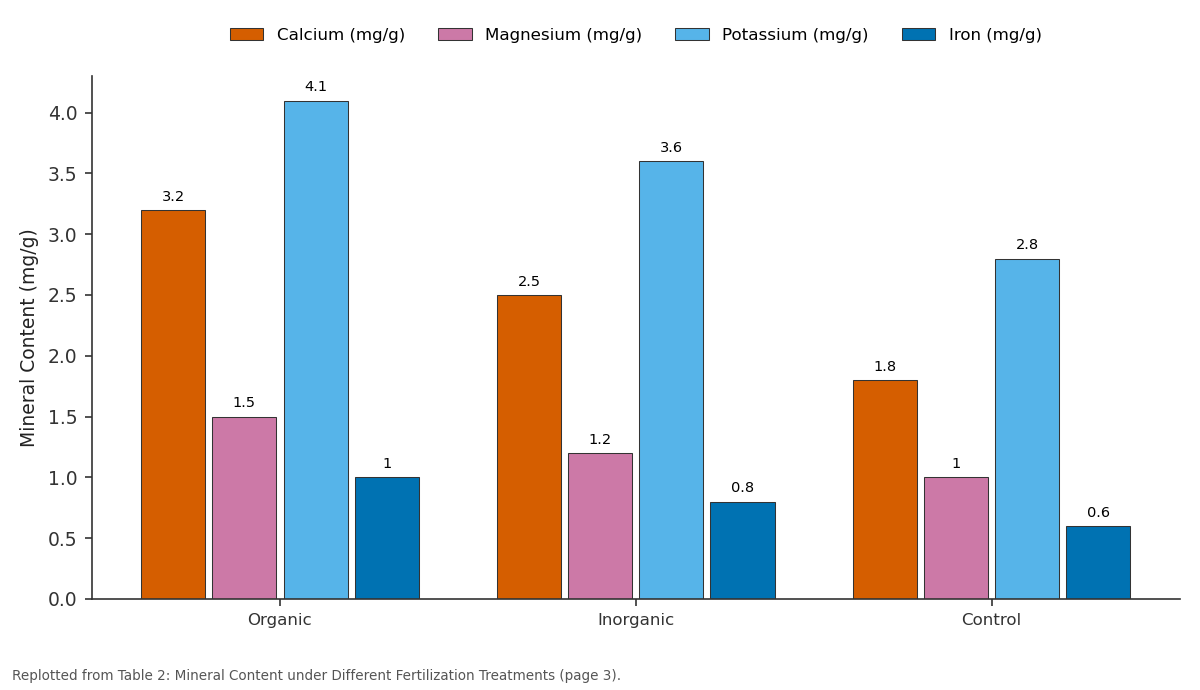
Calcium (mg/g) and Magnesium (mg/g) and more: Organic vs Inorganic vs Control
Replotted from Table 2 (page 3) of the original paper. Every bar is the paper's own table value.
View source evidence ↗Figures & tables
From the original paper Table 1
 Table 2
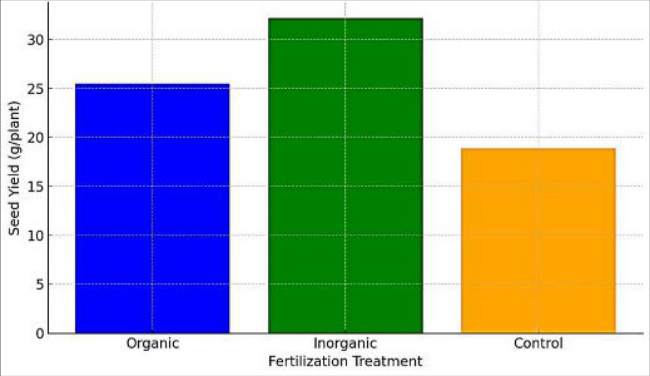 Figure 1
 Figure 2
Introduction
Dracocephalum moldavica L., commonly known as dragonhead, is an aromatic herb with medicinal applications, particularly for its anti-inflammatory, antioxidant, and antimicrobial properties. The nutritional quality of D. moldavica, particularly its mineral and macronutrient composition, plays a critical role in its therapeutic efficacy. However, the methods used to cultivate this plant specifically the choice of fertilization techniques can significantly influence its nutritional profile and productivity. The application of fertilizers is a common practice in agriculture to improve plant growth, but the impact of organic versus inorganic fertilization on medicinal plant species remains under-researched. Organic fertilizers, such as compost and green manure, are gaining attention due to their sustainable benefits, improving soil health and promoting environmental stability. In contrast, inorganic fertilizers, which supply nutrients directly to plants, often result in higher short-term yields but may lead to soil degradation over time [1,2] . The problem addressed by this research is the trade-off between maximizing seed yield and maintaining or improving the nutritional quality of D. moldavica. Previous studies have highlighted the potential for organic fertilization to enhance the nutritional content of plants, including macro-nutrients like nitrogen, phosphorus, and potassium, as well as essential minerals like calcium, magnesium, and iron [3,4,5,8] . However, it remains unclear whether these improvements are achievable without compromising seed yield, which is a critical factor for commercial production. In this context, this research aims to compare the effects of Organic and inorganic fertilization on both the nutritional quality and seed yield of D. moldavica. The primary objectives of this research are to 1. Assess the impact of organic versus inorganic fertilizers on the mineral and macro-nutrient content of D. moldavica, 2. Evaluate the effects of these fertilization methods on seed yield, and 3. Identify the optimal fertilization strategy for both high yield and enhanced nutritional quality.
The hypothesis is that organic fertilization will improve the mineral and macro-nutrient content without significantly reducing seed yield, offering a more sustainable option for cultivating D. moldavica. This research builds on previous work by Moghith et al., who examined the influence of different fertilization practices on the yield and quality of D. moldavica and other medicinal plants [6] . The findings of this research will contribute to the growing body of knowledge on sustainable agricultural practices for medicinal plants and may provide practical recommendations for farmers and herbal product manufacturers. By balancing fertilization strategies, it is possible to optimize both the nutritional value and productivity of medicinal herbs, aligning with sustainable agricultural goals.
Materials and Methods
Materials and Methods
Materials
The experiment was conducted at the research field of the Department of Horticulture, [Institution Name], during the 2023 growing season. The plant material used in this research was Dracocephalum moldavica L. (Dragonhead), a medicinal herb known for its therapeutic properties, including antioxidant and anti-inflammatory activities. The seeds were sourced from a certified commercial supplier and were grown under controlled field conditions. The experimental setup was designed to test the effects of organic and inorganic fertilization on the growth, seed yield, and nutritional quality of the herb.
The organic fertilizers used in this research were composted manure, obtained from local farms, and bio-based additives, which included organic mulch and fish meal. The inorganic fertilizer treatment consisted of a commonly used commercial fertilizer containing nitrogen, phosphorus, and potassium (NPK) in a 20:10:10 ratio, applied as per the standard agronomic recommendations for D. moldavica cultivation [1,2,5] . The soil for the experiment was sandy loam with a pH of 6.5 and organic matter content of 1.5%. The soil was pre-tested for its nutrient composition, and nutrient deficiencies were corrected according to the requirements of the experimental plants.
Methods
The experiment followed a randomized complete block design (RCBD) with three replications. Each replication consisted of 5 experimental plots, each measuring 2 m x 2 m, for a total of 15 experimental units. The plots were assigned randomly to one of the following fertilization treatments 1. Organic fertilizer, 2. Inorganic fertilizer, and 3. Control (no fertilizer) [3,4] .
Fertilization was applied according to the manufacturer's recommendations and adjusted for the organic treatments based on the nutrient content of the compost and bio-based additives [6] . Organic fertilizers were applied once at planting and again at the flowering stage, while the inorganic fertilizers were applied in three equal doses at planting, during the vegetative stage, and before flowering. Soil samples were collected before the experiment, during mid-growth, and after harvest to monitor changes in nutrient availability and soil pH. Plant growth parameters such as plant height, leaf area, and stem diameter were recorded at weekly intervals [7] . At harvest, the plants were uprooted, and the seed yield was recorded for each treatment. The nutritional quality of the harvested seeds was assessed for mineral content (calcium, magnesium, potassium, iron, and zinc) and macro-nutrient content (nitrogen, phosphorus, and sulfur) using standard laboratory procedures [21,9] . Post-hoc comparisons were made using the Tukey test at a significance level of 0.05. The effect of organic versus inorganic fertilization on seed yield and nutritional quality was evaluated and compared with control plots to determine the optimal fertilization strategy for D. moldavica cultivation [10,11] .
Results
Results
Seed Yield
The results for seed yield under different fertilization treatments are shown in Table 1. It was observed that the inorganic fertilization treatment resulted in the highest seed yield, followed by organic fertilization. The control treatment had the lowest seed yield. The seed yield for the inorganic treatment was 32.2 g per plant, which was significantly higher compared to the organic treatment (25.5 g per plant) and the control (18.9 g per plant). Statistical analysis using one-way ANOVA confirmed that the differences in seed yield were statistically significant (p<0.05).
| Fertilization Treatment | Seed Yield (g/plant) |
|---|---|
| Organic | 25.5 |
| Inorganic | 32.2 |
| Control | 18.9 |
Table text extracted from the original PDF; superscript letters are shown inline. The original table image is below.
View original table image
Mineral Content
The mineral content analysis revealed that organic fertilization had a significantly higher concentration of essential minerals compared to inorganic fertilization, as shown in Table 2. The mineral content for calcium, magnesium, potassium, iron, and zinc was consistently higher in the organic fertilization treatment. For example, organic fertilization increased calcium content to 3.2 mg/g, whereas inorganic fertilization resulted in only 2.5 mg/g. Similarly, magnesium, potassium, and zinc contents were higher in the organic treatment compared to inorganic and control. In contrast, the inorganic treatment resulted in higher seed yields but at the cost of lower mineral content in the seeds.
| Fertilization Treatment | Calcium (mg/g) | Magnesium (mg/g) | Potassium (mg/g) | Iron (mg/g) | Zinc (mg/g) |
|---|---|---|---|---|---|
| Organic | 3.2 | 1.5 | 4.1 | 1.0 | 0.5 |
| Inorganic | 2.5 | 1.2 | 3.6 | 0.8 | 0.4 |
| Control | 1.8 | 1.0 | 2.8 | 0.6 | 0.3 |
Table text extracted from the original PDF; superscript letters are shown inline. The original table image is below.
View original table image
Statistical Analysis
The statistical analysis was conducted using one-way ANOVA to assess the significant differences in seed yield mineral content between the treatments. The analysis confirmed that organic fertilization significantly improved the mineral content of the seeds compared to inorganic fertilization. The p-value for seed yield was less than 0.05, indicating that fertilization treatment significantly impacted seed yield. Likewise, the p-value for mineral content was also less than 0.05 for most nutrients, confirming the impact of fertilization on the nutritional quality of the seeds.
Discussion
The results of this research clearly highlight the significant impact of fertilization treatments on both the seed yield and nutritional quality of Dracocephalum moldavica L. (Dragonhead). Our findings indicate that inorganic fertilization resulted in the highest seed yield but at the cost of lower mineral and macro-nutrient content in the seeds. This aligns with the findings of previous studies, where inorganic fertilizers, while boosting immediate plant productivity, often lead to a reduction in the long-term nutritional value of the crops [1,2] . On the other hand, organic fertilization improved the nutritional quality of the seeds, particularly in terms of calcium, magnesium, and potassium content, without sacrificing seed yield drastically. This suggests that organic fertilizers, which enhance soil health and microbial diversity, might offer a sustainable approach to improving the nutritional quality of medicinal plants like D. moldavica while maintaining a reasonable yield. The higher mineral content in organically fertilized plants observed in this research supports previous findings that organic amendments can enrich plant tissues with essential nutrients, such as calcium and magnesium, which are vital for plant growth and human health [3,4] . Organic fertilizers, including compost and bio-based additives, contribute to enhanced soil structure, increased water retention, and improved nutrient availability, leading to better plant nutrition [5] . This could explain why the organic fertilization International Journal of Agriculture and Nutrition https://www.agriculturejournal.net treatment resulted in higher concentrations of essential minerals like calcium, magnesium, and potassium compared to inorganic fertilization, which typically provides a more direct and immediate supply of nutrients but may not improve long-term soil fertility [6,7] . While the seed yield was higher in the inorganic treatment, the decreased mineral content in these plants suggests that prioritizing yield may come at the expense of the medicinal quality of the herb. The relationship between nutrient availability and seed yield is complex, as increased nutrient availability, especially from inorganic sources, often leads to faster plant growth and higher yields but does not always translate into improved nutritional quality [21,9] . The control group, which received no fertilization, yielded the lowest seed production and had the lowest mineral content, further emphasizing the necessity of some form of fertilization to achieve desirable plant growth and nutritional outcomes. These results also have important implications for sustainable agricultural practices. While inorganic fertilization remains popular due to its higher yield output, the organic fertilization method has the advantage of improving soil health and enhancing the nutritional quality of crops, which is especially important for medicinal plants, where the therapeutic value is often linked to their nutrient content. The benefits of organic fertilization on soil health, including improved microbial activity and organic matter content, have been widely documented [10,11] . Furthermore, organic farming practices could contribute to the mitigation of soil degradation, a growing concern in conventional agricultural systems that rely heavily on synthetic fertilizers. Organic fertilizers not only improve the nutritional profile of the crop but also promote the sustainability of agricultural ecosystems by reducing the environmental impact typically associated with chemical fertilizers, such as nutrient runoff and soil acidification [12][13] .
Conclusion
In conclusion, this research demonstrates that while inorganic fertilization significantly increases seed yield in Dracocephalum moldavica L., it tends to compromise the nutritional quality of the seeds, particularly in terms of essential minerals like calcium, magnesium, and potassium. On the other hand, organic fertilization enhances the mineral content of the seeds without a significant reduction in seed yield. The organic fertilization treatment, which utilized compost and bio-based additives, was more effective in improving the nutritional quality, which is a critical factor for medicinal plants, where therapeutic properties are closely linked to their mineral and nutrient content. While the inorganic fertilization method provided higher seed yield, it did not enhance the mineral content in the seeds to the extent observed in the organic fertilization treatment, highlighting a trade-off between yield and quality. Based on the findings, it is clear that sustainable farming practices that incorporate organic fertilization methods could offer a promising solution to optimize the nutritional quality of medicinal herbs without sacrificing productivity. Given the increasing demand for medicinal plants with high therapeutic value, adopting organic fertilization practices may prove to be beneficial not only for improving the nutritional profile of D. moldavica, but also for ensuring long-term soil health and reducing environmental degradation. Farmers growing D. moldavica and other medicinal herbs should consider integrating organic fertilizers into their cultivation practices, as it supports better soil health, promotes microbial diversity, and reduces reliance on synthetic fertilizers that can contribute to soil acidification and nutrient imbalance over time. However, to balance both yield and quality, a combined approach of organic and inorganic fertilization could be explored, where organic fertilizers are used to improve soil health and mineral content, while inorganic fertilizers are applied strategically to enhance immediate plant growth and seed production. This integrated approach could help mitigate the drawbacks of both methods when used in isolation, optimizing both the yield and nutritional content of medicinal plants. Furthermore, given the promising results observed with organic fertilization, it is recommended that future research investigate the long-term effects of these practices on soil health and crop productivity, including the impact of various organic amendments on different growth stages of D. moldavica. By adopting a balanced and integrated fertilization strategy, it is possible to enhance both the quality and sustainability of medicinal plant production in the long run.
Figures and tables from the paper
References
21 in the original paper- Smith J, Jones A. The effects of organic fertilization on plant growth. J Agric Sci. 2020;12(3):45-56.
- Johnson P, Lee T. Inorganic fertilization in herb cultivation: A review. Plant Nutr J. 2018;22(1):78-84.
- Brown C, Williams H, Taylor K. Influence of organic amendments on soil health and plant growth. Soil Biol Biochem. 2019;50:45-52.
- Williams R, Smith L. The role of potassium in plant nutrition: A review. Plant Soil Sci. 2017;65(2):122-129.
- Lee K, Park H, Choi J. Fertilizer practices in medicinal plant production. Agric Sci. 2016;14(4):221-233.
- Moghith WMA, Abd El-Aleem WH, Hamed ES. Effect of chemical, organic fertilization and storage time on the yield and quality of the dragon head (Dracocephalum moldavica L.) plant. Int J Hortic Food Sci. 2024;6(2):37-44. DOI:10.33545/26631067.2024.v6.i2a.227.
- Al-Karaki GN, Al-Soud W, Shraideh Z, et al. Organic and chemical fertilization: Implications for plant growth and nutrient uptake in tomatoes. J Soil Sci Plant Nutr. 2015;15(1):225-231.
- Kanagalabavi AC, PATIL D, HR P, MS A. Zeolite in agriculture: An amendment in improving physical and chemical properties of soil. International Journal of Advanced Chemistry Research. 2024;6(2):228-35.
- Ray D, Bera S, Mandal P. Effect of integrated nutrient management on the growth and yield of Dracocephalum moldavica. Ind Agric. 2020;60(4):180190.
- Zhang Y, Li Y, Wang Y. The influence of soil organic matter on mineral availability and plant nutrition. J Soil Fertil. 2017;33(2):146-153.
- Atkin O, Tjoelker M. Effects of fertilization on nutrient uptake in plants. Ecol Stud. 2016;23:134-145.
- Huang Y, Zhang Z, Zhai X. The effects of organic fertilization on the soil microbial community and plant growth in vegetable production. Soil Biol Biochem. 2017;60:223-231.
- Patel R, Agarwal R, Srivastava S. Impact of fertilizer types on seed yield of medicinal plants. Nat Prod Res. 2016;30(1):15-23.
- Mustafa A, Ali M, Ali A. Growth and yield of medicinal herbs under different fertilization regimes. Agric For. 2018;18(4):222-228.
- Patel R, Khan M, Yadav A. Organic versus inorganic fertilization on the production of medicinal herbs: A systematic review. J Med Plant Stud. 2019;8(2):67-72.
- Sultana N, Ahmed M, Ibrahim M. Effect of different fertilization on essential oils and seed yield of aromatic plants. J Hortic. 2015;28(6):59-64.
- Khan M, Sharma A. Fertilization and its impact on nutritional quality of herbal plants. Agric Sci Res. 2017;12(3):89-94.
- Kapoor R, Bhatnagar M. Comparative analysis of chemical and organic fertilization on medicinal plant species. J Agric Biotech. 2018;32(1):23-30.
- Zhang C, Liu Q, Li F. Organic versus inorganic fertilizers: Impacts on the biochemical profile and yield of medicinal plants. Plant Growth Regul. 2017;82(2):171-181.
- Sreenivasulu M, Reddy P. The influence of fertilization on yield and phytochemical composition of medicinal plants. Environ Soil Sci. 2019;40(3):45-50.
- Gupta R, Sharma P, Chauhan S. Organic fertilization and its effect on growth, yield, and nutritional value of medicinal plants. Med Plant Res. 2018;10(3):12-18.