
Research article · 2025 · Full text
International Journal of Horticulture and Food ScienceDevelopment and evaluation of jaggery using different solidifying agents
Volume 7(12) · Pages 01–07 · DOI: 10.33545/26631067.2025.v7.i12a.431 ↗
Research areasNatural Products and Biological ResearchSugarcane Cultivation and ProcessingPsidium guajava Extracts and Applications
Abstract
Author-writtenJaggery is a condensed sugarcane juice product. It is a possible natural nutrient source and a better thing as compared to white sugar. In this research, the sugarcane variety was VCF0517 which was used in making jaggery with varying solidifying agents namely soda, Lime and Soda with Lime; and no solidifying agent at all. Sensory evaluation of all the prepared jaggery variants was done and the most acceptable variant investigated on physico-chemical parameters. Jaggery type prepared with lime was observed as very acceptable in regards to sensorial with great physico-chemical properties and antioxidant activity. Due to the findings, we have decided that, the most acceptable version of jaggery was of good quality with very good quality characteristics and was within the acceptable FSSAI requirements.
Summary
Source-checkedPlain-language reading of the full paper, prepared with AI and checked against the text. Each point links to the authors' own words.
Why it matters
- Jaggery is a traditional natural sweetener produced by concentrating sugarcane juice. View evidence ↗
- It is considered a nutraceutical product due to its content of vitamins, essential amino acids, antioxidants, phenolics, and minerals such as iron, phosphorus, and calcium. View evidence ↗
- The VCF-0517 sugarcane variety, introduced in 2017, is highly demanded in southern Karnataka because of its high yields of cane, sugar, and jaggery. View evidence ↗
The question
- The study aimed to develop jaggery using different solidifying agents and evaluate the most acceptable variant based on its sensory and physico-chemical properties. View evidence ↗
What they did
- The researchers used twelve-month-old sugarcane of the VCF 0517 variety. View evidence ↗
- Four jaggery variants were prepared: one without additives, one with soda, one with lime, and one with both lime and soda. View evidence ↗
- Sensory properties were evaluated by a semi-trained panel of 30 members. View evidence ↗
- The panel used a nine-point hedonic scale to rate appearance, color, taste, texture, and overall acceptability. View evidence ↗
What they found
- Sample C (prepared with lime) received the highest overall acceptability score of 8.2, while Sample A (no additive) received the lowest score of 6.7. View evidence ↗
- Sample C scored highest for taste (8.2) and texture (8.3), outperforming Sample B, which scored 7.8 and 7.7 respectively. View evidence ↗
- The most accepted jaggery variant contained 1.95% insoluble solids. View evidence ↗
- The sucrose content of the best accepted jaggery was 86.21 ± 0.02%. View evidence ↗
- The moisture content of the best accepted jaggery was 5.12 ± 0.008%. View evidence ↗
- Radical Scavenging Activity (RSA) increased with concentration, ranging from 29.90% at 50 ppm to 75.70% at 200 ppm. View evidence ↗
- During a 3-month storage period in airtight PET bottles, Sample C showed no significant changes in sensory properties except for color. View evidence ↗
What it means
- The authors concluded that jaggery made with lime is of good quality, possesses strong antioxidant capability, and meets FSSAI standards. View evidence ↗
Visual summary
3 visualsIllustrations explain the paper; charts are replotted from the paper's own table values.
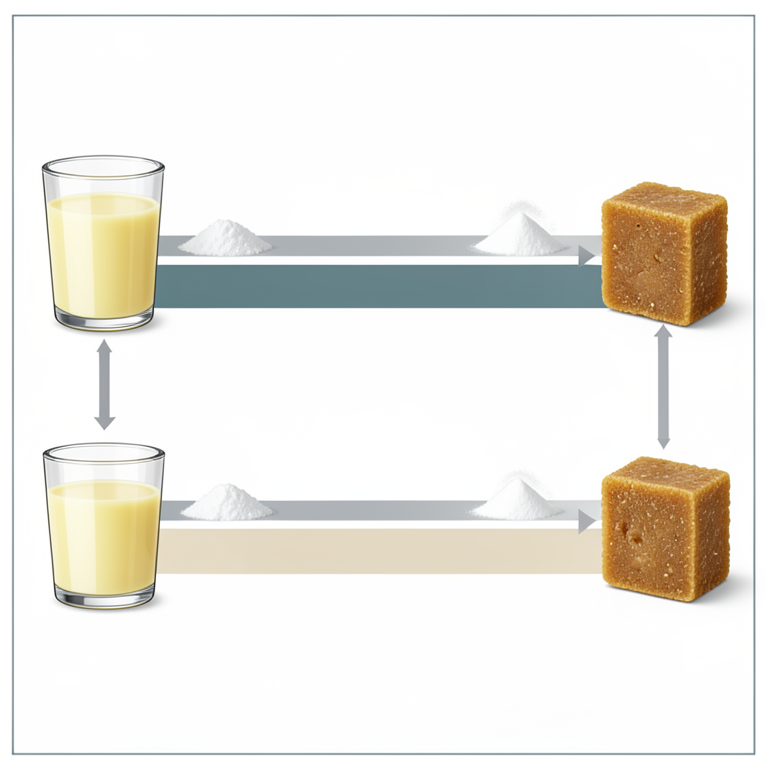
Jaggery Treatment Groups
AI-generated conceptual illustration (sugarcane juice and jaggery blocks). It explains the idea and does not show study data.
View source evidence ↗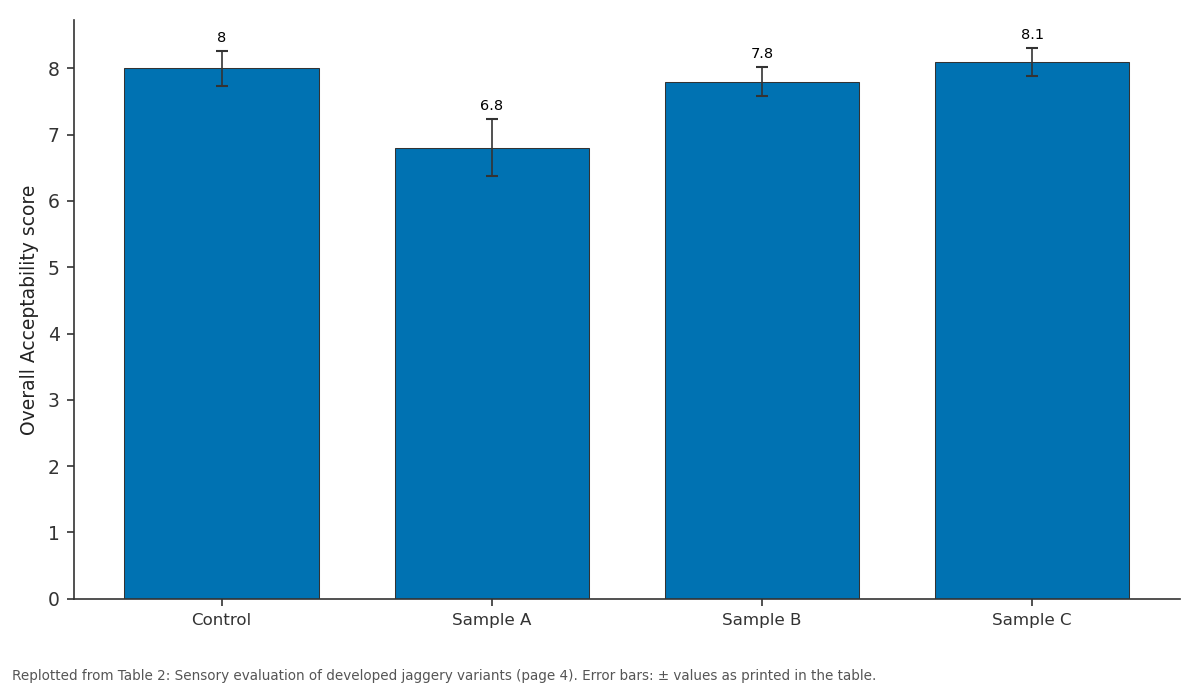
Flavour: Control vs Sample A vs Sample B vs Sample C
Replotted from Table 2 (page 4) of the original paper. Every bar is the paper's own table value.
View source evidence ↗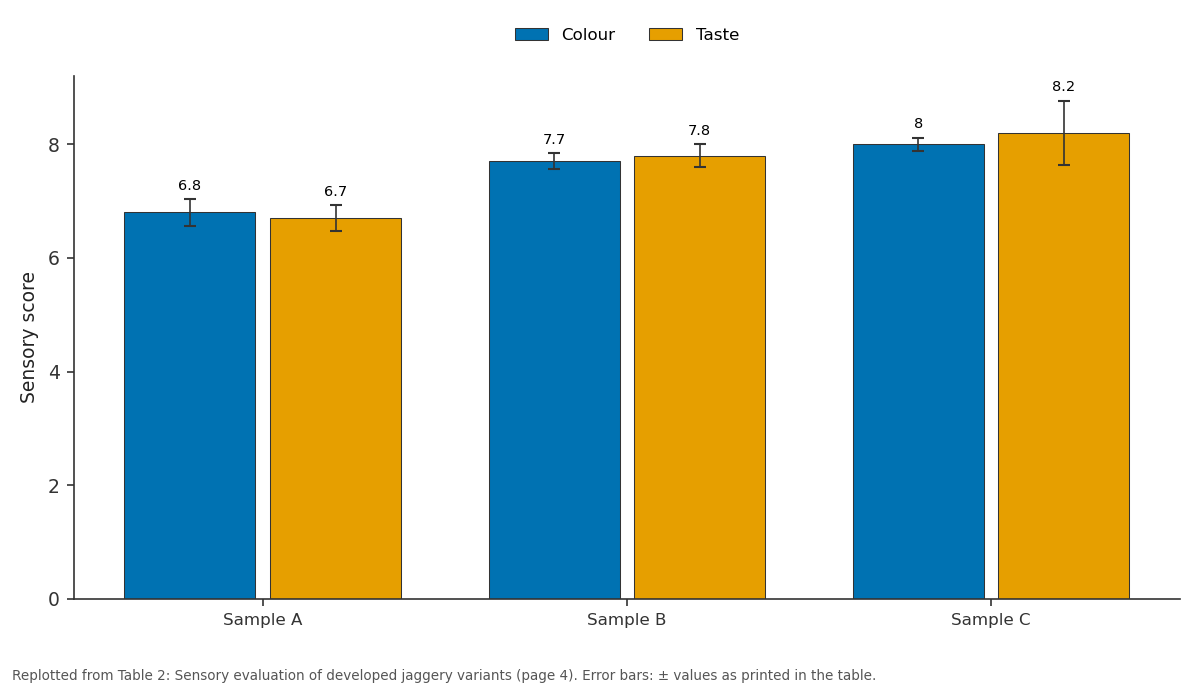
Colour and Taste: Sample A vs Sample B vs Sample C
Replotted from Table 2 (page 4) of the original paper. Every bar is the paper's own table value.
View source evidence ↗Figures & tables
From the original paper Table 1
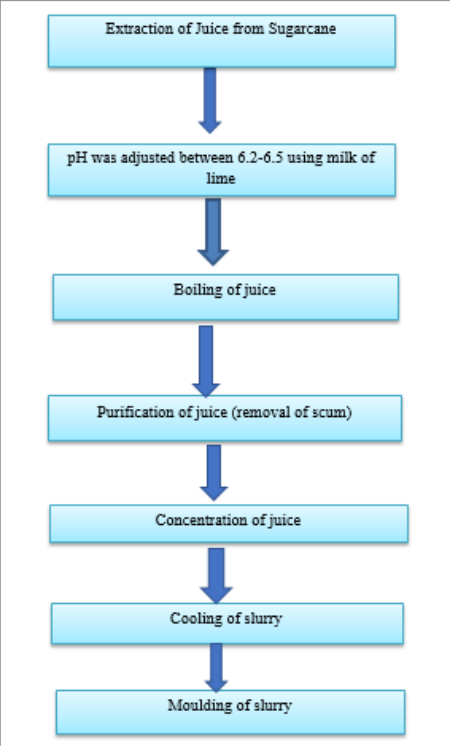 Figure 1
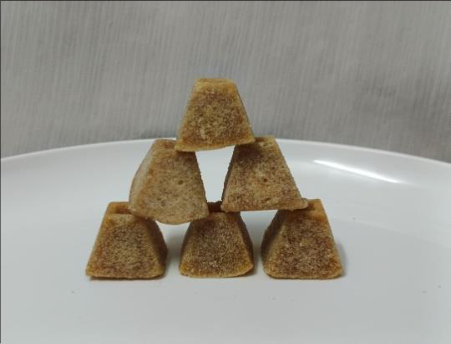 Figure 2
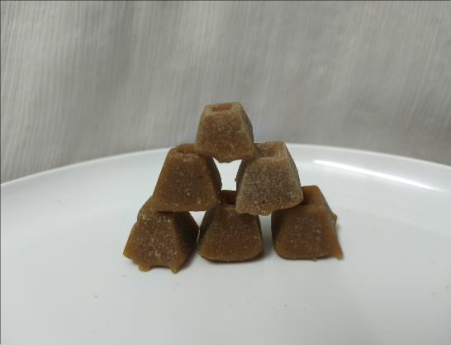 Figure 2
 Table 2
 Table 4
 Table 3
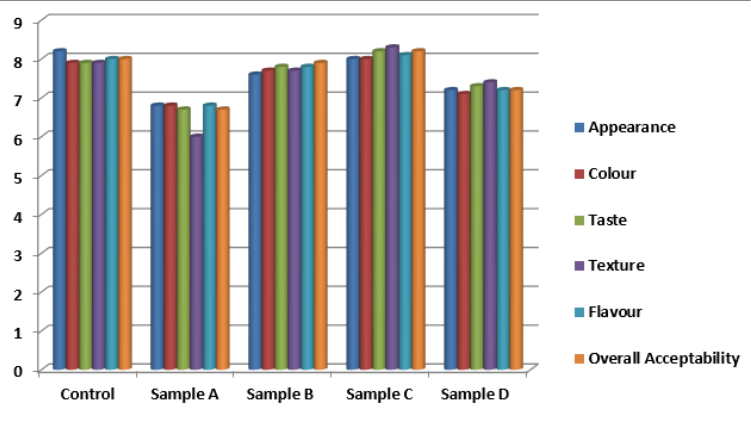 Figure 3
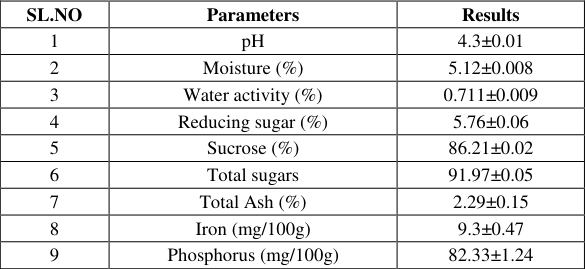 Table 5
 Table 6
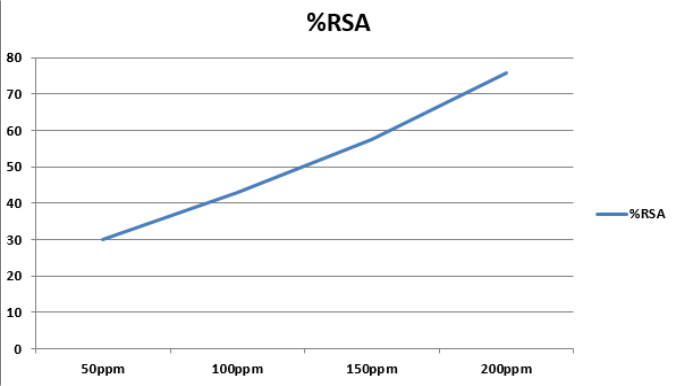 Figure 4
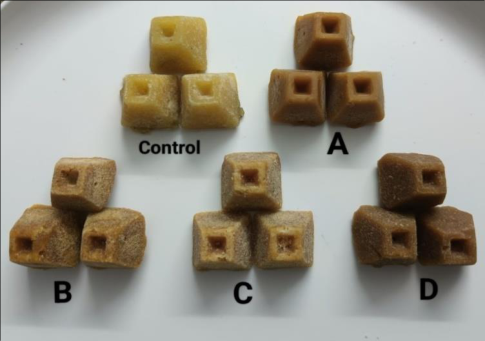 Figure 5
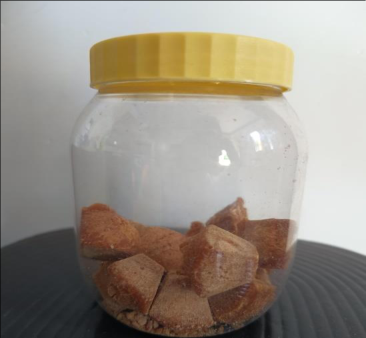 Figure 5
Introduction
Jaggery is a natural sweetener, which is traditionally made by the concentration of the sugarcane juice. Jaggery derives its name to the Portuguese word jagar which means coarse brown sugar. The product that is made by boiling the juice of crushed sugarcane is referred to as Gur or Jaggery (FSSAI, 2017) [5] . Jaggery is pure sugar that is not centrifuge, but is commonly used in Asia, Africa, Middle East, South and Central America, and the Caribbean. Jaggery is the most produced and consumed product in the world. Jagannadha et al. (2007) [8] assert that over 70 percent of the aggregate production is made in India. Jaggery used as a sweetening agent, is a source of 4 kcal of energy per 1 gram of the body. It is also sold in the feed formulations of animals. Jaggery is a nutraceutical product because of the presence of a large number of vitamins, minerals like calcium, phosphorus, and iron, essential amino acids, antioxidants, and phenolics. Best quality jaggery should have over 70 percent of sucrose with an overall limit of 10 percent of glucose and fructose, less than 5 percent of minerals, and a limit of less than 3 percent of moisture content. Pattnayak and Misra (2004) [13] assert that the jaggery has many medical, herbal and traditional applications. Sugarcane juice is rich to salts, nitrogenous materials, lipids, gums, wax, pectins, organic acids, and phenols, which have to be eliminated before the sugars are gathered to make jaggery. Depending on the type of cane and the environment where is grown, the quality of jaggery is affected. Poor conditions like salinity and drought may influence the yield of cane and the quality (Wandre et al., 1995) [22] . Sugarcane production research and extension efforts have been aimed at ensuring an augmentation of production and productivity as a result of the wide array of by-products utilization and commercial value which a sugarcane has. This led to the discovery of a new type referred to as VCF-0517. VCF-0517 is a sugarcane variety that is farmer-friendly and which was introduced in 2017, and sixty percent of the area is now covered by VCF-0517 in southern Karnataka. Its large cane yield, large sugar recovery, large jaggery yield and quality sugar make it in demand. They are generally referred to as Bahubali (Swamygowda et al., 2017) [18] . This is where the research is carried out on development of jaggery with various modifications using solidifying agents and most acceptable variation that is then analysed further in terms of physico chemical and sensorial properties.
Raw Materials and Methods
Raw Materials and Methods
Material
Sugarcane variety, VCF 0517 Sugaracane, twelve month old was used. SCJ extraction in the shop CANE PUB, Mysuru was done using semi-automatic machine. The locally obtained calcium hydroxide and Sodium bicarbonate were used in the study.
Methods
Sugarcane juice processing involves harvesting of sugarcane and then the processing of extracted juice of harvested sugarcane. To eliminate the impurities the filtered juice was filtered using nylon cloth with pore size being 10 micron. The pH of fresh juice was 5.2 to 5.4 and this was further boosted to 6.2-6.5 to strengthen the solidification process. The precipitation of suspended pollutants of gummy colloidal substances also contributed to preventing inversion of sugar. Juice was solidified with the addition of such reagents as soda and lime before boiling to have the pH approximately 6.2 -6.5. During the boiling process, any impurities that formed began to coagulate and settled on surface which was removed using the strainer. During boiling, removal of second golden scum should then be performed at each instance where it forms on the surface of the juice. At temperatures regarded as excessively high, that is above 1100 C the juice began to create froth. Constant giving was performed by hand stirrer to prevent unnecessary frothing and also prevent wastage of juice through overflowing. Juice then becomes concentrated due to reaching striking point of 1180 C after prevention of frothing. Upon hitting striking point, the pan holding the mass of hot material was moved into platform whereby the pan was thoroughly mixed with the flat stirrer to obtain a homogenous cooling effect. The semi cooled mass was added to moulds of required size and shape. This has four variants, which are Without any additive Addition of Soda Addition of Lime Addition of Lime and Soda
Sensory Evaluation
Jaggery sample, such as the Control, (where there was no additive, addition of soda, addition of lime) and addition of lime and soda were tested in semi trained panel of members on sensory properties (n=30). Coded samples provided to the panelists comprised of a glass of water and asked to rate the acceptability of the samples basing on appearances, color, taste and texture as well as acceptability of the sample using a nine-point hedonic scale.
Insoluble solids:
The percentage composition of the insoluble solids in jaggery was ascertained by the procedure reported by Ranganna (2007) [15] . A sample 10 g of jaggery was added to 100 ml of distilled water and boiled to make the solution boil. The sample was boiled after which it left to cool at ambient temperatures then was filtered using a sintered glass filter. The sintered glass filter with the residue was then dried in an oven at 135 0 C and the weight was repeatedly weighed till a constant weight was obtained. The mass of the insoluble solids was then expressed as a proportion on a dry basis.
Moisture and Ash:
The AOAC (1990) [1] method of the moisture and ash content of jaggery samples were determined. Jaggery (10 g sample) was dried in the hot air oven at 70 o C, until the constant weight was reached (6 hours). The loss of weight obtained the percentage content of jaggery moisture. The dry jaggery was subsequently burned by being heated in a silica crucible using a burner and allowed to heat in a muffle furnace at 600 Cover 4 hours. The silica basin of the furnace was taken out, cooled and weighed. Findings were also given in percentages on a dry weight basis. Reduction, sugar sugar reducing sugars were estimated by using Fehling A and Fehling B solutions in the Lane and Eynon method.
Antioxidant assay
DPPH assay was used to define the antioxidant activity of the jaggery variant. The in vitro tests were performed thrice.
Statistical analysis:
Any experiment was done in triplicates (n=3) and the results were tabulated in the form of mean with the standard deviation (SD) in Microsoft Excel software.
Results and Discussion:
The sensory analysis of varying samples of jaggery as represented in Table 2 revealed that the best overall acceptability was attributed to the Sample C (8.2) with the lowest score of Sample A (6.7). Anything above 8 meant that Control and Sample C was overall acceptable. The addiction was yellow light, and the soda was strongly tasting, the soda was used as a bleaching agent in terms of the control, and sample C was of a golden yellow color and a pleasant taste. Sample A that was not made with any additives had the lowest score on the texture (6.0) in comparison to the other variants because it looked moist, dark brown in color, the texture was a little sticky, and the sample tasted like pure sugarcane juice. Jaggery type that was highly accepted was again subjected to analysis of physicochemical parameters. Means of three replicates and standard deviation of values. Table 3 and 4 show the physical characteristics of the jaggery such as color and insoluble solids. It was found that the insoluble solids content of the jaggery is 1.95, which is in the same manner as the values stated by Kolar and jamuna (2022) [9] .
| Variations | Appearance | Colour | Taste | Texture | Flavour | Overall Acceptability |
|---|---|---|---|---|---|---|
| Control | 8.2±0.51 | 7.9±0.49 | 7.9±0.40 | 7.93±0.36 | 8±0.26 | 8±0.26 |
| Sample A | 6.8±0.24 | 6.8±0.23 | 6.7±0.23 | 6.0±0.43 | 6.8±0.43 | 6.7±0.32 |
| Sample B | 7.6±0.15 | 7.7±0.14 | 7.8±0.2 | 7.7±0.21 | 7.8±0.22 | 7.9±0.25 |
| Sample C | 8.0±0.33 | 8.0±0.12 | 8.2±0.57 | 8.3±0.43 | 8.1±0.21 | 8.2±0.11 |
| Sample D | 7.2±0.21 | 7.1±0.2 | 7.3±0.22 | 7.4±0.21 | 7.2±0.2 | 7.2±0.2 |
Table text extracted from the original PDF; superscript letters are shown inline. The original table image is below.
View original table image
Physico-Chemical Characteristics of Jaggery
Physico-Chemical Characteristics of Jaggery
Means will be an average of three replicates and standard deviation
The color of jaggery has been regarded as the best determinant of its quality and diverse studies have established that the lighter the jaggery, the more preferred it is by the customers (Tiwari and Chatterjee, 1998; Patil and Adsule, 1998; Rodriguez and Segura, 2004) [19,11,16] . The L value of the jaggery sample was 51.54, which showed that the jaggery sample was light. The and b values were equal to the reddish and yellowish color respectively. These values (L=51.54, a=10.35, b=21.16) were in agreement with the values obtained by Kolar and Jamuna (2022) [9] .
Chemical and mineral constituency of best accepted jaggery is illustrated in Table 5.
| SL.NO | Parameters | Results |
|---|---|---|
| 1 | pH | 4.3±0.01 |
| 2 | Moisture (%) | 5.12±0.008 |
| 3 | Water activity (%) | 0.711±0.009 |
| 4 | Reducing sugar (%) | 5.76±0.06 |
| 5 | Sucrose (%) | 86.21±0.02 |
| 6 | Total sugars | 91.97±0.05 |
| 7 | Total Ash (%) | 2.29±0.15 |
| 8 | Iron (mg/100g) | 9.3±0.47 |
| 9 | Phosphorus (mg/100g) | 82.33±1.24 |
Table text extracted from the original PDF; superscript letters are shown inline. The original table image is below.
View original table image
Mean of three replicates with standard deviation of values:
The key constituents that influence the quality maintenance capacity of jaggery are the moisture content and the water activity. Water activity (aw) determines the quantity of free or active water that is accessible to encourage growth of microorganisms in jaggery whereas moisture content of jaggery determines the quantity of water present in percentage.
The moisture content of the jaggery sample was 5.12 which showed that it was of special quality as per patil and Adsule (1998) [11] . According to Bureau of Indian Standards (BIS, 1990), moisture level of recently prepared jaggery must be in the range of 5-7 per cent (Anonymous, 1990). The water activity (aw) of a product whose aw is equal to or less than 0 is between 0 and 1 and the jaggery had the water activity of (aw) equal to 0.7. Highly moist foods give a perfect Environment in which food spoilage-causing bacteria thrive. Nevertheless, bacteria, molds, and yeast tend not to grow and proliferate because of the initial absence of moisture and the high content of solid in jaggery (Mandal et al., 2006) [10] . Minor incidental differences in moisture value and water activity of various types of jaggery are likely to arise due to the smallest errors in chilling and molding processes.
The stability and storage properties of jaggery are the factors that largely depend on the pH. The prepared jaggery had a pH of 4, which is lower than the prescribed value of 5.9 in the reference Ecuadorian technical standard (2002) of panela. The change in pH level of the jaggery sample might be explained with the differences in the amount of lime applied during the clarification of the juices.
The non-reducing sugars that were estimated in the jaggery sample were found within the range of 86.21 which compare with the findings made by Prada (1997) of a range between 84-86 g/100 g. This score is quite below the Indian Standards of 80 which is the grade-I limit. Nevertheless, the amount of sucrose in the product of jaggery was less than the one cited by Vandna and Anlesh (2019) [22] . It may be explained by the fact that low yielding sugarcane varieties were used to prepare jaggery and extract the juice later, so the conversion of sucrose to glucose and fructose occurred (Rajesh and Shajahan., 2016) [14] .
The significance of the lowering of sugar of the jaggery sample was 5.76. The required reduction of sugars should be between 5.5 and 10 percent in mass as stipulated by the Ecuadorian technical standard (NTE INEN 2 332, 2002), though the 12 percent by mass is the maximum allowed by the Colombian technical standard NTC 1311 (1991). Conversely, Grade I and Grade II are 10 and 20 percent by mass respectively (Bureau of Indian Standards, 1999). The result obtained fell within the limits mentioned above asr standards. Verma and Maharaj (1990), Tiwari and Chatterjee (1998) [19] , and others concur that high percentage of reducing sugars is not wanted in that it increases the hygroscopic nature of the panela and influences the texture and stability of the panela on storage.
The ash value of the prepared jaggery was 2.29 and this can be compared with the results of Shweta et al., (2022) [17] .
The mineral content such as iron (9.3 mg/ 100 g), phosphorous (82.33 mg/ 100 g), etc. were also obtained, and the values were observed to fall within the reported range by Shrivasatava and Singh (2020).
According to Food Safety and Standards Authority of India (FSSAI, 2017), the prepared jaggery in this study had the required limit in all five parameters, such as moisture, sucrose, total sugars, reducing sugars, and recommended ash (VM Ingale et al., 2024) [20] .
DPPH Radical Scavenging Activity
The in vitro technique was the DPPH radical scavenging assay which was used in the determination of antioxidant activity of the jaggery. The DPPH radical is a free radical, which is unstable, absorbing radiation at 517 nm and this absorption reduces when the radical is accepted by an antioxidant, creating the non-radical form, DPPH-H (Blios, 1958). The extent of decolorization of DPPH is a stoichiometric ratio of the antioxidant potential in the test samples. Values are expressed as Mean ±SD of triplicates Table 6 depicts sensory assessment of the samples of the jaggery throughout the storage process. Sample C (Ambient temperature) the storing of the Jaggery lasted 3 months in airtight PET bottles. The shelf life of stored jaggery was evaluated as first 7 days and then 1 month at first and then 3 days to three months as intervals.
The color of the jaggery was found to be slightly different as compared to the first days and after two months the color of the jaggery was slightly different. Non however, there was No significant variation in their sensory properties over the 3 month of storage period, except in the case of color. Sensory characteristics of the stored jaggery were tested using the aspects of appearance, colour, taste, texture, flavour and acceptability in totality and found the overall acceptability of the stored jaggery to be 8.1.
Conclusion
Jaggery, a tradition sugar with therapeutic value is not as demanded by the consumers since she has an antagonistic color and uses chemicals that are not of food grade and is also inconvenient to store as opposed to table sugar. Nevertheless, the current research revealed that jaggery made with lime as a solidifying agent was very acceptable in terms of sensory analysis and good physicochemical qualities. The jaggery in which lime was added also had strong antioxidant capability. Also, the quality parameters which were examined were within the standards established by FSSAI which means that the quality of the jaggery developed was good.
Figures and tables from the paper
| Jaggery variants | pH of juice | Quantity of juice(ml) | Quantity of lime (ml) | Quantity of soda(g) |
|---|---|---|---|---|
| 1. Sample A | 5 | 1000 | - | - |
| 2. Sample B | 5.2 | 1000 | - | 0.775 |
| 3. Sample C | 5.2 | 1000 | 3.0 | - |
| 4. Sample D | 5 | 1000 | 2.8 | 0.5 |
Table text extracted from the original PDF; superscript letters are shown inline. The original table image is below.
View original table image
| Color | Value |
|---|---|
| L | 51.54±0.04 |
| a* | 10.35±0.38 |
| b* | 21.16±0.23 |
Table text extracted from the original PDF; superscript letters are shown inline. The original table image is below.
View original table image
References
21 in the original paper- AOAC. Official methods of analysis. 15th ed. Washington (DC): Association of Official Analytical Chemists; 1990. p. 929-01.
- Blois MS. Antioxidant determinations by the use of a stable free radical. Nature. 1985;181(4617):1199-1200.
- Burton HS, McWeeny DJ. Non-enzymic browning reactions: Consideration of sugar stability. Nature. 1963;197:266-268.
- Ecuadorian Technical Standard NTE INEN 2332. Panela granulada requisitos. Quito (Ecuador); 2002. p. 2.
- FSSAI. Standards for gur or jaggery, sodium saccharin and calcium saccharin. New Delhi: Food Safety and Standards Authority of India, Ministry of Health and Family Welfare, Government of India; 2017. p. 5.
- ISI. Handbook of food analysis. Part II: Sugar and honey. New Delhi: Bureau of Indian Standards; 1984.
- Jagannadha RPVK, Das M, Das SK. Jaggery -A traditional Indian sweetener. Indian Journal of Traditional Knowledge. 2007;6:95-102.
- Kolar P, Jamuna K. Standardization of Krishna Tulsi (Ocimum tenuiflorum) enriched jaggery and quality analysis. The Mysore Journal of Agricultural Sciences. 2022;56(1):261-265.
- Mandal D, Tudu S, Mitra SR, et al. Effect of common packing materials on keeping quality of sugarcane jaggery during monsoon season. Sugar Tech. 2006;8:137-142.
- Patil JP, Adsule A. Studies on various quality parameters for grading of jaggery. Indian Food Industry. 1998;17(4):215-217.
- Patil JP, Shinde US, Nevkar GS, Singh J. Clarification efficiency of synthetic and herbal clarificants in quality jaggery production. Sugar Tech. 2005;7:77-81.
- Pattnayak PK, Misra MK. Energetics and economics of traditional gur preparation: A case study in Ganjam District of Orissa, India. Biomass and Bioenergy. 2004;26:79-88.
- Rajesh CK, Shajahan MA, Hameed S. Analytical study on different samples of guda (jaggery) collected from Thrissur, Kerala. Ayurpharm International Journal of Ayurveda and Allied Sciences. 2016;5(4):52-58.
- Ranganna S. Handbook of analysis and quality control for fruit and vegetable products. 2nd ed. New Delhi: Tata McGraw-Hill Publishing Co. Ltd.; 2007. p. 9-10.
- Rodriguez A, Segura M. Panela granulada ecológica. Antenour Orrego. 2004;15(22):47-55.
- Shweta, Pawar K, Gehlot R, Kumar, Sharma. Screening and physico-chemical study of quality jaggery prepared from different early and mid-season sugarcane varieties. Asian Journal of Dairy and Food Research. 2022; 41(1):56-63.
- Swamygowda SN, Nagaraju TE, Keshavaiah KV. Performance of VCF 0517 (Bahubali): A high tonnage sugar rich, mid-late maturing variety. Mysore Journal of Agricultural Sciences. 2017;51(4):803-807.
- Tiwari RJ, Chatterjee A. Evaluation of early and midlate sugarcane (Saccharum officinarum) varieties for yield of millable cane and quality of jaggery. Indian Journal of Agricultural Sciences. 1998;68(5):255-257.
- Er. PD Ukey, VM Ingale, SB Wategaonkar, Jong Pil Park, Prathapan K Pillai, JS Ghatge, SB Patil and JA Khot. Jaggery making reforms, value addition and preservation: A comprehensive review. Int. J. Adv. Biochem. Res. 2024;8(1):692-701.
- Vandna P, Anlesh KD. Analytical study of different samples of guda (jaggery). International Journal of Innovative Science and Research Technology. 2019;4(6):1-6.
- Wandre SS, Hasabnis AB. Liquid jaggery: A promising sweetening agent from sugarcane. Sugarcane: AgroIndustrial Alternatives. 1995; p. 313-321.