
Research article · 2025 · Full text
International Journal of Agriculture and Food ScienceInclination of postgraduate students towards initiations of startups pertaining to agriculture and allied sectors
Volume 7(12) · Pages 260–262 · DOI: 10.33545/2664844x.2025.v7.i12d.1050 ↗
Research areasDiverse Educational Innovations StudiesInnovations and Analysis in Business and EducationDiverse Scientific Research Studies
Abstract
Author-writtenThe introduction of digital technologies has transformed higher education and agriculture to a great extent, with enormous opportunities for learning, research, and entrepreneurial innovation. The present study examines the trends of adoption and use among postgraduate students at Mahatma Phule Krishi Vidyapeeth (MPKV), Rahuri, one of the leading agricultural universities in India. In the context of India's agriculture-based economy, which is grappling with serious issues of climate change, market volatility, and food security, digital technologies such as AI-based analytics, social media platforms, and Agri-Tech applications have the potential to revolutionize conventional agricultural practices and research approaches. Nonetheless, even with their increasing spread, there is still a significant knowledge gap on how agricultural students interact with these technologies, the conditions influencing their adoption, and the system constraints curtailing their full potential.This study evaluated the inclination of postgraduate students at MPKV Rahuri towards initiating startups in agriculture and allied sectors. The findings reveal a generally positive mindset, with a majority of students (68.26%) categorized as "Inclined" and an additional 18.64% as "Highly Inclined" towards agri-startups. Despite this inclination, the results show that students exhibit high digital dependence alongside critical readiness gaps in agricultural entrepreneurship. While students are comfortable with digital platforms with 74.48% rating them as important for time-saving market access and 62.17% using social media to learn about government schemes their application of advanced tools is limited. For example, only 35.24% use AI for subsidy inquiries, and very low usage of professional networks like LinkedIn (39.34%) was reported, indicating a preference for more casual platforms. The discussion highlights a significant gap: high digital adoption has not yet fully equated with startup confidence. This is underscored by the predominant need for AI/ML training, as expressed by 80.74% of respondents. The study concludes that focused AI training and mentorship programs are necessary to close the gap between the students' theoretical knowledge and the practical skills required for hands-on agripreneurship. By overcoming such challenges, respondents have the potential to unlock the transformative power of digital technologies to enable students to innovate at the nexus of agriculture and technology. This study not only bridges an essential gap in literature on digital adoption in developing economies but also offers a framework for scalable interventions to improve agricultural education, entrepreneurship, and sustainable rural development.
Summary
Source-checkedPlain-language reading of the full paper, prepared with AI and checked against the text. Each point links to the authors' own words.
Why it matters
- India's agriculture-based economy faces challenges like food security, market volatility, and climate change, which digital technologies like AI and Agri-Tech could potentially revolutionize. View evidence ↗
- Despite the spread of digital tools, there is a lack of understanding regarding how agricultural students use these technologies and the constraints that limit their potential. View evidence ↗
The question
- The study aimed to evaluate the inclination of postgraduate students toward starting businesses in agriculture and related sectors. View evidence ↗
What they did
- The research was conducted at the main campus of Mahatma Phule Krishi Vidyapeeth (MPKV) in Rahuri, Maharashtra. View evidence ↗
- The researchers used an ex-post facto research design to analyze how postgraduate students utilize AI and social media platforms. View evidence ↗
- The study included a sample size of 145 postgraduate students. View evidence ↗
What they found
- A high percentage of students (74.48%) believe digital platforms are important for saving time when accessing market information. View evidence ↗
- Despite digital dependence, only 35.24% of students actually use AI to inquire about agricultural subsidies. View evidence ↗
- Social media is frequently used for learning about government schemes, with 62.17% of students utilizing these platforms for this purpose. View evidence ↗
- Students showed a preference for casual platforms over professional ones, as evidenced by the low usage of LinkedIn (39.34%). View evidence ↗
- There is a strong demand for technical education, with 80.74% of respondents expressing a need for AI/ML training. View evidence ↗
What it means
- The authors conclude that mentorship and focused AI training are essential to bridge the gap between theoretical knowledge and the practical skills needed for agricultural entrepreneurship. View evidence ↗
- The study provides a framework for scalable interventions aimed at improving rural development, entrepreneurship, and agricultural education. View evidence ↗
Visual summary
3 visualsIllustrations explain the paper; charts are replotted from the paper's own table values.
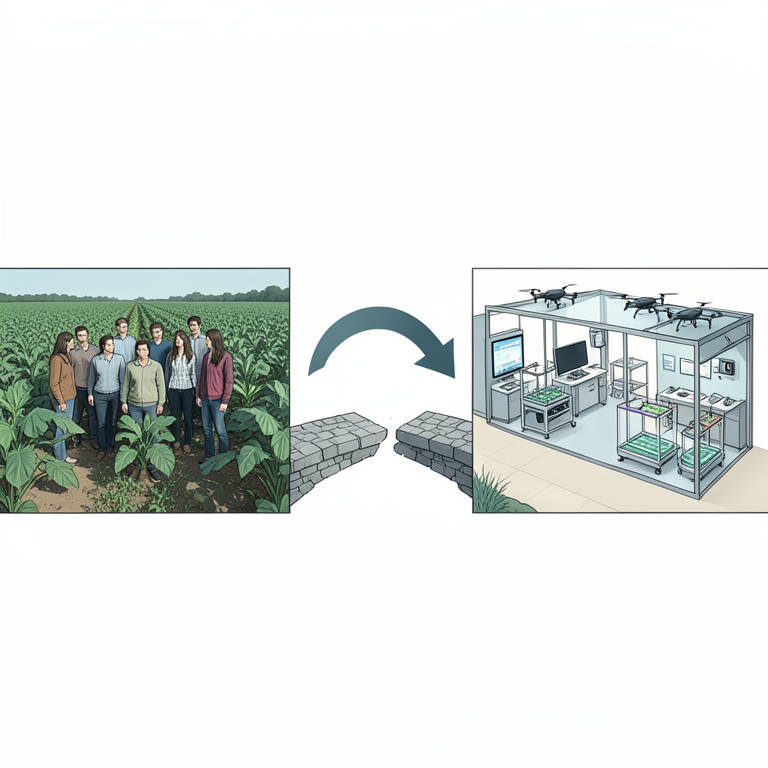
The Gap Between Intent and Skill
AI-generated conceptual illustration (Postgraduate students in an agricultural university setting). It explains the idea and does not show study data.
View source evidence ↗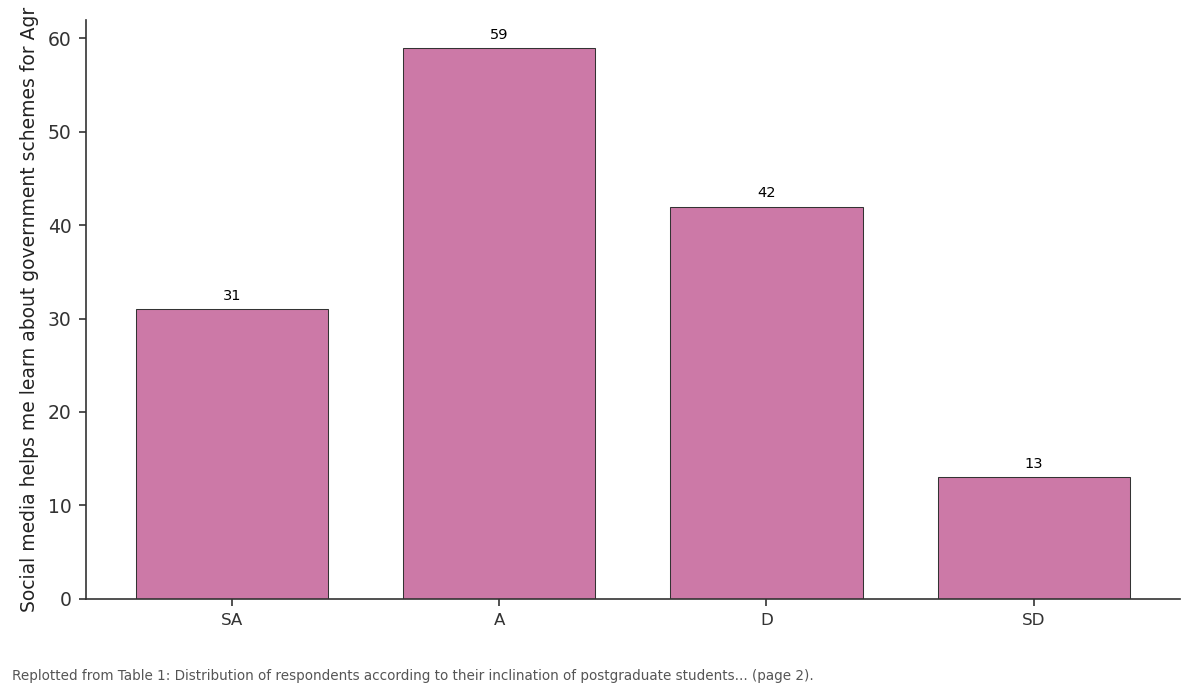
Social media helps me learn about government...: SA vs A vs D vs SD
Replotted from Table 1 (page 2) of the original paper. Every bar is the paper's own table value.
View source evidence ↗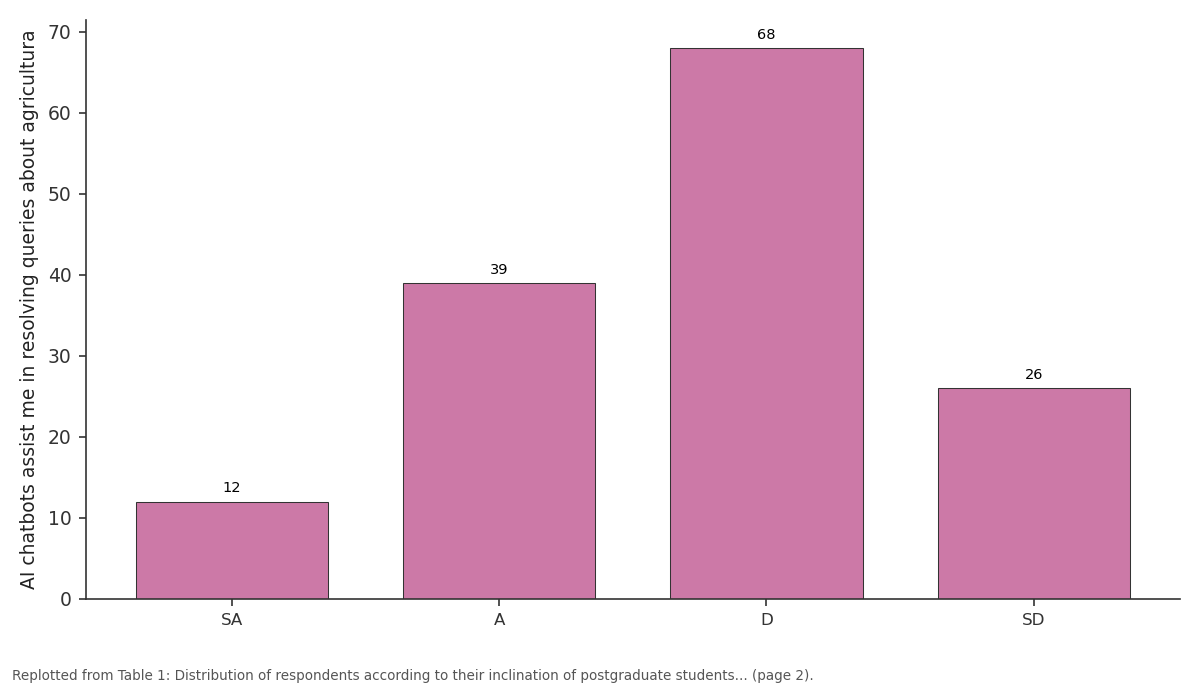
AI chatbots assist me in resolving queries...: SA vs A vs D vs SD
Replotted from Table 1 (page 2) of the original paper. Every bar is the paper's own table value.
View source evidence ↗Figures & tables
From the original paper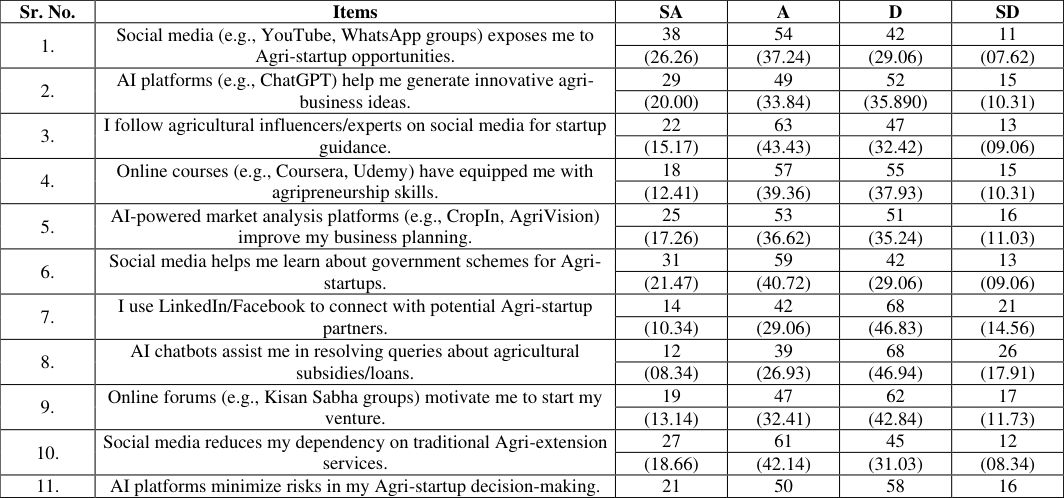 Table 1
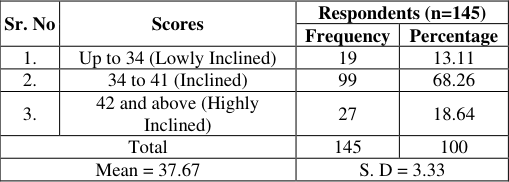 Table 2
Introduction
The digital age has really shaped higher education and agriculture around the world. Social media and AI technologies have become essential tools for learning and innovation. At Mahatma Phule Krishi Vidyapeeth (MPKV) in Rahuri, postgraduate students are tapping into platforms like YouTube, WhatsApp, and Agri Tech apps to boost their academic success and explore opportunities in Agri-startups. Nonetheless, there’s still a gap in understanding how these students use these technologies, the socioeconomic factors that affect their usage, and the challenges they encounter.
This study is important because it supports India’s strategic emphasis on digital agriculture through programs like the National Agriculture Market (eNAM) and Agri Stack. Its goal is to provide practical suggestions to organizations such as MPKV to improve their curricula by incorporating AI training and promoting an entrepreneurial mindset in agriculture. NAAS Rating (2025): 4.97 IJAFS 2025; 7(12): 260-262 P Pratihari MSc. Scholar Department of Agricultural Extension Education, PGI, MPKV, Rahuri, Maharashtra, India BA Deshmukh Assistant Professor, Directorate of Extension Education, MPKV, Rahuri, Maharashtra, India SS Sadaphal Assistant Professor, Department of Agricultural Extension Education, PGI, MPKV, Rahuri, Maharashtra, India PB kharde Associate Professor, Department of Agricultural Extension Education, PGI, MPKV, Rahuri, Maharashtra, India SD Shinde Assistant Professor, Department of Statistics, PGI, MPKV, Rahuri, Maharashtra, India P Pratihari MSc.
Scholar Department of Agricultural Extension Education, PGI, MPKV, Rahuri, Maharashtra, India https://www.agriculturaljournals.com Inclination of postgraduate students towards initiations of startups pertaining to agriculture and allied sectors This variable measures the interest and proactive engagement of postgraduate agriculture students in leveraging social media and AI platforms to initiate or support agricultural startups and allied sector ventures. It captures entrepreneurial intent, digital innovation adoption, and perceived opportunities at the intersection of agri-tech and digital platforms.
Results And Discussion
Inclination of postgraduate students towards initiations of startups pertaining to agriculture and allied sectors In the table 3.1 the questionnaire shows that postgraduate students at MPKV Rahuri exhibit high digital dependence but critical readiness gaps in agricultural entrepreneurship. Whereas 74.48 per cent rate digital platforms as important for time-saving market access (Q12) corroborating World Bank's (2022) findings regarding ICT in agriculture - a mere 35.24 per cent use AI for subsidy inquiries (Q8), in line with Kamilaris et al. (2017) [8] observed constraints of AI in bureaucratic applications. The predominant need for AI/ML training (80.74 per cent, Q13) underlines Van den Berg et al. (2021) [14] focus on building skills, interestingly 62.17 per cent use social media for schemes by the government (Q6), confirming FAO's (2021) digital extension models, but very low usage on LinkedIn (39.34 per cent, Q7) refutes Ellison et al. (2015) theories of professional networks, indicating the students prefer more casual platforms. The findings show that while students are comfortable with digital platforms, they face challenges due to limited institutional support and technical issues with specific platforms, where high digital adoption (Q1-Q6) has not yet fully equated with startup confidence a gap where focused AI training and mentorship programs must be used to close the gap between theoretical knowledge and hands-on agripreneurship.
These findings are in partially similar to the findings reported by kamilaries et al. (2017), world bank (2022), van den Berg et al. (2021), FAO (2021) and Salami et al. (2020). By identifying obstacles and enablers to adopting digital tools, the research aims to assist policymakers and educators in developing inclusive solutions for agricultural students. The study specifically examines the current level of digital integration in MPKV’s curricula and highlights areas needing enhancement, such as formal AI education, better infrastructure, and stronger entrepreneurial support. Targeting postgraduate students, the research seeks to prepare future leaders in India’s agricultural sector.
It evaluates how these students engage with social media and AI, along with the effects on their academic development and entrepreneurial activities. Although recognizing the potential advantages, students primarily use WhatsApp for communication and YouTube for learning, but they do not fully utilize advanced AI tools for research or business planning. Objectives To study inclination of postgraduate students towards initiation of startups pertaining to agriculture and allied sectors.
Methodology
The study is conducted at the main campus of Mahatma Phule Krishi Vidyapeeth (MPKV), Rahuri, located in Ahilyanagar district, Maharashtra. MPKV Rahuri is one of India’s premier agricultural universities, known for its contributions to agricultural research, education, and extension activities. The university offers diverse postgraduate programs in agriculture, making it an ideal location for exploring the utilization patterns of social media and AI platforms by students. The present study employs an ex-post facto research design, which is most appropriate for understanding the utilization patterns of social media and AI platforms among postgraduate students in agriculture at MPKV, Rahuri.
This design involves the analysis of variables and their relationships without direct manipulation, as the researcher cannot control or alter the independent variables such as students' usage patterns, motivational factors, or engagement levels. Table 1: Distribution of respondents according to their inclination of postgraduate students towards initiations of startups pertaining to agriculture and allied sectors Sr. No. Items SA A D SD 1.
| Sr. No. | Items | SA | A | D | SD |
|---|---|---|---|---|---|
| 1. | Social media (e.g., YouTube, WhatsApp groups) exposes me to Agri-startup opportunities. | 38 | 54 | 42 | 11 |
| (26.26) | (37.24) | (29.06) | (07.62) | ||
| 2. | AI platforms (e.g., ChatGPT) help me generate innovative agri- business ideas. | 29 | 49 | 52 | 15 |
| (20.00) | (33.84) | (35.890) | (10.31) | ||
| 3. | I follow agricultural influencers/experts on social media for startup guidance. | 22 | 63 | 47 | 13 |
| (15.17) | (43.43) | (32.42) | (09.06) | ||
| 4. | Online courses (e.g., Coursera, Udemy) have equipped me with agripreneurship skills. | 18 | 57 | 55 | 15 |
| (12.41) | (39.36) | (37.93) | (10.31) | ||
| 5. | AI-powered market analysis platforms (e.g., CropIn, AgriVision) improve my business planning. | 25 | 53 | 51 | 16 |
| (17.26) | (36.62) | (35.24) | (11.03) | ||
| 6. | Social media helps me learn about government schemes for Agri- startups. | 31 | 59 | 42 | 13 |
| (21.47) | (40.72) | (29.06) | (09.06) | ||
| 7. | I use LinkedIn/Facebook to connect with potential Agri-startup partners. | 14 | 42 | 68 | 21 |
| (10.34) | (29.06) | (46.83) | (14.56) | ||
| 8. | AI chatbots assist me in resolving queries about agricultural subsidies/loans. | 12 | 39 | 68 | 26 |
| (08.34) | (26.93) | (46.94) | (17.91) | ||
| 9. | Online forums (e.g., Kisan Sabha groups) motivate me to start my venture. | 19 | 47 | 62 | 17 |
| (13.14) | (32.41) | (42.84) | (11.73) | ||
| 10. | Social media reduces my dependency on traditional Agri-extension services. | 27 | 61 | 45 | 12 |
| (18.66) | (42.14) | (31.03) | (08.34) | ||
| 11. | AI platforms minimize risks in my Agri-startup decision-making. | 21 | 50 | 58 | 16 |
Table text extracted from the original PDF; superscript letters are shown inline. The original table image is below.
View original table image
Social media (e.g., YouTube, WhatsApp groups) exposes me to Agri-startup opportunities. 38 54 42 11 (26.26) (37.24) (29.06) (07.62) 2. AI platforms (e.g., ChatGPT) help me generate innovative agri- business ideas. 29 49 52 15 (20.00) (33.84) (35.890) (10.31) 3. I follow agricultural influencers/experts on social media for startup guidance. 22 63 47 13 (15.17) (43.43) (32.42) (09.06) 4. Online courses (e.g., Coursera, Udemy) have equipped me with agripreneurship skills. 18 57 55 15 (12.41) (39.36) (37.93) (10.31) 5.
AI-powered market analysis platforms (e.g., CropIn, AgriVision) improve my business planning. 25 53 51 16 (17.26) (36.62) (35.24) (11.03) 6. Social media helps me learn about government schemes for Agri- startups. 31 59 42 13 (21.47) (40.72) (29.06) (09.06) 7. I use LinkedIn/Facebook to connect with potential Agri-startup partners. 14 42 68 21 (10.34) (29.06) (46.83) (14.56) 8. AI chatbots assist me in resolving queries about agricultural subsidies/loans. 12 39 68 26 (08.34) (26.93) (46.94) (17.91) 9.
Online forums (e.g., Kisan Sabha groups) motivate me to start my venture. 19 47 62 17 (13.14) (32.41) (42.84) (11.73) 10. Social media reduces my dependency on traditional Agri-extension services. 27 61 45 12 (18.66) (42.14) (31.03) (08.34) 11. AI platforms minimize risks in my Agri-startup decision-making. 21 50 58 16 https://www.agriculturaljournals.com (14.54) (34.54) (40.06) (11.07) 12. Digital platforms save time in accessing Agri-market information. 45 63 29 8 (31.06) (43.47) (20.00) (05.54) 13.
I wish AI/ML training was included in our Agri-entrepreneurship curriculum. 52 65 21 7 (35.94) (44.87) (14.52) (04.82) SA- Strongly Agree A- Agree D- Disagree SD- Strongly Disagree Here in table 3.2 the scores are inflicted of the respondents who chosen scoring value respectively. A majority of 68.26 per cent of students come under the "Inclined" category (scores 34-41), which reflects a relatively positive mindset towards agri-startups. At the same time, 18.64 per cent of the respondents are "Highly Inclined" (scores 42 above), which reflects intense entrepreneurial inclination, whereas a lower per cent of 13.11 per cent reflect low inclination (scores up to 34). Table 2: Distribution of scores of the postgraduate students according to their initiations of startups pertaining to agriculture and allied sectors Sr.
| Sr. No | Scores | Respondents (n=145) | — |
|---|---|---|---|
| Frequency | Percentage | ||
| 1. | Up to 34 (Lowly Inclined) | 19 | 13.11 |
| 2. | 34 to 41 (Inclined) | 99 | 68.26 |
| 3. | 42 and above (Highly Inclined) | 27 | 18.64 |
| Total | 145 | 100 | |
| Mean = 37.67 | S. D = 3.33 |
Table text extracted from the original PDF; superscript letters are shown inline. The original table image is below.
View original table image
No Scores Respondents (n=145) Frequency Percentage 1. Up to 34 (Lowly Inclined) 19 13.11 2. 34 to 41 (Inclined) 99 68.26 10. Mathew MM, Ali S. The role of social media in promoting agripreneurship among the youth.
J Ext Educ. 2021;33(2):6545-9. 11. NseVolg A, Brecic R. Social media and public relations in agriculture: challenges and opportunities. J Cent Eur Agric. 2018;19(1):190-202. doi:10.5513/JCEA01/19.1.2008. 12.
Patil PK, Singh S. Artificial intelligence in agricultural education: a transformative approach for skill development. J Agric Inform. 2023;14(1):1-13. 13. Tiraieyari NA, Hamzah AMS.
The role of social media in informal learning among agricultural university students. J Appl Sci Res. 2012;8(2):946-53. 14. Van den Berg A, et al. Barriers to AI adoption in agricultural education: a global survey.
Agric Syst. 2021;188:103045. doi:10.1016/j.agsy.2020.103045. 15. Van den Berg A, van der Veen H, van Wijk CAP. Digital tools in agricultural education: bridging skill gaps for agripreneurship. Comput Electron Agric. 2021;180:105903. doi:10.1016/j.compag.2020.105903. 3. 42 and above (Highly Inclined) 27 18.64 Total 145 100 Mean = 37.67 S.
D = 3.33
References
9 in the original paper- Adel AM, Ibrahim MA, El-Kader SMA. Using social media in agricultural extension: a review. Middle East J Agric Res. 2021;10(1):166-80.
- Ajzen I. The theory of planned behavior. Organ Behav Hum Decis Process. 1991;50(2):179-211. doi:10.1016/0749-5978(91)90020-T.
- Aker JC. Dial “A” for agriculture: a review of information and communication technologies for agricultural development in Africa. Appl Econ Perspect Policy. 2011;33(4):547-67. doi:10.1093/aepp/ppr022.
- Anshari M, Almunawar MN, Lim SA, Al-Mudimigh A. Customer relationship management and artificial intelligence: a systematic literature review. J Enterp Inf Manag. 2019;32(2):302-19. doi:10.1108/JEIM-09- 2018-0181.
- Baruah TD. Effectiveness of social media as a tool of communication and its potential for technology dissemination: a study in Assam. Int J Sci Res Publ. 2012;2(5):1-4.
- Goel AK, Sharma AK, Sharma R. Challenges in the adoption of agri-tech in developing countries. J Agric Sci Technol. 2020;22(5):1189-200.
- Jena D, Sahoo S. Agri-preneurship intention among agriculture students: an empirical investigation. J Agribus Dev Emerg Econ. 2022;12(3):416-34. doi:10.1108/JADEE-04-2021-0105.
- Kamilaris A, Kartakoullis A, Prenafeta-Boldú FX. A review on the practice of big data analysis in agriculture. Comput Electron Agric. 2017;143:23-37. doi:10.1016/j.compag.2017.09.037.
- Lopes CM, Jham BC, Rosa AF. Digital literacy and use of digital platforms by higher education students in agriculture. Educ Inf Technol. 2021;26:7099-111. doi:10.1007/s10639-021-10582-8.