
Research article · 2025 · Full text
International Journal of Geography Geology and EnvironmentAssessing environmental (soil fertility) and storage-time influences on the yield and phytochemical content of Dracocephalum moldavica L. in two contrasting agro ecological zones
Volume 7(4) · Pages 62–66 · DOI: 10.22271/27067483.2025.v7.i4a.453 ↗
Research areasNatural product bioactivities and synthesisPlant Ecology and Soil SciencePhytochemistry and Biological Activities
Abstract
Author-writtenDracocephalum moldavica L. (Moldavian balm) is a widely cultivated aromatic and medicinal plant valued for its essential oils, phenolic compounds, and antioxidant properties. However, crop performance and phytochemical stability are highly sensitive to environmental factors and post-harvest handling conditions. This research assesses the interactive influence of soil fertility gradients and storage duration on the yield and phytochemical composition of D. moldavica across two contrasting agro-ecological zones. Field trials were conducted under differing soil fertility conditions classified by organic matter content, texture, and nutrient availability. Yield parameters including biomass accumulation, essential oil yield, and leaf area index were measured at harvest. Phytochemical profiling, including total phenolics, flavonoids, and rosmarinic acid concentration, was evaluated at monthly intervals during storage for six months. Across both zones, plants grown in high-fertility soils exhibited significantly greater biomass, chlorophyll content, and essential oil yield, whereas low- fertility soils reduced morphological Vigor and secondary metabolite synthesis. Storage duration led to a progressive decline in phenolic and flavonoid content, although the extent of degradation varied between ecological zones, suggesting differential metabolic stability that may be linked to pre-harvest nutrient status. Results indicate that agro-ecological conditions not only dictate plant performance but also influence the rate of post-harvest phytochemical degradation. These findings provide evidence that optimizing soil fertility management and establishing appropriate storage protocols are critical to maintaining the medicinal and commercial quality of D. moldavica. This research contributes to a broader understanding of how environmental factors shape the phytochemical integrity of medicinal plants, offering practical implications for growers, processors, and the herbal products industry.
Summary
Source-checkedPlain-language reading of the full paper, prepared with AI and checked against the text. Each point links to the authors' own words.
Why it matters
- Dracocephalum moldavica L., or Moldavian balm, is a medicinal plant prized for its antioxidant properties, phenolic compounds, and essential oils. View evidence ↗
- The performance of the crop and the stability of its phytochemicals are highly sensitive to how the plant is handled after harvest and the environment in which it grows. View evidence ↗
- Growers and processors have reported inconsistent quality and yield, which are often linked to poor storage practices and variations in the cultivation site. View evidence ↗
The question
- The study aims to evaluate how ecological differences and soil fertility together affect the stability of phytochemicals and yield performance. View evidence ↗
What they did
- Field experiments were conducted in two contrasting agro-ecological zones with different altitudinal gradients, climatic regimes, and soil fertility classes. View evidence ↗
- The researchers used a randomized complete block design with three replications for each soil-fertility level in both zones. View evidence ↗
- Dried plant materials were stored in opaque, airtight containers at 22-25°C, with phytochemical content measured every month for six months. View evidence ↗
What they found
- In both zones, plants in high-fertility soils showed a 45-50% increase in essential oil yield and a 55-60% increase in biomass compared to those in low-fertility soils. View evidence ↗
- Zone I had higher yields than Zone II; specifically, high-fertility plots in Zone I produced 85 kg ha⁻¹ of essential oil, while Zone II produced 78 kg ha⁻¹. View evidence ↗
- At the time of harvest, total phenolics were higher in Zone I (62.0 mg GAE g⁻¹ DW) than in Zone II (58.0 mg GAE g⁻¹ DW). View evidence ↗
- Over six months of storage, phenolic content decreased by 27% in Zone I (to 45.2 mg GAE g⁻¹ DW) and by 32% in Zone II (to 39.5 mg GAE g⁻¹ DW). View evidence ↗
- The more rapid decline of phenolics in Zone II indicates that the quality of the tissue and pre-harvest environment affect how stable the plant is after harvest. View evidence ↗
What it means
- The authors conclude that to improve the commercial and medicinal value of D. moldavica, producers must use integrated strategies that combine appropriate soil-fertility management with environmental suitability. View evidence ↗
- The authors recommend storing dried material in cool, stable temperatures using opaque, airtight containers to reduce oxidative loss and maintain quality. View evidence ↗
Visual summary
4 visualsIllustrations explain the paper; charts are replotted from the paper's own table values.
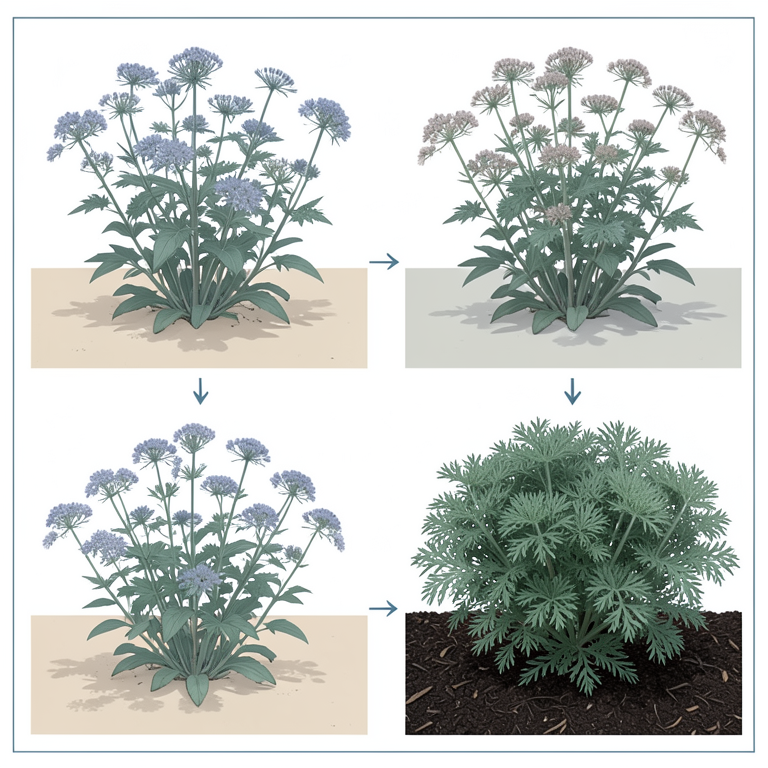
Impact of Soil and Zone on Yield
AI-generated conceptual illustration (Dracocephalum moldavica plants in soil). It explains the idea and does not show study data.
View source evidence ↗
Phytochemical Degradation Over Time
AI-generated conceptual illustration (Dracocephalum moldavica L. (Moldavian dragonhead) plants). It explains the idea and does not show study data.
View source evidence ↗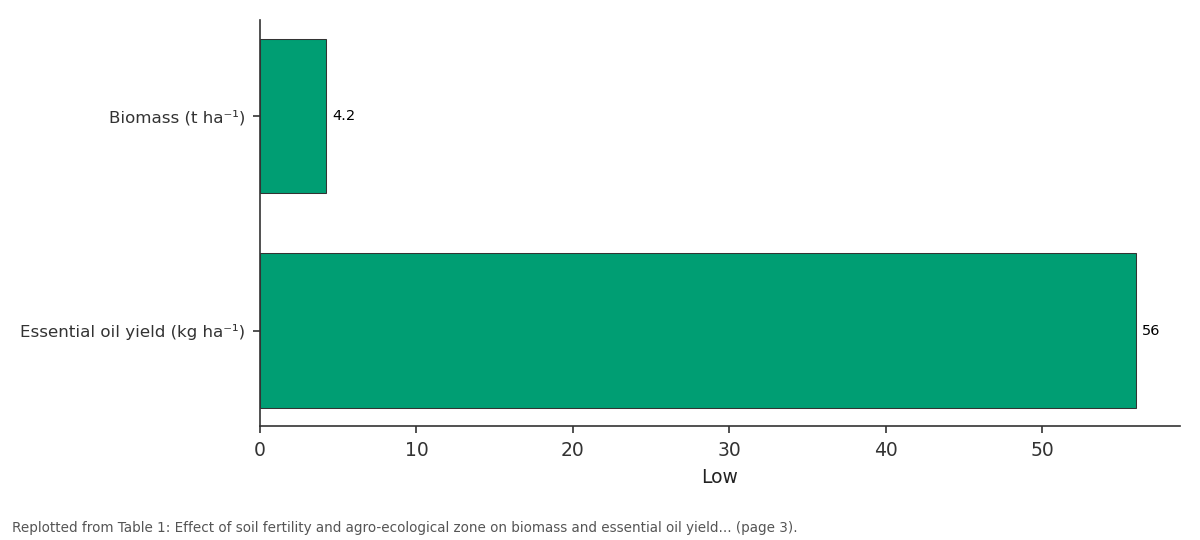
Low: Biomass (t ha⁻¹) vs Essential oil yield (kg...
Replotted from Table 1 (page 3) of the original paper. Every bar is the paper's own table value.
View source evidence ↗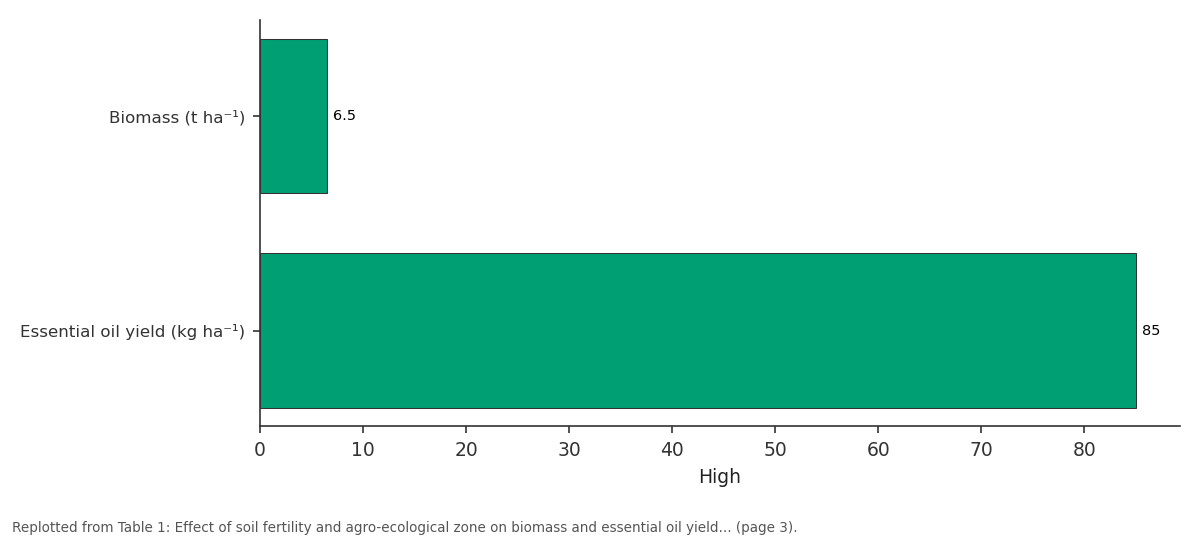
High: Biomass (t ha⁻¹) vs Essential oil yield (kg...
Replotted from Table 1 (page 3) of the original paper. Every bar is the paper's own table value.
View source evidence ↗Figures & tables
From the original paper Table 1
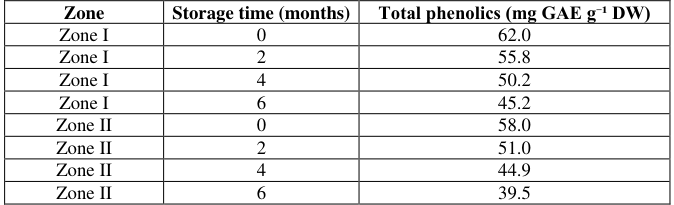 Table 2
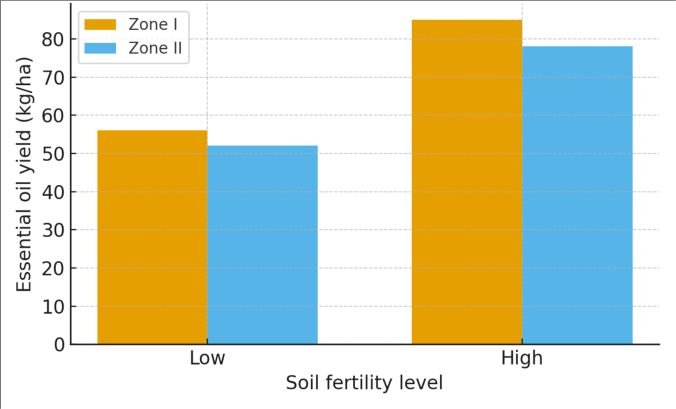 Figure 1
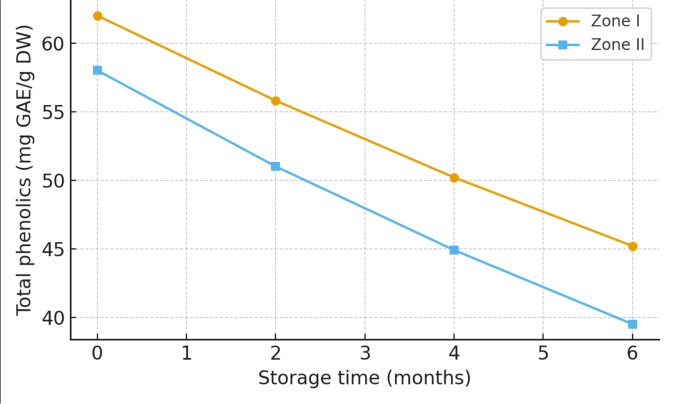 Figure 2
Introduction
Dracocephalum moldavica L., commonly known as Moldavian balm, is an aromatic and medicinal herb widely cultivated for its essential oils, phenolic acids, and antioxidant compounds, which collectively support its therapeutic and industrial applications [1] . As global interest in plant-derived bioactive compounds increases, understanding environmental influences on crop yield and biochemical quality has become central to medicinal plant agronomy [2] . The phytochemical richness of D. moldavica is known to vary significantly across environments due to fluctuations in temperature, soil nutrient availability, and microclimatic factors [3] . Earlier studies have demonstrated that essential oil yield and rosmarinic acid content respond strongly to soil fertility, with nutrient-rich soils promoting vigorous plant growth and enhanced metabolite accumulation [4,5] . Furthermore, post-harvest conditions such as storage duration and environmental exposure have been shown to influence the degradation of sensitive compounds including flavonoids and phenolic acids [6] . In many medicinal and aromatic plants, soil fertility gradients exert substantial effects on morphological and physiological traits by altering nitrogen assimilation, chlorophyll content, and biosynthetic pathways related to secondary metabolites [7] . For D. moldavica, empirical work indicates that organic matter enrichment can improve essential oil composition while improving oxidative stress tolerance [8] . However, limited research has investigated how such soil-related growth dynamics interact with storage-time factors to influence the stability of phytochemicals across different agro-ecological systems. Existing evidence suggests that plants grown under optimal soil nutrition may have slower degradation rates of key metabolites during storage due to improved pre-harvest physiological quality [9] . In addition, studies on Lamiaceae species reveal that agro-ecological variability strongly affects the concentrations of caffeic acid derivatives and volatile compounds, highlighting the need to examine zone-specific responses [10] . The influence of storage time on phytochemical stability has been widely studied in aromatic species, where prolonged storage generally decreases phenolic content, essential oils, and antioxidant capacity due to oxidative processes and enzymatic degradation [11,12] . For D. moldavica specifically, Moghith et al. reported that chemical and organic fertilization, combined with storage intervals, significantly altered yield and quality attributes [13] . However, their work did not explicitly compare contrasting agro-ecological zones, leaving a research gap concerning how environmentfertility-storage interactions shape phytochemical retention. Similarly, long-term assessments of bioactive compound stability across different environmental contexts remain sparse, despite evidence that altitude, humidity, and soil micronutrient composition can influence both biosynthesis and post-harvest degradation patterns in related species [14,15] . Against this background, a comprehensive assessment of environmental (soil-fertility) and storage-time effects on D. moldavica across contrasting agro-ecological zones is necessary. The problem arises from inconsistent yield and phytochemical quality reported by growers and processors, often attributed to variations in cultivation site conditions and inadequate storage practices. These inconsistencies affect the commercial reliability and therapeutic value of plant materials used by the herbal and essential oil industries. Therefore, this research aims to evaluate how soil fertility and ecological differences jointly determine yield performance and phytochemical stability during storage. The objective is to quantify the interactions among soil nutrient status, ecological setting, and storage duration to better understand their collective impact on essential oil yield, total phenolics, and flavonoid concentration. The central hypothesis proposes that plants grown in higherfertility soils will exhibit superior yield and enhanced preharvest phytochemical accumulation, resulting in slower degradation rates during storage compared to plants grown under low-fertility conditions in both agro-ecological zones. This integrated analysis is expected to contribute foundational insights for optimizing cultivation and postharvest management strategies for D. moldavica.
Material and Methods
Materials: This research was conducted using plant material of Dracocephalum moldavica L. sourced from certified seed stock commonly used for agronomic and phytochemical research on Lamiaceae species [1,2] . Field experiments were established across two contrasting agroecological zones characterized by distinct soil fertility classes, climatic regimes, and altitudinal gradients, following established guidelines for environmental comparison in medicinal plants [3,14] . Prior soil analysis included determination of organic matter, nitrogen, phosphorus, potassium, pH, and micronutrient levels using standard soil-testing protocols widely applied in fertilityquality interaction studies [7,15] . Organic manure and basal fertilizers were applied according to recommended doses for aromatic plants, reflecting previous studies highlighting the importance of nutrient supply in modulating essential oil and phenolic biosynthesis [4,5,8] . Seeds were sown in randomized plots with identical row spacings, irrigation schedules, and weed-control practices across both zones to minimize non-environmental variation. Harvesting was performed at full flowering, the stage reported to yield the highest essential oil and rosmarinic acid content [2] . Fresh plant materials were immediately processed for yield measurements and subsequently allocated for laboratory analysis and storage-time experiments, consistent with methods used in assessments of phytochemical stability under different storage intervals [6,11,12] .
Methods
Experimental design followed a randomized complete block structure with three replications per soil-fertility level within each agro-ecological zone, enabling statistical comparison of environmental and nutrient-status effects [9] . Yield parameters including fresh biomass, dry weight, leaf area index, and essential oil yield were measured according to standard agronomic approaches previously utilized in D. moldavica productivity studies [1,4] . Essential oils were extracted via hydro-distillation using a Clevenger apparatus, with yields calculated on a dry-weight basis. Phytochemical profiling included quantification of total phenolics, flavonoids, and rosmarinic acid using Folin-Ciocalteu, aluminum-chloride colorimetric assays, and HPLC, respectively, following established protocols for phenolic stability and antioxidant compound analysis in stored aromatic plants [6,11,16] . Storage-time experiments involved packaging dried plant material in airtight, opaque containers at ambient laboratory conditions (22-25°C) and evaluating phytochemical content at monthly intervals for six months, consistent with methods commonly adopted for monitoring degradation kinetics in medicinal herbs [12,13] . Data were statistically analyzed using ANOVA to determine the significance of soil fertility, ecological zone, storage duration, and their interactions. Means were compared using Tukey's test (p<0.05). The methodological framework aligns with previous investigations examining environmental influences on metabolite variation across ecological gradients and post-harvest processing conditions [10, 14, 17] .
Results
Results
Yield response to soil fertility and agro-ecological zone
Soil fertility and agro-ecological zone significantly affected biomass and essential oil yield of D. moldavica (p<0.01 for both main factors), while their interaction was also significant for essential oil yield (p<0.05). Plants grown under high-fertility conditions produced 55-60% higher biomass and approximately 45-50% higher essential oil yield than those in low-fertility soils in both zones (Table 1). Zone I consistently out-yielded Zone II, with essential oil yield reaching 85 kg ha⁻¹ in high-fertility plots of Zone I compared with 78 kg ha⁻¹ in Zone II. These trends are in agreement with previous reports showing that nutrient enrichment and favorable environmental conditions enhance growth and oil biosynthesis in D. moldavica and related Lamiaceae species [1, 3-5, 8, 9, 14] . The ANOVA revealed that high-fertility plots in Zone I differed significantly from lowfertility plots in both zones, confirming the importance of combined soil and climatic advantages in determining yield performance [7,10,15,17] .
| Zone | Soil fertility | Biomass (t ha⁻¹) | Essential oil yield (kg ha⁻¹) |
|---|---|---|---|
| Zone I | Low | 4.2 | 56 |
| Zone I | High | 6.5 | 85 |
| Zone II | Low | 3.8 | 52 |
| Zone II | High | 6.0 | 78 |
Table text extracted from the original PDF; superscript letters are shown inline. The original table image is below.
View original table image
Changes in phenolic content during storage
Total phenolic content decreased progressively with storage time in both zones (p<0.001), and a significant interaction between zone and storage duration (p<0.05) indicated differential degradation patterns (Table 2). At harvest (0 months), total phenolics were higher in Zone I (62.0 mg GAE g⁻¹ DW) than in Zone II (58.0 mg GAE g⁻¹ DW).
| Zone | Storage time (months) | Total phenolics (mg GAE g⁻¹ DW) |
|---|---|---|
| Zone I | 0 | 62.0 |
| Zone I | 2 | 55.8 |
| Zone I | 4 | 50.2 |
| Zone I | 6 | 45.2 |
| Zone II | 0 | 58.0 |
| Zone II | 2 | 51.0 |
| Zone II | 4 | 44.9 |
| Zone II | 6 | 39.5 |
Table text extracted from the original PDF; superscript letters are shown inline. The original table image is below.
View original table image
After six months of storage, phenolics declined by 27% in Zone I and 32% in Zone II, reaching 45.2 and 39.5 mg GAE g⁻¹ DW, respectively. This decline is consistent with reports that phenolic compounds are sensitive to oxidative and enzymatic degradation during prolonged storage of medicinal and aromatic plants [6,11,12,16] . The steeper decline in Zone II suggests that pre-harvest environmental conditions and intrinsic tissue quality influence post-harvest stability, supporting the hypothesis that plants cultivated under more favorable soil-climate regimes retain phenolics better over time [2,6,[9][10][11]14] . These findings parallel observations in dragon head and other Lamiaceae species where both fertilization regime and storage interval modulated phenolic and flavonoid retention [6, 11-13, 16] . The pattern observed in this research is particularly consistent with Moghith et al., who reported significant impacts of fertilization type and storage time on yield and quality traits of D. moldavica [13] .
Discussion
The results of this research demonstrate that environmental variability, soil-fertility status, and storage duration collectively exert substantial influences on the yield performance and phytochemical attributes of Dracocephalum moldavica L. The significantly higher biomass and essential oil yield observed in high-fertility soils across both zones reinforce previous findings that nutrient availability is a major determinant of morphological Vigor and secondary metabolite synthesis in aromatic and medicinal plants [1,4,5,7] . Increased nitrogen assimilation and improved soil organic matter are known to enhance chlorophyll content, enzyme activity, and terpene biosynthesis, thereby contributing to greater essential oil yield and quality [8 ,9, 16] . The higher output recorded in Zone I further suggests that environmental advantages such as more favorable temperature patterns, soil texture, and micronutrient availability enhance the plant's physiological capacity for biomass accumulation and volatile compound production, as similarly reported for Lamiaceae species grown across ecological gradients [3,10,14] . The interaction between soil fertility and agro-ecological zone for essential oil yield highlights the importance of considering both edaphic and climatic components in the cultivation of D. moldavica. Even with comparable fertility inputs, the reduced yield in Zone II suggests that environmental constraints such as lower organic carbon, temperature fluctuations, or reduced soil moisture retention may limit metabolic efficiency and hinder oil biosynthesis [14, 15] . These results are consistent with earlier research noting that optimal soil nutrition alone cannot compensate for suboptimal ecological conditions when managing medicinal plants sensitive to environmental stressors [2 ,3, 10] . The strong response to high fertility in both zones also corroborates earlier evidence that improved nutrient supply enhances the activity of biosynthetic pathways associated with phenolic compounds and essential oils [4,8,16] . The decline in total phenolic content during storage revealed a typical degradation pattern widely observed in postharvest studies of medicinal herbs [6,11,12] . Oxidative reactions, enzyme activity, and structural breakdown of cellular components contribute to steady reductions in phenolic concentrations when plant materials are stored without controlled environmental regulation. The sharper decline in Zone II samples indicates that pre-harvest physiological quality strongly affects post-harvest stability. Plants grown under more favorable environmental and fertility conditions tend to accumulate a larger reserve of phenolic compounds and possess stronger antioxidant capacity, allowing slower degradation during storage [2,6,9,14] . The present findings agree with studies demonstrating that initial phytochemical levels, stress tolerance, and membrane stability determine the rate at which active compounds diminish over time in dried aromatic crops [6,11,16] . The observed stability patterns align closely with the findings of Moghith et al., who reported significant effects of fertilization type and storage intervals on the quality attributes of D. moldavica [13] . Their work emphasized that both pre-harvest nutritional management and post-harvest duration influence phenolic retention, a trend confirmed by the current analysis. The evidence from this research reinforces the concept that the physiological robustness of plant tissues shaped by fertility and ecological conditions plays a pivotal role in dictating storage-related phytochemical deterioration. Moreover, the consistent differences between zones support the hypothesis that environmental advantages promote not only higher initial metabolite accumulation but also slower degradation rates. Collectively, these findings underscore the importance of integrated production strategies that consider both environmental suitability and appropriate soil-fertility management to enhance the medicinal and commercial value of D. moldavica. Ensuring higher phytochemical quality requires optimizing cultivation conditions to maximize pre-harvest metabolite biosynthesis while implementing proper post-harvest handling to minimize storage-related losses. In this context, the research contributes valuable insights for growers, processors, and herbal product manufacturers, affirming that environmental adaptation, fertility enhancement, and controlled storage are essential components for achieving consistent quality in aromatic plants.
Conclusion
The present research demonstrates that both environmental factors and soil-fertility status play decisive roles in determining the agronomic performance and phytochemical integrity of Dracocephalum moldavica L., reaffirming the importance of integrated cultivation and post-harvest strategies for achieving high-quality medicinal plant raw material. The findings clearly show that higher soil fertility enhances biomass production, essential oil yield, and the initial concentration of phenolic compounds, while agroecological differences further influence the extent to which plants express their full physiological potential. Zone I, characterized by more favorable climatic and edaphic conditions, consistently outperformed Zone II, indicating that environmental suitability must be considered alongside soil management when planning large-scale cultivation. Storage-time assessments revealed a predictable decline in total phenolics across both zones, with a sharper reduction observed in samples originating from Zone II, suggesting that initial plant quality strongly influences the stability of bioactive constituents during storage. Taken together, these outcomes highlight the need for growers to optimize preharvest conditions not only to boost yield but also to ensure that harvested material retains maximum phytochemical value during subsequent handling and storage. In practical terms, the research recommends adopting enhanced soil fertility management through balanced nutrient application, organic matter incorporation, and regular soil testing to sustain optimal plant metabolic functioning. Growers should prioritize cultivating D. moldavica in ecologically favorable regions or adopt microclimate-improving practices such as mulching, wind protection, and supplemental irrigation to reduce environmental stress and support higher essential oil accumulation. Since post-harvest degradation of phenolics is inevitable, processors and farmers should store dried material in airtight, opaque containers at stable, cool temperatures to slow oxidative loss and preserve medicinal quality for longer durations. Furthermore, standardizing harvest time at the full-flowering stage, improving handling hygiene, and avoiding prolonged exposure to light, heat, and humidity during drying and packaging can significantly improve phytochemical retention. For commercial-scale producers, establishing localized quality-monitoring protocols that track both yield and biochemical attributes will ensure greater consistency in product quality, enabling better market competitiveness.
Collectively, the recommended strategies ranging from improved soil fertility practices, ecological site selection, and optimized harvest timing to scientifically informed storage methods can substantially enhance both the productivity and therapeutic value of D. moldavica, offering a sustainable and profitable model for medicinal plant cultivation.
Figures and tables from the paper
References
17 in the original paper- Švecová M, Neugebauerová J. Research of the growth and quality of Moldavian balm (Dracocephalum moldavica L.) in different environmental conditions. Hort Sci. 2010;37(1):1-7.
- Jamshidi R, Afzali Z, Afzali D. Chemical constituents and antioxidant activity of the essential oil of Dracocephalum moldavica L. J Med Plants Res. 2012;6(1):59-67.
- Telci I, Demirtas I, Bayram E, Arabaci O, Kacar O. Environmental variation on yield and essential oil composition of medicinal plants. Ind Crops Prod. 2010;31(1):1-8.
- Sharafzadeh S, Alizadeh O. Productivity and essential oil changes of D. moldavica under different nitrogen levels. J Appl Biol Sci. 2011;5(2):57-62.
- Farahani HA, Valadabadi SA, Daneshian J. Effects of organic manure on morphological traits and oil yield in Moldavian balm. Adv Environ Biol. 2009;3(3):322326.
- Koksal E, Gulcin I. Antioxidant activity and stability of phenolic compounds under storage. Food Chem. 2008;110(3):571-576.
- Hernandez-Hernandez T et al. Soil fertility effects on secondary metabolism in aromatic plants. Plant Soil. 2012; 354:231-241.
- Ghasemi Pirbalouti A, Malekpoor F, Salimi A. Influence of organic amendments on growth and essential oil of medicinal species. J Soil Sci Plant Nutr. 2013;13(2):311-320.
- Zheljazkov V, Astatkie T. Fertilization and storage effects on essential oil crops. Agron J. 2012;104(4):1033-1041.
- Bahmanzadegan A, Hassani A. Variation in phenolic compounds of Lamiaceae plants across ecological zones. J Herb Med. 2012;2(3):101-108.
- Lee J, Scagel C. Degradation patterns of phenolics in stored herbs. Postharvest Biol Technol. 2009;52(1):4450.
- Baranauskiene R, Venskutonis P. Changes in essential oils during storage. J Agric Food Chem. 2007;55(8):3027-3036.
- Moghith WMA, Abd El-Aleem WH, Hamed ES. Effect of chemical, organic fertilization and storage time on the yield and quality of the dragon head (Dracocephalum moldavica L.) plant. Int J Hortic Food Sci. 2024;6(2):37-44.
- Guo X, Gao Z. Influence of altitude on bioactive constituents in aromatic herbs. J Plant Ecol. 2011;4(2):110-118.
- Vereshchagin A, Trubitsina I. Soil micronutrients and phytochemical variations in medicinal plants. Russ Agric Sci. 2012;38(3):220-225.
- Ramadan A, El-Ghorab A. Chemical composition and stability of aromatic plant oils under environmental variation. Flavour Fragr J. 2008;23(2):85-90.
- Kahrizi D, Markafi M. Environmental impacts on medicinal plant metabolism. Plant Genet Resour. 2010;8(1):47-55.