
Research article · 2025 · Full text
International Journal of Geography Geology and EnvironmentThe growth and development of the dairy industry in the (Abu Gharib) factory and its impact on the local economy of the population
Volume 7(12) · Pages 09–16 · DOI: 10.22271/27067483.2025.v7.i12a.451 ↗
Research areasUrban Agriculture and SustainabilityWater management and technologiesUrban and Rural Development Challenges
Abstract
Author-writtenThis research aims to analyze the reality of the dairy industry in the Abu Ghraib dairy factory and its role in strengthening the local economy by studying the development of production capacity, the level of the factory's connection with farmers in the region, and the quality of production processes. In addition, the expansion of raw milk supply networks by local farmers contributed to supporting agricultural activity and raising suppliers' income. The income of workers varied based on the nature of their work and the responsibilities associated with it, while the number of workers has remained relatively stable in recent years. On the other hand, the location of the factory in an urban-rural environment and its proximity to the main transportation routes all contribute to the ease of distribution of products and their lower prices compared to the importer, which further enhances local food security. The study concluded that the Abu Ghraib dairy factory represents a production base of promising importance that supports the economic and social development in the district of Abu Ghraib, despite the persistence of some challenges related to energy, imported competition, and marketing.
Summary
Source-checkedPlain-language reading of the full paper, prepared with AI and checked against the text. Each point links to the authors' own words.
Why it matters
- Dairy products are essential human foods derived from livestock milk, such as cows and sheep. View evidence ↗
- Processing milk into packaged products is vital for local food security by providing reliable staple foods. View evidence ↗
- Reducing dependence on foreign imports of dairy products helps Iraq save foreign currency and move toward self-sufficiency. View evidence ↗
The question
- The research aims to analyze the Abu Ghraib dairy factory's production capacity, its connection to local farmers, and its overall impact on the local economy. View evidence ↗
What they did
- The study used a descriptive method to analyze the factory's reality and a statistical method to process data on production, employment, and income. View evidence ↗
- Field data were collected from local residents and factory workers using a questionnaire. View evidence ↗
- The study analyzed data over a temporal limit spanning from 2016 to 2024. View evidence ↗
What they found
- Half of the surveyed residents (50%) perceived the Abu Gharib dairy factory as being developed. View evidence ↗
- The most common demand from local residents was for price reductions, cited by 33.3% of participants. View evidence ↗
- The factory's design capacity utilization improved significantly, rising from 0-15% in 2016 to 51-91% in 2024. View evidence ↗
- By 2024, the factory achieved 90% of its production plan across all items. View evidence ↗
- Raw milk received from local farmers increased to over 5,200 tons in 2024, indicating an expanded supplier network. View evidence ↗
- Local products are cheaper than imports, with imported products costing 40% to 100% more depending on the item. View evidence ↗
- The largest group of workers (35.7%) earned a monthly income between one million and one and a half million dinars. View evidence ↗
What it means
- The authors conclude that the factory is a promising production base that supports the social and economic development of the Abu Ghraib district. View evidence ↗
- The authors recommend that local dairy products be aligned with international quality regulations. View evidence ↗
- The factory faces operational challenges including power outages that increase production costs due to reliance on generators. View evidence ↗
Visual summary
3 visualsIllustrations explain the paper; charts are replotted from the paper's own table values.
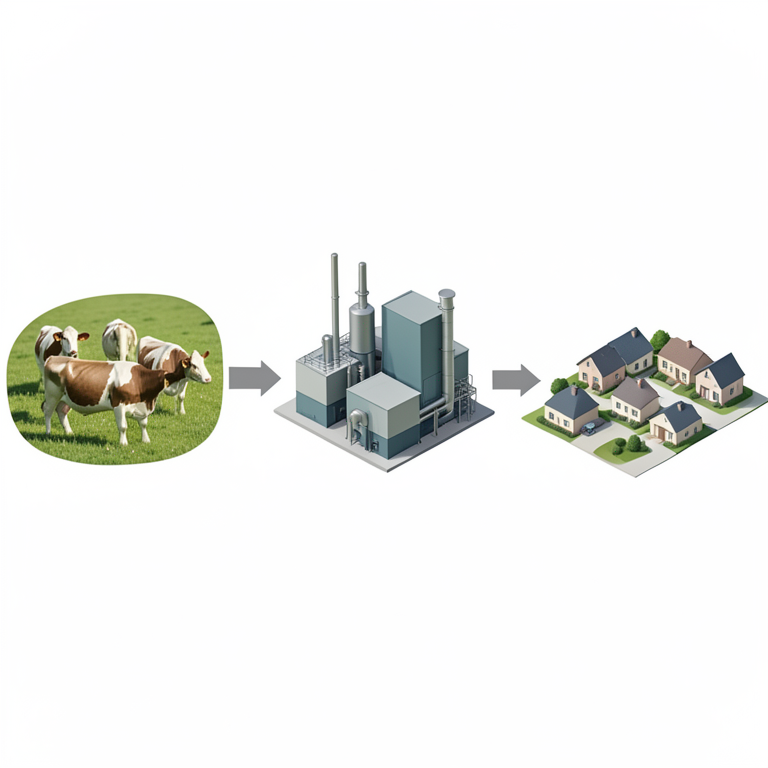
Local Economic Cycle of Abu Ghraib Dairy
AI-generated conceptual illustration (Dairy cows, a milk processing factory, and local households). It explains the idea and does not show study data.
View source evidence ↗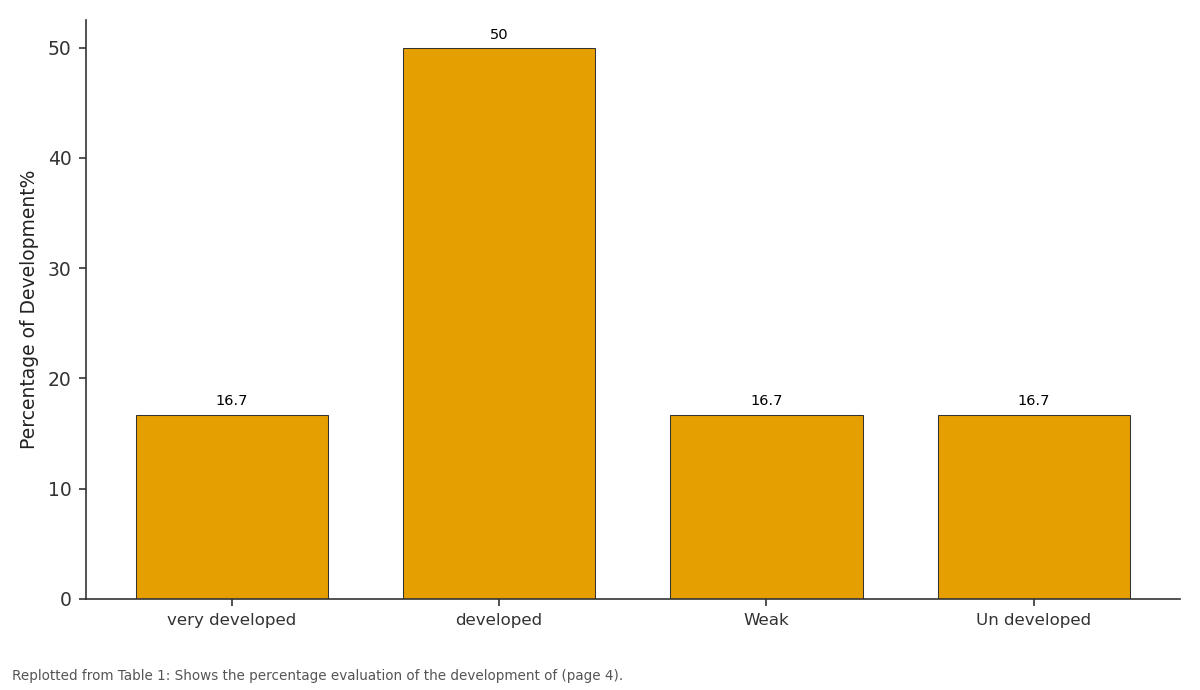
Percentage of Development%: very developed vs developed vs Weak vs Un developed
Replotted from Table 1 (page 4) of the original paper. Every bar is the paper's own table value.
View source evidence ↗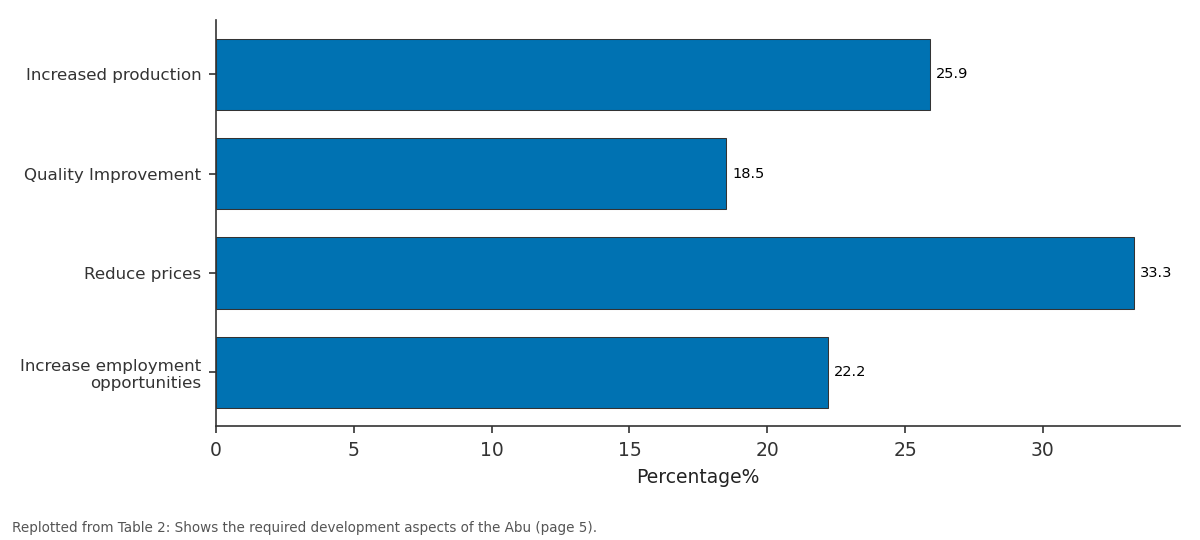
Percentage%: Increased production vs Quality Improvement vs Reduce prices vs Increase employment...
Replotted from Table 2 (page 5) of the original paper. Every bar is the paper's own table value.
View source evidence ↗Figures & tables
From the original paper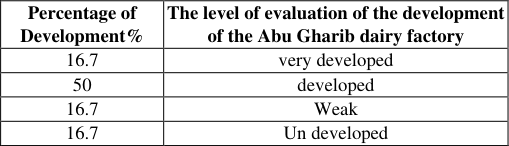 Table 1
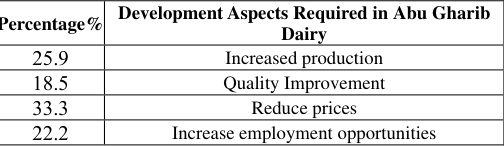 Table 2
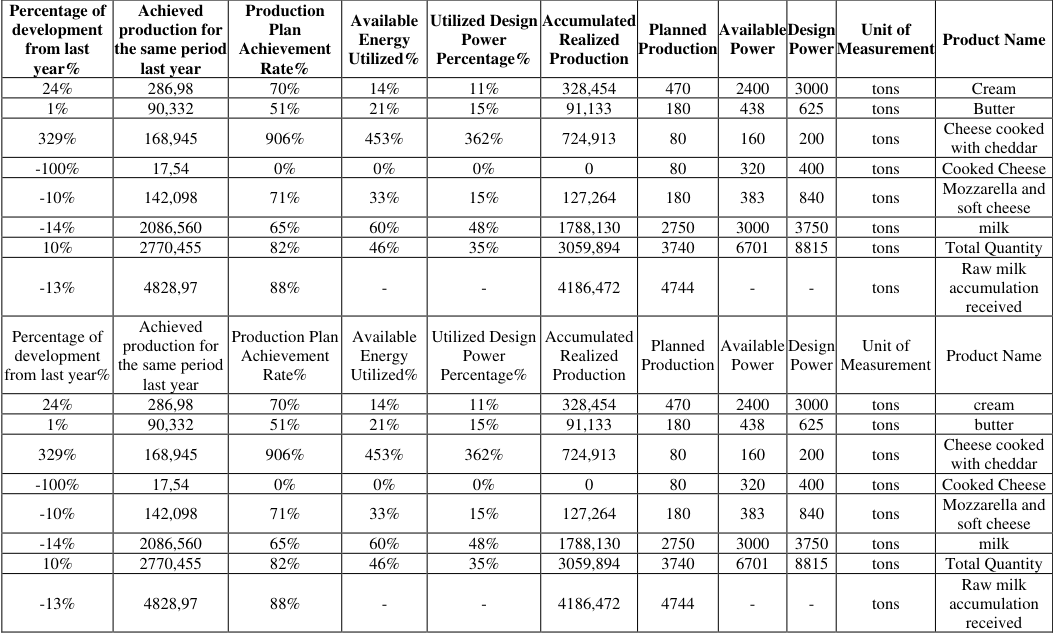 Table 3
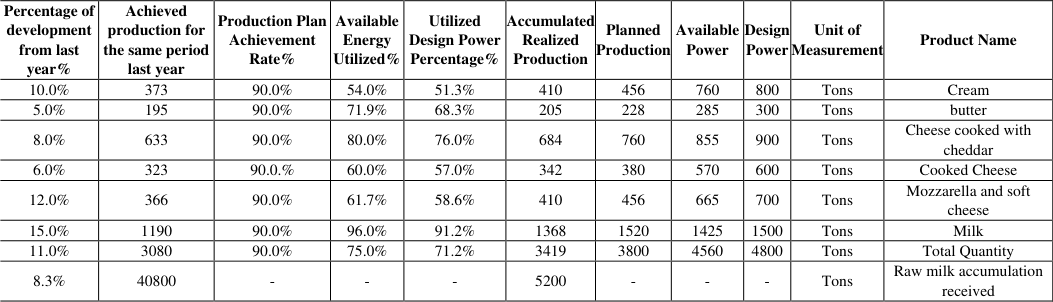 Table 4
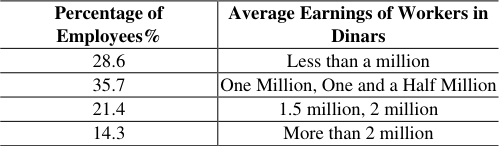 Table 6
 Table 5
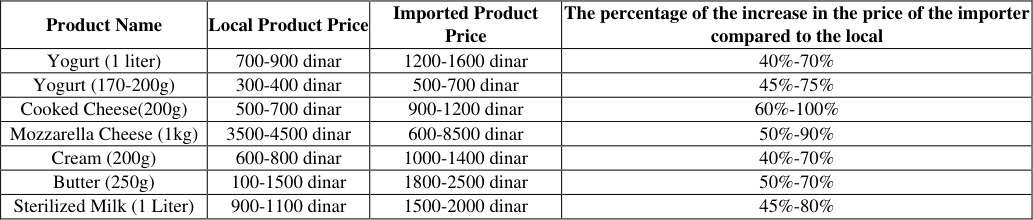 Table 7
Introduction
Dairy and dairy products are an essential food for humans and are often extracted from the milk of livestock (cows, sheep, or other mammals). The most prominent of these products are cheese, yogurt, butter, and cream. These products are of great importance in food consumption, as they are a beneficial source of protein. They also boost the demand for dairy products in Iraq, allow them to be produced locally, and help identify and develop problems hindering the industry, increase the added value of dairy production, and stimulate increased production [1] . This contributes to several benefits, including increasing the income of dairy producers, creating multiple job opportunities, and stimulating investment in cattle and buffalo breeding projects and exporting other animals. Conversely, it also helps ensure that local production is available for consumption. Competition between existing laboratories may lead to improved quality and increased production quantities, which can develop in the future with rational policies that reduce imports and provide opportunities for the export of surpluses [2] . In recent years, these products have undergone development and rehabilitation with the aim of increasing their production capacity and diversifying them to meet local demand and reduce dependence on imports. The study aims to achieve self-sufficiency and reduce dependence on importing many products from foreign markets, which contributes to the savings of foreign currency. It also seeks to promote the optimal utilization of local primary resources and increase their production [3] .
Research Problem
• What are the technical, administrative, and marketing barriers that hinder the growth of the factory? • How does the development of the laboratory (improvement of manufacturing technology, application of quality standards of worker training) affect production, employment, and income of the local family?
• What is the reality of the qualitative and quantitative production of the dairy industry in the Abi Gharib factory? • What policies and interventions can be made to maximize the local economic impact of the dairy industry in Abu Ghraib?
Research Objective
• Identify the main barriers to growth and development.
• Describe the current reality of production, quality, and supply chains in the laboratory. • Providing practical and policy recommendations to enhance the integration between the plant and the local economy.
• Measure the potential/actual impact of development initiatives on employment opportunities and household income.
Research Hypothesis •
The development of the laboratory raises the rate of local employment and the income of the families dealing with it .
• There is a positive relationship between the quality of the product and the ease of marketing it locally and regionally.
•
The implementation of technical and administrative improvements leads to a significant increase in the volume and quality of production.
Importance of the research •
The importance of the research in its treatment of the Abu Gharib Dairy Factory is highlighted as it is one of the most prominent food establishments that affect food security and the local economy in the district.
•
Highlighting the importance of developing production lines and further improving operational efficiency in raising production capacity and improving the quality of products.
•
Clarify the plant's connection with local farmers and its impact on supporting and enhancing family income and employment opportunities.
•
Analyze the economic and geographical factors that contribute to the success of the dairy industry.
Methodology
The research relied on two basic approaches, namely the descriptive method in analyzing the reality of the Abu Ghraib dairy factory and the characteristics of its geographical location within the Baghdad governorate and the road networks leading to it, in addition to describing the factors affecting its production activity. On the other hand, the statistical method was used to process data on production capacity, the number of workers, and their income level through tables and graphs. A questionnaire form was adopted to collect field data from workers and local people and to analyze the relationship between variables.
Temporal and spatial limits of the research Temporal Limits
The duration of the study was set between the years 2016-2024.
Spatial Limitations
• Abu Gharib Dairy Factory.
• Workers inside a factory.
• Local farmers supplying raw milk.
• Households and shops that depend on the factory's products or benefit from its economic activity.
Practical part The Genesis of the Dairy Industry
The dairy industry is one of the most prominent food industries in the world, as it is a staple food for families. Baby milk factory: Currently permanently out of operation due to the destruction it suffered during the 2003 war and the sabotage that followed, and is currently in need of rehabilitation [4] .
The importance of the dairy industry
The dairy industry is a vital sector due to the nutritional, economic, and social benefits it offers. Converting milk into packaged dairy products contributes to local food security by providing stabilizing and reliable staple foods [9] . Economically, the sector is an important source of income by employing farmers, manufacturers, and manufacturing, distribution, and marketing workers, adding value to local livestock production rather than relying on imports. As the food industry is one of the most important manufacturing industries in Iraq, it plays a vital role in meeting the needs of the population and ensuring food security, and it also contributes to the development of the economy through broad interdependence with other economic sectors, which enhances production, improves national income, and stimulates the growth of the local economy [5] .
Geographical factors affecting the dairy industry in Abu Ghraib
There are several geographical factors that affect the production and processing of dairy in Abu Ghraib, the most important of which are natural factors, including climate, geographical location, surface, water, and temperature (as high temperature reduces milk production and increases the animals' need for water and ventilation); water availability and safety (including water shortages or changes in the flow of the Tigris and Euphrates rivers, which affects the irrigation of fodder crops and livestock breeding); economic factors, which include raw materials, transportation, market, etc.; and social factors, which include manpower, technology, management, and more [6] .
First: Natural Factors Geographical Location
The geographical location plays an important role in the manufacture of water products, and this importance is reflected in the fact that the factories are located near transportation routes and population gatherings, as they cannot be located in sparsely populated areas, but resort to areas where demand is high to meet the needs of the population. The Abu Ghraib dairy factory is located in the Abu Ghraib district of Baghdad governorate in the west of the capital at latitude 33⁰.3045 north and longitude 44⁰.1754 east and is considered an extension of the urban-rural area surrounding the capital [3,6] .
Source: Ministry of Water Resources, General Authority for Survey, Administrative Map of Abu Ghraib District 1:250000
Map 1: The location of the Abu Ghraib dairy factory within the district
Surface
The uneven topography of the surface affects the location of industrial projects because flat or slightly sloped land is suitable for construction, provided that the site is structurally sound and can accommodate the equipment or additional space needed for potential future expansion. Areas with complex terrain indirectly affect industrial projects by increasing transportation costs, which in turn raises the final production costs; therefore, it is preferable to establish industrial projects on flat land to facilitate the delivery of raw materials and the transportation of final products to consumer markets. The site of the Abu Ghraib dairy factory, located in the Abu Ghraib district of Baghdad province, is part of the sedimentary plain that is characterized by its slope and flattening from the northwest towards the southeast, which makes it easy to establish industrial projects on it [6] .
Water
Water is considered an essential element in industrial processes, so it can be used as a solvent, a cooling medium, and a source of sterilization and cleaning, in addition to its entry into some chemical structures in the manufacture of products. The dairy industry is one of the most sensitive and water-dependent industries, as it is used in sterilizing and cleaning equipment and production lines and maintaining food safety standards, and sometimes it enters into technical processes such as cooling milk, adjusting temperatures during pasteurization, and treating liquid waste. In addition, the low quality of water or contamination negatively affects the characteristics of the final product, such as taste, nutritional value, and texture, and may cause harmful microbial growth. For this reason, standards in the dairy industry emphasize the need to use purified water in accordance with the requirements of the World Health Organization (WHO) and the Food and Agriculture Organization (FAO), taking into account the monitoring of pH, organic and inorganic pollutants, and the percentage of salts to ensure the safety and quality of the industrial product [7] .
Second: Economic Factors Raw Materials
Raw materials in the dairy industry are directly dependent on clean, fresh, and pollution-free raw milk because it determines the quality of the final product. In addition, sterile and purified water must be used at all stages of sterilization, washing, and refrigeration to ensure the safety of production. Special bacterial techniques are also used in products such as cheese and yogurt to convert the milk into the desired consistency and flavor. In addition, packaging materials are an important part because they preserve the product during transportation and storage. Energy and cooling play a key role in ensuring the pasteurization of milk and preventing its spoilage, as its availability and stability are considered prerequisites for the success of production [8] .
Transportation
The process involves designing a plan for the transportation and distribution of products from the Abu Ghraib factory to the areas designated for unloading and consumption. The transportation process is very important because it impacts all other elements, starting with the collection of milk through the production process and continuing to the delivery of the product to the consumer with high efficiency [19] . The transportation and distribution process is carried out by a group of individuals who transport the products by refrigerated trucks from the factory and distribute them to the shopping malls located on both sides of Karkh and Rusafa [10,11] .
Market
The market is known as the place where producers and consumers meet to buy and sell goods and services; it is a crucial factor in shaping industrial production and directly influences the dairy industry in the Abu Ghraib district by affecting both the local demand for milk products and the factory's capacity to market and distribute these products in Baghdad and its surrounding countryside [12] . The factory is forced to develop its products, update its technologies, and improve the quality of the milk used and the packaging in order to ensure competition with other imported or domestic dairy products. The provision of points of sale, retail shops, and popular markets in Abu Ghraib helps to deliver the product easily to the consumer, enhancing the continuity and sustainability of the factory [13] .
Fuel
Fuel is any material that can be burned and used as energy, whether thermal or mechanical, that invests fuel in the operation of devices and equipment, which includes petroleum fuels, diesel, gasoline, and natural gas. At the Abi Gharib dairy factory, fuel plays an important role in the operation of thermal production lines, such as pasteurization, heating of milk, and cooling and freezing systems that are necessary to prevent spoilage of dairy products. It is also used to run generators in the event of a power outage to ensure the continuity of the production process [14] .
Government Policies
Government policies are the set of procedures, rules, and directives that the state legislates to regulate social and economic activities, ensure stability, and safeguard the interests of producers and consumers. The policy of monitoring the quality of water, energy, and hygiene contributes to the prevention of food contamination and maintains public health, as government legislation is considered a basic framework for the continuity, stability, and quality of factories [15] .
Technology Expertise
Technological expertise is a key element in ensuring the efficiency and effectiveness of production in dairies, as it includes the use of modern equipment, advanced sterilization and packaging lines, refrigeration and digital control systems, as well as the application of advanced manufacturing standards. At Abi Gharib Dairy Factory, this expertise contributes to reducing waste, ensuring the safety of milk and its products, and accurately adjusting the pasteurization process, sterilization, pressure, and temperatures, thus preventing microbial contamination and preserving the final product [6] .
Administration
Management involves accurately understanding the performance requirements of individuals and ensuring that they implement them with the highest efficiency and lowest cost. This knowledge is regarded as a fundamental and effective requirement for societal development, as it influences the success or failure of any organization or community, given that economic and social progress relies on the effectiveness of planning and organization within society. Modern societies implement development plans through management processes [17] .
First Topic
A questionnaire form was distributed to some residents of the district of Abu Ghraib to express their opinion on the extent of the development of the Abu Ghraib dairy factory The results of the survey above show that half of the participants (50%) thought that the Abu Gharib dairy factory was developed, while some saw it as very developed, reflecting a positive view of the majority of the population. What others see as the lab is not developed or weak, and this indicates that there is a group that feels the slow development in the lab; in general, the results were mixed but leaned towards the positive side.
Source: The researcher's work based on the data of Table 1.
| Percentage of Development% | The level of evaluation of the development of the Abu Gharib dairy factory |
|---|---|
| 16.7 | very developed |
| 50 | developed |
| 16.7 | Weak |
| 16.7 | Un developed |
Table text extracted from the original PDF; superscript letters are shown inline. The original table image is below.
View original table image
A questionnaire was distributed to some residents of the district to give some feedback on the Abu Gharib dairy factory
22.2
Source: The researcher worked on a questionnaire that was distributed to some of the residents of Abu Ghraib Source: From the researcher's work based on the data of Table 2 It is clear from the above survey that most of the residents' demands were price reductions, with a participation rate of 33.3%, reflecting consumers' sensitivity to cost. The other two, which were 25.9%, believed increasing production, while others (18.5%) focused on improving quality, and 22.2% believed in increasing employment opportunities in the factory. These results indicate that the population prefers development that balances cost, production, quality, and job opportunities. It is clear from the table above that most of the production lines are operating at low energy compared to the design capacity, so the level of design energy utilization ranges between 0% and 15%, with the exception of cheese cooked with cheddar, which showed an unprecedented rise due to the large demand for the quantity, which represented an unstable cumulative production during the year, which led to a decrease in the general exploitation of industrial energy, and this indicates that the factory had many obvious operational problems, most notably the lack of availability of raw milk, old machines, and stoppages. This led to poor marketing, which led to the actual production being limited, and it was also evident that products such as yogurt and mozzarella had relatively higher rates of exploitation than other products, indicating that they were more in demand locally. Additionally, the demand for certain products, such as cooked cheese, has dropped to zero, resulting in a complete halt of the production line due to various factors, including equipment malfunctions, unavailability of raw materials, and the suspension of marketing efforts. This resulted in a highly fluctuating development rate compared to last year, highlighting the instability of the factory's operations during that year and indicating defects in the management and supply of energy sources . The above table clearly shows the significant improvement in performance for the year 2024 compared to 2016. We note that the percentage of energy utilization of the design ranged from 51% to 91%, and this percentage is the percentage of operation that is suitable and showed the stability of production lines, the development of equipment, and the availability of raw materials. In addition, the achievement of 90% of the production plan for all items indicates that the factory is working within realistic operational lines based on market demand, as well as the increase in development rates compared to the year In some products, such as 12% mozzarella yogurt and 15% yogurt, the figure reflects the success of management, quality, and rehabilitation efforts. We note an increase in milk receipts to 5,200 tons, indicating the expansion of the supplier network and the factory's success in recovering confiscated milk from local producers. These figures show the expansion of the factory's production capacity and the high level of operational efficiency compared to previous years. The data shows that the Abu Ghraib dairy factory witnessed a decrease in the number of employees in 2016 due to retirement referrals or the reduction of temporary contracts and the failure to provide the factory with new hires due to financial constraints. After this decrease, the number of employees tended to relative stability for the period 2017-2024, with a slight fluctuation in increase and decrease, which reflects the actual operational nature of the plant after the restructuring phase. This stability is due to the management's reliance on the minimum labor required to operate the basic production lines.
| Percentage% | Development Aspects Required in Abu Gharib Dairy |
|---|---|
| 25.9 | Increased production |
| 18.5 | Quality Improvement |
| 33.3 | Reduce prices |
| 22.2 | Increase employment opportunities |
Table text extracted from the original PDF; superscript letters are shown inline. The original table image is below.
View original table image
Factory production development schedules from 2016 to 2024
Factory production development schedules from 2016 to 2024
Second Topic Number of Employees
Second Topic Number of Employees
Average Income of Employees
A questionnaire was conducted and distributed to the workers of the Abu Gharib Dairy Factory to find out the average income of each worker. Through the above figure, we can see that there is a noticeable difference between the workers in their monthly income level, as the highest percentage was 35.7% for workers whose monthly income ranged from one million and a half dinars, followed by the percentage of the middle group which was 28.6% for workers whose income was less than one million dinars, and most of them were service workers or support workers, and the percentage of workers whose income was 21.4% was from one and a half million to 2 million and the lowest percentage was 14.3% for workers whose income was more than 2 million who were supervisory employees, managers or department officials, their income is higher as a result of their organizational responsibilities. From the above table, it is clear that the prices of local products in the Abi Gharib Dairy Factory are lower than imported products, as the rates of increase in imported products range from 40% to 100% depending on the type of product. The decrease in the price of the local product is due to lower transportation costs, customs duties, and the availability of raw milk from local farmers. Although the imported product excels in packaging and shelf life, the local product has important price advantages that are invested to boost the demand for it in the Iraqi markets.
Prices of local products versus importer
Prices of local products versus importer
Third Topic The impact of the plant location on the local population
The Abu Ghraib dairy factory in western Baghdad is contributing to a range of economic and social impacts on the local population. Its proximity to residential complexes and major transportation routes facilitates the access of products to popular markets and sales centers, leading to the availability of basic food commodities at reasonable prices and further enhancing local food security. It provides job opportunities for the people of the region and provides indirect opportunities related to the transportation of raw milk, marketing of products, and the supply of feed, which is reflected in the improvement of the income of many local families. The expansion of the plant's production capacity and the increase in the percentage of raw milk received from local farmers in recent years reflect the increasing dependence of the population on the economic activity of the plant. The geographical location of the factory in a rural agricultural environment makes it easy to obtain raw milk from local breeders, which has encouraged the continuation of agricultural activity, raising cows in the area, and reducing the cost of transportation for producers [6] .
Fourth Topic Factory (SWOT) Analysis
SWOT analysis is a strategic analysis that is used in economic and management research to assess the state of institutions and diagnose the internal environment (strengths and weaknesses) and external environment (opportunities and threats) [18] .
Strengths
Strengths
•
The Abu Ghraib dairy factory is strategically located within the urban-rural area, which facilitates the distribution process and access to markets.
•
Production inputs from raw milk are supplied from local breeders near the factory, and this reduces costs.
•
A direct contribution to food security through the availability of essential products at affordable prices.
• Providing job opportunities for the people of the region, whether directly or indirectly, which enhances local income.
•
Strong bonding with the local community through the expansion of production and increased receipt of milk quantities from suppliers.
Weaknesses
• Increased reliance on local suppliers means that any fluctuation in milk production directly affects the operation of the plant.
•
The location of the plant within a populated area may lead to some planning issues or environmental stress at times.
•
The potential for limited production capacity compared to the amount of increasing demand in Baghdad.
•
The effects of traffic jams in the Abu Ghraib area, which slow down the distribution process.
Threats
Threats
•
There is a sagging in the company's administrative structure as a result of the number of employees appointed by central decisions from the state, where their number currently stands at (2762) employees, while the company's standard staff in all its factories ranges between (1200-1250) employees. This has significantly impacted the increase in production costs and other administrative and organizational matters.
•
The deterioration of livestock (milk and buffalo) in Iraq after the lifting of subsidies in 1996, as well as the decline in water levels in the Tigris and Euphrates rivers, negatively affected the farmer's care of the animals, eventually leading to cow farmers resorting to slaughtering operations due to the high costs of feed materials and veterinary services.
•
Dairy products are characterized by their sensitivity and the need to provide electricity from the stage of processing the milk until it reaches the consumer. It has been noted that our company suffers from power outages like other companies, forcing us to rely on the operation of our own generators, which inevitably leads to increased production costs as a result of high fuel and maintenance prices.
•
The marketing capacity suffers from weakness due to the flooding of the market with products imported from neighboring countries, the failure to fully activate the customs tariff law on these products, as well as the failure to activate the protection of consumers and the national product, and the refusal of all ministries of the state to purchase the national product.
Fifth Topic
Linking the results to reality and their impact on the population: The results of the study show that the development of the Abu Gharib Dairy Factory in recent years has directly reflected on the economic and social reality of the local population. The production capacity for the period 2016-2024 improved in terms of design utilization and available capacity, as well as in the high rate of achieving the production plan, particularly for mozzarella, yogurt, and cooked cheese products. This improvement indicates the stability of the production process and the expansion of the supply network, which in turn increased the demand for raw milk from local farmers and raised their income levels. This enhances the availability of essential food commodities at reasonable prices when compared to those offered by importers. The factory's reliance on locally produced raw milk helped to promote agricultural activity and cow breeding within the district, which created economic integration between the factory and the population and stimulated the commercial movement related to transportation, marketing, and the supply of primary resources.
Conclusions
• The Abu Ghraib Dairy Factory has witnessed a clear improvement in operational efficiency between 2016 and 2024, as the utilization rate of design capacity increased from 0-15% in 2016, while the percentages increased between 51-91% for 2024, reflecting the success of technical and industrial efforts within the factory. • The percentage of products meeting the production plan has increased to 90% for 2024, indicating that the factory can keep pace with local demand and improve its operational and marketing management compared to previous years. • The analysis of raw milk production showed that the quantities received from local farmers increased to more than 5200 tons in 2024, indicating an expansion of the local supplier network and a strengthening of the economic relationship between farmers and the factory, which contributes to supporting agricultural activity and raising cows in the district • The low prices of local products compared to imported products give Abu Gharib products a significant price advantage, which helps enhance their competitiveness.
Recommendations
• Local dairy products should be encouraged to be subject to international quality regulations. • The quantities of imported dairy products must be determined based on their international origins and the international quality system, ensuring they are subject to the national control system, with Iraqi standards applied after conducting the required examinations. • The role of health control must be activated on production processes in factories belonging to the public and private sectors. • Assigning health control campaigns at border crossings and shops is essential to identify dairy products that violate health conditions.
Figures and tables from the paper
| Percentage of Employees% | Average Earnings of Workers in Dinars |
|---|---|
| 28.6 | Less than a million |
| 35.7 | One Million, One and a Half Million |
| 21.4 | 1.5 million, 2 million |
| 14.3 | More than 2 million |
Table text extracted from the original PDF; superscript letters are shown inline. The original table image is below.
View original table image
References
19 in the original paper- Fahd T, Ali I. Analysis of economic efficiency and optimal allocation of economic resources in Abu Ghraib Dairy Factory using linear programming in 2015. Iraqi J Agric Sci. 2017;48(1):382-396.
- Ahmad H. Marketing margin of locally produced milk cows in the province of Baghdad/District Abu-Ghraib for productive season 2015; 2017.
- Abdulrahman DAF, Ali LDSH. Value chain analyze of dairy products in Iraq: case study Abu Ghraib Dairy (Factories). J Account Financ Stud (JAFS). 2023;18(65):254-269.
- التكنولوجي التغيير مؤشرات وتحليل قياس م.م.ا.ا. حسين م.م.ا.ه، حسين ( الغذائية للمنتوجات العامة الشركة في حالة دراسة - أبو ألبان مصانع االقتصادية. للعلوم العراقية المجلة غريب(. 2019 ; 17 ( 63 :( 75 - 89 .
- Qasim M, Al-Birmani S. Estimation and analysis of the cost function of the food industries in Iraq. J Econ Adm Sci. 2025;31(146):67-80.
- غريب أبي ألبان (مصنع الغذائية للمنتجات العامة الشركة م.د.ا.ر. عباس والدولية. العربية للدراسات المستنصرية مجلة .( ً أنموذجا 2017;14(58):1-36.
- Shine P, Murphy MD, Upton J. A global review of monitoring, modeling, and analyses of water demand in dairy farming. Sustainability. 2020;12(17):7201.
- Deka RP, et al. Training manual for milk traders; 2019.
- Tenaw DK, Metiku T, Birhanu M, Ruilan L. Review on the status of dairy production and processing in Ethiopia. Acta Entomol. Zool. 2024;5(1):36-40.
- Khalaf WS, Mohammed ZA, Khalaf BA. Designing a supply chain based on multi-goal salesman style. Int. Bus Manag. 2019;13(10).
- Kontominas MG. Packaging and the shelf life of milk. In: Food packaging and shelf life: A practical guide. Boca Raton: CRC Press; 2010, p. 81-102.
- Shama ZS, Motlak JB. Resilient housing system strategies: Baghdad governorate as a model. In: IOP Conf Ser Mater Sci Eng; 2020.
- Kotler P. Marketing management. Englewood Cliffs (NJ): Prentice-Hall; 2003.
- Chamberland J, et al. Integrating reverse osmosis to reduce water and energy consumption in dairy processing: a predictive analysis for Cheddar cheese manufacturing plants. J Water Process Eng. 2020;38:101606.
- الغذاء; وتكنولوجيا الغذائي األمن أ.ع.ا. فوزي 2017 .
- Mohammed AA. The effect of workplace respect on employee performance: a survey study in Abu Ghraib Dairy Factory. J Econ Adm Sci. 2022;28(134):15-28.
- الت في بالتجوال اإلدارة تأثير أ.د.س.م. محمود س.ح.ر، حمد العاملين زام للمنتوجات العامة الشركة في تطبيقية دراسة الرسمي: الدوام بأوقات واالقتصاد. اإلدارة مجلة غريب. أبي ألبان مصانع الغذائية 2022;47(133):1-12.
- Aboud A, Șahinli M. SWOT and TOWS analysis: an application to cocoa in Ghana; 2019.
- Bedewy BAH, Alwan KH, Fleeh MK. Dynamic urban modelling for urban growth varieties and transport: building a complex dynamic model. In: IOP Conf Ser Earth Environ Sci; 2021.