
Research article · 2025 · Full text
International Journal of Agriculture and Food ScienceImpact of dietary protein supplements on the economic traits of Mulberry Silkworm (Bombyx mori L.)
Volume 7(11) · Pages 503–506 · DOI: 10.33545/2664844x.2025.v7.i11g.997 ↗
Research areasSilkworms and Sericulture ResearchSilk-based biomaterials and applicationsInvertebrate Immune Response Mechanisms
Abstract
Author-writtenThe mulberry silkworm (Bombyx mori L.) is an important model insect in nutritional and developmental studies, with its growth and reproduction strongly dependent on dietary protein. The present study, conducted during March-April 2025 at the Experiential Learning Programme Unit on Commercial Sericulture, College of Agriculture, Latur (VNMKV, Parbhani), evaluated the impact of protein-fortified mulberry leaves on the biological performance of the bivoltine double hybrid CSR2 reared on V-1 mulberry variety under a Completely Randomized Design. Results showed that supplementing mulberry leaves with plant-based protein sources significantly improved larval and economic traits compared to the control. Among all treatments, 0.5% soya flour enrichment produced the best outcomes, including the lowest disease incidence (1.50%), the highest mature larval weight (47.23 g/10 larvae), maximum effective rate of rearing (97.03%), and highest cocoon yield (20.70 kg per 10,000 larvae). In contrast, larvae fed distilled water–treated leaves showed the poorest performance, with the lowest larval weight (39.57 g), lowest ERR (90.40%), lowest cocoon yield (14.83 kg), and the highest disease incidence (5.73%). Overall, the study confirms that protein supplementation through soya, groundnut, pigeon pea, pea, gram, black gram, and green gram flours enhances larval growth, cocoon production, and overall silkworm performance. The findings suggest that dietary proteins may directly influence reproductive physiology, potentially by improving vitellogenin synthesis and other key biochemical processes. Soya flour at 0.5% emerged as the most effective supplement, while untreated controls consistently underperformed, highlighting the critical role of protein-rich diets in silkworm development and productivity.
Summary
Source-checkedPlain-language reading of the full paper, prepared with AI and checked against the text. Each point links to the authors' own words.
Why it matters
- The mulberry silkworm (Bombyx mori L.) is a key model for studying nutrition and development because its growth and reproduction rely heavily on dietary protein. View evidence ↗
- Proteins in mulberry leaves are critical for cocoon yield, as they contribute to over 70% of silk synthesis. View evidence ↗
- Adding nutritional supplements to the diet is a key method for enhancing the productivity and growth of silkworms. View evidence ↗
The question
- The study aimed to investigate how treating mulberry leaves with different dietary proteins affects the life cycle of the mulberry silkworm. View evidence ↗
What they did
- The experiment used a Completely Randomized Design to test the biological performance of CSR2 bivoltine double hybrid silkworms fed V-1 mulberry variety in Latur during March-April 2025. View evidence ↗
- The researchers tested eight treatments: seven different 0.5% protein flour supplements (soya, groundnut, pigeon pea, pea, gram, black gram, and green gram) and a distilled water control. View evidence ↗
- The study utilized three replications for each of the eight treatments, with 100 silkworms per replication. View evidence ↗
What they found
- Soya flour (0.5%) resulted in the lowest disease incidence at 1.50%, while the distilled water control had the highest incidence at 5.73%. View evidence ↗
- The highest mature larval weight was 47.23 g in the soya flour group, compared to the lowest weight of 39.57 g in the control group. View evidence ↗
- The effective rate of rearing (ERR) peaked at 97.03% with soya flour and was lowest in the control group at 90.40%. View evidence ↗
- All tested plant-based protein supplements improved larval growth and cocoon production compared to the control. View evidence ↗
What it means
- The authors conclude that 0.5% soya flour is the optimal supplement and strongly recommend its use to improve the biological performance of B. mori. View evidence ↗
Visual summary
2 visualsIllustrations explain the paper; charts are replotted from the paper's own table values.
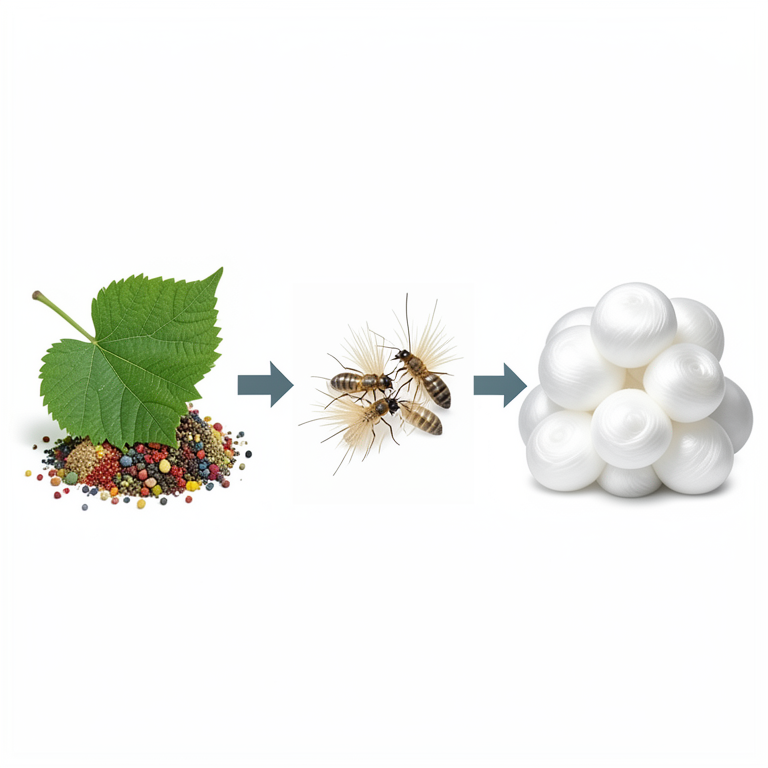
Protein Supplement Treatment Groups
AI-generated conceptual illustration (Mulberry silkworms (Bombyx mori)). It explains the idea and does not show study data.
View source evidence ↗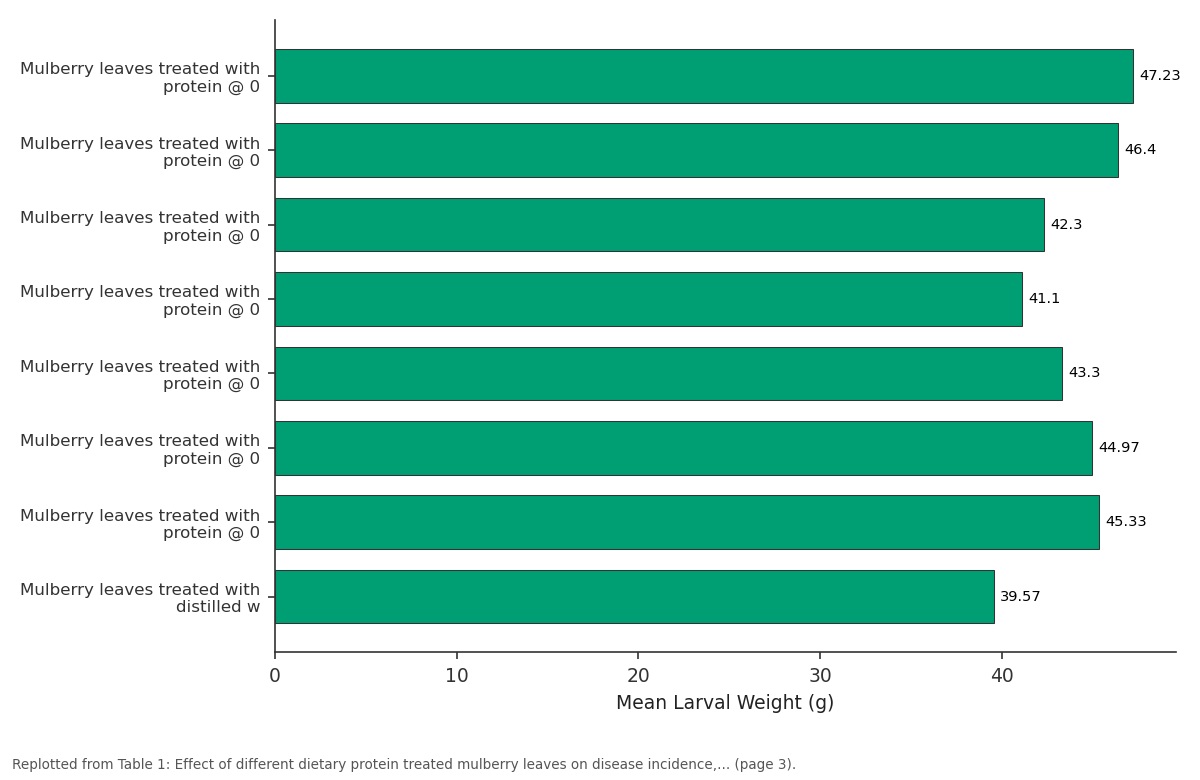
Mean Larval Weight (g): Mulberry leaves treated... vs Mulberry leaves treated... vs Mulberry leaves treated... vs Mulberry leaves treated... vs Mulberry leaves treated...
Replotted from Table 1 (page 3) of the original paper. Every bar is the paper's own table value.
View source evidence ↗Figures & tables
From the original paper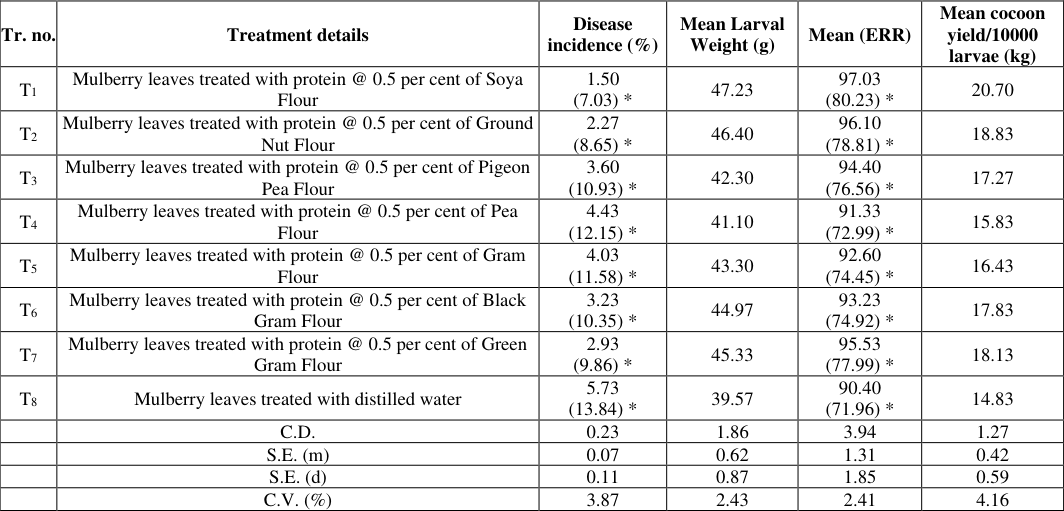 Table 1
Introduction
Silkworm (B. mori) is a monophagous lepidopteron insect that is reared for silk production under a special controlled environment (Fambayun et al. 2022) [5] . Silkworm derives all essential nutrients from mulberry leaf for growth and development (Chanotra, and Bhat 2021) [4] . The growth and development of silkworm larvae is greatly influenced by the mulberry leaves' quality (Prasad and Madhavi 2020; Murugesh et al. 2022; Saha et al. 2022) [17, 15, 21] . The production of cocoons is also affected by different factors including environmental conditions, planting and pruning and soil characteristics that affect mulberry leaf quality (Samami et al. 2019) [22] . The dietary and nutritional requirements of the silkworm including water, vitamins, carbohydrates, proteins, fats and ascorbic acid are met by digestion and assimilation of mulberry leaves (He et al 2021; Rajan et al. 2022) [8,19] . Furthermore, proteins present in mulberry leaves contribute to more than 70% of silk synthesis in silkworms [12] , thereby playing a crucial role in determining cocoon yield. (Alipanah et al. 2020). Nutritional supplementation plays a crucial role in improving the growth and productivity of silkworms. Additives enriched with vitamins, amino acids, and proteins have been reported to significantly enhance the economic traits of Bombyx mori (Amalarani et al., 2011) [2] . Soy protein, being a rich dietary source, has been recognized for its role in enhancing larval growth and improving the economic traits of Bombyx mori.
Daily supplementation of soy protein significantly contributes to increased quality and quantity of silk cocoon production (Ito, 1980; Kamaraj et al., 2017) [10,11] . Larvae of B. mori have been successfully reared on semi-artificial diets supplemented with various protein sources such as soybean, mushroom, corn flour, and their mixtures. Among these, corn flour-based diets during the fifth instar recorded the highest values for larval duration, larval weight, silk gland weight, pupal weight, cocoon and shell weight, as well as the number of eggs deposited, while also resulting in the lowest mortality percentage (Mona Mahmoud, 2013) [11] . The growth and development of silkworms are strongly influenced by the nutritional quality of mulberry leaves (Masthan et al., 2011) [14] . This nutritional value can be further enhanced through enrichment with supplementary nutrients. Studies have demonstrated that honey supplementation improves both biological performance and economic traits of Bombyx mori (Saad et [20,23,1,6] . Protein-rich food sources are recognized for enhancing the economic traits and supporting the growth of silkworms, with soy protein being a notable example (Rahman, 2018) [18] . Bombyx mori utilizes all amino acids in egg albumen, especially the essentials during growth and development, to synthesize silk fiber (Islam et al., 2020) [9] . To assess this, the effect of different dietary protein-treated mulberry leaves was investigated on the life cycle of the mulberry silkworm (Bombyx mori L.).
Material and Methods / Experimental Details / Methodology
The study was conducted during March-April 2025 at the Experiential Learning Programme Unit, Department of Agricultural Entomology, College of Agriculture, Latur, Maharashtra, to evaluate the effect of protein-treated mulberry leaves on economic traits of Bombyx mori.
Materials
Disease-free layings (DFLs) of mulberry silkworm were fed on mulberry variety V-1 leaves sourced from the Instructional-cum-Research Farm, Department of Agricultural Entomology, College of Agriculture, Latur. Essential equipment included plastic rearing trays (36" × 24" × 3"), iron stands, chopping boards, knives, bamboo sticks, feathers, cleaning nets, collapsible plastic mountages (2 × 0.95 m²), paraffin papers, foam pads, and a digital electronic balance for weighing larvae, pupae, cocoons, and shells.
Experimental treatments
Eight treatments involved mulberry leaves sprayed with 0.5% protein supplements derived from soya, groundnut, pigeon pea, pea, gram, black gram, green gram flours, and distilled water as a control. Leaves were sprayed, air-dried, and fed to larvae until pupation.
Rearing method
DFLs of CSR2 bivoltine double hybrid silkworms were obtained from SSPC, Latur. Eggs at the blue stage were incubated in black boxes to ensure uniform hatching. After hatching, 100 chawki larvae per treatment per replication were transferred to separate trays. Early instars were fed tender mulberry leaves, while later instars received mature leaves treated with dietary proteins. Bed size, spacing, and feeding schedules followed standard protocols (Krishnaswami, 1978; Nalwandikar et al., 2017) [24,16] . Environmental conditions were maintained at 22-28 °C temperature, 60-90% relative humidity, with 14-16 hours light and 8-10 hours darkness, monitored using thermohygrographs. Rearing trays were disinfected using 2% formalin and 0.3% lime powder before, during, and after rearing. Leaves were chopped according to larval preferences and fed at 6, 10, 16, and 21 hours daily. Larvae were not disturbed during moulting; beds were dusted with Vijetha (4 kg/100 DFLs) post-moulting and cleaned regularly. Feed quantity was adjusted as larvae grew. Cocoons were harvested on the fifth day. Three random samples of 10 cocoons per treatment were selected to measure cocoon weight, filament length, and moth emergence.
Grasserie-and flacherie-infected larvae were counted, and disease incidence was calculated as: Disease Incidence (%) = Diseased larvae ÷ Total larvae×100
Effective rate of rearing (%) ERR was computed using: ERR (%) = No. of cocoon harvested ÷ No. of larvae retained x 100
Cocoon Yield (kg/10,000 larvae) One hundred cocoons were randomly weighed, and yield per 10,000 larvae brushed was estimated.
The weight of 10 matured larvae was recorded and expressed in grams.
Statistical analysis
Data on biological and economic traits were subjected to analysis of variance (ANOVA) using OPSTAT software. Differences among treatments were tested for significance at the 5% probability level by the F-test, following the procedures described by Gomez and Gomez (1984).
Experimental design
The experiment was arranged in a Completely Randomized Design (CRD) with eight treatments and three replications. Each treatment involved 100 silkworms per replication.
Results and Discussion
Results and Discussion
Effect of different dietary protein treated mulberry leaves on disease incidence of mulberry silkworm
The effect of different dietary protein-treated mulberry leaves on disease incidence in mulberry silkworms is presented in Table 1. Disease incidence across treatments ranged from 1.50 to 5.73%. The lowest incidence (1.50%) was recorded in treatments with 0.5% soya flour, indicating superior nutrition and better disease resistance. Moderate disease levels were observed in treatments with 0.5% groundnut flour (2.27%), green gram flour (2.93%), and black gram flour (3.23%). Slightly higher incidences occurred with pigeon pea flour (3.60%), gram flour (4.03%), and pea flour (4.43%). The highest disease incidence (5.73%) was recorded in the control, where larvae were fed leaves treated only with distilled water. The results are accordance with of Jaybhay (2018) reported that the effect of dietary supplement treated mulberry leaves on disease incidence of mulberry silkworm revealed that none of the treatment evidenced disease occurrence. Whereas, Hamzah Mohamed Kamel (2014) showed that feeding of larvae on treated leaves lead to decreased larval mortality percentages, supporting the findings of present study.
| Tr. no. | Treatment details | Disease incidence (%) | Mean Larval Weight (g) | Mean (ERR) | Mean cocoon yield/10000 larvae (kg) |
|---|---|---|---|---|---|
| T1 | Mulberry leaves treated with protein @ 0.5 per cent of Soya Flour | 1.50 (7.03) * | 47.23 | 97.03 (80.23) * | 20.70 |
| T2 | Mulberry leaves treated with protein @ 0.5 per cent of Ground Nut Flour | 2.27 (8.65) * | 46.40 | 96.10 (78.81) * | 18.83 |
| T3 | Mulberry leaves treated with protein @ 0.5 per cent of Pigeon Pea Flour | 3.60 (10.93) * | 42.30 | 94.40 (76.56) * | 17.27 |
| T4 | Mulberry leaves treated with protein @ 0.5 per cent of Pea Flour | 4.43 (12.15) * | 41.10 | 91.33 (72.99) * | 15.83 |
| T5 | Mulberry leaves treated with protein @ 0.5 per cent of Gram Flour | 4.03 (11.58) * | 43.30 | 92.60 (74.45) * | 16.43 |
| T6 | Mulberry leaves treated with protein @ 0.5 per cent of Black Gram Flour | 3.23 (10.35) * | 44.97 | 93.23 (74.92) * | 17.83 |
| T7 | Mulberry leaves treated with protein @ 0.5 per cent of Green Gram Flour | 2.93 (9.86) * | 45.33 | 95.53 (77.99) * | 18.13 |
| T8 | Mulberry leaves treated with distilled water | 5.73 (13.84) * | 39.57 | 90.40 (71.96) * | 14.83 |
| C.D. | 0.23 | 1.86 | 3.94 | 1.27 | |
| S.E. (m) | 0.07 | 0.62 | 1.31 | 0.42 | |
| S.E. (d) | 0.11 | 0.87 | 1.85 | 0.59 | |
| C.V. (%) | 3.87 | 2.43 | 2.41 | 4.16 |
Table text extracted from the original PDF; superscript letters are shown inline. The original table image is below.
View original table image
Effect of different dietary protein treated mulberry leaves on weight of matured larvae of mulberry silkworm
The effect of protein-treated mulberry leaves on mean larval weight is shown in Table 1. The mature larval weight ranged from 39.57 to 47.23 g. The highest weight (47.23 g) was obtained with leaves treated with 0.5% soya flour, which was statistically at par with groundnut flour (46.40 g) and followed by green gram flour (45.33 g). Moderate weights were recorded with black gram (44.97 g), gram flour (43.30 g), and pigeon pea flour (42.30 g). Pea flour resulted in 41.10 g, while the lowest weight (39.57 g) occurred in the control. These results show that dietary proteins play a key role in larval growth and development. Maqbool et al. (2023) reported that mulberry leaves supplemented with spirulina and thyroxine improved cocoon yield. In spring, the combination of spirulina (500 ppm) and thyroxine (5 ppm) produced the highest cocoon yield (21.44 kg/10,000 larvae), while the control without treatment recorded the lowest (15.77 kg). Similarly, in autumn, the same combination achieved the maximum yield (18.54 kg), whereas the untreated control showed the minimum (12.64 kg/10,000 larvae). However, Kamaraj et al. (2017) [11] who indicated that among the treatments, soya solution treated leaves observed higher larval weight of silkworm as compared to other treatments. Also, Krishnan et al. (1995), they showed that the hydrolyzed soya protein (P-soyatase) supplementation decreased the larval duration and increased the accumulation of haemolymph protein (SP-1: female specific protein and SP-2; an arlyphorin), larval weight.
Effect of different dietary protein treated mulberry leaves on effective rate of rearing (ERR) of mulberry silkworm
The effect of protein-treated mulberry leaves on the effective rate of rearing (ERR) is shown in Table 1. ERR ranged from 90.40% to 97.03%. The highest ERR (97.03%) was obtained with leaves treated with 0.5% soya flour, which was at par with groundnut flour (96.10%), followed by green gram flour (95.53%) and pigeon pea flour (94.40%). Moderate ERR values were recorded with black gram flour (93.23%), gram flour (92.60%), and pea flour (91.33%). The lowest ERR (90.40%) occurred in the control treatment. These findings align with earlier studies. Shruti et al. (2019) reported the highest ERR in silkworms fed azollasupplemented leaves (95.73% in June-July and 92.87% in March-April), followed by the control and soy milk treatments. Rahul et al. (2017) found no significant difference in ERR when larvae were fed leaves enriched with 0.5-1% yeast extract. noted that enriching leaves with asparagine (0.1%) and alanine (0.5%) improved ERR, while recorded the highest ERR with alanine-enriched leaves (1000 ppm).
Effect of different dietary protein treated mulberry leaves on cocoon yield per 10,000 larvae brushed of mulberry silkworm The effect of protein-treated mulberry leaves on cocoon yield per 10,000 larvae is shown in Table 1. Cocoon yield ranged from 14.83 to 20.70 kg. The highest yield (20.70 kg) was obtained with leaves treated with 0.5% soya flour, significantly outperforming all other treatments. Groundnut flour (18.83 kg) and green gram flour (18.13 kg) produced comparable yields, followed by black gram flour (17.83 kg). Moderate yields were recorded with pigeon pea flour (17.27 kg) and gram flour (16.43 kg), which were at par. Pea flour resulted in 15.83 kg, while the lowest yield (14.83 kg) occurred in the control.
Conclusion
The overall results indicate that fortifying mulberry leaves with protein supplements specifically soya flour, groundnut flour, pigeon pea flour, green gram flour, gram flour, and black gram flour positively influences the growth and development of Bombyx mori larvae, as well as cocoon and silk production. This enhancement is likely attributable to increased protein availability during the larval stages, which significantly affects subsequent pupal and adult stages. Among the treatments, mulberry leaves enriched with 0.5% soya flour yielded the most favourable outcomes, including reduced larval and pupal duration, higher moth emergence, increased fecundity and hatching rates, improved effective rate of rearing, and superior cocoon and silk quality parameters such as single cocoon weight, cocoon yield, filament length, filament weight, and denier. These findings confirm soya flour as the optimal protein supplement for sericulture applications. Therefore, the application of mulberry leaves treated with 0.5% soya flour is strongly recommended as a dietary supplement to enhance the biological performance of B. mori.
References
24 in the original paper- Alagumanikumaran N, Prema P. Studies on evaluation and improvements of growth and economic parameters of Bombyx mori L. influence under MR2 leaves fortified with natural honey. Int J Curr Sci Res. 2016;2(6):757-65.
- Alipanah M, Abedian Z, Nasiri A, Sarjamei F. Nutritional effects of three mulberry varieties on silkworm in Torbat Heydarieh. Psyche J Entomol. 2020;2020:1-4.
- Amala Rani G, Padmalatha C, Ranjith Singh AJA. Probiotic supplementation to improve commercial characteristics, disease resistance and protein in the silkworm Bombyx mori L. World J Biol Res. 2011;4(2):12-26.
- Chanotra S, Bhat MA. A simple, efficient and costeffective protocol for detection of BmNPV in the silkworm Bombyx mori (L.). Int J Fauna Biol Stud. 2021;8(3):34-7.
- Fambayun RA, Agustarini R, Andadari L. Cultivation and breeding techniques for increasing silk productivity in Indonesia. IOP Conf Ser Earth Environ Sci. 2022;995(1).
- Gad AF. Effect of honey bee supplementation on silkworm Bombyx mori L. growth and cocoon characters. Egypt J Agric Res. 2013;91(2):553-61.
- Gomez KA, Gomez AA. Statistical procedures for agricultural research. 2nd ed. Philippines: John Wiley & Sons; 1984. p. 680.
- He Z, Fang Y, Li DC, Chen DS, Wu F. Effect of lactic acid supplementation on the growth and reproduction of Bombyx mori (Lepidoptera: Bombycidae). J Insect Sci. 2021;21(2):7.
- Islam T, Khan IL, Ganie NA, Ahmed K, Sahaf NJ, Gora MM. Impact of egg albumen fortified mulberry leaf on rearing and cocoon parameters of Bombyx mori L. Int J Chem Stud. 2020;8(4):276-81.
- Ito T. Dietary requirements of silkworm, Bombyx mori L., and its artificial diets. In: XVII International Congress of Entomology Abstracts; 1980; Tokyo. p. 448.
- Kamaraj S, Pandiaraj T, Prabhu IG, Kumari S, Sinha AK. Effect of soya protein enriched fortified feed on tasar silkworm (Antheraea mylitta) rearing performance and cocoon traits. Int J Appl Biol Pharm Technol. 2017;7(1):61-4.
- Vasanth V, Ramamoorthy R, Arasakumar E, Kumar SR, Bora NR, Nitish G, Kumar RN, Moulidharshan R. Evaluation of Spirulina mediated TiO2NPs on silkworm economic traits. Int J Biol Sci. 2023;5(2):3446.
- Mahmoud MM. Effect of various kinds of dietary proteins in semi-artificial diet on mulberry silkworm Bombyx mori L. Egypt Acad J Biol Sci. 2013;6(1):21-6.
- Masthan K, Kumar TR, Narsimha Murthy CV. Beneficial effects of spirulina and Saccharomyces cerevisiae on cocoon parameters of Bombyx mori L. Asian J Microbiol Biotechnol. 2011;13(1):205-8.
- Murugesh KA, Aruna R, Chozhan K. Influence of amino acids on economic characters of silkworm Bombyx mori L. Madras Agric J. 2022;108(7-9):1.
- Nalwandikar PK, Bhamare VK, Badgire BB, Kale AD. Effect of feeding different maturity leaves of mulberry variety V1 on economic traits of PM × CSR2 silkworm. Trends Biosci. 2017;10(23):4613-7.
- Prasad SS, Madhavi R. Impact of honey-enriched mulberry diet on energy metabolism of silkworm Bombyx mori. J Appl Nat Sci. 2020;12(2):133-45.
- Rahman YA. Effect of whey protein on economic traits for mulberry silkworm Bombyx mori L. J Plant Prot Pathol. 2018;9(4):273-6.
- Rajan R, Chunduri AR, Lima A, Mamillapalli A. Spermidine enhances nutritional indices of Bombyx mori larvae. J Entomol Sci. 2022;57(1):12-26.
- Saad MSI, Eman M, Hassan IAI. Comparative study of the effect of camphor honey bee and camphor oil on biological and productivity traits of Bombyx mori L. J Plant Prot Pathol. 2014;5(5):651-8.
- Saha S, Kumar P, Raj S, Choudhury BM. Sericulture: management and practices of mulberry silkworm. Int J Pharm Res Appl. 2022;7(2):35-46.
- Samami R, Seidavi A, Eila N, Moarefi M, Ziaja DJ, Lis JA, et al. Production performance and economic traits of Bombyx mori L. fed with mulberry (Morus alba) leaves vary according to hybrid lines. Livest Sci. 2019;226:133-7.
- Thulasi N, Sivaprasad S. Larval growth, silk production and economic traits of Bombyx mori under honeyenriched mulberry diet. J Appl Nat Sci. 2015;7(1):28692.
- Krishnaswami S. New technology of silkworm rearing. Mysore: Central Sericulture Research and Training Institute; 1978. Bulletin No. 2, p. 1-4.