
Research article · 2025 · Full text
International Journal of Geography Geology and EnvironmentDeveloping teachers’ skills in carrying out the educational process in light of the sustainable development strategy for the intermediate stage
Volume 7(11) · Pages 47–55 · DOI: 10.22271/27067483.2025.v7.i11a.444 ↗
Research areasSustainability in Higher EducationEnvironmental Education and SustainabilityEducational Practices and Challenges
Abstract
Author-writtenThis study aims to develop the skills of middle school teachers in performing the educational process in light of the sustainable development strategy. The research focuses on the necessary educational, cognitive, professional, and behavioral skills to achieve sustainable education goals, emphasizing the integration of sustainability values into daily teaching practices. The study employed a descriptive-analytical method, with the population consisting of middle school teachers in the Al-Shu’lah area during the 2024/2025 academic year, and the sample included 100 teachers selected randomly and purposively. The research instruments included a questionnaire and analysis of official documents to assess the level of teachers’ skills related to sustainability. The results indicated that teachers possess a high level of cognitive knowledge regarding sustainable development concepts, while their professional, behavioral, and value-based skills were moderate, with a noticeable gap in the practical application of sustainability principles in classrooms. The study recommends developing teacher preparation programs, conducting continuous training workshops, promoting sustainable values and behaviors, and involving teachers in environmental and community projects, ensuring the effective integration of sustainability in the educational process.
Summary
Source-checkedPlain-language reading of the full paper, prepared with AI and checked against the text. Each point links to the authors' own words.
Why it matters
- The intermediate educational stage is critical for developing a student's personality and their cognitive, behavioral, and value-based skills. View evidence ↗
- Many intermediate school teachers rely on traditional cognitive teaching methods and do not sufficiently focus on the attitudes and values required for sustainability. View evidence ↗
- Existing teacher training programs often fail to provide enough content on how to integrate sustainability into actual educational practices. View evidence ↗
The question
- The study asks how the skills of intermediate school teachers can be developed to align the educational process with the Sustainable Development Strategy. View evidence ↗
What they did
- The study used a stratified random sample of 100 male and female government school teachers. View evidence ↗
- The research population consisted of middle school teachers in the Al-Shu’lah area during the 2024/2025 academic year. View evidence ↗
- The study employed a five-point Likert scale to measure teacher responses, ranging from 'Never' to 'Always'. View evidence ↗
What they found
- Teachers with Master's degrees or higher scored higher in cognitive and professional development domains than those with only Bachelor's degrees or diplomas. View evidence ↗
- Teachers with more than 10 years of experience tended to have better behavioral and professional skills. View evidence ↗
What it means
- The authors conclude that while teachers have high theoretical knowledge of sustainability, there is a significant gap in applying this knowledge in the classroom. View evidence ↗
- The researcher recommends integrating sustainable development into university and teacher training programs, specifically focusing on practical application. View evidence ↗
- The study's geographical scope was limited to intermediate schools in the Al-Shula area. View evidence ↗
Visual summary
1 visualsIllustrations explain the paper; charts are replotted from the paper's own table values.
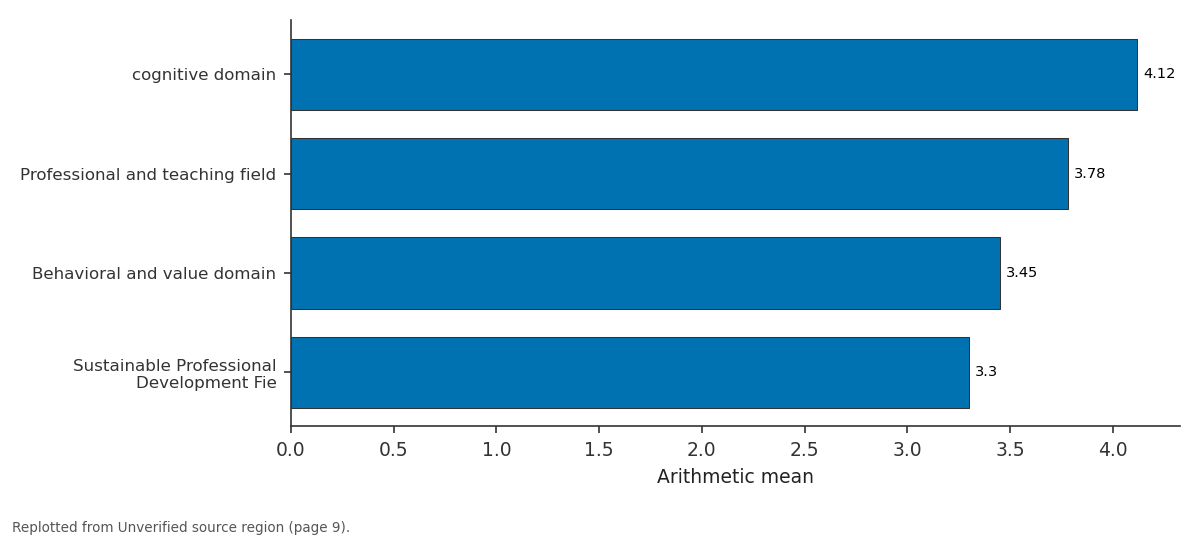
Arithmetic mean: cognitive domain vs Professional and... vs Behavioral and value... vs Sustainable...
Replotted from a table (page 9) of the original paper. Every bar is the paper's own table value.
View source evidence ↗Figures & tables
From the original paper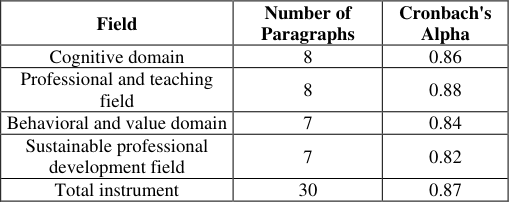 Table 1
 Table 4
 Table 5
 Table 2
 Table 3
Introduction Chapter One: General Framework of the Research First: The Research Problem
The educational process at the intermediate level is a pivotal stage in shaping the learner's personality and refining their cognitive, behavioral, and value-based skills. This stage forms the foundation upon which knowledge transitions from rote learning to learning based on understanding, analysis, and application. With the rapid transformations occurring in education in light of the requirements of sustainable development, the teacher's responsibility has become more complex than simply transmitting knowledge. Their role now requires developing students' environmental, social, and economic awareness and promoting the values of responsible citizenship and sustainable practices. However, it is observed in the educational field that a large number of intermediate school teachers still focus on the traditional cognitive aspects of teaching, without sufficient attention to developing attitudes and values that support the concepts of sustainability. Furthermore, the educational training programs provided to them often lack sufficient content that addresses integrating sustainability into educational practices. This deficiency results in a weakness in the application of modern teaching strategies and a gap between the requirements of sustainable development and actual practices in schools. Hence, the research problem is encapsulated in the following central question: How can the skills of intermediate school teachers be developed to deliver the educational process in light of the Sustainable Development Strategy? This question leads to many sub-questions, such as: 1. What are the most important educational and professional skills that teachers should possess to achieve the Sustainable Development Goals? 2. To what extent do middle school teachers currently possess these skills?
3. What is the proposed vision for developing teachers' skills in line with the principles and strategies of sustainable development?
Second: Research Objectives
This research aims to present a scientific and practical vision for developing the skills of middle school teachers in line with the goals of sustainable development in education. This will be achieved through: 1. Identifying the key educational and professional skills that teachers must possess to achieve the Sustainable Development Goals, such as critical thinking skills, interactive teaching, project-based learning management, and the promotion of environmental and social values. 2. Assessing the level of middle school teachers' acquisition of these skills using specific scientific tools to identify gaps between the current situation and desired outcomes. 3. Developing a proposed framework for developing teachers' skills in light of the sustainable development strategy, which education departments can utilize in designing effective training programs.
Third: The Importance of the Research
The importance of this research stems from two main dimensions: 1. Theoretical Importance It contributes to enriching the educational literature related to the topic of developing teachers' skills and linking them to the concepts of sustainable development, a relatively new field in Arabic research. It clarifies the complementary relationship between the quality of teacher performance and achieving the Sustainable Development Goals in education, thus opening the door to specialized future studies.
Practical Importance
It provides a practical framework that education departments and educational authorities can utilize in preparing and implementing teacher training programs that include sustainability concepts and practices. It helps improve the quality of the educational process at the intermediate level by enhancing teachers' competence in cognitive, skill-based, and value-based aspects.
Fourth: Research Limitations
To ensure the accuracy and focus of the research, its limitations have been defined as follows:
1. Geographical Limitations: The research application is limited to intermediate schools in the Al-Shula area.
Timeframe:
The research will be conducted during the 2024/2025 academic year.
Scope:
The research focuses on developing teachers' skills in light of the Sustainable Development Strategy, without delving into other elements such as curriculum development or school management.
Population:
The research will be applied to a sample of middle school teachers in the target region, selected using either random or purposive sampling.
Search Terms
First: The Concept of Skill Linguistic Meaning: In Lisan al-Arab, skill means proficiency and mastery in something. A skilled person performs every task with precision and accuracy. It is said, "He was not treated with care," meaning he was not treated with skill or without proper execution. Similarly, it is said, "The skill was not applied to this building," meaning it was not approached correctly or constructed as it should be (Ibn Manzur, 1998, p. 128) [1] . Technical Meaning: Skill is defined as the mastery and proficiency of a task, and the ability to perform it with skill and proficiency (Al-Khuwaiski, 2008) [5] . Al-Laqqani and Al-Jamal (2003, p. 310) [12] define it as an easy and precise performance based on understanding what a person learns mentally and physically, while being economical in time, effort, and cost. Operational Definition: In this research, the skill can be operationally defined as the accuracy and speed with which a middle school teacher teaches various branches of the language, reflecting their deep understanding of the subject matter and their competence in effectively conveying it to learners.
Second: The Concept of Teaching 1. Technical Definition: Shawqi defines teaching as an interactive situation between two parties, each with specific roles, through which they strive to achieve particular educational objectives. This means that the student is no longer a passive element in the educational process, but rather an active participant who comes to school equipped with prior experiences and seeks to learn multiple skills, such as reading, listening, critical thinking, and judgment. 2. Operational Definition: In this research, teaching is operationally defined as the process of interaction and constructive dialogue between the teacher and the learner, aimed at acquiring knowledge and developing intellectual and social skills, thus contributing to the learner's personal development and growth in various aspects.
Skills are among the central concepts in the fields of education and human resource management, and researchers have addressed them with numerous definitions that converge in emphasizing the integration of knowledge, action, and behavior. Guy Le Boterf (2002) [19] defined them as a triad consisting of knowledge, practices, and appropriate attitudes that enable an individual to perform their tasks effectively in evolving professional or educational contexts. Cécile Dejoux (2001) [17] defined them as the integration of knowledge, abilities, and organized, goal-oriented behaviors within a specific professional or educational environment.
In the same vein, Le Boterf (2002) [19] elsewhere emphasizes that skill is the ability to solve problems effectively within a structured framework that responds to the institution's or organization's requirements, making it a tool for adaptation and creativity in professional practice.
As for skills development within the procedural framework of this research, it refers to: A structured process designed to enhance the cognitive, professional, and behavioral capabilities of teachers, enabling them to perform their educational tasks efficiently and adopt modern teaching strategies that contribute to achieving the Sustainable Development Goals
Third: The Concept of the Educational Process:
Didactics is a branch of educational science concerned with studying the process of teaching and learning, and the interactions that arise within it between its various essential elements: the teacher who transmits knowledge, the learner who receives and interacts with it, and the knowledge itself, which forms the core of the educational process. It thus represents an educational science with its own theoretical foundations and methodology, studying teaching methods and strategies for organizing learning situations to achieve educational objectives (Al-Marouni, 1993; Al-Draij, 2011) [15, 14] .
The Arabic word for "educational" is derived from the verb, which means to teach or instruct. From this root also come the words (to know), (to understand), (to learn), and (to master).
In Lisan al-Arab, it is stated that teaching means mastery, understanding, and the act of marking or indicating meaning (Ibn Manzur, 1997, p. 416) [1] .
In foreign languages, the equivalent of the term "education" is Didactique in French and Didactics in English. Both terms are derived from the Greek root Didaskein, meaning "to teach" or "the art of teaching".
The Terminological Definition of Didactics:
The terminological definition of didactics is multifaceted in educational literature.
Al-Marouni (1993, p. 95) [15] defined it as the scientific study of the learning situations experienced by the learner to achieve a specific educational objective. Al-Draij (2011, p. 11) [14] defined it as the scientific study of teaching methods and techniques, as well as the organizational structures of learning situations to which learners are subjected within educational institutions.
From this perspective, it can be said that the educational process represents a set of organized procedures aimed at achieving effective learning through integrated interaction between the teacher, the learner, and the content within a stimulating learning environment. -The connection between education and development:
Fourth: The
As a result of the spread of the concept of education for life, there has been an increased interest in linking the goals of education with the social and economic development goals of the state. There has also been an increased emphasis on the need for schools to be open to the local environment and community, and it has become essential for schools to be aware of environmental, social, and economic problems and methods of addressing them (Al-Harithi, 2014: 25).
Theoretical Framework The Concept of Teacher Skills
Attention to the skills involved in the educational process has become a necessity emphasized by modern educational trends. Teacher training in the modern era is based on developing these skills. Most teacher preparation programs now focus on preparing competent teachers with high-level teaching skills that enable them to perform their work effectively.
The educational process is a reciprocal interaction between the teacher and the learner. The teacher strives to enable students to acquire the necessary educational experiences and skills, using diverse methods and tools to achieve educational goals. The educational process is not merely the transmission of information or the rote learning of facts; rather, it is an interactive activity involving cooperation between the two parties to equip the learner with knowledge, attitudes, and skills that contribute to modifying their behavior and developing their personality holistically.
The concept of the educational process can be summarized in the following points (Khalaf, B.T., 19): It is a means of organizing the educational environment in a way that helps the learner interact with it and modify their behavior positively. It is a set of purposeful activities that aim to achieve learning. -It is the method the teacher uses to translate the curriculum content practically and achieve its objectives in the learners' behavior.
The Teacher's Role in Achieving Quality Education
It was natural for the concepts of quality to move from the fields of industry and economics to the field of education, as is the case with many educational concepts that have their roots in other fields. With the development of the times, the acceleration of knowledge and technology, and the increasing intensity of competition between individuals and institutions, the application of Total Quality Management in education has become a fundamental requirement for achieving efficiency and effectiveness in the educational process. High-quality education is a key tool for achieving comprehensive development and societal progress, integrating cognitive, skill-based, and emotional aspects to meet society's needs for qualified and competitive individuals.
Definition of Teacher Quality
Quality is defined as the extent to which a product or service conforms to specific specifications or requirements.
According to the American Standards Institute (ASI), it is "the set of attributes and characteristics that enable a product or service to meet specific needs."
In the educational context, teacher quality is defined as the set of attributes and characteristics that accurately reflect the essence of the educational process in its various dimensions: inputs, processes, outputs, feedback, and the interactions that lead to achieving the desired goals for all learners (Khudair Abbas Jari et al., 2017) [4] .
Objectives of Quality in Education
Quality in education seeks to achieve a set of strategic objectives, most notably (Raafat Abdul Aziz Al-Buhi et al., 2018) [7] : 1. Ensuring the correct performance of all elements of the educational process while continuously improving and developing them. The importance of adopting a Total Quality Management (TQM) system in education is evident in the following points (Mohsen Ali Attia, 2000) [13] 1. Improving the outcomes of the educational process and reducing the gap between developed and developing countries.
2. Strengthening horizontal and vertical communication channels within the educational institution to ensure integration and effectiveness.
3. Supporting the principle of delegating authority to staff while maintaining continuous monitoring and supervision. 4. Achieving student satisfaction as the focus of the educational process, since quality management seeks to meet their needs and achieve their satisfaction as the primary beneficiary of the educational process. The Educational Process in Intermediate Education The intermediate stage is a pivotal educational link in the education system, serving as the bridge that connects learners from basic to secondary education. At this stage, the nature of the educational process shifts from direct instruction to inquiry-based learning, interaction, and participation. Education at this level is not merely the transmission of knowledge, but a holistic development process designed to shape the learner's well-rounded personality. This is achieved through the development of cognitive, emotional, social, and behavioral aspects, guided by an educational philosophy that considers the needs of adolescents and the challenges of contemporary society (Republic of Iraq, Ministry of Education, 2022). Intermediate-level students are characterized by unique developmental traits associated with early adolescence. They undergo significant physical, psychological, and social transformations. They are more inclined towards independence, more sensitive to self-esteem, and begin to form their own worldviews. Their need for belonging and social acceptance also increases (UNICEF, 2021). They also exhibit a growing intellectual curiosity that drives them to question, discuss, and experiment, making it necessary to direct the educational process toward developing critical and creative thinking skills, rather than being limited to memorization and repetition. Recent studies suggest that providing a supportive and stimulating learning environment can contribute to reducing negative behaviors and increasing intrinsic motivation to learn (Eccles & Roeser, 2011) [18] .
Sustainable Development Strategy in Education
Sustainable development is a central concept adopted by modern educational systems as a comprehensive framework for achieving balance between humanity, the environment, society, and the economy. UNESCO (2013) affirmed that any sustainable development program should consider the three fundamental dimensions of sustainability environment, society, and economy along with the implicit cultural dimension that reflects the identity of societies and their local contexts. Therefore, sustainable development is not a single, fixed model, but rather a dynamic system that takes on multiple forms depending on the environmental, social, and cultural specificities across the globe. The core principles of this development are based on the concepts of intergenerational equality, peace, tolerance, social justice, the conservation of natural resources, and poverty reduction values that represent the ethical foundation from which all sustainability efforts emanate (UNESCO, 2013, p. 5).
Sustainable development is a central concept adopted by modern educational systems as a comprehensive framework for achieving balance between humanity, the environment, society, and the economy. To achieve sustainable development in its holistic sense, countries must possess a clear political will, coupled with effective societal and individual readiness to ensure the implementation of its strategic pillars. Al-Marsawi (2015) indicates that achieving the Sustainable Development Goals requires defining its core pillars and establishing precise quantitative and qualitative indicators to monitor its realization in the economic, social, and environmental spheres. He also emphasizes the necessity of creating a balanced interrelationship between global economic systems to ensure responsible and long-term economic growth that includes all countries and societies without discrimination or exclusion.
Components and Approaches of Sustainability Education
The most important components of sustainability education lie in the necessity of adopting an integrated scientific model that considers all elements of the educational process and its environment. This model should be designed on clear scientific foundations that ensure consistency between objectives, content, and educational methods. These components include four fundamental dimensions: 1. A sustainability environment, which focuses on supporting the senior management of educational institutions, securing the necessary financial and human resources, and promoting cooperation and interaction among all partners in the educational process. 2. Sustainability curriculum, which should be diverse, relevant to the local culture, and connected to the daily lives and professional fields of learners, making it more practical and acceptable. 3. Learning sustainability, which aims to cultivate an engaged and motivated learner capable of transcending the boundaries of academic disciplines and applying knowledge to new life situations.
4. The sustainability teacher is the key element who possesses the awareness, skills, and training necessary to apply sustainability principles using modern educational methods, along with the ability to motivate and encourage learners to adopt sustainable practices.
Approaches and Methods of Sustainability Education
Sustainability education approaches are viewed as the practical mechanisms that enable educational institutions to integrate sustainable development concepts into all aspects of the educational process, from objectives and content to teaching methods and assessment. Al-Buraidi emphasizes that adopting diverse approaches to sustainability education is a prerequisite for its effectiveness, given the multiplicity, complexity, and interconnectedness of the issues it addresses across scientific and social fields. Teaching Methods for Education for Sustainable Development Teaching methods for education for sustainable development are among the most essential tools that enable teachers to transform theoretical concepts into effective educational practices, contributing to the development of learners' awareness and shaping their behavior towards environmental, social, and economic issues. The United Nations Educational, Scientific, and Cultural Organization (UNESCO, 2013) identified ten key aspects that support quality education in light of the principles of sustainable development. These aspects relate to five main areas concerning the learner: reaching the learner, understanding their prior experiences, developing content that is realistically relevant to their lives, employing diverse teaching methods, and providing a supportive and encouraging learning environment.
In light of these principles, the teacher's role becomes pivotal in designing an interactive learning environment that considers the individual needs of learners and provides them with equal learning opportunities. This represents a form of social justice, which is a cornerstone of sustainability. A teacher who employs diverse strategies such as cooperative learning, classroom discussion, and project-based learning contributes to increasing student participation and activating their roles within the classroom, making the educational process a comprehensive experience that fosters their critical and creative thinking (UNESCO, 2013, p. 15).
Practical Section First: Research Methodology
This research employed a descriptive-analytical approach, as it was deemed the most suitable for the nature of the problem and its objectives. The descriptive-analytical approach is based on studying educational phenomena as they exist in reality, describing them accurately through the collection of relevant data and information, and then analyzing and interpreting it to reach conclusions and proposals that contribute to the development of the educational reality. Accordingly, a questionnaire was used as the primary data collection tool, as it enables the collection of quantitative and descriptive information from a large sample of the target population. The results were then statistically analyzed using descriptive methods (such as percentages, arithmetic means, and standard deviations), along with making the necessary comparisons between demographic variables (such as gender, years of experience, and educational qualifications) to arrive at an objective scientific interpretation of the results. The descriptive-analytical approach adopted in this research goes beyond mere description. It involves analyzing the existing educational reality, identifying strengths and weaknesses in teacher performance, and then offering practical and applicable suggestions for improving their performance in line with the principles and educational goals of sustainable development.
Second: The Research Population and Sample
The research population refers to all individuals to whom the characteristics of the phenomenon under study apply, and to whom the research findings are intended to be generalized. Accordingly, the population of this research consists of all male and female middle school teachers in the Al-Shula district during the 2024/2025 academic year, given that this group is directly responsible for implementing the educational process and achieving the goals of sustainable development within the school environment.
The research sample was selected using stratified random sampling, representing various middle schools in the district, while ensuring gender balance (male and female teachers), diversity of specializations, and years of experience. The sample size was 100 male and female teachers from government schools, a statistically sufficient size to represent the original population and achieve a reasonable degree of validity in the results.
The questionnaire was distributed directly to the sample members after coordination with the school administrations, with assurances of confidentiality and that the information would only be used for scientific research purposes.
Participants were given ample time to complete their responses, and the completed questionnaires were collected, sorted, and verified for validity and suitability for statistical analysis. This sample selection was based on the principle of realistic representation of the population, allowing for the generalization of results within the study's scope. Geographical and social diversity was also considered in the selection of schools to ensure a comprehensive picture and maximize the objectivity of the findings.
Third: Research Tools
Third: Research Tools
Third: Other Supporting Tools
In addition to the questionnaire, the researcher utilized the analysis of official documents (such as training plans and teachers' professional performance reports) to enhance the quantitative study results with qualitative indicators that support interpretation and analysis. This contributes to providing a more comprehensive picture of the educational skills of middle school teachers.
Fourth: Instrument Validity and Reliability
Ensuring the validity and reliability of the research instrument is a fundamental step in guaranteeing the credibility and generalizability of the results. Therefore, the researcher adhered to a set of methodological procedures to verify validity and reliability, following established scientific methods in educational research.
Validity
The questionnaire's validity was verified in two ways:
A. Face Validity
The questionnaire, in its initial form, was presented to a group of experts and reviewers specializing in education, curriculum, teaching methods, and professional skills assessment. This group consisted of eight (8) reviewers, all university professors and experienced educational supervisors.
They were asked to provide their opinions on the clarity, comprehensiveness, and suitability of the items to the research objectives. Based on their feedback, some linguistic and methodological modifications were made, such as rewording some items for greater precision and relevance, and deleting repetitive or weakly relevant items related to the topic of sustainable development.
B. Content Validity
The researcher verified the content validity by comparing the questionnaire items with the content of educational literature and previous studies related to the topic of developing teachers' skills in light of sustainability. It was found that the questionnaire covered all the principal axes of the targeted educational skills cognitive, professional, behavioral, and developmental thus enhancing its overall validity.
Reliability:
To measure the reliability of the instrument and the stability of its results when administered more than once, the researcher used the internal consistency coefficient (Cronbach's alpha) after the initial application of the questionnaire to a pilot sample of 30 male and female teachers outside the main research sample. The results of the quantitative and qualitative analysis were linked to the primary research objectives to determine the extent to which teachers possess educational skills in light of sustainable development, to identify strengths and weaknesses, and then to formulate scientifically and objectively developed recommendations and proposals.
Chapter Four: Presentation and Discussion of Results
Chapter Four: Presentation and Discussion of Results
First: Presentation of Survey Results
After analyzing the data collected from the survey, results were obtained regarding the level of teachers' possession of educational skills in light of sustainable development, distributed according to the four domains:
Third: Proposals
To further improve the educational process in light of sustainable development, the researcher proposes the following: 1. Conduct future studies on the impact of sustainable development programs on student achievement and their awareness of sustainable values. 2. Develop curricula that are integrated with the Sustainable Development Goals, achieving a balance between knowledge, skills, and behaviors. 3. Study the role of school administration in supporting sustainable education and providing a suitable learning environment for implementing innovative strategies.
4. Encourage applied scientific research in the field of sustainable education and link research findings to national and regional educational policies.
Figures and tables from the paper
| Field | Number of Paragraphs | Cronbach's Alpha |
|---|---|---|
| Cognitive domain | 8 | 0.86 |
| Professional and teaching field | 8 | 0.88 |
| Behavioral and value domain | 7 | 0.84 |
| Sustainable professional development field | 7 | 0.82 |
| Total instrument | 30 | 0.87 |
Table text extracted from the original PDF; superscript letters are shown inline. The original table image is below.
View original table image
References
20 in the original paper- Ibn Manzur MI. Lisan al-Arab. 1st ed. Beirut: Dar Sader; 1997-1998.
- Badr al-Din ibn Taridi. Modern Education Dictionary. Algeria: Publications of the Supreme Council for the Arabic Language; 2010.
- Al-Jaburi WMM. The role of school administration in developing creative thinking skills among intermediate school students from the teachers' perspective. J Educ Res. 2025. https://iasj.rdd.edu.iq/journals/uploads/2025/03/20/4f81 367a8937c71256d728585bbac729.pdf
- Khudair Abbas Jari, et al. Quality in teacher preparation, training, and development. Baghdad: University Press for Printing, Publishing, and Translation; 2017.
- Al-Khuwaiski RK. Language Skills: Listening, Speaking, Reading, and Writing, and Factors for Developing Language Skills among Arabs and NonArabs. 1st ed. Cairo: University Knowledge House; 2008. p.13.
- Al-Bouhi RA, et al. Total quality in education. Cairo: Dar Al-Ilm Wal-Iman for Publishing and Distribution; 2018.
- Ta'ima RA, et al. Total quality in education. 1st ed. Amman: Dar Al-Masirah for Publishing; 2006.
- Al-Shammari DSJ. The reality of science teachers' practice of methods for developing creative thinking skills in the Hail Region at the intermediate level. J Twenty-First Year. 2022;(41). https://ncerd.journals.ekb.eg/article_223294.html
- Ahmed SM. Modern trends in curriculum planning. 1st ed. Cairo: Dar Al-Fikr Al-Arabi; 2004.
- Tawfiq AASR. Teacher preparation in light of some experiences of Arab group countries. Cairo: [publisher unknown]; 2017.
- Al-Laqani AH, Al-Jamal AA. Dictionary of cognitive educational terms in curricula and teaching methods. Cairo: Alam Al-Kitab; 2003.
- Attia MA. Total quality and new approaches to teaching. Amman: Dar Safaa Publishing; 2000.
- Al-Draij M. Returning to the definition of didactics or the science of teaching. J Educ Sci. 2011;(47). Rabat, Morocco.
- Al-Marouni AM. Contemporary pedagogy and issues of formal education. Rabat: Publications of the Faculty of Arts and Humanities; 1993.
- Ministry of Education (Iraq). The secondary school system in Iraq. Baghdad: Ministry of Education; 1981.
- Dejoux C. Les compétences au coeur de l'entreprise. Paris: Éditions d'Organisation; 2001.
- Eccles JS, Roeser RW. Schools as developmental contexts during adolescence. J Res Adolesc. 2011;21(1):225-241. https://doi.org/10.1111/j.1532-7795.2010.00725.x
- Le Boterf G. Construire les compétences individuelles et collectives. Paris: Éditions d'Organisation; 2002.
- Republic of Iraq, Ministry of Education. National strategy for education in Iraq 2022-2031. Baghdad: Directorate of Studies and Planning; 2022. Available from: https://dirasat.mohesr.gov.iq/assets/documents/files/Nat ional-Strategy-Education.pdf
- UNICEF. Adolescent development and participation. New York: United Nations Children's Fund; 2021. Available from: https://www.unicef.org/adolescence