
Research article · 2025 · Full text
International Journal of Agriculture and Food ScienceAgricultural system in Uttarakhand hills: With special reference to crop nutrients and irrigation strategies (Western Himalaya)
Volume 7(11) · Pages 436–442 · DOI: 10.33545/2664844x.2025.v7.i11f.988 ↗
Research areasAgricultural Economics and PracticesAgricultural Science and FertilizationAgricultural Systems and Practices
Abstract
Author-writtenThe present study was conducted in five districts of Garhwal Himalayan region of Uttarakhand state namely Tehri, Uttarkashi, Rudraprayag, Chamoli, Pauri and Dehradun. The study covers crops grown in the hilly areas of Uttarakhand, nutrients found in them and water conservation strategies. The crops studied were divided into three climatic zones. A total of 79 crops have been observed. These include 10 cereals/millets, 27 vegetables, 17 fruits, 11 pulses, 3 oils and 6 spice crops. Various types of nutrients (micro and macro) were observed. A comparative study of the production rate of different crops from the year 2021 to 2023 has also been observed.
Summary
Source-checkedPlain-language reading of the full paper, prepared with AI and checked against the text. Each point links to the authors' own words.
Why it matters
- Agriculture in the hilly regions of Uttarakhand is primarily rain-fed, meaning crop production rates are directly dependent on local rainfall. View evidence ↗
- Rain-fed agricultural areas are often characterized by high levels of poverty, food insecurity, and malnutrition, as well as poor infrastructure and land degradation. View evidence ↗
- Crops grown in these hilly areas are considered highly nutritive and beneficial for the body's immune system. View evidence ↗
The question
- The study aims to analyze the quality and production rates of crops cultivated in the hilly regions of Uttarakhand. View evidence ↗
- The research also explores how the development of irrigation methods could increase crop production rates in these areas. View evidence ↗
What they did
- The investigation was conducted across six districts in the Garhwal Himalayan region of Uttarakhand: Tehri, Uttarkashi, Rudraprayag, Chamoli, Pauri, and Dehradun. View evidence ↗
- The study observed a total of 79 crops, categorized into 10 cereals/millets, 27 vegetables, 17 fruits, 11 pulses, 3 oils, and 6 spice crops. View evidence ↗
- Data on farming systems and production rates from 2021 to 2024 were collected via questionnaires administered to five selected families per village. View evidence ↗
- The researchers supplemented villager data with production rate information obtained from district agriculture and horticulture departments. View evidence ↗
What they found
- In the hills of Uttarakhand, only wheat and rice are irrigated, while all other crops rely on rainfall. View evidence ↗
- Among rain-fed crops, millets occupied the largest average area at 208 hectares, while maize occupied the smallest at 17 hectares. View evidence ↗
- Rice recorded the highest average production rate at 19,864 quintals per hectare. View evidence ↗
- Barley had the lowest average production over three years, totaling 541 quintals. View evidence ↗
- Wheat achieved the highest average production rate of 32,345 quintals, whereas barley and pear recorded low productions of 231 and 738 quintals, respectively. View evidence ↗
- Common irrigation sources used to combat water scarcity in the region include Diggi, Dhara, Chal, and Nahar. View evidence ↗
What it means
- The authors recommend that the government provide improved seed varieties and implement a concrete water conservation policy to boost production. View evidence ↗
- The authors conclude that while the crops grown in these areas are highly nutritious, production is hindered by the lack of proper rainwater management. View evidence ↗
Visual summary
1 visualsIllustrations explain the paper; they do not show study data.
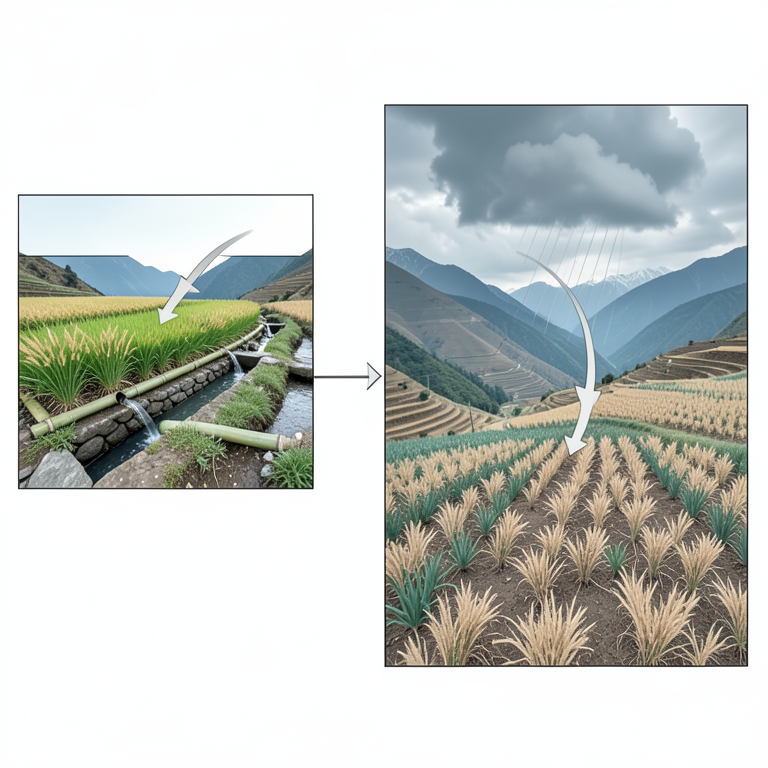
Irrigation Landscape in Uttarakhand Hills
AI-generated conceptual illustration (Terraced farmland in the Uttarakhand hills with rice, wheat, and traditional water systems). It explains the idea and does not show study data.
View source evidence ↗Figures & tables
From the original paper Table 1
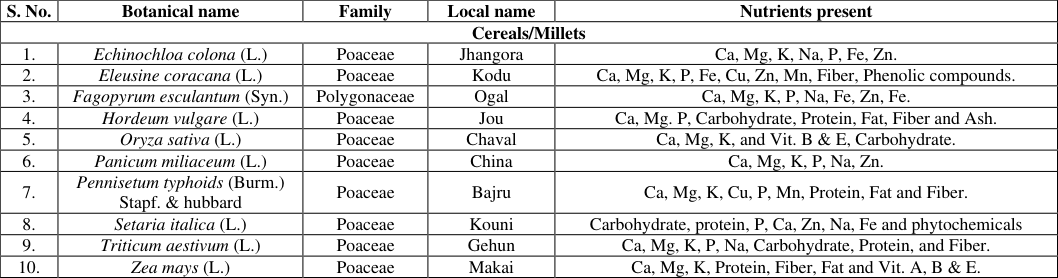 Table 2
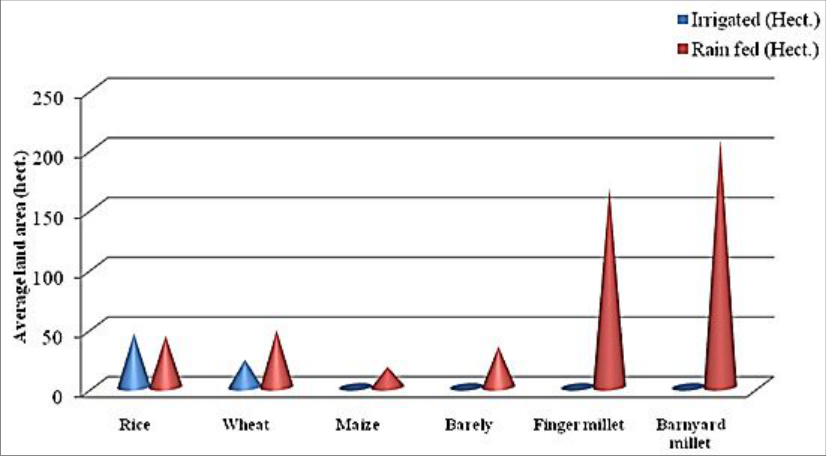 Figure 1
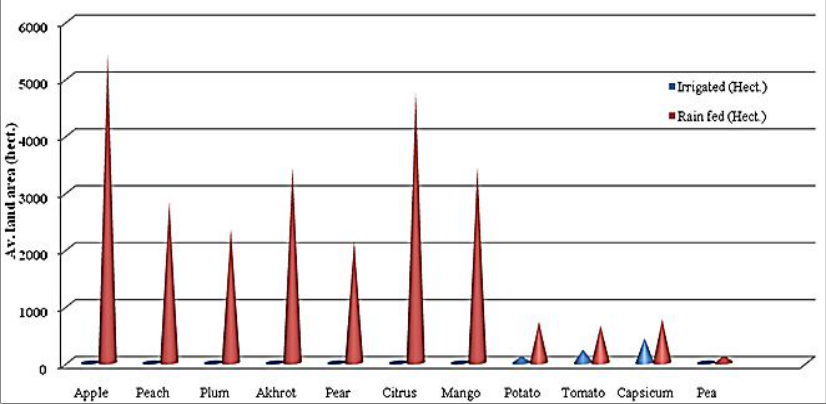 Figure 2
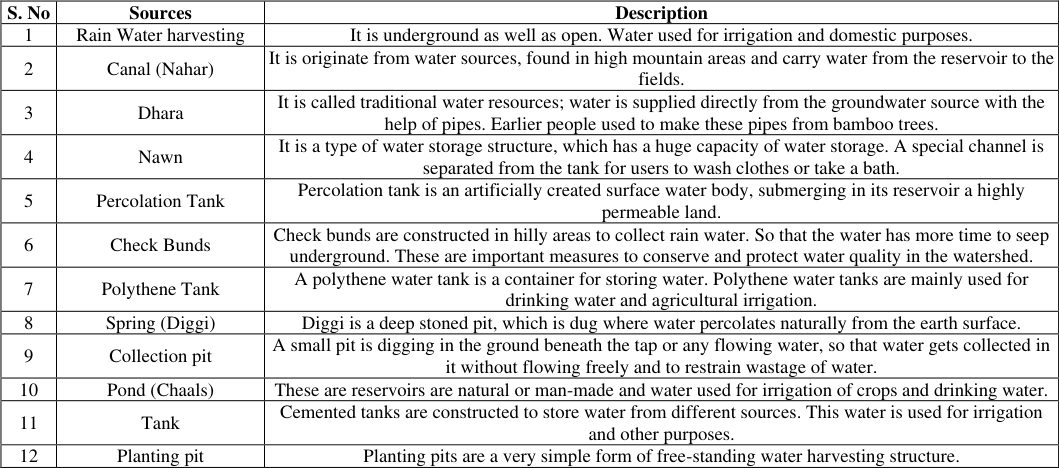 Table 3
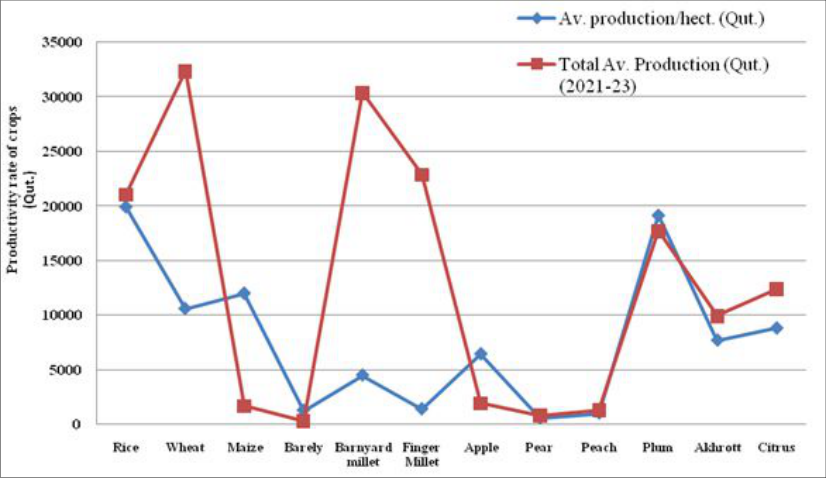 Figure 3
Introduction
The present research paper highlights the nutritional elements found in crops grown in Garhwal Areas. Actually crops in hilly areas of Uttarakhand are rain-fed and its production rate is determined by the rainfall in the area. Despite this, the farmers of hills focus completely on organic farming to ensure the quality and to keep traditional crops alive. From nutritional point of view, crops grown in hilly areas are highly nutritive and increase the body's immune system. Many places in the world do not have irrigation sources and crops are totally rain-fed but contribution of rain-fed agriculture from 80 percent of agricultural land to the world's food basket is 58 percent (Raju et al. 2008) [10] . The rain fed areas are the hot-spots of poverty, malnutrition, food insecurity, prone to severe land degradation, water security and poor social and institutional infrastructure (Rockstorm et al. 2007; Wani et al. 2007) [12,15] . Management of natural resources at watershed scale produces multiple benefits in terms of increasing food production, improving livelihoods, protecting environment, addressing gender and equity issues along with biodiversity concerns (Sharma, 2002 and Calder et al. 2003) [14,3] . Actually, the availability of nutrients in plants depends on the fertilizers present in the soil. The plants nutrition depends on the uptake and availability of macro nutrients and micro nutrients that are enclosed in the soil (Acosta-Durán et al., 2007) [1] . The aim of the present study is to analyze the production rate and quality of crops grown in the hilly areas of Uttarakhand. How irrigation methods can be developed in the hilly areas to increase the production rate of crops is also included.
Material and Methods
Six hill districts of Uttarakhand state viz. Tehri, Uttarkashi, Rudraprayag, Pauri, Chamoli and Dehradun have been selected for present investigation. A main centre was established in New Tehri town of Tehri Garhwal district and a subsidiary centre was also established in each district under the main centre. To get proper information about the agricultural system in the hills of Uttarakhand, four blocks from each district and 10 villages from each block were selected. The selected blocks and villages in different districts of Uttarakhand are as follows-To collect information related to agricultural farming system and to measure the production rate of different types of crops by the year 2021-2024, five families were selected from each village and data was collected from the villagers by preparing a questionnaire. Twenty questions were asked in the questionnaire, one questionnaire was allotted to each family. The subsidiary centers were operated and controlled from the main center. Two experts were appointed at each main and subsidiary centre. They visited each block from time to time and collected data. Data on crop production rate etc. was also collected from the agriculture and horticulture departments of each district. The information obtained from the horticulture/agriculture departments and the villagers was analyzed.
Results and Discussion
The crops grown in the hilly areas of Uttarakhand state have been divided into various zones on the basis of agro-climatic conditions; the cultivation of crops grown in the agroclimatic zones has been shown in Table 1. Allium cepa (L.) Amaryllidaceae Piyaz Ca, Mg, P, K, S, Folate and Vit. B.
| Agro-climatic zone | Altitude (MSL) | Climatic feature | Crop |
|---|---|---|---|
| Tarai and lower Doon | Up to 600mtr. | Humid sub-tropical climate | Cereals, vegetables, legumes, spices and fruits. |
| Upper Doon Bhawar and lower Shivalic | 600m-1200mtr. | Sub-tropical to temperate climate | Fruits and spices. |
| Cold zone | 1200m-2000mtr. | Temperate climate | Fruits and legumes |
Table text extracted from the original PDF; superscript letters are shown inline. The original table image is below.
View original table image
3.
Allium sativum (L.) Amaryllidaceae Lahsun Ca, Mg, K, P, Mn, Zn, and Vit. K.
4.
Amaranthus caudatus (L.) Amaranthaceae Marshu Ca, Mg, K, Na, Fe, P, Mn, Zn and Multi Vit.
5.
Amaranthus viridis (L.) Amaranthaceae Marshu Ca, Mg, K, Na, Fe, P, Zn and Multi Vit.
6.
Brassica juncea (L.) Brassicaceae Rai Ca, Na, Cu, Fe, P, Protein, Vit. A,B6,C,E,K, Fiber and Fat. 7.
Brassica oleracea (L.) Brassicaceae Gobhi Na, K, P, Fe Mg and Vit. B6, D.
8.
Brassica oleracea (L.) Brassicaceae Bandgobi Ca, Mg, Na, K, Fe, Vit. B6, and Fiber. 9.
Capsicum annum (L.) Solanaceae Shimla Mirch Ca, Mg, K, Na, Vit. B6 and Fiber. 10.
Colocasia esculanta (L.) Araceae Kuchain Ca, Mg, K, P, Fe, K and Starch, Protein, Fat, Fiber, Vit. A and Folate. 11.
Cucumis sativus (L). Cucurbitaceae Kheera Ca, Mg, Fe, Protein, Energy, Rivoflavin and Thiamin. 12.
Cucurbita maxima Duch. Cucurbitaceae Kaddu Ca, Mg, K, P, Zn, Fe and Silicon.
13.
Cyclanthera pedata (L.) Schr. Cucurbitaceae Mitha karela Ca, Mg, K, P, Zn, Vit. B and fibre.
14.
Daucus carota (L.) Apiaceae Gajar Ca, Mg, K, P, Cu, Fe, Mn, Zn, Vit. A, B, (Phylloquinone), B6, E K and Biotin.
15.
Lagenaria siceraria (Mol.) Standl. Cucurbitaceae Lauki Ca, Mg, K, P, Fe, Mn, Protein, Fiber and selenium.
16.
Luffa acutangula (L.) Cucurbitaceae Kali tori Ca, Mg, K, P, Cu, Fe, Vit. A, B, K and fiber. 17.
Luffa cylindrical (L.) Ghia tori Ca, Mg, K, P, Fe, Vit. A, B and fiber. Capsicum frutesence (L.) Solanaceae Lal mirch Mg, K, Ca, P, Vit. K, folate, choline and fiber.
2.
Cleome viscose (L.) Cleomaceae Jakhiya Ca, Mg, K, P.
3.
Coriandrum sativum (L.) Apiaceae Dhania Ca, P, K, Mn, Choline, beta carotene, beta crypoxanthin, lutein, Zeaxanthin, Folate, Ash.
4.
Curcuma domestica Valn., Bull. Jrd. Zingiberaceae Haldi Mg, K, Mn, Zn, P, Calories, vit. E, Cu and Fiber.
5.
Eltaria cadamomum (L.) Maton Zingiberaceae Badi Elaychi Ca, Mg, Zn, Fe, fiber, calories. 6.
Ginziber officinale Zingiberaceae Aaddu Na, Ca, K, P and Zn.
Most of the crops grown in hills of Uttarakhand are rain-fed due to lack of irrigation facilities. It is observed that only rice and wheat crops are irrigated in the hills of Uttarakhand, all other crops are rain-fed. Maize has the lowest average rain fed area at 17 hectares, and millets have the highest at 208 hectares. The average land area (hectares) where irrigated and rain fed crops are grown (cereals and millets) is described in Figure 1. The total agricultural land area (hectares) under fruits and vegetables where rain-fed and irrigated crops are grown is shown in Figure 2. Potato, tomato, capsicum and pea crops are irrigated and rain-fed, while other crops are completely dependent on rainwater. It is originate from water sources, found in high mountain areas and carry water from the reservoir to the fields.
3 Dhara It is called traditional water resources; water is supplied directly from the groundwater source with the help of pipes. Earlier people used to make these pipes from bamboo trees.
Nawn
It is a type of water storage structure, which has a huge capacity of water storage. A special channel is separated from the tank for users to wash clothes or take a bath.
5
Percolation Tank Percolation tank is an artificially created surface water body, submerging in its reservoir a highly permeable land.
6
Check Bunds Check bunds are constructed in hilly areas to collect rain water. So that the water has more time to seep underground. These are important measures to conserve and protect water quality in the watershed.
7
Polythene Tank A polythene water tank is a container for storing water. Polythene water tanks are mainly used for drinking water and agricultural irrigation. 8
Spring (Diggi) Diggi is a deep stoned pit, which is dug where water percolates naturally from the earth surface. 9 Collection pit A small pit is digging in the ground beneath the tap or any flowing water, so that water gets collected in it without flowing freely and to restrain wastage of water. 10 Pond (Chaals) These are reservoirs are natural or man-made and water used for irrigation of crops and drinking water.
11 Tank Cemented tanks are constructed to store water from different sources. This water is used for irrigation and other purposes. 12 Planting pit Planting pits are a very simple form of free-standing water harvesting structure.
Water is conserved by various methods to overcome water scarcity in hills of Uttarakhand. Diggi, Dhara, Chal and Nahar etc. are the common sources for irrigation.
Traditional step-based irrigation systems produce good crops. But climate change is having a bad impact on crop production in the hills of Uttarakhand. It is important to use water and nitrogen fertilizer in a timely and appropriate manner. However, to optimize water use in production and quality, there is a need to detect water stress in crops in real time (Han et al. 2018) [5] . Apart from irrigation, compost is also another problem. The presence of good nutrients in any crop depends on the soil conditions and fertilizers. Despite this, timely irrigation and proper fertilizers is also a part of higher yield and improved quality. But due to limited irrigation sources in the hilly areas and crops being rainbased, many times the amount of nutrients becomes unbalanced, and then it directly affects economy of local peoples. On the other hand, surplus use of fertilizers possibly will lead to the accumulation of heavy metal which is also a cause of distraction for crop (Hayyat et al., 2020) [6] . The percentage of nutrients such as iron, zinc, calcium, potassium, etc. in wheat, rice and various types of fruits also depends on the good quality of fertilizers. Due to their dietary importance, grain iron and zinc are also components of rice grain quality. Nutrients are essential for growth, which protects us from various types of diseases and due to lack of nutrients in crops people suffer from malnutrition. More than 3 billion people worldwide suffer from Fe and Zn deficiency (Graham et al., 2001) [4] . Moreover, their number is expected to increase in future (Byrnes and Bumb, 1998) [2] .
In [11] . Rice and wheat are a common part of the diet in the hilly areas. Therefore, it is important to have plenty of nutrients in both these crops to avoid malnutrition. Sufficient nitrogen supply can help increase head rice recovery with a significant reduction in grain protein, grain antioxidant capacity grain anthocyanin (Yamuangmorn et al., 2018) [17] and kernel chalkiness. However, N improves protein concentration in Maize and cereals (Zhang et al., 2020) [18] . With increasing proportion of grain nutrient content allocated to the endosperm, grain iron and zinc in the endosperm increases, however, endospermic iron and zinc may decrease if nutrients are allocated to the alveolar layer (Senchai et al., 2016) [13] . People in the hilly areas of Uttarakhand are very poor and depend on cultivated crops due to lack of industrial establishments. Low production and poor quality of crops are the main causes of malnutrition for the people living here. Much of the land in hilly areas has become barren due to the lack of water resources. Water is becoming a scarce resource for food production as a result of global population growth, and this situation is worsened by climate change (Molden 2007) [9] . Water is conserved and used on a small scale for domestic and irrigation purposes. Nutrition deficiency also reduces the production rate of fruiting crops in hills. The most disappointing thing is that there is no proper supply of water along with fertilizers. The overall result of the deficiency of nutrients during fruit development is due to the low concentration of nutrients during fruit development (Kaur et al. 2020) [7] . The production of traditional crops in the hilly areas is also negligible, whereas traditional crops have the highest amount of nutrients. Its effect is also being seen on other crops across the country. Maize production in India is lower than the global average, which is affected by various biotic and abiotic stresses (Yadav et al. 2016) [16] . Overall, this shows that timely care of crops and proper fertilization are important for best quality and higher yields. Crop residues, which contain abundant organic carbon and mineral nutrients, are important sources of organic matter that can be returned to soil for nutrient recycling and for improving soil physical, chemical, and biological properties (Kumar and Goh, 2000) [8] .
Conclusion
There is a trend of growing traditional crops in hilly areas since civilization, but the problem is water, due to which the production is negligible. Therefore, people are regularly migrating from hilly areas. Water has become a problem that is hampering the development of hills. A study was done on the nutrients found in the crops grown in hilly areas and their irrigation methods. The study showed that the crops that are sown have the highest amount of nutrients, but due to lack of proper management of rainwater, it affects crop production. Keeping in mind the production rate of crops, the government should provide an improved variety of seeds to the farmers; along with this, a concrete policy should be made for water conservation. So that crops can grow easily even in places with less water and give more production and people of that area can become economically strong and all the hilly areas can develop.
Figures and tables from the paper
| S. No. | Botanical name | Family | Local name | Nutrients present |
|---|---|---|---|---|
| Cereals/Millets | ||||
| 1. | Echinochloa colona (L.) | Poaceae | Jhangora | Ca, Mg, K, Na, P, Fe, Zn. |
| 2. | Eleusine coracana (L.) | Poaceae | Kodu | Ca, Mg, K, P, Fe, Cu, Zn, Mn, Fiber, Phenolic compounds. |
| 3. | Fagopyrum esculantum (Syn.) | Polygonaceae | Ogal | Ca, Mg, K, P, Na, Fe, Zn, Fe. |
| 4. | Hordeum vulgare (L.) | Poaceae | Jou | Ca, Mg. P, Carbohydrate, Protein, Fat, Fiber and Ash. |
| 5. | Oryza sativa (L.) | Poaceae | Chaval | Ca, Mg, K, and Vit. B & E, Carbohydrate. |
| 6. | Panicum miliaceum (L.) | Poaceae | China | Ca, Mg, K, P, Na, Zn. |
| 7. | Pennisetum typhoids (Burm.) Stapf. & hubbard | Poaceae | Bajru | Ca, Mg, K, Cu, P, Mn, Protein, Fat and Fiber. |
| 8. | Setaria italica (L.) | Poaceae | Kouni | Carbohydrate, protein, P, Ca, Zn, Na, Fe and phytochemicals |
| 9. | Triticum aestivum (L.) | Poaceae | Gehun | Ca, Mg, K, P, Na, Carbohydrate, Protein, and Fiber. |
| 10. | Zea mays (L.) | Poaceae | Makai | Ca, Mg, K, Protein, Fiber, Fat and Vit. A, B & E. |
Table text extracted from the original PDF; superscript letters are shown inline. The original table image is below.
View original table image
References
18 in the original paper- Acosta-Durán CM, Ocampo D, Cedillo E, Nava LM. Effect of calcium sulphate and bio-solids in crop yield peanut (Arachis hypogaea L.). Agricultural Research. 2007;4(1):31-38.
- Byrnes BH, Bumb BL. Population growth, food production and nutrient requirements. Journal of Crop Production. 1998;1(2):1-27.
- Calder IR, Reid I, Nisbet TR, Green JC. Impact of lowland forests in England on water resources: application of the Hydrological Land Use Change (HYLUC) model. Water Resources Research. 2003;39(11):10.
- Graham RD, Welch RM, Bouis HE. Addressing micronutrient malnutrition through enhancing the nutritional quality of staple foods: principles, perspectives and knowledge gaps. Advances in Agronomy. 2001;70:77-142.
- Han M, Zhang H, Chávez JL, Ma L, Trout TJ, De Jonge KC. Improved soil water deficit estimation through the integration of canopy temperature measurements into a soil water balance model. Irrigation Science. 2018;36:187-201.
- Hayyat MS, Adnan M, Awais M, Khan B, Rahman HA, Ahmed R, et al. Effect of heavy metal (Ni) on plants and soil: a review. International Journal of Applied Research. 2020;6(7):313-318.
- Kaur R, Gill MS, Gill PS. Seasonal accumulation of mineral nutrients in leaves, peel and stone of Dashehari mango. Agricultural Research Journal. 2020;57(6):887891.
- Kumar K, Goh KM. Crop residues and management practices: effects on soil quality, soil nitrogen dynamics, crop yield, and nitrogen recovery. Advances in Agronomy. 2000;68:197-319.
- Molden D. Water for Food, Water for Life: A Comprehensive Assessment of Water Management in Agriculture. London: Earthscan; 2007. 40 p.
- Raju KV, Aziz A, Sundaram MSS, Sekher M, Wani SP, Sreedevi TK. Guidelines for Planning and Implementation of Watershed Development Program in India: A Review. Global Theme on Agroecosystems Report 48. Andhra Pradesh: International Crops Research Institute for the Semi-Arid Tropics; 2008.
- Rai M, Ingle A, Grade A, Durate MCT, Duran N. Synthesis of silver nanoparticles by Phoma gardeniae and in vitro evaluation of their efficiency against human disease-causing bacteria and fungi. IET Nanobiotechnology. 2015;9:71-75.
- Rockström J, Hatibu N, Oweis T, Wani S, Barron J, Bruggeman A, et al. Managing water in rain-fed agriculture. In: Molden D, editor. Water for Food, Water for Life: A Comprehensive Assessment of Water Management in Agriculture. London: Earthscan; 2007.
- Saenchai C, Pron-u-thai C, Lordkaew S, Rouached H, Rerkasem B. Distribution of iron and zinc in plant and grain of different rice genotypes grown under aerobic and wetland conditions. Journal of Cereal Science. 2016;71:108-115.
- Sharma R. Watershed development adaptation strategy for climate change. Presented at: South Asia Expert Workshop on Adaptation to Climate Change for Agricultural Productivity; 2002; New Delhi.
- Wani SP, Joshi PK, Ramakrishna YS, Sreedevi TK, Singh P, Pathak P. A new paradigm in watershed management: a must for development of rain-fed areas for inclusive growth. In: Conservation Farming: Enhancing Productivity and Profitability of Rain-Fed Areas. New Delhi: Soil Conservation Society of India; 2007. p.163-178.
- Yadav OP, Prasanna BM, Yadava P, Jat SL, Kumar D, Dhillon BS, et al. Doubling maize (Zea mays) production of India by 2025: challenges and opportunities. The Indian Journal of Agricultural Sciences. 2016;86(4):427-434.
- Yamuangmorn S, Dell B, Prom-u-thai C. Effects of cooking on anthocyanin concentration and bioactive antioxidant capacity in glutinous and non-glutinous purple rice. Rice Science. 2018;25:270-278.
- Zhang L, Liang ZY, He XM, Meng QF, Hu YC, Schmidhalter U, et al. Improving grain yield and protein concentration of maize (Zea mays L.) simultaneously by appropriate hybrid selection and nitrogen management. Field Crops Research. 2020;249:107754.