
Research article · 2025 · Full text
International Journal of Geography Geology and EnvironmentComparative analysis of clonal and seedling rootstocks in apple tree cultivation in Rohru, Jubbal, and Kotkhai Tehsils of Shimla district, Himachal Pradesh
Volume 7(11) · Pages 33–41 · DOI: 10.22271/27067483.2025.v7.i11a.442 ↗
Research areasPlant Physiology and Cultivation StudiesPhytoplasmas and Hemiptera pathogensBanana Cultivation and Research
Abstract
Author-writtenApple cultivation in Himachal Pradesh has traditionally relied on seedling rootstocks, which often result in irregular tree growth, delayed harvest, and inconsistent fruit size, color, and yield. These factors lower the share of high-grade apples and reduce market returns. To overcome these limitations, growers are increasingly adopting clonal rootstocks that produce uniform, compact, and high-yielding trees. This study compared clonal and seedling rootstocks in orchards across Rohru, Jubbal, and Kotkhai tehsils of Shimla district. Results revealed that clonal rootstocks are strongly preferred by farmers due to their higher productivity, better tolerance to pests and diseases, and suitability for high-density planting systems. They also enhance fruit quality and ensure more consistent harvests, making them economically advantageous despite higher establishment costs. Seedling rootstocks remain useful under difficult soil conditions but require more labor. Overall, the findings highlight the potential of clonal rootstocks for sustainable apple production in a changing climate.
Summary
Source-checkedPlain-language reading of the full paper, prepared with AI and checked against the text. Each point links to the authors' own words.
Why it matters
- Traditional apple cultivation in Himachal Pradesh has used seedling rootstocks, but these often lead to inconsistent yields and irregular tree growth. View evidence ↗
- Growers are shifting toward clonal rootstocks to achieve more uniform, compact trees and higher yields. View evidence ↗
- Himachal Pradesh is a major apple producer in India, contributing approximately 20% of the national output. View evidence ↗
The question
- The study aims to compare clonal and seedling rootstocks regarding their impact on productivity, fruit quality, and economic returns. View evidence ↗
What they did
- The research was conducted in the Rohru, Jubbal, and Kotkhai tehsils of the Shimla district in Himachal Pradesh. View evidence ↗
- Data was collected using a mixed-method approach consisting of Visual Appraisal Assessment (VAA) and Rapid Rural Appraisal (RRA). View evidence ↗
- The study purposively selected farmers experienced with both rootstock types and gathered data via semi-structured questionnaires. View evidence ↗
What they found
- Clonal rootstocks allow for high-density planting (200-250 trees per bigha), whereas seedling rootstocks typically support 40-60 trees per bigha. View evidence ↗
- Clonal rootstock plantations have significantly higher establishment costs (₹200,000-300,000 per bigha) compared to seedling rootstocks (₹40,000-60,000 per bigha). View evidence ↗
- A vast majority of farmers (96%) believe clonal rootstocks are superior for achieving better fruit size. View evidence ↗
- Clonal rootstocks are strongly associated with early fruiting, reported by 98% of farmers. View evidence ↗
- Clonal rootstocks provide more consistent annual yields, as indicated by 90% of respondents. View evidence ↗
- Seedling rootstocks are perceived to require more pesticides than clonal rootstocks by 90% of farmers. View evidence ↗
- Clonal rootstocks are considered more resistant to pests and diseases by 96% of farmers. View evidence ↗
- Seedling rootstocks are preferred for their better adaptability to challenging soils, as stated by 66% of respondents. View evidence ↗
What it means
- The authors conclude that clonal rootstocks are superior to seedling rootstocks in terms of yield efficiency, fruit quality, and early bearing. View evidence ↗
- There is a strong preference for clonal rootstocks or a combined approach for future plantations. View evidence ↗
- The authors suggest that future research should focus on improving the tolerance of clonal rootstocks to diverse soils and climatic stresses. View evidence ↗
Visual summary
3 visualsIllustrations explain the paper; charts are replotted from the paper's own table values.
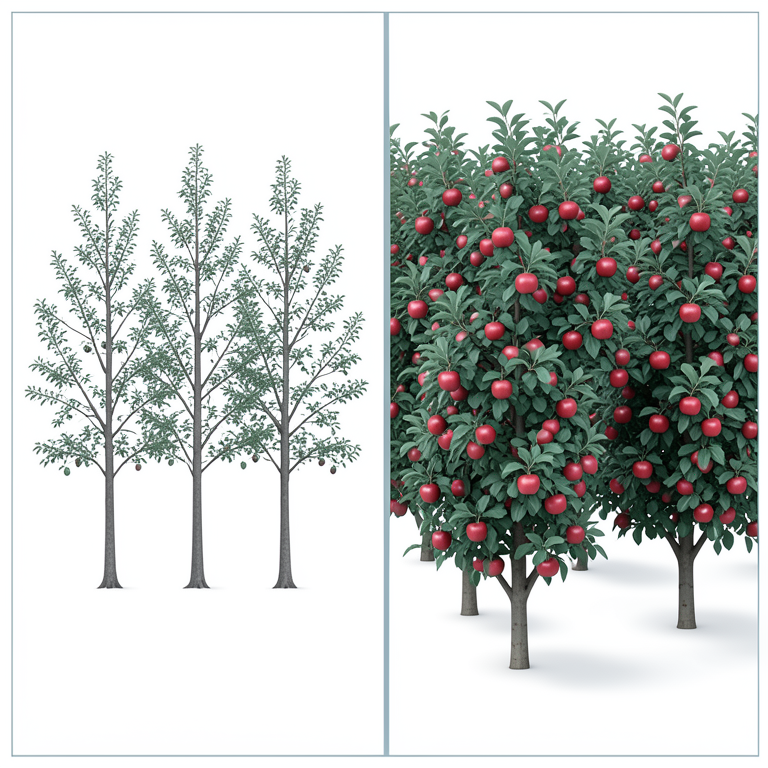
Comparison of Rootstock Systems
AI-generated conceptual illustration (apple trees). It explains the idea and does not show study data.
View source evidence ↗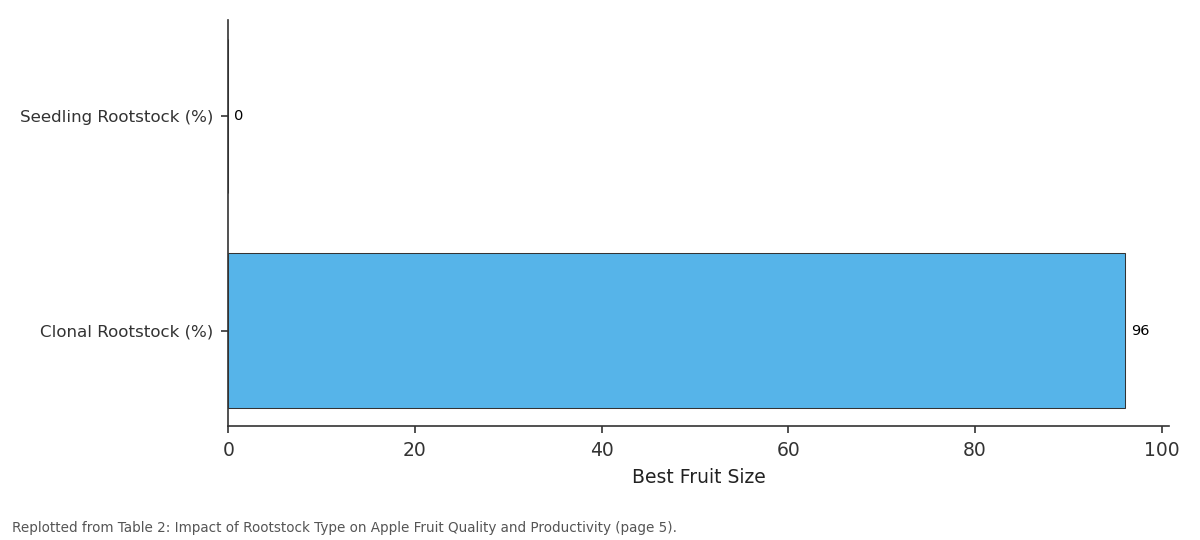
Best Fruit Size: Seedling Rootstock (%) vs Clonal Rootstock (%)
Replotted from Table 2 (page 5) of the original paper. Every bar is the paper's own table value.
View source evidence ↗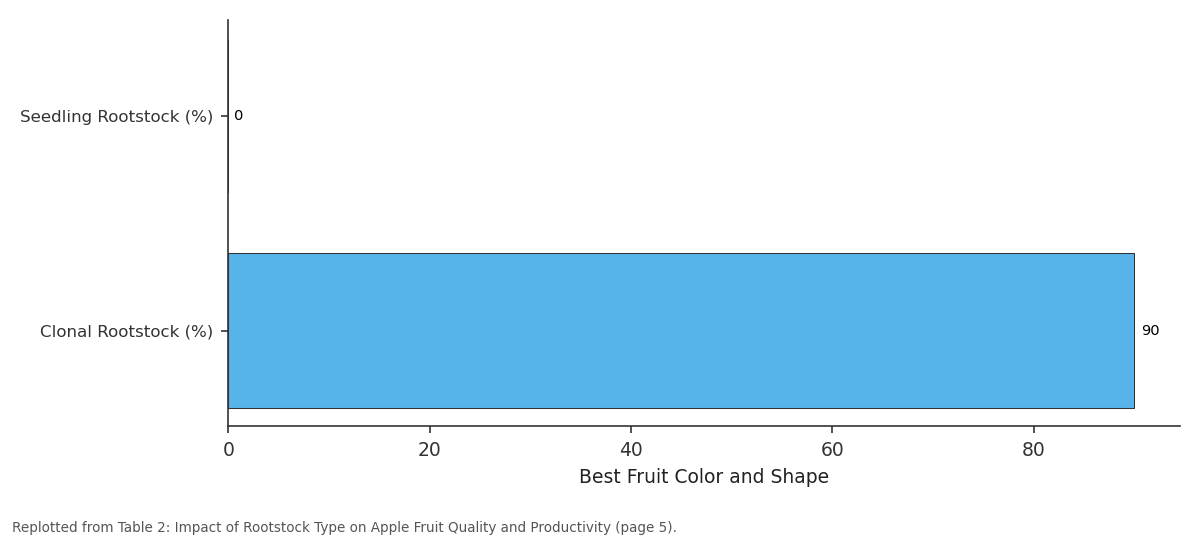
Best Fruit Color and Shape: Seedling Rootstock (%) vs Clonal Rootstock (%)
Replotted from Table 2 (page 5) of the original paper. Every bar is the paper's own table value.
View source evidence ↗Figures & tables
From the original paper Figure 1
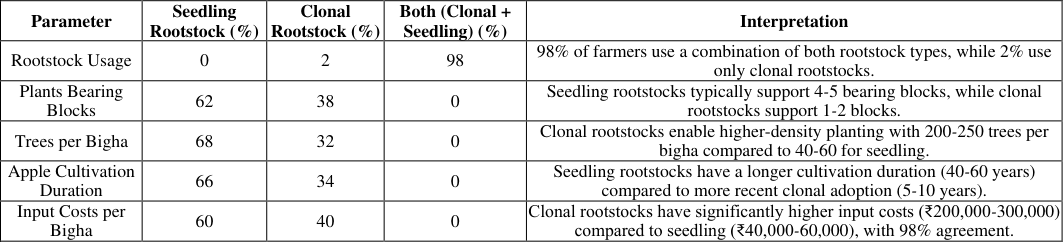 Table 1
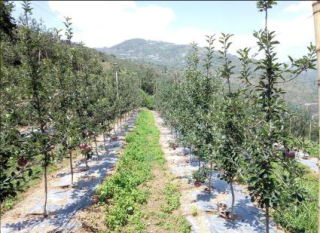 Figure 2
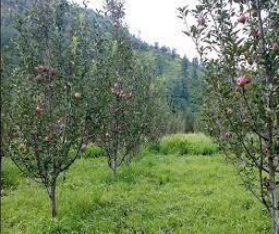 Figure 2
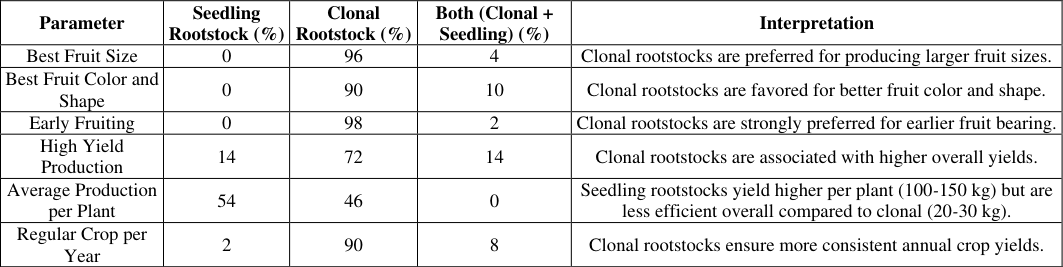 Table 2
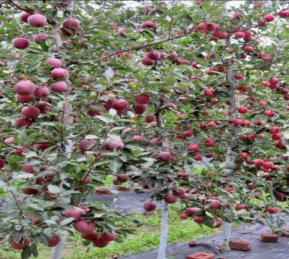 Figure 3
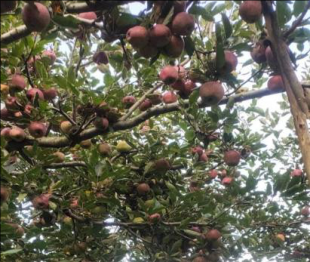 Figure 3
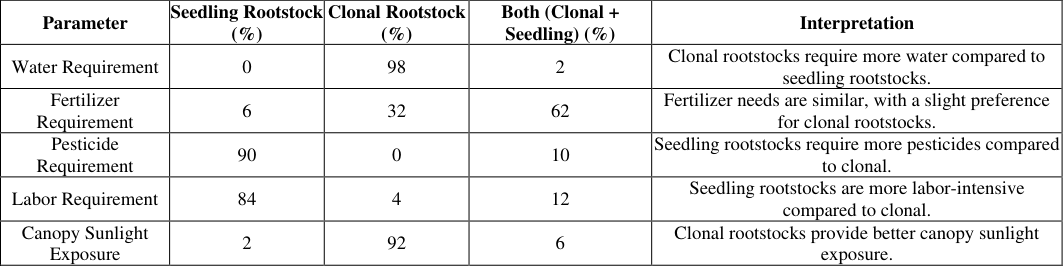 Table 3
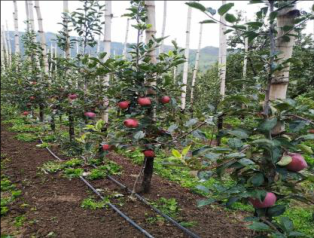 Figure 4
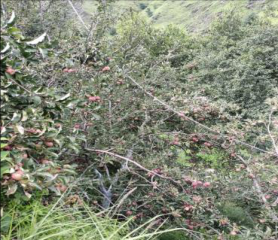 Figure 4
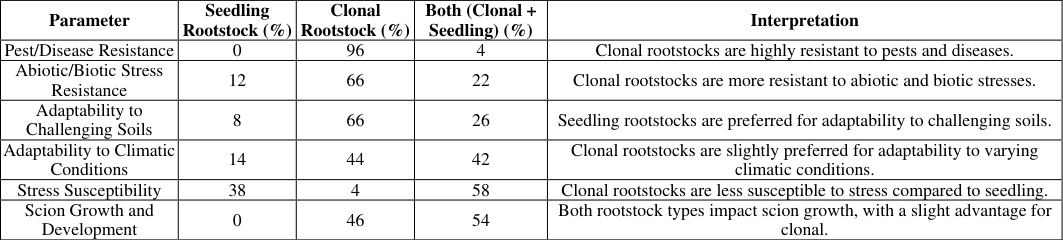 Table 4
 Table 5
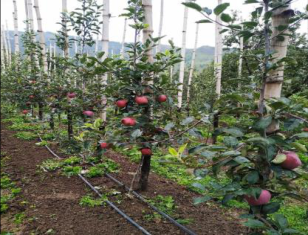 Figure 5
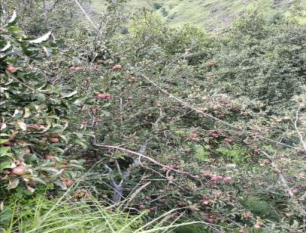 Figure 5
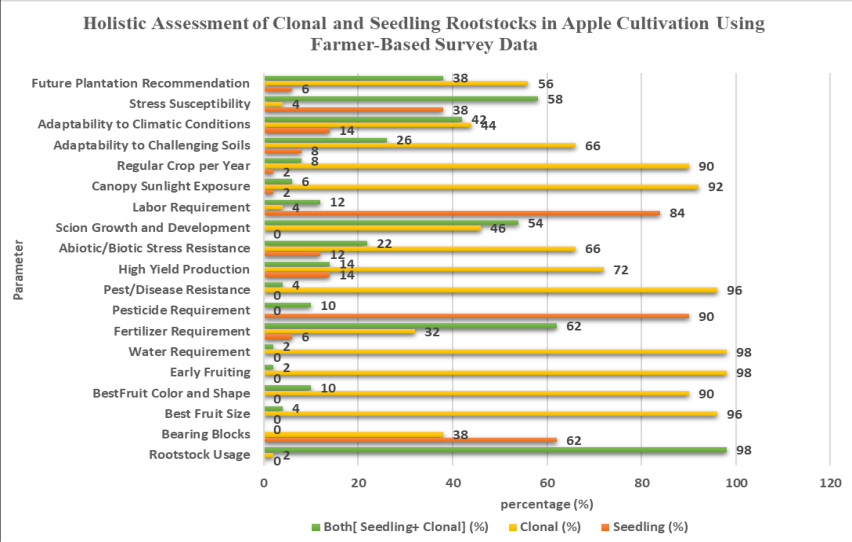 Figure 6
Introduction
The cultivated apple (Malus × domestica Borkh.), belonging to the family Rosaceae and subfamily Maloideae, is one of the most important temperate fruit crops of global significance. The species originated in Central Asia, particularly the region around Kazakhstan, and has been cultivated for thousands of years across Asia and Europe before its introduction to North America by European settlers (Juniper & Mabberley, 2019) [1] . According to Statista (2024), global apple production continued its steady growth, reaching 97.34 million metric tons in 2023. China remained the dominant producer, contributing the largest share to global output. In 2023, Asian countries produced approximately 65.47 million metric tons of apples, over three times more than European countries. In terms of export value, Italy ranked as the world's leading apple exporter, followed by China, the United States, New Zealand, and South Africa.
Nutritional and Medicinal Importance of Apple
Apples are among the most consumed fruits globally due to their nutritional richness and medicinal properties. They are an abundant source of vitamins (C and B-complex), flavonoids, dietary fiber, and phenolic compounds, which contribute to their antioxidant capacity (Boyer & Liu, 2004) [2] . Regular apple consumption is associated with reduced risks of chronic diseases, including cardiovascular disorders, type-2 diabetes, obesity, hypertension, and certain cancers (Hyson, 2011) [3] . Phytonutrients present in apple peel play a vital role in reducing oxidative stress, supporting immune function, and promoting gut health. From a dietary perspective, apples are best consumed raw with their peel to maximize nutritional benefits (Nordqvist, 2017) [4] .
Role of Rootstocks in Apple Cultivation
Rootstocks play a decisive role in the performance of apple orchards, influencing tree vigor, productivity, stress tolerance, and fruit quality. Broadly, rootstocks are categorized into two groups: seedling rootstocks, which are derived from sexual propagation, and clonal rootstocks, which are propagated vegetatively to maintain genetic uniformity (Hartmann et al., 2009) [5] . Seedling rootstocks, though vigorous and adapted to diverse soils, suffer from heterogeneity, delayed bearing, and incompatibility issues. In contrast, clonal rootstocks provide uniformity, early bearing, and adaptability, in addition to resistance against pests, diseases, drought, and replant problems (Ferree & Warrington, 2003) [6] . Globally, the adoption of clonal rootstocks has been a cornerstone of high-density apple planting systems, revolutionizing orchard management and profitability.
Global Status of Clonal Rootstocks
Around the world, apple growers are adopting clonal rootstocks to boost orchard efficiency and make fruit production easier. In China, roughly 12% of orchards use modern dwarfing rootstocks like M.9, M.26, and SH-series, which help trees stay smaller and produce fruit earlier. The U.S. sees even wider adoption, with 50-55% of apple trees grafted onto clonal types such as M.9, B.9, M.26, MM.106, MM.111, and the Geneva series, making management and harvesting more efficient. Poland leads with over 80% of its orchards relying on clonal rootstocks, mainly M.9-T337 and B.9, while countries in Western Europe including Italy, France, Germany, and the UK report about 90% usage, primarily M.9, M.26, and MM.106. Japan uses the JMseries along with M.9 and M.26 rootstocks in about 75% of orchards (Wang et al., 2019) [7] . These widespread practices show that clonal rootstocks play a critical role in modern, productive apple orchards, supporting higher yields and consistent fruit quality, and demonstrating benefits observed in the world's top apple-producing countries.
Status of Apple Cultivation in India
In India, apple cultivation is concentrated in the North-Western Himalayan states of Jammu & Kashmir, Himachal Pradesh, and Uttarakhand, with smaller areas expanding into Arunachal Pradesh, Sikkim, Nagaland, Meghalaya, and the Nilgiris in Tamil Nadu (Kumar et al., 2020) [8] . According to FreshPlaza/USDA-FAS (2024), India continues to rank fifth in global apple production, with the most recent data for the 2024/2025 marketing year estimating annual output at 2.55 million metric tons a 6% increase from the previous period, attributed to favorable weather conditions. The total area under apple cultivation is now approximately 320 thousand hectares. Jammu & Kashmir contributes about 70% of the national production, while Himachal Pradesh accounts for around 20%. According to the World Bank (2024), Himachal Pradesh often called the "Apple Bowl of India" had approximately 115,680 hectares under apple cultivation in 2023, yielding about 672,840 metric tonnes during the 2022-2023 season. This production represents nearly 26-28% of India's total apple output. Apples remain the dominant crop in the state's horticultural sector, accounting for 81-84% of total fruit production by weight and directly or indirectly supporting over 400,000 families. According to the H.P. Economic Survey (2024-25), apples hold a dominant position in the horticultural economy of Himachal Pradesh, contributing approximately 85% of the state's total fruit production and occupying about 49% of the total fruitgrowing area.
Transition from Seedling to Clonal Rootstocks in Himachal Pradesh
Traditionally, orchards in Himachal Pradesh relied on seedling rootstocks, which, due to their heterozygous nature, resulted in variability in tree vigor, delayed bearing, and inconsistency in fruit quality (Sharma et al., 2016) [9] . This not only reduced the proportion of export-grade fruit but also led to market instability for growers. In response, modern orchardists have increasingly shifted toward clonal rootstocks such as M.9, M.26, M.7, M.4, MM.106, MM.111, B.9, B.118, and Geneva series (G.11, G.41). These rootstocks support high-density planting, ensure early and uniform bearing, and enhance resistance against soilborne pathogens and abiotic stresses (Padhan & Singh, 2023 [10] . However, India remains dependent on imported clonal rootstocks, primarily from Europe and the USA, which has implications for orchard economics and sustainability.
Research Gap and Rationale of the Study
Despite the increasing adoption of clonal rootstocks in Himachal Pradesh, scientific literature documenting their comparative performance with traditional seedling rootstocks in local conditions remains scanty. Limited empirical evidence exists on how these rootstocks influence tree performance, productivity, and fruit quality under the unique agro-climatic conditions of Jubbal, Kotkhai, and Rohru regions renowned for premium apple cultivation. Therefore, the present study aims to conduct a comparative analysis of clonal and seedling rootstocks in apple tree cultivation, with a focus on productivity, fruit quality, and economic returns. The findings are expected to provide valuable insights for optimizing orchard management and guiding policy interventions to enhance farmer profitability in the region.
Methodology 2.1 Study Area (Himachal Pradesh: The Apple State of India)
According to the H.P. Economic Survey (2024-25), Himachal Pradesh continues to be recognized as the "Apple State of India" and remains a leading player in the country's horticultural sector. As of 2025, apple cultivation in the state covers nearly 115,680 hectares, supports over 200,000 families, and accounts for approximately 83-84% of total fruit production by weight. The Shimla and Kinnaur districts lead in apple output, with the sector valued at ₹5,000-₹5,500 crore (around USD 600 million) annually. Apple farming has transformed Himachal Pradesh from a primarily agrarian region into an advanced hill economy, spurring development in infrastructure, cold storage, packaging, and logistics. Geographically, Himachal Pradesh spans 55,673 km² between latitudes 30°22′40″ N to 33°12′40″ N and longitudes 75°45′55″ E to 79°04′20″ E. It is bounded by Jammu & Kashmir and Ladakh in the north, Punjab in the west, Haryana and Uttarakhand in the south, and Tibet in the east. The state's physiography is diverse, ranging from subtropical foothills to cold deserts, with rugged terrain, complex geology, and temperate flora across subtropical latitudes. Based on climatic conditions, Himachal Pradesh is divided into four major agro-climatic zones: (i) sub-tropical submountain low hills (<650 m), (ii) sub-humid mid-hills (650-1,800 m), (iii) wet temperate high hills (1,800-2,200 m), and (iv) dry temperate high hills (>2,200 m). Of these, the latter three zones provide optimal conditions for apple cultivation. While the low hills remain unsuitable due to shorter growing seasons and high summer temperatures, the midhill and high-hill wet temperate zones offer extended growing periods, adequate chilling hours, and welldistributed rainfall. The cold deserts of Kinnaur and Lahaul-Spiti, though characterized by sandy to silty clay loam soils, extreme cold, and a single growing season, also sustain apple orchards of high quality (Kumar et al., 2020) [8] .
Apple Cultivation in Shimla District
Shimla district occupies a central position in Himachal Pradesh's apple economy, producing some of the finest quality apples in the country. Situated in the western Himalayas, at an average elevation of ~2,200 m above mean sea level, Shimla falls within the wet temperate agroclimatic zone. It experiences cold winters with snowfall and moderately warm summers, conditions that provide adequate chilling hours for apple production. The district's terrain is predominantly hilly, with soils ranging from sandy loam to clay loam, well-drained, and rich in organic matter ideal for apple orcharding. Apple cultivation is a cornerstone of the district's agricultural economy, with farmers adopting practices such as terracing, drip irrigation, and integrated pest management to optimize productivity and ensure sustainability. Districts such as Kullu, Kinnaur, Mandi, and Chamba also produce apples, but Shimla remains the largest contributor in terms of both area and output.
Selected Study Sites: Rohru, Jubbal, and Kotkhai Tehsils
The present study was undertaken in three prominent apple-growing tehsils of Shimla district Rohru, Jubbal, and Kotkhai renowned for their superior apple production and export-quality fruit.
Rohru Tehsil
Rohru, located on the banks of the Pabbar River, lies about 115 km from Shimla city. Geographically positioned at 31.202°N and 77.7519°E, it has an average elevation of 1,525 m (5,003 ft). The region is famous for producing high-quality apples, with the highest productivity in the district. Apples from Rohru are widely marketed across India and also exported abroad.
Jubbal Tehsil
Jubbal lies to the southeast of Shimla and shares its boundary with Uttarakhand. Geographically situated at 31.109°N and 77.662°E, Jubbal has an average elevation of ~2,200 m (7,220 ft). This tehsil is a major apple belt in Shimla district, with orchards spread across steep slopes and valleys. It is also well known for the Jubbal Palace and its cultural heritage, apart from its dominance in apple production.
Kotkhai Tehsil
Kotkhai, located at 31.12°N and 75.53°E, has an average elevation of ~1,881 m (6,171 ft). The tehsil consists of around 40 villages, most of which depend primarily on apple cultivation. Known as one of the largest applegrowing valleys in Himachal Pradesh, Kotkhai contributes significantly to household income and the state's overall horticultural economy. The quality and volume of apples produced here make Kotkhai a central hub in the apple supply chain.
Data Collection and Survey Design (Methodology)
The present study was conducted in the Rohru, Jubbal, and Kotkhai tehsils of Shimla district, Himachal Pradesh, focusing on a comparative analysis of apple orchards using clonal and seedling rootstocks.
Primary Data Collection
A mixed-method approach was adopted, utilizing Visual Appraisal Assessment (VAA) and Rapid Rural Appraisal (RRA) for direct field data collection.
Visual Appraisal Assessment (VAA)
Observational data were collected through ocular assessment, photographic documentation, and recording of orchard characteristics and rootstock types during field visits to selected apple orchards.
Rapid Rural Appraisal (RRA)
Farmers with experience in cultivating both clonal and seedling rootstocks were purposively selected as respondents. Data were gathered using a semi-structured questionnaire comprising open-ended questions designed to elicit farmer perceptions, experiences, and preferences related to rootstock performance, fruit quality, orchard management, and economic aspects. Interviews were conducted both in person and via online forms (Google Forms) to ensure broader participation. Verbal informed consent was obtained from all participants prior to data collection. Identification and information regarding different apple rootstocks were validated in the field with direct assistance from
Secondary Data Collection
Secondary data supporting the study were collected from books, published articles, e-journals, government records, and reputable online sources. This data provided additional context and supported the interpretation of farmer responses.
Data Analysis
Survey responses and farmer perceptions were analyzed qualitatively. Observations and interview data were organized, summarized, and interpreted to highlight prevailing trends, experiences, and opinions regarding clonal and seedling rootstocks.
Results
Results
Rootstock Usage and Orchard Characteristics
The survey results reveal that 98% of respondents cultivate apples on both seedling and clonal rootstocks, while only 2% cultivate apples exclusively on clonal rootstocks. This highlights a transitional phase in the region, where traditional seedling-based orchards coexist with modern high-density systems established on clonal rootstocks. With respect to the number of bearing apple blocks, 62% of respondents reported having 4-5 bearing blocks on seedling rootstock, whereas 38% of respondents reported having 1-2 bearing blocks on clonal rootstock. Tree density also varied significantly between the two systems. About 68% of farmers reported maintaining 40-60 trees per bigha on seedling rootstocks, while 32% reported higher densities of 200-250 trees per bigha, reflecting adoption of high-density planting systems using clonal rootstocks. The advantage of having a greater number of clonal rootstocks per bigha lies in optimizing orchard productivity, resource utilization, and economic returns. Clonal rootstocks are specifically suited for high-density planting, which allows for earlier bearing and higher cumulative yields compared to seedling rootstocks. Experience with rootstock types also revealed clear distinctions. Approximately 66% of farmers have been cultivating apples on seedling rootstocks for 40-60 years, while 34% of respondents reported using clonal rootstocks for only the past 5-10 years. Farmers adopting clonal rootstocks tend to be more innovative and receptive to modern horticultural practices, and their experiences contribute valuable insights into best practices for pest and disease management, orchard design, and resource efficiency. The cost of establishment further distinguishes the two systems. About 60% of farmers reported a plantation cost of ₹40,000-60,000 per bigha for seedling rootstocks, whereas 40% reported significantly higher costs of ₹200,000-300,000 per bigha for clonal rootstock plantations. These findings clearly indicate that while clonal rootstock systems require higher initial investment, they hold potential for greater economic returns in the long run. To understand the current status of orchard establishment systems in the study area, information was collected from growers regarding their rootstock usage and orchard characteristics. The comparative details of rootstock adoption, tree density, and cost of establishment are presented in Table 1.
| Parameter | Seedling Rootstock (%) | Clonal Rootstock (%) | Both (Clonal + Seedling) (%) | Interpretation |
|---|---|---|---|---|
| Rootstock Usage | 0 | 2 | 98 | 98% of farmers use a combination of both rootstock types, while 2% use only clonal rootstocks. |
| Plants Bearing Blocks | 62 | 38 | 0 | Seedling rootstocks typically support 4-5 bearing blocks, while clonal rootstocks support 1-2 blocks. |
| Trees per Bigha | 68 | 32 | 0 | Clonal rootstocks enable higher-density planting with 200-250 trees per bigha compared to 40-60 for seedling. |
| Apple Cultivation Duration | 66 | 34 | 0 | Seedling rootstocks have a longer cultivation duration (40-60 years) compared to more recent clonal adoption (5-10 years). |
| Input Costs per Bigha | 60 | 40 | 0 | Clonal rootstocks have significantly higher input costs (₹200,000-300,000) compared to seedling (₹40,000-60,000), with 98% agreement. |
Table text extracted from the original PDF; superscript letters are shown inline. The original table image is below.
View original table image
Resource Requirements and Management
Resource demands varied significantly between rootstock types. Water is essential for the growth and development of apple trees, facilitating nutrient uptake, supporting photosynthesis, and helping transport nutrients and sugars throughout the plant. A consistent and adequate water supply is vital for producing high-quality fruit with good size, color, and taste. The table 3 shows that 98% of respondents indicated clonal rootstock has a high water requirement. A few respondents indicated that both types have similar water requirements, suggesting a strong consensus among respondents that clonal rootstock requires more water than seedling rootstock. Regarding fertilizer requirements, 62% of respondents indicated that both types require more fertilizer application, while 32% revealed that clonal rootstock requires more, and 6% of respondents indicated seedling rootstock requires more. This suggests that most respondents believe both types have similar fertilizer needs. In contrast, seedling rootstocks required significantly more pesticides. The table depicts that 90% of farmers indicated that seedling rootstock requires more pesticides in apple farming, while 10% of respondents believe both types require more pesticides. The choice of rootstock can impact labor requirements in apple orchards, influencing operational efficiency and costs. The table 3 illustrates that 84% of respondents believe seedling rootstock requires more labor compared to clonal rootstock, while 12% of respondents think both require equal labor, and 4% of respondents consider clonal rootstock to require more labor. This suggests that clonal rootstock may be a more cost-effective option in terms of labor. Good sunlight exposure within the canopy of apple trees is crucial for enhancing photosynthesis, fruit quality, yield, and disease management. The table 3 shows that 92% of respondents indicated clonal rootstock has good sunlight exposure in the entire canopy, 2% of respondents stated that seedling rootstock has good sunlight exposure, and 6% of respondents said that both types do. Efficient orchard management depends on the optimal use of resources such as water, nutrients, plant protection inputs, and labor. The comparative requirements of seedling and clonal rootstockbased orchards in terms of resource utilization are presented in Table 3.
Resistance and Adaptability
Clonal rootstocks demonstrated superior resistance to pests and diseases. Rootstocks play a crucial role in conferring resistance in apple cultivation. The choice of rootstock significantly impacts the overall health and productivity of apple trees. The table shows that the majority of farmers (96% of respondents) indicated clonal rootstock is more resistant to pests and diseases, while 4% of respondents said both types have good resistance. For abiotic and biotic stress resistance, 66% of respondents said clonal rootstock has resistance, followed by 22% of respondents who believed both types do. Only 12% of respondents believed clonal rootstocks have resistance. Seedling rootstocks were preferred for adaptability to challenging soils, with 66% of respondents stating seedling rootstock has better adaptability, 26% favoring clonal rootstock, and 8% indicating both are comparable. For climatic adaptability, clonal rootstocks were slightly preferred: 44% of respondents believed clonal has better adaptability, 42% thought seedling rootstock has better adaptability, and 14% said both are equal. Selecting the most suitable rootstock is crucial for mitigating stress conditions that impact apple tree growth and productivity. The table illustrates that 58% of respondents believe clonal rootstock is more susceptible to stress, 38% of respondents think seedling rootstock is more susceptible, and 4% of respondents believe both are equally susceptible. Scion growth and development were influenced by both types: 54% of respondents believe both types affect scion growth and development, while 46% of respondents believe only clonal rootstock affects it, highlighting its significant impact on tree vigor and fruiting. The adaptability and resilience of rootstocks play a crucial role in sustaining apple production under varying agro-climatic conditions. Table 4 presents growers' perceptions of pest and disease resistance, stress tolerance, and adaptability of seedling versus clonal rootstocks.
| Parameter | Seedling Rootstock (%) | Clonal Rootstock (%) | Both (Clonal + Seedling) (%) | Interpretation |
|---|---|---|---|---|
| Pest/Disease Resistance | 0 | 96 | 4 | Clonal rootstocks are highly resistant to pests and diseases. |
| Abiotic/Biotic Stress Resistance | 12 | 66 | 22 | Clonal rootstocks are more resistant to abiotic and biotic stresses. |
| Adaptability to Challenging Soils | 8 | 66 | 26 | Seedling rootstocks are preferred for adaptability to challenging soils. |
| Adaptability to Climatic Conditions | 14 | 44 | 42 | Clonal rootstocks are slightly preferred for adaptability to varying climatic conditions. |
| Stress Susceptibility | 38 | 4 | 58 | Clonal rootstocks are less susceptible to stress compared to seedling. |
| Scion Growth and Development | 0 | 46 | 54 | Both rootstock types impact scion growth, with a slight advantage for clonal. |
Table text extracted from the original PDF; superscript letters are shown inline. The original table image is below.
View original table image
Disscusion
This study compares the performance of seedling and clonal rootstocks in apple cultivation across Rohru, Jubbal, and Kotkhai tehsils of Shimla district, Himachal Pradesh. The results reveal that local apple farming is currently in a transitional phase, where traditional seedling-based orchards coexist with modern high-density systems established on clonal rootstocks. A large majority of farmers (98%) cultivate apples using both clonal and seedling rootstocks, while only 2% rely entirely on clonal types. This trend reflects global developments in apple production, where clonal rootstocks are increasingly favored for their high yield potential, early fruiting, and ease of orchard management (Robinson, 2011; Fazio et al., 2013) [11,12] . Clonal rootstocks allow for high-density planting, accommodating about 200-250 trees per bigha compared with only 40-60 trees in traditional seedling orchards. Such dense planting systems contribute to better space utilization, higher productivity, and improved fruit quality. Similar findings have been reported by Fazio et al. (2013) [12] and Webster (2004) [13] , who observed that clonal rootstocks such as M9 and MM111 encourage uniform canopy growth and produce fruits with more desirable market traits.
Although establishment cost of clonal orchards (₹200,000-300,000 per bigha) is considerably higher than that of seedling orchards (₹40,000-60,000 per bigha), most farmers recognize that the long-term economic returns justify this investment. Clonal rootstocks require less labor, offer higher fruit quality, and deliver consistent yields, which together enhance profitability (Robinson et al., 2011) [11] . Regarding fruit quality, 96% of respondents reported that clonal rootstocks produce larger fruits, and 90% appreciated their superior color and shape. These results agree with Fazio et al. (2013) [12] , who found that clonal rootstocks significantly improve fruit marketability and uniformity. In pest and disease management, 96% of respondents stated that clonal rootstocks show better resistance and require fewer pesticide applications compared to seedling rootstocks. This observation supports the findings of Cummins and Aldwinckle (2009) [15] , who documented that many clonal rootstocks are bred for resistance to common apple pathogens such as Phytophthora spp. and woolly apple aphid. Additionally, 66% of farmers observed that clonal rootstocks withstand abiotic and biotic stresses more effectively, indicating their adaptability to fluctuating environmental conditions (Atkinson et al., 2010) [16] . Despite their many advantages, seedling rootstocks remain valuable for their strong adaptability to difficult soil conditions a quality acknowledged by 66% of farmers. This emphasizes the importance of selecting rootstocks suited to local environmental and soil characteristics (Atkinson et al., 2010) [16] . More than half of the farmers (56%) recommended clonal rootstocks for future plantations, while 38% suggested using both types to balance performance and adaptability. This combined approach reflects a practical and sustainable direction for apple cultivation in Himachal Pradesh. Looking ahead, future research should focus on developing clonal rootstocks with improved tolerance to diverse soils and climatic stresses, ensuring stable production under changing environmental conditions (Jackson, 2003) [17] .
Conclusion
Clonal rootstocks offer clear agronomic and economic benefits over traditional seedling rootstocks in apple cultivation across the Rohru, Jubbal, and Kotkhai regions of Shimla district, Himachal Pradesh.While seedling rootstocks continue to dominate older orchards due to their historical prevalence and adaptability to local soils, the production trends and farmer preferences observed in this study clearly indicate a progressive shift toward clonal rootstock-based systems. Clonal rootstocks outperform seedling rootstocks in terms of early fruit bearing, yield efficiency, fruit uniformity, and quality attributes such as size, color, and market acceptability. Their compatibility with high-density planting systems allows for 200-250 plants per bigha, thereby maximizing land productivity compared to 40-60 plants per bigha under seedling rootstocks. Although the initial establishment cost of clonal orchards is higher, their long-term profitability is supported by reduced labor input, better canopy management, and higher returns per unit area. Furthermore, clonal rootstocks demonstrated improved pest and disease resistance and performed better under climatic variability, making them more suitable for commercial apple production in changing environmental conditions. However, seedling rootstocks showed better adaptability to poor and marginal soils, ensuring their continued relevance under specific site conditions. Overall, the study underscores a paradigm shift toward high-density, highefficiency orchard systems that enhance productivity, sustainability, and economic resilience for apple growers in the region.
Figures and tables from the paper
| Parameter | Seedling Rootstock (%) | Clonal Rootstock (%) | Both (Clonal + Seedling) (%) | Interpretation |
|---|---|---|---|---|
| Best Fruit Size | 0 | 96 | 4 | Clonal rootstocks are preferred for producing larger fruit sizes. |
| Best Fruit Color and Shape | 0 | 90 | 10 | Clonal rootstocks are favored for better fruit color and shape. |
| Early Fruiting | 0 | 98 | 2 | Clonal rootstocks are strongly preferred for earlier fruit bearing. |
| High Yield Production | 14 | 72 | 14 | Clonal rootstocks are associated with higher overall yields. |
| Average Production per Plant | 54 | 46 | 0 | Seedling rootstocks yield higher per plant (100-150 kg) but are less efficient overall compared to clonal (20-30 kg). |
| Regular Crop per Year | 2 | 90 | 8 | Clonal rootstocks ensure more consistent annual crop yields. |
Table text extracted from the original PDF; superscript letters are shown inline. The original table image is below.
View original table image
References
17 in the original paper- Juniper BE, Mabberley DJ. The extraordinary story of the apple. Kew: Royal Botanic Gardens; 2019. 226 p.
- Boyer J, Liu RH. Apple phytochemicals and their health benefits. Nutrition Journal. 2004;3:5. doi:10.1186/1475-2891-3-5.
- Hyson DA. A comprehensive review of apples (Malus domestica) and apple components and their relationship to human health. Advances in Nutrition. 2011;2(5):408420. doi:10.3945/an.111.000513.
- Nordqvist J. Apples: Health benefits, facts, research. Medical News Today. 2017 Apr 11. Available from: http://www.medicalnewstoday.com/articles/267290
- Hartmann HT, Kester DE, Davies FT, Geneve RL. Plant propagation: principles and practices. 8th ed. New Delhi: Prentice Hall of India Pvt. Ltd.; 2009. 880 p.
- Ferree DC, Warrington IJ, editors. Apples: botany, production and uses. Wallingford: CABI Publishing; 2003. doi:10.1079/9780851995922.0000.
- Wang Y, Zhang L, Wang X. Progress of apple rootstock breeding and its use. Horticultural Plant Journal. 2019;5(5):183-194. doi:10.1016/j.hpj.2019.06.001.
- Kumar A. Performance studies of new apple cultivars on different rootstock under high-density plantation in cold dry temperate region of Kinnaur, Himachal Pradesh. International Journal of Bio-resource and Stress Management. 2020;11(2):148-152.
- Sharma N, Samadia DK, et al. Horticulture based crop production site management approach (HBCPSMA): An innovative concept for doubling farm income under dry-lands. Journal of Agriculture and Ecology. 2016;1(1):1-9. doi:10.53911/JAE.2016.1101.
- Padhan A, Singh S. Clonal rootstock: A boon for apple growers of Himalayan hill states of India. Agri Journal World. 2023;3(7):1-2.
- Robinson TL. Advances in apple culture worldwide. Revista Brasileira de Fruticultura. 2011;33:37-47. doi:10.1590/S0100-29452011000500005.
- Fazio G, Robinson TL, Aldwinckle HS. Geneva apple rootstocks: Breeding, evaluation, and commercialization. Acta Horticulturae. 2013;993:93104. doi:10.17660/ActaHortic.2013.993.11.
- Webster AD. Apple rootstocks. In: Ferree DC, Warrington IJ, editors. Apples: botany, production and uses. Wallingford: CABI Publishing; 2004. p. 91-124. doi:10.1079/9780851995922.0091.
- Robinson TL, Hoying SA, Fazio G. Performance of Geneva® rootstocks in on-farm trials in New York State. Acta Horticulturae. 2011;903:249-256. doi:10.17660/ActaHortic.2011.903.31.
- Aldwinckle HS. Breeding apples for disease resistance: Improvements, challenges, and prospects. In: Proceedings of the International Symposium on Apple Breeding & Genetics. 2009. p. 123-131.
- Atkinson CJ, Else MA, Taylor L, Dover CJ. Root and rootstock effects on tree vigor, fruit yield, and quality in apple: A review. Journal of Horticultural Science & Biotechnology. 2010;85(1):1-12. doi:10.1080/14620316.2010.11512607.
- Jackson DL. Revisiting sample size and number of parameter estimates: Some support for the N: q hypothesis. Structural equation modeling. 2003 Jan 1;10(1):128-41.