
Research article · 2025 · Full text
International Journal of Advanced Chemistry ResearchObstacles in achieving sustainability in vanya silk industry: A review
Volume 7(11) · Pages 39–43 · DOI: 10.33545/26646781.2025.v7.i11a.332 ↗
Research areasSilkworms and Sericulture ResearchPapaya Research and ApplicationsSilk-based biomaterials and applications
Abstract
Author-writtenSilk has been used for thousands of years, with both mulberry and wild silkworms contributing to its production. Mulberry silkworms provide fine, long, and smooth silk, while wild silks such as Tasar, Muga and Eri are stronger, naturally coloured, and highly dependent on forest ecosystems. In India, wild sericulture faces several persistent problems, including shortages of host plants, forest restrictions, irregular climatic conditions, and lack of scientific cultivation methods. Silkworm crops also suffer from diseases and pest attacks, which cause major losses. Poor-quality seed supply, labour-intensive operations, and limited technology adoption further reduce productivity. Muga silkworm rearing is particularly difficult due to multiple life cycles per year and environmental fluctuations. In addition, competition from cheaper synthetic fibres reduces the market demand for natural silk. To improve production, there is a need for efficient seed systems, disease control, forest management, and the integration of modern rearing technologies. With proper institutional support, forest policy adjustments, and rural training, Vanya silk culture could become a profitable and sustainable industry that enhances livelihood security in tribal regions.
Summary
Source-checkedPlain-language reading of the full paper, prepared with AI and checked against the text. Each point links to the authors' own words.
Why it matters
- Vanya (wild) silks, including Tasar, Muga, and Eri, are valued for being stronger and naturally colored compared to mulberry silk, though they rely heavily on forest ecosystems. View evidence ↗
- Muga silk is specifically noted for its durability, natural luster, and significant cultural value in northeastern India. View evidence ↗
- The wild sericulture industry in India is hindered by persistent issues such as limited host plants, forest regulations, unstable climates, and a lack of scientific farming methods. View evidence ↗
The question
- The objective of this review is to identify and analyze the obstacles that prevent the Vanya silk industry from achieving sustainability. View evidence ↗
What they did
- The authors conducted a review of existing literature to synthesize environmental, socio-economic, and technological factors affecting the sustainability of the Indian Vanya silk sector. View evidence ↗
What they found
- Sustainability is threatened by declining forest density and increased government restrictions on the traditional rights of tribal rearers to access host plants. View evidence ↗
- Pest predation, specifically by the uzi fly, can lead to the destruction of up to 80% of winter silkworm crops. View evidence ↗
- Muga silkworms show poor realized fecundity (120-150 eggs) compared to their potential (250-280 eggs) and compared to Eri (440-470) and mulberry (450-550) silkworms. View evidence ↗
- India cannot meet its domestic silk requirements, with production at approximately 18,000 MT against a demand of 28,000 MT. View evidence ↗
- The lack of mechanization in rural areas forces tribal farmers to perform tasks manually, making the industry economically difficult due to high labor needs and rising wages. View evidence ↗
- A critical failure of government institutions to provide quality seeds on time has led rearers to rely on their own, often untested, seed stocks. View evidence ↗
What it means
- The authors conclude that barriers to sustainability can be overcome by improving R&D, enhancing extension services, and adopting community-based sericulture models. View evidence ↗
- A collaborative effort between the government, private sector, researchers, and producers is recommended to preserve cultural heritage and meet sustainable development goals. View evidence ↗
Visual summary
1 visualsIllustrations explain the paper; they do not show study data.
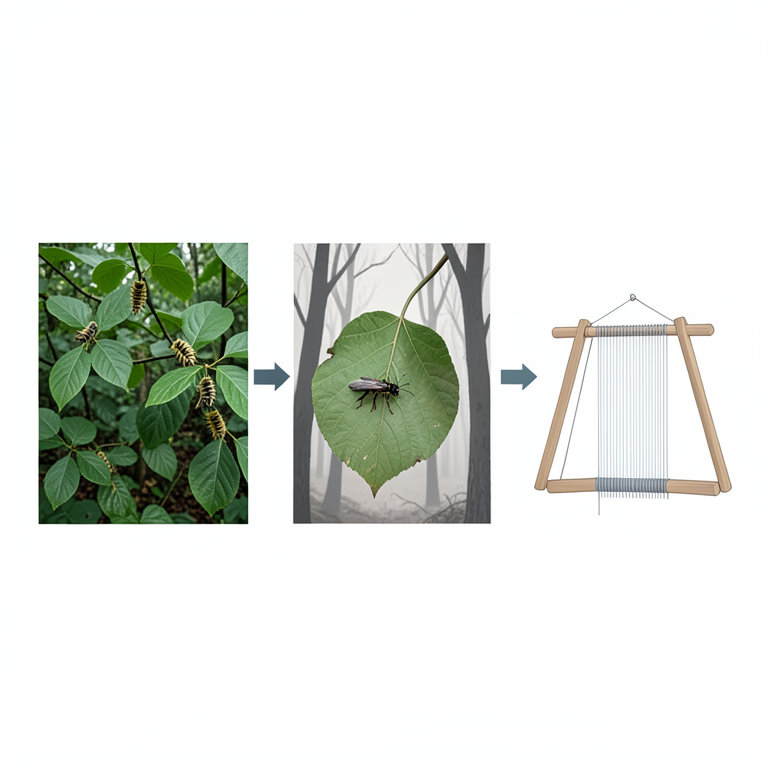
Obstacles to Vanya Silk Sustainability
AI-generated conceptual illustration (Vanya silk moths (Antheraea paphia) and their host plants in a forest setting). It explains the idea and does not show study data.
View source evidence ↗Introduction
Silk derived from various species has been used since ancient times, either in its natural form or after refinement (Misra, 1976) [21] . Historical records indicate that spider webs were used as wound dressings in ancient Greece and Rome and as painting substrates during the 16th century (Akai, 2005) [4] . In the Aztec civilization, caterpillar nests were cut and pasted together to form a paper-like fabric, showing the ancient human fascination with silk fibres (Arora & Gupta, 1979) [6] . To produce woven fabric, silk threads must be extracted either by carding and spinning or by unravelling the intact cocoon filament (United Nations, 1976) [30] . The domesticated silkworm, Bombyx mori, is typically killed before the moth emergesby piercing or boilingallowing the cocoon to be reeled as a single continuous thread, producing finer silk (CSB Bangalore, 1988a) [13] . In contrast, wild silks from Muga, Eri and Tasar species are harvested after moth emergence, breaking the filament and yielding a coarser yet more durable silk (Ahmed & Sarkar, 2015; Akai, 2005) [3,4] . More than 500 species of wild silkworms exist globally, though only a few contribute to textile production (Arora & Gupta, 1979) [6] . Wild silks are difficult to bleach or dye but exhibit naturally attractive colours, such as the rich golden hue of Muga silk from Assam (Ahmed & Rajan, 2011; CSB Bangalore, 1988b) [2,14] . Muga silk (Antheraea assamensis) is particularly renowned for its natural lustre, durability, and cultural importance in northeastern India (Sharma et al., 2025) [27] . The cocoon shells of wild silks are typically reinforced either by tanning or by mineral compounds like calcium oxalate, which confer toughness and resilience (Kavane & Sathe, 2011) [19] . Recent innovations, such as demineralization techniques, enable wet reeling of wild silk cocoons similar to B. mori, offering potential to improve yarn quality and industrial viability (Gumedze et al., 2025) [17] .
Dependence on Natural Habitat
There has been a sharp decline in the production of tasar silk in India due to its high dependence on natural forest habitats. The availability of host plants is crucial for the growth and survival of non-mulberry silkworms such as Antheraea mylitta and Antheraea assamensis. A reduction in forest density and the scattered distribution of host trees have severely affected rearing practices. Moreover, the increasing restrictions from forest departments on traditional rights of tribal rearers have further limited their access to host plants and rearing areas. Tasar and Eri are the main forest-based silks cultivated by tribal communities across Jharkhand, Odisha, Chhattisgarh, and the northeastern states. These silks depend heavily on outdoor rearing under natural conditions, making them highly vulnerable to environmental fluctuations and forest degradation. Sustainable production thus relies on both the conservation of natural host plants and the adoption of agroforestry-based rearing systems that can ensure yearround leaf availability (Ahmed & Rajan, 2011; Ahmed & Sarkar, 2015) [2,3] . The dependence on natural habitats also poses challenges in disease control and seed management. As rearing sites are scattered and unregulated, monitoring of silkworm health becomes difficult, leading to losses from pests and infections. Recent studies emphasize the need for scientific management of host plant plantations and the integration of silkworm rearing into community-based forest management programmes (CSB, 2017; Sharma et al., 2025) [11,27] .
Crop Loss is Maximum
Silk host plants, like any agricultural crop, can be severely affected by both biotic and abiotic stresses. Biotic factors include microbial pathogens such as fungi, bacteria, and viruses, whereas abiotic factors include poor soil fertility, temperature extremes, moisture stress, and chemical pollution. Together, these issues cause significant reductions in foliage quality, thereby directly affecting silkworm health and cocoon yield. Unfavourable soil conditions or fertility imbalances often lead to nutrient disorders, which can manifest as chlorosis, necrosis, or deformation of leaves. These nutritional deficiencies make host plants more susceptible to diseasecausing organisms. Likewise, heavy rainfall, prolonged droughts, or temperature fluctuations can disrupt leaf quality and feeding patterns of silkworms, especially in tasar and muga rearing cycles (Biswas, Hahn, & Ray, 2008; Bal, Kaul, & Ram, 2008) [9,7] . Pesticide misuse is another concern. Excessive use of fungicides and insecticides can damage the leaves of food plants and create toxicity in silkworms. Chemicals such as copper and sulfur-based compounds, when applied inappropriately, have been reported to cause foliar bronzing and larval mortality. Moreover, industrial air pollutants like ozone, sulfur dioxide, and nitrogen oxides are known to cause oxidative stress and leaf necrosis in sericulture zones near urban and industrial belts (CSB Bangalore, 1988b; United Nations, 1976) [14,30] . Environmental and nutrient stresses together account for nearly half of the plant health problems encountered in Vanya silk regions. To reduce crop losses, integrated nutrient management, soil testing, and the use of organic fertilizers have been suggested as sustainable alternatives. Training of tribal farmers and improved diagnostic support can also play a major role in reducing pre-rearing crop losses (Ahmed & Sarkar, 2015; Gumedze et al., 2025) [3,17] .
Nutrient Toxicities
Excessive application of macronutrients such as nitrogen, phosphorus, or potassium can lead to toxicity in host plants, reducing their suitability as food for silkworms. Nitrogen toxicity, for instance, often occurs under hot, dry conditions, causing overly dark green foliage and stem lesions in seedlings, which may be mistaken for canker disease. Similarly, ammonium toxicity in greenhouse soils can result in leaf twisting and stunted growth, indirectly affecting silkworm larval development (Biswas et al., 2008; Bal et al., 2008) [9,7] . Micronutrient toxicity is equally problematic. Elements such as iron (Fe) and manganese (Mn) often accumulate in high-pH soils or irrigation water, causing chlorosis, necrosis, or leaf flecking. Heavy metals like lead (Pb) and arsenic (As) are toxic to both plants and silkworms, reducing leaf quality and cocoon productivity (Sharma et al., 2025; Ahmed & Rajan, 2011) [27,2] . Proper soil management, pH monitoring, and the use of organic fertilizers have been recommended to mitigate these problems.
Nutrient Deficiencies
Deficiency of essential nutrients such as calcium, phosphorus, and iron in host plants severely limits leaf quality, growth, and reproduction of silkworms. Often, these deficiencies are linked not to low soil nutrient content but to poor soil conditions, such as inappropriate pH that hampers nutrient uptake. Visible signs of deficiency, such as uniform chlorosis on older leaves, can help distinguish these from pathogen-induced symptoms (CSB, 1988a; Dutta et al., 2015) [13,33] . Plant tissue analysis is the most accurate method to diagnose nutrient deficiencies, as it assesses nutrient uptake rather than soil nutrient availability. Ensuring proper nutrition in mulberry and wild silkworm host plants improves larval growth, cocoon weight, and silk quality. For wild silks like Muga and Tasar, the challenge is greater due to outdoor rearing conditions and variable leaf availability (Ahmed & Sarkar, 2015; Bal et al., 2008) [3,7] .
Moisture Extremes
Water availability is crucial for host plant physiology and silkworm nutrition. Both water deficit and waterlogging can negatively affect leaf quality, larval growth, and cocoon yield. Short-term stress may allow recovery, but chronic drought or prolonged flooding can permanently reduce leaf production and induce early leaf senescence (Biswas et al., 2008; Sharma et al., 2025) [9,27] . Effective water management, including irrigation scheduling and mulching, is recommended in mulberry and wild silkworm cultivation areas. Tribals practicing outdoor rearing of tasar or muga silk are particularly vulnerable to rainfall variability, which may lead to crop failure and economic losses (Ahmed & Rajan, 2011; Dutta et al., 2015) [2, 33] .
Temperature Extremes
Silkworms and their host plants are highly sensitive to temperature. Early instar larvae of Muga and Tasar are particularly vulnerable to cold, which slows metabolism and growth. Conversely, extremely high temperatures can induce heat stress, desiccation, and increased susceptibility to diseases. Roots and above-ground biomass may tolerate temperature extremes differently, emphasizing the need for careful seasonal planning of rearing operations (Bal et al., 2008; Sharma et al., 2025) [7,27] . For indoor chawki rearing, maintaining optimal temperature and relative humidity is critical. Fluctuations outside the ideal range during early larval stages can reduce larval vigor, cocoon weight, and silk quality. Seasonal and daily management of environmental conditions is therefore an essential strategy for sustainable vanya silk production (CSB, 2017; Ahmed & Sarkar, 2015) [11,3] .
Lack of Research Methodologies in Breeding
Proper breeding techniques for Muga, Eri and Tasar silkworms are critical for improving cocoon yield and disease resistance. These techniques include collection and identification of germplasm, recording biological characteristics, evaluating economic traits, conducting genetic analyses, and long-term cold storage of polyvoltine germplasm (Dutta et al., 2015; Ahmed & Rajan, 2011) [33,2] . Failure to implement these methodologies has led to lowquality seed cocoons, poor fecundity, and reduced silk output. For example, Muga silkworms can lay 250-280 eggs, but realized fecundity often drops to 120-150 due to improper seed maintenance and environmental stress (CSB, 2017; Dutta et al., 2015) [11,33] .
Laborious and Time-Consuming Operations
Silk production, especially wild silk rearing, involves numerous labor-intensive tasks such as land preparation, sowing, weeding, fertilization, leaf harvesting, larval rearing, and cocoon harvesting. Most of these operations are performed manually by tribal farmers due to lack of mechanization in rural areas. The high labour requirement, coupled with rising wages, makes sericulture economically challenging for small-scale farmers (Bal et al., 2008; Dutta et al., 2015) [7,33] . Time constraints are further compounded by multivoltine species such as Muga, which require multiple seed crops to support commercial cropping. Each rearing cycle demands careful monitoring of environmental conditions, pest management, and seed quality, increasing labour input and operational costs (CSB, 2017; Ahmed & Sarkar, 2015) [11,3] .
Improper Maintenance of Grainage or Seeds
Seed is the basic input in agriculture and all the technologies revolve around it. Production of quality seed is paramount for achieving potential yields in any crop. Therefore utmost care is required in the production of different categories of seed. The most serious and basic problem is the scarcity of quality and healthy seeds of standard breeds for commercial rearing under natural atmosphere. The government institutions have failed to supply required seeds to the rearers at proper time so the rearers use their own produced seeds year after year. But sometimes, the rearers have to collect untested seeds from the local co-rearers. Due to the lack of proper grainages in particular areas, rearers have to suffer a lot. Some grainages do not produce quality seeds due to the lack of instruments or any other factors like:lack of technology/skills, lack of labour, lack of space etc. All these factors inturn leads to low production or decline the quality of product. Muga silkworm is multivoltine and there are 5-6 crops in a year with two commercial crops. To raise either of the two commercial crops Jethua (Spring) and Katia (Autumn), the four seed crops have to be raised in two separate rearing cycles. The seed crops such as Saonia (July-August), Ahinia (September-October), Aghonia (November-December) and Chotua (February-March) are to be raised for Jethua crop and Jarua (December-February), Bohogua (March-April), Aherua (June-July), Bhodia (August-September) seed crops are to be raised for Katia (Sept.-Oct./Oct.-Nov.) crop. Multivoltinism is one of the major problem for which the maintenance of different seed broods of muga silkworm is difficult, time consuming, laborious and hazardous making the unavailability of good quality seed cocoons in specific seasons. Dutta et al. reported that muga silkworm has the potential lay a good number of eggs (250-280) but realized fecundity (120-150) is comparatively poor even during the favorable seasons of Jethua and Katia compared to eri (440-470) and mulberry (450-550).
Incidence of Disease and Pest in Seed Crops
Muga, Eri and Tasar silkworms are vulnerable to viral, bacterial, fungal, and protozoan diseases, which can cause heavy crop losses. Pebrine (caused by microsporidia) can kill entire cultures, while flacherie (bacterial) is prevalent during summer due to poor leaf quality and temperature fluctuations. Other diseases, such as grasserie and muscardine, also reduce cocoon yield (CSB, 2017; Bal et al., 2008) [11,7] . In addition to pathogens, silkworms face predation by parasitoids like the uzi fly (Exorista bombycis), which can destroy up to 80% of winter crops. Disease and pest management is therefore crucial for ensuring sustainable production of vanya silk (Ahmed & Rajan, 2011; Sharma et al., 2025) [2,27] .
Effect of Environmental Conditions (Temperature, Humidity, Rainfall)
Environmental conditions strongly influence cocoon quality, larval growth, and reproductive potential. Temperature below 20 °C slows silkworm metabolism, weakening larvae and increasing susceptibility to diseases. High temperatures can desiccate leaves, stunt larvae, and promote fungal and viral outbreaks (CSB, 1988a; Bal et al., 2008) [7,13] . Humidity indirectly affects leaf withering and larval feeding. Both indoor and outdoor rearing operations require careful control of temperature and relative humidity to maintain stable cocoon production. Seasonal variations highlight the need for adaptive management strategies, especially for outdoor-reared tasar and muga silkworms (Dutta et al., 2015; Ahmed & Sarkar, 2015) [3,33] .
Demand and Market Constraints
Despite increasing global demand for silk, India remains unable to meet domestic requirements due to low production of non-mulberry silk. Domestic demand is approximately 28,000 MT, whereas production is around 18,000 MT (CSB, 2017) [11] . Competition from synthetic fibers further reduces market share for natural silk, as synthetic fibers are cheaper and more widely available. Additionally, tribal communities often use wild silk primarily for subsistence or local sale, leaving limited quantities for the market (Ahmed & Rajan, 2011; Sharma et al., 2025) [2,27] .
Pests, Predators, and Diseases
Silkworms and host plants are continuously threatened by pests, predators, and diseases. In addition to microbial diseases (viral, bacterial, and fungal), herbivorous insects and leaf-feeding pests reduce leaf availability and quality, thereby affecting larval growth. Predators, such as birds and rodents, also contribute to losses (Bal et al., 2008; CSB, 1988a) [7,13] . Proper pest management, disease control, and protection of host plants are critical for improving yield. Integrated approaches including cultural practices, chemical control, and biological agents are recommended for sustainable vanya silk production (Ahmed & Sarkar, 2015; Dutta et al., 2015) [3,33] .
Conclusion
The pursuit of sustainability in India's Vanya silk industry remains a complex challenge shaped by environmental, socio-economic, and technological factors. While the sector holds immense potential for promoting rural livelihoods, biodiversity conservation, and traditional craftsmanship, its growth is hindered by issues such as inconsistent cocoon supply, inadequate market linkages, limited technological innovation, and poor awareness of sustainable practices among stakeholders.
Strengthening research and development, improving extension services, and promoting community-based sericulture models can help overcome these barriers. Furthermore, policy support aimed at value addition, eco-certification, and fair trade can create a more resilient and sustainable Vanya silk ecosystem. A collaborative approach involving producers, government agencies, researchers, and private enterprises is essential to ensure that the Vanya silk sector not only preserves its cultural heritage but also contributes meaningfully to India's sustainable development goals.
References
33 in the original paper- Ahmed SA. Attacus atlas L. (Lepidoptera: Saturniidae): A new record on Ailanthus excelsa Roxb. from Assam, India. World J Zool. 2013;8(2):127-130.
- Ahmed SA, Rajan RK. Exploration of vanya silk biodiversity in the North-Eastern region of India: Sustainable livelihood and poverty alleviation. In: International Conference on Management, Economics and Social Sciences (ICMESS 2011). Bangkok, Thailand; 2011.
- Ahmed SA, Sarkar CR. Role of forest biodiversity in conservation of non-mulberry (vanya) silk in India. Munis Entomol Zool. 2015;10(1):43-45.
- Akai H. The potential for non-mulberry silks (wild silks). In: Proceedings of the 20th Congress of the International Sericulture Commission. Bangalore, India; 2005. p. 6-11.
- Anonymous. Annual report. Bangalore: Central Silk Board, Ministry of Textiles, Government of India; 2012.
- Arora GS, Gupta IJ. Taxonomic studies on some of the Indian non-mulberry silk moths (Lepidoptera: Saturniidae). Mem Zool Surv India. 1979;16(1):1-54.
- Bal RK, Kaul A, Ram K. Feasibility of sericulture in Jammu and Kashmir. Environ Ecol. 2008;26(3A):11321134.
- Bhat TA, Choure T. Study of growth and instability in raw silk production and marketing in India. Eur J Bus Manag. 2014;6(14):108-111.
- Biswas S, Hahn TK, Ray N. Comparative studies of Som (Persea bombycina) and Sualu (Litsea polyantha) combinations on commercial rearing of muga silkworm. Environ Ecol. 2008;26(3A):1139-1142.
- Borah MB, Borgohain A. State and muga silk in independent Assam. Int J Soc Sci Econ Res. 2018;3(2):495-504.
- Central Silk Board (CSB). Note on the performance of Indian silk industry and functioning of the Central Silk Board. Ministry of Textiles, Government of India; 2017. p. 1-4.
- Chakravorty R, Thangavelu K. Lessons on Tropical Tasar. Ranchi, India: Speed-O-Print; 2000.
- CSB Bangalore. Eri Culture in India. Bangalore: Central Silk Board, Ministry of Textiles, Government of India; 1988.
- CSB Bangalore. Handbook on Muga Culture. Bangalore: Central Silk Board, Ministry of Textiles, Government of India; 1988.
- Dewangan SK, et al. Sericulture in India: Status, challenges and potential. Int J Adv Res. 2011;5(11):1480-1488.
- Elumalai D, Uma K, Anjugam M, Umapathy G, Balaji P. Studies on constraints faced by different types of silk reelers in traditional area of Tamil Nadu. Int J Pure Appl Biosci. 2019;7(3):156-162.
- Gumedze KM, Kebede TG, Nindi MM, et al. Innovations in wild silk processing and applications: A comparative review of African and other wild silks. Fibers Polym. 2025. https://doi.org/10.1007/s12221025-01169-8
- Islam NM, Mili SA, Hasan SMN. Problems and prospects of silk industry in Bangladesh. J Econ Sustain Dev. 2010;1(1):29-36.
- Kavane RP, Sathe TV. Wild silk technology. New Delhi, India: DPH; 2011.
- Mir MA. Studies on the impact of adoption of sericulture technologies on cocoon production and productivity in Kashmir [Master's thesis]. Srinagar: Sher-e-Kashmir University of Agricultural Sciences & Technology of Kashmir; 2013.
- Misra B. Non-mulberry silks. Rome, Italy: FAO; 1976.
- Nassig WA, Piegler RS. The life history of Actias maenas (Saturniidae of Sumatra). Lepid Soc J. 1984;38:114-123.
- Pandey C, Das KK, Roy NT. Economics of muga culture-a case study in Coochbehar district of West Bengal. J Crop Weed. 2010;6(1):17-21.
- Roy P, Sarkar R. Work participation and income generation from sericulture: A case study of Alomtola village of Kaliachak-II block in Malda district, West Bengal. Soc Econ Geogr. 2015;1(1):31-36.
- Saikia M, Gosh K, Peigler RS. Factors affecting quality muga silkworm (Antheraea assamensis Helfer) seed crop production: A review. J Entomol Zool Stud. 2016;4(6):806-810.
- Sarkar M, Majumdar M, Ghosh A. Critical analysis on role of women in sericulture industry. Int J Soc Sci. 2017;6(3):211-222.
- Sharma S, Bhagat AV, Bhalerao SS, Rambhai KP, Rajput YV. A conceptual review on sericulture in Northeast India: Viability, opportunities and policy pathways. Arch Curr Res Int. 2025;25(9):230-241. https://doi.org/10.9734/acri/2025/v25i91490
- Shwetha GV, Sindhu G, Kruthika MS, Kankanawadi N, Veenita MK. Minor silk producing species: An approach towards diversity and prospects. Annu Res Rev Biol. 2025;40(8):171-182. https://doi.org/10.9734/arrb/2025/v40i82295
- The evolution of knowledge in sericultural research: A bibliometric analysis. F1000Research. 2018;6:2075. https://doi.org/10.12688/f1000research.14568.1
- United Nations. Wild silk technology. FAO Manual Series No. 7. Rome; 1976.
- Unni BG, Goswami M, Kakoty Y, Bhattacarjee M, Wann SB, Rajkhowa Das GS, et al. Indigenous knowledge of silkworm cultivation and its utilization in North Eastern region of India. Indian J Tradit Knowl. 2009;8(1):70-74.
- Vijayan K, Anuradha HJ. Genetic diversity and differentiation among populations of the Indian eri silkworm (Samia cynthia ricini) revealed by ISSR markers. J Insect Sci. 2006;6(1):30. https://doi.org/10.1093/jinseci/6.1.30
- Dutta S, Singh B, Chessell L, Wilson J, Janes M, McDonald K, et al. Guidelines for feeding very low birth weight infants. Nutrients. 2015 Jan 8;7(1):423-42.