
Research article · 2025 · Full text
International Journal of Advanced Chemistry ResearchRheological behavior of oil EP90
Volume 7(11) · Pages 34–38 · DOI: 10.33545/26646781.2025.v7.i11a.331 ↗
Research areasLubricants and Their AdditivesTribology and Wear AnalysisGear and Bearing Dynamics Analysis
Abstract
Author-writtenEP 90 transmission oil plays an important role in the operation of the machine, which is why it is important to pay attention to the signals that will notify you that it needs to be changed. Hydraulic fluid, lubricant and coolant - these are the three important roles that transmission oil successfully fulfills. In this article, we have determined four rheological models that describe the behavior of EP90 oil. The presence of anti-wear and extreme pressure additives does not significantly affect the rheological behavior, but contributes to maintaining lubricating performance under conditions of high load, high temperatures and increased pressure.
Summary
Source-checkedPlain-language reading of the full paper, prepared with AI and checked against the text. Each point links to the authors' own words.
Why it matters
- EP90 transmission oil is essential for machine operation, serving as a lubricant, hydraulic fluid, and coolant. View evidence ↗
- While anti-wear and extreme pressure additives do not significantly change rheological behavior, they help maintain lubrication under high pressure, load, and temperature. View evidence ↗
The question
- The study aimed to determine four rheological models that accurately describe the behavior of EP90 oil. View evidence ↗
What they did
- The researchers used exponential fitting of experimental data to develop rheological models, evaluating them via correlation coefficients. View evidence ↗
What they found
- The dynamic viscosity of EP90 oil decreases as the temperature increases. View evidence ↗
- The dynamic viscosity of the oil decreases exponentially as the shear rate increases. View evidence ↗
- Shear stress decreases exponentially as the shear rate increases. View evidence ↗
- The four developed rheological models showed high accuracy, with correlation coefficients ranging from 0.99061 to 0.99987. View evidence ↗
What it means
- The authors conclude that the exponential fitting models faithfully describe the oil's behavior within the studied temperature range. View evidence ↗
- The oil is considered stable for demanding use in differentials and gears because it maintains its structure and properties under high shear. View evidence ↗
- A limitation of this high-viscosity grade oil is its significantly increased viscosity at low temperatures, which may hinder cold starts and the formation of a lubricating film. View evidence ↗
Visual summary
1 visualsIllustrations explain the paper; they do not show study data.
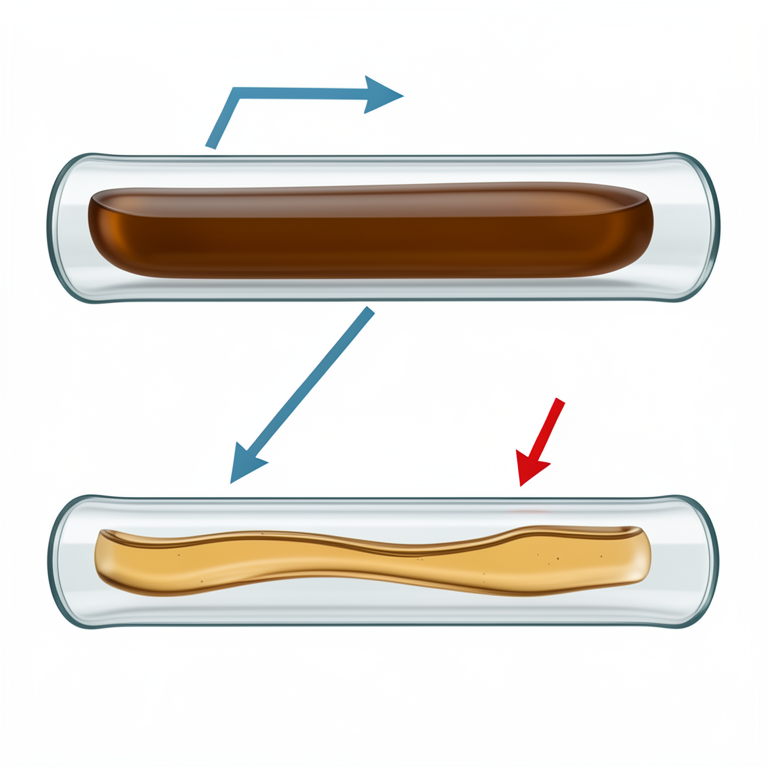
Temperature Effect on Oil Flow
AI-generated conceptual illustration (EP90 industrial gear oil in glass conduits). It explains the idea and does not show study data.
View source evidence ↗Figures & tables
From the original paper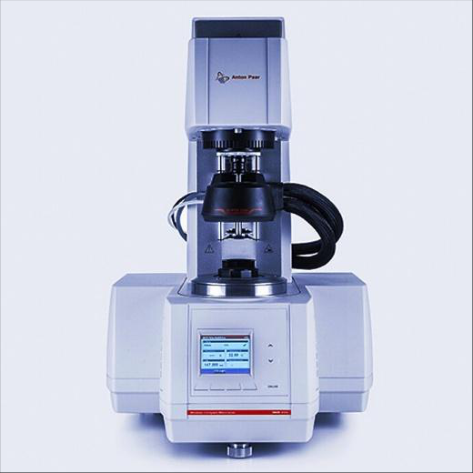 Figure 1
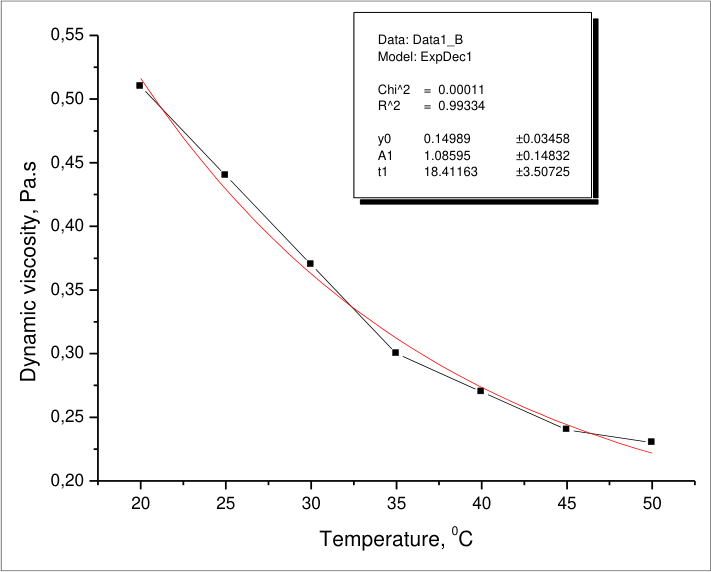 Figure 2
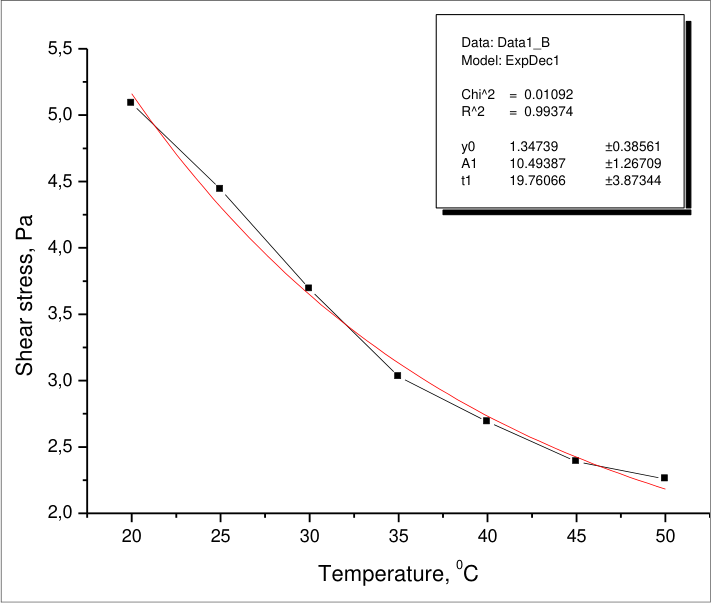 Figure 3
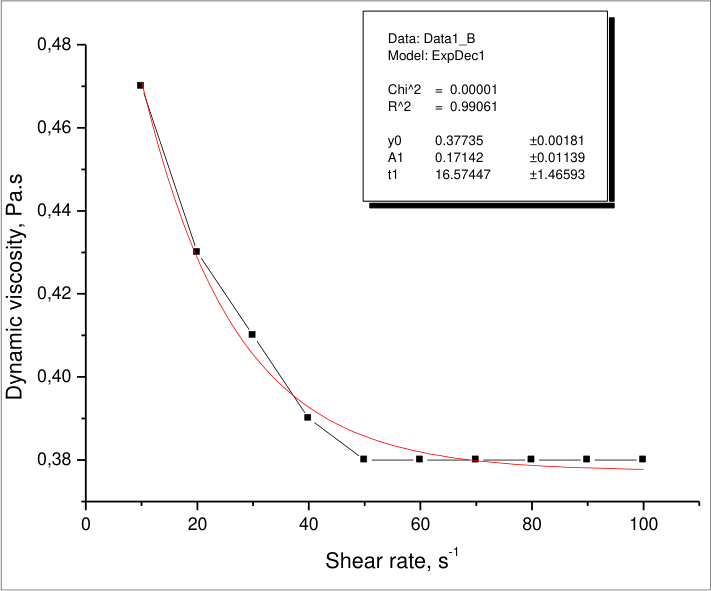 Figure 4
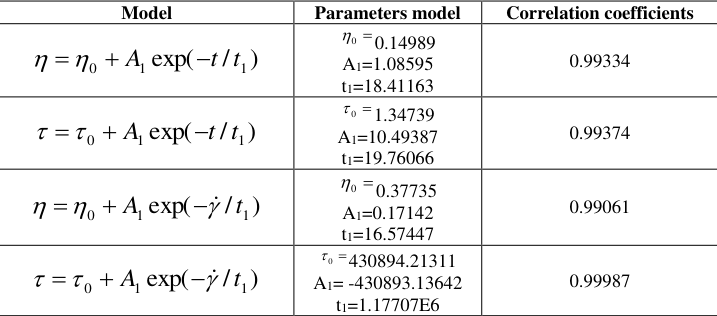 Table 1
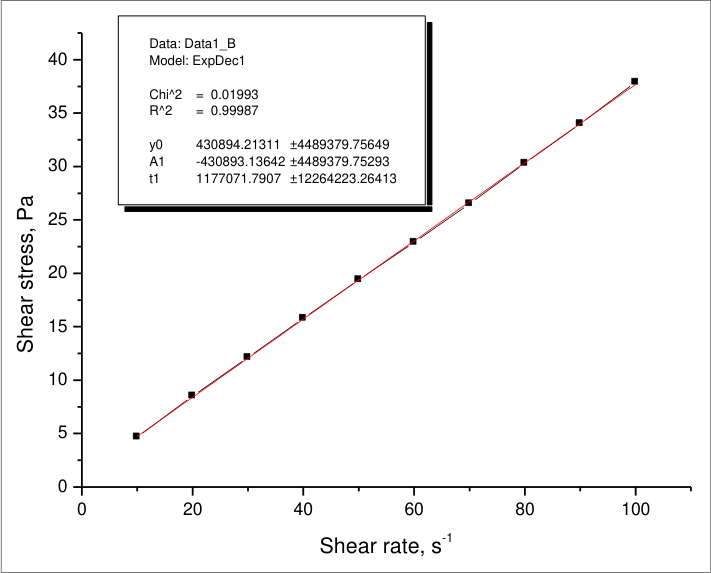 Figure 5
Introduction
Rheology is the study of the flow and deformation behavior of materials, particularly under applied forces. In the context of lubricants such as EP90 oil, rheology focuses on how the oil's viscosity responds to temperature, shear rate, and pressure-key factors that influence performance in mechanical systems. EP90 oil, a high-viscosity gear oil classified under the SAE J306 standard, is designed for use in heavy-duty gear systems, such as in automotive differentials and manual transmissions. The "EP" stands for Extreme Pressure, indicating the oil's ability to maintain lubrication and protect metal surfaces under high load and pressure conditions. Understanding the rheological properties of EP90 oil is crucial because: It ensures adequate film strength to prevent metal-to-metal contact. It affects energy efficiency due to drag and fluid resistance. It determines the oil's flowability at different temperatures, which is critical for cold start performance and high-temperature operation [1][2][3][4][5] .
Rheological testing methods such as rotational viscometry, temperature sweep, and shear rate-dependent measurements are typically used to characterize EP90 oil. These tests help in evaluating its viscosity index, thixotropic behavior, and yield stress, which are all essential in ensuring optimal lubrication and protection in demanding environments.
Changing the transmission oil is an important process that every driver must perform for their car. According to specialists in the field, automatic transmission oil should be changed after 70,000 km have been driven, that is, once every 2-3 years. EP 90 transmission oil plays an important role in the operation of the car, which is why it is important to pay attention to the signals that will notify you that it needs to be changed. Hydraulic fluid, lubricant and coolant -these are the three important roles that transmission oil successfully fulfills. Basically, the lubrication of the car's transmission is carried out with the help of this type of oil. When the oil loses its properties, it will no longer lubricate the parts as it should, and this will lead to poor operation of the car. And a factor that contributes to its wear is driving in urban areas, in busy traffic. The color of the EP 90 transmission oil is changed or has impurities that are easily visible to the naked eye. More precisely, it can happen that the oil takes on a brown or even black hue, and the smell is of burnt oil -clear signs that it needs to be changed.
Also, if the gear changes emit noises and small shocks is another aspect that should make you think when it comes to changing the gearbox oil. Another worrying aspect is the delayed gear changes. If you have difficulty shifting from one gear to another, then it is time to take the car to a specialized service. So do not go on the road if the gearbox oil needs to be changed, but choose wisely to make a stop at a service [6][7][8][9][10][11][12][13][14][15][16][17][18] .
Material and Methods
The viscosity of EP90 oil was measured with the Rheometer MCR302 viscometer in the temperature range of 20-50 0 C at shear rate of 10s -1 for 2 minutes. Figure 1 shows the Rheometer.
Results & Discussion
Figure 2 represents the dependence of dynamic viscosity on temperature for EP90 oil. As can be seen in the figure, the dynamic viscosity of the oil decreases with increasing temperature.
At low temperatures, EP90 oil exhibits very high viscosity, making it thicker and more resistant to flow. This can hinder lubrication during cold starts.At high temperatures, the oil becomes thinner (lower viscosity), which may reduce its ability to maintain a lubricating film under high loads and speeds. In Table 1 we have included the rheological models that describe the behavior of EP90 oil. For the models found, the correlation coefficients have values close to unity.
Conclusion
The rheological models found by exponential fitting of the experimental data faithfully describe the behavior of the oil in the temperature range at which it was studied. The oil was studied with the MCR302 rheometer. At high operating temperatures (above 80-100°C), EP90 oil exhibits almost Newtonian behavior, which means that the viscosity remains relatively constant with varying shear rates. This is beneficial for constant lubrication in loaded transmissions. At low temperatures, EP90 exhibits a significantly increased viscosity, which can affect cold starting and rapid formation of the lubricating film. This is a common limitation for oils with a high viscosity grade. The oil retains its structure and rheological properties under high shear conditions, which indicates good stability when used in demanding conditions (gears, differentials). EP90 oil quickly returns to its original state after mechanical stress is removed, which is favorable for continuous operation without large viscosity fluctuations.
Figures and tables from the paper
References
7 in the original paper- Penciu S, Beldescu A. Studiul potenţialului de export al României: Uleiuri vegetale. Centrul Român pentru Promovarea Comerţului şi Investiţiilor Străine; 2012.
- Bradford PG, Awad AB. Molecular Nutrition and Food Research. 2007;51:161-170.
- Szydłowska-Czerniak A, Bartkowiak-Broda I, Karlovic I, Karlovits G, Szlyk E. Food Chem. 2011;127:556-563.
- Ostlund RE Jr, Racette SB, Okeke A, Stenson WF. Am J Clin Nutr. 2002;75(6):1000-1004.
- Meneghetti SMP, Meneghetti MR, Wolf CR, Silva EC, Lima GE, Coimbra MDA, et al. J Am Oil Chem Soc. 2006;83(9):819-822.
- Sheibani A, Ghotbaddini-Bahraman N, Sadeghi F. Orient J Chem. 2014;30(3):1205-1209.
- Stanciu I. Orient J Chem. 2023;39(4):1068-1070. (Note: Zea mays oil)