
Research article · 2025 · Full text
International Journal of Biology SciencesSeaweeds as a sustainable feedstock for the bio-based economy: A critical review of biorefinery pathways
Volume 7(11) · Pages 01–06 · DOI: 10.33545/26649926.2025.v7.i11a.509 ↗
Research areasSeaweed-derived Bioactive CompoundsPlant Growth Enhancement TechniquesMarine and coastal plant biology
Abstract
Author-writtenThe shift towards a bio-based economy requires the search for sustainable and renewable feedstocks alternative to the finite fossil resources. Seaweeds or marine macroalgae have become an attractive 3rd generation biomass. Unlike other food crops, seaweeds can grow on arable lands that are marginal for the production of food and use brackish/saltwater as a media and thus grown without competition to agriculture practices. Seaweed are endowed with higher productivity compared to terrestrial plants including carbon sequestration. This paper presents an in-depth overview of the current status of seaweed biorefineries featuring possible pathways focusing on various fractions, used for several different end-uses such as biofuels, biochemicals and biomaterials. The paper reviews the state-of-art of seaweed growth, composition and principal transformation pathways (biochemical- -anaerobic digestion, fermentation-, and thermochemical- -pyrolysis, hydrothermal liquefaction-) in a combined approach. It evaluates each pathway with respect to both the opportunities and challenges which it may pose - ranging from feedstock availability/variability, processing intensity and economics to scalability. Additionally, this review emphasizes the significance of integrated, multi-product biorefining approaches for optimal biomass valorization and improved sustainability in the context of a seaweed-based bioeconomy. Research gaps and future perspectives needed to overcome the existing barriers and enable seaweeds to be a cornerstone of our sustainable industrial future are also discussed in this article.
Summary
Source-checkedPlain-language reading of the full paper, prepared with AI and checked against the text. Each point links to the authors' own words.
Why it matters
- Transitioning to a bio-based economy is necessary to find sustainable alternatives to finite fossil resources. View evidence ↗
- Seaweeds are attractive feedstocks because they grow in saltwater or marginal lands, avoiding competition with traditional food agriculture. View evidence ↗
- Seaweed farming supports the 'blue economy' by providing ecosystem services like carbon sequestration and nutrient bioremediation. View evidence ↗
The question
- The paper aims to provide an in-depth overview of seaweed biorefinery pathways and their use in producing biofuels, biochemicals, and biomaterials. View evidence ↗
What they did
- The authors conducted a systematic review by searching databases including Scopus, Web of Science, and Google Scholar using specific keywords related to seaweed biorefineries. View evidence ↗
- The review focused on English-language peer-reviewed articles, reviews, and conference proceedings published between 2010 and 2025. View evidence ↗
What they found
- Carbohydrates are the primary organic component across seaweed groups, ranging from 25-50% in green seaweeds to 30-75% in brown seaweeds by dry weight. View evidence ↗
- Carbon sequestration potential varies by species, with Laminaria showing high potential up to 1,156 t C/ha/year compared to 68.43 t C/ha/year for Eucheuma. View evidence ↗
- High ash content in seaweeds can negatively impact pyrolysis, leading to lower quality bio-oil. View evidence ↗
What it means
- The authors conclude that integrating the production of high-value co-products like pigments and proteins with biofuels is essential to improve the economic viability of seaweed biorefineries. View evidence ↗
- Realizing a seaweed-based bioeconomy requires a combination of targeted research, strategic investment, and supportive policy frameworks. View evidence ↗
- A significant barrier is the inconsistency of feedstock quality and supply due to variations in species, season, and environment. View evidence ↗
Visual summary
1 visualsIllustrations explain the paper; they do not show study data.
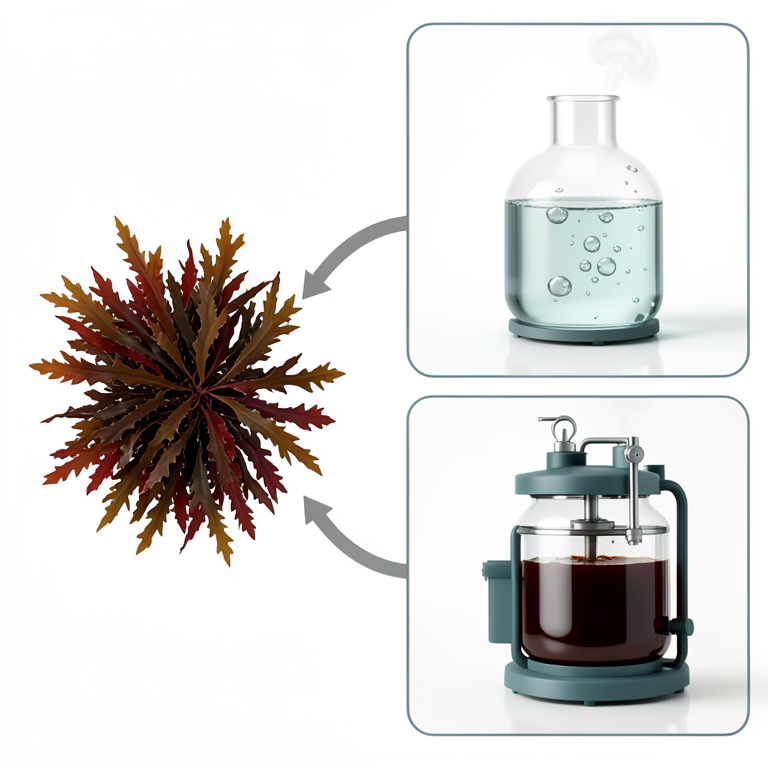
Seaweed Biorefinery Conversion Pathways
AI-generated conceptual illustration (Brown and red seaweed biomass). It explains the idea and does not show study data.
View source evidence ↗Figures & tables
From the original paper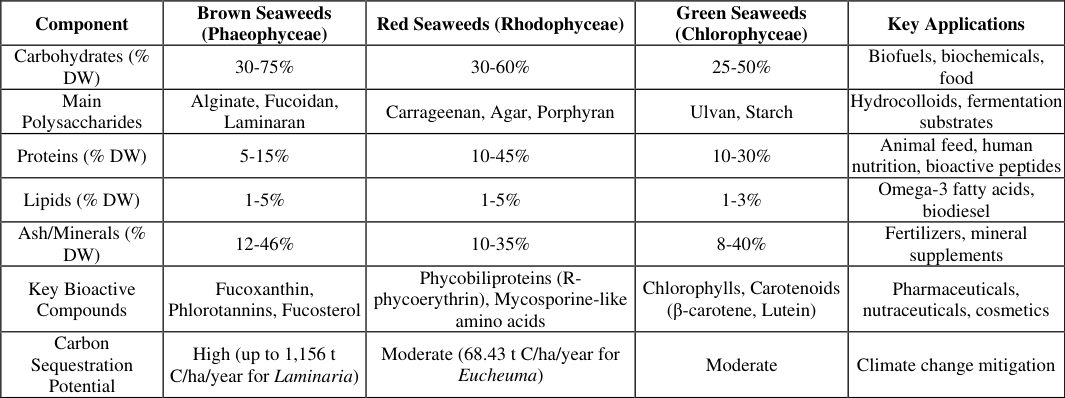 Table 1
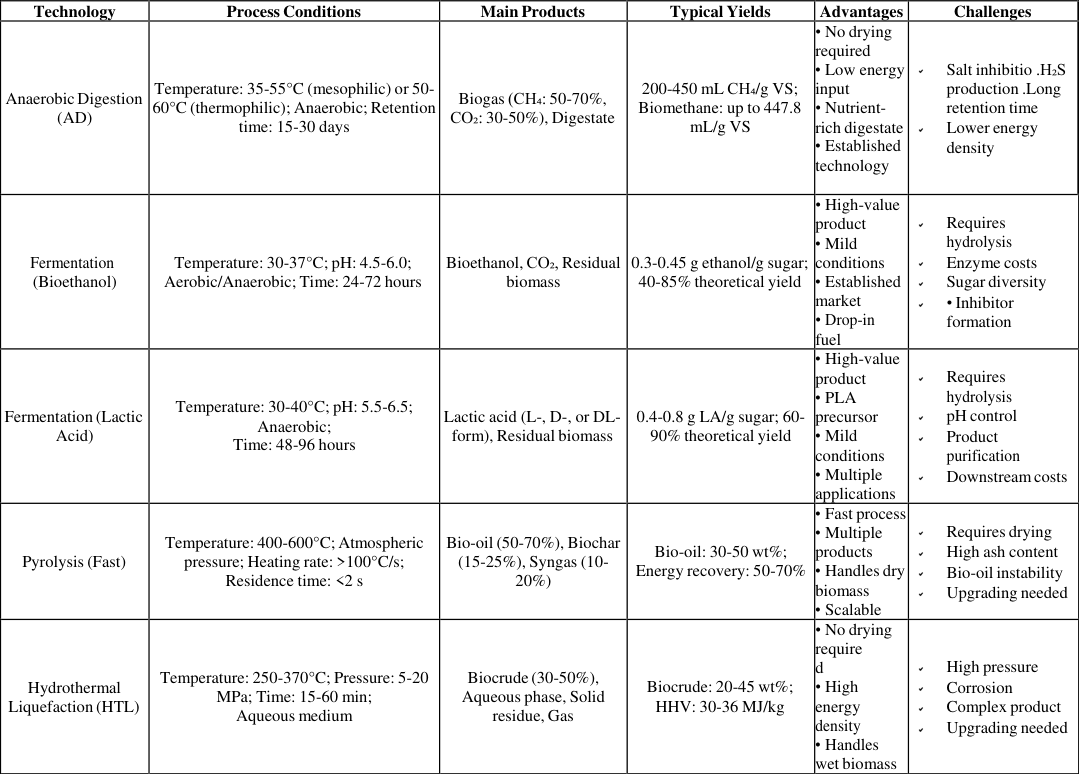 Table 2
Introduction
The global economy is at a crossroads but inhabited by two key concerns: the necessity of climate change mitigation and the transition from finite fossil-resource dependence. This phenomenon has driven the transition towards a bio-based economy, using sustainable biomass resources to produce energy, materials and chemicals (Kostas et al., 2021) [1] . At the center of becoming is the discovery and continuous development of appropriate biomass feedstocks. Whereas food-security concerns are raised for first-generation feedstock (e.g., corn, sugarcane), and issues with processing exist for second-generation sources (e.g., lignocellulosic biomass), third-generation biofuel feedstocks have attracted considerable scientific and industrial attention, most notably of marine microalgae or seaweed ( (Sharmila et al., 2021)) [2] . Seaweeds provide an attractive set of features as a biorefinery feedstock. They do not compete with arable land, freshwater and fertilizers as well, thus avoiding most of the sustainability-related disadvantages of terrestrial biomass (Fernand et al., 2017) [3] . In addition, since seaweed farms can be utilized for ecosystem services such as carbon sequestration, nutrient bioremediation in coastal waters and marine life habitat provision, they represent an important element of the blue economy (Krause-Jensen & Duarte, 2016) [4] . The fast growth rates and the variety in macromolecular composition of seaweeds, very rich in polysaccharides, proteins, lipids and many bioactive compounds render them particularly suitable as feedstock for a multi-product bio refinery (Torres et al., 2019). [5] The biorefinery concept has analogous to petroleum refinery, with the objective of converting biomass into range of value added products using integrated processing routes for optimum resource utilization and economic revenue generation while minimizing wastage (Baghel et al., 2023) [6] . A byword here is the design of a circular bioeconomy, that keeps resources in use for as long as possible, extracts maximum value from them whilst in use and then recovers and regenerates products and materials at the end of each service life. This review critically evaluates the current development and challenges of seaweed biorefinery in order to provide an insight into different conversion pathways, variety of end products, as well as barriers that should be addressed for wide scale commercialization of sustainable feedstock from seaweed for the global bio-based industry.
Methodology
This paper aims to systematically and critically review the literature in order to summarize current knowledge on seaweed biorefineries. The study's methodology was multiphased and intended to be extensive and balanced on the coverage of the research subject. First, a wide search of scientific databases such as Scopus, Web of Science and Google Scholar was performed by searching with keywords or a compound of words including "seaweed biorefinery," "macroalgae bio-based economy," "seaweed conversion pathways" and "sustainable feedstock." Then, further searches were based on a targeted search strategy with specific conversion technologies used as input queries (e.g., "anaerobic digestion," "fermentation," etc.) within the context of seaweed biomass. The selection criteria for inclusion in this review prioritized peer-reviewed journal articles, review papers, and conference proceedings published in English between 2010 and 2025 to ensure the relevance and timeliness of the information. Emphasis was placed on studies that provided quantitative data on process yields, techno-economic assessments, and life cycle analyses. The gathered literature was systematically categorized based on key research themes: seaweed cultivation and sustainability, biochemical composition, biorefinery conversion technologies (biochemical and thermochemical), and commercialization challenges. The information was then critically analyzed to identify key trends, knowledge gaps, and future research directions. By synthesizing information from a wide range of high-impact sources, this review aims to provide a holistic and critical perspective on the potential of seaweeds to contribute to a sustainable bio-based economy.
Seaweed as a Sustainable Feedstock: Composition and Cultivation
Seaweed's potential as the biorefinery feedstock is essentially determined by marine biomass and its renewable aquaculture constraints. Unlike land-based crops, seaweeds can grow rapidly and provide high biomass yields without the need to compete for the most important resources including arable land and fresh water which makes them fundamentally more sustainable alternative for bio-based economy (Roleda & Hurd, 2019) [7] .
Biochemical Composition
Seaweeds are generally divided into three major groups brown (Phaeophyceae), red (Rhodophyceae), and green (Chlorophyceae) with unique, but also highly bioactive chemical composition. Carbohydrates are the major organic components of FW, ranging between 59% and 75% in dry matter (Jönsson et al., 2020) [8] . But high levels of proteins and lipids as well as minerals and a plethora of bioactives factors can be found. The carbohydrate fraction is of particular importance for biorefining because it consists of complex polysaccharides which are the main substrates used in biofuels and biochemicals production. The brown type of seaweed contains the alginate, fucoidan, and laminaran. Carrageenan and agar, which are already commonly used as gelling agents in the food industry, are obtained from red seaweeds. Ulvan and other sulfated polysaccharides have been found in green seaweeds (Rhein-Knudsen et al., 2015) [9] . The complex and diverse structures between different species, even within a single species due to the impact of seasons and environment, make polysaccharides promising but difficult substrates for hydrolysis (Maneein et al., 2018) [10] . In addition to polysaccharides, seaweed biomass is also rich in a range of commercially valuable co-products such as phycobiliproteins, pigments (e.g., fucoxanthin), polyphenols and minerals which can be extracted through an integrated biorefinery approach to improve economic feasibility (Arias et al., 2023) [11] .
Cultivation and Sustainability Aspects
Seaweed (or macroalgae) aquaculture has several potential environmental advantages in compliance with a Circular Bioeconomy. Seaweed farms serve as prodigious carbon sinks, soaking up large amounts of atmospheric CO2 through photosynthesis. It has been calculated that seaweed farming could sequester large amounts of CO2 (Laminaria species, for example, might sequester as much as 1,500 tonnes of CO2 per square kilometer per year. It is this ability to capture carbon that makes seaweed farming so attractive as a tool against climate change (Canvin et al., 2025) [12] . In addition, seaweeds are powerful in taking up surplus nutrients (nitrogen and phosphorous) from coastal areas. This bio filtration capacity would contribute to reduce the impact of eutrophication in the coasts resulting from agricultural load and waste discharges ((Sisman-Aydin & Simsek, 2022)) [13] . The combination of seaweed farming with other aspects of aquaculture (Integrated Multi-Trophic Aquaculture, IMTA) also provides a synergistic approach which acknowledges that the waste from one species is food for another and further improves sustainability. The possibility of cultivating seaweed at sea also makes the immense areas of ocean available for productive use, greatly increasing the potential scale of biomass production without encroaching on land-based ecosystems (Ashkenazi et al., 2022) [14] .
Seaweed Bio refinery: Conversion Pathways and Products
The bioconversion of seaweed biomass to a variety of products are possible with different conversion routes, namely biochemical and thermochemical pathways. The selection of pathway is presumably influenced by the seaweed species to be used as feedstock, the desired nutraceutical portfolio and the ultimate economic, social and environmental targets of biorefinery ((Herrera Barragán et al., 2022) [33] . The integrated strategy of co-fermentation among different pathways is frequently thought to be the best way for complete utilization of biomass [15] .
Biochemical Conversion Pathways
Biochemical conversion pathways employ microorganisms and enzymes to decompose the organic content of seaweed, in particular their complex polysaccharides into less complex molecules that can be fermented or digested for biofuel and biochemical production. Such processing generally is carried out at moderate temperatures and pressures.
Anaerobic Digestion for Biogas Production
Anaerobic digestion (AD) is a mature technology that employs a microbial community in the absence of oxygen to biologically convert organic matter into biogas, which mainly consists of methane (CH4), carbon dioxide (CO2), and nutrient-rich digestate. AD with seaweed Seaweed is a good and promising feedstock for AD, because it has high carbohydrate but low lignin content, so can be more easily biodegraded than lignocellulosic biomass(Hughes et al., 2012) [16] . The process yields biogas, a mixture of methane (CH₄) and carbon dioxide (CO₂), which can be used for heat and power generation or upgraded to biomethane for injection into the natural gas grid. The nutrient-rich digestate co-product can be recycled as a biofertilizer, contributing to a circular economy model (Milledge et al., 2019) [17] . However, challenges such as salt inhibition of microbial activity and the presence of sulfur compounds that can lead to the formation of corrosive hydrogen sulfide (H₂S) need to be addressed for efficient operation. Nevertheless, some challenges still there such as the possibility of inhibition by high salt content and sulfur compounds are present in seaweeds might cause generation of a corrosive gas H2S in the biogas Pre-treatment of lignocellulosic feedstock, including washing to remove salt content or enzymatic hydrolysis for the degradation of complex polysaccharides, can increase the effectiveness of AD but also contribute to higher overall process costs (Ward et al., 2014) [18] .
Fermentation for Bioethanol and Lactic Acid
The fermentation is also a considerable biological route to process the sugar from seaweed becoming more valuable products such as bio-ethanol and lactic acid. In contrast to the starch of first generation crops, seaweed polysaccharides cannot be fermented directly and need either specific hydrolytic enzymes or acidic treatments so as nano-heated solutions to convert them to monosaccharides which can then be fermented (i.e. glucose, galactose or mannose). The hydrolysis step is a key component of the seaweed-biofuel value chain and should be both cost effective and efficient (Offei et al., 2018) [19] . Considerable efforts have been made to bioethanol production using several species of seaweed. There are reports of the bioethanol high-yielding fermentations of seaweeds with easily hydrolysable polysaccharides. In addition, lactic acid has also been successfully produced by fermentation with seaweed hydrolysates not only as a versatile platform chemical for biodegradable polymers (PLA, polylactic acid), plastics, food and drugs The selection of the microbial strain is essential, as it has to ferment in a very efficient way against the combination of sugars that will be present in seaweed hydrolysate. (Chong et al., 2024) [20] . The coexistence of several high value products inside a bioethanol and lactic acid biorefinery hallways is a promising strategy for the sectors' diversification as well as complementing the economic feasibility (Lee et al., 2024) [21] .
Thermochemical Conversion Pathways
Heat and pressure are even employed in thermochemical conversion processes to break the seaweed biomass down into biofuels and biochar. These are generally faster than their chemical counterparts and work with a broader spectrum of feedstocks, such as leftover biomass or slag produced by other processes.
Pyrolysis for Bio-oil Production
Pyrolysis is the process of thermally degrading biomass in a zero-oxygen environment to generate biooil as liquid product, char as solid product, and syngas (Rowbotham et al., 2012) [22] . Fast pyrolysis, a quick heating to intermediate temperatures (400-600 °C), is generally preferred for the higher production of bio-oil that can be upgraded to transportation fuels or as feedstock for specialty chemicals. The high ash contents of seaweed are difficult to pyrolyze due to the catalytical activity, which can result in poor quality bio-oil. Nevertheless, from the perspective of bio-oil yield and quality, we find that co-pyrolysis of seaweed together with other biomass (e.g., rice husk) is a better approach (Fermoso et al., 2017) [23] .
Hydrothermal Liquefaction (HTL)
Hydrothermal liquefaction (HTL) is a hot slurry pressurized conversion of wet biomass in water (250-370°C, 5-20 MPa) to a crude bio-oil commonly called biocrude. (Osman et al., 2021) 24 .Among the strengths of HTL, there is no need for energy-consuming drying process to be carried out on the feedstocks which makes it particularly convenient to treat high-moisture biomass such as seaweed. The bio-liquids produced are of higher energy content, and more stable than the pyrolysis bio-oil. It has been demonstrated that HTL can efficiently transform various seaweeds to biocrude in high yields. Life cycle assessments have shown that HTL can be such an environmentally friendly biofuel production pathway from seaweed, but development is required to pass the process and up-grade its low quality of biocrude for further upgrading into drop-in fuels ((Djandja et al., 2020) [25] .
Challenges and Future Perspectives
Although seaweed biorefineries have great potential, a few barriers need to be overcome for the industrial application. These difficulties are encountered all along the value chain from cultivating and harvesting sustainably to effectively converting and marketing. Feedstock Supply Consistency and Quality: One of the main challenges is to provide a continuous supply of high-quality seaweed biomass. The biochemical content of seaweed varies greatly depending on species, season and growing conditions affecting the efficiency and coherency of conversion processes (Ferreira et al., 2025) [26] . It is essential to develop sophisticated cultivation and harvesting operations, and a strong conversion technology that can accept variability in the feedstock.
Techno-Economic Viability:
The severe economic barrier in terms of the seaweed biorefinery is a significant challenge. High cost of production and harvesting, as well as conversion to useful forms, while low-priced end uses such as biofuels make them difficult to economically compete with products from fossils (Soleymani & Rosentrater, 2017) [27] . An integrated multi-products biorefinery concept combined to the extraction of high-value co-products (e.g., phycocolloids, pigments and protein) with biofuels could still enhance the overall economics (Poblete-Castro et al., 2020) [28] . Techno-economic-analyses and life-cycle assessments are indispensable tools to identify cost-reduction potentials, as well as for optimized-sustainability of the overall value chain (Pantis et al., 2024) [29] . Integrated processes and Process optimisation: The establishment of novel economic technologies for the fractionation and conversion of seaweeds biomass is one of the crucial research needs. These tools include new pathways to synthesize chemicals, such as enzymes for the hydrolysis of polysaccharides, robust microbial strains that ferment these products, and better catalysts for thermochemical conversion((Wargacki et al., 2012) [30] . Modeling cascading biorefinery Model involving multiple conversion pathways is crucial in order to exploit biomass resources and avoid waste (Luan et al., 2024). [31] Market and policy support: The establishment of markets for seaweed-based products and the setup of enabling policy is essential to stimulate growth in the seaweed bioeconomy. This encompasses policies that promote the consumption of renewable and sustainable products, as well as investment in research and development to de-risk new technologies and assist in their commercialization (Balina et al., 2017) [32] .
To accelerate the commercialization of seaweed biorefineries, attention of future study should be emphasized on some aspects. These include: Genetic improvement and selection of seaweed strains with increased growth rates, resistance to stress, and desirable chemical components. Novel low-cost enzymes and microbial consortium that can hydrolyze and ferment complex polysaccharides from seaweeds. Process intensification for biochemical â€" deep eutectic solvent (DES) and thermochemical conversion to enhance yield, energy consumption, cost efficiency. LCA and TEA of various biorefining trains to determining optimal sustainable and cost competetive pathways. Creation of favorable policy and regulatory regimes that encourage investment in seaweed farming and biorefinery, such as carbon credits for growing seaweed or requirements on bio-based products.
In these ways, it is possible to unlock the full potential of seaweed as a lynchpin for a sustainable bio-based economy by overcoming the obstacles through focused research, technological advancement, and timely policy development.
Conclusion
Seaweeds are a key feedstock for the global bio-based economy and provides an alternative way out of the vicious cycles of economic growth, fossil resource dependence, natural resource degradation and pollution. This review has consolidated the vast amount of literature reporting on marine macroalgae that demonstrates their huge promise in light of being easily cultivable with little resource demands and favourable environmental attributes including carbon sequestration and nutrient bioremediation. The development of advanced biorefinery pathways that include biochemical and thermochemical methods for product conversion have proven the technical basis to produce a broad range of valuable products --from next generation biofuels, high value specialty chemical intermediates as well as biomaterials.
But the road from good research to mass commercial practicality is paved with difficulties. The major obstacles of feedstock large scale, high-processing costs, and capital investment are issues that need to be resolved stepwise. A multifaceted approach is necessary in order to ensure the success of the future seaweed biorefinery industry. This involves further development of cultivation and quantitative harvesting technologies, advances in enzymatic and catalytic conversion to deliver pathways with reduced costs and enhanced sustainability, while at the same time promoting the implementation of multi-product biorefinery concepts which can convert every fraction of biomass into its highest value products as well.
In the end, bringing to fruition our vision of a robust seaweed-based bio economy will be a combined effort among scientists, engineers, entrepreneurs and policy makers. That potential of seaweeds can be unleashed through targeted research, strategic financing and investment as well as the development of enabling policy frameworks towards a circular bio-seaweed industrial ecosystem with high sustainability and resiliency.
Figures and tables from the paper
References
33 in the original paper- Kostas ET, Adams JMM, Ruiz HA, Durán-Jiménez G, Lye GJ. Macroalgal biorefinery concepts for the circular bioeconomy: A review on biotechnological developments and future perspectives. Renewable and Sustainable Energy Reviews. 2021;151:111553. DOI: 10.1016/j.rser.2021.111553
- Sharmila G, M DK, Pugazhendi A, Bajhaiya AK, Gugulothu P, J RB. Biofuel production from macroalgae: Present scenario and future scope. Bioengineered Bugs. 2021;12(2):9216-9238. https://doi.org/10.1080/21655979.2021.1996019
- Fernand F, Israel A, Skjermo J, Wichard T, Timmermans KR, Golberg A. Offshore macroalgae biomass for bioenergy production: Environmental aspects, technological achievements and challenges. Renewable and Sustainable Energy Reviews. 2017;75:35-45. DOI: 10.1016/j.rser.2017.01.082
- Krause-Jensen D, Duarte CM. Substantial role of microalgae in marine carbon sequestration. Nature Geoscience. 2016;9(10):737-742. DOI: 10.1038/ngeo2790
- Torres MD, Kraan S, Domínguez H. Seaweed biorefinery. Reviews in Environmental Science and Bio/Technology. 2019;18(2):335-388. DOI: 10.1007/s11157-019-09496-y
- Baghel RS, Reddy CRK, Jha B. Developments in seaweed biorefinery research: A comprehensive review on fractionation and cascade biorefinery concept. Chemical Engineering Journal. 2023;456:140177. DOI: 10.1016/j.cej.2022.140177
- Roleda MY, Hurd CL. Seaweed nutrient physiology: Application of concepts to aquaculture and bioremediation. Phycologia. 2019;58(5):552-562. DOI: 10.1080/00318884.2019.1622920
- Jönsson M, Allahgholi L, Sardari RR, Hreggviðsson GÓ, Nordberg Karlsson E. Extraction and modification of macroalgal polysaccharides for current and nextgeneration applications. Molecules. 2020;25(4):930. DOI: 10.3390/molecules25040930
- Rhein-Knudsen N, Ale MT, Meyer AS. Seaweed hydrocolloid production: An update on enzyme-assisted extraction and modification technologies. Marine Drugs. 2015;13(6):3340-3359. DOI: 10.3390/md13063340
- Maneein S, Milledge JJ, Nielsen BV, Harvey PJ. A review of seaweed pre-treatment methods for enhanced biofuel production by anaerobic digestion or fermentation. Fermentation. 2018;4(4):100. DOI: 10.3390/fermentation4040100
- Arias A, Feijoo G, Moreira MT. Macroalgae biorefineries as a sustainable resource in the extraction of value-added compounds. Algal Research. 2023;69:102954. DOI: 10.1016/j.algal.2022.102954
- Canvin MC, Tom ARB, Mollie B, Jessica G, Menage G, Moore PJ, et al. Can the emerging European seaweed industry contribute to climate change mitigation by enhancing carbon sequestration? Reviews in Aquaculture. 2025. DOI: 10.1111/raq.70004
- Sisman-Aydin G, Simsek K. Investigation of the phycoremediation potential of freshwater green algae Golenkinia radiata for municipal wastewater. Sustainability. 2022;14(23):15705. DOI: 10.3390/su142315705
- Ashkenazi DY, Figueroa FL, Korbee N, GarcíaSánchez M, Vega J, Ben-Valid S, et al. Enhancing bioproducts in seaweeds via sustainable aquaculture: Antioxidant and sun-protection compounds. Marine Drugs. 2022;20(12):767. DOI: 10.3390/md20120767
- Kaur A, Singh A, Kaur H, Kumar D. Principles and methods of biofuel and bioethanol production. Int J Agric Nutr. 2024;6(2):104-109.
- Hughes AD, Kelly MS, Black KD, Stanley MS. Biogas from macroalgae: Is it time to revisit the idea? Biotechnology for Biofuels. 2012;5:86. DOI: 10.1186/1754-6834-5-86
- Milledge JJ, Nielsen BV, Maneein S, Harvey PJ. A brief review of anaerobic digestion of algae for bioenergy. Energies. 2019;12(6):1166. DOI: 10.3390/en12061166
- Ward A, Lewis D, Bailey GF. Anaerobic digestion of algae biomass: A review. Algal Research -Biomass, Biofuels and Bioproducts. 2014;5(1):204-214. DOI: 10.1016/j.algal.2014.02.001
- Offei F, Mensah M, Thygesen A, Kemausuor F. Seaweed bioethanol production: A process selection review on hydrolysis and fermentation. Fermentation. 2018;4(4):99. DOI: 10.3390/fermentation4040099
- Chong SL, Tan IS, Foo HCY, Lam MK, Lee KT. Thirdgeneration L-lactic acid biorefinery approaches: Exploring the viability of macroalgae detritus. Bioenergy Research. 2024. https://doi.org/10.1007/s12155-024-10801-z
- Lee J, Shin H, Lee KH, et al. Component analysis and utilization strategy of brown macroalgae as promising feedstock for sugar platform-based marine biorefinery. Biotechnol Bioproc E. 2024;29:377-386. https://doi.org/10.1007/s12257-024-00022-8
- Rowbotham JS, Dyer PW, Greenwell HC, Theodorou MK. Thermochemical processing of macroalgae: A late bloomer in the development of third-generation biofuels? Biofuels. 2012;3(4):441-461. DOI: 10.4155/bfs.12.28
- Fermoso J, Coronado JM, Serrano DP, Pizarro P. Pyrolysis of microalgae for fuel production. Woodhead Publishing. 2017:259-281.
- Osman AI, Mehta N, Elgarahy AM, Al-Hinai A, AlMuhtaseb AH, Rooney D. Conversion of biomass to biofuels and life cycle assessment: A review. Environmental Chemistry Letters. 2021;19(6):1-44. DOI: 10.1007/s10311-021-01273-0
- Djandja OS, Wang ZC, Chen L, Qin L, Wang F, Xu Y, Duan P. Progress in hydrothermal liquefaction of algal biomass and hydrothermal upgrading of the subsequent crude bio-oil: A mini review. Energy & Fuels. 2020;34(10):11723-11751. DOI: 10.1021/ACS.ENERGYFUELS.0C01973
- Ferreira HS, Mouga T, Lourenço S, Matias MH, Freitas MV, Afonso CN. Assessing high-value bioproducts from seaweed biomass: A comparative study of wild, cultivated and residual pulp sources. Applied Sciences. 2025;15(10):5745. DOI: 10.3390/app15105745
- Soleymani M, Rosentrater KA. Techno-economic analysis of biofuel production from macroalgae (seaweed). Bioengineering. 2017;4(4):92. DOI: 10.3390/bioengineering4040092
- Poblete-Castro I, Hoffmann SL, Becker J, Wittmann C. Cascaded valorization of seaweed using microbial cell factories. Current Opinion in Biotechnology. 2020;65:102-113. DOI: 10.1016/j.copbio.2020.02.019
- Pantis A, Nikoloudakis C, Tsoutsos T. A critical review of macroalgae exploitation pathways implemented under the scope of life cycle assessment. Chem Engineering. 2024;8(4):74. DOI: 10.3390/chemengineering8040074
- Wargacki AJ, Leonard E, Win MN, Regitsky DD, Santos CNS, Kim PB, et al. An engineered microbial platform for direct biofuel production from brown macroalgae. Science. 2012;335(6066):308-313. DOI: 10.1126/science.1214547
- Luan C, Lin X, Lin J, Ye W, Li Z, Zhong X, et al. Integrated biorefinery approach for seaweed Sargassum fusiforme: A step towards green circular economy. Journal of Cleaner Production. 2024;445:141335. DOI: 10.1016/j.jclepro.2024.141335
- Balina K, Romagnoli F, Blumberga D. Seaweed biorefinery concept for sustainable use of marine resources. Energy Procedia. 2017;128:504-511. DOI: 10.1016/j.egypro.2017.09.067
- Herrera Barragán JA, Olivieri G, Boboescu IZ, Eppink MHM, Wijffels RH, Kazbar A. Enzyme-assisted extraction for seaweed multiproduct biorefinery: A techno-economic analysis. Frontiers in Marine Science. 2022;9:948086. DOI: 10.3389/fmars.2022.948086
Cited by 1
From OpenAlex, OpenCitations and reference lists read by Scinovex
- Process-integrated nanozyme-assisted bioconversion and fermentation of agar-rich red macroalgae to polyhydroxyalkanoates ↗
Khang Khoa Hoang Nguyen, Beom Soo Kim · Bioresource Technology · 2026
❝ 0