
Research article · 2025 · Full text
International Journal of Geography Geology and EnvironmentCommunity forest management and indigenous conservation practices: A study of the Karbi tribal communities in the Jamuna watershed, Assam (India)
Volume 7(11) · Pages 01–07 · DOI: 10.22271/27067483.2025.v7.i11a.438 ↗
Research areasConservation, Biodiversity, and Resource ManagementIndigenous Knowledge Systems and AgricultureEthnobotanical and Medicinal Plants Studies
Abstract
Author-writtenIn North-East India the forest covers are the ecological and cultural foundation of various tribal communities. In the Jamuna watershed of Assam (India), the Karbi tribes have traditionally maintained a close relationship with forest landscapes through various traditional conservational methods. This study investigates the role of community forest management (CFM) and indigenous conservational practices in sustaining forest resources in four Karbi villages located in the upstream hilly zones of the Jamuna watershed. Primary data were obtained from 120 households using structured interviews, focus group discussions and field observations, with key informant inputs from local leaders and forest officials. Quantitative data were analyzed through descriptive statistics using MS Excel, while qualitative narratives were thematically coded. Results reveal that 87% of respondents actively participate in community forest protection, 73% people depends on forest products for daily livelihoods in the upstream zones of the watershed. Traditional methods such as sacred groves, rotational shifting cultivation with fallow forest restoration and community restrictions on timber extraction, one time community fishing in a year and prohibition of catching juvenile fishes contribute significantly to forest and species resilience. However, challenges persist in the form of population pressure, market-driven extraction and weakening customary norms with time. The study concludes that integrating indigenous forest knowledge with formal Community Forest Management (CFM) policy mechanisms can help in ensuring ecological sustainability and management of the Jamuna watershed for the future generations; with recommendations of strengthening community institutions through participatory efforts, training and financial incentives.
Summary
Source-checkedPlain-language reading of the full paper, prepared with AI and checked against the text. Each point links to the authors' own words.
Why it matters
- Forests are critical ecological assets that support human survival, biodiversity, and climate regulation while providing essential resources like food and fuel wood. View evidence ↗
- Over the last 25 years, population growth, agricultural expansion, and market-driven timber extraction have accelerated deforestation and resource degradation. View evidence ↗
- The Karbi tribal communities in Assam possess unique clan-based authority and traditional forest management practices. View evidence ↗
The question
- The primary objective of the study is to document the indigenous and community-driven forest conservation methods used in the upstream Jamuna watershed of Assam. View evidence ↗
What they did
- The research was conducted in the upstream hilly catchment of the Jamuna watershed in Assam, India. View evidence ↗
- The study purposively sampled 120 households across four Karbi villages: Rongchelot, Amlakhi, Saijang, and Dillai. View evidence ↗
- A mixed-methods approach was used, including structured household surveys conducted in 2024, focus group discussions in each village, and semi-structured interviews with local leaders and forest officers. View evidence ↗
What they found
- A high majority of respondents (87%) actively participate in the protection of community forests. View evidence ↗
- Approximately 73% of the people in the upstream zones of the watershed depend on forest products for their daily livelihoods. View evidence ↗
- About 74% of respondents confirmed the existence of collective rules managed by the village council (Rong Amei) to regulate forest use. View evidence ↗
- Population pressure has reduced traditional jhum (shifting cultivation) fallow periods from 10–12 years down to 3–6 years. View evidence ↗
- Villagers perceive their community forest practices as effective, with 34% rating them as very effective and 45% as moderately effective. View evidence ↗
- Major challenges include population pressure and shrinking jhum cycles (63%), illegal timber extraction (52%), and the erosion of traditional authority (47%). View evidence ↗
What it means
- The authors conclude that integrating indigenous knowledge with formal policy mechanisms is essential for the future ecological sustainability of the Jamuna watershed. View evidence ↗
- The study recommends strengthening community institutions through training, financial incentives, and participatory efforts. View evidence ↗
- A limitation noted is that community protection restrictions can limit potential earnings for locals if alternative livelihood support is not provided. View evidence ↗
Visual summary
3 visualsIllustrations explain the paper; charts are replotted from the paper's own table values.
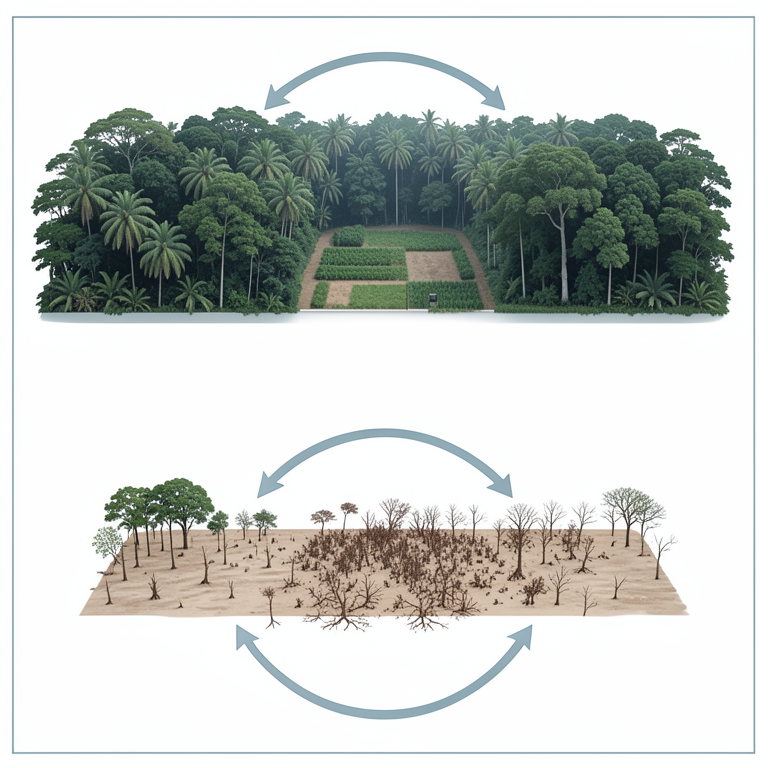
Impact of Population Pressure on Jhum Cycles
AI-generated conceptual illustration (Tropical forests and shifting cultivation plots in the Jamuna watershed, Assam). It explains the idea and does not show study data.
View source evidence ↗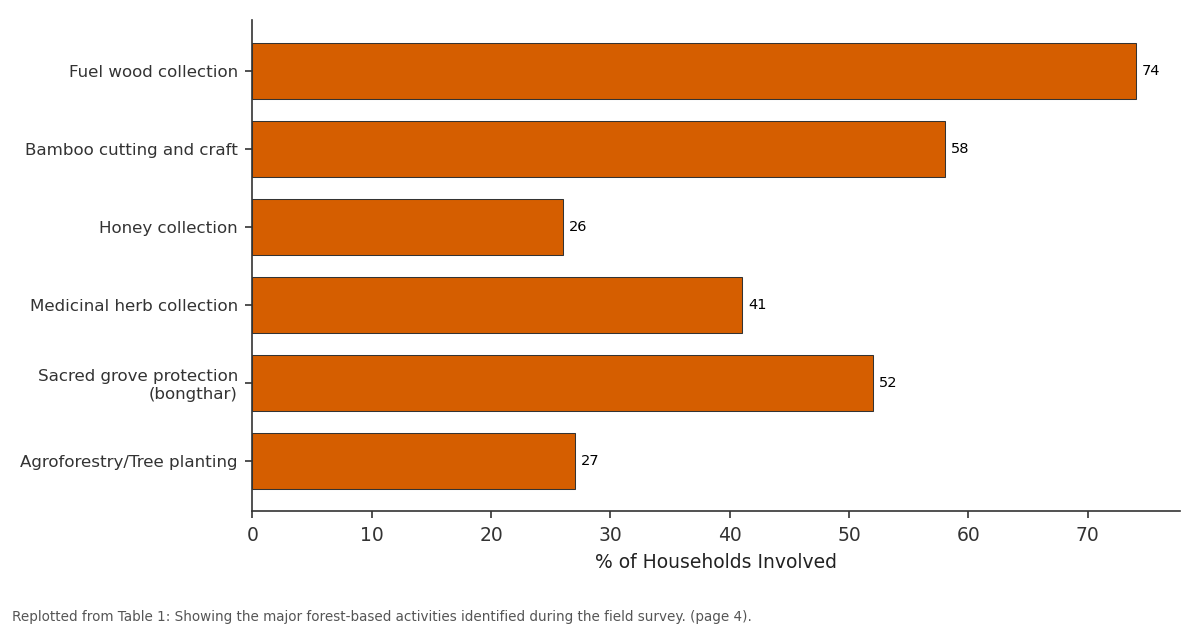
% of Households Involved: Fuel wood collection vs Bamboo cutting and craft vs Honey collection vs Medicinal herb... vs Sacred grove protection...
Replotted from Table 1 (page 4) of the original paper. Every bar is the paper's own table value.
View source evidence ↗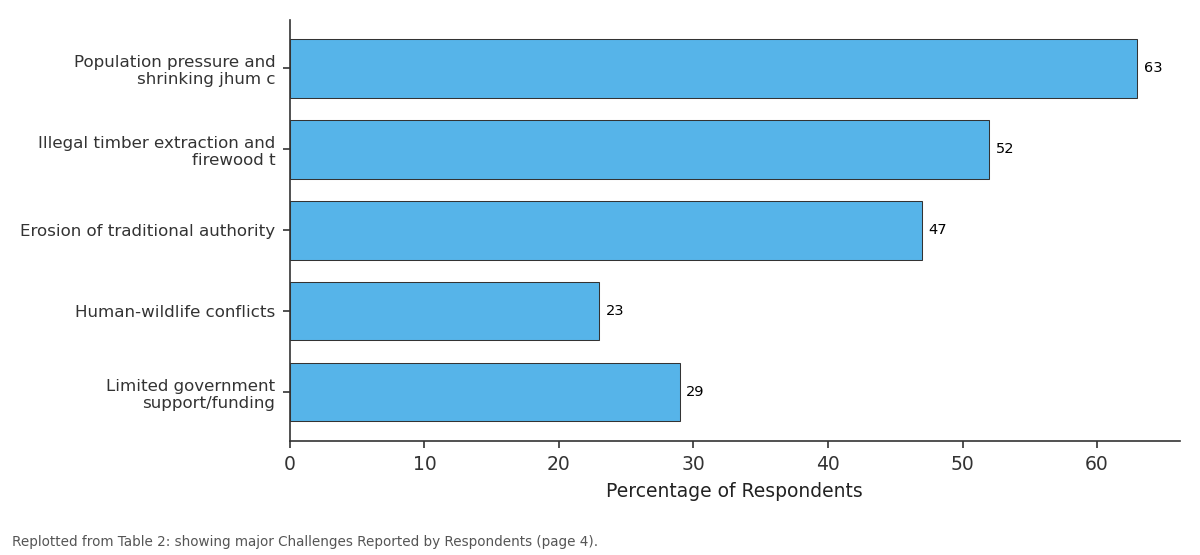
Percentage of Respondents: Population pressure and... vs Illegal timber... vs Erosion of traditional... vs Human-wildlife conflicts vs Limited government...
Replotted from Table 2 (page 4) of the original paper. Every bar is the paper's own table value.
View source evidence ↗Figures & tables
From the original paper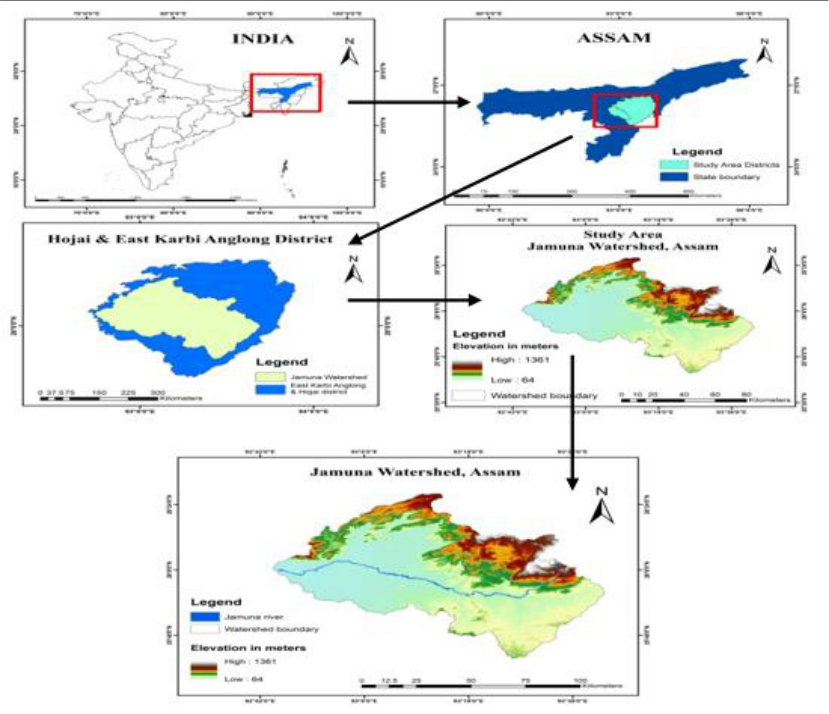 Figure 1
 Table 1
 Table 2
 Table 3
Introduction
Forests are among the most significant ecological assets supporting human survival, biodiversity and climate regulation (FAO, 2020). They provide fuel wood, food, regulate water flows, soil fertility and also hold cultural values for millions of forest-dependent people across the world (Agrawal & Chhatre, 2011) [2] . In tropical regions, especially South and Southeast Asia, the relationship between indigenous communities and forests extends beyond resource use; it encompasses economic benefits, deep spiritual and social connections (Chakraborty et al., 2021) [11] . However, in the last 25 years, deforestation and resource degradation have accelerated due to population growth, agricultural expansion and market-driven timber extraction (Kumar et al., 2020 [19] ; Acharya et al., 2018). In recent scenario, community-based approaches have been increasingly promoted as alternatives to maintain the remaining forest and their restoration (Adedotun et al., 2023) [25] . Community Forest Management (CFM) has emerged as a participatory mechanism that integrates local communities and traditional knowledge in the sustainable use of forest resources (Baynes et al., 2015) [6] . The model is based on the principle that people living adjacent to forests are the most capable guardians of their ecological environment (Gilmour, 2016). In India, the evolution of CFM has been closely linked to Joint Forest Management (JFM) programs initiated in the early 1990s under the Ministry of Environment, Forest and Climate Change (MoEFCC). These programs have sought to integrate local participation in forest protection, afforestation and biodiversity conservation (Kumar et al., 2019) [20] .
Yet, despite institutional innovations, implementation outcomes remain uneven across regions due to sociocultural diversity, administrative limitations, negligence and the erosion of traditional governance systems (Singh & Das, 2021) [28] .
Community and Forest Linkages in Northeast India
The hilly and plateau regions of Northeast India are predominantly inhabited by various tribal groups, whose subsistence and identity are inseparable from the natural forest ecosystems (Saikia, 2018) [27] . Among these tribal groups, the Karbi people of Assam are known for their distinct forest management traditions and clan-based authority (Teron & Borthakur, 2017) [29] . Their indigenous system managed by village heads, regulates forest access through community consensus, seasonal restrictions and sacred forest protection (Terang, 2019) these traditional norms emphasize reciprocity with nature and collective responsibility of the people rather than economic maximization. The Jamuna River, flowing through the eastern portion of Karbi Anglong and parts of Hojai district, represents a dynamic socio-ecological landscape. The upper catchment is characterized by dense forests, shifting cultivation (jhum) plots in the hills and small clusters of settlement. The Karbi people inhabiting these uplands have long practiced community forestry combining rotational cultivation (Jhumming), sacred grove protection and controlled harvesting of non-timber forest products (NTFPs) such as bamboo, honey, wild fruits, wild edible vegetables and medicinal plants (Teron & Goswami, 2022) [30] . In the past two decades, increased demographic pressure and declining fallow periods in Jhum cultivation have led to degradation and shrinkage of community forest lands and it results instability inside the watershed (Das & Dutta, 2020) [14] .
Rationale of the Study:
Several studies have examined JFM and participatory forestry in India, but there is limited understanding of how indigenous Karbi people practices ecological sustainability in the context of watershed-based forest management (Lalramnghinglova, 2021) [21] . Most available works focus on policy-level evaluations rather than community level dynamics. Understanding the local ways of organizing forest governance, manage conflicts and adapt socio-economic transitions is important for framing inclusive forest policies in the tribal dominant places (Agrawal, 2014 [1] ; Menzies, 2018) [22] . The Jamuna watershed of Assam, being ecologically fragile and socioculturally unique, provides an ideal site to explore such inter-linkages between people and forest covers. This study aims to assess the contribution of community forest management and traditional Karbi style conservation practices in maintaining forest ecosystems in the upstream hilly region of the Jamuna watershed. It focuses on identifying the major practices, evaluating their effectiveness and examining the challenges faced by local communities in sustaining these traditional systems under the changing environmental conditions.
Research Questions and Objectives
The study is guided by the following key questions: 1. What are the traditional and community-based approaches employed by the Karbi tribes to manage forest resources in the Jamuna watershed? 2. How effective are these approaches in sustaining forest cover and biodiversity? 3. What socio-economic and institutional challenges hinder effective community forest management?
The main objective of this work is to document indigenous and community driven forest conservation methods in the upstream of Jamuna watershed of Assam.
Materials and Methods
Study Area: The study was conducted in the upstream hilly catchment of the Jamuna watershed of Assam, Jamuna is a tributary of the Kopili River; Jamuna flows through East Karbi Anglong and Hojai districts, Assam, India. The Jamuna watershed lies between 25°41′N-26°27′N latitude and 92°44ʹ E to 93°40ʹ E longitude (Fig. 1), with a total area of about 3900 sq. km and maximum portion of it lies in the East Karbi Anglong district (Borah & Deka, 2019 [9] ; 2020 [10] ; Nasrin & Barman, 2025) [23] .
Sampling Design
Four Karbi villages were purposively selected from the upper Jamuna watershed based on their dependence on forest resources and presence of community-managed forests. The selected villages are-Rongchelot, Amlakhi, Saijang and Dillai (near Manja of Karbi Anglong) represent variations in settlement size, forest and accessibility. Each selected village comprised 25 to 40 households. A representative sample of 120 households was selected proportionally from the four villages. Within each village, households were chosen through simple random sampling to ensure inclusiveness of all gender, age and occupation. With that 12 key informants were identified purposively, including village headmen, members of the community forest committee, women's group representatives and officials from the local forest range office.
Data Collection
The study is done with a mixed method research design, combining quantitative household surveys and qualitative participatory approaches.
1. Household Questionnaire Survey: A structured questionnaire was prepared and collected data in 2024, covering demographic characteristics, livelihood dependence on forests, awareness of conservation rules, participation in community forestry and perceptions of forest condition. 2. Focus Group Discussions (FGDs): Two FGDs were conducted in each village (one with elders and one with youth and women's groups) to understand collective forest governance, customary laws and emerging challenges.
Key Informant Interviews:
Semi-structured interviews with local leaders and forest officers explored institutional linkages between traditional systems and formal forest management.
Ethical Considerations
Informed consent was obtained from all participants before data collection. The study respected local customs and ensured confidentiality of respondents. Findings were shared with village committees for validation and feedback.
Results
Results
Socio-Demographic Characteristics of Respondents
The survey covered 120 households across four Karbi villages, named -Rongchelot (30 households), Amlakhi (28), Saijang (32) and Dillai (30). Out of the 120 respondents, 67% were men and 33% were women; the majority (58%) belonged to the 30
Community Forest Management Practices
The Karbi villages in the upper Jamuna basin follow customary systems of forest use and conservation; their three main practices were identified as:
1. Village Community Forest Regulation: Each village maintains a demarcated forest area managed collectively under the village council (Rong Amei).
Cutting of large timber, hunting of wildlife, or clearing for new cultivation is prohibited without community permission. Around 74% of respondents affirmed the existence of such collective rules, while 11% said enforcement had weakened over time.
Sacred Groves: Every villagers in the hills has to
maintain the protected forest area, a small forest patch is preserved for ritual purposes. Entry is restricted during sacred periods and extraction is strictly forbidden. Elders reported that trees in these groves are over a century old.
Shifting Cultivation with Fallow Regeneration:
Traditionally, jhum cycles lasted 10 to 12 years, allowing forests to regenerate. Currently, due to population pressure, fallow periods have reduced to 3 to 6 years. However, 68% of respondents reported deliberate replanting of bamboo and native species on abandoned plots to restore fertility.
Customary Sanctions and Incentives:
Villages impose fines for illegal tree cutting or forest burning, often in the form of livestock or grain contributions. Conversely, community members who volunteer in fire control or replanting drives receive symbolic rewards during village festivals.
Perceived Effectiveness of Management Approaches
The villagers were asked about the effectiveness of current community forest practices, in conserving local forest.
Respondents associated success with visible forest regrowth, reduced soil erosion and increased wildlife sightings (especially wild elephants, monkeys and hornbills etc). The distribution of responses regarding perceived effectiveness:
• Moderately effective -45%
Challenges Faced by the Community
Despite community control, several challenges threaten the sustainability of local forest systems (Table 2). Qualitative narratives revealed that the decline of customary forest rules coincides with the growing market forces and weak enforcement of traditional sanctions. Elders also lamented the lack of youth engagement in community meetings and rituals.
| Challenge | Percentage of Respondents | Description |
|---|---|---|
| Population pressure and shrinking jhum cycle | 63% | Shorter fallow periods cause soil degradation |
| Illegal timber extraction and firewood trade | 52% | Driven by outside traders and urban demand |
| Erosion of traditional authority | 47% | Youth less interested in age old customary rules |
| Human-wildlife conflicts | 23% | Crop damaged by wild animals |
| Limited government support/funding | 29% | Lack of recognition for community forests |
Table text extracted from the original PDF; superscript letters are shown inline. The original table image is below.
View original table image
Community Strategies and Innovations
To address these challenges, the villages have introduced several adaptive measures with assistance from local NGOs and forest extension staff: 1. Re-establishment of Forest Committees: Each village has formed or revived a Community Forest Management Committee composed of elders, women and youth representatives.
Agroforestry and Home Gardens:
Households increasingly plant multipurpose trees such as Michelia champaca, Areca catechu and Bambusa balcooa in their homesteads.
Women's Role:
Women's groups have begun processing wild fruits and medicinal herbs into valueadded products like pickles, jelly and balms for alternative incomes.
Overall, 87% of respondents supported continued collective management, expressing pride in ancestral forest traditions. As one elder from Amlakhi stated, "The forest is like our ancestor's home; if we lose it, we lose ourselves."
Quantitative Indicators of Forest Condition
Based on the field observation and participatory counting, villagers perceived an overall 10 to 12% improvement in forest density over the past decade. Regenerated fallows now exhibit secondary growth dominated by Schima wallichii, Albizia procera and bamboo species etc and small wildlife populations have reportedly increased. The data shows that the persistence of indigenous management practices like sacred grove protection, fallow land restoration and collective monitoring has maintained ecological balance within the upper Jamuna watershed.
Discussion
Discussion
Community-Based Forest Management and Indigenous Systems:
The results demonstrate that community forest management (CFM) in the upper Jamuna watershed is deeply rooted in indigenous Karbi ecological ethics. The strong participation rate (almost 80%) and high perception of effectiveness (almost 60-70%) shows the enduring relevance of traditional systems that integrate livelihood needs with ecological care. These findings align with studies by Agrawal (2014) [1] and Baynes et al. (2015) [6] , who observed that CFM success depends not only on institutional arrangements but also on local cultural norms, reciprocity and social cohesion. The Karbi people of upstream practices protecting bongthar (sacred groves) resonates with conservation models reported from other tribal regions of Northeast India, for example the Khasi Law Kyntang in Meghalaya and the Umang Lai forests of Manipur, where biodiversity is preserved through ritual taboos and religious associations (Tiwari et al., 2010 [31] ; Upadhaya & Barik, 2021) [32] . These sacred forests serve as refugia for rare species and form micro-watersheds that sustain perennial springs (Khumbongmayum et al., 2006) [17] . In the upstream zones of Jamuna watershed, sacred groves not only conserve biodiversity but also reinforce a restraint against overexploitation, which is often missing from formal forestry programs (Teron & Goswami, 2022) [30] . The Karbi people approach to rotational shifting cultivation (jhum) reflects adaptive landscape management rather than environmental degradation. When fallow periods are adequate, jhum promotes nutrient cycling and secondary succession (Ramakrishnan, 2007) [34] . The population pressure and shrinking fallow cycles now threaten this sustainability. Similar concerns have been raised across Northeast India where demographic changes and land scarcity have shortened the regenerative period of shifting cultivation, leading to soil erosion and vegetation loss (Choudhury et al., 2020) [13] .
Community Participation and Livelihood Linkages
The integration of livelihood benefits like bamboo crafts, forest edibles collection and medicinal herb gathering, with forest protection shows the socio-ecological resilience of the Karbi community. Such livelihood-forest linkages are central to participatory conservation (Ao et al., 2019 [4] ; Kumar et al., 2020) [19] . The challenges like economic marginalization and weak market access is also there.
Respondents noted that while community protection restricts unsustainable extraction, it also limits potential earnings without alternative livelihood support. As Singh and Das (2021) [28] argue, community forestry in India often suffers when economic incentives do not match the conservation restrictions. To counter this, the villages of the upstream of Jamuna watershed have introduced micro-level initiatives, like women-led herbal processing and community-based measures of forest protection (Kongkeaw et al., 2019 [18] ; Pokharel et al., 2007) [24] .
Institutional and Governance Dimensions
Traditional Karbi governance under the Rong Amei remains the central mechanism of forest regulation. Yet, respondents noted declining youth participation and reduced respect for customary authority. The erosion of traditional governance is not unique to the Jamuna watershed; similar patterns have been documented among Naga and Mizo tribes, where the shift from collective to individualized land management undermines communal decision-making (Lalramnghinglova, 2021) [21] . Strengthening these indigenous institutions through formal recognition and integration into decentralized forest governance is very important. The findings reveal that community forestry succeeds when tenure rights, local leadership and benefit-sharing mechanisms are clearly defined. This supports Baynes et al.'s (2015) [6] observation that clarity of ownership and decision-making autonomy determine the success of CFM initiatives. The results also aligns with Berkes (2004) [7] , who emphasized that sustainable community management arises when local users feel both custodial and beneficiary rights over forest resources. In India, the Forest Rights Act (FRA) of 2006 provides legal backing for community forest resource (CFR) ownership, yet its implementation in Assam remains partial and inconsistent (Upgupta et al., 2018) [33] . Recognizing Karbi and other community forests under FRA provisions could provide institutional legitimacy, improve access to government support and reduce external encroachment.
Ecological Implications
Quantitative perceptions of forest improvement such as increased canopy density and enhanced NTFP availability etc suggest that the participatory and indigenous approaches have contributed to ecological stability. The regeneration of native tree species and improved soil moisture conditions observed in the study align with ecological outcomes documented in Nepal's community-managed forests (Gautam, 2009) [15] and Tanzania's participatory forestry programs (Blomley et al., 2008) [8] . The protection of bongthar and community reforestation of fallow plots serve as localized climate adaptation strategies, enhancing carbon sequestration and water regulation. As reported by Giam (2017) [16] , conserving small forest patches in community-managed systems contributes significantly to maintaining regional biodiversity and ecosystem services. Thus, even without large-scale afforestation projects, the Karbi CFM model demonstrates how grassroots conservation can sustain both cultural and ecological resilience (Chirwa & Phiri, 2025) [12] .
Conclusion
This study highlights the crucial role of community forest management and indigenous conservation systems in sustaining the forest ecosystems of the Jamuna watershed in Assam. The Karbi people's practices rooted in traditional values, they believe in animism; where they believe that every living things or natural elements have a distinct spiritual essence. Therefore they maintain sacred groves and rotational land use for Jhum cultivation etc measures they take to protect the nature. They demonstrate how community institutions can maintain ecological balance while meeting livelihood needs. The results reveal that despite growing demographic and economic pressures, local participation and traditional ethics have helped retain forest cover and biodiversity. However, some challenges persist in the form of reduced fallow cycles, illegal logging and weakening customary governance. By embedding traditional Karbi ecological wisdom into formal forest management policies, the Jamuna watershed can serve as a model of people-centered conservation for other tribal landscapes in North-East India. As the findings indicates that empowering communities not only protects forests but also strengthens cultural identity, resilience and sustainable livelihoods.
Figures and tables from the paper
| Forest-related Activity | % of Households Involved | Remarks |
|---|---|---|
| Fuel wood collection | 74% | Mainly women |
| Bamboo cutting and craft | 58% | Seasonal livelihood |
| Honey collection | 26% | Managed by men’s groups |
| Medicinal herb collection | 41% | Mainly older women |
| Sacred grove protection (bongthar) | 52% | Collective activity |
| Agroforestry/Tree planting | 27% | Practiced near homesteads |
Table text extracted from the original PDF; superscript letters are shown inline. The original table image is below.
View original table image
| Indicator | Percentage Reporting Improvement | Remarks |
|---|---|---|
| Forest canopy density | 60% | Natural regeneration and protection |
| Wildlife sightings | 65% | Return of small animals and birds |
| Soil moisture and water availability | 50% | Due to tree cover near streams |
| NTFP availability | 55% | Sustainable harvesting practices |
Table text extracted from the original PDF; superscript letters are shown inline. The original table image is below.
View original table image
References
34 in the original paper- Agrawal A. Studying the commons, governing common-pool resource outcomes: Some conceptual and methodological challenges. Environmental Science & Policy. 2014;36:86-93.
- Agrawal A, A. Against monoconsequentialism: Multiple outcomes and their drivers in social-ecological systems. Global Environmental Change. 2011;21(1):1-3.
- Agrawal A, Gibson C. Enchantment and disenchantment: The role of community in natural resource conservation. World Development. 1999;27(4):629-649.
- Ao B, Pongen I, Sema A. The role of non-timber forest products in household economy and forest conservation in Nagaland, India. Indian Journal of Traditional Knowledge. 2019;18(3):594-602.
- Arnold JEM. Forests and People: 25 Years of Community Forestry. Rome: FAO; 2001.
- Baynes J, Herbohn J, Smith C, Fisher R, Bray D. Key factors which influence the success of community forestry in developing countries: Lessons from a metastudy. Global Environmental Change. 2015;35:226238.
- Berkes F. Sacred Ecology: Traditional Ecological Knowledge and Resource Management. 3rd ed. Routledge; 2014.
- Blomley T, Pfliegner K, Isango J, Zahabu E, Ahrends A, Burgess N, et al. Seeing the wood for the trees: An assessment of the impact of participatory forest management on forest condition in Tanzania. Oryx. 2008;42(3):380-391.
- Borah A, Deka N. Hydrology and land-use interactions in the Jamuna-Kopili river basin. Indian Journal of Geography. 2019;51(3):125-140.
- Borah A, Deka N. Floodplain dynamics and human adaptation in Assam. Asian Journal of Geographical Research. 2020;12(2):101-119.
- Chakraborty S, Dutta D, Rahman M. Human-forest interaction and traditional ecological knowledge among tribal communities in Northeast India. Sustainability. 2021;13(21):11822.
- Chirwa BR, Phiri A. Contribution of community forest management groups to effective forest conservation: A case study of the Mwamba Community Forest in Kasama, Zambia. Journal of Applied Life Sciences and Environment. 2025;58(2):215-231.
- Choudhury D, Nath AJ, Das AK. Changing dynamics of shifting cultivation and its ecological implications in Northeast India. Current Science. 2020;118(4):541-548.
- Das S, Dutta R. Forest degradation and socio-economic drivers in the Jamuna River Basin, Assam. International Journal of Environmental Studies. 2020;77(3):489-502.
- Gautam AP. Equity and livelihoods in Nepal's community forestry. International Journal of Social Forestry. 2009;2(2):101-122.
- Giam X. Global biodiversity loss from tropical deforestation. Proceedings of the National Academy of Sciences of the United States of America. 2017;114(23):5775-5777.
- Khumbongmayum AD, Khan ML, Tripathi RS. Sacred groves of Manipur, northeast India: Biodiversity value, status and strategies for their conservation. Biodiversity and Conservation. 2006;15:1545-1570.
- Kongkeaw T, Piboonrungroj P, Punyapiroje C. Factors influencing community participation in forest conservation in Thailand. Forest Policy and Economics. 2019;104:22-29.
- Kumar A, Singh VK, Sharma R. Forest governance and community participation in India: An analysis of policy transitions. Environmental Management. 2020;65(4):485-497.
- Kumar C, Saint-Laurent C, Begeladze S, Calmon M, editors. Enhancing Food Security through Forest Landscape Restoration: Lessons from Asia and Africa. Gland: IUCN; 2019.
- Lalramnghinglova H. Traditional ecological knowledge and forest management among Mizo tribes, Mizoram, India. Asian Journal of Forestry. 2021;2(1):35-47.
- Menzies NK. Communities and the Environment: Ethnicity, Gender, and the State in Community-Based Conservation. Rutgers University Press; 2018.
- Nasrin M, Barman B. NDVI and LULC change in Jamuna watershed of Assam: An assessment based on Landsat imagery. Ecology, Environment and Conservation. 2025;31(Suppl):S174-S182.
- Pokharel BK, Branney P, Nurse M, Malla YB. Community forestry: Conserving forests, sustaining livelihoods and strengthening democracy. Journal of Forest and Livelihood. 2007;6(2):8-19.
- Adedotun A, Tella IO, Saka MG, Ogunbode AS. Perception of Girei community on biodiversity conservation in Girei forest reserve of Adamawa state, Nigeria. South Asian J Agric Sci 2023;3(1):37-41.
- Rao RJ, Veena Vishwanath R, Venkateshwaran M. Community management of forests in India: Its impact on environment and livelihood. In: Environment and Sustainable Development. Serials Publications; 2019. p. 33-48.
- Saikia A. Forests and Ecological History of Assam, 1826-2000. Oxford University Press; 2018.
- Singh S, Das S. Joint forest management and participatory governance: A critical assessment in India's northeast. Journal of Environmental Planning and Policy. 2021;23(6):801-818.
- Teron R, Borthakur SK. Traditional forest use and management among the Karbi tribe of Assam, India. Indian Journal of Traditional Knowledge. 2017;16(4):588-596.
- Teron R, Goswami S. Indigenous ecological practices and conservation ethics among the Karbis of Assam. Ecology, Environment and Conservation. 2022;28(2):521-530.
- Tiwari BK, Barik SK, Tripathi RS. Sacred forests of Meghalaya: Biodiversity, ecological services and management strategies. Indian Journal of Forestry. 2010;33(2):157-164.
- Upadhaya K, Barik SK. Sacred forests and conservation ethics in Northeast India. Indian Forester. 2021;147(4):317-326.
- Upgupta S, Singh RK, Nair SS. Implementation challenges of the Forest Rights Act in India: A critical analysis. Land Use Policy. 2018;79:950-957.
- Ramakrishnan PS. Shifting Agriculture and Sustainable Development: An Interdisciplinary Study from NorthEastern India. UNESCO-MAB/Parthenon Publishing; 2007.