
Research article · 2025 · Full text
International Journal of Agriculture and Food ScienceGermination response of local bean genotypes to seed treatment with different ground plant powders
Volume 7(11) · Pages 89–93 · DOI: 10.33545/2664844x.2025.v7.i11b.944 ↗
Research areasInsect Pest Control StrategiesSeed Germination and PhysiologyPlant Growth Enhancement Techniques
Abstract
Author-writtenSeveral species of insects have been documented to cause significant post-harvest losses, spoilage, and lowered demand for beans in the market, causing huge economic losses for farmers in Botswana. Their management has, for years, relied on the use of synthetic grain protectants. However, the use of synthetic grain protectants has raised serious environmental and human health concerns, and have promoted interest in the use of plant derived grain protectants as safer alternatives. This study was undertaken to evaluate the effect of garlic, peppermint, marigold and fever tea ground plant powders on germination of different bean seed genotypes. The experiment was arranged in a split plot design, laid out in a Complete Randomized Design with 3 replicates. The study revealed that seeds treated with garlic, fever tea and marigold recorded the highest average germination percentages which were 100, 99.17 and 97.5 percent respectively, while peppermint recorded an average germination percentage of 85.83 percent. The untreated control recorded the lowest average emergence of 77.5 percent. This implies that plant powders have a positive effect on the germination of seeds of the different bean genotypes assessed. Since this study was undertaken in the laboratory, further research and field testing is necessary to confirm these laboratory findings.
Summary
Source-checkedPlain-language reading of the full paper, prepared with AI and checked against the text. Each point links to the authors' own words.
Why it matters
- Insect pests cause significant economic losses for bean farmers in Botswana through post-harvest spoilage and reduced market demand. View evidence ↗
- There is a growing interest in plant-derived grain protectants because synthetic alternatives raise concerns regarding human health and the environment. View evidence ↗
- While traditional African communities have used ground plant powders for grain protection, their specific effect on the germination of local bean genotypes in Botswana has not been studied. View evidence ↗
The question
- The study aimed to evaluate how ground powders from garlic, peppermint, marigold, and fever tea affect the germination of various bean seed genotypes. View evidence ↗
What they did
- The research was conducted in the Entomology laboratory at the Botswana University of Agriculture and Natural Resources. View evidence ↗
- The experiment utilized a split plot design within a Complete Randomized Design, using three replicates. View evidence ↗
- Germination was measured by counting emerged beans after seven days of storage in a dark place under ambient conditions. View evidence ↗
What they found
- Garlic treatment resulted in the highest average germination percentage at 100%, which was statistically similar to fever tea and marigold. View evidence ↗
- Fever tea treatment achieved the second highest average germination rate of 99.17%. View evidence ↗
- Marigold treatment resulted in the third highest average germination percentage at 97.50%. View evidence ↗
- Germination varied by genotype, with the X-genotype showing the highest mean (98.00%) and DAB520 showing the lowest (81.33%). View evidence ↗
What it means
- The authors conclude that marigold, garlic, and fever tea are potential tools for managing C. maculatus because they possess insecticidal activity and positively affect seed germination. View evidence ↗
- Peppermint is not recommended for seed management because it significantly reduces the germination percentage of the seeds. View evidence ↗
- The study was limited to a laboratory setting, and the authors state that further research under actual storage conditions is required to validate the findings. View evidence ↗
Visual summary
1 visualsIllustrations explain the paper; they do not show study data.
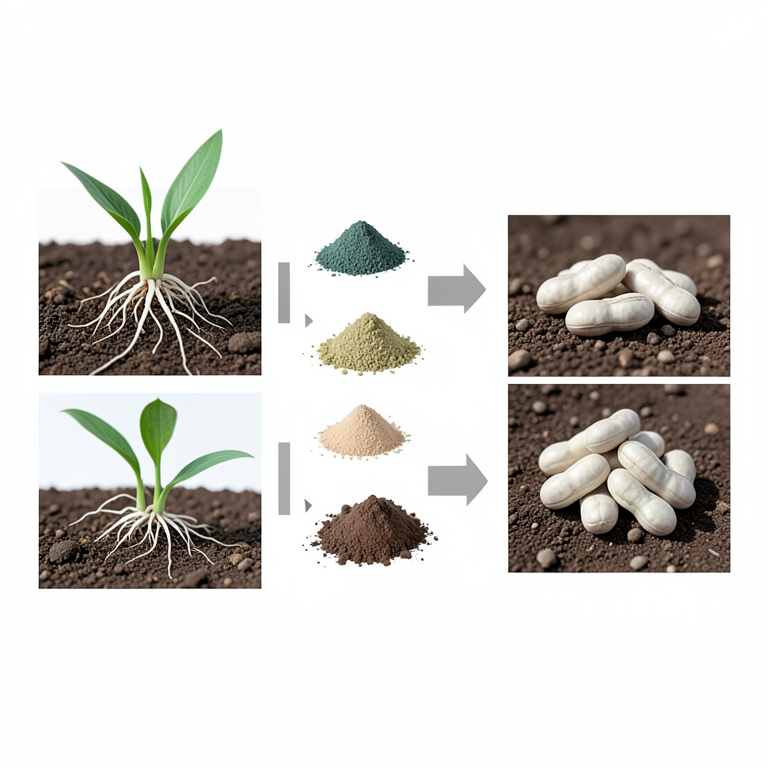
Comparison of Plant Powder Effects on Germination
AI-generated conceptual illustration (common bean seeds (Phaseolus vulgaris)). It explains the idea and does not show study data.
View source evidence ↗Figures & tables
From the original paper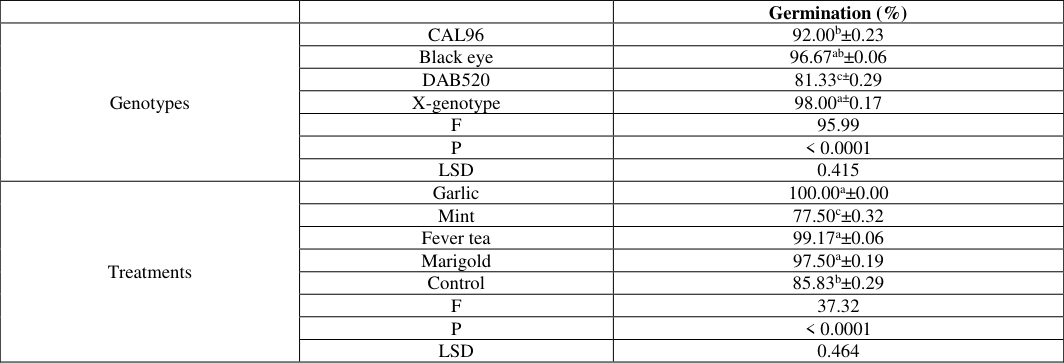 Table 1
Introduction
Phaseolus vulgaris L. (Fabaceae), Common bean, is among the highly valued legume crops worldwide (ref). It is among the most popular pulse crops consumed in Botswana (Mangole et al., 2023) [17] . It provides for the nutritional needs of local communities due to its high protein and energy content (Astaraki et al., 2025; Mashiqa et al., 2019) [2,20] . Beans are an excellent source of important minerals, vitamins and dietary fibre for low income households in most developing countries (Kutoš et al., 2003) [15] . However, its production has not been satisfactory in most developing countries owing abiotic and biotic factors (Katungi et al., 2017) [12] . The damage by storage pests during storage is among the most important constraints, which inflict significant losses (Mutari et al., 2021; Estelle et al., 2018) [21,5] . Quantitative losses are inflicted through consumption of the grain, while qualitative losses through contamination from feces and casts (Kaliramesh et al., 2013) [11] . While other methods exist, including integrated pest management (Makate, 2016) [16] , the control of storage pests is heavily dependent on the application of synthetic grain protectants which for a long time were viewed to be effective, quick and secure. However, synthetic grain protectants have been discovered to possess several disadvantages which include; undesirable effect on produce and the environment, toxicity to humans and animals, presence of residues on the commodity, and resistance development in target pests (Rajkumar et al., 2020; Singh, 2017) [25,28] . These negative outcomes have necessitated the search for more eco-friendly control methods for storage pest management such as the use of plant extracts as grain protectants. Plant extracts have been recognized as potential alternatives to synthetic grain protectants owing to their biodegradability, ease of use, low harm to humans and wildlife, less risk of pesticide resistance development, and no harm to non-target and beneficial entomofauna. Besides protecting plants from different pest and diseases, several studies have reported botanical plant extracts to influence germination of different crops. In a study by Fritz (2007) [6] , germination and growth of lettuce was significantly inhibited by goatweed (Hypericum polyanthemum) plant extract. A study by Ismail and Chong in 2002 [9] investigated the effects of Mikania extracts on various plant species, including tomato (Lycopersicon esculentum Mill.). It was reported that the aqueous extracts of Mikania significantly impacted the germination and early growth of tomato. Besides the inhibitory effects, several reports indicate the biostimulant effects of plant extracts on germination (Jyoti and Kumar, 2025) [10] . Research by Abdel-Monaim (2011) [1] found that plant extracts from Eugenia jambolana, Nerium oleander, and Citrullus colocynthis improved the growth and yield of lupine plants. A study by Rady et al. (2013) [24] suggested that soaking of bean seeds in Moringa oleifera leaf extracts resulted in increased growth and yield. Although ground plant powders have been used as grain protectants by traditional African communities for decades (Kiri et al., 2024; Yadav et al., 2022) [13,30] , no studies have been undertaken in Botswana to determine their effect on germination of local bean genotypes. As much as it is essential to identify effective ground plant powders, it is also important to determine their effect on germination parameters of bean seeds following treatment. This study investigated the effects of selected ground plant powders on local bean seed germination.
Materials and Methods
This experiment was carried out in the Entomology laboratory, Department of Crop and Soil Sciences at Botswana University of Agriculture and Natural Resources (BUAN) (24°34′ 25″S, 25°95′0″E; altitude: 998 m).
Preparation of plant powders
Garlic and peppermint were bought from the local markets, marigold was collected from a local garden and fever tea was collected from a local farms. Plant powders were obtained by thoroughly rinsing the plant vegetative part (clove, flowers or leaves) in distilled water thrice to remove dirt, and then dried at room temperature in the Entomology laboratory for 7 days. The plant materials were then oven dried at 60±1 ºC for 48 h and each were preserved in their own clear airtight bottle which was then placed in a refrigerator at 4±2 ºC.
Experimental set up
Germination test was carried out on beans which had been treated with the 4 plants (pepper mint, fever tea, marigold and garlic) powder and left in storage for a month. The Germination test was carried out as per the standard germination test for seed viability. The germination of P. vulgaris that has been mixed with the plant extract was assessed. Upon termination of experiment 2 (4.4) the seeds were then taken for germination test. Ten seeds of each bean variety were randomly collected then they were soaked in water for 24 h, and then placed in Petri dishes over a moist germination paper in a split plot design arranged in a Complete Randomized Design with three replicates. The petri dishes were then kept in a dark place in the Entomology laboratory under ambient conditions, and number of emerged beans was taken at the end of seven days. The germination percentages were calculated following Ogendo et al. (2004) [22] .
Data Analysis
The Data collected on various parameters from the experiments were entered into Microsoft excel and statistical analysis was performed using the SAS 9.4 software package. Data was subjected to analysis of variance (ANOVA) and the means were separated using the Least Significant Difference (LSD) at P<0.05. The arcsine square root transformation, expressed as arcsine √(percent x/100), was used to stabilize the variance of percentage data in studies involving adult emergence, adult mortality, seed weight loss, DSI, and germination [arcsine √(percent x/100] (Bromiley & Thacker, 2002) [4] before analysis. Pearson correlation was performed on the relationship between biochemical components and pest susceptibility index.
Results
Results
Germination Test Experiment
Table 1 illustrates the germination percentage of different genotypes treated with different plant extracts. The experimental findings revealed that there was significant difference among the seed germination in terms of germination percentage (F (3, 40) =95.99, P˂0.0001). Blackeye and X genotype had significantly highest germination percentage compared to other genotypes, and they were not significantly different from each other. However, X-genotypes was significantly different in terms of percentage germination, from both CAL96 and DAB520. Germination percentage of CAL96 and Blackeye were not significantly different from each other, but they were significantly different from that of DAB520. More so, DAB520 and X-genotype significantly differed in germination percentage. The individual means of germination for genotypes ranged from 81.33±0.29 (DAB520) to 98.00±0.17 (X-genotype). Mean of germination for genotype CAL96 was the second lowest with 92.00±0.23 followed by that of blackeye cowpeas with 96.67±0.06. The study also showed that there was significant difference in germination percentage among the treatments (F (4, 40) =37.32, P˂0.0001). There was no significant difference was observed among treatments garlic (100.00±0.00), fever tea (99.17±0.06) and marigold (97.50±0. 19). In terms of germination percentage these treatments had the highest germination percentage. The three treatments showed high germination compared to mint (77.50±0.32) and control (85.82±0.29). However, mint and control had significantly different germination percentages (Table 1).
| — | — | Germination (%) |
|---|---|---|
| Genotypes | CAL96 | 92.00b±0.23 |
| Black eye | 96.67ab±0.06 | |
| DAB520 | 81.33c±0.29 | |
| X-genotype | 98.00a±0.17 | |
| F | 95.99 | |
| P | < 0.0001 | |
| LSD | 0.415 | |
| Treatments | Garlic | 100.00a±0.00 |
| Mint | 77.50c±0.32 | |
| Fever tea | 99.17a±0.06 | |
| Marigold | 97.50a±0.19 | |
| Control | 85.83b±0.29 | |
| F | 37.32 | |
| P | < 0.0001 | |
| LSD | 0.464 |
Table text extracted from the original PDF; superscript letters are shown inline. The original table image is below.
View original table image
Discussion
Discussion
Germination response of bean genotypes to different plant extracts
A germination test was performed on seeds treated with plant powder to investigate the effects of the treatments on their germination. The findings of this study revealed a significant effect of the plant powders tested on germination of all the seeds (CAL96, DAB520, X-genotype and blackeye). After 7 days the average germination percentage in different treatments and untreated seeds ranged from 77.5 to 100 percent. Garlic, fever tea and marigold treatments were observed to be statistically at par with each other and these were seen to have recorded the highest average germination percentages at 100, 99.17 and 97.5 percent, respectively. Peppermint recorded the second lowest average germination percentage at 85.83 percent, whilst the untreated control recorded the lowest average emergency percentage of 77.5. Observations from the present study have indicated that garlic can provide satisfactory protection and maintain quality needed for germination to host seeds against C. maculatus as shown by the 100 percent seed percent emergence in all the experimental units (CAL96, DAB520, X-genotype and blackeye cowpeas). The results of the experiment might be due to allelopathic properties of garlic which cause the seeds to emerge faster than when they are not treated with anything. Garlic treated seeds were observed to have started germination on the 4th day after germination test commenced. This observation is consistent with several studies. Perelló et al. (2013) [23] found that garlic extract, contains the bioactive compound allicin, which can promote wheat seed germination and seedling growth. Hayat et al. (2018) [8] reported on the growth promoting activity to wheat seed germination due to the presence of bioactive compounds found in garlic which include allicin, vitamins, flavonoids, phenolic compounds, carbohydrates, and enzymes. Hafez et al. (2013) [7] while investigating the impact of garlic extract on wheat seed germination, found that it can enhance germination and seedling health, particularly in pathogeninfested seeds. The present study has also shown that fever tea provided the second highest emergence with an average of 99.1 percent. The germination percentage obtained in fever tea for each seed were 100 percent in both CAL96 and Blackeye, and then 96.7% in both DAB520 and X-genotype. Germination was observed to have started within the first five days of the germination experiment. These results indicate that fever tea improves the germination of seeds (CAL96, DAB520, X-genotype and black eye) when compared to untreated control, which might be due to chemical components found in fever tea. In his 2017 publication, Alfred Maroyi [18] reviewed the plant growthpromoting properties of fever tea (Lippia javanica) owing to the presence of various phytochemicals, including alkaloids, flavonoids, amino acids, triterpenes, iridoids, and minerals. While Maroyi's [18] review focuses on the broader aspects of the plant, other studies have explored specific growthpromoting properties. For example, Mashela et al. (2010) [19] also reported growth promoting properties of fever tea on tomato. Specifically, they found that fever tea, when applied as a soil amendment, significantly increased the shoot and root dry weight, chlorophyll content, and stem diameter of tomato plants compared to untreated plants. This suggests that fever tea can be used as a sustainable alternative to synthetic grain protectants and as a plant growth promoter, potentially enhancing crop production and environmental sustainability. Furthermore, their research also indicated that fever tea had nematicidal properties, reducing nematode populations in tomato roots. Marigold had the third highest average germination percentage of seeds (97.5%). From the present study, the average germination percentage recorded from the seeds was 100% for both blackeye and Xgenotype, 96.7% for CAL96 and 93.3% for DAB520. Germination from seeds treated with marigold were observed to have started within five days of the experiment. The result from this experiment indicates that marigold promotes seed germination when compared to untreated control. In their 2014 study, Baličević et al. [3] investigated the effects of marigold on weed germination and growth. Their research, involving both fresh and dry marigold biomass, found that extracts from fresh marigold biomass stimulated germination and growth of hoary cress seedlings, while extracts from dry biomass had an inhibitory effect. This effect was due to the presence of Alpha terthienyl, which is a major light sensitive compound found in marigold known for its pesticidal effects, and shown to enhance the growth and development of several plants, including tomatoes and tobacco (Kumar et al., 2000) [14] . Peppermint recorded the lowest average percentage germination of all the plant powders with an average of 77.50%. The average germination percentage of seeds treated with peppermint were 96.7 for X-genotype, 86.7 for CAL96, 83.3 for blackeye cowpeas and 43.3 for DAB520.
The seeds treated with peppermint were observed to have started germinating within five days of the experiment. Peppermint was observed to reduce the percentage germination in seeds as it recorded the lowest average emergence percent compared to the untreated control, which had an average percent of 85.83%. Some studies suggest that chemical compounds found in peppermint, particularly volatile compounds and aqueous extracts, can inhibit or reduce seed germination. This phenomenon, known as allelopathy, occurs when plants release chemicals that affect the growth of other plants. Dried peppermint leaves release volatile compounds that can inhibit seed germination in other plants, as observed in studies with radish seeds (Szafraniec et al., 2019) [30] . Sarheed et al. (2020) [26] and Skrzypek et al. (2015) [29] , suggested that the allelopathins of mint are responsible for the reduction in germination percentage of tomatoes.
Conclusion
The plant extracts had a significant effect on the germination of seed genotypes used in the current study. Marigold, garlic and fever tea have all the qualities to be considered as potential use in management of C. maculatus on the new genotype seeds as they have previously been shown to possess good insecticidal activity, and also have a positive effect on germination of the seeds. Peppermint though it has good insecticidal properties against C. maculatus, it significantly reduces germination percentage of seeds as such it would not be recommended to use in management of C. maculatus on seeds. Since this study was conducted in the laboratory, further research is needed under storage conditions to validate the results obtained in the present study.
Acknowledgement
AcknowledgementsThe authors acknowledge the Department of Crop and Soil Sciences, Botswana University of Agriculture Natural Resources for providing technical support and lab facilities.
References
30 in the original paper- Abdel-Monaim MF, Abo-Elyousr KAM, Morsy KM. Effectiveness of plant extracts on suppression of damping-off and wilt diseases of lupine (Lupinus termis Forsik). Crop Protection. 2011;30(2):185-191.
- Astaraki S, Atighi MR, Shams-bakhsh M. Highthroughput sequencing revealed the symptomatic common bean (Phaseolus vulgaris L.) virome in Iran. Sci Rep. 2025;15:1621.
- Baličević R, Marija R, Mira K, Marić K, Mikić I. Effect of marigold (Calendula officinalis L.) cogermination, extracts and residues on weed species hoary cress (Cardaria draba (L.) Desv.). Herbologia an International Journal on Weed Research and Control. 2014;14:23-32.
- Bromiley PA, Thacker NA. The effects of an arcsin square root transformation on a binomial distributed quantity. Tina Memo. 2002;007.
- Estelle LYL, Joel AA, Azize O, Joelle T, Alexandre D. Farmer's traditional practices and management methods of stored common bean (Phaseolus vulgaris L.) insect pests in the central region of Benin Republic. Journal of Horticulture and Forestry. 2018;10(8):113-126.
- Fritz D, Bernardi AP, Haas JS, Ascoli BM, Bordignon SA, von Poser G. Germination and growth inhibitory effects of Hypericum myrianthum and H. polyanthemum extracts on Lactuca sativa L. Revista Brasileira de Farmacognosia. 2007;17(1):44-48.
- Hafez OM, Saleh MA, El-Lethy SR. Response of some olive seedlings cultivars to foliar spray of yeast and garlic extracts with or without vascular arbuscular mycorrhizal fungi. World Applied Sciences Journal. 2013;24(9):1119-1129.
- Hayat S, Ahmad H, Ali M, Ren K, Cheng Z. Aqueous garlic extract stimulates growth and antioxidant enzymes activity of tomato (Solanum lycopersicum). Scientia Horticulturae. 2018; 240:139-146.
- Ismail B, Chong T-V. Effects of aqueous extracts and decomposition of Mikania micrantha H.B.K. debris on selected agronomic crops. Weed Biology and Management. 2006; 2:31-38.
- Jyoti, Kumar H. Biostimulant effects of plant extracts on seed germination and storage stability. Archives of Current Research International. 2025;25(5):296-301.
- Kaliramesh S, Chelladurai V, Jayas DS, Alagusundaram K, White NDG, Fields PG. Detection of infestation by Callosobruchus maculatus in mung bean using near-infrared hyperspectral imaging. Journal of Stored Products Research. 2013; 52:107-111.
- Katungi E, Mutua M, Mutari B, Makotore W, Kalemera S, Maereka E, et al. Improving bean production and consumption in Zimbabwe: Baseline report. 2017. Available from: https://core.ac.uk/reader/132691630. Accessed 29 May 2020.
- Kiri IZ, Eghosa O, Usman B, Biliyaminu A. The use of botanicals as pesticides: history, development and emerging challenges. Dutse Journal of Pure and Applied Sciences (DUJOPAS). 2024;10(1a).
- Kumar A, Dunkel FV, Broughton MJ, Sriharan S. Effect of root extracts of Mexican marigold, Tagetes minuta (Asterales: Asteraceae), on six nontarget aquatic macroinvertebrates. Environmental Entomology. 2000;29(2):140-149.
- Kutoš T, Golob T, Kač M, Plestenjak A. Dietary fibre content of dry and processed beans. Food Chemistry. 2003;80(2):231-235.
- Makate NM. A review of insecticide resistance status in Botswana. InTech. 2016. DOI:10.5772/61513.
- Mangole G, Ithuteng M, Radikgomo M, Molosiwa OO. Challenges and opportunities in common bean production and marketing in Botswana: prospects and farmer's perspectives. African Journal of Food Security, Agriculture, Nutrition and Development. 2023;22(5):20461-20479.
- Maroyi A. Lippia javanica (Burm.f.) Spreng.: Traditional and commercial uses and phytochemical and pharmacological significance in the African and Indian subcontinent. Evidence-Based Complementary and Alternative Medicine. 2017; 2017:6746071.
- Mashela PW, Shimelis HA, De Waele D, Mokgalong MN, Mudau FN, Ngobeni LG. Fever tea (Lippia javanica) as a root-knot nematode suppressant in tomato induction. African Plant Protection. 2010; 16:16.
- Mashiqa P, Moatshe O, Tiroesele B, Lekgari L, Molosiwa O. Response of common bean (Phaseolus vulgaris L.) genotypes to varying planting dates in Botswana. Journal of Agricultural and Crop Research. 2019;7(2):26-30.
- Mutari B, Sibiya J, Bogweh Nchanji E, et al. Farmers' perceptions of navy bean (Phaseolus vulgaris L.) production constraints, preferred traits and farming systems and their implications on bean breeding: a case study from South East Lowveld region of Zimbabwe. J Ethnobiology Ethnomedicine. 2021;17(13). https://doi.org/10.1186/s13002-021-00442-3.
- Ogendo JO, Deng AL, Belmain SR, Walker DJ, Musandu AO, Obura RK. Pest status of Sitophilus zeamais Motschulsky, control methods and constraints to safe maize grain storage in Western Kenya. Egenton J Sci Technol. 2004;5(1):175-193.
- Perelló A, Gruhlke M, Slusarenko AJ. Effect of garlic extract on seed germination, seedling health, and vigour of pathogen-infested wheat. Journal of Plant Protection Research. 2013;53(4):317-323.
- Rady MM, Varma CB, Howladar SM. Common bean (Phaseolus vulgaris L.) seedlings overcome NaCl stress as a result of presoaking in Moringa oleifera leaf extract. Scientia Horticulturae. 2013; 162:63-70.
- Rajkumar V, Gunasekaran C, Paul CA, Dharmaraj J. Development of encapsulated peppermint essential oil in chitosan nanoparticles: characterization and biological efficacy against stored-grain pest control. Pesticide Biochemistry and Physiology. 2020;170. https://doi.org/10.1016/j.pestbp.2020.104679.
- Sarheed MM, Rajabi F, Kunert M, Boland W, Wetters S, Miadowitz K, et al. Cellular base of mint allelopathy: menthone affects plant microtubules. Front Plant Sci. 2020; 11:546345. doi:10.3389/fpls.2020.546345.
- Silva TT, Costa FM. Survey of insects that attack stored bean grains Vigna unguiculata (L.) and Phaseolus vulgaris L. in Porto Velho, Rondônia, Brazil. EntomoBrasilis. 2016;9(2):124-128.
- Singh S. Natural plant products as protectants during grain storage: a review. Journal of Entomology and Zoology Studies. 2017;5(3):1873-1885.
- Skrzypek E, Repka P, Stachurska-Swakon A, BarabaszKrasny B, Mozdzen K. Allelopathic effect of aqueous extracts from the leaves of peppermint (Mentha piperita L.) on selected physiological processes of common sunflower (Helianthus annuus L.). Notulae Botanicae Horti Agrobotanici Cluj-Napoca. 2015;43(2):335-342.
- Yadav SPS, Sharma R, Yadav B, Paudel P. History, presence, and perspective of botanical insecticides against insect pests. In: Advances in Agricultural Entomology. 2022;49-69.