
Research article · 2025 · Full text
International Journal of Agriculture and Food ScienceEmerging landscape of agri-startups in India with special reference to Assam
Volume 7(11) · Pages 46–53 · DOI: 10.33545/2664844x.2025.v7.i11a.942 ↗
Research areasInnovation and Socioeconomic DevelopmentInnovations and Analysis in Business and EducationAgricultural Economics and Practices
Abstract
Author-writtenThe landscape of Agri startups in India is undergoing rapid transformation, propelled by increased investments, technological advancement, and proactive government initiatives. The growth trajectory of startups typically progresses throughout the stages of ideation, concept development, commitment, validation, scaling and establishment. Funding sources evolved accordingly, beginning with pre seed and seed stages, followed by early-stage deals, late-stage financing, bridge loans, mezzanine finance, and ultimately, Initial Public Offerings (IPO). The present study is based on data collected from both primary and secondary sources. Eight major Agri startup sectors were identified, with Agri tech accounts for the highest share (42 per cent), followed by food processing (17 per cent) and organic agriculture (15 per cent), while other sector include horticulture, animal husbandry and dairy. Maharashtra leads the nation with 1,363 Agri startups, followed by Gujrat (700) and Karnataka (621), Where Assam ranks seventeen with 124 startups. An analysis of funding received by startups between 2016 to 2024 revealed a substantial annual growth rate of 26.60 per cent, which is statistically significant at 1 per cent level. However, the number of startups founded each year showed a comparatively lower growth rate of 9.43 per cent, also significant at the 1 per cent level. Funding data sourced from the Tracxn database indicated that Agri startups collectively received approximately USD 1.6 billion in 2024. Forecast projections suggest this figure will rise to USD 1.31 billion in 2025 and may reach USD 4.30 billion by 2030, highlighting a strong upward trajectory. Details of 21 Agri startups from Assam are also presented. Despite challenges, continuous policy support, institutional strengthening, and entrepreneurial enthusiasm are expected to accelerate sectoral growth and enable Agri startups to make a sustainable contribution to Indian Economy.
Summary
Source-checkedPlain-language reading of the full paper, prepared with AI and checked against the text. Each point links to the authors' own words.
Why it matters
- India's agricultural startup landscape is transforming quickly due to government initiatives, new technology, and increased investment. View evidence ↗
- Agri-tech startups are using AI, IoT, and big data to improve agricultural supply chains. View evidence ↗
- Despite growth, these startups struggle with an underdeveloped ecosystem and limited access to venture capital and funding. View evidence ↗
The question
- The study aims to analyze growth trends in Indian agri-startups, identify specific startups in Assam, and suggest strategies to improve the ecosystem. View evidence ↗
What they did
- Data was gathered from secondary sources like government and private websites and journals, with Assam-specific data sourced from the NEATEHUB incubator. View evidence ↗
- The researchers used the Compound Annual Growth Rate (CAGR) from 2016 to 2024 to measure growth in funding and the number of startups founded. View evidence ↗
What they found
- Agri-tech is the dominant sector at 42%, followed by food processing (17%) and organic agriculture (15%). View evidence ↗
- Maharashtra has the most agri-tech startups (1,363), followed by Gujarat (700) and Karnataka (621). View evidence ↗
- Funding for agri-startups grew at a statistically significant CAGR of 26.60% between 2014 and 2024. View evidence ↗
What it means
- The authors conclude that sustainable development for agri-startups requires a combination of government support, public-private partnerships, and increased investor interest. View evidence ↗
- The study notes a limitation in the lack of a consolidated national database for the exact number and total funding of agri-startups in India. View evidence ↗
Visual summary
1 visualsIllustrations explain the paper; they do not show study data.
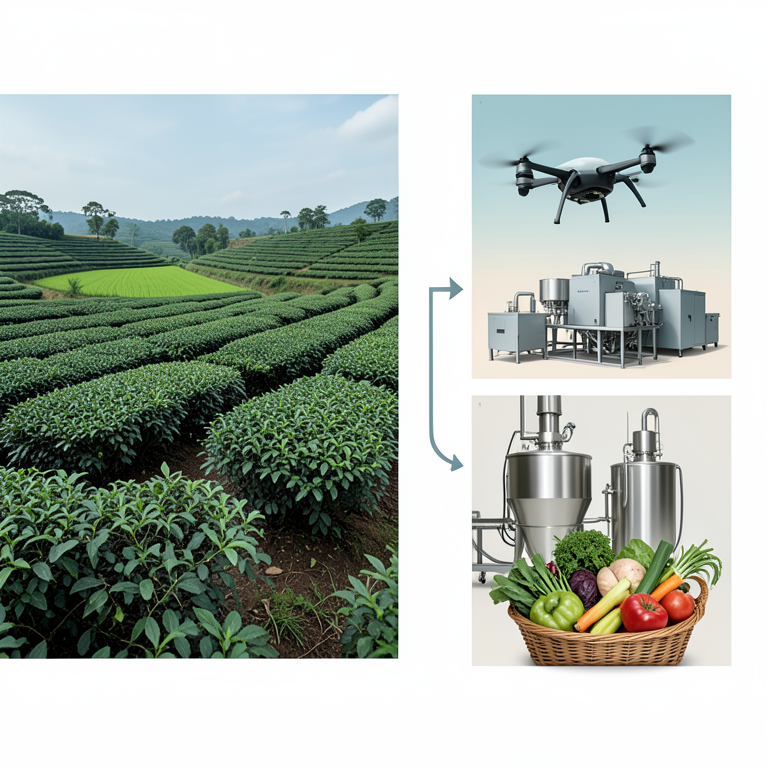
Agri-Startup Sector Distribution
AI-generated conceptual illustration (Agricultural landscapes and technology in Assam, India). It explains the idea and does not show study data.
View source evidence ↗Figures & tables
From the original paper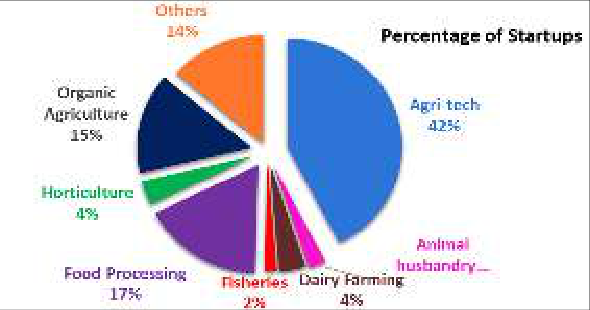 Figure 1
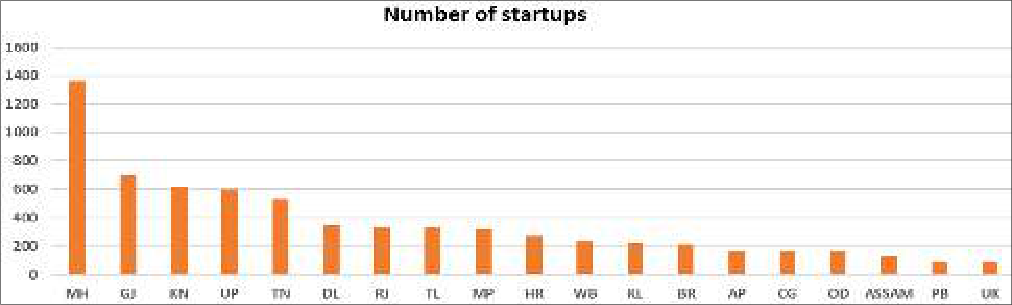 Figure 2
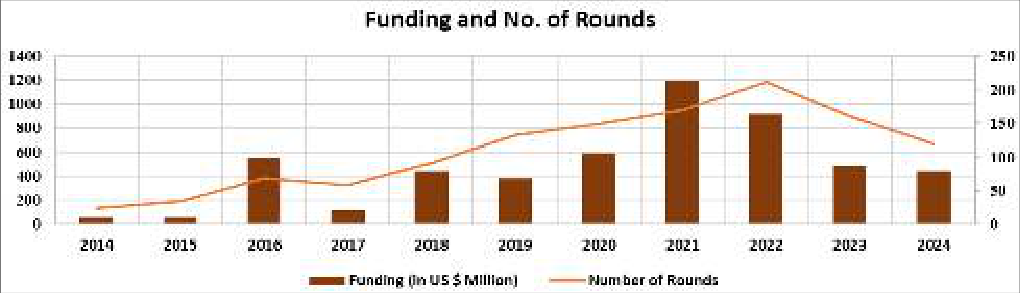 Figure 3
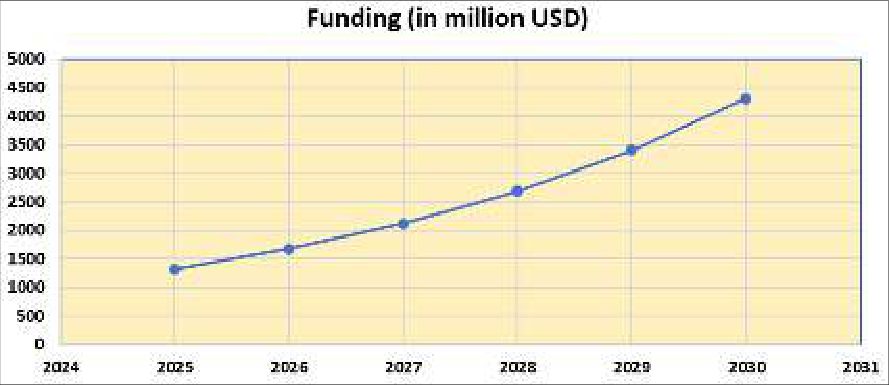 Figure 4
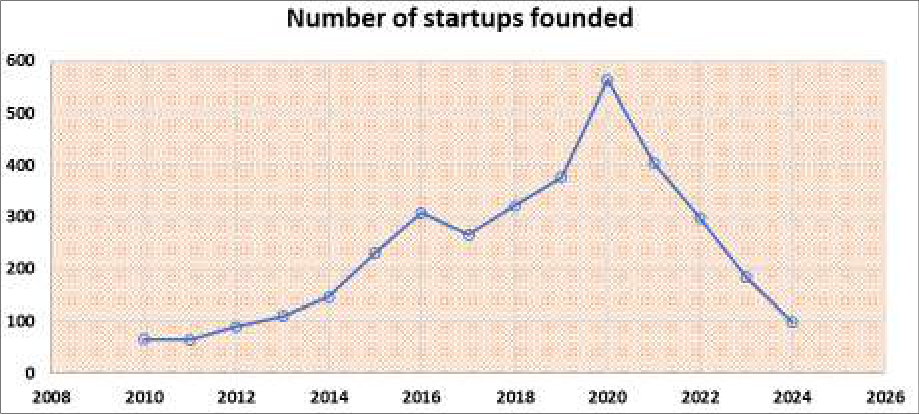 Figure 5
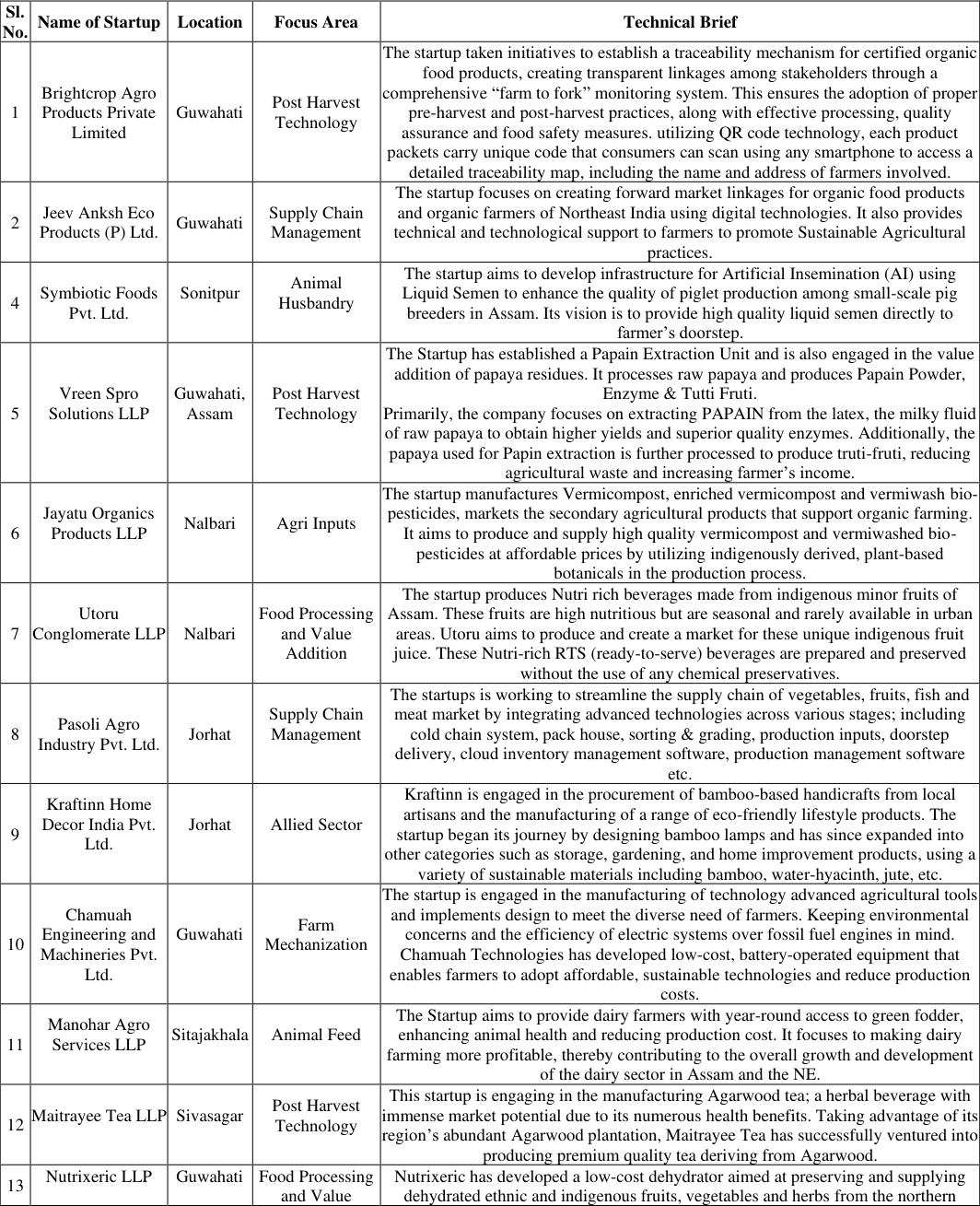 Table 1
Introduction
A startup venture refers to a newly established business in its initial phase of operations, typically funded by an individual or small group of individuals. It represents a young, innovative and scalable business model driven by technology and innovation, wherein founders develop products or services to meet emerging market demands either by disrupting existing industries or by creating entirely new markets. Startups transform innovative ideas into commercial enterprises (Babu and Sridevi, 2019) [3] . The landscape of Agri startups in India is rapidly evolving, marked by substantial growth in investments and increasing government support (Kumar et al., 2024) [8] . As the saying goes, "big things come in small packages", which holds true for the emerging startup ecosystem.
The startups are proving to be the change engines of the world. These small startup companies are revolutionizing their industries with new ideas and the development of disruptive technologies (Anand and Raj, 2019) [2] . As India celebrates its 77th year of independence, the nation recognizes its growing influence in the global entrepreneurial area. From a nascent market, India has emerged as the world's third-largest startup ecosystem, encompassing over 3.1 million startups, of which approximately 0.13 million are recognized by the government of India. These enterprises spanning 806 districts and include 107 unicorns, collectively valued at around $350 billion-a testament to the nation remarkable progress over the past decade. Notably, since 2017-2018, the number of unicorns has surged by 66%, with 42 technology-driven startups attaining unicorn status in 2021-2022 alone.
These startups operate across diverse sectors, including fintech, Agri tech, health tech, attracting significant global investors interest (Kumar et al., 2024) [8] . Indian Agri tech start-ups are pioneering technological innovations to enhance agricultural supply chains through the integration of internet services, big data analytics, digital platforms, artificial intelligence (AI), and the Internet of Things (IoT). Their role becomes particularly vital during Covid-19 pandemic, when supply chain disruptions posed major challenges. Amid panic-induced bulk purchasing and artificial scarcity. Agri tech start-ups ensured continuity by effectively linking farmers, producers, distributors, retailers, and consumers (Adhya and Sahoo, 2022) [1] . These enterprises now leverage advanced technologies to address critical issues related to food security, rural livelihoods, and environmental sustainability (Kumar et al., 2024) [8] .
Regions like Maharashtra, Karnataka, Gujarat, and Uttar Pradesh have emerged as major hubs for Agri-startup activity (K. N. R. Kumar et al., 2024) [8] , while Rajasthan has established itself a centre for technology driven entrepreneurs (Beniwal and Mathur, 2023) [5] . The government of India has introduced various initiatives to foster entrepreneurship in agriculture, including improve access to resources, funding and market linkages (Beniwal and Mathur, 2023) [5] . However, despite such efforts, Indian Agri startups continue to face significant challengesparticularly inadequate funding, limited access to venture capital, and an underdeveloped startup ecosystem. (K. N. R. Kumar et al., 2024) [8] , Nevertheless, they remain pivotal in transforming Indian agriculture and enhancing farmer's livelihood (Yadav et al., 2022) [16] .
Growth Stages of a Startup Funding Stages of a Startup
Growth Stages of a Startup Funding Stages of a Startup
Research Objectives
To keep in view the overall discussions, the following objectives have been developed for the study; 1. Analyse trend and growth pattern in Indian startups 2. To Identify existing Agri startups in assam and their focus areas 3. To propose strategies/suggestions for fostering robust startup ecosystem
Material and Methods
Material and Methods
Data Collection
The data collection completely retrieved from secondary sources such government websites, private websites, published research journals, newspaper. Also, data related to startups in Assam collected from North East Agriculture Technology Entrepreneurs Hub (NEATEHUB) an incubator of Assam Agricultural University, Jorhat-13.
Data Analysis
• Descriptive Statistics: Tabulation and basic statistical tools were employed for this purpose. The pie chart above (Figure 1) clearly illustrates that Agritech startups represent the largest segment, comprising approximately 2987 startups recognized by the DPIIT in 2025. This was followed by the food processing sector, which accounts for about 17 percent with 1209 startups. Next was organic agriculture, consisting of 1053 startups. The dairy sector holds 4 percent, while animal husbandry and fisheries represent 2 percent, respectively. Additionally, other allied sector startups make up about 14 percent, totalling around 968 startups, as recognized by DPIIT in 2025. There was no consolidated data available regarding the exact amount of funding received by agritech startups in India over the years. While some information can be found online, the most reliable data was compiled from the Tracxn website. As per figure 3, according to their reports, in 2021, agritech startups received approximately $1.16 billion in funding. This surge can be attributed to the COVID-19 pandemic, which led to a nationwide lockdown. During this time, many people in rural areas began to understand the value of digitalization, allowing farmers to benefit from digital agriculture. They also accessed loans for crop production and received advisory services from startups through mobile internet facilities. This newfound awareness prompted many startups to raise funds by capitalizing on the emerging business opportunities. However, funding levels subsequently declined in the following years due to uncertainties in the agribusiness sector, leading venture capitalists to lose interest in investing in this area. The Compound Annual Growth Rate (CAGR) for funding received from 2014 to 2024 was calculated to be 26.60 per cent, significant at 1 per cent level of significance.
Top DPIIT Recognized Number of Agri Startups in India
Top DPIIT Recognized Number of Agri Startups in India
Forecasting of Fundings in Agri Startups in India
Forecasting of Fundings in Agri Startups in India
Discussion
Discussion
Technical brief of Agri and allied sector startups in Assam
Table 1 below lists several Agri startups operating in Assam. The data on these Agri startups were collected in person by the authors from the North East Agriculture Technology Entrepreneurs Hub (NEATEHUB), located in Assam Agricultural University, Jorhat-13. These startups received initial or subsequent funding support at various stages. The startup taken initiatives to establish a traceability mechanism for certified organic food products, creating transparent linkages among stakeholders through a comprehensive "farm to fork" monitoring system. This ensures the adoption of proper pre-harvest and post-harvest practices, along with effective processing, quality assurance and food safety measures. utilizing QR code technology, each product packets carry unique code that consumers can scan using any smartphone to access a detailed traceability map, including the name and address of farmers involved.
2 Jeev Anksh Eco Products (P) Ltd.
Guwahati Supply Chain Management
The startup focuses on creating forward market linkages for organic food products and organic farmers of Northeast India using digital technologies. It also provides technical and technological support to farmers to promote Sustainable Agricultural practices.
4 Symbiotic Foods Pvt. Ltd.
Sonitpur Animal Husbandry
The startup aims to develop infrastructure for Artificial Insemination (AI) using Liquid Semen to enhance the quality of piglet production among small-scale pig breeders in Assam. Its vision is to provide high quality liquid semen directly to farmer's doorstep.
5
5
Guwahati, Assam
Guwahati, Assam
Post Harvest Technology
The Startup has established a Papain Extraction Unit and is also engaged in the value addition of papaya residues. It processes raw papaya and produces Papain Powder, Enzyme & Tutti Fruti. Primarily, the company focuses on extracting PAPAIN from the latex, the milky fluid of raw papaya to obtain higher yields and superior quality enzymes. Additionally, the papaya used for Papin extraction is further processed to produce truti-fruti, reducing agricultural waste and increasing farmer's income.
6
Jayatu Organics Products LLP Nalbari Agri Inputs
The startup manufactures Vermicompost, enriched vermicompost and vermiwash biopesticides, markets the secondary agricultural products that support organic farming. It aims to produce and supply high quality vermicompost and vermiwashed biopesticides at affordable prices by utilizing indigenously derived, plant-based botanicals in the production process.
Utoru
Utoru
Conglomerate LLP Nalbari
Conglomerate LLP Nalbari
Food Processing and Value Addition
The startup produces Nutri rich beverages made from indigenous minor fruits of Assam. These fruits are high nutritious but are seasonal and rarely available in urban areas. Utoru aims to produce and create a market for these unique indigenous fruit juice. These Nutri-rich RTS (ready-to-serve) beverages are prepared and preserved without the use of any chemical preservatives.
8
Pasoli Agro Industry Pvt. Ltd. Jorhat
Supply Chain Management
The startups is working to streamline the supply chain of vegetables, fruits, fish and meat market by integrating advanced technologies across various stages; including cold chain system, pack house, sorting & grading, production inputs, doorstep delivery, cloud inventory management software, production management software etc.
9
Kraftinn Home Decor India Pvt. Ltd.
Jorhat Allied Sector
Kraftinn is engaged in the procurement of bamboo-based handicrafts from local artisans and the manufacturing of a range of eco-friendly lifestyle products. The startup began its journey by designing bamboo lamps and has since expanded into other categories such as storage, gardening, and home improvement products, using a variety of sustainable materials including bamboo, water-hyacinth, jute, etc.
10 Chamuah Engineering and Machineries Pvt.
Guwahati Farm Mechanization
The startup is engaged in the manufacturing of technology advanced agricultural tools and implements design to meet the diverse need of farmers. Keeping environmental concerns and the efficiency of electric systems over fossil fuel engines in mind. Chamuah Technologies has developed low-cost, battery-operated equipment that enables farmers to adopt affordable, sustainable technologies and reduce production costs.
Manohar Agro Services LLP Sitajakhala Animal Feed
The Startup aims to provide dairy farmers with year-round access to green fodder, enhancing animal health and reducing production cost. It focuses to making dairy farming more profitable, thereby contributing to the overall growth and development of the dairy sector in Assam and the NE.
Maitrayee Tea LLP Sivasagar Post Harvest Technology
This startup is engaging in the manufacturing Agarwood tea; a herbal beverage with immense market potential due to its numerous health benefits. Taking advantage of its region's abundant Agarwood plantation, Maitrayee Tea has successfully ventured into producing premium quality tea deriving from Agarwood.
Lack of Seed Funds: Numerous promising business
ideas fail to materialize due to insufficient funding necessary to develop them into viable prototypes. This inability to secure adequate financing is a major issue that prevents many innovative ideas from becoming a reality.
Lack of Mentorship and Limited Incubation
Centres: There are very few mentors available to young entrepreneurs who need crucial technological guidance during the initial stages of their ventures. Additionally, the limited number of incubation centres hampers access to necessary support, funding, and knowledge essential for scaling up a business.
Limited Access to Markets:
In India, the availability of regulated markets is quite low, and many existing ones suffer from poor management. The unstructured nature of markets, along with various unethical practices, poses challenges for new businesses aiming for long-term survival. As these nascent businesses develop their products, they often face high costs, which are difficult to cover, especially when consumers-largely from mid-to low-income brackets-tend to prefer established products at lower prices, making it harder for new entrants to compete.
Investor Reluctance Towards High-Risk Ventures:
Agriculture startups are often viewed as uncertain investments, with low returns in their early phases. Investors generally consider these sectors too risky after experiencing a significant drop in investments in Agri startups since 2021.
Limited Knowledge of Available Technology: Many
new entrepreneurs lack awareness of the latest technological advancements, which hinders their ability to adapt and stay competitive, often resulting in losses. 7. Insufficient Government Support: While the government has initiated various programs to support the startup ecosystem, their impact on the ground is minimal. Many states do not have dedicated startup policies or prioritize the promotion of startup culture, leading to significant challenges for emerging businesses.
Suggestion for Agri Startups
1. The adaptation of innovation and technology addresses the demands of modern life and the rapidly changing landscape of technology. The introduction of various AI software helps propel a country forward. By adopting new and updated technologies, as well as creating innovative ideas, business models, and products, companies can experience rapid growth.
2. Fostering public-private partnerships is crucial for enhancing today's businesses at their highest potential. This collaboration is essential in the current environment, as it creates a favourable ecosystem within the country, attracts foreign collaborations, and brings diverse expertise and funding across various fields, which in turn supports the rapid growth of startups.
Strengthening incubation centres and accelerators,
along with arranging more mentorship programs, will assist startups in sustaining their businesses. These initiatives provide essential technical and financial support during the critical early stages of their journey, leading to successful business development. 4. The government needs to implement more dedicated policies for startups. This includes increasing seed funding, introducing new dedicated funds for startups, and developing enhanced infrastructure facilities. These efforts will create a more favourable environment for startups to operate effectively. 5. Access to new market systems will help startups explore additional market opportunities. By investing more time and resources into market research and development studies, they can create new products and expand their consumer base. 6. Improving access to funding opportunities will enable startups to grow rapidly and expand their businesses effectively. is a prevailing mindset that encourages seeking stable government or private sector jobs, leading to a reluctance to start new businesses. In contrast, Maharashtra and Gujarat foster an entrepreneurial culture where individuals are more inclined to take business initiatives, invest their own funds as seed capital, and work diligently to establish their enterprises. This attitude contributes to greater financial flow into the Indian economy. 5. Robust Financial Ecosystem: Mumbai and Gujarat are recognized as business hubs, attracting a higher concentration of venture capitalists and investors. The presence of these financial backers encourages investment in startups, as they are more confident in receiving good returns on their investments. This financial ecosystem significantly contributes to the growth of businesses in these states. 1.
Benefits of Linking
Benefits of Linking
Prospects
There are very few studies conducted on Agri Startups in India, and even fewer in the context of Assam. The available literature on this subject, especially online, is quite limited. furthermore, there is no consolidated database or comprehensive record of the total funding received by Agri startups in India, nor of their exact number. This indicates the need for a detailed review and further research in this field In recent years, however, Agri startups have been gaining significant popularity among investors, who are increasingly showing interest in supporting small-scale ventures. Most Agri startups are still in their early stages, but many young entrepreneurs are entering the Agri business sector. This growing sector is expected to expand further in the future and make a sustainable contribution to the Indian economy.
Conclusion
Agri startups are making significant progress each day by adopting sustainable approaches that extend from production to the end consumers. These efforts contribute to more efficient supply chain management. With government support, public-private partnerships, increased investor interest in small startups, and foreign collaborations, the path for Agri startups towards sustainable long-term development is being strengthened, ultimately contributing a substantial share to the economy. Additionally, incubation centers play a crucial role for entrepreneurs by fostering innovation and providing essential support, which benefits both the enterprises and society.
Acknowledgement
AcknowledgementWe would like to thank NEATEHUB, AAU, Jorhat-13; Department of Agricultural Economics, AAU, Jorhat-13 and Department of Extension Education, AAU, Jorhat-13 for their extensive support in providing information related to Agri and allied startups in Assam.
Figures and tables from the paper
References
16 in the original paper- Adhya PS, Sahoo SK. Agritech startups in India: a revolutionary idea giving birth to agripreneurs. IJIRT. 2022;9(5):688-695.
- Anand A, Raj S. Agritech startups: the ray of hope in Indian agriculture. National Institute of Agricultural Extension Management (MANAGE). 2019.
- Babu GS, Sridevi K. A study on issues and challenges of startups in India. Int J Financ Manag Econ. 2019;2(1):44-48.
- Bansal D. A study on status of agricultural startups in Haryana state of India. Online J Distance Educ e-Learn. 2023 Apr;11(2):1122-1131.
- Beniwal A, Mathur A. Rajasthan's agricultural innovation landscape: an overview of start-ups and trends. Asian J Agric Ext Econ Soc. 2023;41(4):157168.
- Choudhury K, Easwaran K. Agricultural entrepreneurship in lower Brahmaputra valley, Assam. J Glob Entrep Res. 2019 Dec;9(1):59.
- Kondapi S. Agri and food startup ecosystem in India. Indian Farming. 2020 Jan;70(1):49-52.
- Kumar K, Babu TR, Deshmukh SS. Nurturing growth: agri-startup landscape in India and the challenges ahead. Res World Agric Econ. 2024 Jun 28;5(2):131149.
- Kumar MS, Vennila M, Lad YA, Mahera AB. Funding options for agricultural start-ups in India-challenges and opportunities. Asian J Agric Ext Econ Sociol. 2022;40(11):616-627.
- Kumar MS, Vennila M, Lad YA, Mahera AB. Funding options for agricultural start-ups in India-challenges and opportunities. Asian J Agric Ext Econ Sociol. 2022;40(11):616-627.
- Manikandan S. A study on startup and its impact on MSME in India with special reference to Maharashtra state. In: Transforming India through Innovation and Entrepreneurship; 2021. Bengaluru: T. John Institute of Management and Sciences (TIMS); 2021.
- Pal D, Sharma L, Mukherjee K, Poddar R. A way forward for agri startups in India. Int J Manag Hum Sci. 2021;5(4):37-44.
- Raj S, Atmakuri Y, Kale AR, HJ P, Kumar S, Abraham A. Case studies on agri-startups in India: inspiration from Mann Ki Baat, innovations and impact. J Agric Ext Manag. 2023;24(1):51-83.
- Verma A, Shrivastava P. Scope and challenges of entrepreneurship in agriculture in India. Int J Educ Mod Manag Appl Sci Soc Sci. 2021;3(2):75-79.
- Vijayan B, Shivkumar PS. Pro-agripreneurial factors for the formation of agri-startups in India. Asian J Agric Ext Econ Sociol. 2020;38(8):1-8.
- Yadav SS, Singh S, Verma M. Innovative agri-startups: boosting the future of agriculture in India. AMC Indian J Entrep. 2022 Jun 1;5(2):8-18.