
Research article · 2025 · Full text
International Journal of Biology SciencesShifting vector ecologies in a warming world: Implications of climate change for infectious disease and healthcare systems
Volume 7(10) · Pages 135–146 · DOI: 10.33545/26649926.2025.v7.i10b.508 ↗
Research areasClimate Change and Health ImpactsParasites and Host InteractionsZoonotic diseases and public health
Abstract
Author-writtenClimate change is reshaping ecosystems worldwide, driving profound shifts in the distribution, abundance, and seasonal dynamics of disease vectors including mosquitoes, ticks, and parasites. These ecological transformations are expanding the geographical range of vector-borne diseases, intensifying transmission dynamics, and creating unprecedented challenges for global health systems. This review synthesizes current evidence on the relationship between climate-driven ecological change and infectious disease patterns, with a focus on the implications for healthcare surveillance, diagnostics, and treatment strategies. The review first explores the ecological mechanisms through which rising temperatures, altered precipitation patterns, and extreme weather events expand vector habitats and facilitate novel pathogen-vector-host interactions. It then examines the epidemiological consequences, highlighting case studies of malaria, dengue fever, Zika virus, Lyme disease, and schistosomiasis in different global regions. The healthcare implications are critically analyzed, emphasizing the need for adaptive surveillance systems, innovative diagnostic tools, and responsive treatment protocols that can anticipate shifting disease burdens. Furthermore, the review considers socioeconomic and policy dimensions, including the disproportionate impact of vector-borne disease expansion on resource-limited health systems and the necessity of coordinated global health governance. Challenges such as data limitations, uncertainty in predictive models, and healthcare system vulnerabilities are discussed, alongside opportunities for leveraging climate-adaptive technologies and integrated vector management approaches. By framing vector ecology as a critical interface between environmental change and human health, this article underscores the urgency of proactive adaptation in healthcare systems. The review concludes with forward-looking recommendations for enhancing resilience against the infectious disease risks of a warming world, positioning climate-responsive healthcare as an essential pillar of global health security.
Summary
Source-checkedPlain-language reading of the full paper, prepared with AI and checked against the text. Each point links to the authors' own words.
Why it matters
- Climate change, characterized by rising temperatures and altered precipitation, is disrupting the ecological balance of disease vectors and pathogens. View evidence ↗
- Vector-borne diseases are expanding into new geographical areas, exposing populations that lack prior immunity. View evidence ↗
- Shifting vector ecologies are problematic because current public health models often rely on static assumptions that no longer reflect reality. View evidence ↗
The question
- The review aims to examine how changes in vector ecology reshape disease transmission and the resulting impact on healthcare system preparedness and resilience. View evidence ↗
What they did
- The review synthesizes ecological mechanisms, epidemiological evidence for specific diseases (malaria, dengue, Lyme), healthcare system implications, regional case studies, and policy recommendations. View evidence ↗
What they found
- In East Africa, malaria-carrying Anopheles mosquitoes have been found at altitudes over 2,000 meters due to warmer microclimates. View evidence ↗
- Milder winters in North America and Europe have facilitated the northward expansion of Aedes albopictus, which transmits Zika, chikungunya, and dengue. View evidence ↗
- Deforestation in the Amazon basin has increased the incidence of leishmaniasis and malaria by exposing humans to previously isolated vector systems. View evidence ↗
- Dengue fever is the most widespread arboviral disease globally, putting more than 3.5 billion people at risk. View evidence ↗
- Large dam projects in Senegal and Egypt have led to increased schistosomiasis prevalence by creating more breeding habitats for snails. View evidence ↗
- The arrival of dengue in southern Europe has strained hospitals that lack experience in managing arboviral epidemics. View evidence ↗
- Many low- and middle-income countries (LMICs) lack the laboratory infrastructure necessary for the molecular diagnostics needed to confirm emerging infections. View evidence ↗
What it means
- The authors conclude that healthcare systems must shift from reactive crisis management to a proactive, integrated approach that emphasizes anticipation and prevention. View evidence ↗
- The authors recommend enhancing predictive capacity via integrated data, climate-proofing healthcare infrastructure, and strengthening global solidarity in financing and governance. View evidence ↗
- A major limitation in predicting disease risk is the scarcity of systematic vector surveillance and epidemiological data in highly vulnerable regions like Southeast Asia and Sub-Saharan Africa. View evidence ↗
Visual summary
1 visualsIllustrations explain the paper; they do not show study data.
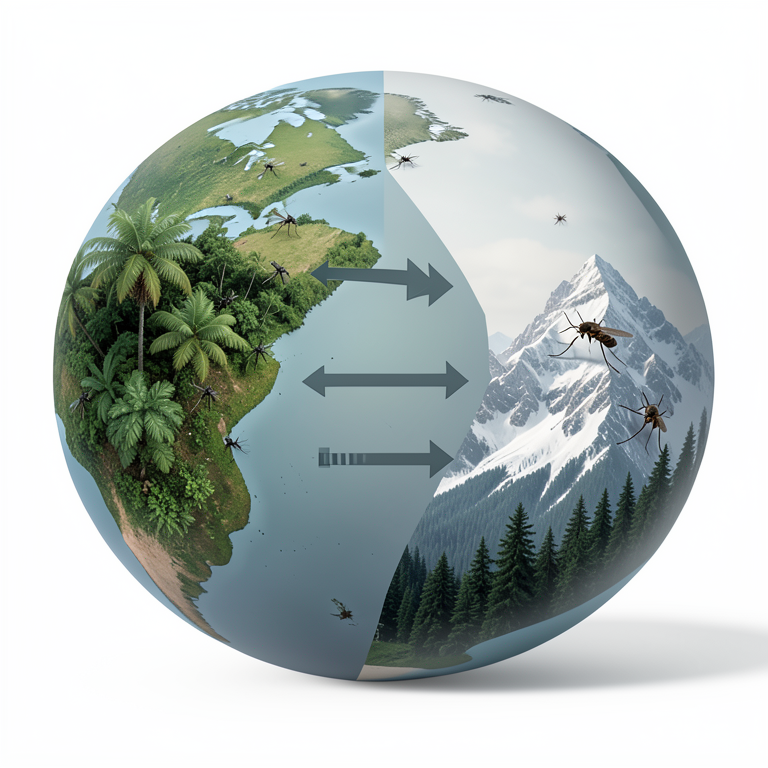
Climate-Driven Vector Expansion
AI-generated conceptual illustration (Anopheles mosquitoes and Aedes albopictus mosquitoes on a global map). It explains the idea and does not show study data.
View source evidence ↗Introduction 1.1 Climate Change as a Driver of Global Health Risk
Climate change is a global problem [1] . It has emerged as one of the most significant determinants of human health in the twenty-first century. Rising global temperatures, shifting precipitation patterns, and the increasing frequency of extreme weather events are transforming the ecological balance of disease vectors and their associated pathogens [1] . The consequences extend far beyond environmental degradation, presenting complex challenges for public health systems, particularly in regions already burdened by weak infrastructure and limited resources [2] . Vector-borne diseases, historically confined to specific climatic zones, are now extending into new territories, threatening populations that previously had little to no exposure or immunity [3] . This shifting epidemiological landscape underscores the urgent need for healthcare systems to adapt to ecological realities. Unlike non-communicable diseases, which primarily reflect lifestyle and genetic predisposition, vector-borne diseases are intrinsically linked to environmental conditions that influence vector survival, breeding, and pathogen transmission [4] . Climate change alters these ecological parameters, thereby changing the risk profile for entire populations. The expansion of mosquito-borne illnesses such as malaria and dengue into higher altitudes, or the northward spread of tick-borne Lyme disease in temperate regions, exemplifies the emerging threats [5] .
The Concept of Shifting Vector Ecologies
Vector ecology refers to the study of how environmental conditions, host availability, and pathogen dynamics interact to shape the distribution and behavior of disease vectors [6] . Under stable climatic conditions, vector species such as Anopheles mosquitoes or Ixodes ticks are constrained by temperature thresholds, rainfall regimes, and seasonal cycles [7] . Climate change disrupts these constraints by creating novel habitats, extending breeding seasons, and altering interspecies competition [8] . This process, termed shifting vector ecologies, describes the ongoing redistribution of vector populations across geographical and temporal scales [9] . These shifts have cascading effects, including the emergence of new vectorpathogen interactions, the reactivation of dormant transmission cycles, and the invasion of vectors into urban environments [10] . The phenomenon is particularly concerning because it challenges existing public health models that are built on static assumptions about vector distribution and disease burden. Healthcare systems must therefore anticipate a moving target, requiring adaptive frameworks that integrate ecological science into disease prevention and control [11] .
Climate Change and Disease Transmission Dynamics
The transmission of vector-borne diseases is highly sensitive to climatic variables. Temperature influences the extrinsic incubation period of pathogens within vectors, often accelerating transmission at higher temperatures [12] . Rainfall creates breeding habitats for mosquitoes, while droughts can drive human-vector interactions as both compete for scarce water sources [13] . Extreme weather events such as floods or hurricanes disrupt ecosystems and health infrastructure, leading to outbreaks in previously unaffected areas [14] . These ecological changes amplify disease transmission dynamics. For example, warmer temperatures in East Africa have been linked to increased malaria transmission in highland regions where cooler climates previously limited vector survival [15] . Similarly, dengue fever has surged in South Asia and Latin America, partly due to climate-driven expansion of Aedes aegypti mosquitoes [16] . Tick-borne encephalitis in Europe has also expanded in range, reflecting longer tick activity seasons facilitated by milder winters [17] . Such evidence illustrates how climate change is altering the epidemiology of multiple diseases simultaneously, creating a multifaceted health challenge.
Implications for Healthcare Systems
Healthcare systems are positioned at the frontline of responding to climate-driven infectious disease threats. However, most systems remain poorly equipped to address the unpredictable and geographically diffuse nature of these risks [18] . Surveillance mechanisms are often reactive rather than anticipatory, diagnostics may lack sensitivity to emerging pathogens, and treatment strategies are frequently constrained by resource shortages [19] . Moreover, public health infrastructure is disproportionately weak in regions most vulnerable to vector-borne diseases, such as Sub-Saharan Africa and parts of Southeast Asia [20] .
The expansion of vector-borne diseases requires healthcare systems to embrace a paradigm shift from reactive outbreak control to proactive resilience building [21] . This entails integrating climate and ecological data into surveillance platforms, strengthening laboratory networks for rapid diagnosis, and ensuring access to effective treatment protocols even in peripheral regions [22] . Importantly, health policy must acknowledge the structural inequalities that amplify vulnerability to climate change, including poverty, weak governance, and inadequate healthcare financing [23] . Without systemic adaptation, the combined pressure of climate change and infectious disease could overwhelm fragile health systems, jeopardizing global health security.
Rationale and Objectives of the Review
The intersection of climate change, vector ecology, and healthcare adaptation has become a focal point of contemporary global health research. Yet, despite growing recognition of the risks, gaps persist in synthesizing ecological, epidemiological, and health system perspectives into a coherent framework [24] . This review addresses that gap by critically examining how shifting vector ecologies reshape disease transmission and what this means for the organization, preparedness, and resilience of healthcare systems. Specifically, the review pursues five objectives. To begin with, it examines the ecological mechanisms by which climate change drives shifts in vector distribution and disease risk. In addition, it analyzes epidemiological evidence of climate-driven changes in malaria, dengue, Lyme disease, and other vector-borne infections. The discussion also assesses the implications for healthcare systems in terms of surveillance, diagnostics, and treatment capacity. Beyond this, it evaluates global and regional case studies that illustrate these dynamics. Lastly, it provides policy and practice recommendations for enhancing health system resilience in the face of climate-driven infectious disease threats. By integrating ecological science with health systems analysis, this review aims to contribute to the growing discourse on climate change and global health, offering evidence-based insights that can inform both research and policy. Ultimately, it emphasizes the need for healthcare systems that are flexible, anticipatory, and capable of responding to the dynamic challenges of a warming world [25] .
Conceptual Foundations of Shifting Vector Ecologies 2.1 Defining Vector Ecology in the Context of Climate Change
Vector ecology is concerned with the biological, environmental, and social determinants that shape the survival, reproduction, and distribution of organisms capable of transmitting pathogens between humans or from animals to humans [26] . These vectors, which include mosquitoes, ticks, sandflies, blackflies, and freshwater snails, operate within complex ecosystems where climatic variables exert profound influence [27] . Under historical climatic stability, vector distributions remained relatively predictable, allowing healthcare systems to develop geographically tailored control strategies [28] . However, climate change has disrupted these equilibria, creating novel environments for vectors and expanding opportunities for pathogen transmission [29] .
In this context, shifting vector ecologies can be defined as the dynamic alteration of vector habitats, population structures, and seasonal patterns in response to changing climate conditions. These shifts are not linear; they interact with other anthropogenic drivers such as urbanization, deforestation, agricultural expansion, and globalization of trade and travel [30] . Understanding these ecological dynamics is foundational to predicting disease risks and designing adaptive healthcare responses.
Climate Drivers of Vector Distribution
Temperature, precipitation, and humidity are the primary climatic drivers that regulate vector distribution and competence. Rising global average temperatures extend the thermal niche of many vectors, enabling them to colonize higher altitudes and latitudes previously unsuitable for survival [31] . For instance, Anopheles mosquitoes, the primary vectors of malaria, have been documented at elevations exceeding 2,000 meters in East Africa, coinciding with warmer microclimates [32] . Similarly, the northward spread of Aedes albopictus, a competent vector for dengue, chikungunya, and Zika viruses, has been linked to milder winters in Europe and North America [33] . Rainfall patterns also exert critical influence. Increased rainfall creates abundant larval habitats for mosquitoes, while drought conditions can concentrate vectors and hosts around scarce water sources, intensifying transmission potential [34] . Humidity modulates vector survival by reducing desiccation risk; thus, prolonged dry seasons can reduce some vector populations, while intermittent rainfall events may trigger explosive breeding cycles [35] . Extreme weather events such as cyclones, hurricanes, and floods further compound these dynamics, displacing populations, collapsing sanitation systems, and creating new ecological niches for disease vectors [36] .
Host-Pathogen-Vector Interactions under Climate Stress
Vector-borne disease transmission relies on the interplay between host susceptibility, pathogen replication, and vector competence. Climate change alters all three components simultaneously [37] . Elevated temperatures can accelerate the extrinsic incubation period (EIP) of pathogens within vectors, allowing faster transmission cycles [38] . For example, the EIP of Plasmodium falciparum shortens at higher temperatures, increasing malaria transmission potential [39] . Likewise, arboviruses such as dengue replicate more efficiently within Aedes mosquitoes under warm conditions, leading to heightened epidemic risk [40] . Host susceptibility is also influenced by climate-related stressors, including malnutrition, displacement, and coinfection with other pathogens [41] . Communities affected by floods, droughts, or food insecurity may exhibit weakened immunity, compounding vulnerability to vector-borne diseases [42] . In addition, climate-induced biodiversity loss can disrupt predator-prey relationships, reducing natural controls on vector populations and facilitating pathogen amplification [43] . These altered host-pathogen-vector dynamics increase the likelihood of disease emergence in previously unaffected areas. Moreover, novel interactions may lead to the spillover of pathogens into human populations, raising concerns about future pandemics originating from climate-driven ecological changes [44] .
The Role of Urbanization and Land Use Change
While climate change is the dominant driver of shifting vector ecologies, its interaction with human land use and urbanization magnifies disease risks. Expanding urban centers create microclimates characterized by higher temperatures (urban heat islands) and abundant breeding sites in poorly managed water storage systems [45] . Aedes aegypti, the primary vector for dengue, thrives in such environments, explaining the explosive urban epidemics observed in Latin America and Asia [46] . Deforestation and agricultural expansion further modify vector habitats. The clearing of forests can expose human populations to previously isolated vector-pathogen systems, as seen in the increased incidence of malaria and leishmaniasis in newly settled agricultural zones of the Amazon basin [47] . Irrigation projects and hydroelectric dams create stagnant water bodies that sustain mosquito and snail populations, facilitating diseases such as schistosomiasis [48] . These anthropogenic modifications often interact synergistically with climate change, intensifying vector proliferation and disease spread [49] .
Ecological Niches and Vector Competence
The concept of ecological niches provides insight into how vectors exploit environmental opportunities under climate change. Each vector species has a fundamental niche defined by temperature tolerance, breeding habitat availability, and host accessibility [50] . Climate change shifts these niches, expanding potential habitats into regions where vectors previously could not survive [51] . The realized niche, which reflects the actual distribution influenced by competition, predation, and human intervention, is also shifting as ecosystems reorganize under environmental stress [52] . Vector competence, the ability of a vector to acquire, maintain, and transmit a pathogenis likewise modulated by climate factors. Even subtle temperature increases can enhance or reduce competence depending on the vectorpathogen system [53] . For instance, higher temperatures increase Aedes aegypti competence for dengue virus, while extreme heat may suppress mosquito survival, reducing overall transmission potential [54] . These nonlinear relationships complicate predictive modeling, underscoring the need for interdisciplinary research linking ecology, epidemiology, and climate science [55] .
Conceptual Framework for Understanding Shifting Vector Ecologies
A comprehensive framework for understanding shifting vector ecologies must integrate climatic, biological, and social dimensions. At its core, climate change provides the environmental stressors that shift vector habitats and behavior. These changes interact with anthropogenic drivers such as urbanization, deforestation, and globalization to amplify disease risks [56] . The outcomes are mediated through complex host-pathogen-vector interactions, resulting in altered transmission dynamics and emerging health threats. This framework emphasizes the need for dynamic rather than static approaches to public health. Traditional models that rely on historical averages of vector distribution are increasingly inadequate [57] . Instead, predictive tools must incorporate climate scenarios, land use projections, and socio-economic vulnerability indices to anticipate future disease hotspots [58] . For healthcare systems, this conceptual foundation highlights the imperative of integrating ecological intelligence into preparedness and response strategies [59] .
Implications for Healthcare Systems 3.1 Healthcare Systems at the Frontline of Climate-Driven Disease
Healthcare systems are the first line of defense against emerging infectious diseases, yet they are increasingly stressed by the unpredictability and intensity of climatedriven outbreaks. Shifting vector ecologies mean that diseases once geographically contained now emerge in regions where healthcare providers lack prior experience, diagnostic familiarity, or treatment capacity [60] . For example, the introduction of dengue in southern Europe has challenged local hospitals unaccustomed to managing arboviral epidemics [61] . Likewise, North American clinicians have faced growing caseloads of Lyme disease and West Nile virus, requiring new diagnostic competencies and treatment pathways [62] . The frontline role of healthcare systems is compounded by systemic vulnerabilities. Many low-and middle-income countries (LMICs), particularly in Sub-Saharan Africa and South Asia, already face shortages of healthcare workers, inadequate laboratory infrastructure, and weak disease surveillance systems [63] . Climate change exacerbates these weaknesses, creating conditions where vector-borne disease outbreaks can rapidly escalate beyond local capacity.
Surveillance Systems and Early Warning Mechanisms
Surveillance is the cornerstone of infectious disease management, yet conventional systems are often reactive and geographically bounded. Climate-driven shifts in vector habitats demand surveillance models that are anticipatory, flexible, and geographically expansive [64] . Early warning systems must integrate meteorological, ecological, and epidemiological data to forecast outbreaks before they occur [65] . For instance, climate-based malaria forecasting models in East Africa have successfully predicted outbreaks by correlating rainfall and temperature anomalies with transmission patterns [66] . Similarly, satellite-based monitoring of vegetation and water bodies has been used to anticipate Rift Valley fever outbreaks in livestock and humans [67] . Despite these successes, integration into routine public health practice remains limited, often due to technological, financial, and capacity constraints [68] . Expanding surveillance capacity also requires community engagement. Local populations often detect ecological changes, such as increases in mosquito density, before formal systems register them [69] . Incorporating communitybased reporting into national surveillance systems can enhance sensitivity and timeliness of outbreak detection.
Diagnostic Challenges in a Changing Epidemiological Landscape
Diagnostics play a pivotal role in confirming infections and guiding treatment. However, shifting vector ecologies introduce diagnostic uncertainties. Diseases may present in areas where clinicians are unfamiliar with their symptoms, leading to misdiagnosis or delayed diagnosis [70] . For example, chikungunya and dengue often mimic influenza-like illnesses, while Lyme disease may be mistaken for autoimmune or neurological disorders [71] . Laboratory infrastructure in many LMICs is inadequate for the molecular diagnostics required to confirm emerging infections [72] . Even in high-income countries, diagnostic tests may not be widely available or validated for newly introduced pathogens [73] . The reliance on serological crossreactivity further complicates diagnosis, as antibodies for related pathogens can yield false positives [74] . To address these challenges, healthcare systems must invest in point-of-care diagnostic tools that are affordable, rapid, and adaptable to multiple pathogens [75] . Advances in molecular technologies, including portable PCR and CRISPR-based diagnostics, offer promising avenues for strengthening frontline diagnostic capacity in both resourcerich and resource-limited settings [76] .
Treatment Strategies and Therapeutic Gaps
Shifting disease burdens place new demands on treatment protocols. For malaria, the spread of vectors into highland areas has increased caseloads in populations with low immunity, requiring greater availability of antimalarial drugs and healthcare staff trained in case management [77] . The spread of arboviruses such as dengue and chikungunya into new regions has created therapeutic gaps, as treatment is largely supportive and health facilities are often unprepared for managing severe complications like dengue hemorrhagic fever [78] . Drug resistance further complicates treatment strategies. The emergence of artemisinin-resistant malaria in Southeast Asia highlights the danger of overreliance on a narrow set of therapies [79] . Similarly, vector control interventions such as insecticides face diminishing returns due to widespread resistance in mosquito populations [80] . Healthcare systems must therefore adopt integrated treatment strategies that combine pharmacological interventions with vector control, community engagement, and supportive care [81] . Research into new antivirals, vaccines, and biologically based vector control methods (e.g., Wolbachia-infected mosquitoes) is also critical to closing therapeutic gaps [82] .
Health System Resilience and Equity Considerations
Resilience in healthcare systems refers to the capacity to anticipate, absorb, and recover from shocks while maintaining essential functions [83] . Climate-driven infectious disease threats test this resilience by introducing uncertainty and compounding existing pressures such as workforce shortages, inadequate financing, and political instability [84] . Equity is a central concern. Vulnerable populations, including rural communities, displaced persons, and urban poor, bear the brunt of climate-sensitive diseases due to limited access to healthcare, poor housing, and inadequate sanitation [85] .
For instance, schistosomiasis disproportionately affects children in rural African communities dependent on freshwater sources that serve as snail habitats [86] . Without deliberate equity-focused policies, climate change will widen health disparities both within and between countries. Healthcare systems must prioritize inclusive adaptation strategies. These include strengthening primary healthcare infrastructure, expanding universal health coverage, and integrating climate-sensitive disease management into routine health services [87] . International cooperation and financing mechanisms, such as the Global Fund and WHO's Climate and Health initiatives, play a crucial role in supporting LMICs to build resilience [88] .
Policy Integration and Cross-Sectoral Collaboration
Addressing climate-driven infectious disease risks requires health systems to engage beyond the biomedical domain. Effective adaptation demands collaboration with meteorological services, environmental agencies, agricultural sectors, and urban planners [89] . For example, coordinated interventions such as integrated vector management (IVM) combine health sector efforts with environmental management, community participation, and agricultural practices to reduce vector breeding sites [90] . At the policy level, climate change must be mainstreamed into national health strategies. Few countries currently integrate climate scenarios into their health planning, leaving them ill-prepared for shifting disease burdens [91] . Multilateral agreements such as the Paris Agreement and the Global Health Security Agenda provide frameworks for aligning climate and health goals, but their translation into actionable national strategies remains uneven [92] . Healthcare systems can benefit from adopting a "One Health" approach that recognizes the interconnectedness of human, animal, and environmental health [93] . By fostering cross-sectoral collaboration, such frameworks can strengthen the adaptive capacity of health systems in the face of ecological disruption.
Global and Regional Case Studies: Climate Change and Vector-Borne Disease Expansion 4.1 Malaria in Sub-Saharan Africa and Highland Regions
Malaria remains one of the most climate-sensitive vectorborne diseases, with Anopheles mosquitoes highly dependent on temperature, humidity, and rainfall patterns for their survival and reproduction [94] . Traditionally confined to lowland tropical and subtropical areas, malaria transmission has expanded into highland regions of East Africa, including Ethiopia, Kenya, and Uganda, where cooler climates previously limited vector populations [95] . Warming temperatures in these regions have allowed Anopheles mosquitoes to establish viable populations above 2,000 meters, leading to increased malaria incidence among populations with little prior exposure and limited immunity [96] . Outbreaks in the Kenyan and Ethiopian highlands have been strongly correlated with anomalous temperature and rainfall patterns linked to climate variability [97] . The healthcare implications are profound. Highland populations often lack the infrastructure and clinical expertise to manage malaria, resulting in higher mortality rates compared to endemic lowland regions [98] . Health systems in these areas face sudden surges in caseloads, straining resources such as antimalarial drugs, diagnostic kits, and inpatient facilities. Adaptive strategies, including climate-informed malaria early warning systems and expansion of vector control interventions into highland zones, have shown promise in mitigating these risks [99] .
Dengue Fever and Urban Expansion in Asia and Latin America
Dengue fever, transmitted primarily by Aedes aegypti and Aedes albopictus, has become the most widespread arboviral disease globally, with over 3.5 billion people at risk [100] . Rising temperatures, erratic rainfall, and urbanization have driven dengue's expansion into new regions, including previously unaffected parts of Asia, Latin America, and even southern Europe [101] . In South Asia, climate variability has intensified dengue epidemics, with India, Bangladesh, and Sri Lanka reporting unprecedented outbreaks in recent decades [102] . Similarly, Latin American cities such as Rio de Janeiro, Caracas, and San Salvador have seen recurrent epidemics, fueled by inadequate water management, poor waste disposal, and rapid urban growth [103] . The spread of dengue into southern Europe highlights its global reach. Aedes albopictus, once restricted to Asia, has colonized Mediterranean countries including Italy, France, and Spain, supported by warmer winters and increased international trade [104] . Autochthonous transmission of dengue in these countries has signaled the erosion of traditional geographic boundaries of the disease [105] . Healthcare systems face significant challenges managing dengue epidemics. Overcrowded hospitals during outbreaks struggle with case triage, particularly for severe forms such as dengue hemorrhagic fever [106] . Furthermore, the absence of widely available vaccines and reliance on vector control underscore the urgent need for healthcare adaptation. Integrating climate and entomological data into dengue forecasting models has shown potential for improving outbreak preparedness [107] .
Lyme Disease Expansion in Europe and North America
Tick-borne Lyme disease, caused by Borrelia burgdorferi and transmitted by Ixodes ticks, provides another example of shifting vector ecologies under climate change. In North America, Lyme disease has expanded northward into Canadian provinces such as Ontario, Quebec, and Manitoba, as milder winters extend tick activity seasons [108] . Similar patterns have been documented in Europe, where longer growing seasons and warmer winters have facilitated the spread of Ixodes ricinus ticks into higher latitudes and elevations [109] . These ecological shifts have led to significant increases in Lyme disease incidence. In the United States, reported cases have more than doubled over the past two decades, with expansion into areas previously considered low-risk [110] . In Europe, high-incidence regions include Scandinavia, Germany, and Eastern Europe, reflecting both ecological and behavioral drivers such as outdoor recreational activities [111] . Healthcare systems face unique diagnostic and treatment challenges with Lyme disease. Its early manifestations, including fever, fatigue, and rash, are often nonspecific, leading to misdiagnosis [112] . In areas where Lyme was historically absent, clinicians may lack familiarity with its clinical spectrum, resulting in delayed treatment [113] . Public health agencies in Canada and Europe have expanded awareness campaigns and enhanced tick surveillance programs, but diagnostic uncertainty and controversies around chronic Lyme disease continue to strain healthcare systems [114] .
Schistosomiasis in Africa: Water Infrastructure and Climate Interactions
Schistosomiasis, caused by parasitic trematodes transmitted by freshwater snails, exemplifies how climate change interacts with human infrastructure to shape disease risk
International Journal of Biology Sciences https://www.biologyjournal.net [115] . Rising temperatures and altered rainfall patterns influence snail habitats, while water development projects such as dams and irrigation schemes create favorable environments for intermediate hosts [116] . The construction of large dams in Africa, including the Aswan High Dam in Egypt and the Diama Dam in Senegal, has been linked to surges in schistosomiasis prevalence due to the proliferation of snail breeding habitats [117] . Climate variability, including prolonged rainy seasons and flooding, exacerbates these trends by expanding snail habitats and facilitating parasite transmission [118] . Healthcare systems in affected regions struggle with diagnosis and treatment, as schistosomiasis is often chronic and associated with poverty, limited access to clean water, and weak sanitation infrastructure [119] . Mass drug administration with praziquantel remains the cornerstone of control, but reinfection rates are high, and integration of snail control, water management, and climate adaptation strategies is urgently needed [120] .
Zika Virus and Global Health Security
The emergence of Zika virus in the Americas during 2015-2016 highlighted how climate change, globalization, and vector ecology converge to create novel public health crises [121] . Transmitted by Aedes aegypti, Zika spread explosively across Brazil, Colombia, and other Latin American countries, eventually reaching North America and parts of Europe [122] . The epidemic was associated with severe congenital outcomes, including microcephaly, underscoring the far-reaching healthcare implications [123] . Climatic factors, including elevated temperatures and rainfall anomalies linked to El Niño events, facilitated the expansion of Aedes populations and accelerated viral transmission [124] . The epidemic overwhelmed healthcare systems in Brazil, where maternal and child health services struggled to cope with the surge in congenital abnormalities [125] .
The global spread of Zika also exposed weaknesses in international health governance. Despite early warnings, response coordination was delayed, and diagnostic limitations hampered rapid identification of cases [126] . The epidemic highlighted the necessity of integrating climatesensitive vector surveillance into global health security frameworks.
Challenges and Future Directions 5.1 Data Limitations and Uncertainty in Predictive Models
One of the foremost challenges in anticipating climatedriven disease risk lies in data scarcity and uncertainty. Accurate predictions of vector distribution require long-term climate records, detailed entomological surveys, and reliable epidemiological data [127] . Yet, many regions most vulnerable to climate-sensitive diseases, particularly Sub-Saharan Africa and parts of Southeast Asia, lack systematic vector surveillance and disease reporting systems [128] .
Predictive models are further constrained by the complexity of host-pathogen-vector interactions. Nonlinear responses to temperature and rainfall mean that small climatic shifts can yield disproportionate changes in transmission [129] . Models often fail to account for social and behavioral variables such as human migration, land use changes, and adaptive vector control measures, limiting their practical applicability for public health planning [130] .
Investing in robust data systems that integrate climate, ecological, and health indicators is essential for improving model accuracy. Remote sensing technologies, big data analytics, and artificial intelligence offer opportunities to fill data gaps, but their implementation requires significant financial and technical resources [131] .
Weaknesses in Health Infrastructure
Healthcare systems, particularly in low-and middle-income countries, often lack the infrastructure to absorb climatedriven disease burdens [132] . Limited laboratory capacity, inadequate supply chains for medicines, and shortages of trained personnel constrain timely diagnosis and treatment [133] . Health facilities in climate-vulnerable regions are also at direct risk of damage from extreme weather events, further undermining resilience [134] .
The mismatch between rising disease burdens and stagnant investment in health infrastructure widens inequities in health outcomes. While high-income countries may adapt by expanding diagnostic panels and updating clinical training, resource-limited systems remain reactive, often responding to crises after outbreaks have already escalated [135] . Building resilient health infrastructure requires not only material investment but also systemic reforms to integrate climate risks into health system design and financing [136] .
Financing and Resource Constraints
Adaptation to climate-driven disease expansion is resource intensive. Investments are required for surveillance systems, laboratory networks, workforce training, and climateinformed health planning [137] . Yet, many governments prioritize short-term economic development over long-term resilience, resulting in chronic underfunding of public health [138] . International financing mechanisms, such as the Global Fund, Gavi, and the Green Climate Fund, have begun incorporating climate-sensitive health initiatives, but funding remains fragmented and insufficient relative to the scale of the threat [139] . Private sector engagement in climatehealth adaptation has been limited, despite opportunities for innovation in diagnostics, pharmaceuticals, and vector control technologies [140] . Future financing strategies must align climate adaptation and health system strengthening agendas, ensuring that funds are channeled to the most vulnerable populations. Innovative financing models, including climate-health bonds and insurance schemes, may provide additional avenues for resource mobilization [141] .
Governance and Policy Gaps
Despite recognition of climate change as a health risk multiplier, few countries have fully integrated climate scenarios into their national health policies [142] . Most health ministries operate independently of meteorological, agricultural, and environmental agencies, leading to fragmented responses [143] . Global governance frameworks such as the Paris Agreement acknowledge health co-benefits of climate mitigation, but concrete guidance for operationalizing health adaptation remains limited [144] . At the regional level, cross-border cooperation is often weak, despite the transnational nature of vector-borne diseases [145] . The spread of malaria across East African highlands or dengue across Latin America illustrates how porous borders undermine unilateral adaptation strategies.
Regional health bodies and multilateral platforms must therefore prioritize climate-sensitive infectious disease management as part of collective security [146] .
Equity and Disproportionate Burdens
Climate-driven shifts in vector ecology disproportionately impact marginalized communities. Poor housing, inadequate sanitation, and limited access to healthcare exacerbate vulnerability to diseases such as dengue, schistosomiasis, and malaria [147] . Climate change also intensifies gender inequities, as women and children often bear greater caregiving responsibilities and are more exposed to waterborne and vector-borne risks in domestic and occupational settings [148] .
The displacement of populations due to climate disasters creates additional vulnerabilities. Refugee camps and informal settlements frequently lack adequate vector control or healthcare services, making them hotspots for outbreaks [149] . Without deliberate equity-focused adaptation policies, climate change will deepen existing health disparities between and within countries [150] .
Research and Innovation Needs
Significant research gaps hinder effective adaptation to shifting vector ecologies. These include limited understanding of pathogen evolution under climate stress, insufficient knowledge of multi-pathogen interactions within vectors, and inadequate evidence on the effectiveness of integrated adaptation strategies [151] . Innovation will be critical in bridging these gaps. Advances in genetic technologies, such as CRISPR-based gene drives to reduce mosquito populations, hold potential but raise ethical and ecological concerns [152] . Climate-adaptive vaccines and antivirals are urgently needed, particularly for dengue, chikungunya, and other emerging arboviruses [153] . Digital health platforms that integrate climate and disease surveillance data offer promising tools for anticipatory action [154] . Collaborative research involving ecologists, epidemiologists, climate scientists, and health system experts is essential to generate actionable evidence. Building research capacity in vulnerable regions should be prioritized to ensure that adaptation strategies are locally relevant and sustainable [155] .
Future Directions: Toward Climate-Responsive Healthcare
The way forward requires reimagining healthcare systems as climate-responsive institutions. This means embedding ecological intelligence into routine health planning, strengthening adaptive capacity across all levels of care, and promoting multisectoral collaboration [156] . Three priorities stand out. First, predictive capacity must be enhanced through integrated surveillance systems that combine climate, ecological, and health data [157] . Second, healthcare infrastructure must be climate-proofed, ensuring resilience to both disease burden shifts and direct climate shocks [158] . Third, global solidarity in financing, governance, and knowledge sharing must be strengthened to reduce inequities and ensure that the most vulnerable are not left behind [159] . In a warming world, shifting vector ecologies will remain a defining challenge for global health. Healthcare systems that embrace resilience, adaptability, and innovation will be better positioned to protect populations from the complex risks of climate-driven infectious disease [160] .
Conclusion
Climate change is not only reshaping the natural environment but is also redefining the boundaries of infectious disease risk. By altering temperature, rainfall, and ecological stability, it has expanded the habitats of vectors such as mosquitoes, ticks, and snails, thereby accelerating the spread of diseases like malaria, dengue, Lyme disease, schistosomiasis, and Zika. These shifting vector ecologies underscore the fragile relationship between environmental change and human health. The review has demonstrated that the impact of climate change on vector-borne diseases is multidimensional, encompassing ecological, epidemiological, and healthcare system perspectives. The evidence reviewed highlights that climate-driven disease expansion presents challenges on several fronts. Ecologically, vectors are exploiting new niches, with novel host-pathogen interactions emerging under climatic stress. Epidemiologically, diseases are appearing in populations with little prior exposure, leading to greater morbidity and mortality. For healthcare systems, this translates into rising caseloads, diagnostic uncertainty, and treatment gaps, compounded by structural weaknesses in low-and middleincome countries. These pressures collectively test the resilience of global health systems, threatening to reverse hard-won gains in infectious disease control. The review also illustrates that healthcare systems cannot remain static in the face of dynamic climate threats. Surveillance must move from reactive detection to anticipatory intelligence that integrates ecological and climatic data. Diagnostics must evolve to manage diseases in new geographic contexts, while treatment strategies require both pharmacological innovation and communitylevel interventions. Most importantly, resilience must be embedded at every level of health systems, from primary care facilities in rural Africa to tertiary hospitals in Europe and North America. Case studies from diverse regions reveal that while the threats are global, the impacts are uneven. Malaria in East African highlands, dengue in South Asia and Latin America, Lyme disease in temperate regions, and schistosomiasis in African river basins each reflect the local expression of a global phenomenon. These examples highlight the need for region-specific strategies that are nonetheless informed by global solidarity and shared learning. The Zika epidemic further reminds us that vector-borne diseases in a warming world are not only health crises but also social, economic, and political challenges that demand coordinated international action. Several challenges persist, including gaps in surveillance data, limited predictive capacity, weak health infrastructure, and chronic underfunding of public health systems. Equity remains a central concern, as the brunt of climate-sensitive diseases falls disproportionately on marginalized communities with the least adaptive capacity. Addressing these challenges requires integrated strategies that bridge ecology, health, and policy. Looking forward, three imperatives emerge for healthcare adaptation. First, predictive systems must be strengthened, leveraging advances in remote sensing, artificial intelligence, and ecological modeling to forecast disease risk. Second, healthcare infrastructure must be climate-resilient, capable of withstanding both epidemiological shocks and direct climate hazards. Third, equity and solidarity must guide global health governance, ensuring that vulnerable populations and resource-limited health systems receive adequate support. In conclusion, shifting vector ecologies represent one of the most visible manifestations of climate change's impact on health. By reshaping the epidemiology of infectious diseases, they compel healthcare systems to evolve toward resilience, adaptability, and innovation. Meeting this challenge requires a paradigm shift in how health systems engage with environmental change, emphasizing anticipation rather than reaction, prevention rather than crisis management, and integration rather than fragmentation. If pursued with urgency and commitment, climate-responsive healthcare can become a cornerstone of global health security in the twenty-first century.
References
157 in the original paper- World Health Organization. Climate change and health. Geneva: World Health Organization; 2021.
- Intergovernmental Panel on Climate Change (IPCC). Climate Change 2021: The Physical Science Basis. Cambridge: Cambridge University Press; 2021.
- Ryan SJ, Carlson CJ, Mordecai EA, Johnson LR. Global expansion and redistribution of Aedes-borne virus transmission risk with climate change. PLoS Negl Trop Dis. 2019;13(3):e0007213.
- Patz JA, Campbell-Lendrum D, Holloway T, Foley JA. Impact of regional climate change on human health. Nature. 2005;438:310-7.
- Caminade C, Kovats S, Rocklov J, Tompkins AM, Morse AP, Colon-Gonzalez FJ, et al. Impact of climate change on global malaria distribution. Proc Natl Acad Sci U S A. 2014;111(9):3286-91.
- Githeko AK, Lindsay SW, Confalonieri UE, Patz JA. Climate change and vector-borne diseases: a regional analysis. Bull World Health Organ. 2000;78(9):113647.
- Martens WJM, Niessen LW, Rotmans J, Jetten TH, McMichael AJ. Potential impact of global climate change on malaria risk. Environ Health Perspect. 1995;103(5):458-64.
- Mordecai EA, Cohen JM, Evans MV, Gudapati P, Johnson LR, Lippi CA, et al. Detecting the impact of temperature on transmission of Zika, dengue, and chikungunya using mechanistic models. PLoS Negl Trop Dis. 2017;11(4):e0005568.
- Siraj AS, Santos-Vega M, Bouma MJ, Yadeta D, Ruiz Carrascal D, Pascual M. Altitudinal changes in malaria incidence in highlands of Ethiopia and Colombia. Science. 2014;343(6175):1154-8.
- Kilpatrick AM, Randolph SE. Drivers, dynamics, and control of emerging vector-borne zoonotic diseases. Lancet. 2012;380(9857):1946-55.
- Campbell-Lendrum D, Manga L, Bagayoko M, Sommerfeld J. Climate change and vector-borne diseases: what are the implications for public health research and policy? Philos Trans R Soc Lond B Biol Sci. 2015;370(1665):20130552.
- Parham PE, Michael E. Modeling the effects of weather and climate change on malaria transmission. Environ Health Perspect. 2010;118(5):620-6.
- Paull SH, Johnson PTJ. Experimental warming drives a seasonal shift in the timing of host-parasite dynamics with consequences for disease risk. Ecol Lett. 2014;17(4):445-53.
- McMichael AJ. Globalization, climate change, and human health. N Engl J Med. 2013;368(14):1335-43.
- Alonso D, Bouma MJ, Pascual M. Epidemic malaria and warmer temperatures in recent decades in an East African highland. Proc R Soc B Biol Sci. 2011;278(1712):1661-9.
- Liu-Helmersson J, Quam M, Wilder-Smith A, Stenlund H, Ebi K, Massad E, et al. Climate change and Aedes vectors: 21st century projections for dengue transmission in Europe. EBioMedicine. 2016;7:267-77.
- Jaenson TGT, Jaenson DGE, Eisen L, Petersson E, Lindgren E. Changes in the geographical distribution and abundance of the tick Ixodes ricinus during the past 30 years in Sweden. Parasit Vectors. 2012;5:8.
- Watts N, Amann M, Arnell N, Ayeb-Karlsson S, Belesova K, Boykoff M, et al. The 2020 report of The Lancet Countdown on health and climate change. Lancet. 2021;397(10269):129-70.
- Semenza JC, Suk JE. Vector-borne diseases and climate change: a European perspective. FEMS Microbiol Lett. 2018;365(2):fnx244.
- World Health Organization. World Malaria Report 2022. Geneva: World Health Organization; 2022.
- Tolle MA. Mosquito-borne diseases. Curr Probl Pediatr Adolesc Health Care. 2009;39(4):97-140.
- Rocklov J, Dubrow R. Climate change: an enduring challenge for vector-borne disease prevention and control. Nat Immunol. 2020;21:479-83.
- Shuman EK. Global climate change and infectious diseases. N Engl J Med. 2010;362(12):1061-3.
- Lafferty KD. The ecology of climate change and infectious diseases. Ecology. 2009;90(4):888-900.
- World Health Organization, World Meteorological Organization. Atlas of Health and Climate. Geneva: World Health Organization/World Meteorological Organization; 2012.
- Reisen WK. Landscape epidemiology of vector-borne diseases. Annu Rev Entomol. 2010;55:461-83.
- Weaver SC, Reisen WK. Present and future arboviral threats. Antiviral Res. 2010;85(2):328-45.
- Hales S, Wet ND, Maindonald J, Woodward A. Potential effect of population and climate changes on global distribution of dengue fever: an empirical model. Lancet. 2002;360(9336):830-4.
- Epstein PR. Climate change and human health. N Engl J Med. 2005;353(14):1433-6.
- Gubler DJ. Resurgent vector-borne diseases as a global health problem. Emerg Infect Dis. 1998;4(3):442-50.
- Ogden NH, Lindsay LR. Effects of climate and climate change on vectors and vector-borne diseases: ticks are different. Trends Parasitol. 2016;32(8):646-56.
- Zhou G, Minakawa N, Githeko AK, Yan G. Association between climate variability and malaria epidemics in the East African highlands. Proc Natl Acad Sci U S A. 2004;101(8):2375-80.
- Medlock JM, Hansford KM, Schaffner F, Versteirt V, Hendrickx G, Zeller H, et al. A review of the invasive mosquitoes in Europe: ecology, public health risks, and control options. Vector Borne Zoonotic Dis. 2012;12(6):435-47.
- Anyamba A, Chretien JP, Small J, Tucker CJ, Formenty P, Richardson J, et al. Prediction of a Rift Valley fever outbreak. Proc Natl Acad Sci U S A. 2009;106(3):9559.
- Brown HE, Diuk-Wasser MA, Andreadis TG, Fish D. Remotely-sensed vegetation indices identify mosquito clusters of West Nile virus vectors in an urban landscape in the northeastern United States. Vector Borne Zoonotic Dis. 2008;8(2):197-206.
- Caminade C, Medlock JM, Ducheyne E, McIntyre KM, Leach S, Baylis M, et al. Suitability of European climate for the Asian tiger mosquito Aedes albopictus: recent trends and future scenarios. J R Soc Interface. 2012;9(75):2708-17.
- Paaijmans KP, Read AF, Thomas MB. Understanding the link between malaria risk and climate. Proc Natl Acad Sci U S A. 2009;106(33):13844-9.
- Blanford JI, Blanford S, Crane RG, Mann ME, Paaijmans KP, Schreiber KV, et al. Implications of temperature variation for malaria parasite development across Africa. Sci Rep. 2013;3:1300.
- Mordecai EA, Paaijmans KP, Johnson LR, Balzer C, Ben-Horin T, Moor E, et al. Optimal temperature for malaria transmission is dramatically lower than previously predicted. Ecol Lett. 2013;16(1):22-30.
- Liu-Helmersson J, Stenlund H, Wilder-Smith A, Rocklöv J. Vectorial capacity of Aedes aegypti: effects of temperature and implications for global dengue epidemic potential. PLoS One. 2014;9(3):e89783.
- Levy K, Woster AP, Goldstein RS, Carlton EJ. Untangling the impacts of climate change on waterborne diseases: a systematic review of relationships between diarrheal diseases and temperature, rainfall, flooding, and drought. Environ Sci Technol. 2016;50(10):4905-22.
- McMichael AJ, Woodruff RE, Hales S. Climate change and human health: present and future risks. Lancet. 2006;367(9513):859-69.
- Keesing F, Belden LK, Daszak P, Dobson A, Harvell CD, Holt RD, et al. Impacts of biodiversity on the emergence and transmission of infectious diseases. Nature. 2010;468(7324):647-52.
- Jones KE, Patel NG, Levy MA, Storeygard A, Balk D, Gittleman JL, et al. Global trends in emerging infectious diseases. Nature. 2008;451(7181):990-3.
- Kraemer MUG, Sinka ME, Duda KA, Mylne AQN, Shearer FM, Barker CM, et al. The global distribution of the arbovirus vectors Aedes aegypti and Ae. albopictus. eLife. 2015;4:e08347.
- Bhatt S, Gething PW, Brady OJ, Messina JP, Farlow AW, Moyes CL, et al. The global distribution and burden of dengue. Nature. 2013;496(7446):504-7.
- Vittor AY, Gilman RH, Tielsch J, Glass G, Shields T, Lozano WS, et al. The effect of deforestation on the human-biting rate of Anopheles darlingi, the primary vector of falciparum malaria in the Peruvian Amazon. Am J Trop Med Hyg. 2006;74(1):3-11.
- Steinmann P, Keiser J, Bos R, Tanner M, Utzinger J. Schistosomiasis and water resources development: systematic review, meta-analysis, and estimates of people at risk. Lancet Infect Dis. 2006;6(7):411-25.
- Patz JA, Olson SH, Uejio CK, Gibbs HK. Disease emergence from global climate and land use change. Med Clin North Am. 2008;92(6):1473-91.
- Peterson AT. Shifting suitability for malaria vectors across Africa with climate change. Proc Natl Acad Sci U S A. 2009;106(7):2104-9.
- Ogden NH, Radojevic M, Wu X, Duvvuri VR, Leighton PA, Wu J. Estimated effects of projected climate change on the basic reproductive number of the Lyme disease vector Ixodes scapularis. Environ Health Perspect. 2014;122(6):631-8.
- Estrada-Peña A, Gray JS, Kahl O, Lane RS, Nijhof AM. Research on the ecology of ticks and tick-borne pathogens-methodological principles and caveats. Front Cell Infect Microbiol. 2013;3:29.
- Lambrechts L, Paaijmans KP, Fansiri T, Carrington LB, Kramer LD, Thomas MB, et al. Impact of daily temperature fluctuations on dengue virus transmission by Aedes aegypti. Proc Natl Acad Sci U S A. 2011;108(18):7460-5.
- Alto BW, Juliano SA. Temperature effects on the dynamics of Aedes albopictus (Diptera: Culicidae) populations in the laboratory. J Med Entomol. 2001;38(4):548-56.
- Carlson CJ, Dougherty E, Boots M, Getz W, Ryan SJ. Consensus and conflict among ecological forecasts of Zika virus outbreaks in the United States. Sci Rep. 2018;8:4921.
- Campbell-Lendrum D, Corvalan C. Climate change and developing-country cities: implications for environmental health and equity. J Urban Health. 2007;84 Suppl 1:i109-17.
- Messina JP, Brady OJ, Golding N, Kraemer MUG, Wint GRW, Ray SE, et al. The current and future global distribution and population at risk of dengue. Nat Microbiol. 2019;4:1508-15.
- Semenza JC, Rocklöv J, Ebi KL. Climate change and infectious disease in Europe: impact, projection and adaptation. Lancet Reg Health Eur. 2021;9:100230.
- Ebi KL, Ogden NH, Semenza JC, Woodward A. Detecting and attributing health burdens to climate change. Environ Health Perspect. 2017;125(8):085004.
- Reiter P. Climate change and mosquito-borne disease. Environ Health Perspect. 2001;109 Suppl 1:141-61.
- Succo T, Leparc-Goffart I, Ferré JB, Roiz D, Broche B, Maquart M, et al. Autochthonous dengue outbreak in Nîmes, south of France, July to September 2015. Euro Surveill. 2016;21(21):30240.
- Kilpatrick AM, Randolph SE. Zoonoses: ecology and epidemiology. Curr Opin Virol. 2012;2(3):302-8.
- Mboera LEG, Mweya CN, Rumisha SF, Tungu PK, Stanley G, Makange MR, et al. The changing burden of malaria in Tanzania: a 25-year review. Malar J. 2013;12:414-27.
- Anyamba A, Linthicum KJ, Tucker CJ. Climate-disease connections: Rift Valley fever in Kenya. Cad Saude Publica. 2001;17 Suppl:133-40.
- Thomson MC, Connor SJ, Zebiak SE, Jancloes M, Mihretie A. Africa needs climate data to fight disease. Nature. 2011;471(7339):440-2.
- Abeku TA, De Vlas SJ, Borsboom G, Tadege A, Gebreyesus Y, Gebreyohannes H, et al. Forecasting malaria incidence from historical morbidity patterns in epidemic-prone areas of Ethiopia: a simple seasonal adjustment method performs best. Trop Med Int Health. 2002;7(10):851-7.
- Linthicum KJ, Anyamba A, Tucker CJ, Kelley PW, Myers MF, Peters CJ. Climate and satellite indicators to forecast Rift Valley fever epidemics in Kenya. Science. 1999;285(5426):397-400.
- Bednarczyk RA, Halsey NA, Omer SB. Vaccine refusal and health consequences. Vaccine. 2013;31(4):446-52.
- Mutero CM, Schlodder D, Kabatereine N, Kramer R. Integrated vector management for malaria control in Uganda: knowledge, perceptions and policy development. Malar J. 2012;11:21-9.
- Steere AC, Malawista SE, Hardin JA, Ruddy S, Askenase PW, Andiman WA. Erythema chronicum migrans and Lyme arthritis: the enlarging clinical spectrum. Ann Intern Med. 1977;86(6):685-98.
- Peeling RW, Mabey D. Point-of-care tests for diagnosing infections in the developing world. Clin Microbiol Infect. 2010;16(8):1062-9.
- Wilder-Smith A, Ooi EE, Horstick O, Wills B. Dengue. Lancet. 2019;393(10169):350-63.
- Priyamvada L, Quicke KM, Hudson WH, Onlamoon N, Sewatanon J, Edupuganti S, et al. Human antibody responses after dengue virus infection are highly crossreactive to Zika virus. Proc Natl Acad Sci U S A. 2016;113(28):7852-7.
- Land KJ, Boeras DI, Chen X-S, Ramsay AR, Peeling RW. REASSURED diagnostics to inform disease control strategies, strengthen health systems and improve patient outcomes. Nat Microbiol. 2019;4:4654.
- de H, Lee RA, Najjar D, Tan X, Soekensen LR, Angenent-Mari NM, et al. Minimally instrumented SHERLOCK (miSHERLOCK) for CRISPR-based point-of-care diagnosis of SARS-CoV-2 and emerging variants. Sci Adv. 2021;7(32):eabh2944.
- Hay SI, Guerra CA, Tatem AJ, Noor AM, Snow RW. The global distribution and population at risk of malaria: past, present, and future. Lancet Infect Dis. 2004;4(6):327-36.
- Stanaway JD, Shepard DS, Undurraga EA, Halasa YA, Coffeng LE, Brady OJ, et al. The global burden of dengue: an analysis from the Global Burden of Disease Study 2013. Lancet Infect Dis. 2016;16(6):712-23.
- Dondorp AM, Fairhurst RM, Slutsker L, Macarthur JR, Breman JG, Guerin PJ, et al. The threat of artemisininresistant malaria. N Engl J Med. 2011;365(12):1073-5.
- Ranson H, Lissenden N. Insecticide resistance in African Anopheles mosquitoes: a worsening situation that needs urgent action to maintain malaria control. Trends Parasitol. 2016;32(3):187-96.
- World Health Organization. Global vector control response 2017-2030. Geneva: WHO; 2017.
- Hoffmann AA, Montgomery BL, Popovici J, IturbeOrmaetxe I, Johnson PH, Muzzi F, et al. Successful establishment of Wolbachia in Aedes populations to suppress dengue transmission. Nature. 2011;476(7361):454-7.
- Kruk ME, Ling EJ, Bitton A, Cammett M, Cavanaugh K, Chopra M, et al. Building resilient health systems: a proposal for a resilience index. BMJ. 2017;357:j2323.
- Frumkin H, Haines A. Global environmental change and noncommunicable disease risks. Annu Rev Public Health. 2019;40:261-82.
- Ebi KL, Semenza JC. Community-based adaptation to the health impacts of climate change. Am J Prev Med. 2008;35(5):501-7.
- Colley DG, Bustinduy AL, Secor WE, King CH. Human schistosomiasis. Lancet. 2014;383(9936):225364.
- World Health Organization. Operational framework for building climate-resilient health systems. Geneva: WHO; 2015.
- Global Fund. Climate and Health: Leveraging Global Health Investments for Climate Adaptation. Geneva: Global Fund; 2021.
- Gubler DJ. The global threat of emergent/re-emergent vector-borne diseases. In: Takken W, Knols BGJ, editors. Emerging pests and vector-borne diseases in Europe. Wageningen: Wageningen Academic Publishers; 2007. p. 39-62.
- Beier JC, Keating J, Githure JI, Macdonald MB, Impoinvil DE, Novak RJ. Integrated vector management for malaria control. Malar J. 2008;7 Suppl 1:S4.
- World Health Organization. Country case studies on climate change and health. Geneva: World Health Organization; 2021.
- Gostin LO, Katz R. The International Health Regulations: the governing framework for global health security. Milbank Q. 2016;94(2):264-313.
- Zinsstag J, Schelling E, Waltner-Toews D, Tanner M. From "one medicine" to "one health" and systemic approaches to health and well-being. Prev Vet Med. 2011;101(3-4):148-56.
- World Health Organization. World malaria report 2021. Geneva: World Health Organization; 2021.
- Pascual M, Ahumada JA, Chaves LF, Rodó X, Bouma M. Malaria resurgence in the East African highlands: temperature trends revisited. Proc Natl Acad Sci U S A. 2006;103(15):5829-34.
- Siraj AS, Santos-Vega M, Bouma MJ, Yadeta D, Ruiz Carrascal D, Pascual M. Altitudinal changes in malaria incidence in highlands of Ethiopia and Colombia. Science. 2014;343(6175):1154-8.
- Abeku TA. Climate change and malaria transmission in Ethiopia: socio-economic vulnerability and adaptation options. Glob Environ Change. 2002;12(4):267-73.
- Zhou G, Minakawa N, Githeko AK, Yan G. Climate variability and malaria epidemics in the highlands of East Africa. Trends Parasitol. 2005;21(2):54-6.
- Thomson MC, Mason SJ, Phindela T, Connor SJ. Use of rainfall and sea surface temperature monitoring for malaria early warning in Botswana. Am J Trop Med Hyg. 2005;73(1):214-21.
- Altizer S, Ostfeld RS, Johnson PT, Kutz S, Harvell CD. Climate change and infectious diseases: from evidence to a predictive framework. Science. 2013;341(6145):514-9.
- Caminade C, Turner J, Metelmann S, Hesson JC, Blagrove MSC, Solomon T, et al. Global risk model for vector-borne transmission of Zika virus reveals the role of El Niño 2015. Proc Natl Acad Sci U S A. 2017;114(1):119-24.
- Lessler J, Chaisson LH, Kucirka LM, Bi Q, Grantz K, Salje H, et al. Assessing the global threat from Zika virus. Science. 2016;353(6300):aaf8160.
- Musso D, Ko AI, Baud D. Zika virus infection -after the pandemic. N Engl J Med. 2019;381(15):1444-57.
- Kraemer MUG, Reiner RC, Brady OJ, Messina JP, Gilbert M, Pigott DM, et al. Past and future spread of the arbovirus vectors Aedes aegypti and Aedes albopictus. Nat Microbiol. 2019;4(5):854-63.
- Hotez PJ, Alvarado M, Basáñez MG, Bolliger I, Bourne R, Boussinesq M, et al. The Global Burden of Disease Study 2010: interpretation and implications for neglected tropical diseases. PLoS Negl Trop Dis. 2014;8(7):e2865.
- Bonds MH, Keenan DC, Rohani P, Sachs JD. Poverty trap formed by the ecology of infectious diseases. Proc R Soc B Biol Sci. 2010;277(1685):1185-92.
- Patz JA, Hahn MB. Climate change and human health: a one health approach. Curr Top Microbiol Immunol. 2013;366:141-71.
- Ostfeld RS, Brunner JL. Climate change and Ixodes tick-borne diseases of humans. Philos Trans R Soc Lond B Biol Sci. 2015;370(1665):20140051.
- Caminade C, Kovats S, Rocklöv J, Tompkins AM, Morse AP, Colón-González FJ, et al. Malaria in a warmer world: predictive models and policy opportunities. Lancet Infect Dis. 2014;14(7):695-702.
- Gubler DJ. Dengue and dengue hemorrhagic fever. Clin Microbiol Rev. 1998;11(3):480-96.
- Randolph SE. To what extent has climate change contributed to the recent epidemiology of tick-borne diseases? Vet Parasitol. 2010;167(2-4):92-4.
- Suk JE, Semenza JC. Future infectious disease threats to Europe. Am J Public Health. 2011;101(11):2068-79.
- Wu X, Lu Y, Zhou S, Chen L, Xu B. Impact of climate change on human infectious diseases: empirical evidence and human adaptation. Environ Int. 2016;86:14-23.
- Massad E, Coutinho FAB, Burattini MN, Lopez LF. The risk of yellow fever in a dengue-infested area. Trans R Soc Trop Med Hyg. 2001;95(4):370-4.
- Chaves LF, Koenraadt CJM. Climate change and highland malaria: fresh air for a hot debate. Q Rev Biol. 2010;85(1):27-55.
- Ebi KL, Nealon J. Dengue in a changing climate. Environ Res. 2016;151:115-23.
- Messina JP, Kraemer MUG, Brady OJ, Pigott DM, Shearer FM, Weiss DJ, et al. Mapping global environmental suitability for Zika virus. eLife. 2016;5:e15272.
- Piontek F, Müller C, Pugh TAM, Clark DB, Deryng D, Elliott J, et al. Multisectoral climate impacts in a warming world: an interdisciplinary review. Glob Environ Change. 2014;23(1):1-13.
- World Health Organization. Climate change and health: country profiles. Geneva: World Health Organization; 2021.
- McMichael AJ. The biosphere, ecosystems and human health. Ecosyst Health. 1997;3(4):200-10.
- Norris DE. Mosquito-borne diseases as a consequence of land use change. Ecohealth. 2004;1(1):19-24.
- Rezza G. Dengue and chikungunya: long-distance spread and outbreaks in naïve areas. Pathog Glob Health. 2014;108(8):349-55.
- Dick GWA, Kitchen SF, Haddow AJ. Zika virus. I. Isolations and serological specificity. Trans R Soc Trop Med Hyg. 1952;46(5):509-20.
- Petersen LR, Jamieson DJ, Powers AM, Honein MA. Zika virus. N Engl J Med. 2016;374(16):1552-63.
- Fauci AS, Morens DM. Zika virus in the Americas - yet another arbovirus threat. N Engl J Med. 2016;374(7):601-4.
- Rasmussen SA, Jamieson DJ, Honein MA, Petersen LR. Zika virus and birth defects -reviewing the evidence for causality. N Engl J Med. 2016;374(20):1981-7.
- Carlson CJ, Dougherty ER, Boots M. Consensus and conflict among ecological forecasts for Zika virus outbreaks. Sci Rep. 2018;8:4921.
- Hay SI, Battle KE, Pigott DM, Smith DL, Moyes CL, Bhatt S, et al. Global mapping of infectious disease. Philos Trans R Soc Lond B Biol Sci. 2013;368(1614):20120250.
- Caminade C, Morse AP. Climate change and the spread of vector-borne diseases. In: Gasparatos A, Willis KJ, editors. Biodiversity in the Green Economy. London: Routledge; 2015. p. 189-206.
- Wu J, Dhingra R, Gambhir M, Remais JV. Sensitivity analysis of infectious disease models: methods, advances and their application. J R Soc Interface. 2013;10(86):20121018.
- Kraemer MUG, Reiner RC, Faria NR, Perkins TA, Brady OJ, Messina JP, et al. Spread of yellow fever virus outbreak in Angola and the Democratic Republic of the Congo 2015-16: a modelling study. Lancet Infect Dis. 2017;17(3):330-8.
- Sachs JD, Malaney P. The economic and social burden of malaria. Nature. 2002;415(6872):680-5.
- Keiser J, Utzinger J, Caldas de Castro M, Smith TA, Tanner M, Singer BH. Urbanization in sub-Saharan Africa and implication for malaria control. Am J Trop Med Hyg. 2004;71(2 Suppl):118-27.
- Atun R, Silva S, Ncube M, Vassall A. Innovative financing for HIV response in sub-Saharan Africa. J Glob Health. 2016;6(1):010407.
- Kickbusch I, Gleicher D. Governance for health in the 21st century. Copenhagen: WHO Regional Office for Europe; 2012.
- Smith KR, Woodward A, Campbell-Lendrum D, Chadee DD, Honda Y, Liu Q, et al. Human health: impacts, adaptation, and co-benefits. In: IPCC. Climate Change 2014: Impacts, Adaptation, and Vulnerability. Cambridge: Cambridge University Press; 2014. p. 70954.
- Watts N, Amann M, Ayeb-Karlsson S, Belesova K, Boykoff M, Byass P, et al. The Lancet Countdown on health and climate change: from 25 years of inaction to a global transformation for public health. Lancet. 2018;391(10120):581-630.
- Costello A, Abbas M, Allen A, Ball S, Bell S, Bellamy R, et al. Managing the health effects of climate change: Lancet and University College London Institute for Global Health Commission. Lancet. 2009;373(9676):1693-733.
- Haines A, Ebi K. The imperative for climate action to protect health. N Engl J Med. 2019;380(3):263-73.
- World Health Organization. Climate change and health financing. Geneva: World Health Organization; 2020.
- Romanello M, McGushin A, Di Napoli C, Drummond P, Hughes N, Jamart L, et al. The 2021 report of the Lancet Countdown on health and climate change. Lancet. 2021;398(10311):1619-62.
- World Health Organization. Climate change and health policy brief. Geneva: World Health Organization; 2019.
- Watts N, Amann M, Arnell N, Ayeb-Karlsson S, Beagley J, Belesova K, et al. The 2019 report of the Lancet Countdown on health and climate change. Lancet. 2019;394(10211):1836-78.
- Semenza JC, Trinanes J, Lohr W, Sudre B, Gale P, Andersson Y, et al. Environmental suitability of Vibrio infections in a warming climate: an early warning system. Environ Health Perspect. 2017;125(10):107004.
- World Health Organization. Protecting health in Europe from climate change: 2017 update. Copenhagen: WHO Regional Office for Europe; 2017.
- United Nations Development Programme (UNDP). Human Development Report 2020: The next frontier - Human development and the Anthropocene. New York: UNDP; 2020.
- Leach M, Fairhead J. Vaccine anxieties: global science, child health and society. London: Earthscan; 2007.
- McMichael C, Barnett J, McMichael AJ. An ill wind? Climate change, migration, and health. Glob Health. 2012;8:12.
- Myers SS, Patz JA. Emerging threats to human health from global environmental change. Annu Rev Environ Resour. 2009;34:223-52.
- Carlson CJ, Burgio KR, Dougherty ER, Phillips AJ, Bueno VM, Clements CF, et al. Parasite biodiversity faces extinction and redistribution in a changing climate. Sci Adv. 2017;3(9):e1602422.
- James S, Collins FH, Welkhoff PA, Emerson C, Godfray HCJ, Gottlieb M, et al. Pathway to deployment of gene drive mosquitoes as a potential biocontrol tool for elimination of malaria in sub-Saharan Africa: recommendations of a scientific working group. Am J Trop Med Hyg. 2018;98(6 Suppl):1-49.
- Thomas SJ, Yoon I-K. A review of Dengvaxia®: development to deployment. Hum Vaccin Immunother. 2019;15(10):2295-2314.
- Semenza JC, Sudre B, Miniota J, Rossi M, Hu W, Kossowsky D, et al. Climate change and infectious disease in Europe: predictions, models and monitoring. Int J Environ Res Public Health. 2016;13(11):1034.
- Cash-Gibson L, Rojas-Gualdrón DF, Pericàs JM, Benach J. Inequalities in global health inequalities research: a 50-year bibliometric analysis (1966-2015). PLoS One. 2018;13(1):e0191901.
- Ebi KL, Boyer C, Bowen KJ, Frumkin H, Hess J, Salas RN. Monitoring and evaluation of adaptation in climate change and health. Clim Change. 2018;148(1-2):145157.
- World Health Organization. Strengthening climate resilience: a health systems perspective. Geneva: World Health Organization; 2017.
- Haines A, Kovats RS, Campbell-Lendrum D, Corvalan C. Climate change and human health: impacts, vulnerability, and mitigation. Lancet. 2006;367(9528):2101-2109.
- Watts N, Amann M, Arnell N, Ayeb-Karlsson S, Beagley J, Belesova K, et al. The 2022 report of the Lancet Countdown on health and climate change: health at the mercy of fossil fuels. Lancet. 2022;400(10363):1619-1654.
Cited by 2
From OpenAlex, OpenCitations and reference lists read by Scinovex
- Climate change and vertically transmissible infections in maternal and neonatal populations: a systematic review ↗
Kimberly Mc Alpine, Tim Groteclaes, Danielle Travill, Margaret M. Brennan, Natasha Lalloo, Ruvimbo Forget et al. · Frontiers in Global Women s Health · 2026
Background: Climate change influences infectious disease dynamics and disrupts maternal and neonatal health services, both of which are pathways through which the risk of vertically transmissible infections may increase. Methods: We systematically reviewed evidence on the association between climate-related environmental exposures and infection-related outcomes relevant to vertical transmission in pregnant or intrapartum women, neonates, and infants. Screening, extraction, and risk-of-bias…
❝ 0PDF - Disease Burden and Epidemiology in South Africa: Transitions, Determinants, and Emerging Challenges ↗
Makandwe Nyirenda, Duduzile Edith Ndwandwe, Nonhlanhla Yende‐Zuma, Tarylee Reddy · Springer eBooks · 2026
❝ 0