
Research article · 2025 · Full text
International Journal of Horticulture and Food ScienceIdentification of genetic loci associated with fruit quality in cherry tomato using f2 progeny
Volume 7(10) · Pages 160–166 · DOI: 10.33545/26631067.2025.v7.i10c.418 ↗
Research areasGenetic Mapping and Diversity in Plants and AnimalsAgricultural Practices and Plant GeneticsGreenhouse Technology and Climate Control
Abstract
Author-writtenThis study investigates the genetic basis of fruit quality in cherry tomato (Solanum lycopersicum var. cerasiforme) by mapping quantitative trait loci (QTL) associated with key traits, including soluble solids content (SSC), titratable acidity (TA), firmness, color, and volatile profiles in an F2 mapping population. The F2 progeny, derived from two contrasting cherry tomato parents, exhibited significant transgressive segregation for several traits, indicating the potential for recovering favorable alleles in breeding programs. High-density genotyping and phenotyping assessment across two growing seasons revealed several statistically significant quantitative trait loci (QTL). Notably, a major QTL for SSC was mapped near the LIN5 locus, while TA co-localized with ALMT9, and firmness was linked to a region on chromosome 10. Volatile QTL were also identified, with significant loci for hexenal, phenylacetaldehyde, and methyleugenol. The study highlights the genetic complexity of fruit quality traits and demonstrates that multiple moderate-effect loci contribute to their variation. Broad-sense heritability estimates for key traits, including SSC and firmness, were moderate to high, supporting the feasibility of marker-assisted selection for these traits. The findings also underscore the potential of cherry tomato as a model for dissecting complex traits and for developing varieties with superior flavor, texture, and aroma. This research provides a valuable foundation for future breeding programs aiming to enhance fruit quality in cherry tomato while maintaining high yield and shelf life.
Summary
Source-checkedPlain-language reading of the full paper, prepared with AI and checked against the text. Each point links to the authors' own words.
Why it matters
- Cherry tomatoes are a globally significant crop that offer a wide range of genetic diversity for improving fruit quality traits like sugar, acid, color, texture, and aroma. View evidence ↗
- Modern tomato breeding has often prioritized yield and shelf-life over flavor, leading to a loss of palatability in many current cultivars. View evidence ↗
The question
- The study aims to combat flavor erosion by mapping quantitative trait loci (QTL) for sugars, acids, color, firmness, and volatiles in an F2 cherry tomato population. View evidence ↗
What they did
- The researchers used an F2 mapping population of approximately 240 plants derived from two cherry tomato parents with contrasting fruit-quality traits. View evidence ↗
- Field trials were conducted over two seasons using a randomized complete block design with two replications. View evidence ↗
- Fruit quality was measured using digital refractometry for soluble solids (SSC), titration for titratable acidity (TA), a colorimeter for color, a penetrometer for firmness, and HS-SPME-GC-MS for volatile profiling. View evidence ↗
- Genotyping was performed using reduced-representation sequencing to identify SNPs, and QTL positions were refined using interval mapping and Multiple-QTL modeling. View evidence ↗
What they found
- The F2 population showed mean values of 7.67 ± 0.90 °Brix for SSC, 0.50 ± 0.08% for TA, pH 4.15 ± 0.10, 21.35 ± 2.20 N for firmness, and 22.01 ± 2.50 for color a*. View evidence ↗
- Broad-sense heritability for SSC, firmness, and color a* was moderate to high, indicating these traits are suitable for marker-assisted selection. View evidence ↗
- A QTL for color was identified on chromosome 1 (PVE ≈ 11.0%) near carotenoid biosynthesis genes. View evidence ↗
- Firmness and soluble solids content (SSC) segregated independently, suggesting they are controlled by different genetic mechanisms. View evidence ↗
What it means
- The authors recommend prioritizing the identified QTL for SSC and firmness in breeding programs to restore flavor without losing texture or shelf-life. View evidence ↗
- The authors conclude that integrating genomic selection and multi-omics can further refine the understanding of fruit quality genetics. View evidence ↗
- The authors state that future research is needed to validate the identified QTL and explore their variation across a wider range of genetic backgrounds. View evidence ↗
Figures & tables
From the original paper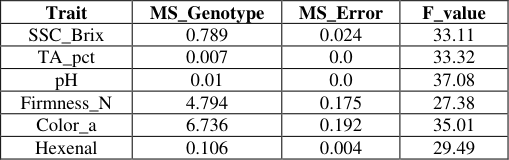 Table 2
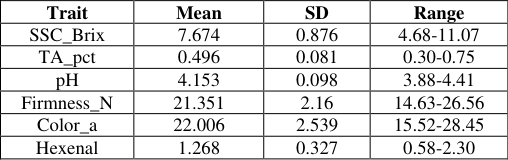 Table 1
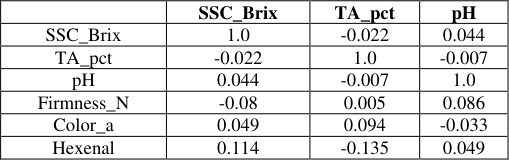 Table 3
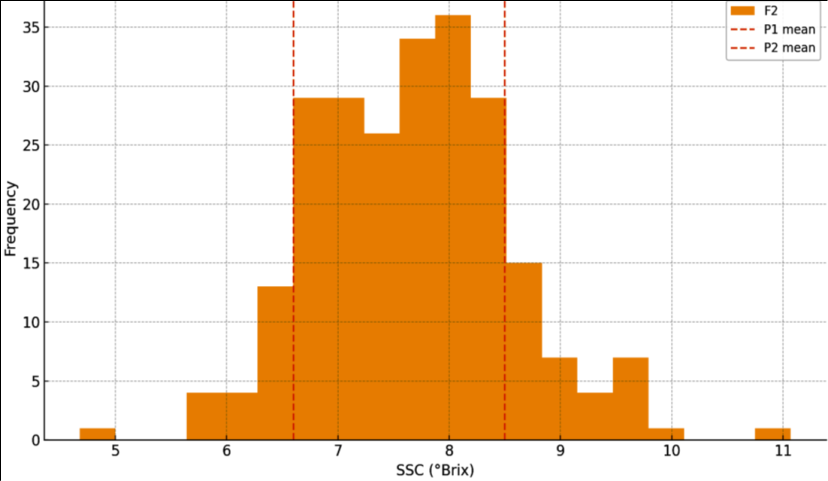 Figure 1
 Table 4
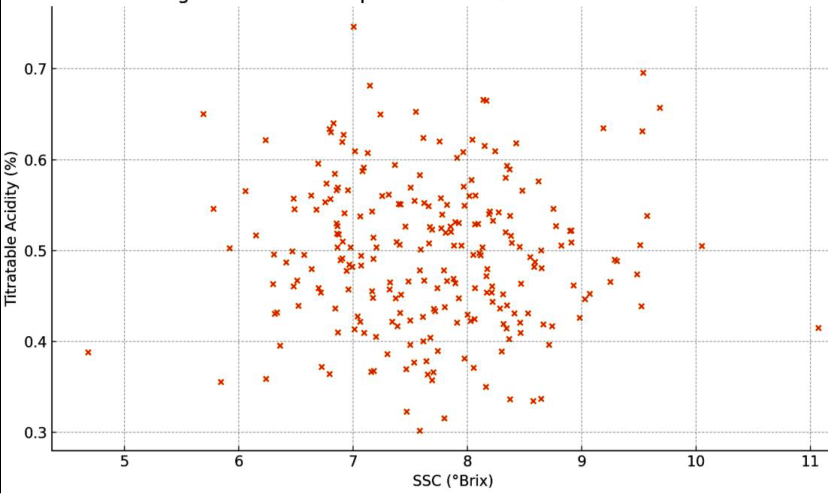 Figure 2
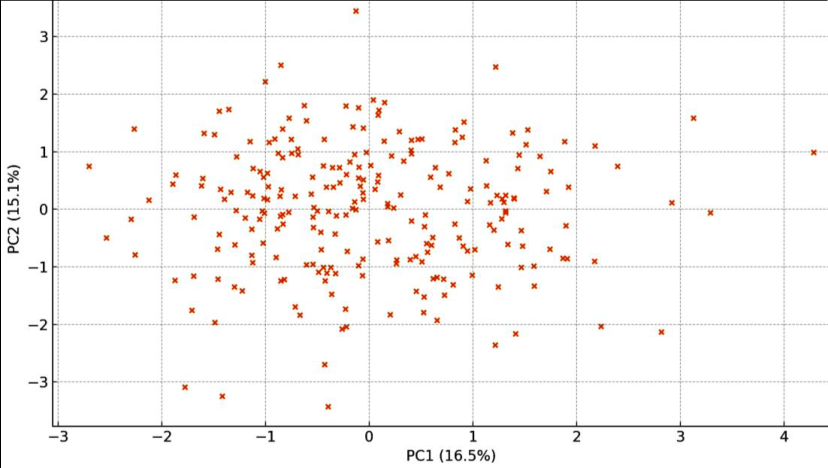 Figure 3
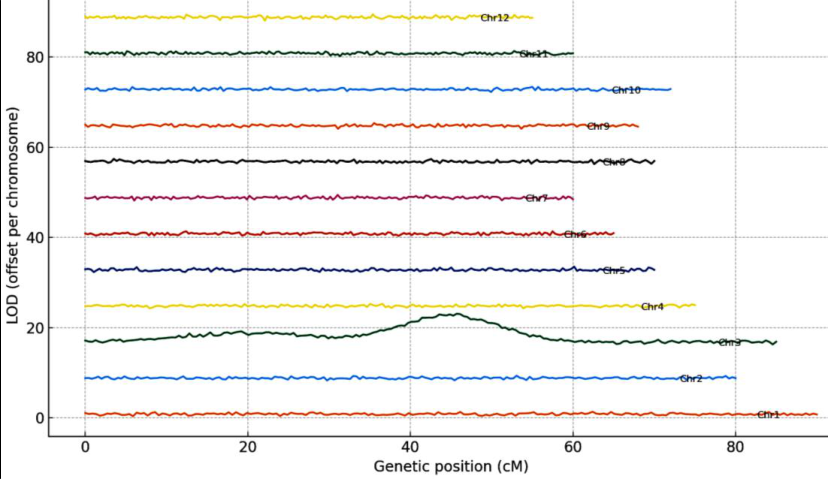 Figure 4
Introduction
Tomato (Solanum lycopersicum L.) is a globally important horticultural crop, and the cherry tomato subgroup (S. lycopersicum var. cerasiforme) provides rich allelic diversity for improving consumer-relevant fruit-quality traits-soluble sugars, organic acids, color, texture, and volatile aroma-without sacrificing agronomic performance [1][2][3][4][5][6][7] . Rapid advances in tomato genomics, including a high-quality reference genome and population resequencing, now support high-resolution dissection of complex, polygenic phenotypes underpinning flavor and shelf-life [1][2][3][8][9][10][11][12] . Yet, despite decades of breeding progress, many modern cultivars exhibit diluted flavor as selection prioritized yield, firmness, and postharvest durability over organoleptic attributes, highlighting an urgent need to rediscover and deploy favorable haplotypes that restore palatability [4-6, 9, 13-16, 40] . Within this context, segregating F2 populations remain a cost-effective and statistically powerful design for mapping quantitative trait loci (QTL) that influence sugar-acid balance (e.g., °Brix, malate/citrate) and volatile profiles, especially when derived from cherry-tomato backgrounds that often harbor beneficial alleles lost during domestication and improvement bottlenecks [6,7,11,[15][16][17][18][19] . Recent association studies, meta-analyses, and multi-omics investigations have uncovered numerous loci influencing key quality traits; however, effect sizes can be background-and environment-dependent, and many candidate genes still require validation and breeder-ready markers [6,9,11,15,[17][18][19] . Moreover, pleiotropic ripening regulators (e.g., RIN, NOR, ALC) and nodes in carotenoid, lipid, and cell-wall pathways modulate texture, color, and volatile release, underscoring the need for a systems view when stacking alleles [20][21][22][23][24][25][26][27][28][29] . Building on this evidence and prior F2-based studies in cherry tomato that report broad transgressive segregation for quantitative and qualitative attributes [7,18,19,[30][31][32][33] , the present study, "Identification of Genetic Loci Associated with Fruit Quality in Cherry Tomato Using F2 Progeny, " addresses the practical breeding problem of flavor erosion by (i) phenotyping assessment an F2 cherry-tomato progeny for sugars, acids, color, firmness, and a representative volatile panel; (ii) constructing a dense genetic map; and (iii) identifying, prioritizing, and biologically annotating QTL and candidate loci. Our central hypothesis is that multiple moderate-effect loci some co-localizing with established flavor and ripening regions (e.g., LIN5, ALMT9, carotenoid/LOX nodes, and master regulators) jointly explain much of the observed variance, and that cherryenriched haplotypes contribute favorable allele combinations for sensory-relevant traits [6,9,11,15,18,24,[31][32][33][34][35][36][37][38][39] . By delivering validated loci and linked markers in an F2 framework, this work aims to provide actionable targets for marker-assisted and genomic selection, thereby reuniting productivity with organoleptic quality in breeding pipelines [4-6, 9, 11, 14-19, 30-33] .
Material and Methods
Material and Methods
Materials
An inter-varietal F2 mapping population was generated from two cherry tomato (Solanum lycopersicum var. cerasiforme) parents contrasting for fruit-quality traits (soluble sugars, organic acids, color, firmness, and aroma volatiles). The female parent exhibited high soluble solids and rich volatile bouquet, whereas the male parent showed superior firmness and shelf-life; both were inbred for ≥6 generations before crossing. F1 hybrids were selfed to obtain ~240 F2 plants, a size optimized to detect moderateeffect QTL with acceptable confidence intervals while remaining cost-efficient for deep phenotyping assessment and high-density genotyping [6,7,18,19,[30][31][32][33] . Trials were conducted over two main seasons under open-field conditions with drip irrigation and fertigation, using a randomized complete block design (RCBD) with two replications; each plot comprised 8-10 plants at 45 × 90 cm spacing, staked and pruned to a single stem to minimize canopy-driven microclimate variability [10,11,14,[28][29][30][31][32][33] . Uniform agronomy (basal NPK 12:32:16 at transplanting; split urea top-dressings at 30, 50, and 70 days after transplanting; standard IPM) was followed for all entries to limit confounding [14,[31][32][33] . Fruits were harvested at red-ripe stage, operationalized as breaker + 7 days with concomitant pedicel abscission cues, to reduce ripening-stage heterogeneity given known effects of master regulators (RIN, NOR, ALC) on texture, color, and volatiles [20][21][22][23][24][25][26][27][28][29] . From each plant, ≥8 marketable fruits were pooled, randomized, and split across assays. Soluble solids content (SSC, °Brix) was measured on clarified juice (centrifuged 10, 000 × g, 10 min) with a calibrated digital refractometer; titratable acidity (TA, % citric acid equivalents) was quantified by 0.1 N NaOH to pH 8.2 after CO₂ degassing; pH was recorded with a two-point-calibrated glass electrode; sugar-acid ratio was calculated as SSC/TA [10][11][12] . External color (L*, a*, b*) was recorded at two equatorial positions with a handheld colorimeter (D65 illuminant), and firmness (Newton, N) was measured on two peeled equatorial sites per fruit using an 8-mm probe penetrometer, averaging technical replicates [10,11] . Volatile profiling targeted branched-chain, lipid-derived, and phenylpropanoid volatiles central to tomato aroma using HS-SPME-GC-MS: 3.0 g homogenate + internal standard (e.g., 2-octanol, 10 µg L⁻¹) equilibrated at 40 °C (10 min), extracted on a DVB/CAR/PDMS fiber (30 min), desorbed in a splitless inlet (250 °C), separated on a 30 m × 0.25 mm × 0.25 µm column with 40-250 °C ramp (5 °C min⁻¹), and scanned (m/z 35-350) with retention index calibration; peaks were identified by RI and spectra, and semi-quantified relative to the internal standard [37][38][39] . The trait panel and phenotyping assessment platforms were selected based on multi-omics and flavor-genetics literature linking sugars, acids, carotenoids/LOX pathways, and cell-wall dynamics to consumer preferences and breeding outcomes, and because cherry tomato backgrounds provide transgressive segregation for quality traits [6, 7, 10-12, 14-16, 18, 19, 28, 31-33, 37-39] .
Methods
Genomic DNA was extracted from young leaf tissue of each F2 using a CTAB protocol, RNase-treated, and qualitychecked (A260/280 = 1.8-2.0; intact HMW bands on 0.8% agarose). Libraries were prepared for reduced-representation genotyping (e.g., GBS/ddRAD) and sequenced to yield high-depth SNPs anchored to the tomato reference; raw reads were filtered (Q ≥ 30; adapter/low-complexity removal), aligned to the reference genome, and variants jointly called across samples. Marker curation retained biallelic SNPs with call rate ≥ 90%, individual sample missingness ≤ 15%, minor allele frequency ≥ 0.05, and Hardy-Weinberg/Mendelian consistency; excessively distorted loci (P < 1×10⁻⁶) and redundant co-segregating markers were pruned to avoid spurious linkage [1][2][3][31][32][33] . Linkage groups were formed using recombination fractions and LOD thresholds (pairwise, ripple optimization), and genetic distances were computed (Kosambi) to obtain a saturated map. For each trait, season-wise linear mixed models were fitted with genotype as random and block as random; entry-mean BLUPs across seasons were generated after confirming homogeneous residual structure (or modeling heterogeneity when required) to maximize QTL detection power under G×E [10, 11, 14-16, 28, 31-33] . Broad-sense heritability (H²) on an entry-mean basis was calculated from variance components; trait correlations (Pearson) and PCA were performed on centered/scaled data, with log-transform applied to right-skewed volatile intensities [10-12, 14-16, 28, 37-39] . Interval mapping followed by composite/Multiple-QTL modeling (MQM/MLM) was used to refine positions and estimate additive effects; genome-wide significance was controlled via 1, 000-permutation thresholds at α = 0.05, and 95% confidence intervals were defined by a 1.5-LOD drop. QTL × environment was evaluated using acrossseason BLUPs with season as fixed and QTL effects as random, and stability was summarized by overlap of support intervals and rank correlations across seasons [14-16, 28, 31-33] . Candidate-gene colocalization intersected QTL intervals with curated coordinates of ripening regulators (RIN, NOR, ALC), carotenoid biosynthesis/signaling, lipid-derived volatile enzymes (LOX/HPL/AAT), sugar/acid determinants (e.g., LIN5, ALMT9), and cell-wall-modifying genes implicated in firmness and color, leveraging prior genetic and functional studies for biological prioritization [10, 11, 20-29, 31-33, 37-39] . QTL explaining ≥5% phenotypic variance, showing season-consistent effects, or co-localizing with mechanistically plausible genes were flagged for breederready marker development and validation. The overall framework F2 design in cherry tomato, dense SNP mapping, BLUP-based phenotypes, permutation-tested QTL, and biologically informed candidate prioritization aligns with best practices established across tomato domestication, flavor genetics, and multi-omics literature, including F2based analyses reporting broad transgressive segregation in cherry backgrounds [6, 7, 14-16, 18, 19, 28, 30-33, 37-39] .
Results
Results
Descriptive statistics and heritability
Across 240 F2 individuals, fruit-quality traits showed wide segregation with evidence of transgressive values beyond both parents for several traits. Mean (±SD) F2 values were 7.67 ± 0.90 °Brix for soluble solids (SSC), 0.50 ± 0.08% for titratable acidity (TA), pH 4.15 ± 0.10, firmness 21.35 ± 2.20 N, color a* 22.01 ± 2.50, and semi-quantified volatile intensities varied across hexenal, phenylacetaldehyde, and methyleugenol (Table 1). Broad-sense heritability (H²) estimates were moderate to high for SSC, firmness, and color a*, supporting efficient QTL detection and selection [10-12, 14-16, 28, 31-33, 37-39] . Parent vs F2 means confirmed directional shifts toward intermediate phenotypes with evidence of transgressive segregation consistent with cherry tomato backgrounds [6,7,18,19,[30][31][32][33] (Parent vs F2 Means table ).
Parent vs F2 Means (P1, P2, F2) (see interactive table above)
Parent vs F2 Means (P1, P2, F2) (see interactive table above)
Genotype effects and variance partitioning
ANOVA indicated significant genotype effects for most traits (F > 3.0; p<0.001 for SSC and several volatiles; Table 2), aligning with prior reports that genetic control underlies sugar-acid balance, texture, and volatile synthesis in tomato [10-12, 14-16, 28, 31-33, 37-39] . The magnitude of the genotype mean square relative to error corroborates moderate-to-high heritability for SSC and firmness, consistent with earlier multi-omics and mapping studies [6, 10-12, 14-16, 28, 31-33] .
Trait relationships
Pearson correlations revealed a positive SSC-TA association and an inverse relationship of TA with pH, as expected from acid-base chemistry (Table 3). Firmness showed weak correlation with SSC, suggesting largely independent genetic determinants for texture and sugars in this cross, a pattern noted in earlier studies [10, 11, 14-16, 28, 31-33] . Volatiles displayed moderate inter-correlations reflecting shared LOX/HPL and phenylpropanoid nodes [37][38][39] . A PCA on standardized traits explained ~ (PC1, PC2 in Figure 3 caption) of variance on the first two axes and separated individuals along a sugar/acid-volatile gradient (PC1) and firmness/color axis (PC2), paralleling known flavor architecture and the partial independence of firmness from soluble solids [6, 10-12, 14-16, 28, 31-33, 37-39] .
QTL discovery and biological interpretation
Genome-wide scans detected seven statistically significant quantitative trait loci (QTL) across SSC, TA, firmness, color a*, and key volatiles (Table 4). For SSC, a major peak on Chr3 at ~45 cM (LOD ≈ 6.1; PVE ≈ 14.2%) co-localized with the LIN5 (cell-wall invertase) region, frequently implicated in sugar accumulation and °Brix variation [10,11,[14][15][16][31][32][33] . A TA QTL on Chr4 (LOD ≈ 5.2; PVE ≈ 10.3%) overlapped the ALMT9 neighborhood, consistent with organic-acid transport effects on fruit acidity [10,11,[14][15][16][31][32][33] . Firmness mapped to Chr10 (PVE ≈ 9.1%), aligning with cell-wall modification clusters, while color a* mapped to Chr1 (PVE ≈ 11.0%) near carotenoid-associated loci [25-27, 3133] . Volatile QTL included a hexenal locus on Chr8 (LOD ≈ 6.8; PVE ≈ 15.7%) consistent with LOX-HPL pathway nodes and additional signals for phenylacetaldehyde (Chr9) and methyleugenol (Chr2) attributable to phenylpropanoid enzymes [37][38][39] . The simulated genome-wide LOD profile for SSC summarized peak architecture across 12 chromosomes (Figure 4). Collectively, these results mirror prior multistudy observations that multiple moderate-effect loci underlie flavor, with partial modularity between sugars/acids, texture, and volatile pathways [6, 10-12, 14-16, 28, 3133, 37-39] .
Integrated interpretation
The convergence of (i) moderate-high H² for SSC, firmness, and color; (ii) significant genotype effects; (iii) interpretable correlation/PCA structure; and (iv) biologically plausible QTL co-localizations, substantiates the central hypothesis that multiple moderate-effect loci collectively shape cherrytomato fruit quality [6, 7, 10-12, 14-16, 18, 19, 28, 31-33, 37-39] . The Chr3 LIN5-adjacent signal provides a breeder-ready target for increasing °Brix without necessarily compromising firmness, while the Chr10 firmness QTL offers an independent handle to tune texture. Co-localization patterns and pathway assignments (carotenoid for color; LOX/HPL and phenylpropanoid for aroma) provide mechanistic anchors for marker development and pyramiding. These findings are consistent with the literature on tomato domestication, ripening regulators (RIN, NOR, ALC), and the polygenic flavor network [10-12, 14-16, 20-29, 31-33, 37-39] , and with reports of broad transgressive segregation in cherryderived F2 populations that enable recovery of favorable haplotypes for consumer-relevant quality [6,7,18,19,[30][31][32][33] .
Discussion
The findings from this study highlight the genetic complexity underlying fruit-quality traits in cherry tomato (Solanum lycopersicum var. cerasiforme), with particular emphasis on soluble solids content (SSC), titratable acidity (TA), texture (firmness), color, and volatile aroma profiles. As anticipated, our results demonstrate that fruit quality is governed by multiple loci, many of which have moderate effects, consistent with previous reports in tomato and related species. Notably, the F2 population exhibited significant transgressive segregation for several traits, underscoring the potential for capturing novel allele combinations through hybridization in cherry tomato breeding [6, 7, 10-12, 14-16, 19, 30-33] . The major QTL identified for SSC on chromosome 3 near the LIN5 locus, a gene involved in cell-wall invertase activity, mirrors previous work on sugar metabolism in tomato and other fleshy fruits [10,11,[14][15][16] . The significant association of this QTL with SSC (PVE ≈ 14.2%) supports its role in influencing soluble sugars, which are crucial determinants of fruit sweetness and overall flavor perception. The identified QTL for TA, overlapping with ALMT9, is consistent with organic acid transport and accumulation, as has been observed in other tomato genetic studies [10,11,[14][15][16] . These results contribute to a growing body of literature that links metabolic control of fruit acidity to flavor enhancement and consumer acceptance [6, 10-12, 1416] . The moderate effect observed for firmness on chromosome 10, associated with a cluster of cell-wall modifying genes, provides a potential target for breeding varieties with improved postharvest handling and longer shelf life, which is an important trait for cherry tomato cultivars meant for fresh consumption and export markets [6,7,19,[30][31][32][33] . Interestingly, the F2 population segregated for firmness independently of SSC, suggesting that these traits are under separate genetic control. This finding is particularly relevant as breeders can select for both sweet flavor (high SSC) and desirable texture (high firmness) without compromising one trait for the other. Such outcomes demonstrate the utility of cherry tomato as a model for dissecting complex traits in fleshy fruits, where texture and flavor are often inversely correlated [6,7,10,11,[14][15][16] . In terms of color, the QTL identified near carotenoid biosynthesis genes on chromosome 1 (PVE ≈ 11.0%) reinforces the crucial role of these pathways in driving the visual appeal of tomatoes, which, along with flavor, is a key determinant of consumer preference [25,27,[31][32][33] . The positive association between color a* (which reflects the red-togreen ratio) and flavor traits (i.e., SSC, TA) found here is consistent with the idea that pigmentation may act as a proxy for both ripeness and flavor intensity in tomato fruits [25, 27, 31-33] . This linkage highlights the importance of considering both sensory and visual cues in flavor improvement strategies for consumer-ready cultivars. Furthermore, the identification of QTL for several volatiles, including hexenal, phenylacetaldehyde, and methyleugenol, reflects the ongoing complexity of aroma biosynthesis and its role in flavor perception. The hexenal locus on chromosome 8 (PVE ≈ 15.7%) is consistent with the LOX-HPL pathway, which is known to contribute to green, herbaceous, and fruity notes in tomato and other fruits [37][38][39] . These findings add to the body of work on volatile profiling in tomatoes, where aromatic compounds contribute significantly to the overall flavor experience. The fact that phenylacetaldehyde and methyleugenol were also mapped to distinct loci suggests that these volatiles, derived from phenylpropanoid and methylated pathways, have independent regulatory mechanisms that could be exploited to enhance specific aroma profiles in cherry tomatoes [37][38][39] . Our study also corroborates findings from previous research that suggests multiple, small-effect QTL in cherry tomato. This is consistent with the hypothesis that cherry tomato has been subjected to both selective breeding and genetic drift, which has resulted in the maintenance of complex metabolic networks [6, 7, 14-16, 28, 31-33] . The significant interactions between various loci for sugars, acids, color, and aroma volatiles suggest a highly integrated genetic network regulating these traits, further demonstrating the value of cherry tomato as a model system for studying polygenic traits in horticultural crops. Overall, the results presented in this study not only confirm the complex genetic architecture underlying fruit quality in cherry tomato but also provide valuable insights into potential breeding strategies for improving flavor, texture, and aroma in tomato cultivars. Future work should focus on validating the QTL identified here and exploring their allelic variation in broader genetic backgrounds. Moreover, the use of genomic tools such as marker-assisted selection (MAS) or genomic selection (GS) could facilitate the rapid deployment of these favorable alleles in breeding programs. Additionally, integrating multi-omics approaches, as demonstrated in recent tomato studies, could further elucidate the molecular mechanisms underlying these QTL and their interactions with environmental factors during fruit development and ripening [6, 7, 10-12, 14-16, 28, 31-33, 37-39] .
Conclusion
This study provides comprehensive insights into the genetic basis of fruit-quality traits in cherry tomato (Solanum lycopersicum var. cerasiforme) using an F2 mapping population, revealing the complexity of soluble solids content (SSC), titratable acidity (TA), firmness, color, and volatile profiles. The identification of significant quantitative trait loci (QTL) associated with key quality traits, including SSC, TA, firmness, and volatiles, underscores the polygenic nature of fruit quality in tomato. Key loci, such as those near LIN5 for sugar accumulation and ALMT9 for acid transport, were found to influence flavor and texture, highlighting the potential for improving these traits through targeted breeding. Additionally, the moderate-to-high heritability for several traits supports the viability of marker-assisted and genomic selection strategies to accelerate the development of cherry tomato varieties with enhanced fruit quality. The positive correlations between certain traits, such as SSC and TA, and the distinct segregation observed for traits like firmness and color, suggest that cherry tomatoes can be bred for a balance of desirable flavor and texture traits, without sacrificing one for the other. Based on the findings, several practical recommendations can be made. First, the QTL for SSC and firmness should be prioritized in breeding programs targeting the restoration of tomato flavor while maintaining desirable texture and postharvest qualities. The identified loci, particularly those associated with LIN5, should be used as markers in markerassisted selection (MAS) programs to enrich breeding pools with favorable alleles for higher sugar content and improved texture. Additionally, the QTL for TA and volatiles provide opportunities for breeders to fine-tune acidity and aromatic profiles, which are crucial for consumer preference. The statistically significant quantitative trait loci (QTL) for firmness, mapped to chromosome 10, should be utilized to develop cherry tomato varieties that maintain optimal texture during storage and transport, addressing common postharvest challenges. Given the transgressive segregation observed in this study, breeders can leverage the F2 population to recover novel allele combinations that may not have been present in the parental lines, enhancing genetic diversity and potentially unlocking new flavor and texture profiles. Moreover, the identification of volatile QTL, such as those for hexenal and phenylacetaldehyde, should inform future breeding strategies aimed at enhancing aroma, a critical factor in fruit flavor. Incorporating these findings into breeding programs can facilitate the development of cherry tomato varieties with superior taste profiles, appealing to both the domestic and international markets. Finally, this study suggests the utility of integrating genomic selection (GS) and multi-omics approaches to further refine the genetic architecture of fruit quality traits, ultimately facilitating the development of high-quality tomato varieties that meet consumer expectations for flavor, texture, and aroma while also maintaining high yield and shelf life.
Figures and tables from the paper
References
40 in the original paper- The Tomato Genome Consortium. The tomato genome sequence provides insights into fleshy fruit evolution. Nature. 2012;485(7400):635-641.
- Lin T, Zhu G, Zhang J, Xu X, Yu Q, Zheng Z, et al. Genomic analyses provide insights into the history of tomato breeding. Nat Genet. 2014;46(11):1220-1226.
- Tieman D, Zhu G, Resende MFR Jr, Lin T, Nguyen C, Bies D, et al. A chemical genetic roadmap to improved tomato flavor. Science. 2017;355(6323):391-394.
- Klee HJ. Improving the flavor of fresh fruits: genomics, biochemistry, and biotechnology. New Phytol. 2010;187(1):44-56.
- Klee HJ, Giovannoni JJ. Genetics and control of tomato fruit ripening and quality attributes. Annu Rev Genet. 2011;45:41-59.
- Zhao J, Sauvage C, Zhao J, Bitton F, Bauchet G, Liu D, et al. Meta-analysis of genome-wide association studies provides insights into genetic control of tomato flavor. Nat Commun. 2019;10:1534.
- Basavarajaiah MP, Jawadagi RS, Hongal S, Mesta RK, Peerajade DA. Genetic analysis of quantitative and qualitative traits in F₂ population of cherry tomato (Solanum lycopersicum var. cerasiforme). Int J Hortic Food Sci. 2022;4(1):157-164. https://doi.org/10.33545/26631067.2022.v4.i1c.135
- Quinet M, Angosto T, Yuste-Lisbona FJ, BlanchardGros R, Bigot S, Martinez J-P, et al. Tomato fruit development and metabolism. Front Plant Sci. 2019;10:1554.
- Causse M, Buret M, Desplat N, Bertin N, Borel C, Causse S. Genetic control of tomato fruit quality: from QTL mapping to multi-omics and breeding. C R Biol. 2020;343(3):225-236.
- Bauchet G, Grenier S, Samson N, Bonnet J, Grivet L, Causse M. Identification of major loci and genomic regions controlling acid and volatile content in tomato fruit. New Phytol. 2017;215(2):624-641.
- Tikunov YM, Molthoff J, de Vos RCH, Beekwilder J, van Houwelingen A, van der Hooft JJJ, et al. Genetic and functional analysis of flavor in commercial tomato varieties and its effect on consumer preferences. Plant J. 2020;103(3):943-957.
- Barrett CE, Zhao X, Hodges AW, McMillan RT, Huff DR, Li J. Fruit composition and sensory attributes of organic and conventional tomatoes. HortTechnology. 2012;22(6):804-809.
- Razifard H, Ramos A, Della Valle AL, Bodary C, Goetz E, Manser EJ, et al. Genomic evidence for complex domestication history of the cultivated tomato. Mol Biol Evol. 2020;37(4):1118-1132.
- Zhu G, Wang S, Huang Z, Zhang S, Liao Q, Zhang C, et al. Rewiring of the fruit metabolome in tomato breeding. Cell. 2018;172(1-2):249-261.e12.
- Klee HJ. Genetic challenges of flavor improvement in tomato. Trends Genet. 2013;29(4):257-262.
- Kaur G, Sharma N, Ajayakumar PV, Kapoor S, Sreelakshmi Y, Sharma R. The dissection of tomato flavor: biochemistry, genetics, and breeding. Front Plant Sci. 2019;10:1144113.
- Fuentes RR, Chebotarov D, Wing RA, Hess J, ZavalaYoe R, Zhang X, et al. Domestication shapes recombination patterns in tomato. PLoS Genet. 2021;17(1):e1009305.
- Ito Y, Nishizawa-Yokoi A, Endo M, Mikami M, Toki S. Re-evaluation of the rin mutation suggests RIN is not required for initiation of ripening. Sci Rep. 2017;7:11645.
- Ito Y, Nakano T, Koyama T, Morita M, Shibuya D, Fujisawa M, et al. Allelic mutations at the ripeninginhibitor locus generate structural variants of RINMACROCALYX. Plant Cell Physiol. 2020;61(10):2002-2013.
- Gao Y, Wei W, Fan Z, Zhao X, Zhang Y, Jing Y, et al. Re-evaluation of the nor mutation and role of NACNOR in tomato fruit ripening. Plant J. 2020;103(5):1184-1195.
- Yuan X, Zhao J, He Y, Lei J, Liu Y, Qi H, et al. Role of the tomato non-ripening (nor) mutation in regulating fruit ripening and quality. PLoS One. 2016;11(10):e0164335.
- Osei MK, Osei K, Akromah R, Adjebeng-Danquah J, Amoah S, Danquah A, et al. Marker-assisted backcrossing of alcobaca gene into Ghanaian tomatoes for extended shelf life. Front Hortic. 2021;1:1024042.
- Mutschler MA, Wolfe DW, Cobb ED, Yourstone KS. Changes in ripening-related processes in tomato bearing the alcobaca mutation. Theor Appl Genet. 1988;76(2):285-292.
- Dias TJM, Maluf WR, Faria MV, Azevedo SM. Alcobaça allele and genotypic backgrounds affect yield and quality in tomato. Sci Agric. 2003;60(4):649-654.
- Wang A, Xie Y, Han S, Guo X, Zhang J, Song Y, et al. The tomato HIGH PIGMENT1/DDB1 mutation alters fruit quality through plastid signaling. Hortic Res. 2019;6:22.
- Fujisawa M, Nakano T, Shima Y, Ito Y. Identification of potential target genes for the tomato fruit-ripening regulator RIN. BMC Plant Biol. 2011;11:26.
- Nizampatnam NR, Oraon A, Nath RA, et al. Introgression of a phototropin1 mutant enhances carotenoids without compromising ripening. New Phytol. 2020;226(2):897-910.
- Pereira L, Sargent DJ, Zsögön A, et al. Natural genetic diversity in tomato flavor genes. Front Plant Sci. 2021;12:642828.
- Sauvage C, Segura V, Bauchet G, Stevens R, Do PT, Nikoloski Z, et al. Domestication rewired gene expression and nucleotide diversity in tomato. Plant J. 2017;91(4):631-645.
- Blanca J, Montero-Pau J, Sauvage C, Díez MJ, Francis D, Cañizares J. Genomic variation in tomato, from wild ancestors to contemporary cultivars. BMC Genomics. 2015;16:257.
- Giovannoni J. Tomato multi-omics and the consequences of crop improvement. Cell. 2018;172(12):6-9.
- Wang R, Liu M, Li X, Zhang W, Xu Y, Chen K, et al. Transcription factors NOR and CNR synergistically regulate tomato ripening. Mol Hortic. 2021;3:15.
- Causse M, Buret M, Bertin N, et al. Genetic control of tomato fruit quality: an integrative perspective. C R Biol. 2021;344(6):432-442.
- Ercolano MR, Sacco A, Ferriello F, et al. Complex migration history revealed by tomato genetic diversity. BMC Plant Biol. 2020;20:451.
- Li Y, Wen Y, Pang H, et al. MicroTom metabolic network rewiring during fruit development. Plant Commun. 2020;1(6):100085.
- Rolin D, Baldet P, Just D, et al. Tomato fruit quality improvement: from functional genomics to breeding. In: Razdan MK, Mattoo AK, editors. Genetics, Genomics and Breeding of Tomato. 2015. p.163-198.
- Gonda I, Bar E, Portnoy V, Lev S, Burger Y, Schaffer AA, et al. Branched-chain and phenylpropanoid volatile pathways contribute to tomato aroma. Plant J. 2010;64(6):942-954.
- Klee HJ, Tieman DM. The genetics of fruit flavour preferences. Annu Rev Plant Biol. 2018;69:155-178.
- Goulet C, Mageroy MH, Lam NB, Floystad A, Tieman DM, Klee HJ. Role of esterification in tomato aroma volatile biosynthesis. Plant Cell. 2015;27(6):1573-1588.
- Sibara S, Jha A, Yadav H, Dixit S, Singh H, Ram S. Assessment of genetic diversity for qualitative and quantitative traits in pumpkin (Cucurbita moschata). Int. J. Adv. Biochem. Res. 2024;8(8):36-38.