
Research article · 2025 · Full text
International Journal of Agriculture and Food ScienceStudies on sensory properties and microbiological quality of burfi blended with apple (Malus pumila) pulp
Volume 7(10) · Pages 605–609 · DOI: 10.33545/2664844x.2025.v7.i10i.927 ↗
Research areasFood Science and Nutritional StudiesHibiscus Plant Research StudiesPapaya Research and Applications
Abstract
Author-writtenThe burfi was prepared by blending 15, 20 and 25 per cent of apple pulp in buffalo milk khoa aimed, to study sensory properties and microbiological quality of burfi blended with apple pulp. The sensory score with respect to colour and appearance, flavour, body and texture and overall acceptability showed that addition of 25 per cent apple pulp decrease flavour (8.00, 8.25, 8.75 and 8.50), body and texture (8.25, 8.50, 8.75 and 8.00) and overall acceptability (8.00, 8.50, 8.75, 8.25) score as compare to 15 and 20 per cent apple pulp. However, addition of apple pulp resulted in increased score for colour and appearance (8.00, 8.25, 8.50, 8.75). The microbial results indicate the standard plate count, yeast and mould count and coliform count were within the all permissible limits.
Summary
Source-checkedPlain-language reading of the full paper, prepared with AI and checked against the text. Each point links to the authors' own words.
Why it matters
- Heat desiccation is an ancient method for processing milk products, which are valued for being nutritionally rich and providing vital calories. View evidence ↗
- Burfi is a popular Indian confection made from khoa and sugar, often blended with ingredients like fruit pulps or dry fruits. View evidence ↗
- Apple fruits are beneficial additions to food as they provide vitamin C, fiber, and polyphenols. View evidence ↗
The question
- The study aimed to evaluate the microbiological quality and sensory properties of burfi blended with 15%, 20%, and 25% apple pulp. View evidence ↗
What they did
- The burfi was made using buffalo milk standardized to 6% fat and 9% solids-not-fat (SNF). View evidence ↗
- Four treatments were tested using 30% sugar by weight: a control (100% khoa), and blends with 15% (T2), 20% (T3), and 25% (T4) apple pulp. View evidence ↗
- A semi-trained panel of five judges used a 9-point hedonic scale to evaluate the sensory attributes of the samples. View evidence ↗
- Microbiological quality was assessed for coliform, yeast and mould, and standard plate counts following the A.O.A.C. (1975) method. View evidence ↗
What they found
- All burfi samples, regardless of apple pulp level, were found to be free from coliform, indicating hygienic quality. View evidence ↗
What it means
- The authors conclude that adding 20% apple pulp to burfi is optimal as it does not negatively affect flavour, texture, or overall acceptability. View evidence ↗
- The authors state that the microbiological counts for all samples remained within permissible limits. View evidence ↗
Visual summary
3 visualsIllustrations explain the paper; charts are replotted from the paper's own table values.
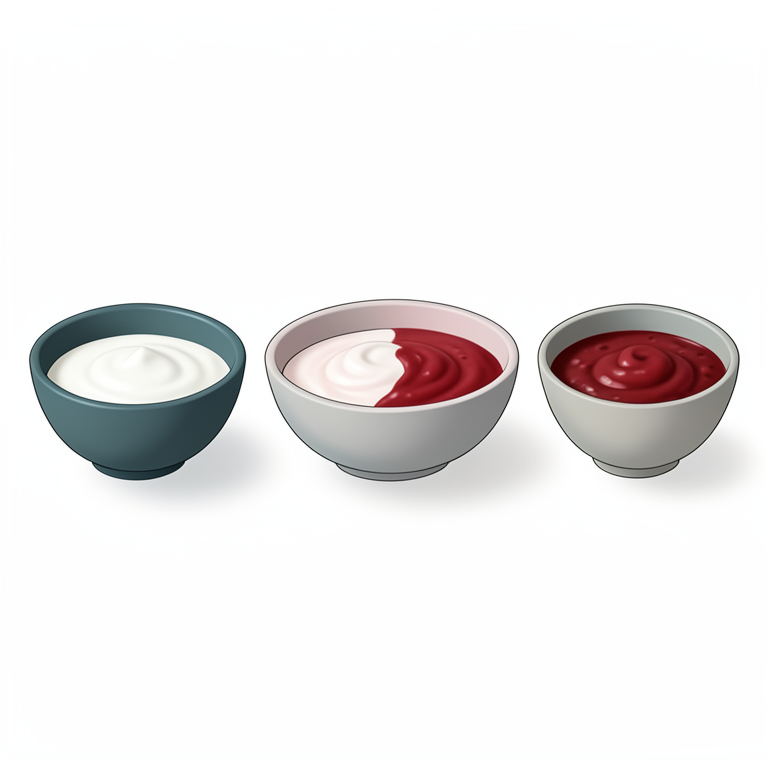
Treatment Groups
AI-generated conceptual illustration (burfi (milk-solid fudge) and apple pulp). It explains the idea and does not show study data.
View source evidence ↗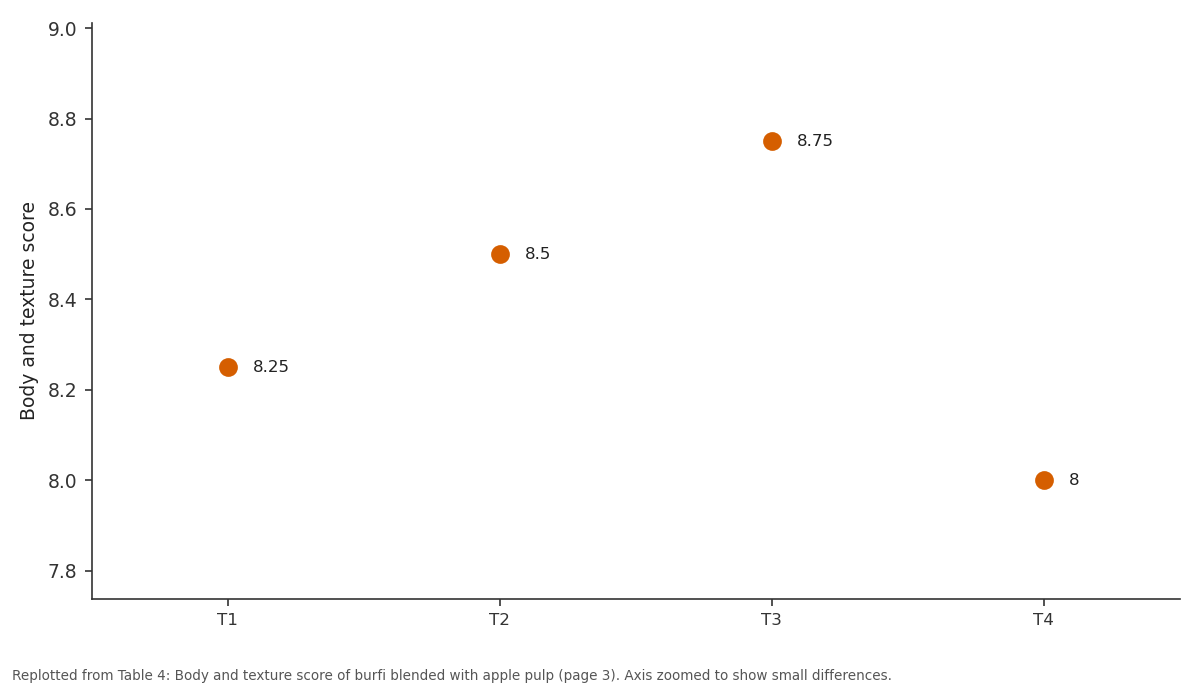
Mean: T1 vs T2 vs T3 vs T4
Replotted from Table 4 (page 3) of the original paper. Every bar is the paper's own table value.
View source evidence ↗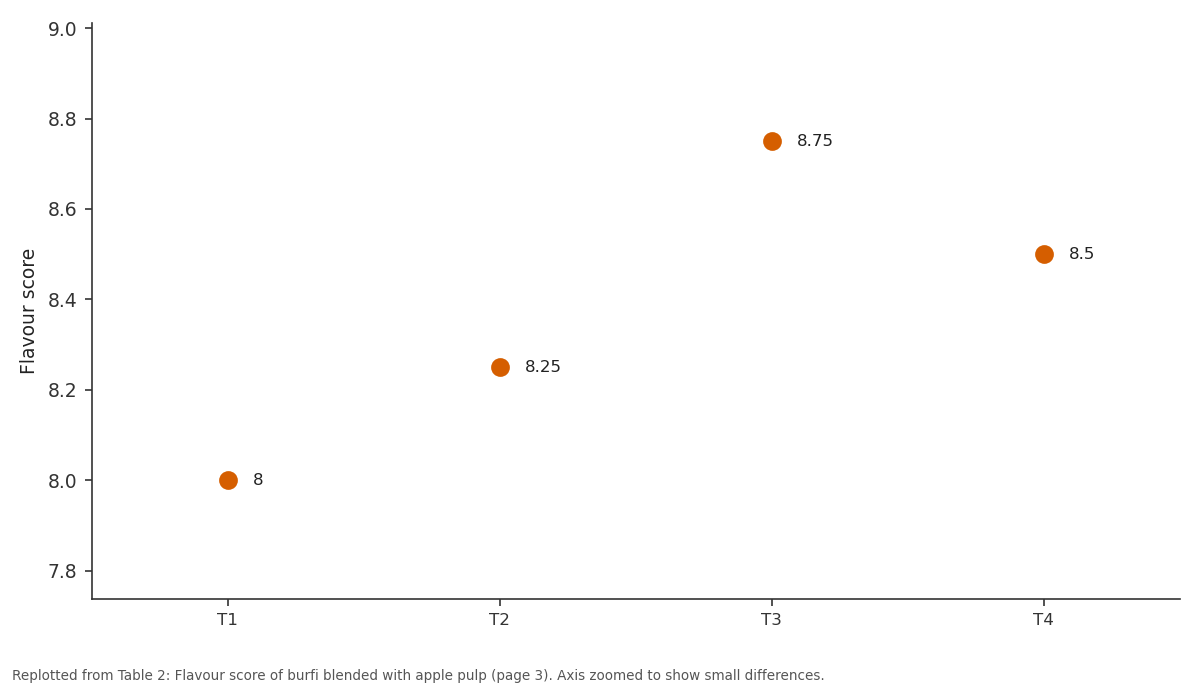
Mean: T1 vs T2 vs T3 vs T4
Replotted from Table 2 (page 3) of the original paper. Every bar is the paper's own table value.
View source evidence ↗Figures & tables
From the original paper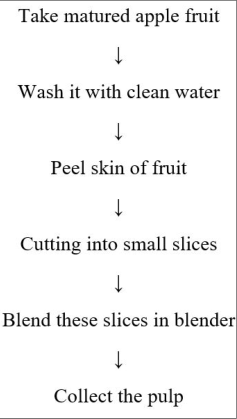 Figure 1
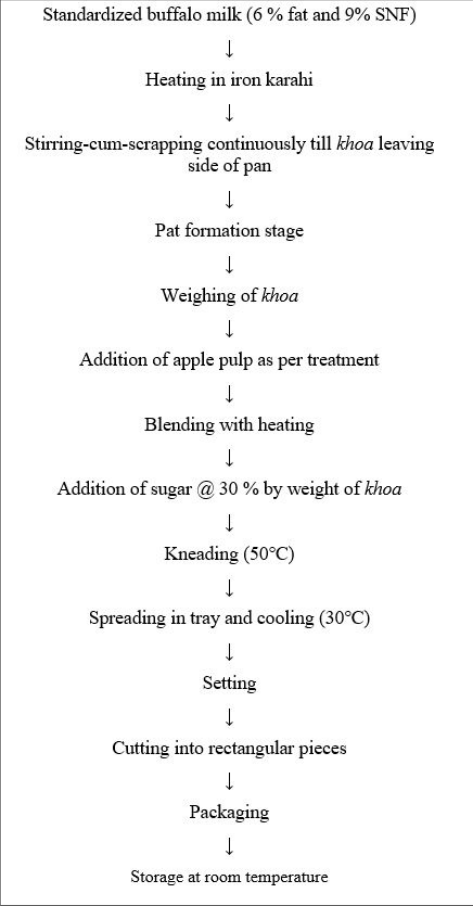 Figure 2
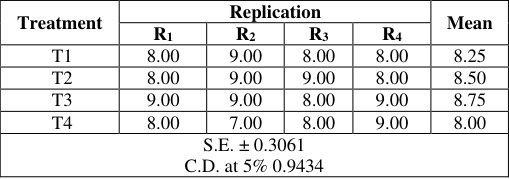 Table 4
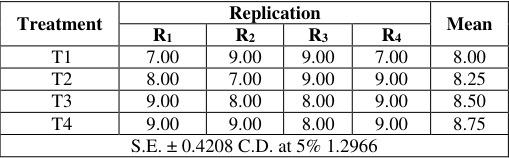 Table 1
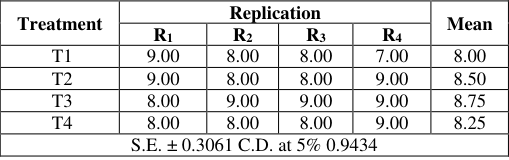 Table 4
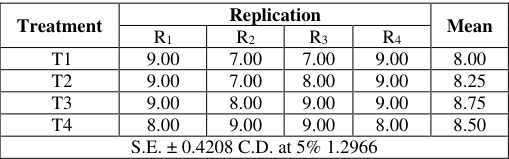 Table 2
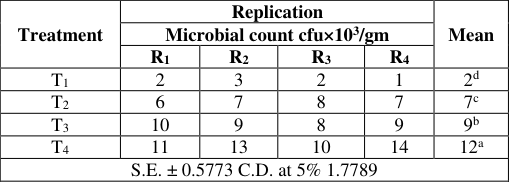 Table 5
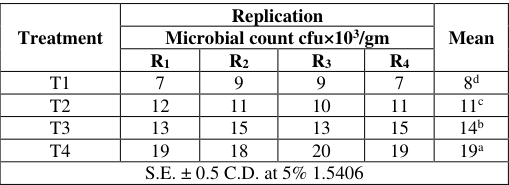 Table 5
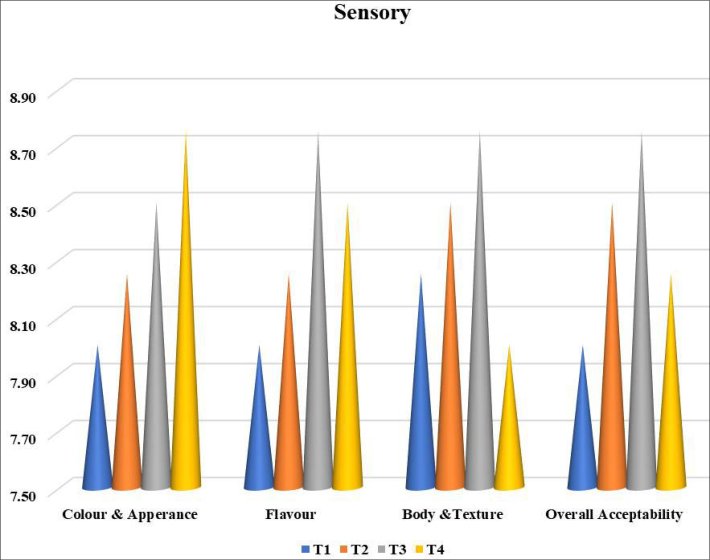 Figure 3
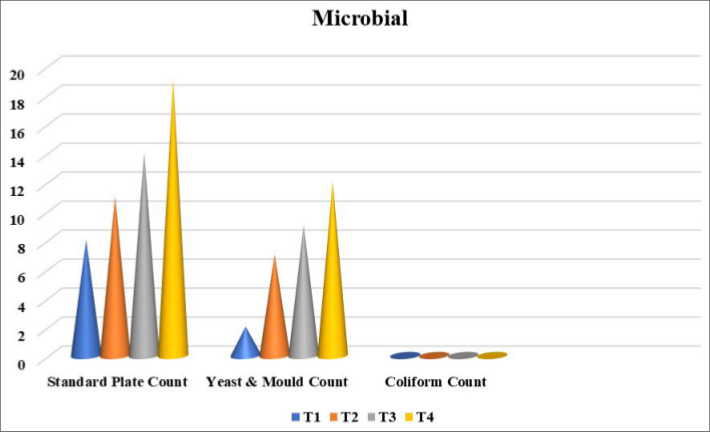 Figure 4
Introduction
Heat desiccation techniques is the most ancient technology used to process the milk and milk products. These products are rich in nutrition and also provide vital calories. Cutting across the different regions of the Indian sub-continent, are famous for heat desiccated milk products are based on khoa/mawa, which is used as base material such as burfi, peda, gulabjamun, kalajamun, kalakand, milk cake, rabri, khurchan, basundi, etc. About 600,000 metric tonnes of khoa was produced annually in India which utilize 7% of total milk production. Burfi is the most popular khoa based confection in Indian sub-continent. It is prepared by mixing different proportions of khoa and sugar along with some other ingredients i.e. dry fruits, fruit pulps, different cereals, pulses and their flours and flavouring materials. Traditionally, burfi was prepared by vigorous blending of khoa and sugar in open shallow kettle till a homogenous, smooth and fine grain mass appears and is transferred hot into a tray for cooling and setting. Apple fruits are a good source of fiber and vitamin C. They also contain polyphenols. Apple fruits may aid weight loss in several ways which are linked to lower blood pressure and stroke risk. Apple fruits promote heart health in several ways. They are high in soluble fiber, lower cholesterol. Apple fruit is a fruit with many associated health benefits, lower risk of type 2 diabetes, lower risk of cancer and death from cancer, protect against asthma, promote bone health and, weight loss. Apple fruit is rich in vitamins B 1 , B 2 , B 6 , C & A. It contains dietary fiber, energy, potassium, phosphorous, magnesium, Sodium, Iron, Zinc and copper (Kedaree et al., 2021) [3] .
Materials Buffalo milk
Fresh standardized Buffalo milk (6% fat and 9% SNF) was procured from local market (Natural Milk Pvt. Ltd., Kallam).
Apple fruit
Fresh matured apple fruit (Red delicious) was procured from the local market and used in the present investigation for preparation of burfi.
Sugar
Good quality clean crystalline, cane sugar was purchased from local market of Latur city.
Microbiological Media
The burfi sample was analyzed for standard plate count, yeast and mould count and coliform count by using Nutrient Agar (NA), Potato Dextrose Agar (PDA) and Violet Red Bile Agar (VRBA) media, respectively.
Methodology
Sensory evaluation of control and burfi blended with apple pulp was conducted by semi-trained panel of 5 judges using 9-point hedonic scale. The sensory attributes such as colour and appearance, flavour, body and texture, overall acceptability was studied and data obtained were analysed with Completely Randomized Block Design (CRD). The score given by judges for different sensory parameters were recorded and subsequently discussed as follows. The microbiological analysis of burfi samples for standard plate count, yeast and mould count and coliform count was performed according to A.O.A.C. method (1975).
Treatment combination
Burfi blended with apple pulp was prepared using 30 per cent sugar by weight of khoa and apple pulp as per the treatment combination as follows. T 1 -100 part of khoa by weight (Control) T 2 -85 part of khoa + 15 part of apple pulp by weight T 3 -80 part of khoa + 20 part of apple pulp by weight T 4 -75 part of khoa + 25 part of apple pulp by weight
Procedure for preparation of burfi blended with apple (Malus pumila) pulp
The burfi was prepared as per the procedure given. Buffalo milk was standardized at 6% fat and 9% SNF was taken in an iron karahi and heated on gentle fire. At the time of boiling, milk was stirred with the help of a khunti in a circular manner. The stirring-cum-scrapping process was continued till a pasty consistency was reached. Addition of apple pulp as per treatment and sugar at 30 per cent by weight of khoa was added. The mixture was then further heated with continuous kneading at 50℃ up to desirable solid mass stage attained. Then the mixture was spreading into greasy stainless-steel tray for cooling at 30℃. After cooling of mixture it was cutting into rectangular blocks. The final product packaging and storage at room temperature.
Results and Discussion
Colour and appearance score of burfi blended with apple pulp The score for colour and appearance of burfi blended with apple pulp are given in Table No.1 The colour and appearance score for control and burfi blended with apple pulp T 2, T 3 and T 4 are 8.00, 8.25, 8.50 and 8.75, respectively and presented in Table 1. The results indicated that addition of apple pulp in burfi increased colour and appearance score non-significantly towards higher level of addition of apple pulp in burfi. The colour and appearance score for T 4 (8.75) was highest and differ non significantly from T 1 (8.00), T 2 (8.25) andT 3 (8.50). The non-signficant difference in colour and appearance score among the treatments and control was due to slight brown colour of apple pulp. However, at higher level T 2 , T 3 and T 4 colour and appearance was appealing due to brown colour of burfi. The results of present study are similar with Sahu et al. (2021) who reported that addition of apple pulp in shrikhand at 15, 20 and 25 per cent increased colour and appearance score at 25 per cent level of apple pulp (7.27) than control (5.95).
| Treatment | Replication | — | — | — | Mean |
|---|---|---|---|---|---|
| R1 | R2 | R3 | R4 | ||
| T1 | 7.00 | 9.00 | 9.00 | 7.00 | 8.00 |
| T2 | 8.00 | 7.00 | 9.00 | 9.00 | 8.25 |
| T3 | 9.00 | 8.00 | 8.00 | 9.00 | 8.50 |
| T4 | 9.00 | 9.00 | 8.00 | 9.00 | 8.75 |
| S.E. ± 0.4208 C.D. at 5% 1.2966 |
Table text extracted from the original PDF; superscript letters are shown inline. The original table image is below.
View original table image
Flavour score of burfi blended with apple pulp
The score for flavour of burfi blended with apple pulp are given in Table No.2 The flavour score for control (T 1 ) and burfi blended with apple pulp T 2 , T 3 and T 4 are 8.00, 8.25, 8.75 and 8.50, respectively and presented in Table 2. The results indicates that addition of apple pulp in burfi increased flavour score non-significantly up to T 3 then decreased. The nonsignficant difference in flavour score of T 3 (8.75) was higher due to mild pleasant flavour was obtained in the burfi blended with apple pulp.However, the flavour score for T 3 was highest and differ non-significantly from T 1 (8.00), T 2 (8.25) as well as T 4 (8.50). Therefore flavour score decrease in T 4 but value does not differ significantly. The results of present study are in agreement with results obtained by Navale et al. (2014) who reported that addition wood apple pulp in burfi at 5, 10 and per cent significantly increased flavour score from T 1 (7.37) to T 3 (8.37) and further decreased from T 3 (8.37) to T 4 (6.62).
| Treatment | Replication | — | — | — | Mean |
|---|---|---|---|---|---|
| R1 | R2 | R3 | R4 | ||
| T1 | 9.00 | 7.00 | 7.00 | 9.00 | 8.00 |
| T2 | 9.00 | 7.00 | 8.00 | 9.00 | 8.25 |
| T3 | 9.00 | 8.00 | 9.00 | 9.00 | 8.75 |
| T4 | 8.00 | 9.00 | 9.00 | 8.00 | 8.50 |
| S.E. ± 0.4208 C.D. at 5% 1.2966 |
Table text extracted from the original PDF; superscript letters are shown inline. The original table image is below.
View original table image
Body and texture score of burfi blended with apple pulp
The score for body and texture of burfi blended with apple pulp are given in Table No.3 The body and texture score for control (T 1 ) and burfi blended with apple pulp T 2 , T 3 and T 4 are 8.25, 8.50, 8.75 and 8.00, respectively and presented in Table 3.The results indicated that addition of apple pulp in burfi increased body and texture non-significantly up to T 3 then decreased. The body and texture score of burfi in treatment T 3 (8.75) was superior over rest of the treatments which had soft body and smooth grained texture burfi. However, body and texture score T 4 (8.00) was lowest among all treatments as well as control T 1 (8.50). The results of present study are in agreement with results obtained by Navale et al. (2014) who reported that addition of wood apple pulp in burfi at 5, 10 and 15 per cent significantly increased body and texture score from T 1 (7.62) to T 3 (8.37) and further decreased from T 3 (8.37) to T 4 (6.75).
Overall acceptability score of burfi blended with apple pulp
The score for overall acceptability of burfi blended with apple pulp are given in Table No.3 The overall acceptability score for control (T 1 ) and burfi blended with apple pulp T 2 , T 3 and T 4 are 8.00, 8.50, 8.75 and 8.25, respectively and presented in Table 4. The results indicated that addition of apple pulp in burfi increased overall acceptability score up to T 3 further decrease. The overall acceptability was highest score for treatment T 3 (8.75) and differ non-significantly from T 1 (8.00), T 2 (8.50) and T 4 (8.25). Overall acceptability score of T 4 was lowest among all treatment as well as control but value decrease differ significantly. The results of present study are similar with findings of Navale et al. (2014) who reported that addition of wood apple pulp in burfi at 5, 10 and 15 per cent significantly increased overall acceptability score from T 1 (7.75) to T 3 (8.45) and further decreased from T 3 (8.45) to T 4 (6.77).
| Treatment | Replication | — | — | — | Mean |
|---|---|---|---|---|---|
| R1 | R2 | R3 | R4 | ||
| T1 | 9.00 | 8.00 | 8.00 | 7.00 | 8.00 |
| T2 | 9.00 | 8.00 | 8.00 | 9.00 | 8.50 |
| T3 | 8.00 | 9.00 | 9.00 | 9.00 | 8.75 |
| T4 | 8.00 | 8.00 | 8.00 | 9.00 | 8.25 |
| S.E. ± 0.3061 C.D. at 5% 0.9434 |
Table text extracted from the original PDF; superscript letters are shown inline. The original table image is below.
View original table image
| Treatment | Replication | — | — | — | Mean |
|---|---|---|---|---|---|
| R1 | R2 | R3 | R4 | ||
| T1 | 8.00 | 9.00 | 8.00 | 8.00 | 8.25 |
| T2 | 8.00 | 9.00 | 9.00 | 8.00 | 8.50 |
| T3 | 9.00 | 9.00 | 8.00 | 9.00 | 8.75 |
| T4 | 8.00 | 7.00 | 8.00 | 9.00 | 8.00 |
| S.E. ± 0.3061 C.D. at 5% 0.9434 |
Table text extracted from the original PDF; superscript letters are shown inline. The original table image is below.
View original table image
Microbial quality of fresh burfi blended with apple pulp
The fresh product prepared was subjected to microbial analysis with respect to standard plate count, yeast mould cound and colifrom count.
Standard Plate Count of fresh burfi blended with apple pulp
The standard plate count of burfi blended with apple pulp are presented on Table No. 5 The mean value of standard plate count for control (T 1 ) and burfi blended with apple pulp T 2 , T 3 and T 4 was (8, 11, 14 and 19 cfu×10 3 /gm, respectively) and presented in Table 5. The standard plate count of control (T 1 ) sample was (8 cfu×10 3 /gm) lower and differ significantly from all treatments. Among the treatments per cent standard plate count of (T 4 ) was (19 cfu×10 3 /gm) higher than all other treatment and differ significantly toward higher level of addition of apple pulp. The significant increase in standard plate count of burfi toward higher level of apple pulp was due to higher moisture (85.56 per cent) content in apple pulp. The results of present study are similar with Waghmare (2012) who reported that addition of bottle gourd pulp in fresh burfi at 5, 10, 15 per cent increased standard plate count from 9 to 19 cfu×10 3 /gm significantly.
| Treatment | Replication | — | — | — | Mean |
|---|---|---|---|---|---|
| Microbial count cfu×103/gm | |||||
| R1 | R2 | R3 | R4 | ||
| T1 | 7 | 9 | 9 | 7 | 8d |
| T2 | 12 | 11 | 10 | 11 | 11c |
| T3 | 13 | 15 | 13 | 15 | 14b |
| T4 | 19 | 18 | 20 | 19 | 19a |
| S.E. ± 0.5 C.D. at 5% 1.5406 |
Table text extracted from the original PDF; superscript letters are shown inline. The original table image is below.
View original table image
| Treatment | Replication | — | — | — | Mean |
|---|---|---|---|---|---|
| Microbial count cfu×103/gm | |||||
| R1 | R2 | R3 | R4 | ||
| T1 | 2 | 3 | 2 | 1 | 2d |
| T2 | 6 | 7 | 8 | 7 | 7c |
| T3 | 10 | 9 | 8 | 9 | 9b |
| T4 | 11 | 13 | 10 | 14 | 12a |
| S.E. ± 0.5773 C.D. at 5% 1.7789 |
Table text extracted from the original PDF; superscript letters are shown inline. The original table image is below.
View original table image
Yeast and Mould Count of fresh burfi blended with apple pulp
The yeast and mould count of burfi blended with apple pulp are presented on Table No. 5 The mean value of yeast and mould count for control (T 1 ) and burfi blended with apple pulp T 2 , T 3 and T 4 was (2, 7, 9 and 12 cfu×10 3 /gm, respectively) and presented in Table 6. The yeast mould count of control (T 1 ) sample was (2 cfu×10 3 /gm) lower and differ significantly from all treatments. Among the treatments per cent yeast mould count of (T 4 ) was (12 cfu×10 3 /gm) higher than all other treatment and differ significantly toward higher level of addition of apple pulp. The significant increase in standard plate count of burfi toward higher level of apple pulp was due to higher moisture (85.56 per cent) content in apple pulp. The results of present study are similar with Waghmare (2012) who reported that addition of bottle gourd pulp in fresh burfi at 5, 10, 15 per cent increased yeast mould count from 3 to 13 cfu×10 3 /gm significantly.
Coliform count of fresh burfi using apple pulp
In present study the product prepared by addition of different level of apple pulp with buffalo milk khoa was found to be free from coliform, indicates the hygienic quality of burfi.
Conclusions
From present investigation it was observed that sensory parameters such as colour and appearance had positive effect on burfi. However, addition of 25 per cent apple pulp decrease flavour, body and texture and overall acceptability score as compare to control. From the results of sensory score it could be concluded that 20 per cent apple pulp could be added in burfi without affecting flavour, body and texture and overall acceptability. The microbial results indicate the standard plate count, yeast and mould count and coliform count were within the all permissible limits.
Figures and tables from the paper
References
6 in the original paper- AOAC. Official methods of analysis. 2nd ed. Washington (DC): Association of Official Analytical Chemists; 1975.
- Aggarwal D, Raju PN, Alam T, Sabikhi L, Arora B. Advances in processing of heat desiccated traditional dairy foods of Indian sub-continent and their marketing potential. J Food Nutr Res. 2018;3:172.
- Kedaree VC, Nalkar SD, Gambhire AR. Preparation of buffalo milk lassi incorporated with apple powder. Int J Chem Stud. 2021;9(2):535-9.
- Navale AS, Deshmukh BR, Korake RL, Narwade SG, Mule PR. Production profile, proximate composition, sensory evaluation and cost configuration of wood apple burfi. Anim Sci Rep. 2014;8(3):54.
- Sahu V, Pathak V, Goswami M. Development and comparison of goat milk shrikhand with apple fruit pulp shrikhand prepared with goat milk. Pharma Innov J. 2021;10(9):845-9.
- Waghmare VK. Utilization of bottle gourd pulp in preparation of burfi [master's thesis]. Parbhani (IN): Vasantrao Naik Marathwada Krishi Vidyapeeth; 2012 [cited 2025 Oct 30]. Available from: http://krishikosh.egranth.ac.in/handle/1/5810050987.