
Research article · 2025 · Full text
International Journal of Geography Geology and EnvironmentAdvance in nitrobacteria attachment of GAC for water treatment by surface-modified GAC using transition metal and air
Volume 7(10) · Pages 59–61 · DOI: 10.22271/27067483.2025.v7.i10a.431 ↗
Research areasTissue Engineering and Regenerative Medicine
Abstract
Author-writtenWhen activated carbon (AC) is used in water treatment, it takes tens or even hundreds of days to have a biological function, which consumes a lot of power. To solve this problem, we used surface modified AC(SMAC) instead of AC is prepared by treating the surface with transition metal oxides in the precursor of AC, followed by vapor activation and oxidation with air. The experimental results showed that the microbial biomass attached to SMAC at 25 °C and 7 days of the nitrifying microbial culture was 3.53 times higher than AC (0.17× 10⁷ CFU/g).
Summary
Source-checkedPlain-language reading of the full paper, prepared with AI and checked against the text. Each point links to the authors' own words.
Why it matters
- Activated carbon (AC) is widely used globally for the purification of domestic and waste water. View evidence ↗
- A significant drawback of using AC in water treatment is the long time required, tens or hundreds of days, to achieve biological function, leading to high power consumption. View evidence ↗
- The application of microbial membranes on AC for biological reactors is currently considered inefficient due to being overly long and power-intensive. View evidence ↗
The question
- The study aims to reduce the time and energy needed for biological reactor operation by increasing AC surface functional groups through transition metal oxide treatment and air oxidation to improve microbial adherence. View evidence ↗
What they did
- Surface modification began by mixing carbide and Zr(NO3)4 at a 1:5 solid-liquid ratio with ion exchange at 200 rpm. View evidence ↗
- The process included adding a 2% ammonia solution to Zr4+ ion-exchanged carbides (1:5 ratio), stirring for 30 minutes, drying at 110 °C, and calcining at 500 °C for 2 hours. View evidence ↗
- Air oxidation was tested using 10 g of steam-revived, metal-oxide coated AC in alumina crucibles, with variations in oxidation temperature and air inlet velocity. View evidence ↗
- To test microbial attachment, 20 g of surface-modified AC (SMAC) and conventional AC were incubated in 100 ml of nitrifying microbial culture for 7 days at 25 °C. View evidence ↗
What they found
- The surface modification process significantly increased the variety of functional groups present on the AC. View evidence ↗
What it means
- The authors conclude that SMAC's 3.52-fold increase in microbial biomass can reduce the bio-acclimation period to less than one-third of the original time. View evidence ↗
- The authors state that further research is required to modify AC surfaces using microorganisms specifically suited for purification. View evidence ↗
Visual summary
2 visualsIllustrations explain the paper; charts are replotted from the paper's own table values.
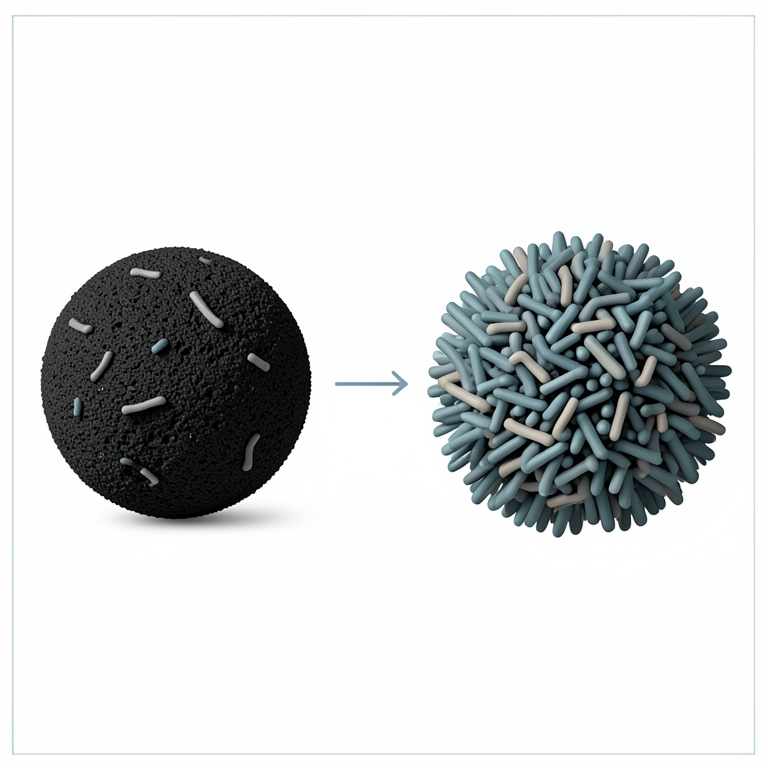
Conceptual Comparison of AC vs SMAC
AI-generated conceptual illustration (granular activated carbon particles and nitrobacteria). It explains the idea and does not show study data.
View source evidence ↗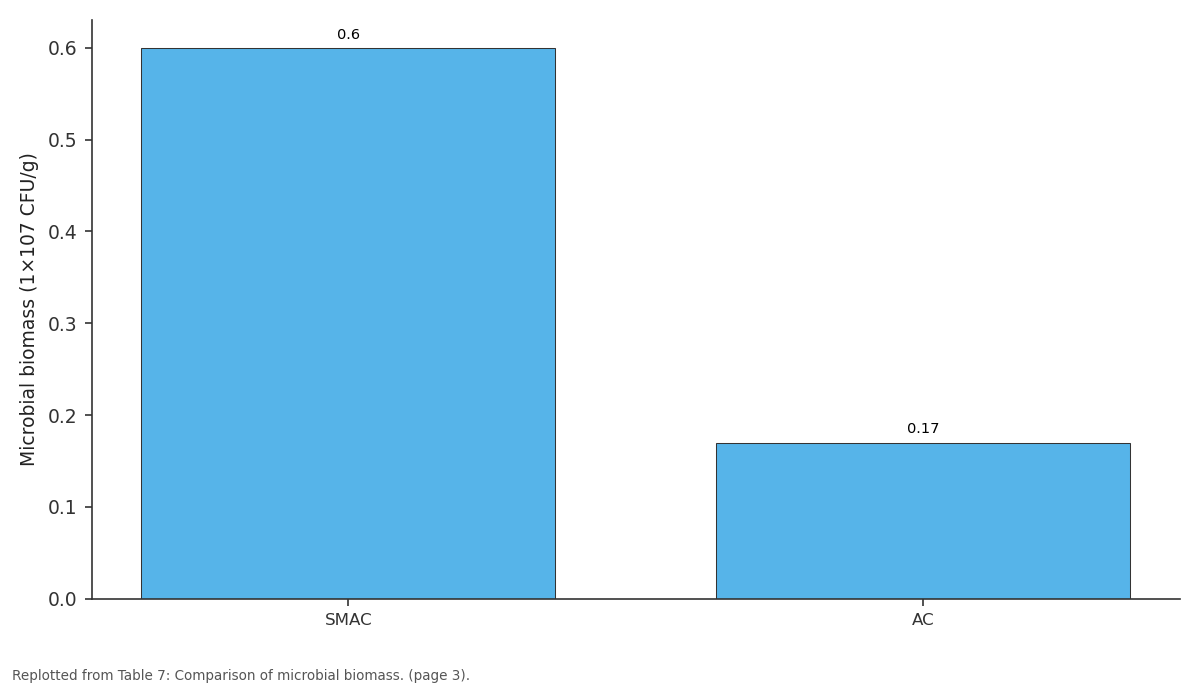
Microbial biomass (1×10⁷ CFU/g): SMAC vs AC
Replotted from Table 7 (page 3) of the original paper. Every bar is the paper's own table value.
View source evidence ↗Figures & tables
From the original paper Table 1
 Table 4
 Table 2
 Table 3
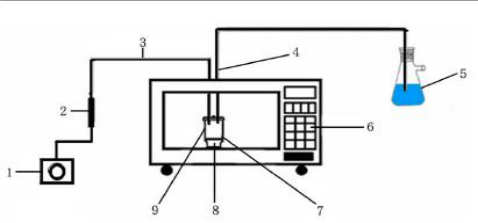 Figure 1
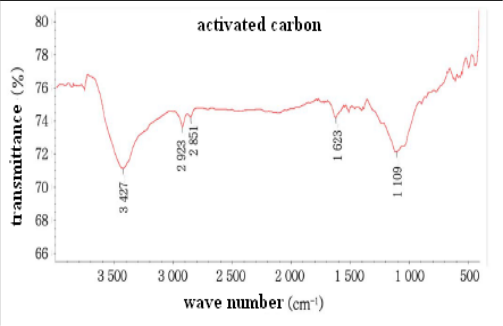 Figure 2
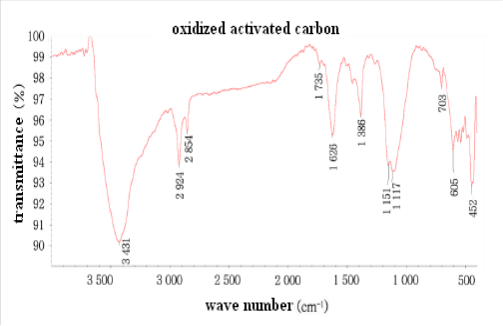 Figure 3
 Table 5
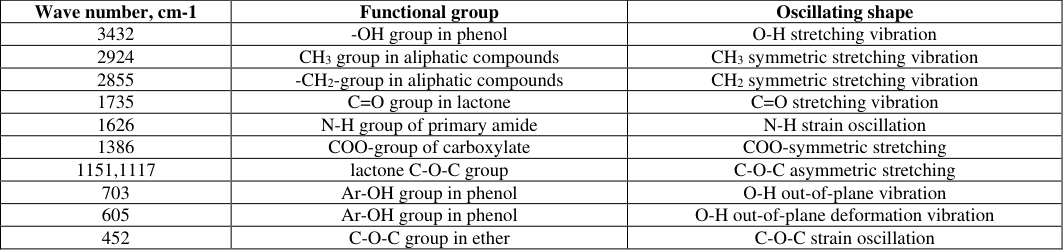 Table 6
 Table 7
Introduction
Study to purify domestic water and waste water using activated carbon (AC) is now widely progressed worldwide. In particular, it is important to improve the adherence properties of microorganisms by using various methods of surface modified AC (SMAC) [1,2] . The process of biological reactor by the application of microbial membranes on AC is long, unnecessarily power consuming and insufficient as a biological reactor [2][3][4] . Hence, this paper presents a study to increase the number of AC surface functional groups during the preparation of AC and to spare time and energy for the normal operation of the biological reactor by applying transition metal oxide treatment which microorganisms can be adhered to a strongly chemically and the method of air oxidation.
Method 2.1 Preparation of Modified AC as Precursor of carrier of biological scavenging
Generally, AC is prepared by carbonization and resurrection of horny or wood. AC as a precursor for biological carrier has must high ion-exchange capacity and covalent binding capacity in favor of microbial attachment to the surface, so it was produced by processes such as carbonization, carbide transition metal treatment, rehabilitation, and air oxidation, unlike the AC production process.
Transient metal oxide treatment on carbide surfaces
The method of treating carbides with transition metal oxide is as follows. Firstly, the solution of carbide and Zr(NO 3 ) 4 is mixed with a solid-liquid ratio of 1:5, followed by adsorption and ion exchange at 200 rpm for a certain time, and then the solid is separated and dried. Secondly, the precipitate (2% ammonia solution) and Zr4+ ion-exchanged carbides were added to a solid-liquid ratio of 1:5 and stirred for 30min. The solid was separated, dried at 110 ℃, and calcined at 500 ℃ for 2h to produce the product. The amount of zirconia ZrO 2 supported on carbides was estimated by determining the Zr4+ ion content separated in the ion-exchange adsorption step. The measured amount of ZrO 2 loaded on AC according to the concentration of Zr(NO 3 ) 4 is shown in Table 1. As shown in the table, the loading of ZrO 2 on carbides increases with increasing concentration of Zr(NO 3 ) 4 solution, and no significant change is observed above 2.5 mol/L. The loading of ZrO 2 is then maximized. The measured loading of ZrO 2 on carbides with loading time is shown in Table 2. As shown in the table, the holding time is reasonable for 1 hr. At this time, the ion exchange-adsorption process is fully equilibrated.
Surface functional group modification of AC by air oxidation
Air oxidation is carried out by using air as an oxidant at a given temperature after water vapor resuscitation after coating the carbides with transition metal oxides. The experimental setup is shown in Figure . 1. The experiments were carried out by adding 10 g of steamrevived AC after coating the carbide with transition metal oxide in an alumina crucible, varying the air inlet velocity and oxidation temperature. The surface functional groups of AC and modified AC were determined by infrared absorption spectroscopy and ion exchange capacity by NaOH method. The main factors affecting the degree of modification of AC are oxidation time and oxidation temperature [7] . First, the change of the ion exchange capacity of AC with oxidation temperature was considered, and the results are shown in Table 3. The oxidation time was set at 1 hr. As shown in Table 3, with the increase of oxidation temperature, the ion exchange capacity of modified AC increased but the yield decreased.
| Oxidation temperature ℃ | 150 | 200 | 250 | 300 | 350 |
|---|---|---|---|---|---|
| Ion exchange capacity, mmol/g | 1.6 | 2.5 | 4.1 | 4.5 | 4.7 |
| Extraction rate, % | 90 | 82 | 65 | 47 | 41 |
Table text extracted from the original PDF; superscript letters are shown inline. The original table image is below.
View original table image
Therefore, the oxidation temperature was set to 250 °C, where the product of ion exchange capacity and yield was maximized.
Next, the change of ion exchange capacity of modified AC with oxidation time was investigated.
The results are shown in Table 4. The oxidation temperature was set at 250 °C. As shown in Table 4, with the increase of oxidation time, the ion exchange capacity of modified AC increased but the yield decreased. Hence, the oxidation time was set at 60 min, considering both the ion exchange capacity and the yield of the modified AC. In addition, functional group analysis was carried out with a Nicolet 6700 Fourier transform infrared spectrometer to characterize the ion exchange properties of AC and modified AC.
| Oxidation temperature, ℃ | 150 | 200 | 250 | 300 | 350 |
|---|---|---|---|---|---|
| Ion exchange capacity, mmol/g | 1.6 | 2.5 | 4.1 | 4.5 | 4.7 |
| Extraction rate,% | 90 | 82 | 65 | 47 | 41 |
Table text extracted from the original PDF; superscript letters are shown inline. The original table image is below.
View original table image
The most important factor in the preparation of bioactive carbon is how the surface functional groups of modified AC are formed. This is due to the different adhesion properties of microorganisms depending on these surface groups. The IR absorption spectra of AC and modified AC are shown in Fig. 2 and3, and the functional group analysis results of AC and modified AC are given in Tables 5 and6. As shown above, the variety of surface functional groups in the modified AC increased significantly.
Preparation of biological carrier
In 100 ml Erlenmeyer flasks, 20 g of SMAC and conventional AC were added to 100 ml of nitrifying microbial culture, and incubated for 7 days at 25 °C in a thermostatic incubator after inoculation with isolated nitrifying microorganisms. After incubation, the SMAC was washed with distilled water, and biological carrier was obtained.
Results and Discussion
The amount of attached biomass was measured by spraying denitrifying the bacterial culture, perfusing the nutrient solution for 7 days to form a biofilm, and then placing 1g of the carrier before and after incubation in sterile water, followed by counting the number of highly agitated and detached cells by plate culture [5,6] .
Conclusion
The above-said method helps establish a new surface treatment method for AC, which can enhance the water purification ability of AC by increasing the microbial attachment rate, and pretreat the AC before it, thus making it possible to produce biological carrier with a low time and energy consumption. The microbial biomass attached to SMAC is 0.6×10⁷ CFU/g, 3.52 times higher than that of AC. This suggests that microbial biomass can reduce the bio-acclimation period to less than one-third as it determines the bio-acclimation period. Further studies on the modification of AC surfaces by microorganisms suitable for purification are needed.
Figures and tables from the paper
| Wave number, cm-1 | Functional group | Oscillating shape |
|---|---|---|
| 3427 | -OH group in phenol | O-H stretching vibration |
| 2923 | CH3 group in aliphatic compounds | CH3 symmetric stretching vibration |
| 2851 | -CH2-group in aliphatic compounds | CH2 symmetric stretching vibration |
| 1623 | N-H group of primary amide | N-H strain oscillation |
| 1109 | Lactone C-O-C group | C-O-C asymmetric stretching |
Table text extracted from the original PDF; superscript letters are shown inline. The original table image is below.
View original table image
| Wave number, cm-1 | Functional group | Oscillating shape |
|---|---|---|
| 3432 | -OH group in phenol | O-H stretching vibration |
| 2924 | CH3 group in aliphatic compounds | CH3 symmetric stretching vibration |
| 2855 | -CH2-group in aliphatic compounds | CH2 symmetric stretching vibration |
| 1735 | C=O group in lactone | C=O stretching vibration |
| 1626 | N-H group of primary amide | N-H strain oscillation |
| 1386 | COO-group of carboxylate | COO-symmetric stretching |
| 1151,1117 | lactone C-O-C group | C-O-C asymmetric stretching |
| 703 | Ar-OH group in phenol | O-H out-of-plane vibration |
| 605 | Ar-OH group in phenol | O-H out-of-plane deformation vibration |
| 452 | C-O-C group in ether | C-O-C strain oscillation |
Table text extracted from the original PDF; superscript letters are shown inline. The original table image is below.
View original table image
| Division | Microbial biomass (1×10⁷ CFU/g) |
|---|---|
| SMAC | 0.6 |
| AC | 0.17 |
Table text extracted from the original PDF; superscript letters are shown inline. The original table image is below.
View original table image
References
7 in the original paper- Kozet Yapsakli GE, et al. Identification of nitrifiers and nitrification performance in drinking water biological activated carbon (BAC) filtration. Advances in Heat Transfer. 1977;13(4):113-116.
- Bhatnagar A. An overview of the modification methods of activated carbon for its water treatment application. Chemical Engineering Journal. 2013;13(4):499-511.
- Pia L. Biodegradation and adsorption of micropollutants by biological activated carbon from a drinking water production plant. Journal of Hazardous Materials. 2020;388(4):113-116.
- Chung YC, et al. Removal of high concentration of NH₃ and coexistent H₂S by biological activated carbon (BAC) biotrickling filter. Bioresource Technology. 2005;96(4):1812-1820.
- White MC, Thompson TD, Harrington GW, Singer PC. Evaluating criteria for enhanced coagulation compliance. Journal American Water Works Association (JAWWA). 1997;89(5):64-77.
- LeChevallier MW, Cawthon CD, Lee RG. Inactivation of biofilm bacteria. Applied and Environmental Microbiology. 1988;23(5):52-67.
- Al-Joubory TGH, Al-Hyali EAS, Al-Hadeethi MR. Study of the factors affecting the adsorption efficiency of some chemical pesticides activated carbon at the nanoscale. Int J Adv Chem Res. 2023;5(1):89-98.