
Research article · 2025 · Full text
International Journal of Agriculture and Food ScienceStandardization and organoleptic evaluation of sweet potato chips (Ipomoea Batatas L.)
Volume 7(10) · Pages 409–412 · DOI: 10.33545/2664844x.2025.v7.i10f.903 ↗
Research areasBanana Cultivation and Research
Abstract
Author-writtenThe Present study focuses on Development and Standardization of Sweet Potato Chips (Ipomoea Batatas L.). The goal was to develop a convenient, health-forward food option tailored for individuals who prioritize balanced nutrition in their daily diets. The formulations for preparation of sweet potato chips were developed with both blanched and unblanched treatments, each having three different combinations (T1, T2, and T3), along with a control sample (T0). These three different combinations prepared, varying in the addition of ingredients such as sodium chloride and spice seasoning. For blanched sample: T1 (97:03:00:00), T2 (95:02:00:03), T3 (93:02:05:00) whereas for unblanched sample the proportions are T1 (98:02:00:00), T2 (94:02:00:04), T3 (90:02:08:00). After conducting sensory evaluations, formulation Unblanched T3 emerged as most favourable in terms of taste, texture, and overall appeal. Nutritional analysis of Unblanched T3 showed it contains 4% moisture, 27.5% fat, 4.3% protein, 57.3% carbohydrates, 4.8% dietary Fiber, and 3% ash per 100 grams. Overall, this formulation Unblanched T3 proved to have excellent sensory and nutritional qualities, making it a healthy snack option for the health-conscious individuals.
Summary
Source-checkedPlain-language reading of the full paper, prepared with AI and checked against the text. Each point links to the authors' own words.
Why it matters
- Sweet potatoes are considered functional foods with medicinal potential because they contain bioactive compounds like anthocyanins and carotenoids that provide antioxidant and anti-inflammatory effects. View evidence ↗
- Sweet potato chips are a promising snack alternative to conventional potato chips because they offer better nutritional attributes, specifically higher levels of dietary fiber and carotenoids. View evidence ↗
The question
- The study aimed to develop and standardize a health-forward sweet potato chip snack for individuals prioritizing balanced nutrition. View evidence ↗
What they did
- The researchers tested seven formulations: a control (T0), three blanched combinations (T1, T2, T3), and three unblanched combinations (T1, T2, T3). View evidence ↗
- Preparation involved slicing sweet potatoes to 0.2mm and treating them with alum for one hour at room temperature before deep frying. View evidence ↗
- Sensory evaluation was performed by 65 random volunteers using a hedonic scale ranging from 1 (dislike very much) to 7 (like very much). View evidence ↗
What they found
- The Unblanched T3 formulation was the most favorable among the test samples for its taste, texture, and overall appeal. View evidence ↗
- Statistical analysis indicated that both the control sample (T0) and the Unblanched T3 sample were significantly superior to all other tested formulations. View evidence ↗
- Per 100 grams, the Unblanched T3 formulation contained 57.3% carbohydrates, 27.5% fat, 4.8% dietary fiber, 4.3% protein, 4% moisture, and 3% ash. View evidence ↗
- Sensory scores for texture showed a significant increase when moving from the T1 blanched formulation to the T3 unblanched formulation. View evidence ↗
What it means
- The authors conclude that the Unblanched T3 formulation is a healthy snack option for health-conscious individuals due to its excellent nutritional and sensory qualities. View evidence ↗
Visual summary
3 visualsIllustrations explain the paper; charts are replotted from the paper's own table values.
Sweet Potato Chip Production Process
AI-generated conceptual illustration (sweet potato tubers (Ipomoea batatas)). It explains the idea and does not show study data.
View source evidence ↗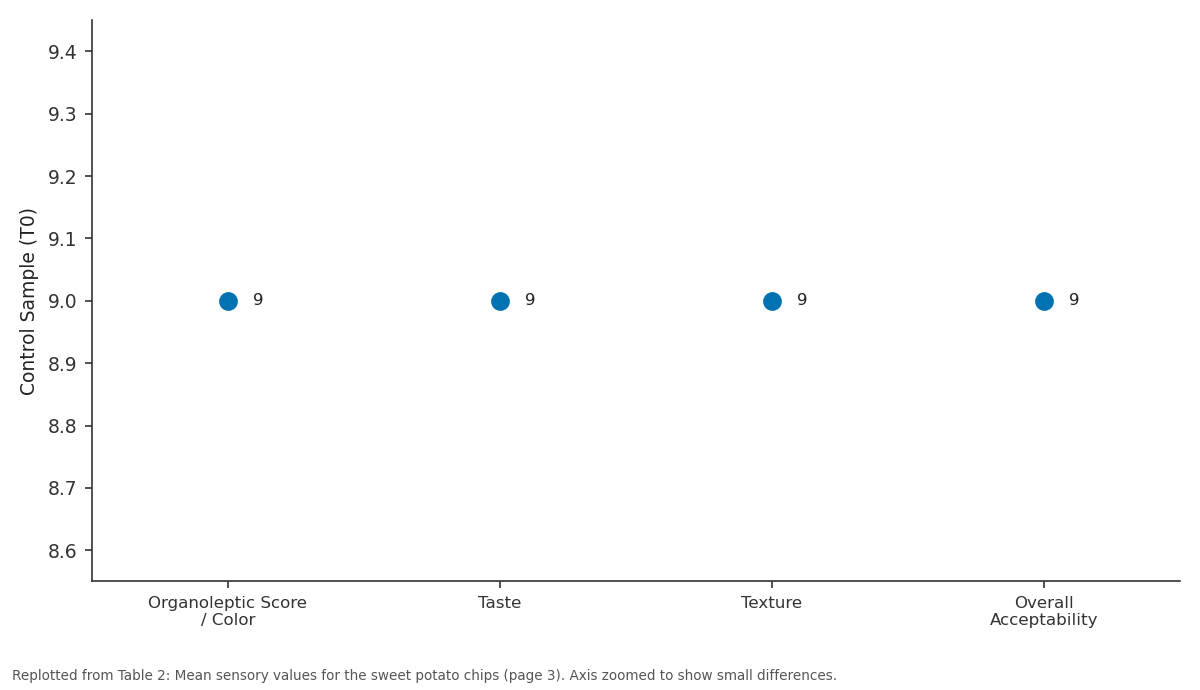
Control Sample (T0): Organoleptic Score /... vs Taste vs Texture vs Overall Acceptability
Replotted from Table 2 (page 3) of the original paper. Every bar is the paper's own table value.
View source evidence ↗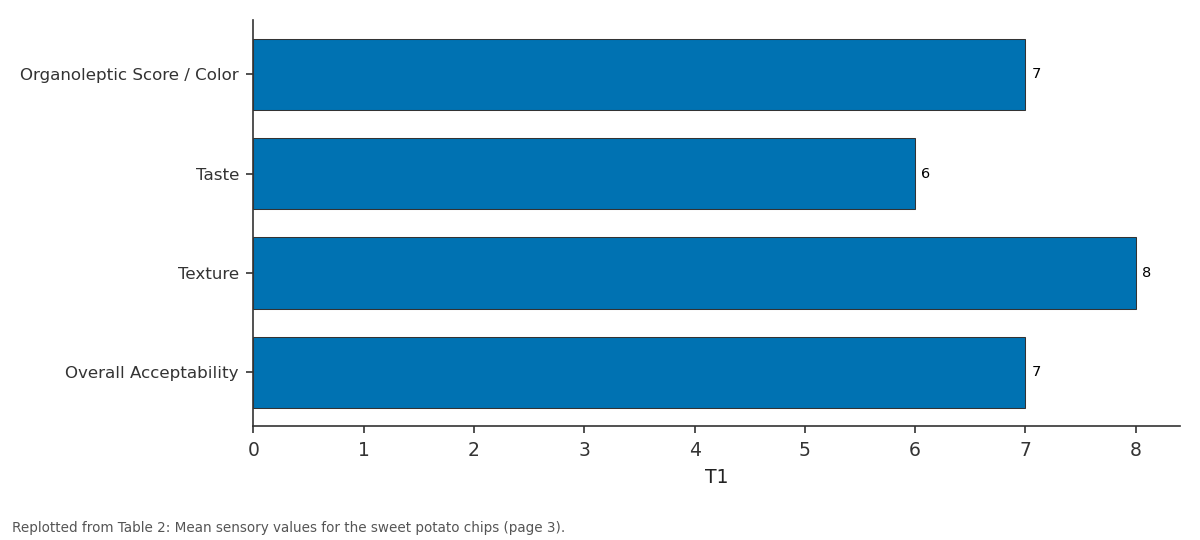
T1: Organoleptic Score /... vs Taste vs Texture vs Overall Acceptability
Replotted from Table 2 (page 3) of the original paper. Every bar is the paper's own table value.
View source evidence ↗Figures & tables
From the original paper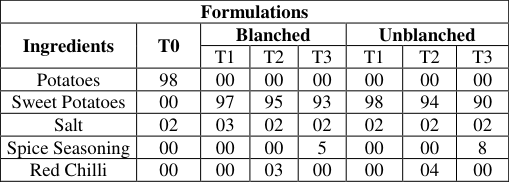 Table 1
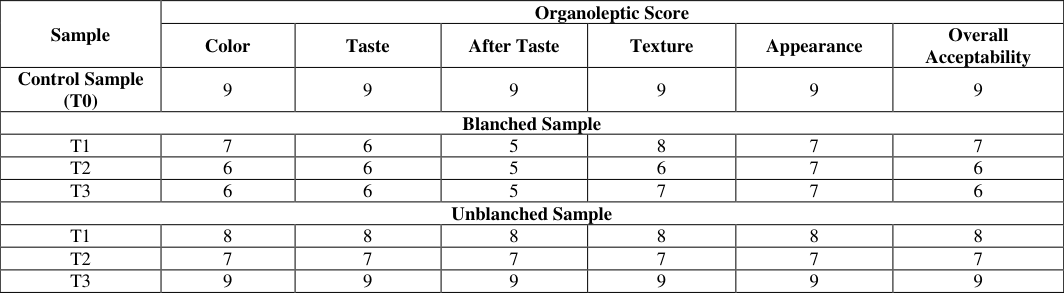 Table 2
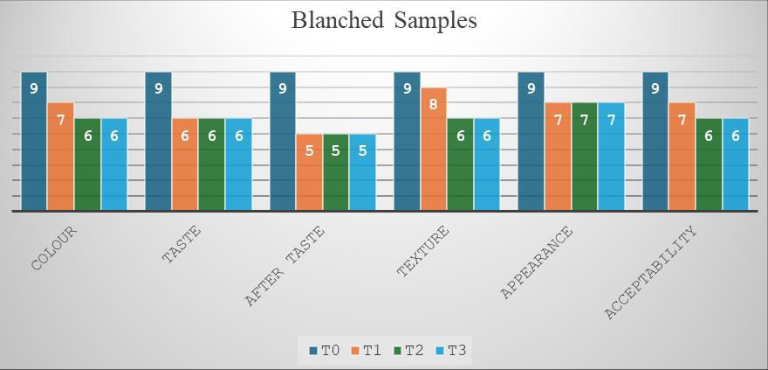 Figure 1
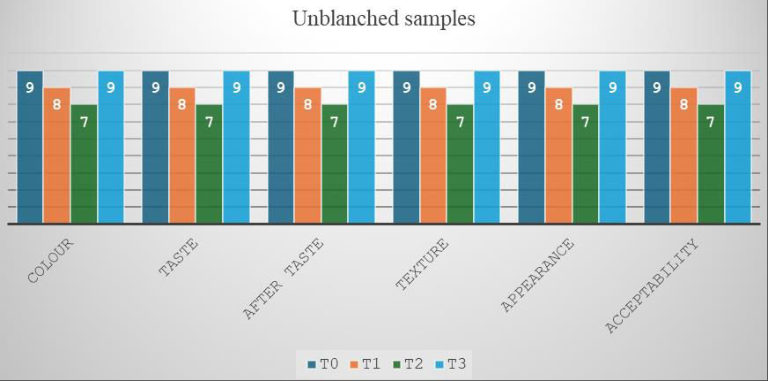 Figure 2
Introduction
Sweet potato (Ipomoea batatas L.), a member of the family Convolvulaceae, originated from Central America and is widely cultivated in tropical and subtropical regions due to its high yield and adaptability. There are over 6,500 varieties globally, differing in skin and flesh color, root shape, and origin. The crop shows great morphological diversity in leaves, stems, and tubers. Productivity varies among varieties even under similar conditions, emphasizing the importance of selecting suitable cultivars. Morphological identification helps in utilizing genetic diversity for breeding programs. Low yields in farmers' fields are mainly due to the use of local genotypes, which can be improved through new or improved clones. CIP-SEA clones require evaluation for morphological and yield traits under organic and medium highland conditions. Tuber formation begins around 28 days after planting, with 80% visible by 49 DAPS. Tuber shapes range from round to oval with varying skin and flesh colourswhite, cream, yellow, orange, or purple-of which orange, white, and cream types are most common (M. Hayati et al., 2020) [3] . Sweet potato (Ipomoea batatas) has been recognized as a functional food with significant medicinal potential due to its rich content of anthocyanins, carotenoids, flavonoids, and polysaccharides, which exhibit strong antioxidant, antiinflammatory, hepatoprotective, and neuroprotective effects (Nguyen et. al., 2021; Laveriano-Santos et. al., 2022) [5,6] . The leaves, abundant in vitamins, minerals, and phytochemicals, possess anticancer, immune-boosting, and hepatoprotective properties, making them valuable as low-cost medicinal vegetables (Nguyen et. al., 2021) [6] . A 2024 U.S. study also demonstrated that sweet potato leaf extracts, rich in chlorogenic acids and quercetin derivatives, show strong antioxidant and antimicrobial activities against Staphylococcus aureus, E. coli, and Candida albicans. Additionally, Laveriano-Santos et. al. (2022) [5] reported that root and peel extracts have notable antidiabetic effects by lowering blood glucose, improving lipid profiles, and enhancing insulin activity.
Collectively, these studies highlight sweet potato's dual nutritional and therapeutic value as a natural functional food. Sweet potato is a globally consumed, highly nutritious food rich in vitamin C, vitamin A (in orange-fleshed varieties), fiber, potassium, and B vitamins, serving as an excellent energy source (Cartabiano-Leite et. al., 2020) [1] . Coloured-fleshed varieties contain bioactive compounds that promote health. The crop is valued for its high starch and dry matter content, with starch comprising 65-89% of its dry weight, making it a key energy reserve and an indicator of good quality varieties (M. Hayati et. al., 2020) [3] . Sweet potato starch, composed of amylose and amylopectin, provides energy when cooked as starch converts into maltose, raising the glycaemic index. Nutritionally, it contains 77.28 g water, 86 kcal energy, 1.57 g protein, 20.12 g carbohydrates, and 3.0 g dietary fiber per 100 g (Cartabiano-Leite et. al., 2020) [1] . Sweet potato chips are considered one of the emerging value-added snacks produced from sweet potatoes (Ipomoea batatas L.), which are known for their unique sweet taste and attractive colour. They are prepared by slicing the tubers into thin pieces, followed by processes such as frying, baking, or air-drying to obtain a crispy and palatable product. sweet potato chips represent a convenient ready-toeat snack with better nutritional attributes compared to conventional potato chips, as they retain higher levels of carotenoids and dietary fibre. The increasing consumer demand for healthier snacks has promoted the utilization of sweet potato in the form of chips, making it a promising alternative in the snack food industry Ulus and Allen (2020). Sweet Potatoes are an excellent source of beta-carotene, ascorbic acid, and dietary fibre, which are partly retained during chip processing. The high beta-carotene content, which is a precursor of vitamin A, makes sweet potato chips more beneficial compared to potato-based snacks, especially in regions where vitamin A deficiency is prevalent. Nutritionally, sweet potato chips are rich in carbohydrates, moderate in protein, and contain essential vitamins and minerals Senthilkumar et. al., (2020) [8] . Studies on sweet potato chip formulations revealed that moisture, ash, fat, protein, and carbohydrate contents vary with processing and seasoning, influencing both nutrition and consumer acceptance (Domingos et. al., 2023) [2] . Freeze-dried chips showed the highest protein (5.65 g/100 g), fiber (3.56 g/100 g), and ash (1.77 g/100 g) with low fat (1.51 g/100 g), while deep-fried chips had the highest fat content (45.85 g/100 g) but were most preferred for taste. This indicates a trade-off between nutritional quality and sensory appeal. Baking and freeze-drying retain more nutrients and are better for healthconscious consumers. Developing optimized formulations using organic seasonings and suitable processing can enhance both health value and market acceptance of sweet potato chips (Domingos et. al., 2023) [2] .
Materials and Methods
This study was conducted in the Department of Food Chemistry and Nutrition at K.K. Wagh College of Food Technology, affiliated with Mahatma Phule Krishi Vidyapeeth, Nashik, Maharashtra. The research focused on formulate an innovative snack food product-crispy sweet potato chips-using locally sourced ingredients.
These nutrient-rich ingredients were carefully selected from the local market of Nashik and the main aim was to create a healthier alternative to conventional chips by maintaining its nutritional profile and quality of sweet potato chips.
Methodology Recipe Standardization for preparation of sweet potato chips
For recipe standardization of sweet potato chips the formulations for preparation of sweet potato chips were developed with both blanched and unblanched treatments, each having three different combinations (T1, T2, and T3), along with a control sample (T0). The sweet potato slices were deep fried in oil and then salt and spice seasoning was given. Organoleptic evaluation of sweet potato chips Hedonic scale test was conducted based on randomly picked evaluators of 65 volunteers. This test was carried out in the Sensory Analysis Laboratory in the individual booths to give privacy for the evaluators to do the sensory. These evaluations had the acceptability scale varying from 7 (like very much) till 1 (dislike very much). The acceptability level was based on texture, taste, appearance and aroma of the processed sweet potatoes. The panels were given water to rinse, a pencil, five samples and score card. The panels were asked to rinse their mouth every time they taste the next sample.
Preparation of sweet potato chips
The raw sweet potatoes were properly washed with water.
Then the sweet potatoes were sliced at appropriate thickness i.e. 0.2mm thickness using potato slicer. Then the alum treatment was given to the slices for 1 hour at room temperature. After the excess water was removed from the slices and then the slices are deep fried into the oil. Later the salt and spice seasoning were given to the chips.
Sweet potato chips elaboration
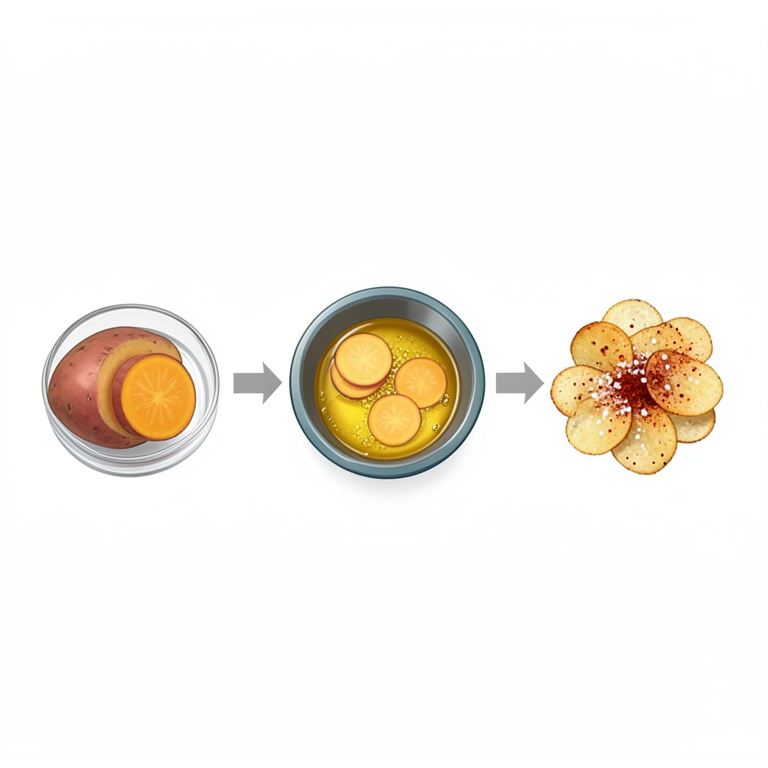
The steps used to prepare the sweet potato chips are shown in Figure 1. The pre-dried sweet potato slices were deepfried in sunflower oil with a slice to oil ratio of 1:10 (w/v) at varying frying temperatures and frying times as per CCRD.
After frying, the fried sweet potato slices were removed from the oil and placed on a wire screen to drain the surface oil and cooled to room temperature. The sweet potato chips were then packed in poly -propylene (PP) bags to store for quality characterization. (Pratiksha Timalsina, et. al.,2019), Kumari, S., Kumar, A., & Singh, N. (2019) [7,4] .
The results are revealed from the Table 2 that the sensory evaluation score is given by the semi trained panellist showed that the textural scores were significantly increasing from T1 blanched to T3 unblanched. The taste and appearance of the all-blanched samples rating are similar whereas the sensory evaluation score of control sample T0 and unblanched sample T3 are significantly similar score. When the data analysed statistically it was found that control sample T0 and unblanched sample T3 was significantly superior to the rest of the samples.
| Sample | Organoleptic Score | — | — | — | — | — |
|---|---|---|---|---|---|---|
| Color | Taste | After Taste | Texture | Appearance | Overall Acceptability | |
| Control Sample (T0) | 9 | 9 | 9 | 9 | 9 | 9 |
| Blanched Sample | ||||||
| T1 | 7 | 6 | 5 | 8 | 7 | 7 |
| T2 | 6 | 6 | 5 | 6 | 7 | 6 |
| T3 | 6 | 6 | 5 | 7 | 7 | 6 |
| Unblanched Sample | ||||||
| T1 | 8 | 8 | 8 | 8 | 8 | 8 |
| T2 | 7 | 7 | 7 | 7 | 7 | 7 |
| T3 | 9 | 9 | 9 | 9 | 9 | 9 |
Table text extracted from the original PDF; superscript letters are shown inline. The original table image is below.
View original table image
Figures and tables from the paper
| Formulations | — | — | — | — | — | — | — |
|---|---|---|---|---|---|---|---|
| Ingredients | T0 | Blanched | Unblanched | ||||
| T1 | T2 | T3 | T1 | T2 | T3 | ||
| Potatoes | 98 | 00 | 00 | 00 | 00 | 00 | 00 |
| Sweet Potatoes | 00 | 97 | 95 | 93 | 98 | 94 | 90 |
| Salt | 02 | 03 | 02 | 02 | 02 | 02 | 02 |
| Spice Seasoning | 00 | 00 | 00 | 5 | 00 | 00 | 8 |
| Red Chilli | 00 | 00 | 03 | 00 | 00 | 04 | 00 |
Table text extracted from the original PDF; superscript letters are shown inline. The original table image is below.
View original table image
References
9 in the original paper- Cartabiano-Leite L, Silva RR, de Souza J. Nutritional composition and bioactive potential of sweet potato varieties (Ipomoea batatas L.). J Food Sci Technol. 2020;57(9):3054-3061.
- Domingos MT, Fernandes AM, Rocha JS. Physicochemical and sensory evaluation of sweet potato chips processed by different methods. Food Res Int. 2023;163:112143.
- Hayati M, Nandini N, Rahman R. Morphological and yield characteristics of sweet potato genotypes under various cultivation conditions. Int J Agron. 2020;2020:1-10.
- Kumari S, Kumar A, Singh N. Effect of pre-treatments on quality attributes of sweet potato chips. Int J Chem Stud. 2019;7(3):1981-1986.
- Laveriano-Santos EP, Kimura M, Ogasawara Y. Functional and medicinal properties of sweet potato (Ipomoea batatas L.) bioactive compounds: A review. Food Chem. 2022;386:132778.
- Nguyen HT, Pham QD, Le TT. Phytochemical composition and biological activities of sweet potato leaves and roots. J Funct Foods. 2021;83:104553.
- Pratiksha T, Thapa S, Gautam R. Optimization of frying conditions for sweet potato chips using response surface methodology (RSM). Int J Food Sci Nutr. 2019;4(2):7986.
- Senthilkumar K, Kumar P, Suresh R. Development of sweet potato-based snacks and evaluation of their nutritional quality. Int Food Res J. 2020;27(5):950-957.
- Ulus B, Allen T. Consumer acceptance and nutritional evaluation of sweet potato chips as a functional snack alternative. J Food Process Preserv. 2020;44(6):e14457.