
Research article · 2025 · Full text
International Journal of Agriculture and Food ScienceUnlocking Yield Potential: Influence of Varieties and Fertilizer Levels on Malt Barley in Medium Black Soils
Volume 7(10) · Pages 382–386 · DOI: 10.33545/2664844x.2025.v7.i10f.896 ↗
Research areasCrop Yield and Soil FertilityAgronomic Practices and Intercropping SystemsAgricultural Science and Fertilization
Abstract
Author-writtenMalt barley (Hordeum vulgare L.) growth and yield performance were examined in relation to various cultivars and fertiliser concentrations. Three malt barley varieties (DWR-UR-52, RD 2035 and PMVM 10/2 R) and four fertilizer levels (GRDF 100:75:50 kg NPK ha-1,GRDF 80:60:40 kg NPK ha-1, GRDF 60:45:30 kg NPK ha-1 and GRDF 100:75:50 kg NPK ha-1) were studied in rabi season of 2024-25. The trial was conducted in a split-plot design and replicated thrice across two locations: Manjari and Nagpur R&D farms of the Vasantdada Sugar Institute. The results of this study indicated that maximum emergence (153.56 plants m-²), dry matter production (374.95 g m-2) at 60 DAS, grain weight per ear (1.33 g) and highest grain yield (31.82 q ha⁻¹) were recorded in RD-2035 barley variety. While plant height, ear length and grain yield was maximum with 100:75:50 kg N: P₂O₅: K₂O ha⁻¹ fertilizer level. Based on field performance it proved that, exploring the maximum potential of malt barley under the agro-climatic conditions of the study area, integrated approach can be recommended for achieving higher productivity and economic returns in malt barley cultivation.
Summary
Source-checkedPlain-language reading of the full paper, prepared with AI and checked against the text. Each point links to the authors' own words.
Why it matters
- Barley is one of the most important cereal crops globally, ranking fourth in production and acreage. View evidence ↗
- The crop is highly versatile, serving as animal fodder and as a primary ingredient for the brewing industry in alcoholic beverages. View evidence ↗
- Proper mineral fertilization is considered a critical intervention for increasing barley yields. View evidence ↗
The question
- The study aimed to examine how different malt barley cultivars and fertilizer concentrations affect growth and yield performance. View evidence ↗
What they did
- The experiment was conducted during the 2024-25 rabi season at two sites: the Manjari and Nagpur farms of the Vasantdada Sugar Institute. View evidence ↗
- The study used a split-plot design with three barley varieties (DWR-UR-52, RD 2035, and PMVM 10/2 R) and four fertilizer levels, with three replications. View evidence ↗
- Phosphorus and potassium were applied fully at sowing, while nitrogen was split equally between sowing and 30 days after sowing (DAS). View evidence ↗
What they found
- Variety RD-2035 showed the highest plant emergence at 153.56 per m², compared to 130.99 per m² for PMVR 10/2R. View evidence ↗
- The highest tillering ratio of 3.50 was achieved with the 100:75:50 kg NPK ha⁻¹ fertilizer level, which was statistically similar to the 80:60:40 kg NPK ha⁻¹ level (3.31). View evidence ↗
- Leaf chlorophyll content (SPAD value) peaked at 44.87 with the 100:75:50 kg NPK ha⁻¹ fertilizer level, followed by 42.72 for the 80:60:40 kg NPK ha⁻¹ level. View evidence ↗
- The 100:75:50 kg NPK ha⁻¹ fertilizer level produced the maximum plant height at 30 DAS (45.03 cm), 60 DAS (74.87 cm), and at harvest (86.29 cm). View evidence ↗
- At 60 DAS, variety RD-2035 produced the highest dry matter at 374.95 g m⁻², while PMVR 10/2R produced 320.44 g m⁻². View evidence ↗
- Variety RD-2035 achieved the highest grains per ear (23.42) and grain weight per ear (1.33 g). View evidence ↗
- The maximum grain yield of 32.41 q ha⁻¹ was recorded using the 100:75:50 kg NPK ha⁻¹ fertilizer level. View evidence ↗
What it means
- The authors conclude that combining the RD 2035 variety with a 100:75:50 kg NPK ha⁻¹ fertilizer level is the optimal strategy for maximizing productivity. View evidence ↗
Visual summary
3 visualsIllustrations explain the paper; charts are replotted from the paper's own table values.
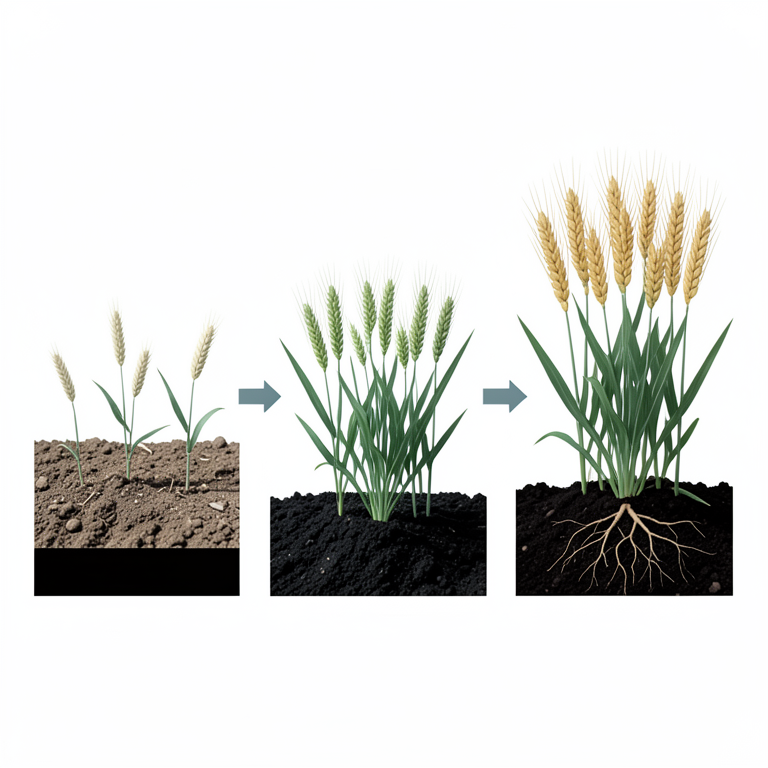
Optimal Barley Productivity Model
AI-generated conceptual illustration (malt barley plants in black soil). It explains the idea and does not show study data.
View source evidence ↗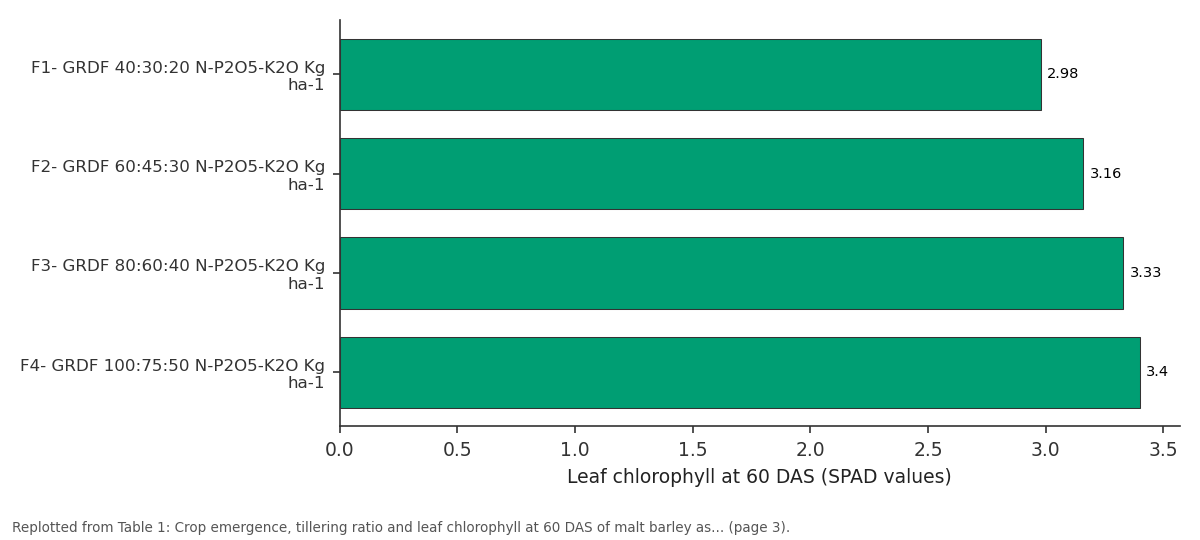
Tillering ratio: F1- GRDF 40:30:20... vs F2- GRDF 60:45:30... vs F3- GRDF 80:60:40... vs F4- GRDF 100:75:50...
Replotted from Table 1 (page 3) of the original paper. Every bar is the paper's own table value.
View source evidence ↗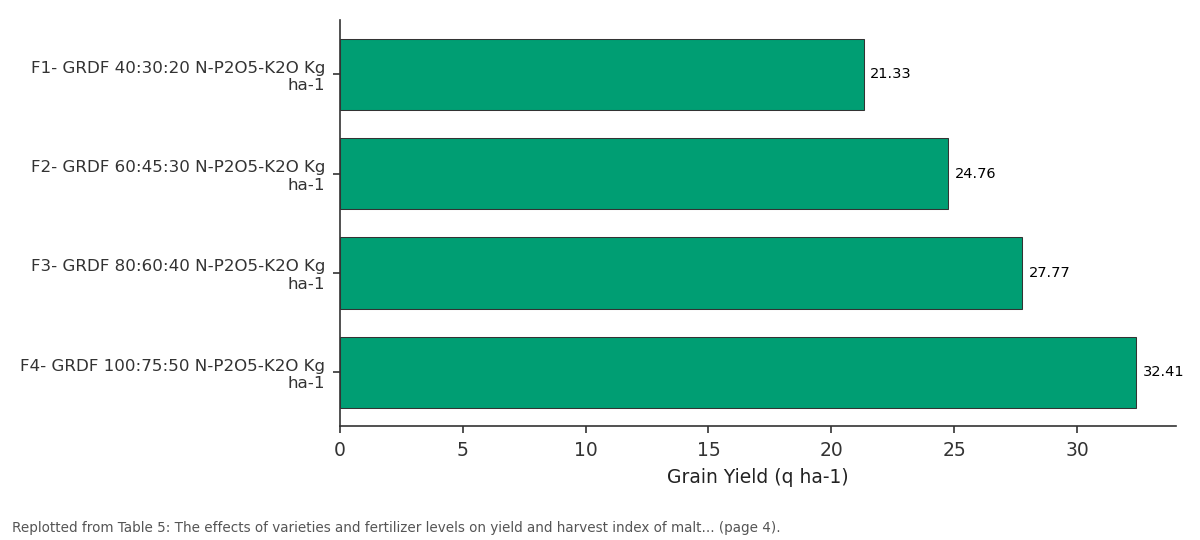
Yield (q ha-1) / Grain: F1- GRDF 40:30:20... vs F2- GRDF 60:45:30... vs F3- GRDF 80:60:40... vs F4- GRDF 100:75:50...
Replotted from Table 5 (page 4) of the original paper. Every bar is the paper's own table value.
View source evidence ↗Figures & tables
From the original paper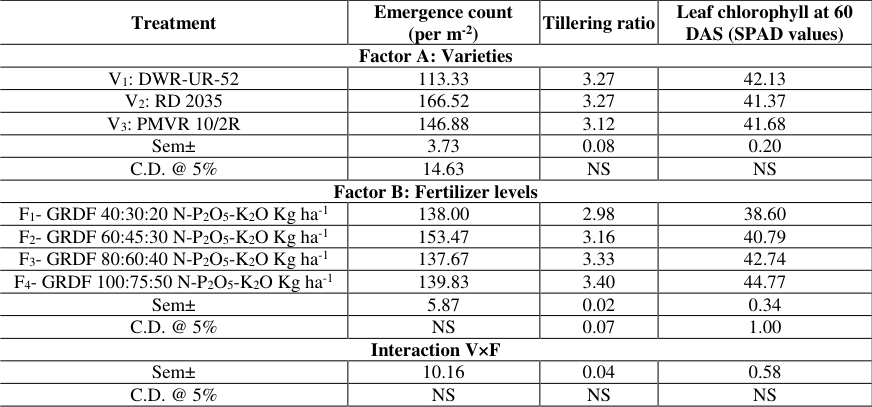 Table 1
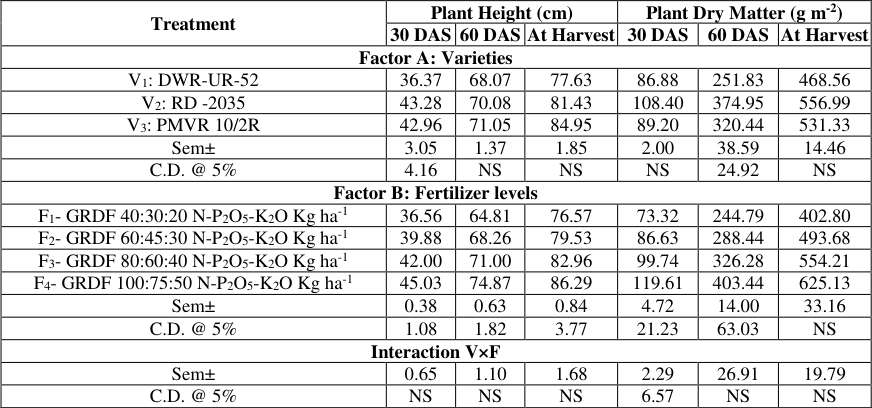 Table 2
 Table 3
 Table 4
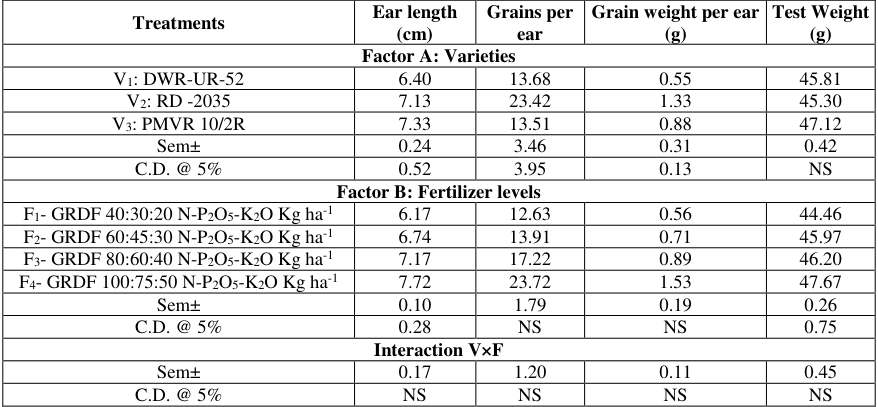 Table 4
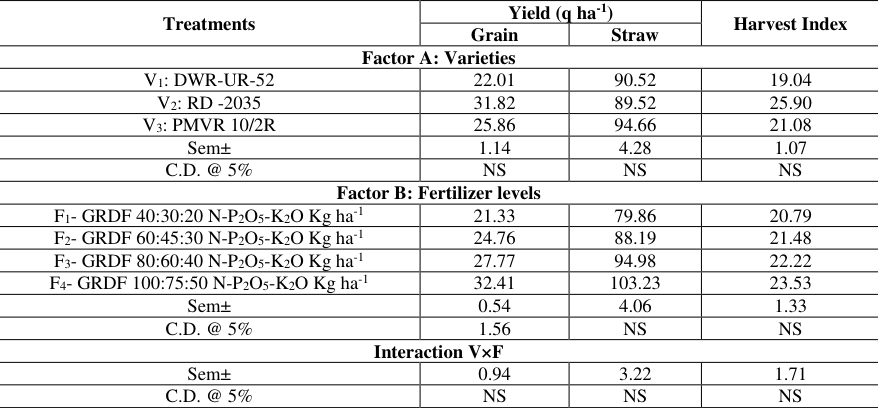 Table 5
Introduction
In terms of global production and acreage, barley (Hordeum vulgare L.) ranks fourth in importance among cereal crops, behind maize, wheat, and rice. Because it can be cultivated in a wider range of environmental conditions than any other cereal crop, this particular rabi season crop is commonly referred to as the most cosmopolitan of the cereal crops. Because of its many qualities, including greater flexibility and hardiness, it is also regarded as one of the ancient crops that humans domesticated. Barley serves various purposes and is a significant cereal crop for the brewing industry. It is primarily utilised as animal fodder and is malted for use in alcoholic beverages, particularly beers. Additionally, it serves as a flavouring agent, vinegar, sweeteners, and malt flours, among other applications. Barley is a robust cereal crop recognised for its adaptability to marginal soils and environmental conditions. The global focus on food and environmental sustainability has led to an increased demand for cereals, especially hardy and droughttolerant varieties like barley (Tuppad et al., 2023) [14] . Yield and yield attributes are influenced by polygenic inheritance and environmental factors, resulting in variations in performance (Dia et al., 2016) [2] . Addressing the high yielding varieties is prior importance for the development of production technology. Adequate mineral fertilization is also important intervention for higher yield. Amongst nutrients, nitrogen plays an important role in synthesis of chlorophyll, amino acids and other organic compounds of physiological significance for plant system (Havlin et al., 2003) [4] . Next to nitrogen, phosphorus is of paramount importance for energy transfer in living cells by mean of high energy phosphate bonds of ATP. Thus, it plays pivotal role in formation and translocation of carbohydrates, fatty acids, glyceroids and other essential intermediate compounds. Likewise, potassium act as a chemical traffic policeman, root booster, stalk strengthen, food formic, sugar and starch transport, protein builder, breathing regulator, water stretcher and as a disease retarder thus improve grain quality (Brady et al., 2003) [1] .
Material and Methods
The field experiment was initiated at Vasantdada Sugar Institute's Manjari and Nagpur farms in two separate sites during the 2024-25 rabi season. Three malt barley types (DWR-UR-52, RD 2035, and PMVM 10/2 R) were used as the main factor in a split plot design, and four fertiliser rates (GRDF 100:75:50 kg NPK ha -1 , GRDF 80:60:40 kg NPK ha -1 , GRDF 60:45:30 kg NPK ha -1 , and GRDF 100:75:50 kg NPK ha -1 ) were used as subfactors and replicated thrice. The full dose of P2O5 and K2O were applied at the time of sowing, while N was applied in two splits: 50% at sowing and 50% at 30 DAS. As needed, the recommended agronomic techniques and plant protection strategies were implemented. The information on growth performance, yield and the factors that contribute to it was documented during the entire growing season.
Result and Discussion Emergence count (per m²)
The results indicated that there was a significant difference (p <0.05) in crop emergence amongst the studied malt barley varieties; however, there was no significant variation in fertiliser levels or their interaction (Table 1). The highest plant emergence (153.56 per m²) was noted from variety RD-2035, which was closely followed by PMVR 10/2R (130.99 per m²). This indicates that plant emergence is primarily governed by varietal potential rather than fertilizer application during the initial establishment phase.
| Treatment | Emergence count (per m-2) | Tillering ratio | Leaf chlorophyll at 60 DAS (SPAD values) |
|---|---|---|---|
| Factor A: Varieties | |||
| V1: DWR-UR-52 | 113.33 | 3.27 | 42.13 |
| V2: RD 2035 | 166.52 | 3.27 | 41.37 |
| V3: PMVR 10/2R | 146.88 | 3.12 | 41.68 |
| Sem± | 3.73 | 0.08 | 0.20 |
| C.D. @ 5% | 14.63 | NS | NS |
| Factor B: Fertilizer levels | |||
| F1- GRDF 40:30:20 N-P2O5-K2O Kg ha-1 | 138.00 | 2.98 | 38.60 |
| F2- GRDF 60:45:30 N-P2O5-K2O Kg ha-1 | 153.47 | 3.16 | 40.79 |
| F3- GRDF 80:60:40 N-P2O5-K2O Kg ha-1 | 137.67 | 3.33 | 42.74 |
| F4- GRDF 100:75:50 N-P2O5-K2O Kg ha-1 | 139.83 | 3.40 | 44.77 |
| Sem± | 5.87 | 0.02 | 0.34 |
| C.D. @ 5% | NS | 0.07 | 1.00 |
| Interaction V×F | |||
| Sem± | 10.16 | 0.04 | 0.58 |
| C.D. @ 5% | NS | NS | NS |
Table text extracted from the original PDF; superscript letters are shown inline. The original table image is below.
View original table image
Tillering ratio at harvest
The analysis result of variance reveals that tillering ratio at harvest had significant (p < 0.05) variation among fertilizer levels, but hadn't significance due to varieties and interaction effect on both factors (Table 1). Statically significant variation was observed on tillering ratio among the tested fertilizer levels in the study area. The highest tillering ratio (3.50) was recorded with the fertilizer level 100:75:50 kg N: P₂O₅: K₂O ha⁻¹, which was statistically at par with 80:60:40 kg N: P₂O₅: K₂O ha⁻¹ fertilizer level with 3.31 tillering ratio, while the remaining two fertilizer levels produced comparatively less tillers. This indicates that tillering response was positively influenced by nutrient availability. More tillers were produced from the main stem and tiller mortality was decreased as a result of higher nitrogen levels. These findings support those reported by Kumar et al. (1999) [7] .
Leaf chlorophyll content at 60 DAS
The analysis of variance shows that leaf chlorophyll content at 60 DAS was significant (p< 0.05) due to fertilizer levels, while varieties and interaction effect was not significant difference on leaf chlorophyll content (Table 1). The maximum SPAD value (44.87) was observed with 100:75:50 kg N: P₂O₅: K₂O ha⁻¹ fertilizer level followed by (42.72) 80:60:40 N: P₂O₅:K₂O ha⁻¹ fertilizer level. The increasing trend in chlorophyll content with fertilizer levels results enhanced nutrient uptake, leading to improved photosynthetic activity.
Plant Height
Plant height was recorded at 30, 60 DAS, and at harvest. The analysis revealed a significant difference (p < 0.05) in plant height among the tested malt barley varieties only at 30 DAS, whereas fertilizer levels showed significant effects at all growth intervals. However, the interaction between varieties and fertilizer rates was not significant (Table 2). At 30 DAS, the highest plant height (43.28 cm) was observed in variety RD-2035, which was statistically at par with PMVR 10/2R (42.96 cm). The lowest height (36.37 cm) was recorded in variety DWR-UR-52 (Table 2). The variation in plant height among varieties may be attributed to genetic differences and their interaction with environmental conditions, which appeared more favorable for RD-2035. Across all growth stages (30, 60 DAS, and harvest), the highest plant height (45.03 cm, 74.87 cm, and 86.29 cm, respectively) was recorded with fertilizer level F4 (100:75:50 kg N:P₂O₅:K₂O ha⁻¹), followed by F3 (42.00 cm, 71.00 cm, and 82.96 cm, respectively) at 80:60:40 kg N:P₂O₅:K₂O ha⁻¹. Similar results were reported by Moreno et al. (2003) [10] , who observed maximum plant height and dry matter accumulation in barley with 120 kg N ha⁻¹ compared to lower nitrogen doses.
| Treatment | Plant Height (cm) | — | — | Plant Dry Matter (g m-2) | — | — |
|---|---|---|---|---|---|---|
| 30 DAS | 60 DAS | At Harvest | 30 DAS | 60 DAS | At Harvest | |
| Factor A: Varieties | ||||||
| V1: DWR-UR-52 | 36.37 | 68.07 | 77.63 | 86.88 | 251.83 | 468.56 |
| V2: RD -2035 | 43.28 | 70.08 | 81.43 | 108.40 | 374.95 | 556.99 |
| V3: PMVR 10/2R | 42.96 | 71.05 | 84.95 | 89.20 | 320.44 | 531.33 |
| Sem± | 3.05 | 1.37 | 1.85 | 2.00 | 38.59 | 14.46 |
| C.D. @ 5% | 4.16 | NS | NS | NS | 24.92 | NS |
| Factor B: Fertilizer levels | ||||||
| F1- GRDF 40:30:20 N-P2O5-K2O Kg ha-1 | 36.56 | 64.81 | 76.57 | 73.32 | 244.79 | 402.80 |
| F2- GRDF 60:45:30 N-P2O5-K2O Kg ha-1 | 39.88 | 68.26 | 79.53 | 86.63 | 288.44 | 493.68 |
| F3- GRDF 80:60:40 N-P2O5-K2O Kg ha-1 | 42.00 | 71.00 | 82.96 | 99.74 | 326.28 | 554.21 |
| F4- GRDF 100:75:50 N-P2O5-K2O Kg ha-1 | 45.03 | 74.87 | 86.29 | 119.61 | 403.44 | 625.13 |
| Sem± | 0.38 | 0.63 | 0.84 | 4.72 | 14.00 | 33.16 |
| C.D. @ 5% | 1.08 | 1.82 | 3.77 | 21.23 | 63.03 | NS |
| Interaction V×F | ||||||
| Sem± | 0.65 | 1.10 | 1.68 | 2.29 | 26.91 | 19.79 |
| C.D. @ 5% | NS | NS | NS | 6.57 | NS | NS |
Table text extracted from the original PDF; superscript letters are shown inline. The original table image is below.
View original table image
The analysis result of variance reveals that plant dry matter (g m -2 ) had significant (p < 0.05) variation among varieties at 60 DAS and fertilizer levels at 30 and 60 DAS (Table 2). The variety RD-2035 produce notably higher dry matter (374.95 g m⁻²), followed by PMVR 10/2R (320.44 g m⁻²) at 60 DAS. The dry matter increased significantly with fertilizer levels. The plant dry matter was higher in F4 fertilizer level (100:75:50 kg N: P₂O₅: K₂O ha⁻¹) (119.61 & 403.44 g m -2 ) however this was not significant at harvest. The interaction effect of both factors presented in (Table 2.1) showed significant variation in dry matter production at 30 DAS. Among the various treatment combinations, the maximum dry matter production (127.80 g m -2 ) was obtained in RD-2035 with 100:75:50 N-P₂O₅-K₂O kg ha⁻¹ fertilizer level, which was statistically comparable with PMVR 10/2R (124.21 g m -2 ) with 100:75:50 N-P₂O₅-K₂O kg ha⁻¹ fertilizer level.
Yield Attributes
The analysis result of variance shows that ear length, grains per ear and grain weight per ear had significant (p < 0.05) variation among varieties. While ear length and test weight had significant influence on fertilizer levels. But interaction effect hadn't any significance response due to both factors. The highest ear length (7.33 cm) was obtained from barley variety PMVR 10/2R, which was statistically on par with RD-2035 (7.13 cm). While RD-2035 recorded higher grains per ear (23.42) & grains weight per ear (1.33 g). The longest ears (7.72 cm) and test weight (47.67 g) was observed with 100:75:50 kg N: P₂O₅: K₂O ha⁻¹ fertilizer level. These results are in conformity with those of Moreno et al. (2003) and Liben et al. (2011) [10,9] who got best results with maximum dose of nitrogen. Tuppad et al., 2023 [14] stated that the yield characteristics were significantly impacted by higher nitrogen levels, which peaked at 120 kg N ha -1 but were comparable to 80 kg N ha -1 . Higher dose of nitrogen significantly increased grain weight. Patel and Upadhyay (1993) [11] .
The analysis of variance revealed that fertilizer levels had a significant effect (p < 0.05) on grain yield, whereas the effects of variety and the interaction between variety and fertilizer level were found to be non-significant (Table 4). The highest grain yield (32.41 q ha⁻¹) was recorded with the application of 100:75:50 kg N:P₂O₅:K₂O ha⁻¹, indicating that a higher nutrient supply positively influenced yield performance. However, straw yield and harvest index did not exhibit any statistically significant differences across treatments. These findings are in alignment with previous studies. Singh et al. (2016) [13] reported that the RD 2035 variety outperformed RD 2552, recording 5.6% higher green fodder yield, 12.4% more grains per earhead, 10.0% higher grain yield, and 9.4% greater grain equivalent yield. Similarly, Sharma (2009) [12] documented that the maximum seed yield (46.20 q ha⁻¹) was obtained from the RD 2035 variety, further supporting its superior performance. Regarding fertilizer response, noted that the application of 100 kg N ha⁻¹, being at par with 80 kg N ha⁻¹, significantly outperformed 60 kg N ha⁻¹ in terms of both grain and straw yield. They also found that higher phosphorus levels, particularly 40 kg P₂O₅ ha⁻¹, resulted in increased grain yield compared to lower levels also demonstrated that the highest fertilizer dose (120N:75P:45K kg ha⁻¹) significantly improved spikelet number, spike dry weight, grain number, grain dry weight, spike relative growth rate, and grain relative growth rate, emphasizing the importance of adequate nutrient supply in enhancing yield components.
| Treatments | Ear length (cm) | Grains per ear | Grain weight per ear (g) | Test Weight (g) |
|---|---|---|---|---|
| Factor A: Varieties | ||||
| V1: DWR-UR-52 | 6.40 | 13.68 | 0.55 | 45.81 |
| V2: RD -2035 | 7.13 | 23.42 | 1.33 | 45.30 |
| V3: PMVR 10/2R | 7.33 | 13.51 | 0.88 | 47.12 |
| Sem± | 0.24 | 3.46 | 0.31 | 0.42 |
| C.D. @ 5% | 0.52 | 3.95 | 0.13 | NS |
| Factor B: Fertilizer levels | ||||
| F1- GRDF 40:30:20 N-P2O5-K2O Kg ha-1 | 6.17 | 12.63 | 0.56 | 44.46 |
| F2- GRDF 60:45:30 N-P2O5-K2O Kg ha-1 | 6.74 | 13.91 | 0.71 | 45.97 |
| F3- GRDF 80:60:40 N-P2O5-K2O Kg ha-1 | 7.17 | 17.22 | 0.89 | 46.20 |
| F4- GRDF 100:75:50 N-P2O5-K2O Kg ha-1 | 7.72 | 23.72 | 1.53 | 47.67 |
| Sem± | 0.10 | 1.79 | 0.19 | 0.26 |
| C.D. @ 5% | 0.28 | NS | NS | 0.75 |
| Interaction V×F | ||||
| Sem± | 0.17 | 1.20 | 0.11 | 0.45 |
| C.D. @ 5% | NS | NS | NS | NS |
Table text extracted from the original PDF; superscript letters are shown inline. The original table image is below.
View original table image
Conclusion
Based on the present findings, the barley variety RD 2035 demonstrated superior performance across most agronomic traits, indicating its potential as a high-yielding and adaptable cultivar. Similarly, the use of 100:75:50 kg N:P₂O₅:K₂O ha⁻¹ as the most effective fertilizer regime, significantly enhancing growth and yield parameters. Therefore, it can be concluded that the combination of RD 2035 variety with 100:75:50 kg N:P₂O₅:K₂O ha⁻¹ fertilizer level is optimal for achieving higher productivity.
Figures and tables from the paper
| Treatment | F1 | F2 | F3 | F4 |
|---|---|---|---|---|
| V1 | 60.37 | 80.31 | 100.01 | 106.81 |
| V2 | 93.35 | 104.25 | 108.20 | 127.80 |
| V3 | 66.23 | 75.34 | 91.02 | 124.21 |
Table text extracted from the original PDF; superscript letters are shown inline. The original table image is below.
View original table image
| Treatments | Yield (q ha-1) | — | Harvest Index |
|---|---|---|---|
| Grain | Straw | ||
| Factor A: Varieties | |||
| V1: DWR-UR-52 | 22.01 | 90.52 | 19.04 |
| V2: RD -2035 | 31.82 | 89.52 | 25.90 |
| V3: PMVR 10/2R | 25.86 | 94.66 | 21.08 |
| Sem± | 1.14 | 4.28 | 1.07 |
| C.D. @ 5% | NS | NS | NS |
| Factor B: Fertilizer levels | |||
| F1- GRDF 40:30:20 N-P2O5-K2O Kg ha-1 | 21.33 | 79.86 | 20.79 |
| F2- GRDF 60:45:30 N-P2O5-K2O Kg ha-1 | 24.76 | 88.19 | 21.48 |
| F3- GRDF 80:60:40 N-P2O5-K2O Kg ha-1 | 27.77 | 94.98 | 22.22 |
| F4- GRDF 100:75:50 N-P2O5-K2O Kg ha-1 | 32.41 | 103.23 | 23.53 |
| Sem± | 0.54 | 4.06 | 1.33 |
| C.D. @ 5% | 1.56 | NS | NS |
| Interaction V×F | |||
| Sem± | 0.94 | 3.22 | 1.71 |
| C.D. @ 5% | NS | NS | NS |
Table text extracted from the original PDF; superscript letters are shown inline. The original table image is below.
View original table image
References
14 in the original paper- Brady NC, Weil RR. The Nature and Properties of Soils. 13th ed. New Delhi: Pearson Education (Singapore) Pvt. Ltd.; 2003.
- Food and Agriculture Organization (FAO). Food Barley Improvement [Internet]. 2002 [cited 2025 Oct 1]. Available from: http://www.fao.org/ag/AGP/AGPC/doc/field/other/act.h tm
- Havlin JL, Beaton JD, Tisdale SL, Nelson WL. Soil Fertility and Fertilizers. 4th ed. New Delhi: Pearson Education Pvt. Ltd.; 2003.
- Department of Agriculture and Farmers Welfare. 3rd Advance Estimates of Production of Foodgrains, Oilseeds and Other Commercial Crops for 2024-25 [Internet]. [cited 2025 Oct 1]. Available from: https://agriwelfare.gov.in/en/AgricultureEstimates
- Kumar A, Chaplot PC, Purohit HS, Upadhyay B, Kaushik MK. Effect of fertility levels, biofertilizers and organic manure on fodder yield of sorghum and its residual effect on barley. Pharma Innov J. 2022;11(2):1760-1763.
- Kumar R, Sharma SN. Effect of nitrogen on dry matter and nutrient accumulation pattern in wheat (Triticum aestivum) under different dates of sowing. Indian J Agron. 1999;44(4):738-744.
- Kumar V, Khippal A, Singh J, Selvakumar R, Malik R, Kumar D, et al. Barley research in India: Retrospect and prospects. J Wheat Res. 2014;6(1):1-20.
- Liben M, Assega A, Tadesse T. Grain yield and malting quality of barley in relation to nitrogen application at mid and high altitude in Northern-Western Ethiopia. J Sci Dev. 2011;1(1):75-88.
- Moreno A, Moreno MM, Ribas F, Cabello MJ. Influence of nitrogen fertilizer on grain yield of barley (Hordeum vulgare L.) under irrigated conditions. Span J Agric Res. 2003;1(1):91-100.
- Patel RM, Upadhyay PN. Response of wheat to irrigation under varying levels of nitrogen and phosphorus. Indian J Agron. 1993;36(1):113-115.
- Sharma NK. Evaluation of dual purpose barley varieties under irrigated situation. Range Manag Agrofor. 2009;30(1):57-58.
- Singh B, Dhaka AK, Kumar M. Performance of dual purpose barley varieties under different nitrogen application schedules. Forage Res. 2016;41(4):246-248.
- Tuppad P, Kishore A, Kharad SS, Sharma JD. Effect of nitrogen levels on the growth and yield of barley (Hordeum vulgare L.) varieties. Ecol Environ Conserv. 2023;29(1):156-160.
- Verma RPS, Bishnoi SK, Malik R, Kumar A, Lal C, Kumar L, et al. Barley Varieties and Genetic Stocks: A Compendium. Karnal: ICAR-Indian Institute of Wheat and Barley Research; 2022. Research Bulletin 48, p.29.